
Artificial intelligence
Demoralised insomnia
Tyler Cowen, American economist, founder of the progress movement and author of the Marginal Revolution blog, tweeted:
I've grown not to entirely trust people who are not at least slightly demoralized by some of the more recent AI achievements.
Thanks for reading Chronicles of the Future! Subscribe for free to receive new posts and support my work.
Ethan Mollick, Professor of AI at Wharton, then retweeted it with the accompanying message:
In my book I wrote that the cost of really getting how to use AI is three sleepless nights.
If you haven’t had at least a minor crisis (What does this mean for my job? What does it mean for my kids’ jobs? What does it mean to think?) you probably haven’t used AI enough.
Having read Mollick’s book, Co-Intelligence, I agree with him for taking some ownership of Cowen’s sentiment of scared helplessness about AI. Mollick covers it in his introduction, before spending the next 200 pages or so explaining why it’s not the end of the world, and how humans can work alongside AI in the short and medium term. Ultimately, Mollick’s message is optimistic: ‘AI is going to change practically everything. The sooner you realise that and start preparing the better. But you shouldn’t despair. AI will still need humans.’
But I also think that Cowen’s tweet touches on something that Mollick didn’t really consider. The ‘three sleepless nights’, as Mollick describes them, when you realise everything is about to change, isn’t the terror of an immediate physical or emotional threat – asteroid heading towards Earth, punch flying towards your face, a loved one receiving a terminal diagnosis. It isn’t the low point in the story, it’s about being written out of it.
No amount of early AI exposure and ‘working with the machine’ will make up for the profound and unprecedentedly unilateral loss of human agency in the coming years, where almost everything you can do, AI will be able to do better, and your skills, talents and what made you feel ‘special’ start to look very normal.
Perhaps Mollick’s pragmatic optimism is the only practical response. If it’s going to happen, you might as well set yourself as best you can. But that won’t stop us mourning a future where we were the protagonists of our own stories.
We laugh at the Luddites, the English textile workers who protested against the use of machines which rendered their handcraftsmanship redundant, because we’re not one of them. But very soon, we’re all going to be Luddites at once. I think that deserves at least a week’s insomnia.
This restaurant does not exist
You need to try out this new restaurant. It’s called Ethos, it’s in Austin, and its striking food gets thousands of likes on Insta.


The catch? It doesn’t exist and all of the images are AI generated. Presumably some of the 75k followers are aware of this, but having scrolled through the comments, plenty clearly aren’t!
So, why does the page exist? Is it just a “passion project”, according to one on Twitter? Maybe. And given it’s been running for over a year with no clear revenue stream, that could be the case. But even if that’s the case, we should prepare to see profiles posting increasingly deceptive AI generated content to build an audience, only to monetise it at a later date (or sell it to a third party who monetises it themselves).
Nor will these ads
Here are a few speculative adverts people have made with AI: Dior, Nike, and an imaginary Korean soda. Many of the comments raved about how realistic and incredible they are. And it’s true, it’s ridiculous the high-quality video graphics you can now make in easily accessible AI products. But ultimately, let’s be real, these are screensavers. Cool images with some background noise. No one will feel differently because of them, nor remember them.
The best adverts of all time have often been so conceptually strange that only a human could think of them. ‘Chicken’ by Mercedes, ‘Hilltop’ by Coca-Cola, or the Cadbury’s Gorilla; all must have sounded crazy in a boardroom, but each have lived long in consumers’ memories. Advertisers should take comfort that you don’t always have to ‘think big’ with new technology, sometimes you can ‘think small’.

Climate change
World Energy Outlook
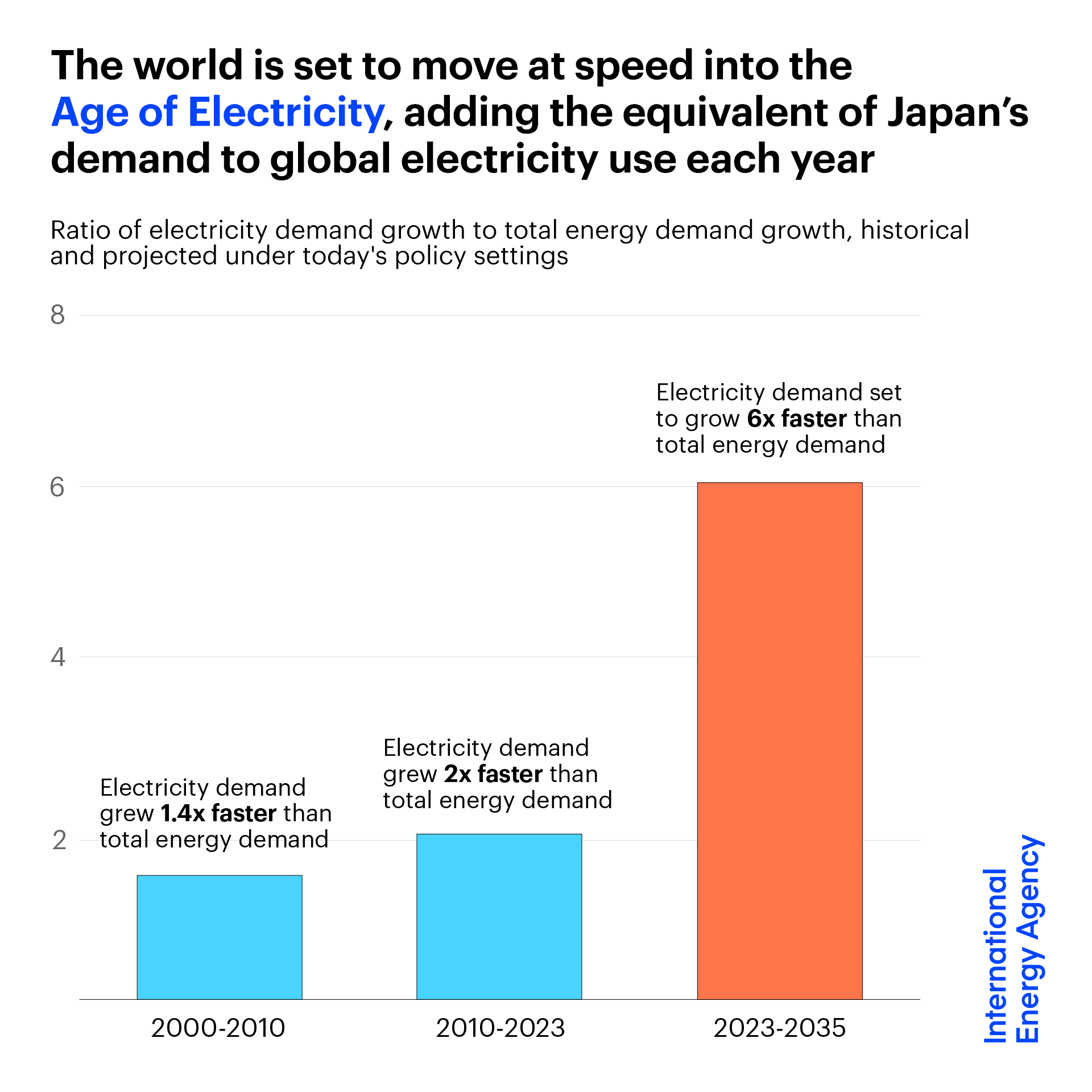
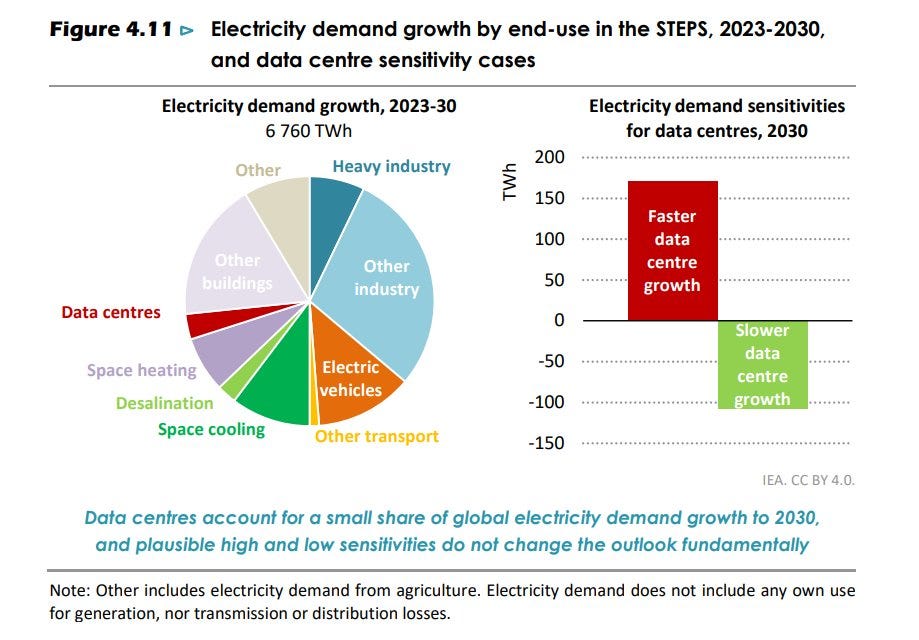
The International Energy Agency has published its World Energy Outlook report for 2024. Here are some highlights…

Overshoot
An interesting part of climate policy is the concept of global warming overshoot, meaning that temperatures temporarily rise above targets but then later fall back in line. This graphic, produced by the University of Exeter, shows that all climate tipping points (thresholds in the Earth's climate system that can lead to large-scale, irreversible changes to the climate) would be avoided if global warming over 1.5C is restricted to 30 years and peak warming kept below 2.5C.
Demographics
IMF takes notice
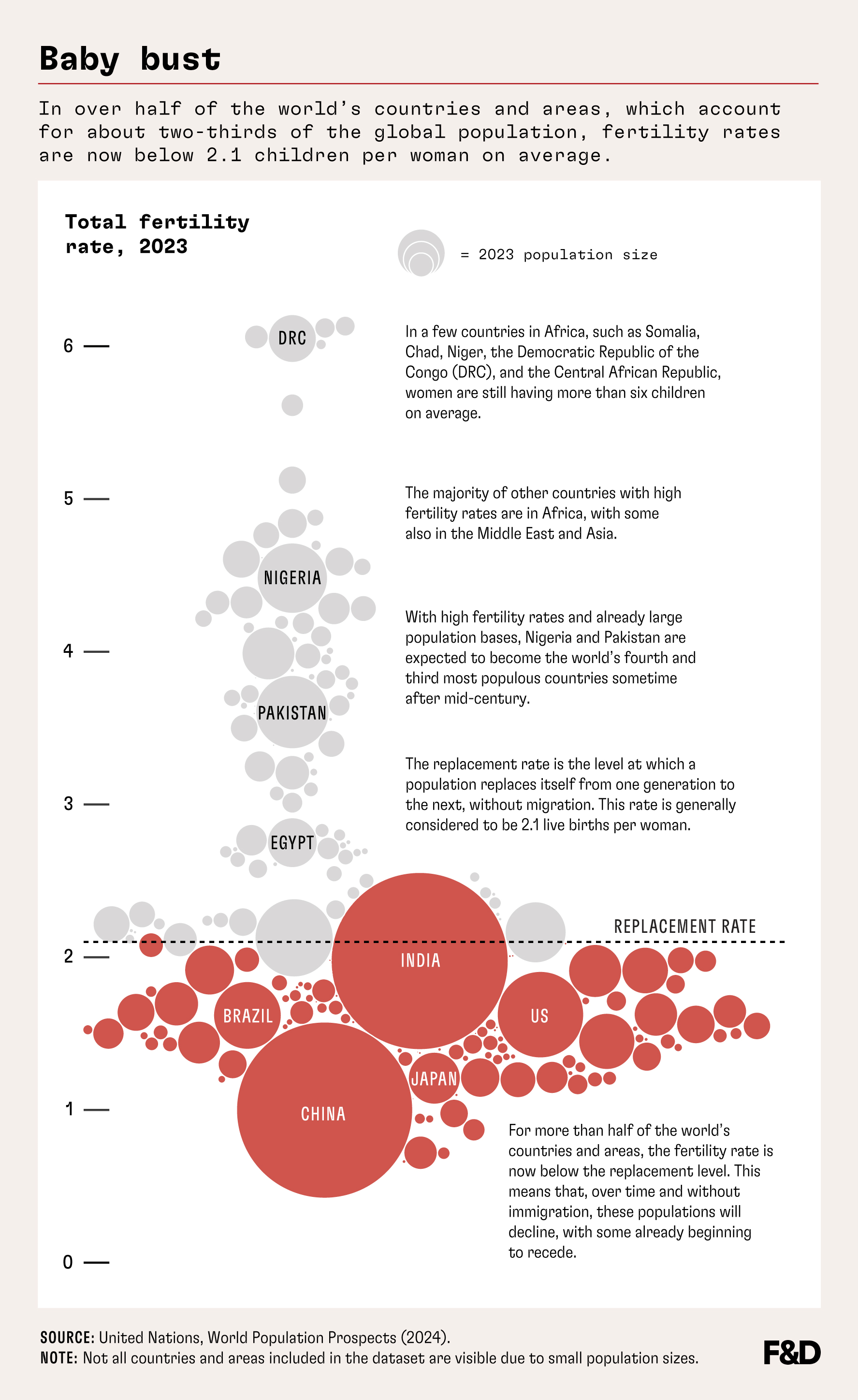
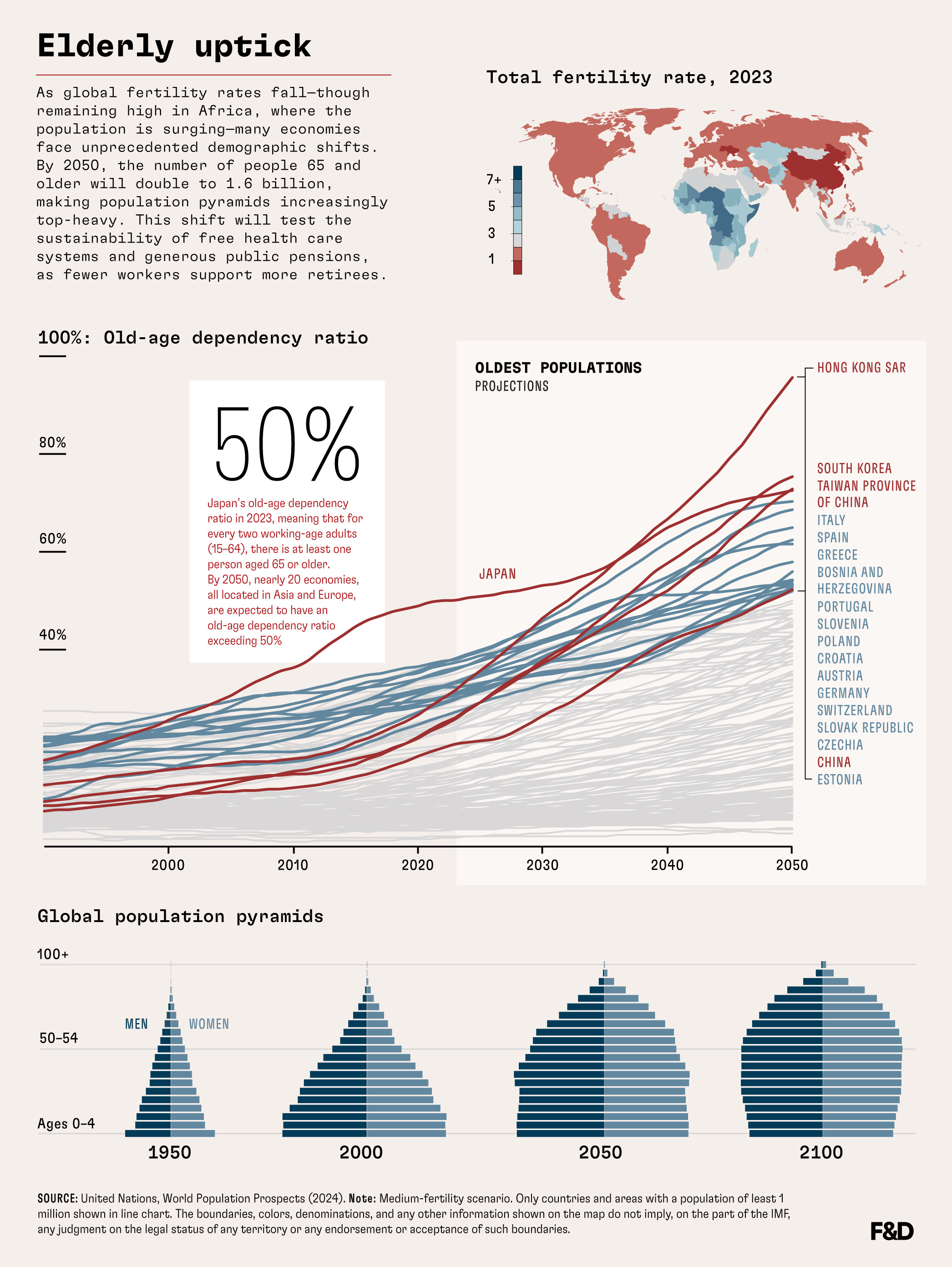
A few weeks ago, I criticised international bodies such as the United Nations for intentionally obscuring the demographic crisis. It’s therefore only right that I pay tribute to the International Monetary Fund for writing an (admittedly short) blog about the issue. Here are the key graphics.
Replacement
At the beginning of the year, I wrote a short essay with a friend about why Britain needs mass immigration to reduce the impact of demographic decline. It was therefore curious (and encouraging) to see Bill Clinton making the exact same argument in a recent Harris rally.
“We got the lowest birth we’ve had in well over 100 years. We’re not at replacement levels which means we’ve got to have somebody come here if we want to keep growing the economy, unless one of your artificial intelligence geniuses can figure out how we can grow with no work.”
This was seized upon by American racists claiming that Clinton was overtly advocating for ‘The Great Replacement’. Clearly, this is nonsense. Clinton didn’t mention race and was explicit about his motivations being economic. But it underlines the challenge in presenting pro-immigration arguments.
Buying young people
Portugal is turning itself into a low tax haven for young people. Under the proposal, young people earning up to €28,000 a year would pay no income tax in their first year of work. They would be exempted from 75% of tax due in years two to four, exempted from 50% of tax due in years five to seven, and exempted from 25% in years eight to 10. These tax breaks would apply to both natives and foreigners, while other tax breaks, such as income tax relief, are only available to international workers.
It will be fascinating to see the divergence in approaches to the demographic crisis from different countries. Some will sacrifice the few young people left at the altar of the gerontocracy (see Greece introducing a six-day working week and Britain bankrupting itself with universal state pensions and healthcare), while others will do all they can to lure young taxpayers to keep their countries afloat.
As Wolf Tivy, Founder and Editor of the Palladium Magazine, said:
The future will be dominated by childless evil old people trying to suck the blood of the young to keep their crumbling fake civilization alive for 10 more years.
The question is not how to have kids but how to liberate our kids from slavery to the olds.
Thanks for reading Chronicles of the Future! Subscribe for free to receive new posts and support my work.
Comments
Nothing yet. Say the first thing.
Sign in to join the conversation.