
Sujeet Indap, Wall Street Editor at the FT, wrote an insightful column about how private equity’s resistance to technologically driven productivity improvements in recent decades may be about to end.
“Even with functionality increasing each year,” Indap wrote, “20-something bankers and investors had been stuck manually typing numbers and equations into cells and then linking and formatting those cells.”
But black-box AI tools could soon change all of that, with junior associates required to display a more discerning skillset to use these machines rather than relying on “raw processing horsepower.”
As for where this takes the industry, it’s anyone's guess. I’ve seen some take the standard line of ‘these jobs will be automated out of existence.’ Maybe. Another potential scenario worth considering is that for those who still do the job (whether there are vastly fewer or the same number), the changing nature of the role will alter the kind of person who does it.
Spending long hours as a highly paid spreadsheet monkey appeals to a certain kind of person, creating a particular professional environment, which presumably, in a circular process, then impacts the work that is done. Perhaps the next questions to ask, then, are: how will changing technology impact private equity’s culture? And how will that change private equity?
Former Google CEO Eric Schmidt caused a stir when he said that Google lost its competitive edge when it decided “that work-life balance and going home early and working from home was more important than winning,” but that “the reason the start-ups work is because the people work like hell.”
Schmidt has since rowed back on his comments, rather unconvincingly saying he “misspoke,” but it still poses an interesting angle to the WFH debate. In many ways, startups are the truest barometer of whether a working practice is beneficial, given any inefficiencies or failings will likely cause failure. It’s therefore revealing that very, very few successful start-ups use working from home or have enviable work-life balances.
This suggests one of two things: either working from home is just worse for results and anyone who says otherwise is lying to themselves, or start-ups are a different kind of company, employing a different kind of person in a less sustainable or scalable way. For all the column inches still spent debating working from home, I haven’t seen many address this central issue.
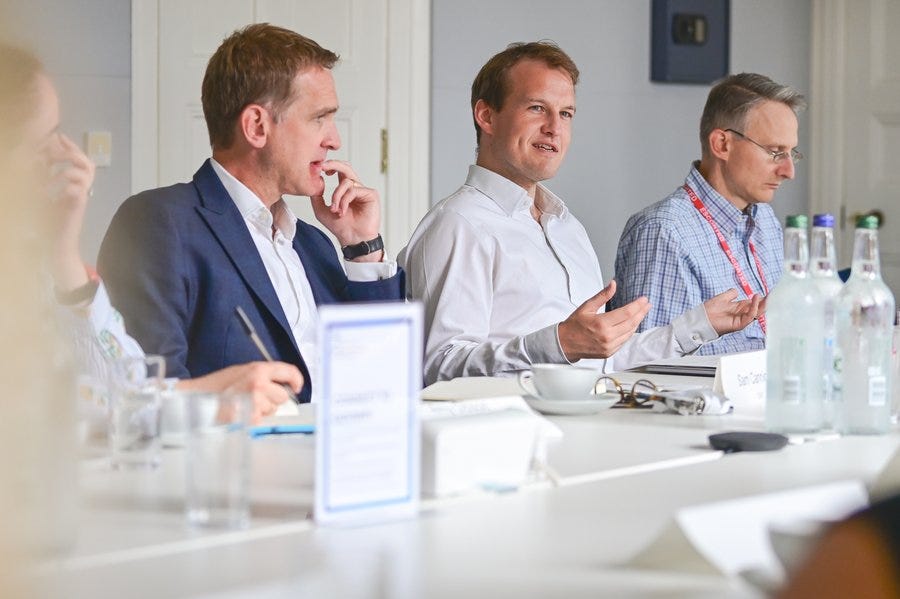
The UK’s Department for Science, Innovation, and Technology released a photo of Matt Clifford in action, leading the Government’s work on the AI Opportunities Action Plan. We’re told to expect Clifford to publicly report his recommendations in September.
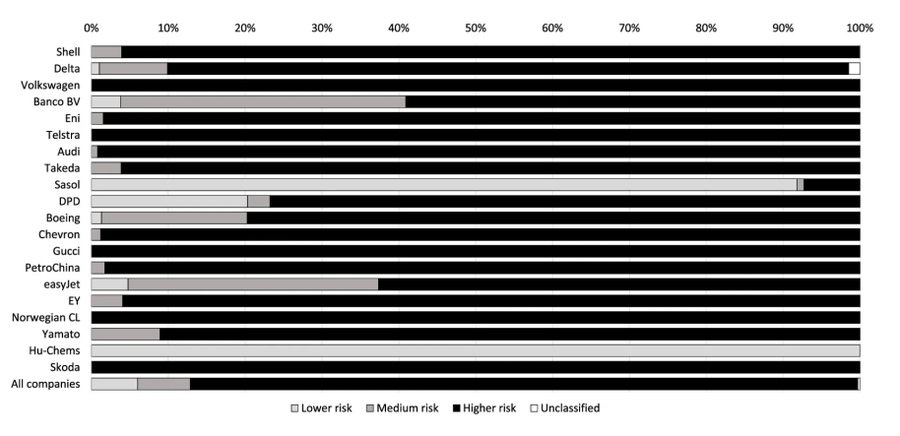
A useful long-read in the FT revealed that many of the companies using carbon offsetting the most (a carbon trading mechanism that enables entities to compensate for offset greenhouse gas emissions by investing in projects that reduce, avoid, or remove emissions elsewhere) “87% carry a high risk of not providing real and additional emissions reductions, with most offsets originating from forest conservation and RE projects.”
The table below shows how many high polluters are gaming the system, using cheaper forms of carbon offsetting that won’t do anything for the planet.
The Mediterranean Sea surface temperature set a new record of average surface temperature of +28.15°C. That would be considered a little on the warm side for a heated swimming pool. 18 out of the top 20 hottest days for the Mediterranean Sea surface have been observed in the last 13 months, and several parts of the sea are reporting surface temperatures above 30°C.

I love to hate the FT’s Janan Ganesh. One of the UK’s most eloquent writers, he has a near-singular ability to write irritating columns that stay in your head. In his piece last week, Ganesh, who is in his mid-forties, reflected on his planned childlessness.
He noted that not having children prematurely ages you. Without ties to the youth, one can be cut adrift from the zeitgeist. Resilience can also falter. With no children to create chaos, you’re left to sweat the small stuff. Most profoundly, Ganesh came to belatedly accept the warnings of the pronatalists, that the comfy city-living he frequently extols requires an army of youth, for work, ideas, and energy. Ganesh concluded:
“That I wouldn’t waver on parenthood, I knew all along. That I am so keen for the rest of you to get on with it, I would never have guessed.”
So, there we have it. The selfish and uncivic case for natalism – for others. Of course, I doubt many who have one or zero children will be as intellectually honest as Ganesh, so telling them they’re selfish – as some natalists, like J.D. Vance, do – is a fool’s errand. The useful work is on the other end of the spectrum: making parenthood virtuous – and easy(ish).
No posts
Comments
Nothing yet. Say the first thing.
Sign in to join the conversation.