
Greetings, fellow science enthusiasts,
As this Mother’s Day comes to a close, it is only fitting that we trace the literal and metaphorical "threads" that bind us to the maternal—from the cellular engines inherited from our mothers to the self-regulating breath of Mother Nature herself.
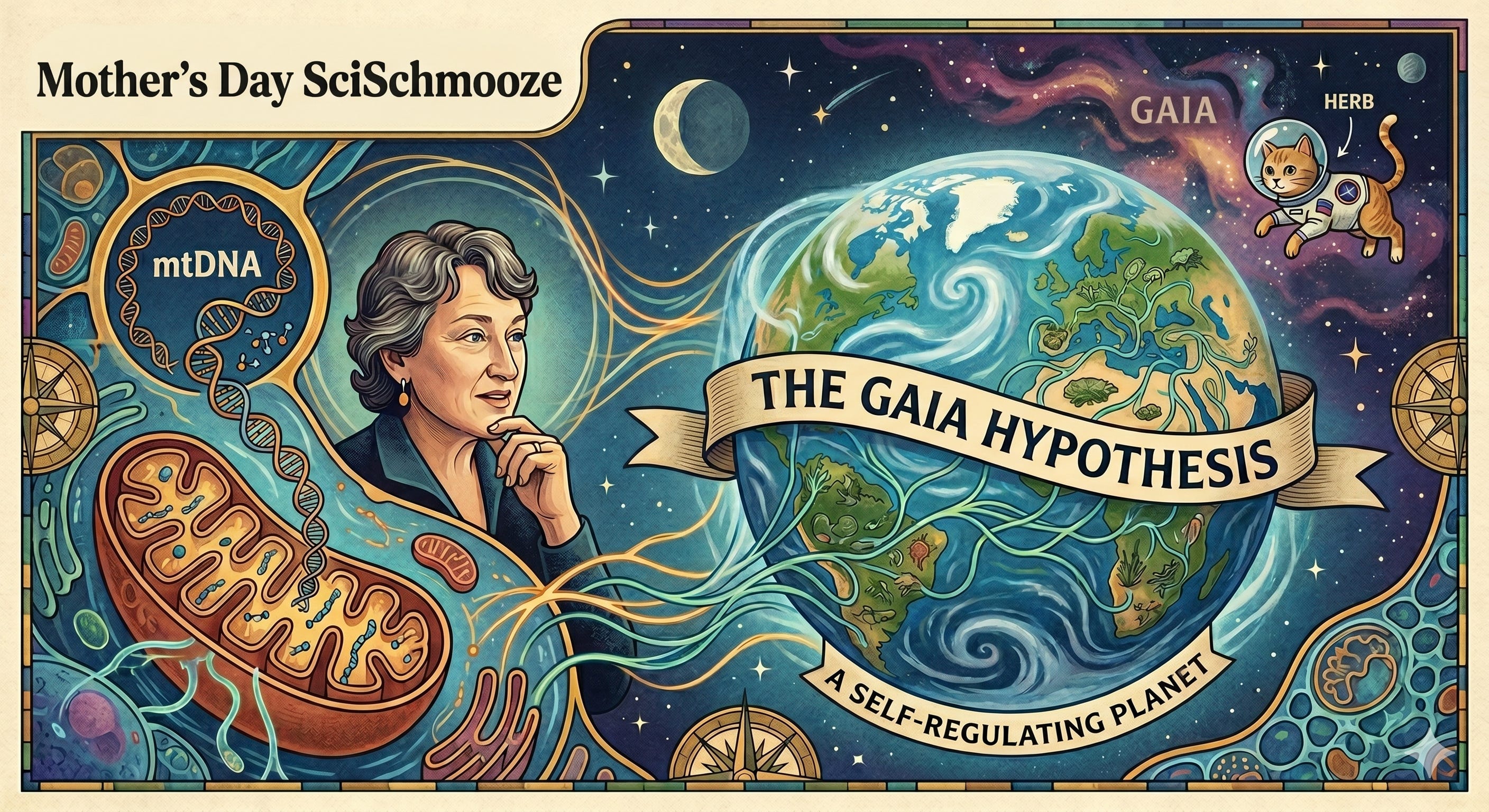
While our nuclear DNA is a shuffled deck from both parents, our Mitochondrial DNA (mtDNA) is an unbroken heirloom, passed exclusively from mother to child. This Mother’s Day, we salute the late Lynn Margulis, the radical visionary who proved that these mitochondria—the power plants of our cells—were once independent bacteria.
Margulis famously observed that “life did not take over the globe by combat, but by networking,” challenging the idea that evolution is driven solely by competition. Through her Endosymbiotic Theory, she argued that complex life emerged through a maternal act of “adoption.” A larger cell hosted a smaller one, providing a home in exchange for energy. As Margulis put it, these ancient bacteria “ended up as guests” within us. It is the ultimate biological narrative: a collaborative merger that allowed life to leap from single-celled simplicity to the complexity of the human spirit.
Margulis didn’t stop at the cellular level. Along with James Lovelock, she championed the Gaia Hypothesis, viewing the atmosphere, oceans, and soil as “organs” in a planetary-scale metabolism.
According to this framework, Earth’s atmosphere is not a mere geochemical accident but a biological construct in a state of extreme chemical disequilibrium. The persistent presence of gases like methane in an oxygen-rich atmosphere serves as a signature of a self-regulating system maintained by the collective activity of all living things.
However, the hypothesis remains a centerpiece of scientific debate. “There is no way for the Earth to be a unit of selection,” Richard Dawkins famously countered, contending that Gaia is “a poetic metaphor, not a scientific theory.” Yet, this friction is exactly what keeps the field alive. Deciphering where the frontier of geochemistry ends and the “breath” of biological influence begins remains one of the most provocative debates in science.
If you want to see this “Mother Earth” metabolism in action, look no further than Bacteriopolis at the Exploratorium in SF. This towering Winogradsky Column is a vibrant, multi-colored metropolis of microbes.
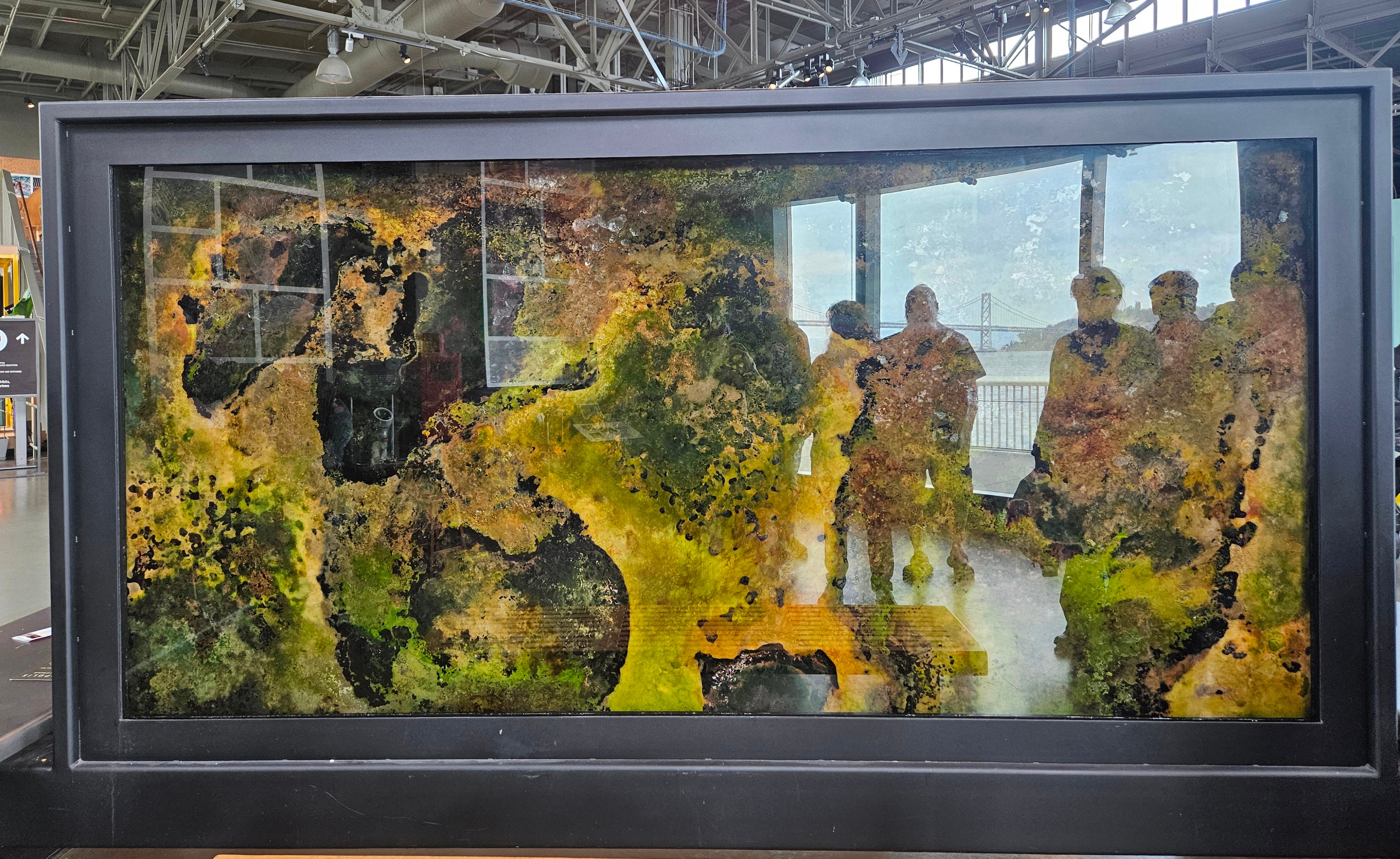
As Sergei Winogradsky, the pioneer of soil microbiology, stated: “Microbes are the great chemists of the earth.” In Bacteriopolis, we see that chemistry happening in real-time. As light hits the column, different layers of bacteria “tinker” with sulfur, carbon, and light, creating a closed-loop ecosystem that mirrors the planetary scale. You can explore the fascinating specifics of this microbial city at the Exploratorium’s Bacteriopolis exhibit.
A profound thank you to Herb Masters for his masterful navigation of our “away team”—a dozen adults gathering from every corner of the Bay Area for a maiden voyage to the Exploratorium this past weekend.
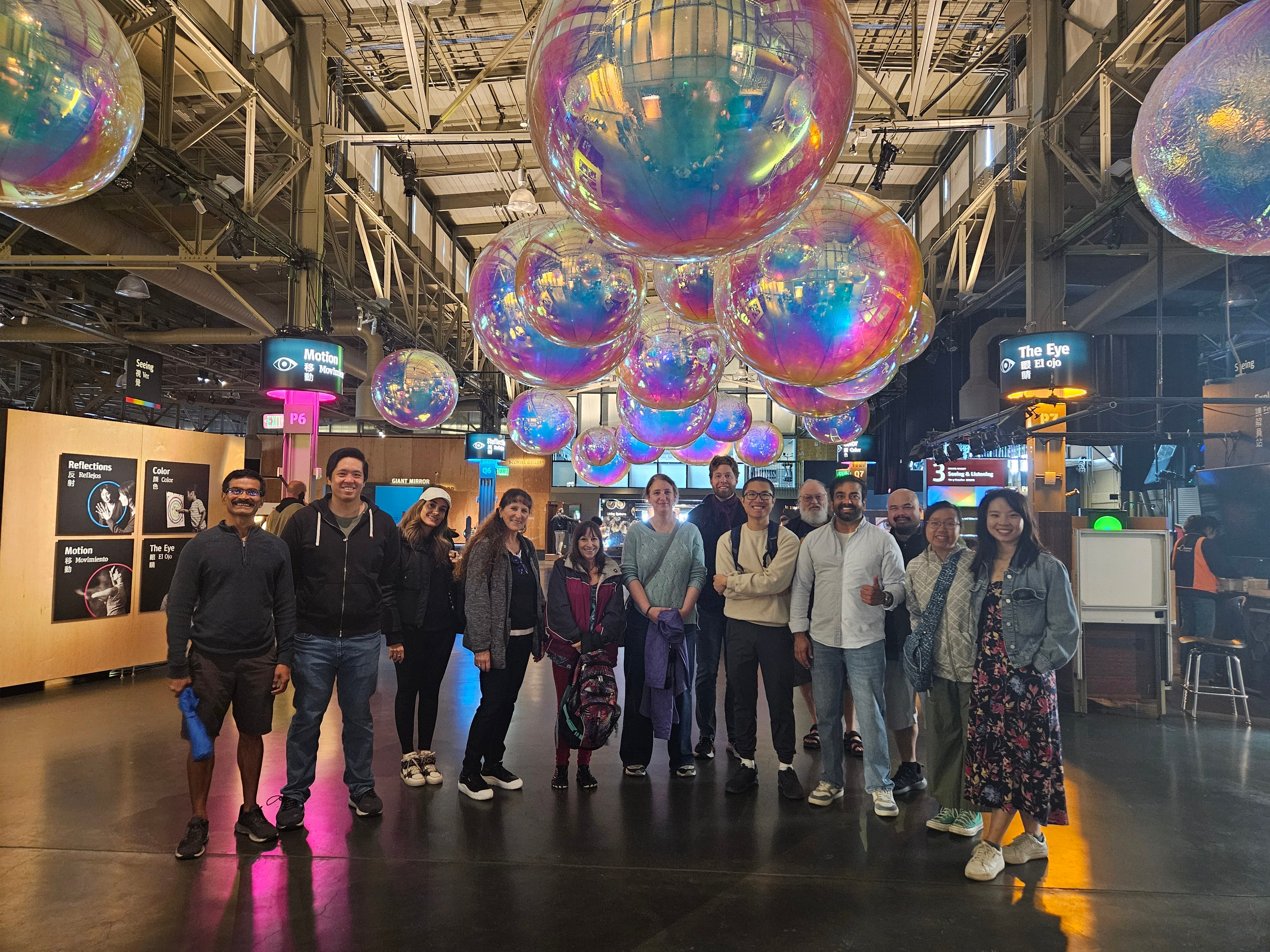
It was a rare joy to watch this group shed their professional veneers to engage with interactive exhibits with pure, unadulterated wonder. Everyone was captivated by Herb’s storytelling as he guided us through his favorite spots, from the sophisticated net-zero energy systems that regulate the building’s temperature to the historical magic of the Observatorium and Camera Obscura. Seeing the crew thrilled by the first exhibitions on spectroscopy and the fundamental beauty of physics and nature was a powerful reminder that the heart of discovery is, and always will be, a sense of play. Just as Gaia balances the atmosphere, Herb balances the flow of curiosity that defines our community.
May your curiosity always be set to “engage,”
Lili
50th David M. Mason Symposium in Chemical Engineering
Monday, May 11, Stanford University
Join the Stanford community for this milestone symposium celebrating the legacy of David M. Mason and exploring the cutting edge of chemical engineering. Event Details
After Dark: Altered States at the Exploratorium
Thursday, May 14, San Francisco
Visit Bacteriopolis and see the living colors of the microbial world for yourself while exploring the science of perception.
Astronomy Night at Mt. Tam
Saturday, May 16, Marin County
Join local enthusiasts for stargazing—weather permitting, we might just spot the giants of our solar system where the search for Gaia’s cousins continues.
Upcoming Events:
Click to see the next two weeks of events in your browser.
Monday, 05/11/2026
The Rise of Industrial AI in America: Microfoundations of the Productivity J-curve(s) - Livestream - 05/11/2026 12:00 PM
Stanford University
We examine the prevalence and productivity dynamics of artificial intelligence (AI) in American manufacturing. Working with the Census Bureau to collect detailed large-scale data for 2017 and 2021, we focus on AI-related technologies with industrial applications.
We find causal evidence of J-curve-shaped returns, where short-term performance losses precede longer-term gains. Consistent with costly adjustment taking place within core production processes, industrial AI use increases work-in-progress inventory, investment in industrial robots, and labor shedding, while harming productivity and profitability in the short run. These losses are unevenly distributed, concentrating among older businesses while being mitigated by growth-oriented business strategies and within-firm spillovers.
Dynamics, however, matter: earlier (pre-2017) adopters exhibit stronger growth over time, conditional on survival. Notably, among older establishments, abandonment of structured production-management practices accounts for roughly one-third of these losses, revealing a specific channel through which intangible factors shape AI’s impact.
Taken together, these results provide novel evidence on the microfoundations of technology J-curves, identifying mechanisms and illuminating how and why they differ across firm types. These findings extend our understanding of modern General Purpose Technologies, explaining why their economic impact - exemplified here by AI - may initially disappoint, particularly in contexts dominated by older, established firms.
Speaker: Kristina McElheran, University of Toronto
Register at weblink to attend
Atomic Precision: Advancing Lithium Batteries through Interface Engineering - 05/11/2026 12:30 PM
Shriram Center Stanford
As the global demand for alternative energy intensifies, there is ongoing research and development aimed at enhancing energy storage systems. Lithium metal batteries represent a promising technology for next-generation energy storage solutions. However, stabilizing the lithium metal anode in these batteries remains a significant obstacle to their commercial viability. Given the central role of interfaces in lithium metal batteries and other electrochemical energy storage systems, engineering and controlling electrode interfaces emerge as a promising strategy for achieving stable performance. During this talk, I will present our research on the layer-by-layer synthetic strategies used to coat interfaces in battery devices with nanoscale thin film materials, aimed at enhancing stability and performance. Our approach leverages atomic layer deposition (ALD), a synthesis method that offers precise control over the composition, structure, and thickness of thin films. We show that with the appropriate film properties, ALD interfacial layers deposited on the current collector can be used to regulate lithium metal morphology and the solid electrolyte interphase (SEI), ultimately improving electrochemical performance in Li metal batteries. For example, ultrathin metal oxide interfacial films on the lithium anode’s current collector can facilitate uniform and reversible Li plating, thereby enhancing battery cyclability. We also introduce a characterization method that enables us to probe the chemical composition of the pristine SEI without species loss by arresting chemical reactions and preserving volatile species at cryogenic temperatures. This new access to pristine interfacial composition allows us to correlate performance across various electrolyte chemistries.
Speaker: Stacey Bent, Stanford University
Genes and Culture: Theory and Misuse - 05/11/2026 04:00 PM
James H. Clark Center (Bldg 340) Stanford
Speaker: Marcus Feldman, Stanford University
Room: Auditorium
Powershift: Supporting Tribal Energy Sovereignty at the California Energy Commission - 05/11/2026 04:30 PM
Hewlett Teaching Center Stanford
Tribal Nations across California and the U.S. are increasingly asserting leadership in clean energy development-pursuing projects that advance energy resiliency, economic opportunity, and tribal sovereignty. Since many Tribes face unduly high energy costs, long outages and have long borne the brunt of fossil fuel extraction, such projects can have an outsized impact. In a dual role at the California Energy Commission (CEC) and Stanford’s Precourt Institute for Energy, Kelsey Freeman has been helping launch a landmark state policymaking effort to ensure that California Native American Tribes can benefit from the clean energy transition. Freeman will discuss how Tribes are leading the way to harness clean energy for the benefit of their people amidst legal, policy and practical challenges - and how the CEC is working to support.
Speaker: Kelsey Freeman, California Energy Commission
Attend in person or watch online (see weblink)
Microelectronics: When the Enabler Becomes the Bottleneck - Livestream - 05/11/2026 04:30 PM
Stanford Linear Accelerator
Microelectronics spans a broad stack from materials and devices to circuits, architectures, and integrated systems, all of which are essential to modern scientific instrumentation. Across fields such as photon science and high-energy physics, advances in microelectronics have enabled new experimental capabilities, from highly segmented detectors to ultrafast, low-noise readout systems. However, as these systems scale, microelectronics increasingly defines the limits of what is possible. As next-generation facilities push toward extreme data rates, challenges in bandwidth, latency, and energy consumption shift attention toward how efficiently information is extracted from measured signals. This colloquium examines the role of microelectronics across these layers, with particular emphasis on circuits and architectures that govern data movement and system-level performance. Through representative examples, it illustrates how architectural choices in data reduction, processing, and control are being rethought to address emerging system-level constraints. The talk concludes by outlining opportunities for cross-layer co-design and key research challenges for future data-intensive scientific instruments.
Speaker: Angelo Dragone, Stanford and SLAC
Watch online (see weblink)
Powering Global Cooperation: Innovation, Security, & Geopolitics In A Changing Energy Landscape - 05/11/2026 04:30 PM
George P. Shultz Building Stanford
In today’s world, energy is a driver of security, prosperity, and strategic influence. As geopolitical shocks, market volatility, and technological change transform the global energy landscape, trusted partnerships are becoming essential to resilience and long-term stability.
Join Condoleezza Rice and Arun Majumdar, in conversation, moderated by Šumit Ganguly, on how energy is reshaping international cooperation. Drawing on lessons from the U.S.-India Civil Nuclear Accord and the challenges of today’s security environment, the discussion will explore how the United States and its partners can strengthen energy security, advance innovation, and build a more stable global future.
This timely discussion will examine the intersection of energy, trust, and geopolitics - and what it will take to power cooperation in a rapidly changing world.
Watch in person or online. See weblink
The Hidden Health Costs of the Digital Age - 05/11/2026 06:00 PM
Commonwealth Club San Francisco
Screens - all the time, everywhere, it seems. We sit at our desks facing screens, hold meetings over screens, answer email after email on them. You’ve heard about the mental health harms of screens, but what about the physical ones? Headaches, back pain, restless sleep, and rising rates of preventable disease. Manoush Zomorodi, host of the TED Radio Hour, says technology is breaking us down, and she comes to Commonwealth Club World Affairs to share her investigation into how our digital lives are changing the way we think, learn and feel.
It’s a topic she explores in her new book Body Electric. From breath and eyesight to blood pressure, posture, and productivity, she says science has shown how small shifts - not “digital detoxes” - can make us healthier, and all we need is five minutes.
Melissa Painter, founder and CEO of Breakthru, will be joining Manoush Zomorodi. Painter is a pioneer in human-embodied intelligence, spatial computing, and kinetic literacy, working to redefine how we interact with technology to protect human health and cognitive performance. Her work bridges the gap between emergent technology and the physical self, creating practical avenues for embodied practices in an increasingly sedentary, screen-saturated world.
Attend in person or online. Tickets at weblink
Skeptics in a Real Pub - 05/11/2026 07:00 PM
Fiddler’s Green Millbrae
Enjoy an evening of socializing and feasting with fellow Bay Area science-forward folk in an Irish Pub on the Peninsula with great food. < Menu >
Join us! This is a free event brought to you by Bay Area Skeptics. All are welcome.
The Paradox of Specialization: How Work Has Become More Demanding - 05/11/2026 07:00 PM
Hawthorn SF Nightclub and Lounge San Francisco
For over a century, thinkers like Adam Smith and Karl Marx believed that as jobs became more specialized, workers would focus on fewer, simpler tasks. And for a time, that seemed true. But today, many specialized roles - from teachers to doctors to police officers - require people to juggle more responsibilities than ever before.
In this lecture, Michelle Jackson, Associate Professor of Sociology at Stanford University, explores this surprising shift in the modern workforce. Drawing on historical and statistical research, she shows how advances in science and data have expanded - not reduced - the scope of what workers are expected to do.
From predicting crime to preventing illness to improving educational outcomes, workers are now tasked with managing increasingly complex systems. This talk reveals how specialization has paradoxically led to more demanding jobs - and what that means for work, inequality, and everyday life today.
Tuesday, 05/12/2026
Black Spot, Black Death, Black Pearl: Tales of Bacterial Pathogens - 05/12/2026 11:00 AM
Weill Hall Berkeley
My lab is interested in elucidating the activity of virulence factors from pathogenic bacteria so that we can gain novel molecular insights into eukaryotic signaling systems. The marine bacterium Vibrio parahaemolyticus is the worldwide leading cause of seafood-borne acute gastroenteritis. We are working on the two V. parahaemolyticus type 3 secretion systems (T3SS1 and T3SS2) and their bacterial effectors to understand how signaling systems in the eukaryotic host can be manipulated by these bacterial pathogens. Each of the two T3SSs uses a unique repertoire of effectors to manipulate host signaling. The first T3SS1 is thought to be used to maintain V. parahaemolyticus’ survival in the environment, while the second T3SS2 is used for pathogenesis in an animal host. For decades, this pathogen has been studied exclusively as an extracellular bacterium, however, our studies demonstrated that V. parahaemolyticus invades and proliferate within host cells using the second T3SS2. What is somewhat perplexing is how the innate immune response is manipulated by this pathogen. Our ongoing studies have elucidated redundant and surprising mechanisms used to subvert detection during invasion and replication inside host cells. This work at UT Southwestern is accomplished using a broad range of tools, including biochemistry, molecular microbiology, protein chemistry, structural biology, yeast genetics, cell biology and more.
Speaker: Kim Orth, US Southwestern Medical Center
Belonging in a Digital Age: Teens, Tech, & Third Places - Livestream - 05/12/2026 11:40 AM
Stanford University
As adolescence becomes increasingly digital, public discourse tends to focus on screen time, platform design, and online harms. Yet alongside these concerns, a parallel transformation has unfolded: the steady erosion of physical spaces meant for teens. What happens to youth social life when the outside world contracts? This talk argues that the rise of digital adolescence must be understood alongside the decline of third places - low-barrier environments beyond home and school that once supported informal peer culture and autonomy. Drawing on original statewide data from caregiver focus groups and a survey of more than 1,000 teens, we examine how young people navigate belonging amid shrinking real-world options. By reframing youth technology use as intertwined with social infrastructure, this research raises a new policy question: What would it mean to treat third places as essential civic infrastructure for youth in a digital age?
Speakers: Jennifer Heifferon, California Partners Project; Alanna Powers-O’Brien, Family Online Safety Institute
Register at weblink
From Random Walks to Phase Transitions: Information and Trading - 05/12/2026 03:30 PM
Hewlett Teaching Center Stanford
I will discuss ideas in modern quantitative finance from the perspective of a theoretical physicist. Starting from the classic picture of price fluctuations as random walks, I will explain how practitioners identify collective modes, or “factors,” and use them to isolate residual predictability, or “alpha.” The problem of trading on such predictions naturally becomes a problem in control theory, with close analogies to signal transmission through a noisy channel. In a simple model, one finds a cascade of bifurcation transitions: from no trading, to discrete buy/hold/sell policies, to progressively finer discretizations, with continuous linear-quadratic control recovered in an appropriate limit.
Speaker: Shamit Kachru, Stanford University
Wonderfest: How a Shark Thinks - 05/12/2026 06:00 PM
San Francisco Public Library San Francisco
A few shark species are, indeed, dangerous wildlife. However, the public portrayal of these animals as villains and killers is overblown. What is the real life of a large shark like? How do they eat? How long do they live, and where do they migrate? Knowing about sharks in this way - especially how they think - helps us see them as part of our ocean world to be respected … and to be amazed by.
Our Wonderfest speaker is Dr. Stephen Palumbi, Professor of Marine Sciences at Stanford University.
Room: Steve Silver Music Center
Black Oystercatcher Monitoring - 05/12/2026 06:00 PM
Hopkins Marine Station Pacific Grove
Monterey Audubon Society’s BLOY project has officially hit 10 years of good, clean data after a few start-up years. Join Judi Romero as she gives an update on the project by sharing what the data is telling us, sharing some stories from the field, and probably some extra-cute photos of BLOYs and their chicks.
Judi has worked alongside our Lead Project Biologist, Jennifer Parkin, for several years, primarily monitoring BLOY territories in Point Lobos, Pebble Beach, and along the Monterey Peninsula.
May LASER Event - Stanford - 05/12/2026 07:00 PM
Li Ka Shing Center for Learning and Knowledge Stanford
Speakers:
Tanya Luhrmann (Stanford Anthropology) on “Voices” Muhammad Khatib (Stanford) on “Fiber Bioelectronics for Precision Medicine” Kathy Aoki (Santa Clara University) on “” Nitya Thakkar (Stanford Medicine) on “AI for Precision Health”
AoT Easy Bay - May! - 05/12/2026 07:30 PM
Two Pitchers Oakland Oakland
This month, we have two excellent talks lined up: First, Katie Hermanson will tell us about dwarf galaxies in dark matter simulations. Then we’ll hear from Hannah Gulick about hunting for black holes… possibly with the very phone in your pocket!
Wednesday, 05/13/2026
Long-Reach Distributed Fiber-Optic Sensing over Repeated Submarine Cables - 05/13/2026 10:30 AM
Mitchell Earth Sciences Building (04-560) Stanford
Distributed Acoustic Sensing (DAS) has emerged as a versatile tool for seismic and geophysical studies due to its unprecedented sensor density, converting regular telecommunication fibers into distributed 1D strain sensors. DAS can achieve m-level spatial resolution and kHz sampling rates, enabling direct measurement of the coherent wavefield from seismic events. A key application is leveraging existing submarine telecommunication cables to create real-time oceanographic and seismic ocean bottom sensors. However, a major limiting factor of DAS is reach: unamplified links are limited to 100 - 200 km, while cables with in-line optical amplifiers are typically restricted to the first repeater (50 - 80 km). This fundamental constraint has prevented the use of the global submarine fiber network for deep-ocean sensing.
This presentation details recent progress on long-reach DAS, adapted for active submarine telecommunication cables. We demonstrate that the first-repeater limit is not fundamental and that by utilizing weak monitoring couplers, originally introduced for cable fault localization, distributed sensing over the entire cable length is feasible. A prototype system installed on a domestic telecom cable connecting California and Hawaii has transformed the 4,400 km cable into a distributed strain sensor with 44,000 100-meter-spaced sensor points. We present recent results from the M8.8 earthquake in Kamchatka, which include the first fiber-optic deep-ocean high-resolution seismic arrivals. Furthermore, we show the ability to accurately track the resulting tsunami wave as it passes over the cable, the first demonstration that standard telecom cables can detect and track tsunami waves in the deep ocean. Finally, we discuss recent system upgrades, resulting in a quasi-uniform noise floor of approximately 1 n?/s/?Hz for 50-meter spatial resolution. These results demonstrate the potential to use existing and future submarine cables, without modification and with negligible loss in throughput, to create a global deep-ocean sensing network.
Speaker: Mikael Mazur, Nokia Bell Labs
Attend in person or online (See weblink)
Room: 350/372
Marine parasites at island-like, disturbed hydrothermal vents - 05/13/2026 11:00 AM
Monterey Bay Aquarium Research Institute Moss Landing
Parasite diversity is sensitive to habitat disturbance and isolation, yet these expectations have rarely been tested in extreme environments. I studied the metazoan parasite community at hydrothermal vents at 9°50’N on the East Pacific Rise - an island-like, frequently disturbed, successional habitat where few parasite species had yet been discovered. I surveyed the vent community and compared its parasite diversity to other marine ecosystems that differ in their isolation and disturbance (atoll sandflat and kelp forest). The vent community overall had fewer parasite species because there were fewer vertebrate predators (fish) and shorter food chains. Contrary to expectation, parasites with complex (multi-host) life cycles were relatively diverse at vents, and several stages of multiple species were linked using morphology and genetics. These findings demonstrate that taxonomically and functionally diverse parasites inhabit extreme environments, with implications for the resilience of obligate symbionts to natural disturbance.
Speaker: Lauren Dykman, University of Victoria
Attend in person or register at weblink to watch online
UC Santa Cruz Whole Earth Seminar - 05/13/2026 12:00 PM
Earth and Marine Sciences Building Santa Cruz
Speaker: Jory Lerback, Lawrence Livermore National Lab
Designing a Satellite Navigation System for the Moon - 05/13/2026 12:30 PM
Mitchell Earth Sciences Building (04-560) Stanford
The Moon is entering a new era of exploration, with dozens of commercial, national, and international missions planned for the coming decade. Supporting this activity will require robust Positioning, Navigation, and Timing (PNT) infrastructure - a “Lunar GPS” - capable of serving spacecraft, landers, and rovers across the cislunar domain. In this talk, I will present my research on building the algorithmic and systems foundations for a “Lunar GPS.” First, I will outline the key challenges in enabling such a system compared to Earth, including precise orbit determination and time synchronization without surface stations, a unique dynamical environment, the definition of new coordinate and time frames, and tighter size, weight, and power constraints. Second, I will describe how terrestrial GNSS signals, including weak sidelobe transmissions that spill beyond Earth, can be leveraged for precise orbit determination and timekeeping of lunar satellites, with particular attention to ionospheric and plasmaspheric delay modeling as a critical bottleneck to achieving meter-level accuracy. Time permitting, I will broaden the perspective to extending satellite radionavigation beyond the Earth-Moon system, including collaborative work with NASA JPL on next-generation Mars navigation and communication relay networks, and emerging opportunities, such as precise timing for low-frequency radio astronomy arrays on the lunar farside, that a mature Lunar GPS infrastructure could uniquely enable.
Speaker: Keidai Iiyama, Stanford University
Roonm 350/372
Tidal dynamics of ecosystem metabolism and nighttime hypoxia - Livestream - 05/13/2026 03:00 PM
UC Davis Bodega Marine Laboratory
Speaker: Nick Nidzieko, Associate Professor, UC Santa Barbara
Register for Zoom at weblink
Ignite SF #19 - 05/13/2026 06:00 PM
Brava Theater San Francisco
Get ready to be blown away at Ignite SF #19 - 15+ speakers, fast talks, bold ideas, and nonstop creativity on one electrifying stage.
Get ready for a night of ideas, insight, and pure adrenaline. In true Ignite fashion, each speaker will have just 5 minutes and 20 auto-advancing slides to enlighten you - fast.
This edition’s lineup will be stacked with brilliant minds and bold voices. Stay tuned!
Doors open at 6 pm (come early - the bar will be open!), and the first round of talks kicks off at 7 pm.
Our mission is simple but powerful: Everybody Speaks. Because when people share their ideas, they don’t just build confidence - they build community.
People Pleasing Is Ruining Your Sex Life - 05/13/2026 07:00 PM
Planted SF San Francisco
People pleasing, perfectionism, overcompensating - these behaviors can help us navigate difficult environments, but they often limit authenticity, intimacy, and connection in our relationships.
In this experiential lecture, Darshana Avila explores the roots of these patterns and how they live in the body. Through reflection, humor, and simple embodied exercises, you’ll begin to recognize and shift them - moving toward more pleasure, power, and purpose.
Known for her grounded and candid approach, she bridges erotic embodiment, trauma healing, and self-actualization. Her work has been featured on Sex, Love & Goop, The Guardian, and The New Yorker. She maintains a private practice in Oakland, CA and hosts the Deeper With Darshana podcast.
Thursday, 05/14/2026
Coastal Walk at Cowell-Purisima Trail - 05/14/2026 10:00 AM
Cowell Purisima Coastal Trailhead Half Moon Bay
Join Peninsula Open Space Trust for a beautiful walk along the Cowell-Purisima trail that POST helped create by protecting adjacent farmland. While it may be foggy, we hope to catch gorgeous views of the ocean, nearby farmland, and glimpses of harbor seals, pelicans, hawks, rabbits, and whales during the winter season.
You will be guided by POST ambassadors who will share details about POST’s work with farmers on the coast, and to create recreational opportunities along one of the most scenic stretches of our state’s coastline!
This walk is moderate at about 4.5 miles round trip with about 400 feet of gradual elevation gain. It is mostly flat throughout, however, it is quite a long walk.
Register at weblink
Infrastructure for Science that Compounds in the Age of AI Agents - 05/14/2026 12:00 PM
Cory Hall Berkeley
AI agents that autonomously conduct research risk breaking a delicate balance in science. The scientific paper is a lossy format: methodological choices and assumptions compressed into a few pages, with peer review and community scrutiny providing the warrant that results are sound. This trade-off worked because the rate of new work stayed roughly matched to the community’s capacity to scrutinize it. Agents now threaten that balance, accelerating production far faster than scrutiny can keep up and deepening an already well-documented trust and reproducibility crisis. But the same technology is also an opportunity: agents can document exactly how results are produced at a level of detail that was previously too onerous to maintain by hand, if we build the infrastructure to capture it.
Closing that gap is what we’re building toward at Lightcone Research, a new initiative between UC Berkeley and the French National Centre for Scientific Research (CNRS). We are building a new standard ensuring that conforming analyses are not only reproducible by default, but also inspectable, verifiable, and extendable - every result traceable to the assumptions that produced it, decisions substitutable without rewriting entire pipelines, and analyses able to cite and build upon one another. Done right, this is what allows AI-powered science to remain trustworthy and continue to compound. Because infrastructure of this kind has to be built with and for the community that relies on it, our project is open-source, collaborative, and designed for shared stewardship from the start.
In this talk, I will survey the current state of agentic AI in science and the pitfalls it is exposing, introduce the Lightcone Research project and its agentic research stack, as well as share lessons from working with UC Berkeley early testers and reproducing flagship cosmology results.
Speaker: François Lanusse, CNRS researcher, CosmoStat Laboratory
Dilatant hydro-shearing fracture growth ??’ theory & observations - 05/14/2026 12:00 PM
Mitchell Earth Sciences Building (04-560) Stanford
This talk explores the mechanics of fluid-driven frictional ruptures, accounting for frictional weakening, dilation, and permeability changes. While primarily occurring during hydraulic stimulation of geothermal reservoirs, these processes also impact fault stability, landslides, and glacier mechanics. Assuming a circular rupture geometry, we examine how the rupture propagation behavior can widely varies with rock properties, in-situ conditions, and injection protocols. Finally, we revisit the Basel-1 well stimulation, presenting a dilatant hydro-shearing model that replicates the injection sequence. We discuss the model’s agreement with observed pressure and microseismic evolution, while addressing uncertainties in key parameters like horizontal stress and frictional properties.
Speaker: Brice Lecampion, Ecole Polytechnique Fédérale de Lausanne (EPFL), Switzerland
Watch in person or online. See weblink
Room 350/372
UC Berkeley Energy and Resources Group Colloquium - 05/14/2026 03:30 PM
Giannini Hall Berkeley
The international community seeks to increase public and private financial flows to address the climate crisis. Initiatives to promote emissions reductions target forests and waterways across the Global South; their success often depends on the reorientation of local governance practices. This talk draws on mixed methods research in Guatemala to examine the effects of transnational climate initiatives in contexts of institutionalized corruption, impunity, and violence - and their entanglements with entrenched kleptocratic networks.
Speaker: Kelsey Alford-Jones, UC Berkeley
Editor’s Note: A similar event conflicts with this one, with overlapping times and the same location. Since no additional information has been published for the other, later listing, we assume this one is correct and the other one is canceled.
UC Berkeley Energy and Resources Group Colloquium - CANCELED? - 05/14/2026 04:00 PM
Giannini Hall Berkeley
Speaker: Cris Crespo and Jess Kersey
Editor’s Note: This event conflicts with a similar event at overlapping times and location. Since no title has been released for this event, we are assuming the other one is correct and UC Berkeley just hasn’t canceled or rescheduled this one at this time.
Drake Awards 2026 - 05/14/2026 05:30 PM
Computer History Museum Mountain View
Join the SETI Institute’s premier space science celebration as we honor pioneering researchers advancing the search for life beyond Earth!
Honoring Excellence in SETI & Astrobiology
The Drake Awards is the SETI Institute’s premier celebration of bold ideas, transformative discovery, and humanity’s enduring question: Are we alone in the universe?
This signature evening brings together scientists, industry leaders, STEM students, and space enthusiasts for an unforgettable night to celebrate discovery, spark new ideas, and honor the pioneers shaping the future of astrobiology and the search for life beyond Earth.
Engage: Connect with leading voices in SETI, astrobiology, planetary science, and more.
Experience: Enjoy an elegant reception and gala dinner hosted by two leading voices in science communication.
Inspire: Meet the next generation of groundbreaking scientists driving the future of research and discovery.
We are grateful for our sponsors: Amaresh Kollipara, Elizebeth Varghese & Matthew Veedon, Wendi Zhang & Jason Slupeiks, TIFF Advisory, Wealthspire Retirement Advisory & NFP, an Aon company, Hum Lab, Sanjeet Dutta & Foley & Lardner LLP, Paul Aiello & Caroline Chiu, Dan Lankford, and Nathalie Cabrol.
Register now: https://www.eventbrite.com/e/drake-awards-2026-tickets-1984512295698?aff=oddtdtcreator
After Dark: Unplug and Play - 05/14/2026 06:00 PM
ExplOratorium San Francisco
Get a taste of life as an Exploratorium engineer! Test-drive prototypes, savor the creative chaos, and find out how your curiosity can shape what comes next.
Ages 18+
NightLife - 05/14/2026 06:00 PM
California Academy of Sciences San Francisco
Thursdays hit different at NightLife. The museum comes alive after hours - wilder, more curious, and full of exciting creatures. Grab your friends, grab a hand-crafted drink, and let yourself wander into whatever weird or wonderful corner calls you. You never know what you’ll stumble into next, and that’s the whole point.
Wander our new mini-exhibit featuring internet star Tiny Chef that celebrates how even tiny actions can make a big impact for our planet.Step inside the iconic Shake House earthquake simulator and our four-story Osher Rainforest, where you can explore the Amazon’s treetops surrounded by free-flying birds and butterflies.Venture into our aquarium exhibit Venom, to encounter live venomous animals and learn the power of venom to both harm and heal.Bask in the glow of one of the largest living indoor coral reef displays in the world: our 212,000-gallon Philippine Coral Reef habitat.Plus, don’t forget to take in the interstellar views from the Living Roof.
The Aquatic World of Penguins - Biology of Fish-Birds - Livestream - 05/14/2026 07:00 PM
Marin Audubon Society
Centuries ago, when penguins were first encountered by European explorers, they were not thought to be birds but rather a fish-like relative. Subsequent accumulation of knowledge has shown penguins to be an avian species with unrivaled aquatic attributes owing to a number of evolutionary adaptations. David Ainley will introduce us to the incredible aquatic nature of these creatures, highlighting the foraging ecology and marine lives of penguins.
Speaker: David Ainley, H. T. Harvey & Associates
Register at weblink to receive Zoom information
Breathing Your Way Out of Fight-or-Flight: The Power of Nervous System Regulation - SOLD OUT - 05/14/2026 07:00 PM
Decentered Arts Studio San Francisco
Breathwork isn’t just wellness - it’s physiology in action. The way you breathe directly shapes your nervous system, influencing stress, focus, and emotional range in real time.
In this interactive lecture, Char Lacsina explores the science behind breath and regulation, from the vagus nerve to CO? tolerance, and why stress can narrow attention and limit how we think and feel. Through a short guided exercise, you’ll experience how shifting your breath can move the body out of threat mode and into a more open, flexible state.
Beyond the science, this talk asks a quieter question: what becomes possible when the body feels safe enough to soften? Blending insight with lived experience, Char invites you to reconnect with the intelligence of your nervous system - and discover how breath can be a simple, powerful way back into the body.
A Field Guide to Getting Swindled: Why Your Brain Is a Charlatan’s Best Friend - Livestream - 05/14/2026 07:30 PM
Bay Area Skeptics
In this talk, Quico Toro draws on his book Charlatans to trace the grifter’s playbook from Renaissance Venice to the algorithmic age. Starting with Mamugnà - a 16th-century fake alchemist who persuaded the Venetian Senate to bankroll his lavish lifestyle for nearly a decade - Toro shows that the basic mechanics of charlatanry haven’t changed in 450 years: capture the imagination, earn the trust, exploit it. What has changed is the technology. From Edir Macedo’s megachurch empire in Brazil to Arif Naqvi’s billion-dollar impact-investing fraud, from Baba Ramdev’s ayurvedic wellness empire to Bentinho Massaro’s algorithm-recruited spiritual cult and Trump University’s wealth-dream grift, Toro maps each case onto a cognitive framework - confirmation bias, motivated reasoning, social proof, identity, and commitment ladders - to argue that the mental mechanisms that make us fall for charlatans aren’t a character flaw, they’re a fundamental feature of how every human mind works. Those features can be hacked, and Charlatans have more tools than ever to hack them. When we rewarded tech platforms for getting better at capturing attention, he argues, we inadvertently activated an evolutionary engine for identifying and amplifying a wild proliferation of charlatans.
Friday, 05/15/2026
Metabolic Drivers of Sleep Disruption in Alzheimer’s Disease - 05/15/2026 12:00 PM
Li Ka Shing Center for Learning and Knowledge Stanford
Speaker: Shannon Macauley, University of Kentucky
Attend in person or watch on Zoom
Room LK 120
The Importance of Fault Network Geometry for Understanding Earthquakes - 05/15/2026 12:00 PM
Earth and Marine Sciences Building Santa Cruz
Speaker: Victor Tsai, Brown University
The Exceptional Botanical Diversity of the Siskiyou Crest - 05/15/2026 03:00 PM
UC Botanical Garden Berkeley
The Siskiyou Crest has one of the highest concentrations of officially designated botanical areas on National Forest lands in the country. Along the ridges, slopes and canyons of the Siskiyou Crest, from Mt. Ashland to the Smith River, are 31 officially designated Botanical Areas that recognize concentrations of rare species, exceptionally rich and diverse floras, or plant communities rarely found in an undisturbed condition. These Botanical Areas form a network of biodiversity hotspots along the California-Oregon border and provide habitat connectivity between the Cascade Mountains and the Coast Range. This presentation will take you on a photographic exploration of these unique Botanical Areas and highlight many of the rare and endemic species that grow in each area. Botanical Areas have been designated with the goal of protecting and enhancing exceptional botanical values, but further protections are needed to safeguard this biodiversity into the future. Come discover this exceptional ecoregion that contains 65% of California’s native plant species.
Speakers: Suzie Savoie & Luke Ruediger of the Siskiyou Crest Coalition
Register at weblink
Saturday, 05/16/2026
An Easy Intro to Feynman’s QED, Part 2: Adding Alternative Histories - Livestream - 05/16/2026 09:00 AM
Washington DC Quantum Computing Meetup
In his February 21, 2026, talk, Terry discussed how Nobel Laureate Richard Feynman devised a radically new way to represent quantum mechanics mathematically by fully accepting both Einstein’s controversial insistence that photons must be localized particles of energy and that all wave-like behaviors of those particles are real and must also be explained using such particles. The result was a mathematically powerful and predictive theory that discarded the idea that a photon follows a single, unique path through space and time between emission and absorption, and replaces it with an infinitely detailed cloud of possible paths. The model then adds these alternative histories using simple rules to obtain a final prediction: an integral of all possible histories. In this Part 2 talk, I look at Feynman’s many specific examples of why his strange-sounding discarding of classical path concepts results in exquisite predictability of how photons actually travel.
Speaker: Terry Bollinger, computer scientist
National River Cleanup Day at the EEC - 05/16/2026 09:00 AM
Don Edwards Refuge Environmental Education Center Alviso
Volunteer to help clean up litter at the Environmental Education Center!
Join us for National River Cleanup Day! We’d love your help picking up litter from the roads and trails around the Environmental Education Center (EEC) to help keep our waterways and wetlands clean!
Please note, volunteers under the age of 16 will need to be accompanied by a responsible adult. We are happy to sign off on volunteer hours.
Sign up at weblink
Stanford Medicine: Health Matters Showcase - 05/16/2026 09:00 AM
Li Ka Shing Center for Learning and Knowledge Stanford
Visionary scientists. Expert health care providers. Thought-provoking presentations. Hands-on activities. It’s all waiting for you at Health Matters 2026.
Whether you’re looking for the latest insights to support your heart health or simple tips to improve your nutrition - and everything in between - we’ve got you covered.
Join us on the medical school campus for wellness talks and exhibits, medical screenings and education, cooking demos, and more. Check back as we add more details! Register at weblink.
See schedule of talks at weblink.
Can’t join us in person? Our Health Talks will be livestreamed.
Astronaut General, Dr. Yvonne Cagle - 05/16/2026 11:00 AM
Hiller Aviation Museum San Carlos
Dr. Yvonne Cagle, MD, PhD, is a NASA Astronaut, aerospace physician, Brigadier General in the California State Guard USAF Retired, senior flight surgeon, and biotech inventor whose career has helped shape the future of human spaceflight and global health. Her work bridges science, medicine, the military, and space exploration with a rare depth of experience and vision.
As an aerospace professor, Astronaut Cagle has educated and mentored students across an impressive spectrum of institutions, including Stanford University, the University of California system, Fordham University, multiple HBCUs, and UTMB Medical School. Her influence reaches across generations of scientists, physicians, and innovators.
Her lifelong impact has been honored on the world stage, with dedicated exhibits celebrating her achievements at the San Francisco Museum of Modern Art and the 2020 World Expo in Dubai. In 2024, she received the Presidential Lifetime Achievement Award Medal, recognizing her monumental contributions and unwavering service to advancing global health and expanding the frontiers of human spaceflight.
This presentation offers a rare opportunity to hear firsthand from a trailblazer whose work continues to inspire bold exploration and meaningful progress here on Earth and beyond.
Family Bird Walk - 05/16/2026 12:00 PM
Don Edwards Refuge Headquarters & Visitors Center Fremont
Join us on a fun, family, feathered Family Bird Walk! This program is especially recommended for families with children ages 5-10.
Let family walks become a shared time of nature learning! We’ll begin by helping kids create their personal bird watching field guides, and then head out onto the trails to find those birds.
A limited number of binoculars are available to borrow. Recommended for families with children ages 5-10, but all are welcome! This program is led by Ken Roux.
Register at weblink. Attendance is limited
Sunday, 05/17/2026
Junior Rangers at the Refuge: Slough Sleuths - 05/17/2026 10:30 AM
Don Edwards Refuge Environmental Education Center Alviso
Become a Junior Ranger as you explore your local National Wildlife Refuge!
Love learning about new habitats? Curious about wildlife? Our Junior Rangers at the Refuge program is perfect for your family! Join us each month as we explore the Don Edwards SF Bay National Wildlife Refuge through fun, educational activities.
This May, we’ll immerse ourselves in the special slough habitat through a visit to the floating dock. We’ll learn about its unique plants and animals while enjoying peaceful views. Then we’ll dive deep into how sloughs connect us all to the Bay through an interactive activity, complete with puppets!
Our Junior Ranger program is perfect for families with elementary-aged children.
Register at weblink.
Monday, 05/18/2026
Understanding the development of reward learning through the lens of meta-learning - 05/18/2026 12:30 PM
Computing and Data Science Building (CoDA) Stanford
A mechanistic account of how our environments shape how we learn is critical for understanding individual differences in behavior. In this talk, I will propose that specific statistics of experienced environments shape reward learning across multiple nested timescales via a meta-learning process, focusing on the example of environmental controllability. The controllability of positive or negative experiences has long been recognized as a critical factor determining their impact on subsequent behavior. Building on an extensive body of work in animal models, I will argue that humans use estimates of environmental controllability to calibrate motivated behavior along a continuum ranging from proactive (‘what can I do in this environment?’) to reactive (’what will this environment do to me?’). I will present studies suggesting that the controllability of motivationally significant outcomes not only modulates an individual’s balance between proactive and reactive reward learning strategies over the short timescales of experimental tasks, but also informs individual differences in reward-guided behavior over the course of development. I will discuss the computational processes and neural mechanisms that may underpin this meta-learning process, and how such environmental adaptation may modulate individual vulnerability to psychopathology.
Speaker: Catherine Alexandra Hartley, New York University
Stanford Energy Seminar - CANCELED - 05/18/2026 04:30 PM
Hewlett Teaching Center Stanford
Speaker: Ryan Chin, Stanford University
Attend in person or watch online (see weblink)
The Apollo Moon Missions: How We Solved the Impossible - 05/18/2026 07:00 PM
Swedish American Hall San Francisco
As humans return to the Moon through NASA’s Artemis program, it’s worth asking: What are the most daunting points of a journey to the Moon and back? In its early days, the U.S. space program had little experience with rockets, reentry, or even the lunar surface itself. The same engineering challenges still confront any Moon-bound mission, and the hard-won lessons of the Apollo program now inform Artemis.
In this lecture, Brandon R. Brown, Professor of Physics and Astronomy at the University of San Francisco, takes us inside the Apollo missions through the stories of the engineers who made them possible. Drawing on firsthand interviews, he uncovers lesser-known challenges, creative solutions, and the ingenuity that powered humanity’s first journey to the Moon.
Looking back at Apollo, this talk explores not just what we achieved - but what we learned, and how those lessons continue to shape the future of space exploration today.
Tuesday, 05/19/2026
My Year With AI: Joanna Stern Hands Over Her Life - 05/19/2026 07:00 PM
Computer History Museum Mountain View
Seeing the Invisible: How AI and Gravitational Lensing Reveal the Dark Universe - 05/19/2026 07:00 PM
The New Parkway Theater Oakland
Poisonous Mushroom Outbreak: The State Health Department Perspective - Livestream - 05/19/2026 07:30 PM
Mycological Society of San Francisco
Wednesday, 05/20/2026
UC Santa Cruz Whole Earth Seminar - 05/20/2026 12:00 PM
Earth and Marine Sciences Building Santa Cruz
Seismic Tracking and Characterization of Re-entering Space Debris - 05/20/2026 12:30 PM
Mitchell Earth Sciences Building (04-560) Stanford
May Butterfly Walk - 05/20/2026 02:00 PM
UC Botanical Garden Berkeley
UC Davis Bodega Marine Laboratory Seminar Series - Livestream - 05/20/2026 03:00 PM
UC Davis Bodega Marine Laboratory
HOW FLOWERS MADE OUR WORLD - 05/20/2026 05:30 PM
Redwood Grove Amphiteater Berkeley
Saving Our Redwoods in a Changing Climate - 05/20/2026 07:00 PM
Wave San Francisco
Building California’s First Statewide Breeding Bird Atlas - Livestream - 05/20/2026 07:00 PM
Santa Clara Valley Bird Alliance
Why Do We Exist? The Nine Realms of the Universe that Make You Possible - 05/20/2026 07:00 PM
Silicon Valley Astronomy Lecture Series Los Altos Hills
Stars Up, Down and All Around - 05/20/2026 07:00 PM
San Francisco Amateur Astronomers San Francisco
Thursday, 05/21/2026
Stanford Smart Grid Seminar - 05/21/2026 01:30 PM
Environment and Energy Building (Y2E2) Stanford
NightLife: Senses - 05/21/2026 06:00 PM
California Academy of Sciences San Francisco
After Dark: Staying Alive - 05/21/2026 06:00 PM
ExplOratorium San Francisco
Birdy Hour: Ask a Scientist - Saline Lake Connections - Livestream - 05/21/2026 06:00 PM
San Francisco Bay Bird Observatory
Advancing Living Shorelines in SF Bay - Livestream - 05/21/2026 07:00 PM
Golden Gate Bird Alliance
Teaching Machines to Learn the Universe: Galaxy Science in the Rubin Era - 05/21/2026 07:00 PM
Los Altos Public Library Los Altos
Friday, 05/22/2026
UC Santa Cruz IGPP Seminar - 05/22/2026 12:00 PM
Earth and Marine Sciences Building Santa Cruz
Saturday, 05/23/2026
Birding Walk at Bouverie Preserve - 05/23/2026 08:00 AM
Bouverie Preserve Glen Ellen
Stewardship Saturday: Discover the Bay’s Oysters and Marine Life - 05/23/2026 10:00 AM
Herons Head Park San Francisco
A night of mountain lions - Movie night at Martin Griffin Preserve - 05/23/2026 06:00 PM
Martin Griffin Preserve Stinson Beach
Sunday, 05/24/2026
Marine Science Sundays: Saving Species - 05/24/2026 10:30 PM
Marine Mammal Center Sausalito
Comments
Nothing yet. Say the first thing.
Sign in to join the conversation.