
Greetings science fans!
Some weeks, the news and the calendar seem to be in quiet conversation with each other. This is one of those weeks.
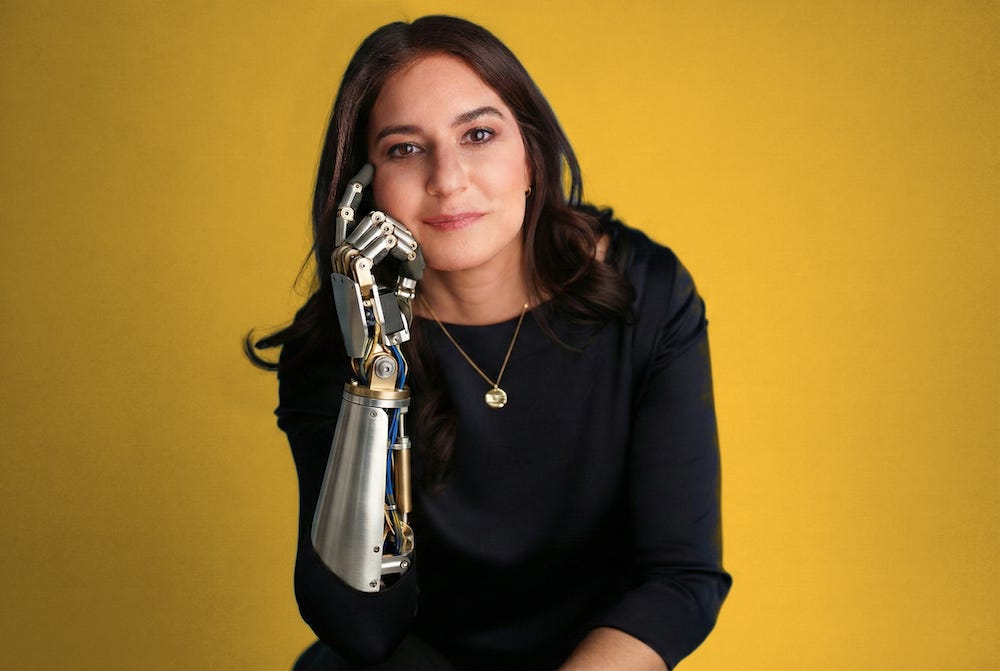
The question of what AI actually does to human life is getting harder to avoid. After a year of headlines claiming AI would replace millions of jobs, companies are quietly discovering something more nuanced: AI isn’t eliminating human work so much as redistributing human judgment, away from routine tasks and into the narrow zones where ambiguity is high, mistakes are costly, and trust actually matters. The gap between what AI can do and what we’re actually willing to let it do unsupervised turns out to be wide and deeply human. That question of trust is one that journalist Joanna Stern explored firsthand by spending a full year handing over her daily life to AI systems. She’s at the Computer History Museum on Tuesday and at the Commonwealth Club on Wednesday to talk about what she found.
In astronomy, the data deluge is already here. The Vera C. Rubin Observatory issued its first scientific alerts in February, launching a system expected to eventually produce up to seven million alerts per night, chronicling new asteroids, exploding stars, and other changes in the sky. In its first year of survey operations, Rubin is expected to capture images of more objects than all other optical telescopes throughout history combined. No human team can process that. The field has already crossed a threshold at which deep learning is the only way to process the sheer volume of data being collected. Stanford’s Michelle Park will talk about what that actually looks like for galaxy science, Thursday evening in Los Altos.
And on the ground here in California: the California Fish and Game Commission granted permanent protections in February to Southern California and Central Coast mountain lions under the state Endangered Species Act, a milestone years in the making. Researchers in the Santa Cruz Mountains have documented pumas with kinked tails, a visible marker linked to inbreeding, a sign of just how isolated these populations have become. Saturday evening at Martin Griffin Preserve, the Living with Lions project brings the research to life through a documentary about P-36, a young mountain lion navigating the fragmented wildlands of Northern California. A good reminder that conservation policy has a face and four paws.
My picks for the week:
My Year With AI: Joanna Stern Hands Over Her Life - 5/19, 7 PM, Computer History Museum
Teaching Machines to Learn the Universe: Galaxy Science in the Rubin Era - 5/21, 7 PM, Los Altos Public Library
A Night of mountain lions - Movie night at Martin Griffin Preserve - 5/23, 6 PM, Martin Griffin Preserve
Have a great week in science!
-Kishore
Upcoming Events:
Click to see the next two weeks of events in your browser.
Monday, 05/18/2026
Understanding the development of reward learning through the lens of meta-learning - 05/18/2026 12:30 PM
Computing and Data Science Building (CoDA) Stanford
A mechanistic account of how our environments shape how we learn is critical for understanding individual differences in behavior. In this talk, I will propose that specific statistics of experienced environments shape reward learning across multiple nested timescales via a meta-learning process, focusing on the example of environmental controllability. The controllability of positive or negative experiences has long been recognized as a critical factor determining their impact on subsequent behavior. Building on an extensive body of work in animal models, I will argue that humans use estimates of environmental controllability to calibrate motivated behavior along a continuum ranging from proactive (‘what can I do in this environment?’) to reactive (’what will this environment do to me?’). I will present studies suggesting that the controllability of motivationally significant outcomes not only modulates an individual’s balance between proactive and reactive reward learning strategies over the short timescales of experimental tasks, but also informs individual differences in reward-guided behavior over the course of development. I will discuss the computational processes and neural mechanisms that may underpin this meta-learning process, and how such environmental adaptation may modulate individual vulnerability to psychopathology.
Speaker: Catherine Alexandra Hartley, New York University
A Sustainable Future for the U.S. Electricity Grid - 05/18/2026 12:30 PM
Shriram Center Stanford
The United States faces the need to build generation, storage, and transmission infrastructure while meeting a growing electricity demand. I will present results from several ongoing analyses that quantify the costs, benefits, and technology investments needed across the country for a variety of policy and technology scenarios. We use a new modeling tool, PyPSA-USA, that includes characteristics of generators, transmission, candidate new generation and transmission technologies, a representation of renewable generation potential, and state- and federal-level policies and incentives.
Speaker: Ines Azevedo, Stanford University
The Power of Grand Challenges in Mobility - 05/18/2026 04:30 PM
Hewlett Teaching Center Stanford
Dr. Ryan Chin will share the vision for the Sustainable Mobility Center (SMC). Dr. Chin will discuss how grand challenges are powerful instruments for making non-incremental impact on sustainable mobility at a global level. He will also share his previous work on electric, shared, and autonomous mobility systems in both academic (MIT) and commercial (Optimus Ride, Inc.) environments.
Speaker: Ryan Chin, Stanford University
Attend in person or watch online (see weblink)
Science-Based Stockpile Stewardship and the Evolving U.S. Nuclear Deterrent - Livestream - 05/18/2026 04:30 PM
SLAC Colloquium Series
The United States has not conducted an explosive nuclear test since 1992, yet confidence in its nuclear deterrent has been maintained through the science-based Stockpile Stewardship Program. Over the past three decades, this effort has driven major advances in high energy density science, materials science, experiments, simulation, and high-performance computing, while supporting a much smaller arsenal than at the height of the Cold War. Although stewardship has been remarkably successful, a more demanding security environment is changing what is required to sustain deterrence. The mission is moving beyond preservation of an aging stockpile to include modernization and the technical foundations needed for future deterrent capabilities. That shift is creating new scientific demands in assessment, certification, manufacturing, and predictive understanding. This colloquium will highlight some of the major scientific achievements of the stewardship era and consider how the enterprise is adapting to a changing environment.
Speaker: Mark Herrmann, Lawrence Livermore National Lab
In-person attendance limited to SLAC and Stanford personnel. See weblink for online information
The Apollo Moon Missions: How We Solved the Impossible - SOLD OUT - 05/18/2026 07:00 PM
Swedish American Hall San Francisco
As humans return to the Moon through NASA’s Artemis program, it’s worth asking: What are the most daunting points of a journey to the Moon and back? In its early days, the U.S. space program had little experience with rockets, reentry, or even the lunar surface itself. The same engineering challenges still confront any Moon-bound mission, and the hard-won lessons of the Apollo program now inform Artemis.
In this lecture, Brandon R. Brown, Professor of Physics and Astronomy at the University of San Francisco, takes us inside the Apollo missions through the stories of the engineers who made them possible. Drawing on firsthand interviews, he uncovers lesser-known challenges, creative solutions, and the ingenuity that powered humanity’s first journey to the Moon.
Looking back at Apollo, this talk explores not just what we achieved - but what we learned, and how those lessons continue to shape the future of space exploration today.
Tuesday, 05/19/2026
What can the chemistry of ancient bones and plants tell us about the evolution of ecosystems and the fate of one of Earth’s most vital biomes? - 05/19/2026 12:00 PM
Braun (Geology) Corner (Bldg 320), Rm 220 Stanford
My lab explores (1) how dietary adaptations shaped life over deep time and (2) the effect of prolonged climate extremes on the Amazon rainforest. By tracing the biochemical signatures left by diets in amino acids (and developing new isotopic methods when needed) the Tejada lab aims to uncover the deep evolutionary roots of herbivory. Fossils also help us to assess the Amazon’s sensitivity to collapse, an outcome widely considered a tipping point in Earth’s climate system. These lines of research bring together lab experiments on modern organisms, new geochemical tools, and fossil discoveries from the Amazon rainforest, one of Earth’s scientific frontiers.
Speaker: Julia Tejada, California Institute of Technology
Superconductivity and Magnetism in Crystalline Graphite Allotropes - 05/19/2026 03:30 PM
Hewlett Teaching Center Stanford
I will describe the physics of graphite crystals with rhombohedral stacking, where the competition between electron hopping within- and between- the graphene planes leads to a flat electronic dispersion and the crystallinity leads to a near total absence of disorder. The high electronic density of states and Berry curvature??”-both of which can be tuned by a perpendicular electric field??”lead to a dizzying variety of magnetic and superconducting states, often within the same device, while the high experimental reproducibility enabled by the crystalline nature of these structurally simple systems allows us to investigate a variety of correlated electron phenomena. I will focus on our efforts to use scanning nanoscale magnetometry to probe the nature and origins of magnetism and unconventional superconductivity, as well as the fate of the correlated electron liquid at high temperatures.
Speaker: Andrea Young, UC Santa Barbara
The microscopic world of kelp forest ecosystems - 05/19/2026 06:00 PM
Hopkins Marine Station Pacific Grove
Towering giant kelp forests can reach heights of 100 feet tall in our coastal ocean, but did you know that half of the kelp life cycle is microscopic ??” hidden beneath the waves on the ocean floor? In this talk, Dr. Brooke Weigel will take you on a tour of the microscopic world contained within kelp forest ecosystems. In addition to growing and studying microscopic kelp in her lab at Hopkins, Brooke’s research zooms in even further - using genomic tools to discover the diverse microbial communities that live on the surfaces of kelp. Every square centimeter of kelp hosts 25 million bacteria - but what do they do for the kelp? Are they friends or foes? Join us as we dive into the microscopic world of our local kelp forest ecosystems!
Speaker: Brooke Weigel, Stanford University
Register at weblink to attend either in person or online
My Year With AI: Joanna Stern Hands Over Her Life - 05/19/2026 07:00 PM
Computer History Museum Mountain View
What happens when you let artificial intelligence run your life?
As AI tools move from novelty to necessity - writing emails, making decisions, translating languages, and organizing our daily routines - the line between human judgment and machine assistance is getting blurrier by the day. But how close are we, really, to The Jetsons’ Rosie the Robot?
To find out, Emmy Award - winning technology journalist Joanna Stern decided to hand over the keys. For a full year, she let AI systems take the lead - tasking Claude to run a vending machine for her Wall Street Journal colleagues (with humorous and chaotic results), testing out a 1x Neo humanoid robot for household chores, and inserting AI into her work, decisions, and even family life.
The outcome? Equal parts impressive, absurd, and occasionally alarming. These experiments were the basis for Stern’s new book, I Am Not a Robot: My Year Using AI to Do (Almost) Everything. At CHM, Stern will share what actually worked, what (hilariously) didn’t, and what her year as an AI-assisted human reveals about where this technology is headed.
Join us for a lively, candid conversation about life with AI - and what it means to stay human when your to-do list has a mind of its own.
What You’ll Experience:
Insights from Joanna Stern, NBC News chief tech analyst, founder ofThe New Things, and former Wall Street Journal tech columnist.Real stories of AI wins, fails, and “what just happened?” moments.A clear, entertaining look at incredible AI breakthroughs - and where AI quite literally still falls flat.
Seeing the Invisible: How AI and Gravitational Lensing Reveal the Dark Universe - 05/19/2026 07:00 PM
The New Parkway Theater Oakland
Much of the universe - dark matter, dark energy, and the forces shaping cosmic evolution - remains invisible to us. So how do astronomers study what they can’t directly observe?
In this lecture, Xiaosheng Huang, Professor of Physics & Astronomy at the University of San Francisco, explores how scientists use gravitational lensing - where massive objects bend light like a cosmic magnifying glass - alongside artificial intelligence and advanced statistical models to uncover hidden structures in the universe.
These cutting-edge methods are helping researchers identify rare cosmic systems and better understand the “dark universe,” offering new insights into how the cosmos has evolved - and what it’s made of.
Poisonous Mushroom Outbreak: The State Health Department Perspective - Livestream - 05/19/2026 07:30 PM
Mycological Society of San Francisco
Join us to learn more about the California Department of Public Health’s Toxicological Outbreak Program and how they have responded to the ongoing outbreak of amatoxin poisoning cases this season. This talk will include an overview of the toxicology of amatoxin poisonings and a discussion of health implications.
Speakers: Russ Bartlett, California Toxicological Outbreak Program; Elizabeth Marder, California Department of Public Health
Wednesday, 05/20/2026
UC Santa Cruz Whole Earth Seminar - 05/20/2026 12:00 PM
Earth and Marine Sciences Building Santa Cruz
Speaker: Margaret Duffy, UC Berkeley
The AI Index - 05/20/2026 12:00 PM
Gates Computer Science Building Stanford
Learn about the year’s major AI breakthroughs, changes in the workplace, policy shifts, and an evolving public sentiment for this technology. From technical advances to ethical considerations, education trends to economic impact??”get the unbiased, data-driven insights that executives, policymakers, and global researchers rely on.The 2026 Index Report provides unbiased, rigorously vetted, and globally sourced data for policymakers, researchers, journalists, executives, and the general public to develop a deeper understanding of the complex field of AI. Led by a steering committee of influential AI thought leaders, the Index is the world’s most comprehensive report on trends in AI. The 2026 report covers AI trends related to research and development, technical performance, technical AI ethics, the economy, education, policy and governance, diversity and public opinion.
Speaker: Sha Sajadieh, Stanford University
Register at weblink
Seismic Tracking and Characterization of Re-entering Space Debris - 05/20/2026 12:30 PM
Mitchell Earth Sciences Building (04-560) Stanford
As Earth orbit grows more crowded, the risks we face from re-entering space debris are growing alarmingly. A key challenge that we face in understanding the hazards posed by these objects, and their impact on the environment, is that we cannot easily track them once they enter the terminal phase of disintegration within the atmosphere. In this talk I will discuss how seismic data from open-source networks can be used to offer unprecedented insight into the trajectories, speeds, and fragmentation patterns of items of debris as they re-enter the atmosphere, and the routes that we are taking to turn this finding into an operational pipeline to inform rapid responses to debris fall events.
Speaker: Ben Fernando, Los Alamos National Lab
Room:350/372
May Butterfly Walk - FULL - 05/20/2026 02:00 PM
UC Botanical Garden Berkeley
Join our butterfly docent specialist Sally Levinson and Andy Liu for a guided walk through the Garden in search of butterflies, as you learn about their plant relationships and amazing life cycle. Bring binoculars if you have them.
Registered children welcome. Pre-registration is required, space is limited.
Fee includes admission to the Botanical Garden
UC Davis Bodega Marine Laboratory Seminar Series - CANCELED - 05/20/2026 03:00 PM
UC Davis Bodega Marine Laboratory
Speaker: TBA
Register for Zoom at weblink
HOW FLOWERS MADE OUR WORLD - 05/20/2026 05:30 PM
Redwood Grove Amphiteater Berkeley
Join us for a very special evening in the Redwood Grove with two-time Pulitzer Finalist David George Haskell in conversation with KQED radio host Alexis Madrigal as they explore the fascinating revelations in Haskell’s just released book How Flowers Made Our World: The Story of Nature’s Revolutionaries. In his book, acclaimed writer and biologist Haskell provides an astonishing new perspective on the history of life on this planet??”with flowers setting a new course for Earth beginning some 200 million years ago??”and reveals their foundational role in humanity’s future.
Ticket includes pre-talk admission to the UC Botanical Garden at Berkeley, a living-museum and one of the most plant-diverse places on the planet. The talk will take place in our historic outdoor amphitheater.
Joanna Stern: ‘I Am Not a Robot’ - 05/20/2026 06:00 PM
Commonwealth Club San Francisco
Humankind is only a few years into the AI Age, but you can get Joanna Stern’s lessons on what to expect and what it means for you.
We keep being told that artificial intelligence is going to help us do just about everything. Make us healthy. Personally tutor each student. Run our businesses efficiently. Make our decisions. Even fold our laundry. As a result, we would have hours of additional free time, and our AI machines would make discoveries previously unimaginable for humankind.
What does that really mean? Will AI really make things better?
To find out, award-winning journalist Joanna Stern let AI run her life for one year. The results were both funny and unsettling, and she reported what happened in her new book I Am Not a Robot. Stern used AI tools and robots to do her household chores, manage her health, and transport her family on its vacation. If she needed a decision made or a task done, she let AI take the lead. The results were not what you’d expect, and Stern has produced an AI guide for ordinary people and gets around the hype and jargon that clutters our AI discussions.
Humankind is only a few years into the AI Age, but you can join us in-person??”or virtually, like an AI agent??”to get Joanna Stern’s lessons on what to expect and what it means for you.
Saving Our Redwoods in a Changing Climate - SOLD OUT - 05/20/2026 07:00 PM
Wave San Francisco
While public debate continues, forests and natural systems are already adapting to a rapidly changing climate. The real challenge isn’t just environmental - it’s how we understand risk and respond as a society.
In this lecture, Dr. Chris Swanston, Director of Science at Save the Redwoods League, draws on decades of research to explore how our thinking about climate change has evolved - and where it falls short.
By looking at how forests respond to change, this talk reveals what climate change is already teaching us - and how we can adapt in more thoughtful, constructive ways.
Building California’s First Statewide Breeding Bird Atlas - Livestream - 05/20/2026 07:00 PM
Santa Clara Valley Bird Alliance
Join Van for an overview of the California Bird Atlas project, one of the most ambitious community-driven research efforts ever undertaken in the state. While 44 states have already completed a statewide breeding bird atlas, California has long been an outlier. That is now changing. The Atlas officially launched in January 2026 and will document the breeding distribution and behavior of every bird species across California during a five-year field period (2026 - 2030). Organized by the nonprofit California Bird Atlas in collaboration with partners statewide, including Santa Clara Valley Bird Alliance, this talk will explain how the project works, how birders of all experience levels can participate, and share an early status update from the first months of fieldwork.
Speaker: Van Pierszalowski, California Bird Atlas
Register at weblink to receive connection instructions
Why Do We Exist? The Nine Realms of the Universe that Make You Possible - 05/20/2026 07:00 PM
Silicon Valley Astronomy Lecture Series Los Altos Hills
The story of our existence can be told as a passage through nine interwoven realms - each revealing a new layer of cosmic information. For example, there’s the Middle Realm, where we humans live; the Realm of Life, where organisms flourish across the vastness of space; the Cosmological Realm, where galaxies dance and collide; the Dark Realm, dominated by unseen energy and invisible forces, and the Quantum Realm, where reality defies intuition. In this talk, based on his newly published book, Why Do We Exist?, Dr. Oluseyi explores these realms with clarity, humor, and honesty. The result is both a blueprint for understanding reality and a surprising case for human potential in an indifferent cosmos.
Hakeem Oluseyi is an astrophysicist, inventor, and award-winning science communicator. He serves as CEO of the Astronomical Society of the Pacific and as a public spokesperson for NASA’s IMAP mission.
Stars Up, Down and All Around - 05/20/2026 07:00 PM
San Francisco Amateur Astronomers San Francisco
Our guest lecturer this month is one of our own, Dan Smiley. Dan will be sharing about past and future travel opportunities for those who like to combine astronomy with travel. We will learn about a few upcoming opportunities, including the Golden Gate Star Party in northern California, OzSky in Australia, and the 2027 Eclipse cruise in the Mediterranean. Whether you are looking for inspiration for your own trip, or prefer to live vicariously through the experiences of others, you will find Dan’s love for the night sky truly infectious.
Dan Smiley is a longtime member and current Vice President of the SFAA.
Thursday, 05/21/2026
Managing the Grid to Decarbonize Energy Services: Minimum Viable Scale, Heating Electrification, and the Mid-Transition - 05/21/2026 01:30 PM
Environment and Energy Building (Y2E2) Stanford
Deep decarbonization models of the US energy system suggest that successfully transitioning to clean electricity and electrified energy services could increase power generation capacity needs by a factor of 2 to 6 by 2050. Yet, grid planners and transition scholars have consistently failed to highlight this crucial value, even amidst concerns about data center demand for much smaller capacity requirements (~gigawatts rather than terawatts). Electrified heating presents a particular challenge, especially as peak loads associated with heating are life safety critical, nondeferrable, and misaligned with deployable resources like solar and battery storage. Simultaneously, planners fail to recognize “minimum viable scale” issues associated with the fossil system, which can pass critical size thresholds that render it unable to provide backup services. For example, it is unlikely that natural gas heating will be a reliable backup for rare cold snaps. During the “mid-transition” where the new, growing clean system and the old, shrinking fossil system are each too small to provide all services but too large to avoid constraining the other system, carefully managing for energy services rather than traditional metrics of reliability and efficiency will be crucial. This talk will address some observations about grid planning that lead to qualitatively different futures than most decision-relevant models currently point to, with the goal of prompting a service lens on how we plan the grid for decarbonization.
Speaker: Emily Grubert, Notre Dame University
Attend in person or watch online (See weblink)
NightLife: Senses - 05/21/2026 06:00 PM
California Academy of Sciences San Francisco
Be among the first to experience Vivid: Immerse Your Senses, our newest exhibit, and step into an after-hours escape of sight, sound, and sensation at NightLife.
After Dark: Staying Alive - 05/21/2026 06:00 PM
ExplOratorium San Francisco
What does it take to survive - and thrive - in a digital world? Tonight, join the fire department to learn hands-only CPR. Then dig into conversations about algorithms and driverless cars, guided by Exploratorium scientists. Enjoy expert talks and ponder: How do crowds move through cities? How are algorithms reshaping institutions and concentrating power? What happens when machines govern our streets, our jobs, and our creative work? Join experiments and debates about staying safe - and staying human - in an algorithmic age.
Ages 18+
Birdy Hour: Ask a Scientist - Saline Lake Connections - Livestream - 05/21/2026 06:00 PM
San Francisco Bay Bird Observatory
Join us for a very special Birdy Hour! SFBBO’s Director of Regional Strategies Dr. Nathan Van Schmidt will answer your questions about our new initiative, Saline Lake Connections. This initiative is bringing together several existing programs (phalarope surveys, California Gull walkthroughs, and gull abatement research) into one integrative program focused on working not just locally in the Bay Area but partnering to expand our research into water management and bird populations at saline lakes across the Great Basin.
The first half hour will be a brief highlight of the major challenges facing saline lake ecosystems and the waterbirds that depend on them, while the second half will be a unique chance to have an open Q&A discussion with Nathan about the new initiative. After you register we will send you a link where you can submit your questions ahead of time, or you can bring your questions to the event.
You can read all about the new Saline Lake Connections program at our blog post here.
Register at weblink
Advancing Living Shorelines in SF Bay - Livestream - 05/21/2026 07:00 PM
Golden Gate Bird Alliance
Marilyn Latta will share information about living shoreline efforts in San Francisco Bay led by the State Coastal Conservancy and a diverse mix of partners. Living shorelines utilize natural materials and nature-based and hybrid green-gray approaches to protect shorelines from sea level rise and enhance habitat for fish and wildlife. Marilyn will share updates on how pilot projects since 2012 are providing lessons learned and best practices for the Regionally Advancing Living Shorelines in San Francisco Bay Project. This new effort includes a targeted approach with a coalition of non-profits, landowners, and agencies to collaboratively design and permit ten future living shorelines sites in SF Bay. Golden Gate Bird Alliance, Marin Audubon Society, Ducks Unlimited, San Francisco Estuary Institute, and many others are engaging in this work with a goal of raising awareness and building capacity for living shorelines in the Central Bay.
Speaker: Marilyn Latta, California State Coastal Conservancy
Teaching Machines to Learn the Universe: Galaxy Science in the Rubin Era - 05/21/2026 07:00 PM
Los Altos Public Library Los Altos
Only a decade ago, projects like Galaxy Zoo relied on global human effort to classify millions of galaxies by eye. With the Vera C. Rubin Observatory’s first light now underway, these approaches no longer scale. Its Legacy Survey of Space and Time (LSST) will image tens of billions of galaxies, repeatedly mapping the sky over the next decade. Astrophysics has entered the big-data regime: deep learning algorithms are now required to not just process data but also identify the most scientifically meaningful signals. In this talk, we’ll explore how deep learning is reshaping galaxy science in the Rubin era. We’ll see how our models can help find unexpected objects, extract distances and physical properties from images alone, and uncover subtle structural patterns across cosmic time through accurate galaxy classification. Finally, we’ll look ahead to astronomy’s multi-modal future, where AI algorithms can integrate Rubin data with diverse surveys and data types to build a unified, data-driven picture of galaxy evolution.
Speaker: Michelle Park, Stanford University
Registration required to attend in person
Friday, 05/22/2026
UC Santa Cruz IGPP Seminar - 05/22/2026 12:00 PM
Earth and Marine Sciences Building Santa Cruz
Speaker: Amada Thomas, UC Davis
Saturday, 05/23/2026
Birding Walk at Bouverie Preserve - 05/23/2026 08:00 AM
Bouverie Preserve Glen Ellen
Come spend the morning sparking joy and learning about birding in the rich biodiverse setting of Sonoma Valley.
Join us for a welcoming, curiosity-led morning of birding at Bouverie Preserve with ecologist David Lumpkin. This walk is designed to welcome new and aspiring birders ??” no prior experience needed. If you’re just beginning to notice birds, learning how to use binoculars, or simply curious about the sounds and movement around you, you’ll be right at home.
Together, we’ll spend the morning opening our senses to nature while moving at an easy pace ??” practicing simple observation skills and noticing birds by sight and sound. David will share approachable tips for identification, along with stories about bird behavior, habitat, and what birds can teach us about the health of the ecosystem.
Bring friends, family, and your questions. This is a supportive, no-pressure space to learn together, spark joy, and build confidence as a birder. Binoculars and cameras are welcome but not required. Curiosity is the only essential gear, as we experience the rich birdlife that makes Bouverie Preserve a unique place.
Stewardship Saturday: Discover the Bay’s Oysters and Marine Life - 05/23/2026 10:00 AM
Herons Head Park San Francisco
This free program for high school students features rotating events along our 600-mile range exploring various realms of conservation.
Join The Marine Mammal Center and Wild Oyster Project for a hands-on exploration of our local Bay ecosystem! During this event, you’ll learn about marine mammals, oysters, and the many ways Bay species are connected. Participants will monitor oysters on the shoreline as part of a Wild Oyster Project C.O.S.M.O. (Community Oyster Science Monitoring Opportunity) that collects valuable data on wild Olympia oysters in San Francisco Bay. By the end of the event, we hope you’ll leave with a deeper understanding of how marine species are connected, a sense of what field work for marine scientists is like, and ideas for ways you can help protect our local waters.
A night of mountain lions - Movie night at Martin Griffin Preserve - 05/23/2026 06:00 PM
Martin Griffin Preserve Stinson Beach
A film night dedicated to mountain lion conservation featuring the short documentary The Path of Puma-36.
Join us for this first ever movie night at Martin Griffin Preserve dedicated to mountain lion conservation - featuring an insightful presentation from the Living with Lions project and a screening of The Path of Puma-36, a short documentary about P36!
The evening will start off with a Living with Lions presentation by Kate Remsen, trail camera project manager, and Scott Jennings, quantitative ecologist, of All Hands Ecology - covering the project beginnings, methods, and recent updates, including the expansion into Marin County.
Following the presentation, we’ll break out the popcorn and soft drinks and screen the short documentary The Path of Puma-36, the story of a young mountain lion, collared in the Living with Lions study. The film follows his search for territory and his fight for survival in the human-dominated landscape of Northern California. Afterwards, stay for a Q&A.
Sunday, 05/24/2026
Marine Science Sundays: Saving Species - 05/24/2026 10:30 PM
Marine Mammal Center Sausalito
Join us in celebrating Endangered Species Day this month by learning more about marine mammals that have returned from the brink of extinction. You’ll hear about the endangered species we care for and more about the Center’s efforts to keep the rarest seal in the United States, the Hawaiian monk seal, from extinction.
Talks at 10:30 AM, 12:00 PM, and 2:00 PM, each lasting 30 minutes.
Tuesday, 05/26/2026
AI and the Developing Child: Myths, Evidence, and Open Questions - Livestream - 05/26/2026 12:00 PM
Stanford University
Steve Jobs in Exile: NeXT and the Making of a Comeback - 05/26/2026 07:00 PM
Computer History Museum Mountain View
Charismatic Cetaceans and Anthropology of the Sea - Livestream - 05/26/2026 07:00 PM
American Cetacean Society
Wednesday, 05/27/2026
Antarctic macroalgal forests: species interactions and impacts of changing ice - 05/27/2026 11:00 AM
Monterey Bay Aquarium Research Institute Moss Landing
UC Santa Cruz Whole Earth Seminar - 05/27/2026 12:00 PM
Earth and Marine Sciences Building Santa Cruz
Feedback between Ecology, Evolution, and Behavior: Applying Insights across Disciplines - Livestream - 05/27/2026 03:00 PM
UC Davis Bodega Marine Laboratory
What We Get Wrong About Empathy - SOLD OUT - 05/27/2026 07:00 PM
Planted SF San Francisco
Wonderfest: Ask a Science Envoy: Rock Clocks & Supernovae - 05/27/2026 07:00 PM
Hopmonk Tavern Novato
Nerd Nite SF #160: Japanese Cocktail Histories, How to Throw a FUNCTION, and This is NOT Legal Advice - 05/27/2026 07:00 PM
Rickshaw Stop San Francisco
Virtual Skeptics on the Pub - 05/27/2026 07:00 PM
Bay Area Skeptics
AI and Empire Building - 05/27/2026 07:30 PM
Shaping San Francisco San Francisco
Thursday, 05/28/2026
Stanford University Smart Grid Seminar - 05/28/2026 01:30 PM
Environment and Energy Building (Y2E2) Stanford
PARC Forum: Moving quantum from lab to fab - 05/28/2026 05:00 PM
PARC Forum Palo Alto
After Dark: At The Edge - 05/28/2026 06:00 PM
ExplOratorium San Francisco
NightLife: Mabuhay - 05/28/2026 06:00 PM
California Academy of Sciences San Francisco
Inside the Next Big Bay Area Earthquake - 05/28/2026 07:00 PM
Donkey & Goat Winery Berkeley
Bay Area Mycological Society monthly meeting - 05/28/2026 07:30 PM
Bay Area Mycological Society Berkeley
Friday, 05/29/2026
Morning Hike at Bear Creek Redwoods - 05/29/2026 09:00 AM
Bear Creek Redwoods Los Gatos
UC Santa Cruz IGPP Seminar - 05/29/2026 12:00 PM
Earth and Marine Sciences Building Santa Cruz
Saturday, 05/30/2026
Wetland Plant Tour at the EEC - 05/30/2026 09:30 AM
Don Edwards Refuge Environmental Education Center Alviso
Science Saturday: Discover Dinos - 05/30/2026 10:00 AM
Pacific Grove Museum of Natural History Pacific Grove
Mt. Sutro Geology & Paleo Tour - 05/30/2026 10:00 AM
The Aldea Center on Mt. Sutro San Francisco
Monday, 06/01/2026
Stanford Energy Seminar - 06/01/2026 04:30 PM
Hewlett Teaching Center Stanford
The Fall and Rise of Forward Physics - Livestream - 06/01/2026 04:30 PM
Stanford Linear Accelerator
Comments
Nothing yet. Say the first thing.
Sign in to join the conversation.