
Greetings science fans!
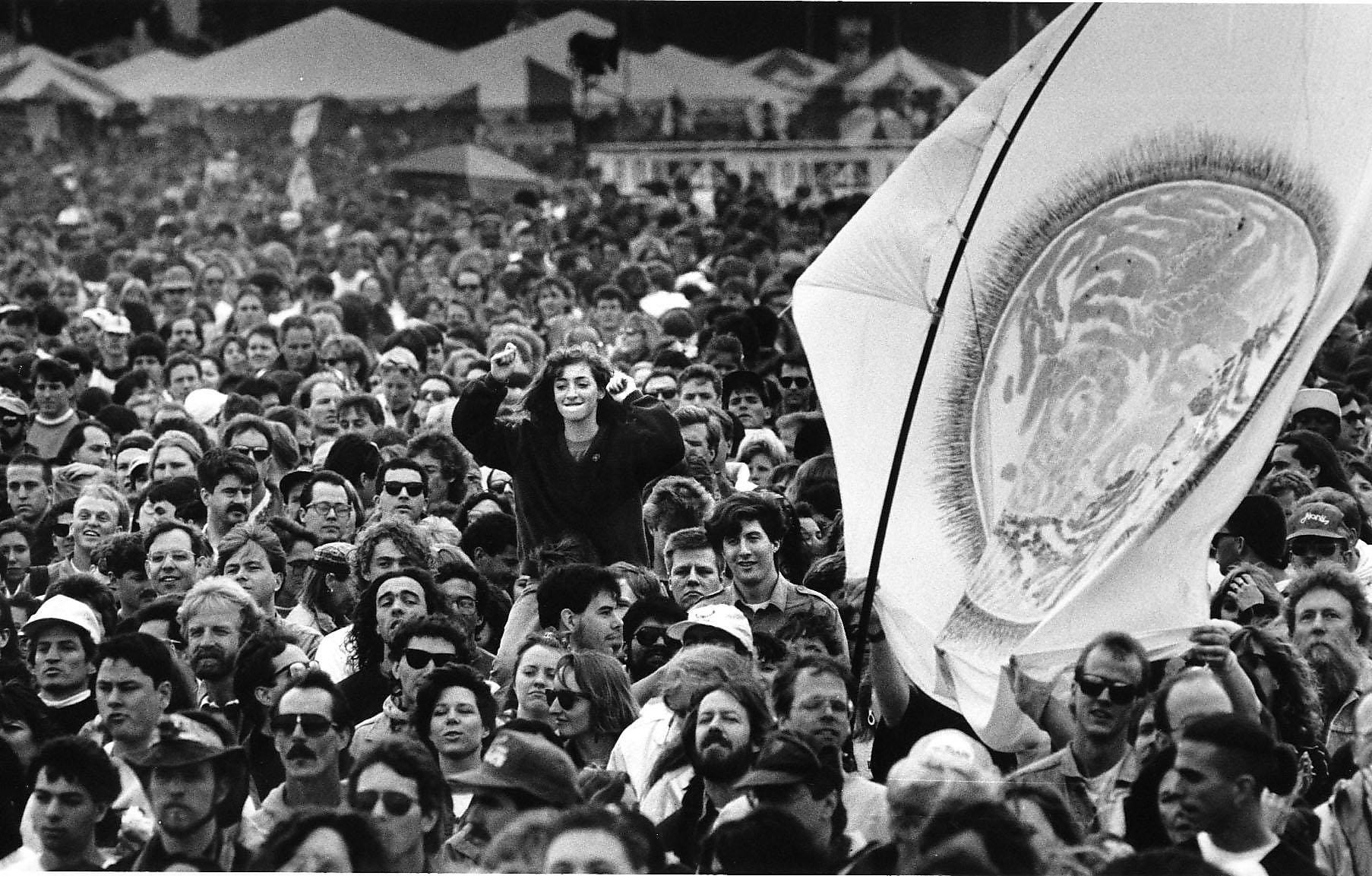
This Wednesday is 56th anniversary of Earth Day. The theme this year is “Our Power, Our Planet,” a call to unite around clean air, clean water, and renewable energy, and a reminder that when communities act together, they can become an unstoppable force. It is a fitting theme for a week that also happens to be SF Climate Week, when more than 650 events and 1,000 speakers are descending on the Bay Area to do exactly that.
Earth Day has deep Bay Area roots. The first Earth Day was held on April 22, 1970, when San Francisco activist John McConnell and Wisconsin Senator Gaylord Nelson separately asked Americans to join in a grassroots demonstration - a convergence of local urgency and national organizing that resulted in one of the largest coordinated civic actions in American history. The moment that crystallized Nelson’s resolve was watching the aftermath of a catastrophic 1969 oil spill off the coast of Santa Barbara. And the intellectual foundation had been laid just years earlier by Rachel Carson, whose Silent Spring made the case that a poisoned environment was an emergency. The book sold more than 500,000 copies in 24 countries and raised public awareness of how industrialization was not only harming wildlife and habitat but also clearly endangering human life.
Fifty-six years on, the scale of the challenge has grown, but so has the scale of the response. And there is no shortage of interesting ways to engage. My friend Ayana Elizabeth Johnson is hosting a series of climate action dance parties across the country. For SF Climate Week, there are dozens of panels on virtual power plants, sea-level rise, the future of energy affordability, and much more. If you want to do something with your hands this week, Thursday evening, the Exploratorium throws open its doors for After Dark: Climate Journeys, a look at creative approaches to navigating climate change and a preview of new local ecosystem exhibits. And on Friday, the Climate Action Youth Summit brings student-led climate projects to Yerba Buena Gardens.
All of which is to say: this is not a week for spectating. The whole spirit of Earth Day, from McConnell’s first proclamation to this year’s theme, is that you are the power. Get out there.
- Kishore
My picks for the week
The Long Now: The Geometry of Consciousness (Monday, April 20, Fort Mason, San Francisco) UC Santa Barbara mathematician Nina Miolane joins science historian Claire Isabel Webb to explore a radical idea: that consciousness might be understood through the geometry of neural patterns with implications for both human minds and AI.
Wonderfest: The Edge of Space-Time (Tuesday, April 21, Bookshop West Portal, San Francisco) Physicist and author Chanda Prescod-Weinstein brings her new book The Edge of Space-Time: Particles, Poetry, and the Cosmic Dream Boogie to a neighborhood bookshop for a free Wonderfest evening at the boundary of science, identity, and wonder.
Consumers and the Future of Energy Affordability (Wednesday, April 22 — Earth Day! — Manny’s, San Francisco) On Earth Day itself, a sharp panel featuring Former FERC Chairman Neil Chatterjee, Palmetto CEO Chris Kemper, and energy journalist Mary Catherine O'Connor digs into the real-world politics and economics of who pays for the energy transition.
Upcoming Events:
Click to see the next two weeks of events in your browser.
Monday, 04/20/2026
Quantifying Uncertainty in Urban Water Demand Projections - 04/20/2026 12:00 AM
Press Stanford
Water demand projections are essential for urban water supply planning. Yet, long-term demand projections are highly overestimated and uncertain, potentially warranting unneeded costly infrastructure, which may lead to irreversible environmental impacts and exacerbate water affordability outcomes. While demand forecasting methods have improved, uncertainty in long-term demand projections remains poorly understood. Our study develops a novel uncertainty characterization framework that can quantify and partition uncertainty in long-term urban water demand projections across planning-relevant spatial scales. Results show that demand uncertainty at the household-, neighborhood-, and city-scale is dominated by human behavior, population growth and housing diversity, and economic trends and policy action, respectively. Our analysis offers new insights into the magnitude and sources of urban water demand uncertainty, informing utility decisions about urban water supply planning, infrastructure investments, and conservation policies.
Speaker: Aniket Verma, Stanford University
Speed & Scale’s Reality Check - 04/20/2026 10:30 AM
Commonwealth Club San Francisco
In 2021, legendary investor John Doerr outlined his plan to solve climate change in his bestseller Speed & Scale. The plan outlines 10 objectives, each with their own set of key results, to cut emissions to net zero. And in true John Doerr style, the results are to be measurable and trackable.
Now, five years later, Doerr and co-author Ryan Panchadsaram unveil their 2026 update, revealing where the world is winning, where it’s falling behind, and what it will take to close the gap.
Join Climate One and Speed & Scale for a dynamic morning at the intersection of electricity, geopolitics and market forces - three powers converging to shape the future of energy. Expect sharp insights, quickfire expert sessions, and an unvarnished look at what’s actually at stake in the energy transition - and the bold actions still required to secure a clean, abundant energy future.
Register at weblink
Student-led Conservation of Steelhead Trout in the Petaluma Watershed - 04/20/2026 12:00 PM
Sonoma State University - Biology Colloquium Rohnert Park
From Ellie’s LinkedIn Bio: “...I am the fisheries biologist for the United Anglers of Casa Grande High School (UACG), a student-founded conservation hatchery dedicated to the conservation of Steelhead Trout in the Petaluma Watershed. I primarily care for the steelhead trout reared in the facility, and instruct participating high school students on proper hatchery management. I established the PIT tagging project being conducted on Petaluma steelhead, and lead redd/spawner surveys with students in the watershed. Along with performing both fieldwork and hatchery work for UACG, I am also the current grant writer for the nonprofit...”
Speaker: Ellie Slick, United Anglers Casa Grande High School, Petaluma
Multiscale Modeling of Battery Systems: A Unified Framework from Upscaling Theory to Symbolic - Numeric Computing and Control - 04/20/2026 12:30 PM
Green Earth Sciences Building Stanford
Defense and energy applications ubiquitously involve multiscale and multiphysics systems. Their accurate modeling, critical to achieve superior performances and optimized designs and control strategies, has challenged generations of computational physicists due to the mathematical and numerical complexities involved in the development of their computable representations. One of the fundamental challenges associated with modeling multiscale processes is the development of rigorous models at the scale of interest (system-scale), which is typically much larger than the scale at which the physics is best understood (fine-scale). Coarse-graining techniques are a suite of mathematical strategies that allow one to perform rigorous scale translation, while bounding a priori upscaling errors. Yet, they require substantial time and mathematical expertise to use. This is due to the number of analytical manipulations and rigorous approximations (e.g., series expansions) involved during model development that quickly become analytically intractable for systems of realistic complexities (e.g., systems with large numbers of interacting physics, nested scales, and chemical species). In addition, their direct application and deployment in practical problems may sometime feel obscure to nonspecialists. These elements often lead practitioners to select simplified/heuristic models and representations whose accuracy cannot be established across a wide range of material parameters and operating conditions in favor of more advanced physics-based multiscale formulations.
Electrochemical and thermal modeling of battery systems share the abovementioned complexities. In this talk, I will present a unified framework, developed within the group and with collaborators over the past 10 years, that self-consistently integrates upscaling theory by multiple-scale expansions, numeric and automated deductive symbolic computing, and more recently control, for multiscale modeling of batteries. We will focus on two separate applications: (i) multiscale models of electrochemical transport in battery electrodes [1,2], their parametrization from microstructural information using ML [3,4], and their initial deployment in control algorithms [5]; (ii) thermal runaway in battery packs [6,7].
We will conclude with an outlook on how the integration of automated symbolic deduction and numeric computing to societally relevant applications allows to go beyond human-centered limitations and to accelerate model development in multiscale multiphysics processes without compromising model interpretability and accuracy.
Speaker: IIlenia Battiato, Stanford University
Convergent Nanosystems for Information Processing: From Atoms to Function - 04/20/2026 01:00 PM
Sutardja Dai Hall Berkeley
Rapid advances in artificial intelligence are driving the need for fundamentally new information processing paradigms that exceed the limits of existing nanoscale technologies in energy, performance, and functionality. Biological systems offer a compelling model, tightly coupling sensing, computation, and memory within distributed architectures that achieve remarkable energy efficiency and adaptability. Such performance is enabled by diverse, interacting atomic and molecular processes. To address this gap, this seminar introduces an atomically informed framework for designing nanoscale nonlinear processes within materials and translating them into functional devices and systems for computing, memory, and sensing. We first present new platforms that leverage principles of additive manufacturing to overcome the resolution and compatibility limits of current fabrication approaches, enabling precise integration of atomic-scale building blocks into functional systems. Building on these capabilities, we introduce a computing paradigm based on molecular building blocks that embed computation and memory directly within material properties, demonstrated through energy-efficient mechanical neuromorphic information processing. Finally, we apply this platform to materials-informed sensors and transducers, including for ultrabroadband rectification and gas sensing, enabling enhanced performance in bandwidth, energy efficiency, sensitivity, speed, and functionality.
Speaker: Farnaz Naroui, Massachusetts Institute of Technology
Basics, intuition, and realization in dissipative SC circuits - 04/20/2026 02:30 PM
Physics North Berkeley
Gottesman, Kitaev, and Preskill proposed to encode a qubit in a remarkable wavefunction, which satisfy location and momentum constraints simultaneously. Such a state offers superior error correction, but is rather hard to achieve and stabilize. We propose a circuit architecture for a dissipatively error-corrected GKP qubit. The device consists of a high-impedance LC circuit coupled to a Josephson junction and a resistor via a controllable switch. When the switch is activated via a particular family of stepwise protocols, the resistor absorbs all noise-induced entropy, resulting in dissipative error correction of both phase and amplitude errors. Furthermore, the proposed architecture provides new implementation for gates and readout, including a protected T-gate. In my talk I’ll introduce the GKP construction and explore our proposal for its realization, as well as how non-Clifford gates can be realized in the platform.
Speaker: Gil Refael, California Institute of Technology
Imaging the freezing and melting of electrons in 2D Wigner crystals - 04/20/2026 04:15 PM
Physics North Berkeley
In most condensed matter systems we think of electrons as delocalized particles that roam about the energy terrain of a material much like waves in the ocean. But what happens when Coulomb repulsion between electrons becomes the dominant energy in a material? In this regime you might expect electrons to freeze in place, like water turning into ice, since it costs too much energy for them to move. Such behavior is, in fact, a 92-year-old prediction of quantum mechanics. But achieving such “electron-ice” (also called a “Wigner crystal”) is surprisingly difficult in practice. So far Wigner crystals have only been seen in a few experimental systems. The first experimental platform for studying Wigner crystals involved floating electrons on the surface of liquid helium back in the 1970s, and the next utilized electrons trapped at buried semiconductor interfaces in the 1980s and 1990s. These systems, however, are not compatible with high-resolution microscopy techniques, and so for almost 90 years it was impossible to glimpse the inner structure of theoretically predicted electron-ice for dimensions > 1. This situation has changed recently due to the development of new 2D materials only a few atoms thick. The electrons contained in these materials are very close to the surface and can, in principle, be imaged using scanned probe techniques such as scanning tunneling microscopy (STM). Here I will describe how it is possible to image the freezing and melting of Wigner crystals in single-layer and bilayer sandwiches of 2D semiconductors using STM techniques.
Speaker: Mike Crommie, UC Berkeley
Understanding the Actual Economics of Nuclear Power: Benefits - including those often uncounted - exceed costs - 04/20/2026 04:30 PM
Hewlett Teaching Center Stanford
Nuclear energy is often labeled “too expensive.” This conclusion too often relies on incomplete and shallow analyses that rely on small samples and focus on a narrow set of benefits. This session examines the full economic picture of nuclear power: 1. Characterize overnight construction, financing, and operating costs for nuclear reactors in a larger sample of countries. This research shows the US is often an outlier in terms of exceptionally costly nuclear reactor builds. That is, many other countries can build nuclear power plants substantially faster and cheaper. 2. Discuss a wider set of benefits that are frequently excluded from standard economic analyses of different energy sources. Nuclear power plants, once built (including in the US) dramatically reduce operating costs of energy production. This direct benefit is typically the focus of comparative energy analyses. The wider set of benefits include zero carbon emissions, reduced pollution, and a range of indirect economic benefits. We will explore how these factors reshape the economics of nuclear energy in real-world systems - and why overlooking them can lead to distorted policy and investment decisions.
Takeaway: When a more comprehensive characterization of all costs and benefits are considered, nuclear power may look very different than its reputation suggests.
Speakers: Jeffrey Bohn & Guido Núñez-Mujica, Anthropocene Institute
Previously scheduled speaker Varun Sivaram, Emerald AI, is not available.
Attend in person or watch online (see weblink)
Hope Versus Hype: Quantum, AI and the Path to Commercial Advantage - 04/20/2026 04:30 PM
Stanford Linear Accelerator (SLAC) Colloquium Series Menlo Park
The promise of quantum is real, and we are beginning to see where this technology can have the greatest impact. Decades of quantum research and development point to one primary class of practical application for quantum computing next to cryptanalysis: the simulation of quantum systems, especially for chemistry and materials science. As we continue to improve the fidelity and scale of quantum machines, we will first be able to unlock scientific quantum advantage, solving a growing class of scientifically interesting and classically intractable problems. As we scale to quantum supercomputers, we will be able to achieve commercial quantum advantage and solve the world’s most pressing challenges through quantum-enabled advances in chemistry, biochemistry, and materials science. Yet scaled quantum systems won’t exist in isolation but will operate alongside AI and classical supercomputing. At Microsoft, we are today engineering these hybrid classical-quantum supercomputing systems with the goal of accelerating scientific discovery. Join us to learn more about the promising applications for quantum computing, our latest achievements, and our path to scale.
Speaker: Matthias Troyer, Microsoft
Attend in person or watch on line (see weblink)
The Long Now: The Geometry of Consciousness - 04/20/2026 07:00 PM
The Interval at Long Now San Francisco
What is consciousness - and how might we describe it scientifically? Neuroscience can map neural activity with extraordinary detail, yet the relationship between electrical signals and subjective experience remains one of humanity’s most enduring questions.
Mathematician and machine learning researcher Nina Miolane approaches this question from an unexpected direction: geometry. In her work, patterns of neural activity can be understood as structures in a mathematical space. In this view, cognition may be described through the geometry of neural representations: patterns that can be measured, compared, and modeled across biological and artificial systems.
In conversation with science historian Claire Isabel Webb, Miolane explores how new mathematical frameworks may help illuminate long-standing puzzles in the science of mind. If consciousness arises from structured patterns of activity, what does that imply about intelligence? Could similar patterns arise in machine systems? And what might it mean to study consciousness as a phenomenon that admits formal description?
Why This Talk Matters Now
As humanity increasingly shares cognitive labor with machines, a rigorous language for studying the mind would be game-changing. If that language could unlock a deeper understanding of consciousness, it would not only have broad implications for the evolving relationship between human cognition and AI, but for how we as human beings fundamentally understand ourselves.
Dr. Claire Isabel Webb directs the Berggruen Institute’s Future Humans program.
Dr. Nina Miolane is an Assistant Professor at UC Santa Barbara and Director of the Geometric Intelligence Lab.
Attend in person, or watch on YouTube (See weblink)
Recycling, Waste Workers, and the Fight Against Climate Change - 04/20/2026 07:00 PM
The New Parkway Theater Oakland
Across the globe, more than 30 million people make their living collecting, sorting, and recycling what we throw away. Often overlooked, these waste pickers are increasingly recognized as a vital “green workforce,” helping reduce emissions and support more sustainable resource systems.
In this lecture, Kate O’Neill, Professor of Environmental Science, Policy and Management at UC Berkeley, explores how waste, recycling, and climate politics intersect. Waste workers not only help combat climate impacts through their labor, but are also among the most vulnerable to climate-related disasters.
Drawing on research in global environmental politics, O’Neill reveals why this workforce is essential to climate action - and why their role is more important than ever.
30 Million Climate Heroes You’ve Never Heard Of - 04/20/2026 07:00 PM
The New Parkway Theater Oakland
Across the globe, more than 30 million people make their living collecting, sorting, and recycling what we throw away. Often overlooked, these waste pickers are increasingly recognized as a vital “green workforce,” helping reduce emissions and support more sustainable resource systems.
In this lecture, Kate O’Neill, Professor of Environmental Science, Policy and Management at UC Berkeley, explores how waste, recycling, and climate politics intersect. Waste workers not only help combat climate impacts through their labor, but are also among the most vulnerable to climate-related disasters.
Drawing on research in global environmental politics, O’Neill reveals why this workforce is essential to climate action - and why their role is more important than ever.
Tuesday, 04/21/2026
Modulation of cancer-specific interactomes via chemical switches and molecular glues - 04/21/2026 11:00 AM
Latimer Hall Berkeley
Chemically induced proximity of bimolecular complexes is a powerful modality to rewire signal transduction networks. Most extensively studied in the context of protein degradation, the full scope and potential of chemically induced proximity for novel targets and pharmacological mechanisms has yet to be realized. I will discuss structure-based strategies to advance chemically induced proximity in several complementary areas, including as an approach to overcome drug resistance and as a mechanism to achieve ultra-selective modulators of kinase targets.
Speaker: Arvin Dar, Memorial Sloan Kettering Cancer Center
Meet a Wildlife Scientist - 04/21/2026 11:00 AM
CuriOdyssey San Mateo
Did you know mountain lions are roaming the hills right here in the Bay Area? Come meet Alys Granados, Wildlife Ecologist for the Felidae Conservation Fund, an organization dedicated to protecting wild cats and their habitats, and hear all about her incredible work tracking and studying these majestic big cats up close!
Alys will share amazing stories and discoveries from the Bay Area Puma Project, giving us a rare peek into the secret lives of mountain lions living alongside our communities.
Perfect for little nature explorers and their grown-ups. You might just leave looking a little more carefully at those open hillsides!
From the Australian Outback to the Mountains of NW Canada: Ediacaran fossils and the early record of animal life - 04/21/2026 12:00 PM
Braun (Geology) Corner (Bldg 320), Rm 220 Stanford
Fossils of the Ediacara Biota preserve the earliest complex communities of macroscopic life, including the oldest known animals. Despite this importance, direct links between extant clades and well-known fossils from the Ediacaran have proved contentious. Although this biota is recognized at dozens of sites globally, more than 75% of total fossil occurrences come from just four sites. As such, many open questions remain regarding the biology, ecology, environmental context, temporal and spatial distribution of these early complex forms. This talk will highlight recent discoveries in South Australia and NW Canada that help address some of these uncertainties, providing new information on the evolution and diversification of complex life on Earth.
Speaker: Scott Evans, American Museum of Natural History
AI Can Make Conflict Worse or Better - Livestream - 04/21/2026 12:00 PM
Stanford University
There has been much discussion of how AI can help humans cooperate, but much less about what happens when you add AI to humans who disagree -- potentially violently. Social media systems, which are increasingly AI driven, may amplify divisive or escalatory narratives. LLMs may similarly exacerbate conflict, especially if they give different answers to people on different sides. I’ll present recent work testing alternative social media algorithms with real users on real platforms in an attempt to reduce polarization around the 2024 election, and using LLMs to produce “politically neutral” answers on maximally controversial topics. These early experiments give us a glimpse into the turbulent future of AI-mediated conflict.
Speaker: Jonathan Stray, UC Berkeley
See weblink for connection information
Who Pays? Private and Public Funding Innovation for Flooding and Sea Level Rise Resilience - 04/21/2026 03:00 PM
Bay Area Metro Center San Francisco
As climate change and sea level rise increase flood risk to shoreline and inland communities, the cost to adapt can seem daunting. Public dollars alone won’t cut it. In this session, thought leaders from the Bay Area to the East Coast will share insights for how we pay to address resilience -- from innovative insurance, bonds, development incentives, public and private partnerships, and more.
This session is co-sponsored by the San Francisco Bay Conservation and Development Commission, ICLEI-USA and SPUR.
Participants:
Sarah Atkinson, Senior Policy Manager, Hazard Resilience, SPURRavi Bhalla, ICLEI USA Board Member and New Jersey AssemblymemberJessica Fain, Director of Planning, San Francisco Bay Conservation and Development CommissionNuin-Tara Key, Chief Operating Officer, CA ForwardSaharnaz Mirzazad, Executive Director, ICLEI USAEric Olson, Co-Founder, HeatWveAnd more
Gravity from Strong Correlations - 04/21/2026 03:30 PM
Hewlett Teaching Center Stanford
Can gravity and extra directions of space emerge from systems that naively lack them? Holography - the celebrated AdS/CFT correspondence - predicts that this can happen via one magic ingredient: entanglement, or strong quantum correlations. I will present in an accessible manner recent advances on this longstanding theoretical idea, using (thought) experiments that an observer “living” inside the hologram could perform to answer basic questions: why do I see particles, forces, gravity? Surprisingly, many similar answers apply to our own world. I will briefly comment on challenges to experimentally realize holography.
Speaker: Simon Caron-Huot, McGill University
Optically driven many-body phases in one dimension - 04/21/2026 04:00 PM
Latimer Hall Berkeley
A key frontier of modern condensed matter is to harness light - matter interaction to coherently engineer quantum states in materials. Under optical driving, quantum materials exhibit emergent many-body phenomena, from ultrafast switching to dynamical quantum states without equilibrium analogs. Progress hinges on using light to both uncover new nonequilibrium states and devise strategies to stabilize them far beyond the duration of the drive.
One-dimensional Mott insulators are particularly compelling platforms for these goals. Electron fractionalization produces highly entangled ground states that are exceptionally responsive to optical perturbations, and theory predicts exotic ordering phenomena upon photoexcitation. In this talk, I will show how ultrafast X-ray spectroscopy provides a direct, microscopic view of these dynamics by resolving charge and spin responses of optically driven phases. I will discuss our observation of a photoinduced Tomonaga - Luttinger liquid state in the one-dimensional cuprate chain Sr2CuO3. I will then show how nonequilibrium states can be stabilized for nanosecond timescales by leveraging symmetry constraints in the parent ladder compound Sr14Cu24O41.
Speaker: Matteo Mitrano, Harvard University
Nature-based solutions in the fight against Climate Change - 04/21/2026 05:30 PM
San Francisco Main Public Library San Francisco
Secretary Wade Crowfoot (California Natural Resources Agency) will discuss California’s groundbreaking work on nature conservation. He will explore the State’s critical partnerships with American Indian Tribes, the creative ways that California is achieving climate and biodiversity goals and how California’s leadership is being recognized by the UN Climate and Biodiversity Conferences.
The Secretary’s comments will be followed by a panel discussion with local conservation and environmental justice leaders, moderated by Tyrone Jue, SF Environment Director. More details to come on the panel.
Wade Crowfoot serves as California’s Natural Resources Secretary, leading efforts to conserve California’s environment and natural resources.
Popping the Science Bubble: Chimpanzee alcohol consumption & animal optics - 04/21/2026 05:30 PM
Berkeley Public Library Berkeley
Learn about cutting-edge research happening at UC Berkeley, directly from the scientists themselves. Join Popping the Science Bubble at the Central Library in the second floor Mystery Room or join us virtually on Zoom: http://bit.ly/PtSBBerkeley (register at the link).
This month’s presentations will be:
What the chimpanzee diet tells us about the origins of alcohol consumption - Aleksey Maro, Integrative BiologyThe optics of animal eyes - Deepthi Bannai, Neuroscience
Next-Generation Pathology: How Is Technology Changing the Way We Diagnose Disease? - 04/21/2026 06:00 PM
San Mateo Public Library San Mateo
Pathology - the study of disease through the examination of tissues and cells - is undergoing a technological transformation. New tools in imaging, computational analysis, and spatial biology now allow scientists to study how cells interact within the architecture of human tissue at unprecedented resolution. These advances are helping researchers better understand cancer, immune response, and other complex diseases while opening new pathways for diagnosis and treatment.
Dr. Lisa McGinnis, Director of Spatial and Digital Pathology in Research Pathology at Genentech will discuss how advances in technology are expanding the field of pathology and reshaping how scientists study disease.
This event is part of the San Mateo Public Library’s San Mateo Celebrates! festival. Please RSVP at weblink.
Wearables on whales: Engineering methods for sensing physiology of the planet’s largest animals - 04/21/2026 06:00 PM
Hopkins Marine Station Pacific Grove
Wearable technologies, like smart watches and fitness trackers, have transformed the way we understand human health by recording daily vital signs such as heart rate, breathing, and activity. Despite these advances in human physiological sensing, few platforms exist to study these same vital rates in animals - particularly for difficult-to-study animals, like baleen whales. Thus, my research focuses on developing new types of biologgers that can measure heart rate and other physiological signals in large whales, including the largest species on Earth.
In this talk, I’ll share how our research group is developing advanced biologging tools to study the physiology of blue whales (Balenoptera musculus) and humpback whales (Megaptera novaeangliae) in places like Monterey Bay. While past biologging tags have helped us answer questions like “where do whales go?” and “what do they do there?” the next generation of biologgers will be equipped to answer the question “how do they do it?” These data will help to understand how large whales dive to depths to feed and perform extended migrations across ocean basins.
My presentation will discuss the engineering design process that has enabled heart rate measurements via electrocardiogram (ECG) recordings from large whales. I’ll present first-of-its-kind heart rate data from whales in Monterey Bay and explain what these data are revealing about their biology and ecology. Finally, I’ll also share some behind-the-scenes stories from the field and lab, and discuss the exciting horizons for the future of this work.
Speaker: Ashley Blawas, Stanford University
Register to attend in person, or watch online (See weblink)
Wonderfest: The Edge of Space-Time - 04/21/2026 07:00 PM
Bookshop West Portal San Francisco
Wonderfest comes to San Francisco’s BookShop West Portal for a special author event featuring cosmologist Dr. Chanda Prescod-Weinstein. In her latest book, The Edge of Space-Time: Particles, Poetry, and the Cosmic Dream Boogie, Dr. Prescod-Weinstein “embraces cosmic wonder and takes us on a mind-altering journey to the boundaries of the universe, inviting us to spend time at the edge of what we know about space-time and about ourselves.”
Speaker: Chanda Prescod-Weinstein, University of New Hampshire
Rare Fungi in Plain Sight: Leveraging the Power of Community Science for Biodiversity Studies - 04/21/2026 07:30 PM
Mycological Society of San Francisco San Francisco
Over the past three years, a collaborative partnership between community scientists and academic mycologists, organized through the Fungal Diversity Survey (FunDiS) and funded by the California Institute for Biodiversity, has transformed our understanding of California’s macrofungal diversity. Together, we have documented, DNA barcoded, and accessioned more than 11,000 fungal collections into the HAY Fungarium at California State University East Bay, likely making HAY the fastest growing fungarium on the globe. While a complete accounting of species encountered will take years to complete, over 4000 unique DNA barcode sequences have been recovered, greatly expanding the documented and sequenced fungal diversity of the state. In addition to expanding the known distribution for species previously reported from California, these collections represent numerous first reports for the state and in many cases reveal cryptic species diversity hidden in plain sight. Importantly, many of these collections originate from regions of California that were previously undocumented for fungal diversity, filling in critical geographic and taxonomic gaps. This project demonstrates the power of pairing rigorous scientific approaches with a community-based sampling network to create an efficient, inclusive, and scalable pathway for rapid and thorough documentation of understudied organismal groups.
Speaker: Brian Perry, California State University East Bay
Wednesday, 04/22/2026
The Frozen Frontier - A Journey into Antarctica - Livestream - 04/22/2026 10:00 AM
Road Scholar
Antarctica is the coldest, driest and windiest place on Earth, filled with geological marvels and remarkable wildlife. In celebration of Earth Day, join Road Scholar expert Nicole Flores for an introduction to this remote continent. Explore the secrets beneath its icy surface and its fascinating history. Meet the intrepid explorers who ventured into this harsh environment and the people who live and work there today. This lecture offers a vivid glimpse of what one might encounter when visiting this extraordinary frontier.
Speaker: Nicole Alexandra Flores Jara
Register at weblink
Utah FORGE: A Field-Scale Geothermal Laboratory - 04/22/2026 12:00 PM
Earth and Marine Sciences Building Santa Cruz
Speaker: Kristine Pankow, University of Utah
Revealing Europa’s Subsurface Chemistry through Earth-based Spectroscopy - 04/22/2026 12:30 PM
Mitchell Earth Sciences Building (04-560) Stanford
Locked beneath its icy crust, Jupiter’s moon Europa likely harbors one of the largest bodies of liquid water in the Solar System - a global, salty, internal ocean that may present a hospitable environment for life. Currently, investigations of the composition of Europa’s geologically young, fractured surface provide our best window into its ocean chemistry and, thus, its potential habitability. I will discuss how I have been using Earth-based spectroscopic observations from facilities like the Hubble Space Telescope, Keck Observatory, and JWST to improve our understanding of Europa’s surface chemistry and its relationship to the internal ocean. These observations complement the past and future spacecraft exploration of the Jupiter system and are revealing new avenues for up-close investigation by the upcoming Europa Clipper mission.
Speaker: Samantha Trumbo, UC San Diego
Attend in person or online (see weblink)
Room: 350/372
AI for Good: In Climate, Health and Investing - 04/22/2026 01:00 PM
Commonwealth Club San Francisco
When should artificial intelligence supplant human intelligence? And when should human intelligence lead? For climate action, for impacts on health, for investing and portfolios, where can AI tools multiply productivity - and what situations cause a quality assurance minefield?
Learn from innovators around the world (from Europe to Oceania to the Americas) when and how AI tools bring new value, expand audiences - and where human intelligence and empathy is still required, and how we all can benefit.
We will delve into how AI can improve the expansion and sustainability of food systems, which can also enhance climate justice, and access to nutrition for low-income communities.
Attend in person or online
AI for Climate Adaptation and Disaster Response: Public Sector Pathways to Impact - 04/22/2026 02:00 PM
SF Planning + Urban Research Assoc. (SPUR) San Francisco
Artificial intelligence is increasingly being applied to climate challenges, from wildfire detection and flood forecasting to public health surveillance and disaster response. But fully realizing that potential requires grappling with real barriers: under-resourced public agencies, fragmented data infrastructure, procurement and equity gaps, and the distance between what a tool can do and what actually lowers risk for frontline communities with compounded vulnerabilities.
Join us for a panel discussion bringing together leaders from public health, emergency management, and California’s technology infrastructure alongside practitioners working on AI tools for climate adaptation and crisis response. The conversation will focus on what responsible, equitable deployment of AI for climate and disaster response could look like in practice, and will foreground actionable lessons for public sector practitioners, AI researchers, and computer scientists who hope to contribute meaningfully to public sector adaptation efforts in California and beyond.
Panelists:
Moderator: Sarah Skenazy / Public Health Lead at Climate Change AIAmy Tong / CA Racial Equity Commissioner, Former Senior Counselor to Governor Newsom and Secretary of GovOpsMark Ghilarducci / Former Director, California Governor’s Office of Emergency Services (Cal OES)Dr. Karen Smith / Former California State Public Health OfficerAdditional panelist from the AI and climate tech sector (to be announced)
Register at weblink
Infrastructures for the Anthropocene: Nature-based Solutions and the infrastructuralisation of ‘Nature’ - 04/22/2026 03:30 PM
McCone Hall Berkeley
From the reintroduction of beavers for natural flood management to the managed grazing of cattle for biodiversity gain, the inclusion-or use-of nonhumans in/as environmental interventions is gaining traction as ‘win-win’ governance techniques for the Anthropocene, associated with a policy turn towards ‘Nature-based Solutions’ (NbS) to climate change and biodiversity loss. NbS are defined by the IUCN as actions that protect, manage, or restore ecosystems while addressing societal challenges (Cohen-Shacham et al., 2016), often involving humans ‘working with nature’ (Seddon et al., 2021). In this talk, I build upon my past critical work on NbS (Welden, 2023; Welden et al., 2021) to consider how the concept necessarily makes ‘Nature’ an infrastructural ‘Solution.’ While infrastructure is ‘conceptually unruly’ (Larkin, 2013), I define it as material relation with (environmental) objects in the (re)production of an organised practice. Weaving together more-than-human geography, political ecology, STS, and biopolitics, this talk outlines my critical typology of the infrastructuralisation of nonhuman bodies: Enrolment, Enmeshment, and Enfleshment, the latter two expanding upon language from Barua’s (2021) ontology of nonhuman infrastructure. This talk tells this infrastructural story through the discursive, material, and labouring lives (and deaths) of nonhuman animals made to be critical infrastructures for the Anthropocene.
Speaker: Annie Welden, Ciriacy-Wantrup Postdoctoral Fellow, Geography, UC Berkeley
Formal Models of Language Generation - 04/22/2026 04:00 PM
Sutardja Dai Hall Berkeley
The emergence of large language models has prompted a surge of interest into theoretical models that might give us insight into both their successes and their shortcomings. We’ll give an overview of recent work in this direction, focusing on a surprising line of positive results that shows it is possible to give guarantees for language-generation algorithms even in the absence of any probabilistic assumptions, in a framework known as “language generation in the limit”. These results suggest interesting notions of “breadth” in language generation, attempting to formalize the idea that different algorithms for this problem might all meet the specification but differ significantly in their expressiveness - in how “richly” they can generate from the underlying language. We also discuss strong contrasts with classical results on language identification, showing a strong sense in which language generation and language learning are fundamentally different as computational problems. The talk will be based on joint work with Sendhil Mullainathan and Fan Wei.
Speaker: Jon Kleinberg, Cornell University
Attend in person or click here to watch online
Behind the Book: Historian Jessica Riskin on ‘The Power of Life ‘ - 04/22/2026 05:30 PM
Levinthal Hall (Humanities Center) Bldg 02-100 Stanford
Stanford Public Humanities invites you to join us for an event and lively conversation celebrating the release of historian Jessica Riskin’s new book The Power of Life (Riverhead Books/Penguin, March 24, 2026). The French naturalist Jean-Baptiste Lamarck is one of the most misunderstood and misrepresented figures in the history of science. Working in Paris in the late eighteenth and early nineteenth centuries, he proposed the first evolutionary theory of life and with it a new science: biology. But his bold reimagining of nature was as radical as it was heretical, earning him formidable enemies and consigning him to the margins of science for the past two centuries. In The Power of Life Riskin tells the story of Lamarck’s life and work as an intense struggle between rival forces to answer questions that remain foundational to our modern worldview: What is a living being, and what is science?
Jessica Riskin will be in conversation with Tom Hayden, Director of Stanford’s Graduate Environmental Communication Program. They will discuss everything from how to wrangle controversial scientific ideas into a compelling story to the journey of writing a book for a popular audience. Book selling and signing to follow!
RSVP at weblink to attend in person or watch online
Speaker: Jesssica Riskin, Stanford University
Virtual Skeptics on the Pub - 04/22/2026 07:00 PM
Bay Area Skeptics
This is a casual night of socializing with fellow science-forward skeptics and with others inhabiting our oblate spheroidal planet.
Please join us! This is a free event brought to you by Bay Area Skeptics. All are welcome.
Consumers and the Future of Energy Affordability - 04/22/2026 07:30 PM
Manny’s San Francisco
This panel will explore how rising energy costs, new technologies, evolving climate & energy policies are influencing households nationally.
Moderated by award-winning energy reporter Mary Catherine O’Connor and featuring Neil Chatterjee, Former FERC Chairman, Chris Kemper, CEO of Palmetto, and Arnab Pal, Deploy Action, the discussion will examine the impact of the upcoming midterms on energy affordability and practical pathways to a more consumer-centric, resilient, and affordable energy future.
Thursday, 04/23/2026
Cortical Areas involved in motor control of the limbs: Plasticity within and across lifetimes - 04/23/2026 12:30 PM
Valley Life Sciences Building Berkeley
Forelimb morphology and use in mammals is extraordinarily diverse. Evolution has produced wings, flippers, hooves, paws and hands which are specialized for a variety of behaviors such as flying, swimming and grasping to name a few. While there is a wealth of data in human and non-human primates on the role of motor cortex and posterior parietal cortical areas in reaching and grasping with the hand, these cortical networks did not arise de novo in primates, but likely arose early in mammalian evolution since most mammals use the forelimbs for reaching and grasping as well as other behaviors. Yet, we know relatively little about how frontoparietal networks that control the forelimb have evolved in mammals. Our laboratory has previously described the organization of somatosensory cortical areas in a variety of mammals and find that both morphology of the limb and how the limb is used are reflected in the organization of cortical fields that represent both mechanosensory receptors and proprioreceptors. In recent studies we examine the organization of movement maps using intracortical microstimulation techniques in a range of mammals to determine the extent of cortex from which movements can be evoked, and how behavioral specializations of the limb are represented in movement maps in the cortex. While there are some features of organization that are similar across species, such as gross topography, most of the details of map organization are species specific. Thus, movement maps are much more variable across species than are sensory maps, and are variable across individuals within a species, suggesting that these maps are, in large part, a product of experience. We propose that motor cortex co-evolved with modifications to the hand and forelimb, and is built during development based on commonly used muscle synergies.
Speaker: Leah Krubitzer, UC Davis
Development of decarbonization tools - 04/23/2026 01:30 PM
Environment and Energy Building (Y2E2) Stanford
Lina Li is Winokur Family Professor of Electrical Engineering and Applied Mathematics in the School of Engineering and Applied Sciences (SEAS) at Harvard University. She is a Scientific Advisor of Singularity Energy, Inc, a startup providing a suite of innovative products, developer APIs, and intelligent tools for companies to build the future of decarbonization solutions, and Elastro Inc, a neurotechnology startup developing next-generation brain-computer interfaces to transform the diagnosis and treatment of neurological and psychiatric disorders
Speaker: Lina Li, Harvard University
Attend in person or watch online (See weblink)
From Generative Models to Control: Representation-Based Reinforcement Learning in Physical Systems - 04/23/2026 01:30 PM
Environment and Energy Building (Y2E2) Stanford
The explosive growth of machine learning and data-driven methodologies has revolutionized numerous fields. Yet, translating these successes to dynamical physical systems remains a significant challenge, hindered by the complexity, uncertainty, and safety-critical nature of such environments. In this talk, we present a unified framework that bridges this gap by introducing novel generative representations for reinforcement learning and control. On the critic side, we develop a structured representation of system dynamics that focuses on modeling how actions influence future state distributions. This transition-based perspective enables the design of nonlinear stochastic control and reinforcement learning algorithms that are efficient, safe, robust, and scalable, with provable guarantees. On the actor side, we represent stochastic feedback policies using diffusion-based generative models, treating control as a generative process. This approach leads to new methods for policy optimization, while providing a flexible and expressive framework for decision-making in dynamical systems. We further demonstrate how these representations help close the sim-to-real gap, improve data efficiency in imitation learning, and enable scalable computation of localized policies for large-scale nonlinear networked systems, with applications including robotics and energy systems.
Speaker: Na Li, Harvard University
A Local View of Stellar Astrophysics in the Early Universe - 04/23/2026 03:30 PM
Campbell Hall, Rm 131 Berkeley
Speaker: Grace Telford, University of Utah
UC Berkeley Energy and Resources Group Colloquium - 04/23/2026 04:00 PM
Giannini Hall Berkeley
Decarbonizing the electricity sector is essential for mitigating climate change, but planning low-carbon power systems under uncertainty requires balancing tradeoffs among costs, climate impacts, and socio-environmental considerations. In this talk, I present findings from a study of low-carbon power system pathways in Southern Africa under uncertainties in technology costs, socio-environmental constraints, and climate change impacts. Despite the region’s substantial hydropower potential and coal resources, rapidly declining costs of wind, solar, and battery storage significantly limit the cost-optimal expansion of new conventional hydropower and coal capacity. Incorporating socio-environmental constraints in the siting of land-intensive renewable and hydropower infrastructure modestly increases system costs, suggesting that stronger protections can be achieved with limited economic tradeoffs. At the same time, climate change impacts are also projected to increase system costs, although proactive planning that accounts for these impacts can mitigate cost increases. To highlight my work on energy justice, equity, and development, I will also briefly present a few other key research studies including the health and employment impacts of oil extraction and refining, adoption of energy efficient appliances in low-income households in India, and public perceptions of energy transitions in fossil-fuel-dependent regions, before outlining future research directions.
Speaker: Ranjit Deshmukh, UC Santa Barbara
After Dark: Climate Journeys - 04/23/2026 06:00 PM
ExplOratorium San Francisco
Learn about creative ways to navigate climate change, and don’t miss a preview of our new exhibits on local ecosystems.
Ages 18+
Fighting Wildfires from the Sky: Toward Safer, Around-the-Clock Aerial Operations - 04/23/2026 06:00 PM
Hacker Dojo Mountain View
Aircraft have been supporting wildfire response for decades - dropping water and retardant, tracking fire movement, and helping protect communities. Yet most aerial firefighting today is still limited to daytime operations using crewed aircraft, with only limited capability in challenging conditions like heavy smoke or low visibility. This leaves critical hours - especially at night - when fires can continue to grow with reduced aerial support.
In this talk, we explore how new technologies being developed at NASA are helping change that picture. By advancing smarter airspace management and coordination tools, these innovations aim to enable safe, continuous (24/7) aerial operations and better integration of both crewed and uncrewed aircraft. The goal is to make firefighting from the sky safer, more flexible, and more effective - even in complex and low-visibility environments.
Join us for a look at how these emerging capabilities could transform wildfire response in the years ahead, expanding what’s possible, improving safety for those on the front lines, and helping communities better face the growing challenge of wildfires.
Speaker: Gilbert Wu, NASA Ames
Friday, 04/24/2026
Making the Invisible Visible: From Ocean Expeditions to Actionable Solutions - 04/24/2026 09:30 AM
swissnex San Francisco San Francisco
Discover what the ocean is telling us, and what we are only beginning to understand.
Plastic particles exist at every scale in our oceans, including sizes so small they’re barely measurable. Below a certain threshold, particles smaller than the width of a human hair, science is only just beginning to see clearly. What lives in that invisible fraction, and what does it mean for our oceans, our food, and our health?
?This morning event brings together a Swiss scientific expedition program and a Bay Area community with the curiosity, expertise, and drive to find out. Sail & Explore and the University of Bern have developed remarkable tools and methods to reach where conventional science has not yet gone - sailing the world’s oceans with citizen researchers who collect data on the smallest plastic particles ever measured at sea, and bringing those samples back to a laboratory that turns field data into new knowledge and practical tools for industry and research.
At the University of Bern, the first nano-sized plastic reference materials are being made, to support experiments to find and characterize ocean-sourced nanoplastics - providing insight into the invisible fraction of plastics in our oceans.
?During SF Climate Week, Dr. Roman Lehner - co-founder of Sail & Explore and principal investigator at the University of Bern - joins Swissnex San Francisco for a curated conversation. Through scientific presentation, and open discussion, we will explore what it means to make the invisible visible - and what it looks like to build the partnerships that turn new knowledge into shared action.
?Are you looking for sustainable solutions in your industry? Do you wonder if microplastics are present in your industry, products, or procedures? Or are you curious about where this research could take us - and how you might be part of it? This curated discussion is for you.
?Join us for a morning of discovery, exchange, and new connections - where Swiss scientific expertise meets Bay Area ingenuity, and where the right people find each other.
Climate Action Youth Summit 2026 - 04/24/2026 10:00 AM
Yerba Buena Gardens San Francisco
Discover innovative projects, connect with changemakers, and explore green career opportunities.
The event is one of San Francisco’s biggest climate events of the year to celebrate youth-led climate action and empower SF youth to explore their interests through an environmental lens! Community members will be able to:
Enjoy youth presentations across areas like science and artMeet youth-focused community organizationsListen to inspirational stories from young leadersHigh school and college students can network at the Career Mixer and participate in a clothing swap
Seafloor Fiber Sensing in Monterey Bay: Earthquake Early Warning and Beyond - 04/24/2026 12:00 PM
Earth and Marine Sciences Building Santa Cruz
Speaker: Yuancong Gou, UC Berkeley
Magic State Cultivation on a Superconducting Quantum Processor - 04/24/2026 01:00 PM
Cory Hall Berkeley
Fault-tolerant quantum computing requires a universal gate set, but the necessary non-Clifford gates represent a significant resource cost for most quantum error correction architectures. Magic state cultivation offers an efficient alternative to resource-intensive distillation protocols; however, testing the proposal’s assumptions represents a challenging departure from quantum memory experiments. We present an experimental study of magic state cultivation on a superconducting quantum processor. We implement cultivation, including code-switching into a surface code, and develop a fault-tolerant measurement protocol to bound the magic state fidelity. Cultivation reduces the error by a factor of 40, achieving a state fidelity of 0.9999(1) (retaining 8% of attempts). Our results experimentally establish magic state cultivation as a viable solution to one of quantum computing’s most significant challenges.
Speaker: Emma Rosenfeld, Goodle Quantum AI
Sabatier Plot and Beyond: Understand, Design and Deployment of Electrocatalysts - 04/24/2026 04:00 PM
Latimer Hall Berkeley
Electrocatalysis plays a crucial role in many new energy technologies, which are becoming increasingly important for mobile electronics, electric vehicles, and the renewable energy industry. Despite notable progress, many electrocatalytic systems still encounter obstacles such as low efficiency, poor stability, or high costs due to the use of precious metal catalysts. In this presentation, I will describe our research on the subtle structural and compositional differences among nanoscale Pt-alloy catalysts and how these factors affect their performance in the oxygen reduction reaction (ORR). By combining theoretical models with experiments, we have created a binary experimental descriptor (BED) that accurately reflects the calculated oxygen binding energy (deltaEo) on Pt-alloy catalyst surfaces. I will also discuss our developments in designing catalysts for long-lasting operation in PEMFCs. Finally, the talk will cover how the microenvironment at the electrode - electrolyte interface impacts electrocatalytic performance.
Speaker: Yu Huang, UC Los Angeles
Saturday, 04/25/2026
Science Saturday: Student Scientists / Student Research Symposium - 04/25/2026 10:00 AM
Pacific Grove Museum of Natural History Pacific Grove
Celebrate the achievements of local student scientists with this FREE event! Students will share their field research projects. Student participants will have their projects reviewed by local scientists. This family-friendly event will also include crafts and community partners to dive into conservation and community science for Earth Month. Science Saturday includes free admission to the Museum.
Wildflower Walk - 04/25/2026 10:00 AM
Bouverie Preserve Glen Ellen
Whether you’re a longtime nature lover or simply curious to see the preserve in its most vibrant season, this walk offers a chance to learn, connect, and experience spring in full expression.
Step into spring at Bouverie Preserve, where hillsides come alive with color and the landscape tells a story of deep biodiversity and seasonal change. This remarkable preserve is home to an extraordinary web of life - over 350 species of flowering plants, 130 species of birds, and an array of wildlife that includes bobcat, gray fox, coyote, mountain lion, and, on rare occasions, even black bear.
Join us for a 3-hour, docent-led nature walk through this 535-acre protected landscape. Traveling in small groups, we’ll wander through oak woodlands and lush riparian corridors, slowing down to notice spring blooms, listening for birdsong, and observing how plants and animals are interconnected in this place. Along the way, our knowledgeable guides will share insights into the ecology, natural history, and quiet wonders that make Bouverie Preserve unique.
Salt Marsh Walk - 04/25/2026 10:00 AM
Don Edwards Refuge Headquarters & Visitors Center Fremont
Join us for a short walk through the La Riviere Marsh!
Join us for a leisurely walk along the La Riviere Trail of the Don Edwards San Francisco Bay National Wildlife Refuge in Fremont. You’ll learn about the ways that salt marshes benefit wetland ecosystems and us!
Meet at the Visitor Center. Bring warm layers, sun protection, sturdy walking shoes, and binoculars if you have them! We will have a limited number of binoculars available to borrow if needed.
This program is led by USFWS volunteers Jim & Judi Nechols.
Register at weblink
Stewardship Saturday: Connecting Oysters, Marine Mammals, and Humans - 04/25/2026 10:15 AM
Hayward Regional Shoreline Hayward
This free program for high school students features rotating events along our 600-mile range exploring various realms of conservation.
Join Cafe Ohlone, Hog Island Oyster Co., and The Marine Mammal Center as we explore oysters and their connections to humans and marine mammals. During this event we will be learning about marine mammals in the area, taking a walk to learn about Ohlone culture, and tasting some sustainably grown oysters from Tomales Bay. By the end of the event, we hope you’ll leave with increased knowledge of the crucial role oysters have played and continue to play in the Bay Area, and will have some goals for the next steps you can take on your conservation journey.
See weblink for additional information, and to sign up
California Native Homeland Festival 2026 - 04/25/2026 11:00 AM
ExplOratorium San Francisco
The Association of Ramaytush Ohlone, the American Indian Cultural District, and the Exploratorium welcome you to the fourth annual California Native Homeland Festival.
Food, culture, and knowledge are deeply connected. Across California, Native communities sustain rich food traditions that reflect relationships with land, water, seasons, and care for future generations. As climate change impacts our state, artists and culture bearers see firsthand how the landscape, and these practices, are changing.
This year, join us by the San Francisco Bay to celebrate food as a living practice that connects culture, ecology, and community. Explore traditional methods of collecting and preparing food, meet renowned Native artists and culture bearers, and discover your own relationship with the earth and the food you eat.
BUGOLOGY: WHERE SIDEWALKS MEET SOIL: FINDING LIFE IN THE CONCRETE JUNGLE - 04/25/2026 11:00 AM
Dogpatch Hub San Francisco
Join SaveNature.Org in this class to explore the tiny worlds that thrive beneath our feet! Our educators will guide you through nature observation, where you will be provided all the tools you need to catch and observe insects and arthropods up close.
We will meet at the Dogpatch Hub, a vibrant community center in Potrero Hill, where we will have short introductory content. We will then walk to Progress Park where you can use all of the information and tools you have been provided to catch and observe insects up close in their environment! All materials are provided.
Ages 5 and up, Under 12 must be accompanied by an adult.
Love Our Earth Festival - 04/25/2026 12:00 PM
Cesar Chavez Ravenswood Middle School East Palo Alto
Join us for a day of environmental education, family-friendly activities, and community celebration. This cherished annual event brings together local organizations, environmental experts, and community members to promote sustainability and environmental stewardship.
Acterra is excited to co-organize the event, bringing a food market featuring local plant-based cuisine, hosting WaterPalooza with sustainability and water-focused speakers along with interactive water tastings, and featuring an EV expo where you can explore electric vehicles and test-drive e-bikes.
Register at weblink
2026 Fellow Awards Ceremony - Livestream - 04/25/2026 07:30 PM
Computer History Museum
We invite everyone to join us online for the Fellow Awards ceremony livestream here!
Computer History Museum is proud to honor the exceptional achievements of the 2026 Fellows, who have changed the world through their advancements in computing and evolution of the digital age:
The Palm Team, Jeff Hawkins, Donna Dubinsky, and Ed Colligan, for development of groundbreaking, commercially successful handheld computers and smartphones, which established the foundation for today’s mobile computing
John Chowning: For the invention of audio FM synthesis, which transformed the musical landscape using computers
Brewster Kahle: For pioneering roles in online search engines, and in digital preservation and open access to knowledge provided by the Internet Archive
During the Awards ceremony, attendees will gain insights into the honorees’ remarkable journeys through video stories showcasing their past accomplishments, heartfelt tributes acknowledging their impact on today, and remarks from the honorees about their visions for the future.
Reggae Under the Stars - A Tribute to Darryl Stanford - 04/25/2026 08:30 PM
College of San Mateo Bldg 36 San Mateo
Jazz Under the Stars is a FREE monthly public stargazing event! Usually occurring on the Saturday nearest the 1st quarter moon (check our Events Page), join us in Building 36 on the 4th floor observatory for a night of smooth jazz, bright stars, and a lot of fun! We play our jazz from CSM’s own KCSM 91.1. Founded in 1964, KCSM has grown to become one of the top 35 most listened to non-commercial stations in the US. With their help, the Astronomy department at CSM opens its observatory doors and balcony, for a night of science and fun! We operate for public viewing 8” dobsonian telescopes, prefect for viewing the planets Venus, Mars, Jupiter and Saturn. We also have a 140mm refractor, with which we view the craters on the moon. Finally, our 11’ schmidt-cassegrain is for our deep sky needs. It can peer deep into globular clusters, and nebulae. Occasionally we even have the chance to image galaxies on our 20” telescope. Our astronomers will also be available for questions and conversation, which you wouldn’t get anywhere else! Feel free to ask us your questions about the cosmos. Don’t miss out, join us at our next Jazz Under the Stars!
*Weather in the bay area is notoriously hard to predict, and often the sources we use don’t get it correct. Before leaving you home, be sure to checkthiswebpage. If we are to cancel it will be posted here at least a few hours before the start of the event.*
Sunday, 04/26/2026
Stewardship Sunday: Rescuing and Rehabilitating Marine Mammals - 04/26/2026 10:00 AM
Morrow Rock Beach Morrow Bay
This free program for high school students features rotating events along our 600-mile range exploring various realms of conservation.
Join The Marine Mammal Center as we explore the 5R’s of our mission - rescue, rehabilitation, research, release, and reaching out. During this event we will be completing demos to better understand how our staff and volunteers do the work needed inside and outside the hospital, studying marine mammals at Morro Rock, and creating resources to share with the larger community. By the end of the event, we hope you will leave with increased understanding of the Center’s work, and will have some goals for next steps you can take on your conservation journey.
Monarch Butterflies: Protecting a Vanishing Natural Resource - 04/26/2026 11:00 AM
Don Edwards Refuge Headquarters & Visitors Center Fremont
Join us at the Visitor Center to learn about monarchs and how you can help them!
Learn about the fascinating and beautiful monarch butterfly, the threats they face, and how we can all play a part to help protect them!
This program is led by Jim Nechols, a retired entomologist. Join us in the Education Room located inside the Visitor Center at the Don Edwards SF Bay National Wildlife Refuge. Space is limited!
Register at weblink
Wonderfest: HOPPERS: Animal Behavior - 04/26/2026 01:00 PM
Cameo Cinema St. Helena
What if we could communicate - clearly and deeply - with animals? In Disney and Pixar’s new feature film HOPPERS, scientists have discovered how to “hop” human consciousness into lifelike robotic animals, allowing us to communicate with denizens of the animal world as animals. Wonderfest comes to the Napa Valley to help present this special Science In Cinema event. Immediately following the screening of HOPPERS, UC Berkeley biologist Dr. Eileen Lacey answers our questions about animal behavior in HOPPERS and in the real world.
Marine Science Sundays: Marine Mammal Mysteries - 04/26/2026 10:30 PM
Marine Mammal Center Sausalito
The Marine Mammal Center leads the way in marine mammal research. Come learn more about the ways we have been deepening understanding of these incredible animals in recent events!
Talks at 10:30 AM, 12:00 PM, and 2:00 PM, each lasting 30 minutes.
Monday, 04/27/2026
Shifting Forests: Examining the Ecological Effects of Kelp Forest Loss and Restoration - 04/27/2026 12:00 PM
Sonoma State University - Biology Colloquium Rohnert Park
Speaker: Maria Velazquez, Greater Farallones Association
Symbolic Systems Forum - 04/27/2026 12:30 PM
Computing and Data Science Building (CoDA) Stanford
Speaker: Riana Pfefferkorn, Human-Centered Artificial Intelligence Institute, Stanford University
Engineering Topological Quantum Matter in Space and Time - 04/27/2026 02:30 PM
Physics North Berkeley
Topology has emerged as a unifying principle in modern condensed matter physics and materials science, enabling quantum phases that are remarkably robust yet exquisitely sensitive to their underlying environment. While traditional approaches to topological materials discovery rely on chemistry, the rise of moiré quantum materials suggests a different strategy: engineering topology by tailoring the physical environment. In this talk I will highlight my group’s recent efforts to control scalable topological quantum matter using the two most fundamental physical knobs - space and time. We constructed a unique testbed to manipulate and probe materials at femtosecond time scale and atomic-layer spatial scale [1]. In space, by epitaxially straining topological superconductors FeTe x Se 1-x to SrTiO 3 substrates, we suppress the competing antiferromagnetic phase near the FeTe limit and uncover a new tuning mechanism for topological superconductivity: electronic correlations [2]. We establish a general protocol to mechanically release and re-assemble ultrathin topological insulator films [3] into twisted moiré structures, yielding unprecedented flat bands [4]. In time, we show that topological electronic states carry intrinsic layer-dependent vibrational fingerprints. By “listening” to these frequencies as the states couple to coherent phonons, we develop a quantum stethoscope capable of resolving long-standing puzzles in magnetic topological insulators, including the elusive broken-symmetry energy gap [5,6]. In combined space-time co- engineering, I will present our latest results integrating photonic crystal cavities with ultrathin topological insulators to realize cavity-driven Floquet engineering [7]. This platform represents a new class of physical-environment control experiments, where the ground states of topological materials are reshaped simultaneously in space and time. Together, these examples illustrate a paradigm in which topological phenomena can be designed and manipulated by engineering the physical environment, and potentially stabilized near ambient conditions - opening pathways toward scalable quantum materials and devices.
Speaker: Shuolong Yang, Assistant Professor of Molecular Engineering, The University of Chicago
UC Berkeley Physics Colloquium - 04/27/2026 04:15 PM
Physics North Berkeley
Speaker: Ehud Altman, Stanford University
Editor’s Note: The original speaker, Mitch Begelman, University of Colorado, Boulder is unavailable.
Techno-economic assessment of energy solutions to power U.S. AI infrastructure and the policy implications for broader electrification - 04/27/2026 04:30 PM
Hewlett Teaching Center Stanford
Expanding data center infrastructure to train and deploy artificial intelligence (AI) models is driving a surge in electricity demand in the U.S., and associated impacts for costs, emissions, and resource use. The electric infrastructure buildout from this AI growth will influence the capabilities and feasibility of broader electrification. We develop an open-source end-to-end techno-economic model of energy solutions to power AI infrastructure across the continental U.S. and compare grid-connected and off-grid data center energy infrastructure using AC-coupled solar and storage, DC-coupled solar and storage, behind the meter natural gas, and conventional grid power across the continental U.S. To estimate opportunity costs of construction and equipment delays, we quantify the deployment speed value of AI data centers using GPU spot market rental prices. We discuss the technical, policy, and environmental implications of these different pathways to power U.S. data centers.
Speaker: Costa Samaras, Carnegie Mellon University
Attend in person or watch online (see weblink)
GammaTPC: a transformational MeV-GeV gamma ray instrument concept - 04/27/2026 04:30 PM
Stanford Linear Accelerator (SLAC) Colloquium Series Menlo Park
I will talk about GammaTPC, a new MeV-GeV gamma-ray instrument based on liquid argon time projection chamber (TPC) technology. The MeV sky in particular is poorly measured, largely due to instrumental challenges. A transformative instrument in this energy range will enable a broad range of measurements, especially in the upcoming era of multi-messenger transient astrophysics. Core to GammaTPC is GAMPix, a new fine grained charge readout architecture that achieves low noise readout at very low power, and has other potential applications including neutrino physics. There are a few other amusing challenges to fielding a liquid noble TPC in low Earth orbit.
Attend in person or via Zoom
Speaker: Tom Shutt
Mushrooms of Tilden Botanic Garden - 04/27/2026 07:30 PM
Bay Area Mycological Society Berkeley
How is the mushroom diversity on 10 acres of land surrounded by forest, densely planted with trees and shrubs brought in from all over the state of California? Ben Anderson will take you on a tour of mushrooms at the Regional Parks Botanic Garden (Tilden Botanic Garden) with a special focus on mycorrhizal associations.
Speaker: Ben Anderson, horticulturist
Tuesday, 04/28/2026
Lateral septum serotonin dynamics mediate aggression following sleep disruption - Livestream - 04/28/2026 12:00 PM
Stanford University
Bringing Bioelectricity to Light - 04/28/2026 03:30 PM
Hewlett Teaching Center Stanford
UC Berkeley Chemistry Lecture - 04/28/2026 04:00 PM
Latimer Hall Berkeley
Wonderfest: Ask a Science Envoy: Elements & Fairness - 04/28/2026 07:00 PM
Hopmonk Tavern Novato
Fossils, Ecology, and Human Evolution - 04/28/2026 07:00 PM
California Academy of Sciences San Francisco
Sydney to San Francisco: A parallel journey along the humpback highway for whale conservation - Livestream - 04/28/2026 07:00 PM
American Cetacean Society
Wednesday, 04/29/2026
UC Santa Cruz Whole Earth Seminar - 04/29/2026 12:00 PM
Earth and Marine Sciences Building Santa Cruz
Unclaim this Body: Necropower in the Global Circuit of Anti-Blackness - 04/29/2026 03:30 PM
McCone Hall Berkeley
Cell Therapy: The New Frontier in the Fight Against Cancer - SOLD OUT - 04/29/2026 07:00 PM
Clio’s Books Oakland
Exciting Results with NASA’s James Webb Space Telescope - 04/29/2026 07:00 PM
Orinda Theater Orinda
Thursday, 04/30/2026
How To AI - Livestream - 04/30/2026 09:00 AM
PARC Forum
Stanford Smart Grid Seminar - 04/30/2026 01:30 PM
Environment and Energy Building (Y2E2) Stanford
Carbon Burning and Beyond: ‘Explodability’ and Gravitational Wave - 04/30/2026 03:30 PM
Campbell Hall, Rm 131 Berkeley
UC Berkeley Energy and Resources Group Colloquium - 04/30/2026 04:00 PM
Giannini Hall Berkeley
Birdy Hour: Plovers - Nesting Patterns, Motus Tagging, and More! - Livestream - 04/30/2026 05:00 PM
San Francisco Bay Bird Observatory
Field Notes from the Bay: An Evening of Live Storytelling - 04/30/2026 05:30 PM
Ocean Photographer of the Year Exhibition Alameda
NightLife x Golden State Valkyries - 04/30/2026 06:00 PM
California Academy of Sciences San Francisco
Friday, 05/01/2026
Localization of Inelastic Strain with Fault Maturity for Strike-Slip Fault Systems: Implications for Earthquake Characteristics - 05/01/2026 12:00 PM
Earth and Marine Sciences Building Santa Cruz
A conversation with Google Chief Scientist Jeffrey Dean - 05/01/2026 01:00 PM
Grimes Engineering Center Berkeley
Designing Confinement: Cages, Networks and Frameworks - 05/01/2026 04:00 PM
Latimer Hall Berkeley
First Friday Nights at CuriOdyssey - 05/01/2026 05:00 PM
CuriOdyssey San Mateo
A Galaxy Not So Far Away - 05/01/2026 06:00 PM
Chabot Space and Science Center Oakland
Saturday, 05/02/2026
Bring Back the Natives Garden Tours - 05/02/2026 10:00 AM
Varies
First Saturday Tour at the Santa Cruz Arboretum - 05/02/2026 11:00 AM
UC Santa Cruz Arboretum Santa Cruz
Staying the Course on Climate: Navigating Uncertainty with Energy and Optimism - 05/02/2026 07:00 PM
Stanley Hall Berkeley
Sunday, 05/03/2026
Bring Back the Natives Garden Tours - Inland Cities - 05/03/2026 10:00 AM
Varies
Solar Observing - 05/03/2026 02:00 PM
San Jose Astronomical Association San Jose
Monday, 05/04/2026
SynBioBeta 2026 - 05/04/2026 08:00 AM
San Jose McEnery Convention Center San Jose
The Role of Autophagy in Aging and Age-Related Neurodegeneration - 05/04/2026 12:00 PM
Sonoma State University - Biology Colloquium Rohnert Park
Big animals & the maintenance of species diversity - 05/04/2026 04:00 PM
James H. Clark Center (Bldg 340) Stanford
Stanford Energy Seminar - 05/04/2026 04:30 PM
Hewlett Teaching Center Stanford
The Social Life of Subatomic Particles - 05/04/2026 07:30 PM
Hewlett Teaching Center Stanford
Comments
Nothing yet. Say the first thing.
Sign in to join the conversation.