
The SciSchmooze
Dave Almandsmith
27 April 2026
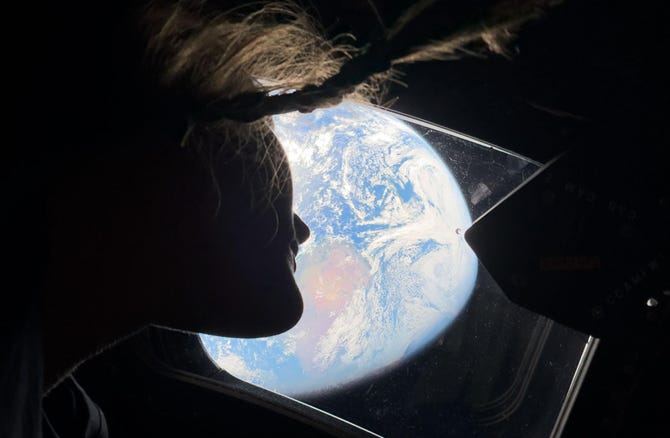
Greetings again, friends of science
Mwapoleni nakabili, ifibusa fya sayansi
[About 6 million people speak Bemba in Zambia, Tanzania, and the Democratic Republic of Congo.]
ENVIRONMENT
Last Wednesday - Earth Day - a bill was scheduled for approval in the U.S. House of Representatives: The Endangered Species Amendments Act. The bill called for fast-tracking the removal of protections from endangered species whose numbers were recovering. It was an act of hubris to put this to Congress on Earth Day, but fortunately it was withdrawn at the last minute since it lacked sufficient support across both sides of the aisle. The Trump administration continues, however, to gut the Environmental Protection Agency created during the Nixon Administration.
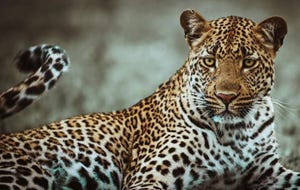
In 1968 while living in Lesotho, i had the distressing experience of viewing a leopard (Panthera pardus pardus) that had just been clubbed to death by villagers. Worse, that was the last leopard ever seen in the country. It was large. Majestic even in death. Elsewhere in some regions of Southern Africa, some leopards continue to exist but their numbers have been rapidly declining. Part of their decline was attributed to the custom that leopard skins must be worn during certain ceremonies held in Zambia. An American organization, Panthera, arranged to supply fake leopard skins, and wearing real leopard skins was made illegal by local authorities. YAY!
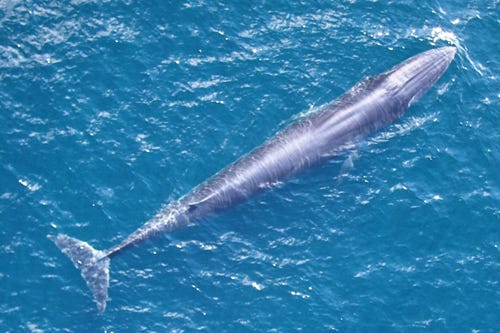
A mere 5 years ago, genetic and morphological studies determined this whale was its own separate species. All approximately 50 individuals live entirely in a sliver of the Gulf of Mexico and were given endangered species protection to keep them from going extinct. Oil drilling operations were required to monitor the whales’ locations and ships were required to slow down while passing though their habitat. No longer. The Trump Administration removed all protections for endangered species in the “Gulf of America” as impediments to rapid oil drilling and production. Besides the Rice’s Whale, this ‘edict’ affects protections of 4 species of endangered sea turtles, 2 species of fish, 3 species of coral, the Florida Manatee, and the Whooping Crane.
The number of birds in the United States dropped overall by 29% from 1970 to 2019, predominantly in agricultural areas, likely because agricultural practices and pesticides reduce general biodiversity. Studies show that rising temperatures are also involved in the decline.
RAFFLE
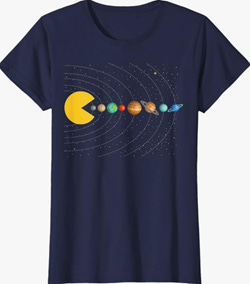
Our previous winner picked out this hilarious shirt i had never seen before with Pac-Man eating the 8 planets. So let’s do it again. The winner gets to pick out a science shirt of their choosing. Just send an email before noon Friday to david.almandsmith <at> gmail <dot> com with your guess of an integer from 1 to 1,000. Last time, the random number generator landed on “542”. Nina Lee won with her guess of 549. Thirty people played.
PHYSICS
Trick Question: ¿How many people are experiencing weightlessness right now? My first guess would be a total of 10 people: the three Taikonauts on the Tiangong Space Station and the seven crew members on the ISS. The real answer includes everybody who just dove off of a diving board, jumped into the air, is between strides while running, etc. So the correct answer is “hundreds of millions”. On the other hand, during the 6 minutes that Artemis II engines fired to change trajectory, that crew were not weightless.
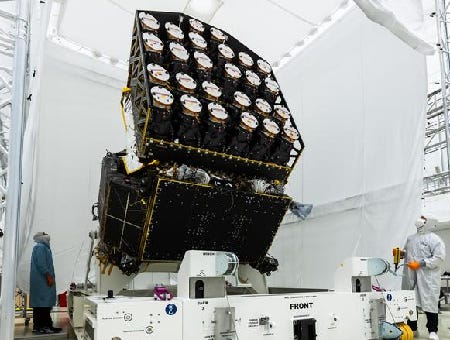
The European Space Agency’s PLATO satellite is complete - ahead of schedule and under budget. ESA put it in a chilly vacuum chamber - complete with artificial sunlight - where it now sits as engineers test it. Launch is scheduled for early next year when PLATO’s 26 cameras will find and study exoplanets.
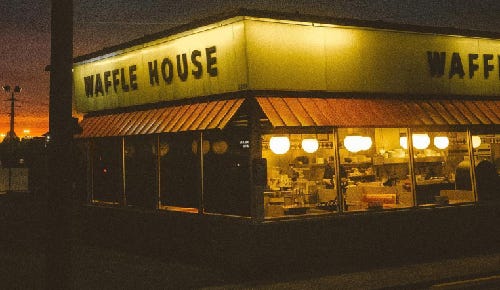
Given our current understanding of physics, the teleportation of a mass would require converting that mass to energy, transmitting that energy to a new location, and then reassembling it back into mass. Tricky, especially since converting a single gram of mass would release as much energy as an atomic bomb. However, Gregg Phillips - the person who is responsible for FEMA’s Division of Response and Recovery - believes he was teleported 50 miles to a Waffle Shop restaurant. ¿Will he respond to the next disaster recovery effort so swiftly?
ARCHAEOLOGY / HISTORY
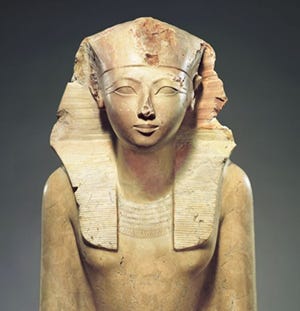
The woman Pharaoh Hatshepsut ruled Egypt for 22 peaceful and prosperous years beginning in 1479 B.C.E. After she died, paintings and statues of her were taken down and buried, possibly because her successors did not want the people to know a woman could be Pharaoh; and a good one at that!
My EVENT PICKS
You do not have every time-slot of every day open for adventure, so peruse my list and set calendar reminders for the ones you can enjoy.
Mushrooms of the Tilden Botanic Gardens Monday 7:30pm, UC Berkeley
Sydney to San Francisco: Humpback Conservation Livestream Tuesday 7pm
Exciting Results: James Webb Space Telescope Wednesday 7pm, Orinda, $
How to AI Livestream Thursday 9am
Birdy Hour: Plovers! Nesting, Tagging, & More Livestream Thursday 5pm
First Friday Night at CuriOdyssey Friday 5 - 8pm, San Mateo, $
Hike at Calero County Park Saturday 9am, Santa Clara County
Solar Observing Sunday 2pm, San José
HEALTH / MEDICINE
Wednesday is Fentanyl Awareness Day. Use this link to make use of tools, graphics, and videos aimed at reducing this scourge. This link will play one of the excellent videos.
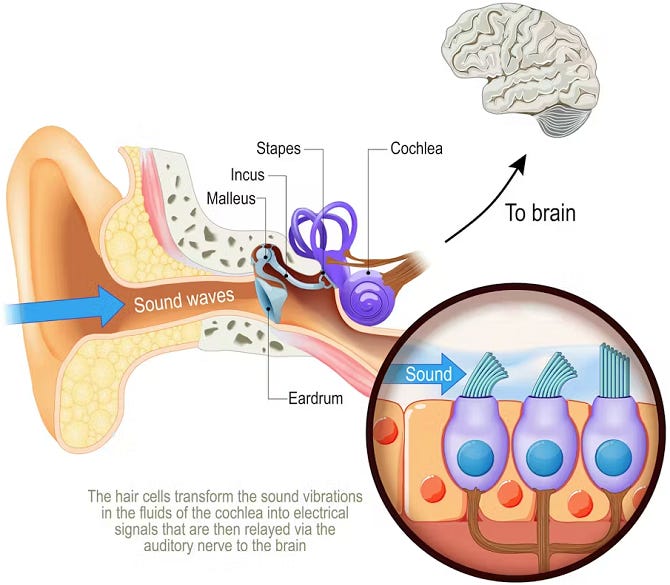
A new gene therapy is now giving hearing to the deaf. One of every 2,000 babies are born with a mutation to the OTOF gene that renders them unable to hear sounds. Of our 20,000 genes, the OTOF gene programs the otoferlin protein that facilitates the electrical transmissions from our cochlear hair cells to the auditory nerve. [In the above diagram, cochlear hair cells are in lavender and nerve fibers are in brown.] Injecting a virus carrying the OTOF gene into the cochlea restores hearing in most recipients. Cost? Free from the developer, Regeneron.
Fun Nerdy VIDEOS
Largest Known Piece of Mars on Earth - Cleo Abram - 1 min
… just sold for $5,300,000
Why Bats Rarely Get Cancers - Dr. Ben Miles - 1.5 mins
Hints for humans?
Ocean Wave Power - Sabine Hossenfelder - 5.5 mins
24-hour power!
¿Making Tylenol from Plastics? - SciShow - Jaida Elcock - 6 mins
With a little help from microorganisms
Quantum Computers - PBS “What the Physics?!” - Athena Brensberger - 6.5 mins
Why & maybe how
¿Why Doesn’t Dark Matter Collapse into Black Holes? - Dr. Becky - Becky Smethurst - 10 mins
¿Why Did We Evolve Brains? - PBS Eons - Michelle Barboza-Ramirez - 12 mins
Huh?
¿What’s the Point of the Narwal’s Tusk? - Bizarre Beasts - Sarah Suta - 13.5 mins
Unicorns of the Sea
Population Growth & Food Production - Just Have a Think - David Borlace - 14.5 mins
Would Thomas Malthus give up steak?
Top 5 Problems of the Standard Model - SciShow - Madelyn Leembruggen - 18 mins
Unbelievable degrees of wrongness!
12 Steps to Building Artificial Gravity - Abigail James - 33 mins
Other than the Star Trek Enterprise’s graviton field generator
The Cascadia Megaquake is Inevitable - PBS Terra - Maiya May - 36 mins
… and overdue!
Neon - Tales from the Periodic Table - Ron Hipschman - 38 mins
Mammal Origins - PBS NOVA - 52 mins
Have a wonderful week,
Dave Almandsmith, Bay Area Skeptics
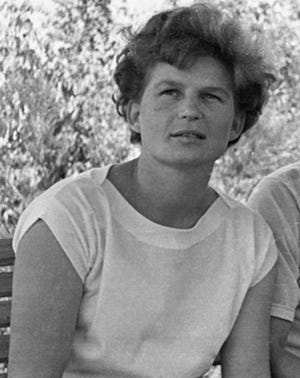
“Once you’ve been in space, you appreciate how small and fragile the Earth is.”
— Valentina Tereshkova (1937 - ) Russian cosmonaut, engineer, politician. The first woman in space; she orbited the Earth solo 48 times in 1963.
Upcoming Events:
Click to see the next two weeks of events in your browser.
Monday, 04/27/2026
Shifting Forests: Examining the Ecological Effects of Kelp Forest Loss and Restoration - 04/27/2026 12:00 PM
Sonoma State University - Biology Colloquium Rohnert Park
Speaker: Maria Velazquez, Greater Farallones Association
How Private Are Your AI Chat Logs? - 04/27/2026 12:30 PM
Computing and Data Science Building (CoDA) Stanford
One in ten humans on Earth uses an AI tool such as ChatGPT at least weekly. Many people share extremely personal information with chatbots, and that information may be stored for a long time. How private are our conversations with AI chatbots? This talk will go over some basics of American digital privacy law and then discuss some recent instances where law enforcement is known to have obtained an AI user’s conversations with popular chatbots.
Speaker: Riana Pfefferkorn, Human-Centered Artificial Intelligence Institute, Stanford University
My lab efforts in the transition to a more sustainable future; from batteries to biology - 04/27/2026 12:30 PM
Shriram Center Stanford
A progress report on our efforts to improve EV and utility battery energy storage, stop greenhouse gas emissions in agriculture due to fertilizer use and necessity of direct air capture of CO2 will be discussed.
Speaker: Steven Chu, Stanford University
Engineering Topological Quantum Matter in Space and Time - 04/27/2026 02:30 PM
Physics North Berkeley
Topology has emerged as a unifying principle in modern condensed matter physics and materials science, enabling quantum phases that are remarkably robust yet exquisitely sensitive to their underlying environment. While traditional approaches to topological materials discovery rely on chemistry, the rise of moiré quantum materials suggests a different strategy: engineering topology by tailoring the physical environment. In this talk I will highlight my group’s recent efforts to control scalable topological quantum matter using the two most fundamental physical knobs - space and time. We constructed a unique testbed to manipulate and probe materials at femtosecond time scale and atomic-layer spatial scale [1]. In space, by epitaxially straining topological superconductors FeTe x Se 1-x to SrTiO 3 substrates, we suppress the competing antiferromagnetic phase near the FeTe limit and uncover a new tuning mechanism for topological superconductivity: electronic correlations [2]. We establish a general protocol to mechanically release and re-assemble ultrathin topological insulator films [3] into twisted moiré structures, yielding unprecedented flat bands [4]. In time, we show that topological electronic states carry intrinsic layer-dependent vibrational fingerprints. By “listening” to these frequencies as the states couple to coherent phonons, we develop a quantum stethoscope capable of resolving long-standing puzzles in magnetic topological insulators, including the elusive broken-symmetry energy gap [5,6]. In combined space-time co- engineering, I will present our latest results integrating photonic crystal cavities with ultrathin topological insulators to realize cavity-driven Floquet engineering [7]. This platform represents a new class of physical-environment control experiments, where the ground states of topological materials are reshaped simultaneously in space and time. Together, these examples illustrate a paradigm in which topological phenomena can be designed and manipulated by engineering the physical environment, and potentially stabilized near ambient conditions - opening pathways toward scalable quantum materials and devices.
Speaker: Shuolong Yang, Assistant Professor of Molecular Engineering, The University of Chicago
Machine learning the effects of many quantum measurements - 04/27/2026 04:15 PM
Physics North Berkeley
A novel aspect of recent experiments with quantum devices is that measurements can play an active role in preparing the state of the system, rather than just in diagnosing it. Unlike unitary evolution, the quantum collapse induced by local measurements can have a highly non-local impact on the state, instantaneously destroying or creating long range entanglement. I will begin by reviewing the surprising collective effects that can ensue, such as measurement induced phase transitions and new entanglement structures. There is, however, a fundamental barrier to observing such measurement induced phenomena, because the post-measurement state is conditioned on many-measurement outcomes with exponentially small probability of recurring. I will describe how we overcame this ‘post-selection problem’ by cross-correlating experimental data, taken with Google’s quantum processor, with results of a generative machine learning model trained on the experimental data. Our approach reveals that measurement-induced long range entanglement emerges where classical models lose the ability to learn quantum state properties, establishing a ‘learnability transition’ that marks a fundamental boundary in our ability to predict quantum behavior.
Speaker: Ehud Altman, UC Berkeley
Editor’s Note: The original speaker, Mitch Begelman, University of Colorado, Boulder is unavailable.
Techno-economic assessment of energy solutions to power U.S. AI infrastructure and the policy implications for broader electrification - 04/27/2026 04:30 PM
Hewlett Teaching Center Stanford
Expanding data center infrastructure to train and deploy artificial intelligence (AI) models is driving a surge in electricity demand in the U.S., and associated impacts for costs, emissions, and resource use. The electric infrastructure buildout from this AI growth will influence the capabilities and feasibility of broader electrification. We develop an open-source end-to-end techno-economic model of energy solutions to power AI infrastructure across the continental U.S. and compare grid-connected and off-grid data center energy infrastructure using AC-coupled solar and storage, DC-coupled solar and storage, behind the meter natural gas, and conventional grid power across the continental U.S. To estimate opportunity costs of construction and equipment delays, we quantify the deployment speed value of AI data centers using GPU spot market rental prices. We discuss the technical, policy, and environmental implications of these different pathways to power U.S. data centers.
Speaker: Costa Samaras, Carnegie Mellon University
Attend in person or watch online (see weblink)
GammaTPC: a transformational MeV-GeV gamma ray instrument concept - 04/27/2026 04:30 PM
Stanford Linear Accelerator (SLAC) Colloquium Series Menlo Park
I will talk about GammaTPC, a new MeV-GeV gamma-ray instrument based on liquid argon time projection chamber (TPC) technology. The MeV sky in particular is poorly measured, largely due to instrumental challenges. A transformative instrument in this energy range will enable a broad range of measurements, especially in the upcoming era of multi-messenger transient astrophysics. Core to GammaTPC is GAMPix, a new fine grained charge readout architecture that achieves low noise readout at very low power, and has other potential applications including neutrino physics. There are a few other amusing challenges to fielding a liquid noble TPC in low Earth orbit.
Attend in person or via Zoom
Speaker: Tom Shutt
Mushrooms of Tilden Botanic Garden - 04/27/2026 07:30 PM
Bay Area Mycological Society Berkeley
How is the mushroom diversity on 10 acres of land surrounded by forest, densely planted with trees and shrubs brought in from all over the state of California? Ben Anderson will take you on a tour of mushrooms at the Regional Parks Botanic Garden (Tilden Botanic Garden) with a special focus on mycorrhizal associations.
Speaker: Ben Anderson, horticulturist
Tuesday, 04/28/2026
Lateral septum serotonin dynamics mediate aggression following sleep disruption - Livestream - 04/28/2026 12:00 PM
Stanford University
Speaker: Ja Eun Choi, Stanford University
See weblink for connection information
Evolution of Titan’s Coastlines - 04/28/2026 12:00 PM
Braun (Geology) Corner (Bldg 320), Rm 220 Stanford
River deltas - which develop through the interaction of erosion, sediment transport, river flow, waves, tides, and sea level variations - are sedimentary archives that record past surface conditions, making them attractive targets for planetary exploration. Deltas have tentatively been identified on Saturn’s moon Titan, but they appear to be rare. Simply, many coastal rivers on Earth terminate in deltas, whereas on Titan most do not. Possible solutions to the question of Titan’s apparent missing deltas fall into two main categories: (1) deltas like those we see on Earth do not form (or rarely form) on Titan because of differences in materials, dynamics, and coastal conditions between the two worlds, or (2) there are many deltas on Titan, but the characteristics of the deltas and of Cassini datasets make them difficult to identify - Titan’s deltas may simply “look” different. Deciphering between these two endmembers, and decoding Titan’s record of tectonics, erosion and climate, requires an investigation of the processes that occur when rivers enter Titan’s lakes and seas and a re-evaluation of Cassini data for evidence of the resulting landforms.
In this talk I will detail the combined theoretical, experimental and numerical approach we have undertaken to understand Titan’s coastal landscapes. Further, I will discuss how yet more applications of terrestrial quantitative methods to Titan’s environment should better allow us to decode Titan’s record of tectonics, erosion and climate, how we can use Titan to reveal new information about our own planet, and why such studies are critical as we transition out of Cassini’s era and into the era of Dragonfly.
Speaker: Sam Birch, Brown University
Bringing Bioelectricity to Light - 04/28/2026 03:30 PM
Hewlett Teaching Center Stanford
Bioelectrical signaling is ubiquitous in life, from bacteria to brains. I will describe tools for chronic and volumetric mapping of membrane voltage, and applications in studying biological pattern formation, embryonic development, neural activity, and the onset of the first heartbeats.
Speaker: Adam Cohen, Harvard University
From Nature to the Laboratory: Tales of Spin Polarisation - 04/28/2026 04:00 PM
Latimer Hall Berkeley
This talk highlights the beauty and significance of spin polarisation phenomena as explored by chemists, physicists, and biologists. The systems discussed are inspired by nature’s ingenious designs, which have guided the development of new materials and contributed to improved sensitivity in spectroscopic techniques. Rather than attempting to cover every aspect of spin polarisation, the presentation focuses on research carried out by our group over the past decade. It will touch on diverse topics, including molecular wires, chemical compasses, and animal magnetoreception. A substantial part of the talk will address Electron Paramagnetic Resonance (EPR) studies of photogenerated triplet states and explore the success of chemical strategies used to control spin delocalisation. The discussion will also cover spin-correlated radical pairs in artificial photosynthetic reaction centres and magnetosensitive proteins, investigated using both EPR and optical spectroscopic methods.
Speaker: Christiane Timmel, Director (Chemistry) of the Centre for Advanced Spin Resonance (CAESR), University of Oxford
Wonderfest: Ask a Science Envoy: Elements & Fairness - 04/28/2026 07:00 PM
Hopmonk Tavern Novato
Wonderfest Science Envoys are early-career researchers with enhanced communication skills and aspirations. Following short talks on provocative modern science topics, these two Science Envoys will answer questions with insight and enthusiasm:
UC Berkeley astronomer Natalie LeBaron on Origins of the Elements - From the oxygen we breathe to the gold in our jewelry and the calcium in our bones, most periodic table elements are forged by stars. How does the universe transforms simple hydrogen into the rich diversity of atoms that build planets, life, and everything we see around us? Beginning their lives in vast clouds of gas and ending in massive explosions, every star in the night sky creates and scatters ingredients for new worlds.UC Berkeley psychologist Colin Jacobs on Children’s Sense of Fairness - Our motivation to enact fairness shapes human behavior across societal and individual levels: from outrage at economic inequalities, to personal protest against not being considered in a discussion. As parents and teachers know, our motivation to insist upon fairness starts early, often through shouts of “that’s not fair,” or very strict regulation of turn-taking. What motivates children to object to unfairness, and how does this moral impulse develop throughout early childhood?
Fossils, Ecology, and Human Evolution - 04/28/2026 07:00 PM
California Academy of Sciences San Francisco
In the remote Turkana Basin in northern Kenya, bone fragments and fossil footprints preserve stories stretching back millions of years. Dr. Kay Behrensmeyer brings these stories to life, showing how scientists piece together ancient ecological settings and animal behavior from what remains after death.
Her work reveals how climate, landscape, and living communities affect both species adaptations and the fate of their remains. Through these deep-time insights, we’ll explore how the forces that shaped the past influence our world today and into the future.
Speaker: Kay Behrensmeyer, Smithsonian Institution
Sydney to San Francisco: A parallel journey along the humpback highway for whale conservation - Livestream - 04/28/2026 07:00 PM
American Cetacean Society
San Francisco and Sydney, Australia are both beautiful “cities by the Bay” and gateways to the Pacific Ocean. What do we have in common when it comes to supporting, protecting, and educating on the marine mammals and wildlife who live and frequent the Bay and surrounding waters? Please join us as we hear from marine scientist, Dr. Vanessa Pirotta, a fierce advocate for the marine world and cetaceans. In getting to know her work, there is a lot we can learn to be more effective stewards locally, for the cetaceans and marine world we love.
Register at weblink
Wednesday, 04/29/2026
UC Santa Cruz Whole Earth Seminar - 04/29/2026 12:00 PM
Earth and Marine Sciences Building Santa Cruz
Speaker: Zach Perzan, University of Nevada, Las Vegas
Evolution of Cometary Surfaces - 04/29/2026 12:30 PM
Mitchell Earth Sciences Building (04-560) Stanford
Cometary surfaces are geologically active worlds shaped by complex erosional and sediment transport processes. By documenting the diverse terrains of comet 67P/Churyumov - Gerasimenko, we show that the nucleus’s hemispherical landscape dichotomy is driven by asymmetric seasonal solar heating, which facilitates the net transport of sediment from the comet’s south to its north. Through multi-year observations, we have also witnessed these surfaces evolve in real-time, identifying dynamic changes such as the migration of ice-rich scarps and large-scale mass wasting triggered by outbursts. Recently, we have integrated thermal and sediment transport models to quantify these transport pathways across this micro-gravity environment.
By coupling our models with observations, we aim to ultimately understand how ice and dust are mixed within comets, a fundamental unknown that is intrinsically linked to how comets accreted in the protoplanetary disk and how they have been altered since. Answering this question is also critical for future sample return missions - the mixing of ice and dust affects not only sample handling but also how returned materials will ultimately be interpreted. In this talk, I will detail the combined observational and numerical approach we have undertaken to address these questions, and demonstrate how the exciting new field of cometary geomorphology allows us to directly link modern landscapes to our solar system’s protoplanetary disk, and even our origins.
Speaker: Sam Birch, Brown University
Room 350/372
Unclaim this Body: Necropower in the Global Circuit of Anti-Blackness - 04/29/2026 03:30 PM
McCone Hall Berkeley
In this talk, Kris Manjapra traces the invention of the “unclaimed body” within an expanding global circuit of medical practice, carcerality and anti-Blackness from the Age of Abolition to the Jim Crow Era. During this period, the realm of the racialized Dead became a new domain of power and value for liberal empire, with implications for our own times. A hidden dynamic underlies modern societies with imperialist roots: we do not put some of the Dead to rest; we keep them in bondage. The health and freedom of some rely on the entrapment and exploitation of others, even in death. An imperialist paradigm not only structures the relations among the living, but perpetuates harm committed against colonized and racialized people long after their mortal demise. Our societies still rely, in remarkably persistent ways, on pipelines that shunt racialized bodies into our medical schools, our science labs, and our museums. An imperialist paradigm has generated immortal profits by harvesting value from racialized postmortem people and extracting rent from the derivatives of their bodies.
Speaker:Kris Manjapra, Stearns Trustee Professor of History and Global Studies, Northeastern University
Astronomy on Tap, Baton Rouge: Stellar Women in STEM - Livestream - 04/29/2026 05:00 PM
Astronomy on Tap
Immerse yourself in astronomical discoveries, trivia, exciting raffles, and illuminate the night with glowing sticks. Astronomy on Tap events are not only free but also suitable for all ages! Bring your friends and family for an evening of scientific wonder.
Save the date and spread the word! Let’s explore the universe’s enigmas together.
Cell Therapy: The New Frontier in the Fight Against Cancer - SOLD OUT - 04/29/2026 07:00 PM
Clio’s Books Oakland
For decades, cancer treatment relied on a blunt strategy: chemotherapy designed to kill rapidly dividing cells. While often effective, these drugs act like a cannon - targeting cancer but also damaging healthy tissue along the way.
Today, a new era of cancer therapy is emerging. Instead of broadly attacking tumors, scientists are learning how to harness the body’s own immune system to recognize and eliminate cancer cells with remarkable precision.
In this lecture, Roberto Sessa, PhD in Cancer Biology, explores the shift from traditional chemotherapy to modern immunotherapies and engineered cell-based treatments. Drawing on his research in cancer biology and immune-based therapies, he explains how scientists are moving beyond simply “poisoning” tumors and toward programming the immune system itself to identify and destroy cancer - opening the door to a new generation of highly targeted cancer treatments.
Exciting Results with NASA’s James Webb Space Telescope - 04/29/2026 07:00 PM
Orinda Theater Orinda
Dr. Alex Filippenko (Distinguished Professor of Astronomy, UC Berkeley) will give a public lecture and Q&A sponsored by Orinda ONE.
There are three purposes:
Orinda ONE supports Orinda’s public schools, and this will be the first lecture in their newly established Community Speaker Series to help spread the word about Orinda ONE.We are trying to help publicize the Orinda Theater - a fine place at which Alex’s son Orion works part-time, but which nearly died during the Covid-19 pandemic and has been struggling ever since.Many people have asked Alex to give a lecture on this topic locally (he has given it with much success in other cities/universities). So here’s the opportunity!
You are encouraged to consider coming and to purchase tickets soon at the weblink.
Thursday, 04/30/2026
How To AI - Livestream - 04/30/2026 09:00 AM
PARC Forum
Join us at SRI’s online PARC Forum to explore how AI is accelerating a new revolution in education.
In his new book How to AI, Wall Street Journal technology columnist Christopher Mims reveals how AI is really being adopted across industries. Through practical “laws” drawn from real-world implementation, Mims shows that the greatest gains from AI don’t come from replacing human expertise - they come from amplifying it.
The pattern is clear: the biggest benefits accrue to professionals who understand their domains deeply enough to ask better questions, push systems further, critically evaluate responses, and recognize when AI is wrong. Mims will share insights and examples of how experts are leveraging AI to improve productivity, strengthen workflows, and build organizational capacity - not by delegating judgment, but by extending it.
Following Mims’ overview, SRI’s Susan Patrick will join for a dynamic dialogue, translating these cross-industry insights into what they mean for education - a field still largely structured around industrial-era models of standardization, batching, and bell schedules. As AI accelerates a Fourth Industrial Revolution, what must education rethink?
Together, Mims and Patrick will explore:
How the principles that make AI valuable in other fields apply to learning environmentsWhy expertise matters more in the age of AI, not lessWhy AI requires verification, not blind trustHow context determines qualityHow AI can amplify and extend educator expertise
Most critically, they’ll examine what it means to redesign learning environments, so students use AI to enhance critical thinking rather than replace it. As AI becomes embedded in everyday tools, the question is no longer whether education will use AI
Register at weblink
SETI Live: Galactic Islands of Tranquility - Livestream - 04/30/2026 11:00 AM
SETI Live
A newly identified class of distant galaxies - nicknamed “little red dots” - may be doing something extraordinary: quietly creating the raw ingredients for life.
Join host Dr. Simon Steel as we explore groundbreaking new research from Dr. Remo Ruffini and Dr. Yu Wang from the International Center for Relativistic Astrophysics Network (ICRANet), suggesting that these compact, enigmatic galaxies could act as “molecular islands,” forming complex organic molecules in environments surprisingly calm compared to the chaotic early universe.
What makes these galaxies so special?How can such small, distant objects produce life’s building blocks?And what does this mean for the possibility that life’s chemistry is widespread across the cosmos?
We’ll break down the science behind these “galactic oases,” how they were discovered, and why they may reshape how we think about the origins of life in the universe.Bring your questions and join us live!
Stanford Smart Grid Seminar - 04/30/2026 01:30 PM
Environment and Energy Building (Y2E2) Stanford
Speaker: Haiwang Zhong, Tsinghua University
Carbon Burning and Beyond: ‘Explodability’ and Gravitational Wave - 04/30/2026 03:30 PM
Campbell Hall, Rm 131 Berkeley
Speaker: Mathieu Renzo, University of Arizona
UC Berkeley Energy and Resources Group Colloquium - 04/30/2026 04:00 PM
Giannini Hall Berkeley
Speaker: Veronica Jacome
The Health and Wellness Lie - Livestream - 04/30/2026 04:00 PM
Skeptical Inquirer
We spend more on health and wellness than almost anything else. But the fad diets, expensive supplements, and quick-fix biohacks aren’t improving our health; they’re making us fatter, sicker, and unhappier.
Join us for a Skeptical Inquirer Presents livestream with exercise scientist Nick Tiller. With unflinching scrutiny, Tiller exposes how wellness marketing exploits our biases, why social media amplifies the loudest voices rather than the most credible, and how bad science drives health misinformation. From weight-loss drugs and cold plunges to wearable tech and alternative therapies, get ready to see wellness culture for what it is: dangerous, dishonest, and long overdue for a reckoning.
See weblink for connection information
Birdy Hour: Plovers - Nesting Patterns, Motus Tagging, and More! - Livestream - 04/30/2026 05:00 PM
San Francisco Bay Bird Observatory
During this Birdy Hour, SFBBO Director of Plover and Tern Science Maddy Schwarz will introduce the Western Snowy Plover and its nesting patterns in the Bay Area. She will then dive into the details of SFBBO’s 2025 Snowy Plover Motus radio tagging project, which was the first of its kind. She will explain the basics of Motus technology, its uses in plover research, the process of setting up the equipment, and what we learned from the project. Finally, she will talk about SFBBO’s current plans for using Motus tags in 2026.
Register at weblink to receive Zoom link
Field Notes from the Bay: An Evening of Live Storytelling - 04/30/2026 05:30 PM
Ocean Photographer of the Year Exhibition Alameda
Fast-paced stories from the scientists who know the Bay best.
Surfing the East Bay mud. Chasing midnight storms. Mapping what can’t be seen.
Join us for an evening of live storytelling with environmental scientists from the San Francisco Estuary Institute at the Ocean Photographer of the Year exhibition in partnership with the West End Arts District in Alameda. In five minutes or less, each speaker shares a true, personal story from the field - offering an insider’s view into the work of studying and protecting the San Francisco Bay and Delta.
In a special art-meets-science collaboration, the scientists will be preparing with Alameda storyteller extraordinaire JP Frary - a six-time The Moth StorySLAM winner - who will also emcee the evening as his protégés take the stage.
Expect insight, humor, and a deeper connection to the waters in our own backyard.
See weblink to purchase tickets
The Ocean Photographer of the Year exhibition will be open from 5.30pm. Come early to enjoy the gallery before our storytellers hit the stage between 7pm - 8pm. The exhibition will close at 8.30pm.
NightLife x Golden State Valkyries - 04/30/2026 06:00 PM
California Academy of Sciences San Francisco
The Golden State Valkyries are taking over. Celebrate the start of season 2 with a Balhalla experience at NightLife. See weblink for more details
Friday, 05/01/2026
Space Exploration Weekend at The Tech Interactive - 05/01/2026 10:00 AM
The Tech Interactive San Jose
Celebrate National Space Day all weekend at The Tech with Space Exploration Weekend, May 1 to May 3. This family-friendly event invites aspiring astronauts to dive into hands-on space programming, watch Space: The New Frontier in IMAX®, and take a spin on the Jet Pack Chair as its send-off celebration begins. Inspired by the excitement and “moon joy” surrounding NASA’s Artemis II lunar flyby, the weekend brings today’s renewed spirit of exploration a little closer to home.
From designing postcards that will launch into space to building a habitat for future Mars missions, Space Exploration Weekend brings real space science to life in fun, memorable ways for kids and grown-ups alike. Guests can explore The Tech’s 50+ interactive exhibits across two floors while imagining what the next era of lunar exploration could make possible.
Highlights:
- Hands-on space activities, including: Postcards from Space, Space Origami, and Nebula Spin Art- Space: The New Frontier screenings in IMAX®- Jet Pack Chair experience - Mars Pod Habitat building challenge in The Tech Studio- Story time featuring Mae Among the Stars
All activities and one IMAX film are included with museum admission.
Localization of Inelastic Strain with Fault Maturity for Strike-Slip Fault Systems: Implications for Earthquake Characteristics - 05/01/2026 12:00 PM
Earth and Marine Sciences Building Santa Cruz
Speaker: Chris Milliner, NASA
A conversation with Google Chief Scientist Jeffrey Dean - 05/01/2026 01:00 PM
Grimes Engineering Center Berkeley
Join us for an in-person conversation with Jeffrey Dean, Chief Scientist at Google, leading the development of foundational Google infrastructure and modern AI research. Dean will present advancements and recent trends in the space, followed by audience Q&A.
Ticket reservations required at weblink
Designing Confinement: Cages, Networks and Frameworks - 05/01/2026 04:00 PM
Latimer Hall Berkeley
Intensifying water scarcity and climate change demand new approaches to aqueous separations, particularly the separation of trace contaminants from drinking water and the capture of ‘critical metals’ from wastewater sources. The Taylor lab at the University of Maryland uses the tools of supramolecular assembly and reticular chemistry to tackle these difficult aqueous separations. Specifically, we study the self-assembly of metal-organic cages as a technique for the separation of one metal species from a mixture of similar metals, and we design functionalized covalent organic frameworks (COFs) as adsorbents for the capture of contaminants such as PFAS. This seminar will describe our progress in the transformation of COF linkages into diverse functional handles, the cross-linking of 2D COFs to produce 3D structures, and the separation of rare-earth ions through supramolecular cage formation.
Speaker: William Clemons, Jr, Caltech
First Friday Nights at CuriOdyssey - 05/01/2026 05:00 PM
CuriOdyssey San Mateo
Swing into the weekend with science, animals, music, food trucks, and fun! On the first Friday of every month, parents and kids celebrate together at CuriOdyssey.
Dance to some of your favorite hits, while enjoying animal presentations and science activities. Activities and programs are different each time, so make it a monthly tradition!
A Galaxy Not So Far Away - 05/01/2026 06:00 PM
Chabot Space and Science Center Oakland
This Friday, join our team of cosmic rebels to celebrate “May the Fourth” early in our galaxy not so far away! Craft your own glowing sword, get a glimpse of distant planets through our historic 8” refractor telescope known as “Leah,” and discover the mechanics of robotics alongside a familiar sassy android. Then, don’t forget to snap a pic in our Galaxy Photobooth, enjoy a themed cocktail, and discover the fact behind the fiction in your favorite intergalactic fantasy movies. Perfect for fans of all ages, this is one sci-fi inspired adventure you won’t want to miss.
Saturday, 05/02/2026
Hike at Calero County Park - 05/02/2026 09:00 AM
Calero County Park San Jose
Join Peninsula Open Space Trust (POST) at Calero County Park, one of the region’s most beautiful oak woodlands just south of San Jose on the westside of Santa Clara Valley. You will be led by POST ambassadors who will share about the natural history of the area and about POST’s contributions to Calero County Park, and the several other open spaces that make up an important area of protected habitat.
The hike is strenuous at about 4 miles round trip with about 650 feet of elevation gain. Guests will experience outstanding views of rolling California hills and the Calero reservoir with beautiful vistas of California’s iconic Springtime emerald rolling hills and open skyline. Hear marsh and meadow birds singing and raptors calling all in one hike! We will hike along the Los Cerritos, Vallecitos and Figueroa trails, through beautiful oak woodlands with views of Calero Reservoir, the Sierra Azul, Santa Cruz mountains, and Coyote Valley.
Register at weblink
Bring Back the Natives Garden Tours - 05/02/2026 10:00 AM
Varies
Bayside Gardens: Talks, Music, and native Seed and Plant Sales in the Gardens.
See the weblink for list of cities and gardens
Register at weblink
Space Exploration Weekend at The Tech Interactive - 05/02/2026 10:00 AM
The Tech Interactive San Jose
Celebrate National Space Day all weekend at The Tech with Space Exploration Weekend, May 1 to May 3. This family-friendly event invites aspiring astronauts to dive into hands-on space programming, watch Space: The New Frontier in IMAX®, and take a spin on the Jet Pack Chair as its send-off celebration begins. Inspired by the excitement and “moon joy” surrounding NASA’s Artemis II lunar flyby, the weekend brings today’s renewed spirit of exploration a little closer to home.
From designing postcards that will launch into space to building a habitat for future Mars missions, Space Exploration Weekend brings real space science to life in fun, memorable ways for kids and grown-ups alike. Guests can explore The Tech’s 50+ interactive exhibits across two floors while imagining what the next era of lunar exploration could make possible.
Highlights:
- Hands-on space activities, including: Postcards from Space, Space Origami, and Nebula Spin Art- Space: The New Frontier screenings in IMAX®- Jet Pack Chair experience - Mars Pod Habitat building challenge in The Tech Studio- Story time featuring Mae Among the Stars
All activities and one IMAX film are included with museum admission.
First Saturday Tour at the Santa Cruz Arboretum - 05/02/2026 11:00 AM
UC Santa Cruz Arboretum Santa Cruz
First Saturday Tours are a wonderful way to introduce yourself to the Arboretum or to deepen your knowledge of the Arboretum’s plant collections. Each tour is a little different depending on the time of year, the interests of the tour guide, and the people who join in. For example, you might learn about the birds and mammals that make this land their home or about the amazing physical adaptations that plants have evolved to better deal with our extreme weather and climate conditions.
Staying the Course on Climate: Navigating Uncertainty with Energy and Optimism - 05/02/2026 07:00 PM
Stanley Hall Berkeley
Speaker: Mary Nichols, California Air Resources Board (retired) and Carla Peterman, PG&E
Attend in person or click to watch on Youtube
Sunday, 05/03/2026
Bring Back the Natives Garden Tours - Inland Cities - 05/03/2026 10:00 AM
Varies
Inland Gardens: Talks, Music, Free Seeds, Birdwatching, and Mugwort Soap Sale in the Gardens
See the weblink for list of cities and gardens
Register at weblink
Space Exploration Weekend at The Tech Interactive - 05/03/2026 11:00 AM
The Tech Interactive San Jose
Celebrate National Space Day all weekend at The Tech with Space Exploration Weekend, May 1 to May 3. This family-friendly event invites aspiring astronauts to dive into hands-on space programming, watch Space: The New Frontier in IMAX®, and take a spin on the Jet Pack Chair as its send-off celebration begins. Inspired by the excitement and “moon joy” surrounding NASA’s Artemis II lunar flyby, the weekend brings today’s renewed spirit of exploration a little closer to home.
From designing postcards that will launch into space to building a habitat for future Mars missions, Space Exploration Weekend brings real space science to life in fun, memorable ways for kids and grown-ups alike. Guests can explore The Tech’s 50+ interactive exhibits across two floors while imagining what the next era of lunar exploration could make possible.
Highlights:
- Hands-on space activities, including: Postcards from Space, Space Origami, and Nebula Spin Art- Space: The New Frontier screenings in IMAX®- Jet Pack Chair experience - Mars Pod Habitat building challenge in The Tech Studio- Story time featuring Mae Among the Stars
All activities and one IMAX film are included with museum admission.
Solar Observing - 05/03/2026 02:00 PM
San Jose Astronomical Association San Jose
It’s there for us year round, lighting our days and providing energy for our lives, so maybe it’s time to give it a closer look. Join SJAA for amazing and detailed views of the Sun, and be assured that we’ll be using special telescopes that will keep your eyeballs perfectly safe. We’ll have white-light telescopes with dense solar filters that reveal sunspots. Further, we’ll show you hydrogen-alpha telescopes that isolate a very specific color of red that reveals prominences (colloquially often thought of as solar flares; see video below) and intricate texture within the Sun’s chromosphere (its atmosphere). We can also share with you a little about how the Sun works and how complex magnetic fields drive the number of sunspots and prominences that we’ll see on a given day. A few minutes after 1:30, we’ll have a short, informal introductory talk, and at other times, you can enjoy the views and ask questions about the Sun, telescopes, or astronomy in general. Often we also have a station where you can get a better feel for the huge scale of our solar system! And you’ll get a solar system you can fold up and carry in your pocket. You may bring your own telescope. If you have a properly filtered white light or H-alpha telescope and want to share views with others, please arrive at 1:00 or earlier, so you have time to set up before the event officially starts. Since we’ll be out in the Sun, consider coming prepared with a hat, sunscreen and water. Conditions may be hot! And with this video you could prepare yourself with a better understanding of solar flares (and how they’re different from prominences):
Sign up at weblink
Monday, 05/04/2026
SynBioBeta 2026 - 05/04/2026 08:00 AM
San Jose McEnery Convention Center San Jose
SynBioBeta 2026 is a leading global synthetic biology conference bringing together founders, investors, and scientists. The event focuses on applications across food, climate, materials, and biomanufacturing. May 4 - 7, 2026 | San Jose, California.
See weblink for details
The Role of Autophagy in Aging and Age-Related Neurodegeneration - 05/04/2026 12:00 PM
Sonoma State University - Biology Colloquium Rohnert Park
From the Buck Institute website: “...Bijoya is from India where she got her bachelor’s and master’s degree in Biotechnology. Aging biology was introduced to her when she joined the lab of Gayatri Ramakrishna in Institute of Liver and Biliary Sciences, New Delhi. There she studied the role of senescence-associated pathways in the progression of liver cirrhosis to hepatocellular carcinoma and received her PhD degree in 2019. Then she joined the Brand lab at Buck as a Glenn postdoctoral fellow. Her area of research was to explore mechanisms by which mitochondrial reactive oxygen species (ROS) acts as a signaling molecule to abrogate various pathways using hypoxia/HIF as a model. She recently joined the Hansen lab where she plans to delve into the cellular recycling process named autophagy and how it affects aging using mammalian cell culture and C. elegans as a model system...”
Speaker: Bijoya Sen, The Buck Institute
Big animals & the maintenance of species diversity - 05/04/2026 04:00 PM
James H. Clark Center (Bldg 340) Stanford
Speaker: Robert Pringle, Princeton University
Room: Auditorium
Stanford Energy Seminar - 05/04/2026 04:30 PM
Hewlett Teaching Center Stanford
Speaker: Alice Jackson, Breakthrough Energy
Attend in person or watch online (see weblink)
Science on Tap: Gossip girl (microbial edition): chemical communication in host-microbe systems - 05/04/2026 06:00 PM
Crepe Place Santa Cruz
Microbes communicate with each other using small molecules that can trigger biological processes such as bioluminescence, cell differentiation, or surface modification. Mass spectrometry is an important tool that allows scientists to intercept and detect chemical messages in different microbial systems. Together, we will explore unique chemistry produced by several different microbial and host-microbe systems, including our current research on bioluminescent Vibrio fischeri and the Hawaiian Bobtail Squid.
RSVP at weblink
The Social Life of Subatomic Particles - 05/04/2026 07:30 PM
Hewlett Teaching Center Stanford
The various materials that we experience in everyday life are built from molecules. In turn, molecules are built from atoms. Atoms are built from electrons and nuclei. Nuclei are built from protons and neutrons, which were once considered “elementary particles”. Bob Hofstadter won his Nobel Prize for dispelling this notion by showing that protons have an internal structure and measuring their size. I will describe how, building on his work, we learned that protons and neutrons are built from particles called quarks and gluons. As far as we know, this is where the “cosmic onion” ends. However, we have also discovered that quarks come in six different flavors and that they have a rich “social life”: they are never alone and always appear in clusters that correspond to protons, neutrons and their numerous cousins. In recent years experiments in giant particle accelerators have dramatically advanced our understanding of the “social preferences” of quarks, revealing many exotic clusters and determining which ones are stable enough to be observed experimentally and how quarks are arranged inside them.
Speaker: Marek Karliner, Tel Aviv University, emeritus
Tuesday, 05/05/2026
Affine Virtual Arrays for Millimeter-Wave Imaging and Metrology - 05/05/2026 12:00 PM
Cory Hall Berkeley
Towards responsible AI for adolescent mental health and well-being - Livestream - 05/05/2026 12:00 PM
Stanford University
Exotic Hadrons - 05/05/2026 03:30 PM
Hewlett Teaching Center Stanford
Killing bacteria by leveraging phage-derived peptide antibiotics - 05/05/2026 04:00 PM
Latimer Hall Berkeley
The Untimely - 05/05/2026 07:00 PM
Long Now Foundation San Francisco
Wednesday, 05/06/2026
What Do Observations of Exhumed Tectonic Plate Boundaries Tell Us About Subduction Zone Earthquakes? - 05/06/2026 12:00 PM
Earth and Marine Sciences Building Santa Cruz
Astronomy’s Newest Discovery Machine: The Vera Rubin Observatory - Livestream - 05/06/2026 05:00 PM
UC Berkeley
Heat Pump Webinar: HVAC Systems and Water Heaters - Livestream - 05/06/2026 06:00 PM
Acterra
Cosmology in Overdrive: Chasing Cosmic Acceleration with Galaxies - 05/06/2026 07:00 PM
Sapp Center for Science Teaching and Learning Stanford
Thursday, 05/07/2026
Development of decarbonization tools - 05/07/2026 01:30 PM
Environment and Energy Building (Y2E2) Stanford
What We Talk to When We Talk to Language Models - 05/07/2026 04:00 PM
International House Berkeley
After Dark: Ride On - 05/07/2026 06:00 PM
ExplOratorium San Francisco
NightLife Carnival SF - 05/07/2026 06:00 PM
California Academy of Sciences San Francisco
Friday, 05/08/2026
UC Santa Cruz IGPP Seminar - 05/08/2026 12:00 PM
Earth and Marine Sciences Building Santa Cruz
In Town Star Party - 05/08/2026 09:15 PM
San Jose Astronomical Association San Jose
Saturday, 05/09/2026
Hike at Windy Hill - 05/09/2026 09:00 AM
Windy Hill Open Space Preserve Portola Valley
Family Nature Adventures: Mother’s Day Tea Party & Flowers Workshop - 05/09/2026 10:30 AM
Chabot Space and Science Center Oakland
Virology and immunology of emergent arboviruses: learning from the patients - Livestream - 05/09/2026 10:30 AM
California Section, American Chemical Society
Starry Nights Star Party - 05/09/2026 09:15 PM
Rancho Canada Del Oro Open Space Preserve Morgan Hill
Sunday, 05/10/2026
Wonderfest: Ask a Science Envoy: DreamFish & Wetlands - 05/10/2026 07:00 PM
Hopmonk Tavern Novato
Marine Science Sundays: Saving Species - 05/10/2026 10:30 PM
Marine Mammal Center Sausalito
Monday, 05/11/2026
The Rise of Industrial AI in America: Microfoundations of the Productivity J-curve(s) - Livestream - 05/11/2026 12:00 PM
Stanford University
Genes and Culture: Theory and Misuse - 05/11/2026 04:00 PM
James H. Clark Center (Bldg 340) Stanford
Powershift: Supporting Tribal Energy Sovereignty at the California Energy Commission - 05/11/2026 04:30 PM
Hewlett Teaching Center Stanford
Skeptics in a Real Pub - 05/11/2026 07:00 PM
Fiddler’s Green Millbrae
The Paradox of Specialization: How Work Has Become More Demanding - 05/11/2026 07:00 PM
Hawthorn SF Nightclub and Lounge San Francisco
Comments
Nothing yet. Say the first thing.
Sign in to join the conversation.