
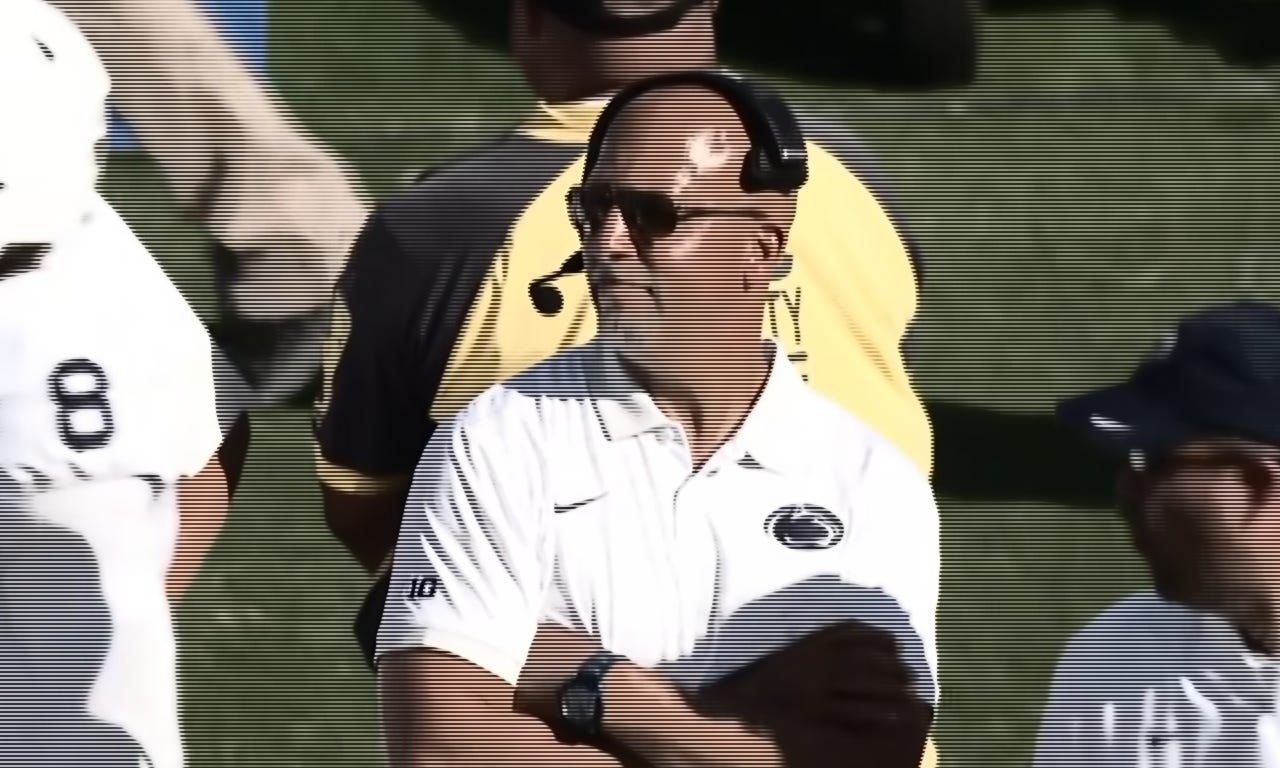
After Penn State’s heartbreaking loss to UCLA on Saturday, alumni had a lot of questions and I try and answer them. If I haven’t answered your question please reach out me at barry@barryfenchak.com.
First, some thoughts:
Like many of you, I watched the Penn State-UCLA football game last Saturday and am as shocked as everyone. As disappointing as the result was, I must however congratulate UCLA on a well-played game. As Coach James Franklin said himself, “We have to give UCLA a ton of credit. We have to give their quarterback a ton of credit. We had a hard time stopping him all day long.”
Based on the pre-season expectations Penn State Intercollegiate Athletics built up, I was cautiously looking forward to a successful season and robust play-off run. And I will continue to be the optimist in the room and hope that the Lions sweep the rest of the season—after all, last year Ohio State won the National Championship with two regular season loses. And right now I can see no other choice but to dance with the date we brought.
Now it’s your turn:
What is James Franklin’s current contract buyout?
Franklin renegotiated his contract prior to the 2022 season and it runs through the 2031 season. He is being paid approximately $8.5 million a year, so Penn State would have to come up with $56 million if they terminated Coach Franklin’s tenure at Penn State ‘without cause’ (more on that later). That amount would decrease by approximately $8 million per season moving forward.
While all of the details of the contracts have not been shared, we do know that Penn State guaranteed to pay Franklin the entire value of his 10 year contract even if Penn State fired him at some point prior to 2031.
Last year, the Penn State Board of Trustees authorized additional levels of performance bonuses for Coach Franklin. Again, Penn State did not release details, but those bonuses could add many millions of dollars of additional compensation over the remaining term of the contract but would not have to be paid if Franklin was terminated.
What if Franklin is hired by another school?
I doubt that Penn State will terminate Coach Franklin, but there are a couple of items that would come into play in that scenario:
First, if another program hired Franklin without Penn State having terminated the contract, Coach Franklin would be responsible for paying a fee to Penn State to release him from the contract. That amount is currently, I believe, $1 million.
On the other hand, if Franklin is hired by another school after Penn State terminates the contract, things get more complicated and uncertain. While Penn State would be responsible for paying Franklin $8 million per year for every year remaining on his contract (currently seven years), such contracts generally have offset provisions. Not all do, and we don’t know about the contract with Penn State and Franklin (because Penn State claims they must remain secret), but most schools are open and up front with those details and generally have that offset feature.
Offset provisions open up many possibilities that can make the contract less of an albatross for the school. Typically, such a provision would say, in the case of Franklin: “We will pay you the $8 million per year, but that amount is reduced by any compensation you receive from other future employment during that term”.* If Franklin’s contract had reasonable provisions included to protect Penn State (which we do not know) the typical scenario would be a negotiated settlement, where Penn State might offer a smaller payoff (less than the $56 million) in return for releasing Franklin to pursue other opportunities without further limitations.
Can Penn State afford to buy out his contract at the end of the season?
Even at an amount significantly less than $56 million, the short answer is: No.
Longer answer: Penn State has spent lavishly on football facilities and athletics administrative staff, and has very little cash on hand. The university is now responsible for this elephant-sized pile of debt, all of which was approved by the Board of Trustees.
To make matters worse, our current coaching staff is the most expensive in the history of college football, operating costs are soaring, and the Board of Trustees approved taking on a gigantic additional debt for the $700 million renovation of 35% of Beaver Stadium.
Simply stated, Penn State Athletics are tapped out. They are not the only major conference program in a tough fiscal situation, but even in the first year of stadium renovation many of Penn State’s assumptions have been shown to be untenable. The Athletic Department did all they could to disguise the assumptions that went into the project’s fiscal projections, when primary analysis showed they were fantastically optimistic, either by design, disingenuousness, or omission.
To be metaphorical: they are already robbing Peter to pay Paul and things are going to get even tighter.
Could Penn State find the money somewhere?
Given the fact that Penn State has recently:
Closed seven branch campuses, citing fiscal constraints
Been unable to come up with a few million dollars per year to maintain Public Broadcasting affiliate WPSU
Raised tuition, claiming that higher tuition is necessary to provide 3% raises to staff
I would have to say Penn State has very little fiscal flexibility and not a lot of options.
Spending tens of millions of dollars to buy out the contract of a fired coach–paying him to NOT coach the team–would certainly send a very disconcerting message to the entire University community (and likely the legislators in Harrisburg). It would not be the first time the University made tone-deaf fiscal decisions, but providing the Athletic Department with funds to buy out Franklin’s contract would, I believe, be seen as a bridge too far.
Dr Lynch is back in court suing Penn State and James Franklin for fraud. Could Penn State fire James Franklin for cause?
That’s a very interesting question.
Coach Franklin’s contract has never been made public so I am extrapolating here, but every university coaching contract I have seen contains a ‘for cause’ clause. These provisions allow a university to terminate the contract without paying the buyout in the event the coach violates certain standards. One may remember the recent firing of Pat Fitzgerald as Northwestern’s football coach, which then led to litigation and an out-of-court settlement.
Universities are generally reluctant to make such moves, but it is certainly not unprecedented. Even if Penn State would like to avoid the potential public relations fallout of a ‘for cause’ firing, such instances could often be used to negotiate a more favorable parting of the ways.
Last year Penn State had to pay a $5 million settlement to Dr Scott Lynch, who brought a wrongful termination lawsuit against Penn State. This trials was catalyzed by allegations of Coach Franklin interfering with medical decisions regarding players (a big no-no in the NCAA rulebook).
During this trial, medical staff members testified that Coach Franklin attempted to influence treatment protocols on several occasions, including the treatment plans for injured players. Evidence also revealed that Franklin enforced a Nike contract provision that prohibited ankle taping over the Nike logo. Most tragically, sworn testimony disclosed that Franklin had wanted doctors to medically disqualify a player undergoing psychiatric care, in order to free up the scholarship.
The jury found sufficient evidence to support Dr Lynch’s claims under the applicable legal standard. Dr Lynch’s new lawsuit, which he filed July 31st in Philadelphia County Court, directly challenges Penn State’s handling of the situations and is asserting they practiced institutional cover-up of medical complaints. Dr Lynch is claiming Penn State and its former Athletics Integrity Officer Bob Boland fraudulently concealed multiple complaints from the medical staff. Dr Lynch is seeking punitive damages.
Didn’t the NCAA say that Penn State had to create a ‘watchdog’ to make sure this didn’t happen again??
Yes.
US Senator George Mitchell was appointed by the NCAA in 2012 to monitor Penn State’s compliance with athletics integrity following the Jerry Sandusky child abuse scandal. He released quarterly reports until 2015, and in 2017 the committee he headed was disbanded. Penn State then formed the Office of Athletics Integrity under the Office of Ethics and Compliance, which is supposed to be an ‘external’ monitor. At the same time, Intercollegiate Athletics created an ‘internal’ monitor position of Athletics Integrity Officer, a position currently held by Tamla Lewis but formerly held by Bob Boland, who is being sued by Dr Lynch.
This sounds like another case of loss of institutional control.
You might very well think so, I couldn’t possibly comment on how that might be interpreted.
* As an example, Penn State hired Manny Diaz from the University of Miami to be their defensive coordinator for the 2022 and 2023 seasons at $500,000 per year. Penn State’s current defensive coordinator, Jim Knowles, is paid $3 million per year. Why was Penn State able to hire Diaz for so much less? Because the University of Miami was on the hook to make sure Diaz was paid $3.5 million per year. So from Diaz’s perspective it didn’t matter what Penn State paid him, he was going to get the $3.5 million; in this case $500,000 from Penn State and $3 million from Miami. Technically, Penn State could have paid him $1, with Miami paying $3,499,999, but Miami would have likely filed suit for something that blatant.
As a former Penn State alumni-elected trustee, I enjoy sharing my personal observations, concerns, and ideas about Penn State. I invite you to contact me with your opinions so that we can engage in meaningful conversations on those topics: barry@barryfenchak.com.
No posts
Comments
Nothing yet. Say the first thing.
Sign in to join the conversation.