
This week’s issue includes a profile of an Emirati tycoon devouring Egypt’s prime real estate, and reports on a gas deal with Israel, a drone strike on a key link in the country’s increasingly fragile gas-import system, senior brass reshuffle, the militarization of pop-culture archival memory, the military’s takeover of Sinai’s Bardawil Lake, and increasingly repressive morality policing.
On 26 July, Emirati billionaire Mohamed Alabbar offered Egyptians an oblique apology. “If we made any mistake, I hope people forgive me,” he told a North Coast gathering, without addressing the dispute engulfing Marassi. The immediate trigger was a reported monthly charge of $3,000 allowing hotel-apartment owners only three visits to Al Alamein Hotel’s beach. Twenty-two owners have sued Emaar Misr for LE100 million, alleging that QR-code guest controls and beach allocations diminished rights attached to their properties. Management says the rules protect security and service standards. A second group at Al Alamein Residence alleges delayed handover and denial of promised hotel and beach access.
An investigation by Matsad2sh suggests that the dispute is being contained rather than resolved. Three unnamed officials at tourism bodies and the Tourism Ministry told the outlet that they had received dozens of complaints alleging violations by Marassi’s management, but that acting on them could threaten foreign investment. Owners described guest restrictions, beaches reserved for hotel clients and VIPs, fines without official receipts, and court judgments that remain unenforced. One said people identifying themselves as security officials had discouraged owners from organizing protests. Two editors at private news organizations also said a person close to Alabbar warned that continued coverage could expose their social-media pages to coordinated mass-reporting campaigns.
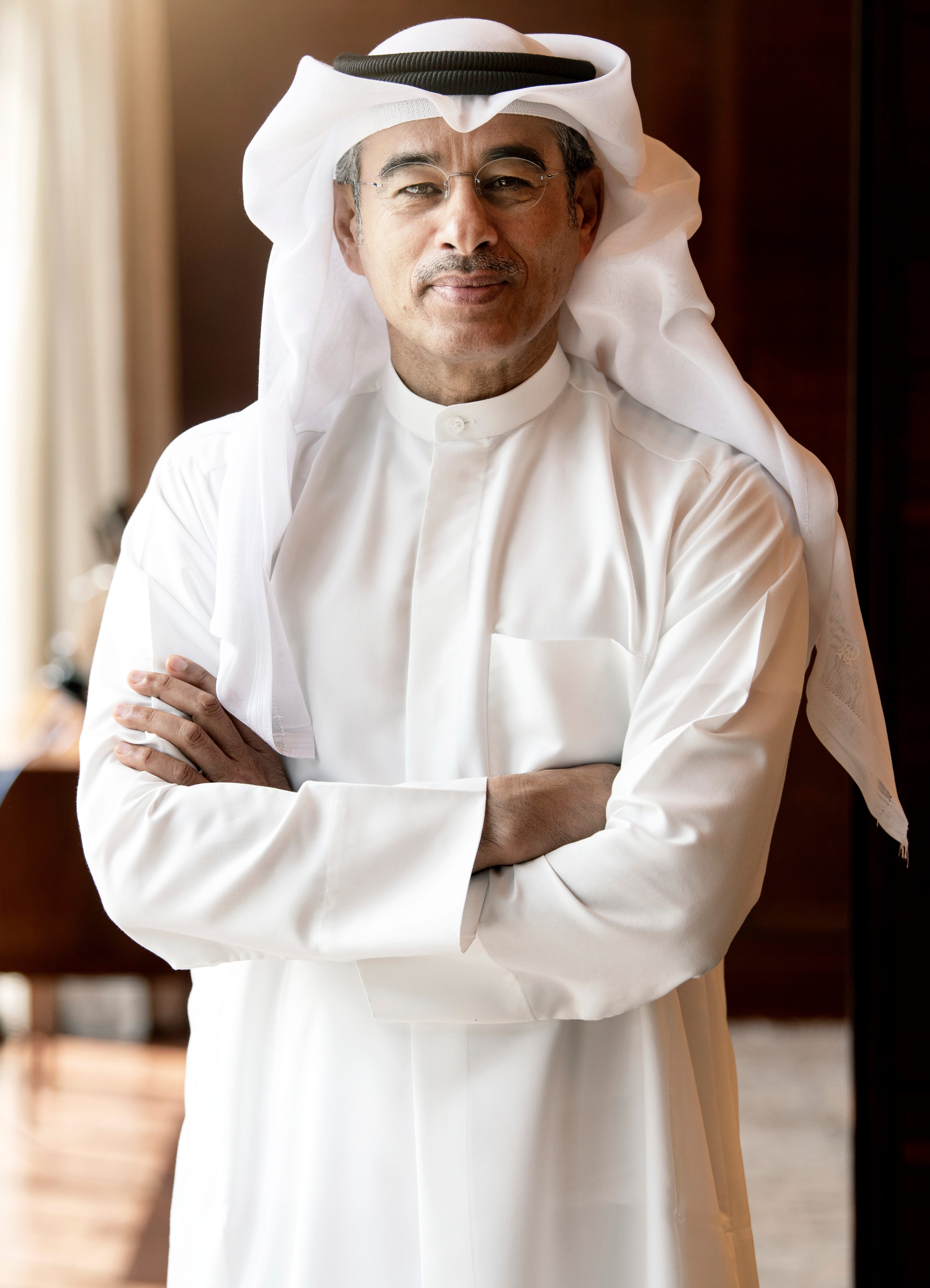
Alabbar does not merely sell houses. He sells controlled worlds: landscaped, guarded enclaves where the developer governs access, services and public space. Marassi, his Mediterranean flagship, has made that model both desirable and politically explosive. It also revives an older dispute: in 2022, authorities halted dredging near Marassi after complaints that its marina was eroding neighboring beaches, an issue legislators say still lacks transparent monitoring and updated public data.
Marassi has also left an environmental footprint beyond the current dispute with owners. A Zawya 3 investigation used Google Earth imagery to estimate that beaches east of the resort’s yacht marina had retreated by between eight and 11 meters following complaints that began in 2020. In July 2022, the Environment Ministry halted dredging and appointed specialists to examine whether the marina works were responsible. Four years later, a coastal-management expert told Shorouk that erosion around Marassi may have reached 14 meters and that remedial work had only partially reduced it.
Born in Dubai in 1956 and educated in finance at Seattle University, Alabbar began in government before becoming the businessman most closely identified with Dubai’s transformation. He was founding director-general of its Department of Economic Development and worked under ruler Mohammed bin Rashid Al Maktoum. Emaar, established in 1997 with state backing, built Downtown Dubai, Dubai Mall and Burj Khalifa.
Calling him a private tycoon therefore misses half the story. Dubai’s state and corporate sectors deliberately overlap. Alabbar once said he did nothing without consulting the ruler who gave him his opportunities. In May 2026, government-owned Dubai Holding raised its Emaar stake to 29.73%, becoming its largest shareholder. His clearest regime relationship is with Dubai’s ruling structure, rather than a documented personal role in Abu Dhabi’s foreign policy; nonetheless, Emaar carries the prestige, capital and access of the Emirati development model.
Alabbar’s Israeli contacts predate the 2020 Abraham Accords. In 2005, Israeli officials said he discussed purchasing homes due to be evacuated by settlers in Gaza, held talks with Shimon Peres and briefly encountered Ariel Sharon. Alabbar denied meeting Sharon or making the offer, describing his visit as humanitarian. His later position was unambiguous: at the official UAE-Israel Future Digital Economy Summit in December 2020, he declared that there was “no limit to what can be done with Israel” and advocated social and family connections beyond commerce. In 2021, the Israeli financial daily Calcalist reported that Alabbar had joined an Israeli food-security initiative in 2018, before formal normalization. He was one of five donors; the widely cited 550-million-shekel figure was their combined contribution over 18 years, not Alabbar’s individual donation.
Alabbar entered Egypt in 2005. Emaar Misr expanded through Uptown Cairo, Mivida, Cairo Gate, Belle Vie and Marassi, acquiring or developing vast tracts from the state. The relationship has mixed privileged access with hard bargaining. A spectacular 2015 plan for Alabbar to lead the New Administrative Capital collapsed over financing and timing. Yet disputes over Uptown Cairo and Cairo Gate later ended in settlements, while Emaar funded government-linked social projects and partnered with the Tahya Misr Fund.
Alabbar’s expansion is part of a much larger reallocation of Egypt’s most valuable coastal geography. A recent mapping by Saheeh Masr estimates that Gulf-linked investments occupy more than 209 million square meters of the western North Coast, compared with 252.4 million square meters controlled by the Egyptian government and Egyptian entrepreneurs. Emirati investments alone account for an estimated 39.7% of the area surveyed, overwhelmingly because of Abu Dhabi’s 170-million-square-meter Ras el-Hikma project. Qatari investments account for another 4.4%, while Saudi, Kuwaiti and joint Egyptian-Gulf projects make up smaller shares.
These figures should not be confused with Alabbar’s personal or corporate holdings: Emaar is only part of the Emirati presence, and Alabbar relates to Dubai’s ruling structure, while Ras el-Hikma is an Abu Dhabi-backed project. They position him within the political economy. His Egypt success isn’t just entrepreneurial growth; it’s part of a larger Gulf capital, Egyptian land, and luxury development trend, transforming much of the coastline into private enclaves.
Alabbar’s impact within this broader transformation is remarkable. Zawya 3 states that companies led by Alabbar own about 4,300 feddans (over 17 million square meters), including projects like Uptown Cairo, Mivida, Cairo Gate, Belle Vie, and Marassi. They are also developing 2,900 feddans (more than 12 million square meters) with partners, totaling nearly 30 million square meters. However, not all of this land is solely owned by Alabbar, as it includes partnership projects where Emaar Misr acts as the developer.
Under Sisi, the fit has grown tighter. The state needs foreign currency and developers capable of monetizing land; Alabbar needs land, infrastructure and political clearance. PM Mostafa Madbouly personally attended the September 2025 signing of Marassi Red Sea, a 2,426-feddan tourism complex advertised at LE900 billion. In June 2026, Alabbar assumed direct supervision of Emaar Misr amid a vacant chief-executive post.
What does he want from Egypt? His portfolio supplies the answer: coasts, strategic urban land and eventually Cairo’s historic center, converted into high-return luxury destinations. He says his interest in Downtown Cairo is civic affection, not merely investment. But his record suggests a larger ambition—to reproduce Dubai’s governing aesthetic, turning land into branded ecosystems and public geography into privately managed experience.
Comments
Nothing yet. Say the first thing.
Sign in to join the conversation.