
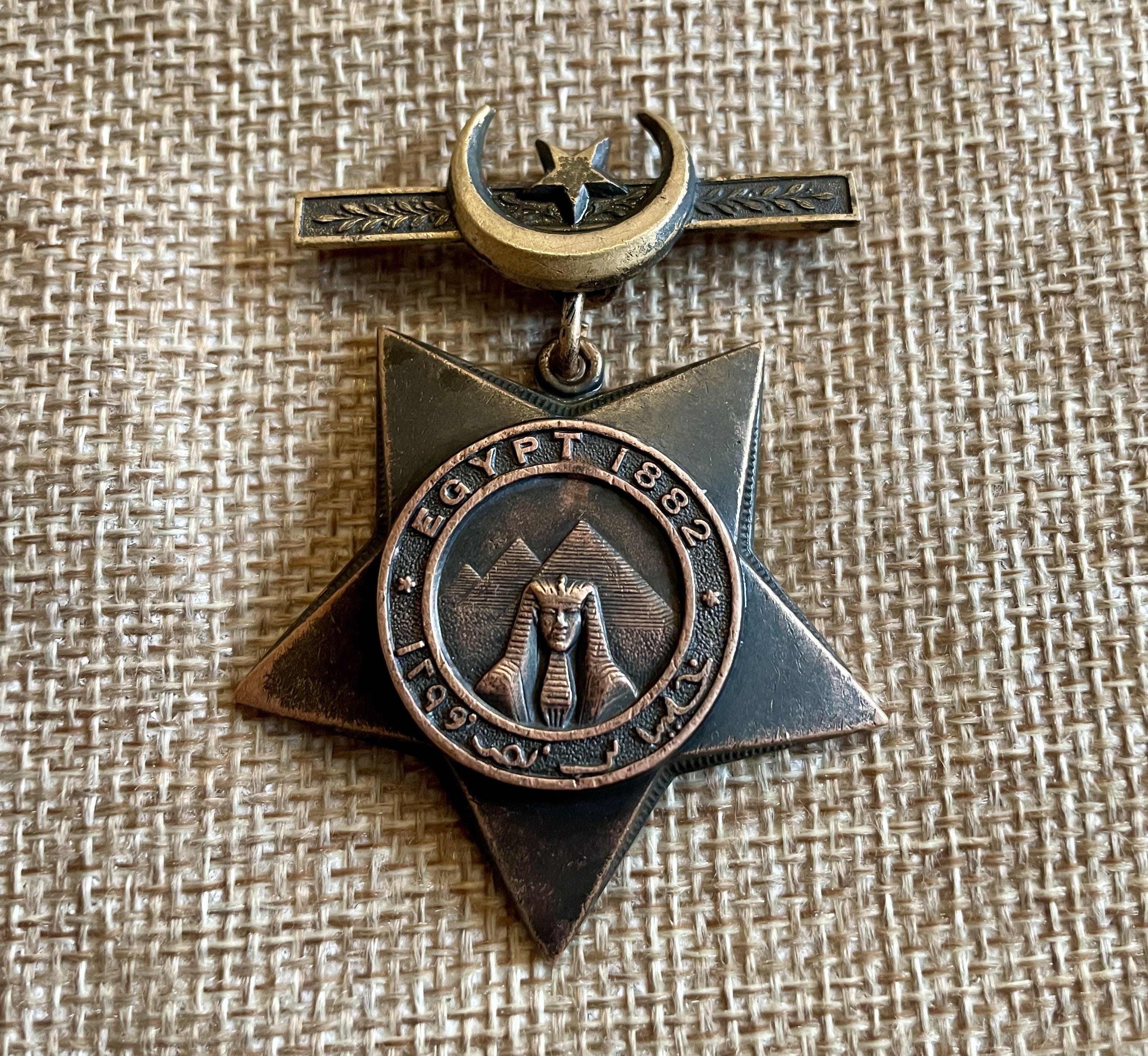
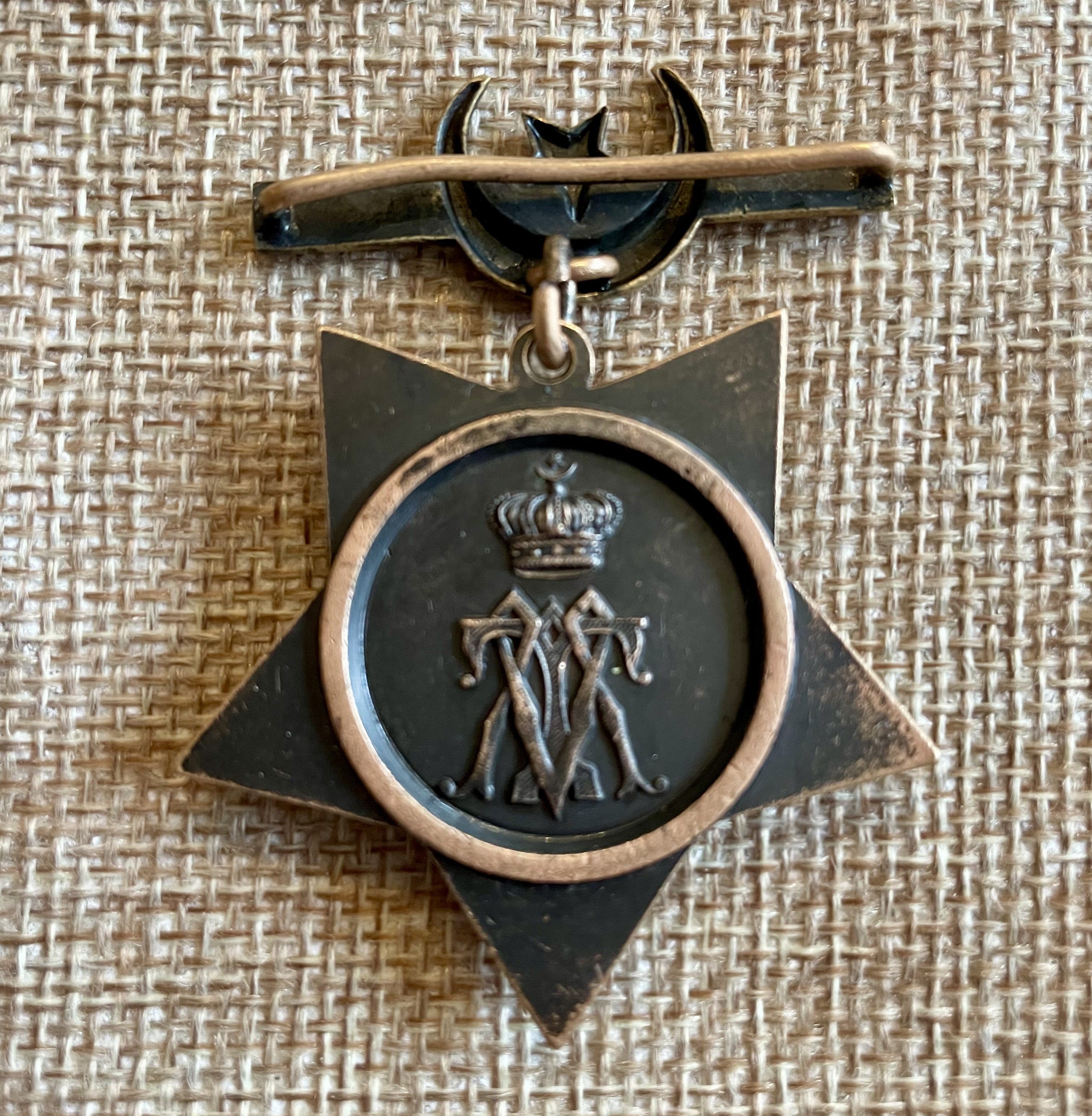
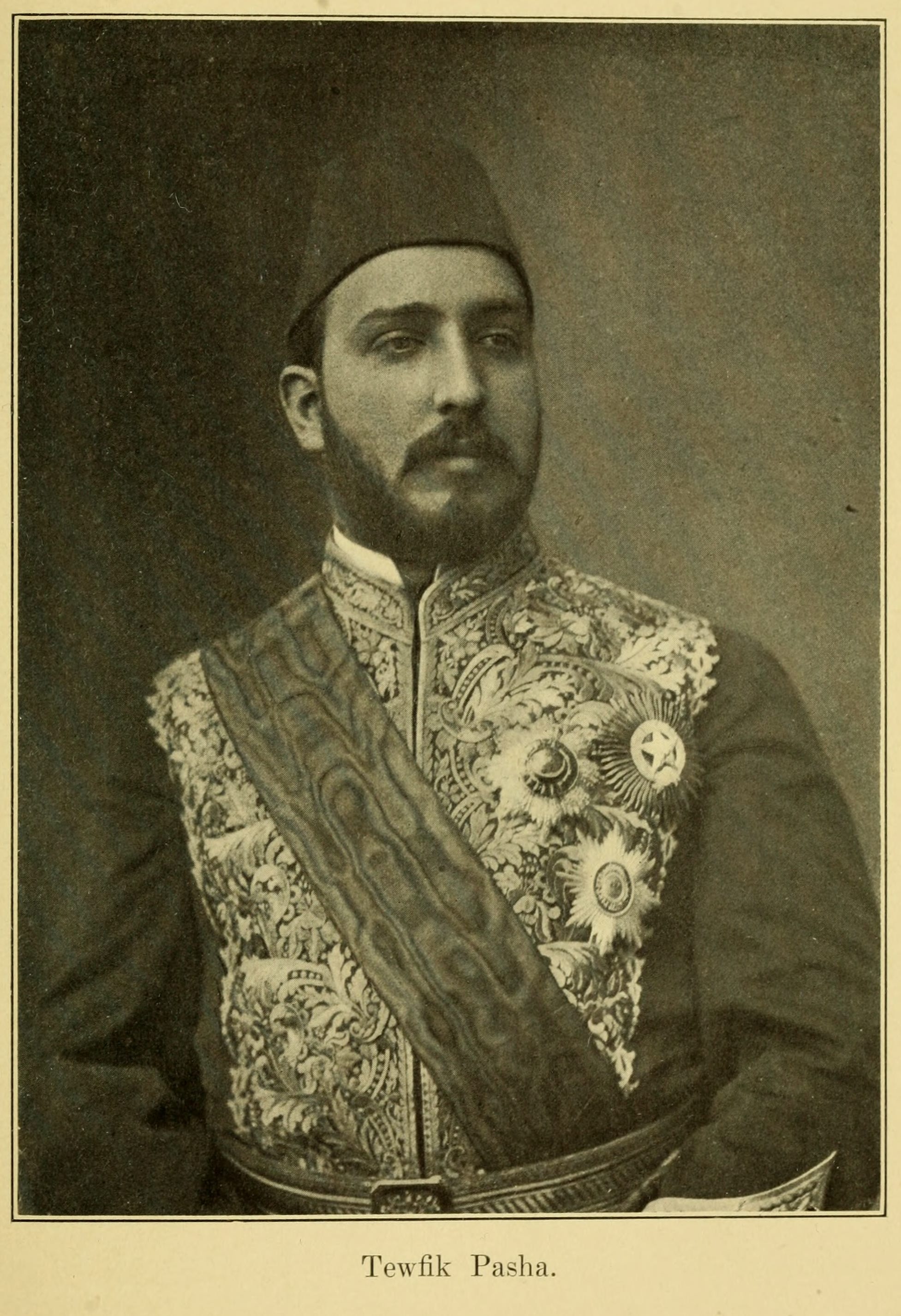
Earlier this year, I acquired this five-pointed star bronze medal. It features a sphinx and pyramids at the center, surrounded by “Egypt 1882” and topped by a crescent and star. On the backside lies the crowned monogram of Tawfiq Muhammad, the Khedive Tawfiq.
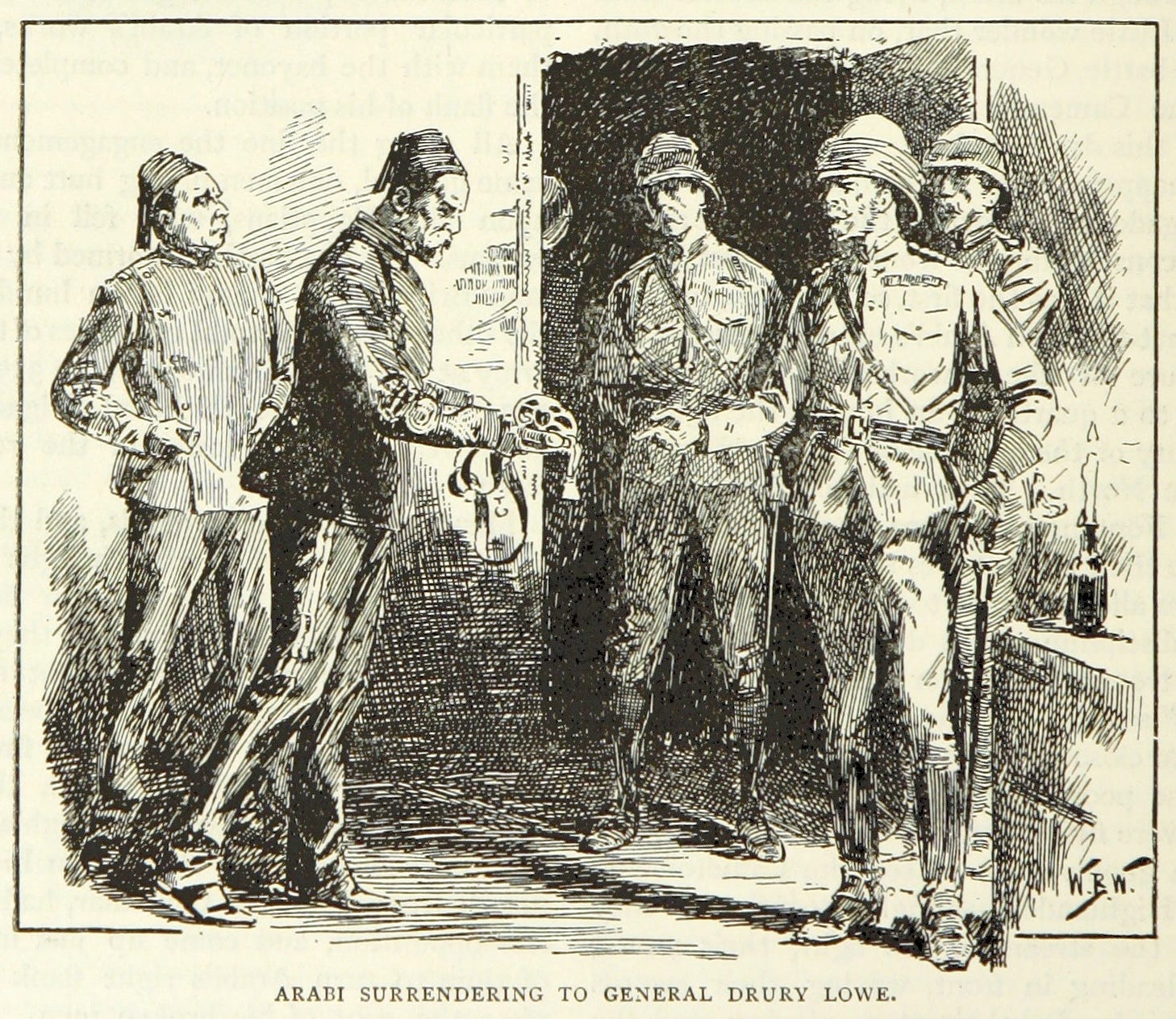
This was the country’s ruler honoring foreign troops for crushing a domestic nationalist revolt, bombing Alexandria, defeating the Egyptian army at Tel el-Kebir, and inaugurating a British occupation that lasted, in one form or another, until 1956.
The 1882 Khedive’s Bronze Star was the initial issue, produced by Henry Jenkins and Sons of Birmingham, and served as the prototype for a later range of decorations associated with subsequent campaigns in Egypt and Sudan.
The next version was the 1884 star, issued for the Suakin operations. Then came the 1884-86 star for the later Sudan campaigns. British General Orders later specified that a further star for the 1888 Suakin and 1889 Nile operations would follow the same pattern, but without a date. Museum collections also preserve later forms, including the Tokar 1891 type. In other words, the 1882 star that I bought belongs to a lineage of Khedivial campaign awards that accompanied Britain’s expanding military role in Egypt and Sudan during the 1880s and early 1890s.
Forbes, Archibald, and Arthur Griffiths. Illustrated Battles of the Nineteenth Century. Vol. 1. London: Cassell and Company, 1895.
Mayo, John Horsley. Medals and Decorations of the British Army and Navy. Vol. 2. Westminster: Archibald Constable and Co., 1897.
Comments
Nothing yet. Say the first thing.
Sign in to join the conversation.