
“Few Countries have had as rich a counterfeiting history as America.”
Ben Tarnoff, Moneymakers, 2011
This month is the second part of counterfeiting, specifically forging paper money.
Until shortly after the Civil War, America was perhaps the most fertile and profitable ground for counterfeiters of paper currency. There are three main reasons for this. First, North American governments were early to print paper currency and to do so in quantity. The British government limited the export of gold and silver which meant a shortage of precious metals for coinage. That forced officials to create other forms of currency. The Massachusetts legislature started printing bills of credit in 1690 in order to pay debts.
Second, an absence of a strong central government. With law enforcement in the hands of each state, there was no unified and coordinated program to combat counterfeiting. It fractured efforts between states and provided counterfeiters with an easy escape. They could set up camp along borders and if detected, they evaded prosecution simply by slipping into the adjacent state where their pursuers had no jurisdiction.
Third, was an absence of centralized currency for most of the century. During the American Free Banking Era (1838-1863) banks were allowed to design and print their own paper money. There were hundreds of different banks which created hundreds of distinctive bank notes. In 1863, there were approximately 1600 banks issuing currency in denominations between $1 and $500. Not only were the designs and sizes unregulated, so too was the paper they were printed on. This made it almost impossible to know what was genuine and what wasn’t. By 1840, the Bicknell’s Reporter, Counterfeit Detector and General Prices Current, included the description of 1,930 different counterfeit bank notes.
Geography was another factor that favored counterfeiters. Vast stretches of wilderness allowed them hide and print a large batch of bank notes, then pack up shop and leave before authorities were aware of their presence. In the early part of the century, British North America (aka Canada before 1867) played a role. Many American counterfeiters came north to print their bills and then smuggled them back into the States for distribution through established pipelines. As Ben Tarnoff, Moneymakers, said “a poorly guarded border between bickering neighbors offered the ideal location to base an operation.” Given the antagonistic relationship between Britain and the States, and the War of 1812, British North American officials were not inclined, and in some instances unwilling, to invest manpower and money to hunt down American counterfeiters on their soil.
Shopkeepers encountered dozens of different bills from different banks each day. From as early as 1726, newspapers did what they could to help. They published descriptions of counterfeit bank notes. Later, periodicals such as Thompson’s Bank Note Reporter and Van Court’s Counterfeit Detector were published on a regular basis. They described which denomination from which banks had been counterfeited, and described how to detect the false from the legitimate. These might be the lettering, not the correct signature on the note or the correct signature misspelled (the signature of the bank’s president was printed on the note).
Forgeries of legitimate bank notes were not the only form of counterfeiting. Banks came and went. When a bank went out of business, their engraving plates were sold, or stolen. Many of the individuals who obtained these plates were counterfeiters. News of such failures was slow to travel, money could be printed and distributed before merchants, or the detectors, knew the bank no longer existed. Other counterfeiters created fictitious banks and “issued” their own currency.
This began to change with the Civil War.
The Union government needed money to fight the war. In 1861, Treasury Secretary Salmon Chase provided a solution. The government would be allowed to borrow $250 million. People could buy bonds which matured in twenty-years or Treasury notes which matured in three years. The most significant of these were the “demand notes” which earned no interest, were issued in small denominations, and were redeemable on demand. These circulated like money and were an early form of federal currency which set the stage for the elimination of all other bank notes.
In 1862, counterfeiting started to get more difficult. The federal government passed the Legal Tender Act, which took another step toward a monopoly of printing currency. By 1877 independent bank notes disappeared and all that remained were those printed by the federal government. Though the federal currency bore the name of the institution that issued it, Chase commissioned engravers to make the master plates. That improved the quality of the images and created consistency in appearance. Rather than having to contend with hundreds of different types of bank notes, merchants and shopkeepers had a single currency to handle. Counterfeits were now easier to spot and more difficult to pass along.
These bills were referred to as Greenbacks and they were unique among all bank notes that had ever existed in the States. Rather than being a promissory note, they were the equivalent of, and legally indistinguishable from, gold or silver. They weren’t a promise of money; they were money.
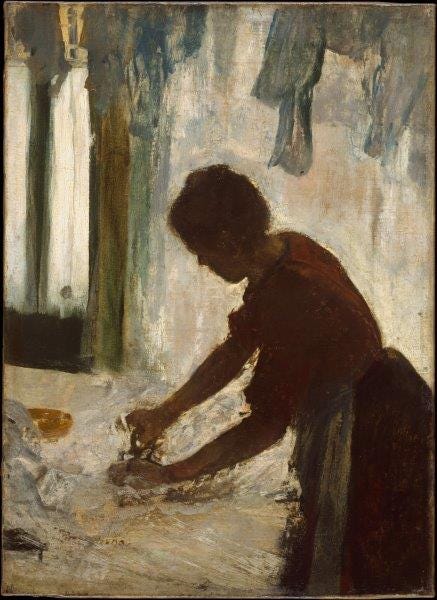
Though occurring in the early 1700s, this is far too charming a story not to tell. Around 1716, in Rehoboth, Massachusetts, Mary Peck Butterworth, started a counterfeiting operation out of her kitchen. While other counterfeiters were using metal plates and etchers, Mary was using a simple household iron and starched cotton/muslin cloths. (Sometimes identified as the first disposable counterfeiting plates.)
There were three steps in the process. One, cover a note with damp muslin/starched cloth, run an iron over them. Two lay that marked cloth over a blank piece of paper, run an iron over them. Three, use quill pens to fill in the pattern by hand. A batch of false notes could be made with a single piece of muslin. It is estimated that she made a few thousand bills.
She enlisted her three brothers, at least one sister-in-law, neighbors, a deputy sheriff, and even had a sign-up list posted at her church. She sold the notes to her husband’s business and friends and made a fortune. The enterprise lasted seven years. There are different stories about her downfall: her employees were caught distributing the forgeries; Mary’s boasting; or that a passer, Arthur Noble, got drunk and was too generous buying everyone drinks, which raised the innkeeper’s suspicions. He turned Noble over to authorities.
Mary went on trial on August 14, 1723. Though witnesses (including her brother and his wife) testified against her, the case was dropped for lack of physical evidence. When authorities searched her home, all they found was an iron, ironing board, and some scraps of burnt muslin in the fireplace.
(The picture is “Woman Ironing,” by Edgar Degas, 1873, and provided by the Metropolitan Museum of Art, Open Access)
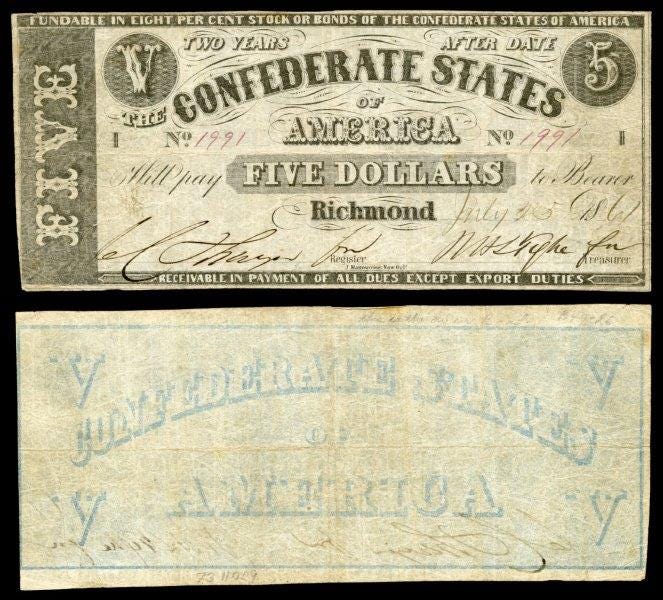
Samuel Curtis Upham owned a shop at 403 Chestnut Street, Philadelphia, and sold stationery, newspapers, and cosmetics. He was also one of the most prolific sellers of fake currency, even though he never intended to be a counterfeiter.
He got started shortly after February 24, 1862 when the demand for that day’s issue of the Philadelphia Inquirer exceeded its supply. The reason? They had printed on their front page a copy of a $5 Confederate note. Upham figured this was good business and started printing his own. He sold them a souvenirs of the war. And he didn’t do it in secret. He took out full-page ads in newspapers touting the quality of his “mementos” and sent orders through the mail.
What prevented him from being arrested as a counterfeiter was perspective. The Union government did not recognize the legitimacy of the Confederate government, and, therefore, did not recognize its bank notes as legal currency.
The South had a very different perspective, referring to Upham as a “knave swindler, and forger of the most depraved and despicable sort.” (Richmond Daily Dispatch) The South knew who he was because Upham created a margin at the bottom of his “mementos” where he included his name and address.
The biggest passers of his “mementos” were Union soldiers. Many traveled through Philadelphia on their way to battlefields in the South. They supplemented their income by buying Upham’s bills and used them to buy supplies in the Confederate states. Whether or not Southern merchants recognized them as counterfeit is irrelevant. As Ben Tarnuff puts it, “a Southern merchant would presumably be more inclined to accept a bill from someone with a gun.”
The quantity of counterfeits circulating not only damaged the economy of the South, and the population’s faith in it; it damaged the legitimacy of the Confederate government itself. By printing Confederate notes, Upham had inadvertently contributed to the Union victory.
How prolific was he? A historian interviewed him in 1874 about Confederate currency. Upham estimated that he printed about $15 million worth of fake bills. Not all of them reached the South (some were purchased as souvenirs and remained in the North). If all of it had, that would have been close to three percent of the total amount of Confederate currency in circulation. That might not seem like much, but compare it to statistics from 1911 when the Secret Service stated that counterfeits made up less than one-thousandth of one percent of the money in circulation.
It wasn’t just a new unified currency that came out of the Civil War; it was a coordinated and dedicated effort to stamp out counterfeiting. With the printing of money in federal hands, the Treasury didn’t have to rely on local efforts, or jurisdiction across state borders. Counterfeiting
became a federal crime.
The urgency to crack down on counterfeiting had political implications for those on both sides of the conflict. Too many fake bills in circulation decreased the public’s faith in a currency, and that would lessen the value of the currency. The lower the value the more difficult it would be to fund the war.
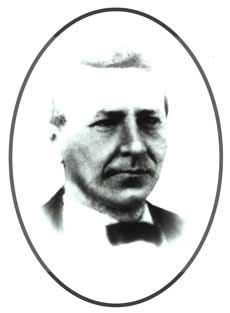
In April 1865, the U.S. Treasury Department created an agency whose sole purpose was hunting down counterfeiters. It was called the Secret Service. William Wood (pictured above) was named its first director. It was quite successful. In its first year it made more than 200 arrests.
Though applauded for his success, Wood was criticized for his questionable (and sometimes illegal) methods. He used government funds to subsidize illegal activity, put criminals on the payroll and encouraged them to commit crimes to collect evidence to convict forgers higher up the chain. The regular breach of the law and of people’s liberties put the Service at odds with more than one judge.
Part of this stemmed from the inability of the agency to make arrests. The Secret Service was formed by the Treasury, not by Congress. This meant operatives had to work with local authorities who weren’t always averse to counterfeiters on their turf so long as they received a percentage of the profits. Wood and his men would buy counterfeit cash, have other operatives witness the transaction, then make a citizen’s arrest. At times, Wood dropped the façade and seized the suspects and evidence by force.
He made a halfhearted attempt to reform the Agency in 1868 by issuing a series of directives to modify the behavior of his agents. To no avail. When Ulysses S. Grant became President in 1869, Wood was dismissed. At the time, he was under indictment for false imprisonment.
Though it had a less than auspicious start, the Secret Service developed into one of the most effective organizations against counterfeiting.
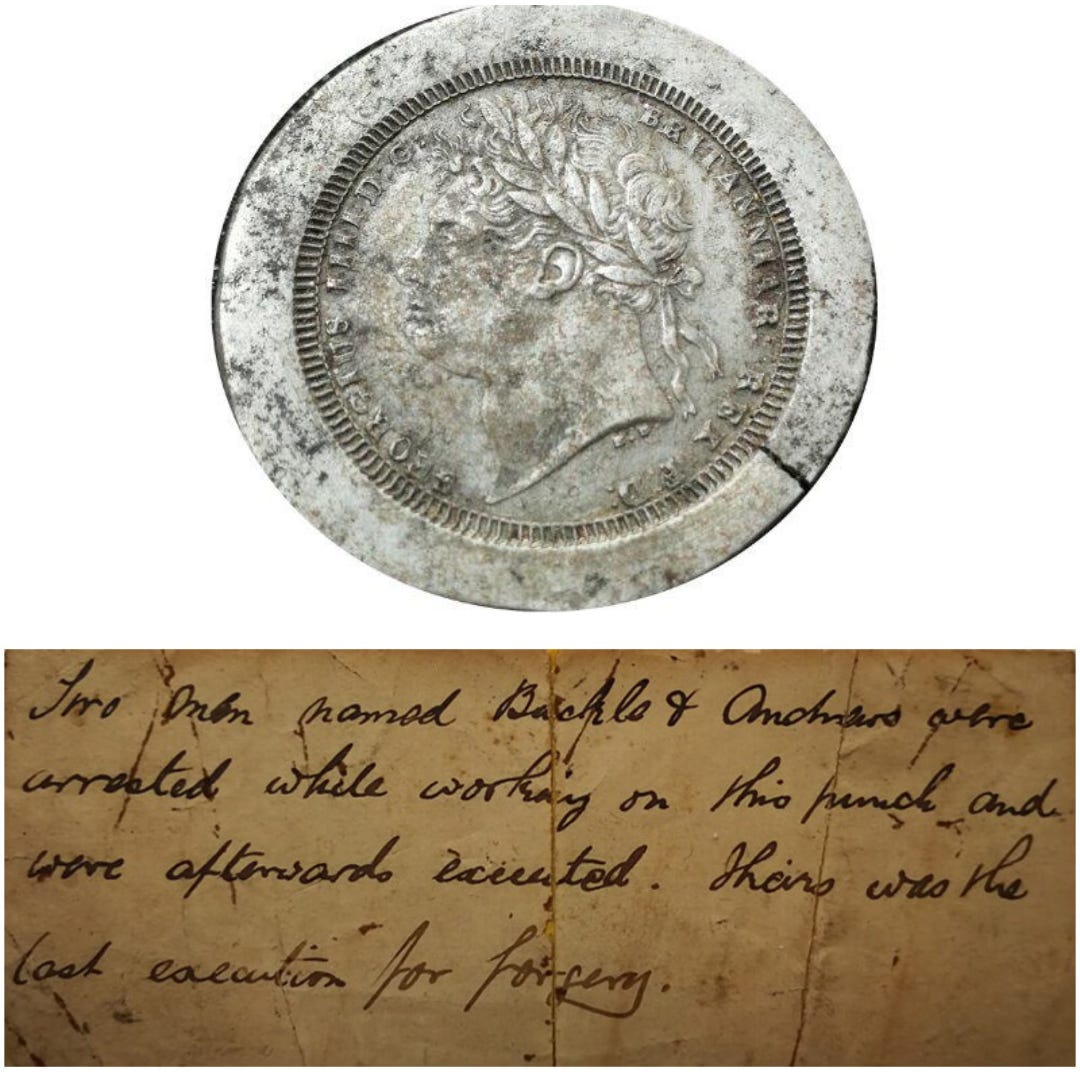
Last month I spoke of the Vauxhall coiners, the coin punch, and the note which read: Two men named Buckley and Andrews were arrested while working on this punch and were afterwards executed. Theirs was the last execution for forgery.
The Royal Mint Museum was kind enough to let me include pictures of the die the Vauxhall coiners used and the letter. Many thanks to the Royal Mint Museum and David Mason, Public Engagement and Information Officer.
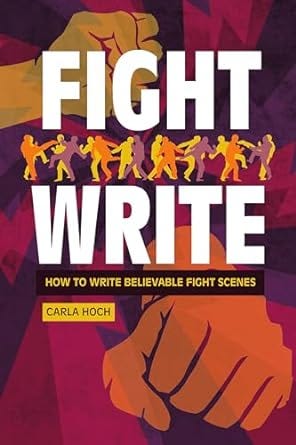
Fight Write, by Carla Hoch
If your story has a fight scene anywhere in it, you need to have this book.
There are many things I like about Carla Hoch’s Fight Write. To start with, everything written is coming from someone with personal experience. Hoch is a fighter, so her book is not about providing theory; she’s talking about things she knows. The items she doesn’t have personal experience with, she brings in someone who does.
Her style is conversational which I appreciate. You won’t get lost in technical jargon and she is not trying to impress you with what she can do. It’s like having a conversation across a table.
Having said that, there are the technical aspects. Terminology, different styles of fighting and what distinguishes them, how to throw a punch, and fighting stances. Hoch talks about the different types of knives, hand guns, rifles, shotguns, and what she refers to as WOOs (weapons of opportunity). But there’s more to her book than the mechanical.
There is a chapter on the impact of the adrenaline rush (good and bad) and the aftermath (the adrenaline dump). She discusses how your character might react to the threat of violence. (I never thought of submission as an advantageous option; I only thought about it in the bad way.) It is very much about the character, how they will react (or won’t), what they’ll feel, the physical consequences of fighting, and the mental consequences of killing.
For me, she brought to the forefront aspects which seem obvious, but only after someone has said them. Things such as all fighters are afraid. That, when wrestling, sometimes the person on the bottom has the advantage. She includes unexpected subjects that contribute to your scene’s authenticity. For example, discussing how culture, societal expectations, and geography impact how your characters will fight.
For me, there were two equally important (and invaluable) parts to the book. Hoch encourages you to plot your fight using a wide net. It isn’t about what punches are thrown; it’s more complicated than that. It’s about why your characters are fighting (their motivation), where they’re fighting, and who they’re fighting and using the answers to these questions to choreograph your fight. It forces you to create the human aspect of a fight and decide how that aspect will impact what each character does.
Which brings us to the second important part. It’s about the people, not just the physical act of fighting. How should your character react to being threatened, to confronting more than one assailant, to being smaller or less experienced than their opponent. I particularly appreciate the realism she brings when she acknowledges that the vast majority of us (and our characters) have no experience fighting. So, this isn’t about making your kidnapped schoolteacher fight like a black belt martial artist, unless they are.
I will end with a boast. Those who have read it will understand: I was able to guess what a Superman punch was.
Surviving impossible wounds. I am not a doctor, but there are certain wounds I know are not survivable. I remember watching Cloverfield. There is a measure of suspended disbelief when watching science fiction and I’m okay with that. My annoyance stems from the extension of that “our reality but not” to things such as wounds. I use Clovefield as an example because one of the characters who survived had been impaled through the left shoulder by rebar poking out from a big chunk of concrete. They removed her from the metal bar, put a small cloth over the wound, and went on their less-than-merry way. Miraculously, she didn’t bleed to death. She should have, especially since she didn’t receive extensive medical care.
The unrealistic presentation of wounds extends to an inequality of consequences. The hero/heroine will survive a wound that the villain won’t. Something that kills or debilitates one person, should kill or debilitate everyone. Our biology is not impacted by our ethics. So, if your baddie dies from a gunshot to the gut, so too must your hero/heroine.
Our characters have to get wounded to make the story exciting, to add danger and suspense. Whatever wound they receive, make certain they can survive it. If they can survive, then so too must your villain. You don’t have to be a medical doctor to know what wounds are/aren’t survivable (though it helps). There are resources available that you can and should consult.
So, suspension of disbelief is fine, but if your characters are surviving impossible wounds, you had better explain why they are able to survive when the rest of us (including the baddies) aren’t.
A bit misleading to call it slang. (Okay, it’s entirely misleading.) Instead, it’s vocabulary related to the topic of counterfeiting.
Specie: Money in the form of coins (metal) rather than paper (notes). This is significant for American currency in the nineteenth century. Banks were not supposed to issue more banknotes than they were able to redeem. At anytime, an individual could redeem their bank notes for coins. The bank was supposed to have enough coin on hand to exchange for the bank note. Such was not always the case. “Wildcat” banks: built in remote areas (often in the wilderness) were founded with fraudulent intentions. The theory (or scam) behind such banks was that their remoteness would deter both patrons and financial institutions in distant states from redeeming their bank notes because the bank was too far away. In other instances, the banks were located in places so remote, they couldn’t be found. They could issue bank notes at a profit knowing they would never be redeemed.
Raised bills: These are legitimate, legal tender that have been manipulated. The denomination has been raised. For example, when a $1 note has been raised to $10. This could be done using a penknife and pen or the denomination could be removed using a chemical process. Such bills could be detected by looking at the color of the paper around the denomination (both words and digits). The chemical process turned it almost white. Other means of detection was to look at the “s” in the word “dollars” and comparing it to the lettering and the ink in the rest of the word. If the note has been raised, the form of the “s” might be different in shape or the ink could be darker.
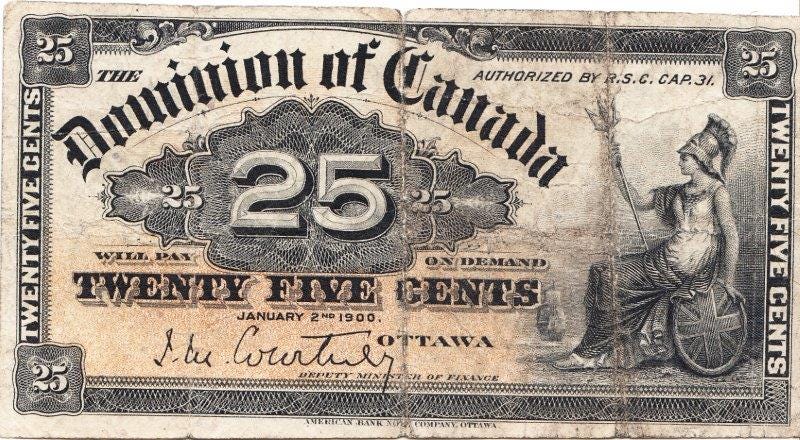
Shinplasters: Paper banknotes of low denomination, usually below a single dollar. They were printed because of the shortage of metal for coinage. They were used predominantly in the 1800s. The origin of the name is said to have come from the American Revolutionary War when soldiers put pieces of paper inside their boots to prevent chafing. Because paper money was perceived to be worth less than metal currency, these small denominations came to be referred to by this slang to reflect the public’s opinion about their lack of value. Stores as well as banks, could issue shinplasters since they weren’t currency per se; they were a note of credit.
In Canada, the term was restricted to 25 cent monetary notes and were issued between 1870 and 1923. The term is believed to have come from the five-shilling note (1/4 pound) which, in French, was referred to as cinq piastres. (Image courtesy of Jbeaulieu)
No posts
Comments
Nothing yet. Say the first thing.
Sign in to join the conversation.