
“I collected the instruments of life around me, that I might infuse a spark of being into the lifeless thing that lay at my feet... the rain pattered dismally against the panes.” Frankenstein, Mary Shelley
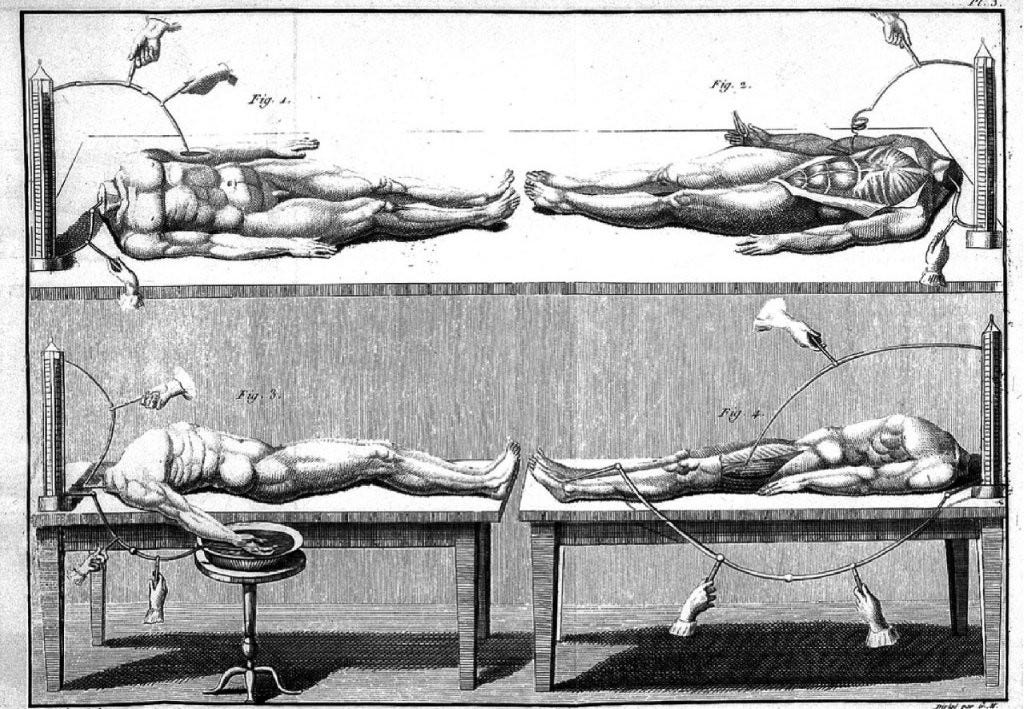
In honor of All Hallow’s Eve, something mildly morbid: galvanism.
The scientific definition is somewhat boring: electricity created by chemical action (think battery). The medical one isn’t much better: therapeutic use of electrical currents. In the nineteenth century, galvanism was much more than this. It is the method Dr. Frankenstein used to bring his creation to life. The reanimation of dead flesh inspired questions about mortality and resurrection. Could the restoration of the electrical currents in a body bring someone back to life?
Galvanism is one of those accidental discoveries that peppers scientific advancements. While experimenting on dissected frogs, Luigi Galvini (1737-1798) noticed their legs twitched when an electrical current was applied. He interpreted this as proof of his “animal electricity” theory. He believed it was the vital life-giving force present in every animal; the force that created life.
Alessandro Volta—Galvini’s contemporary and the man who coined the term galvanism—was not convinced. He took up his own experiments and debunked “animal electricity,” arguing that the convulsions were result of environmental factors, not internal ones.
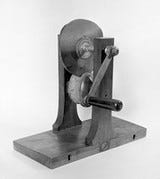
“Before deciding that death has actually taken place, a muscle of the arm or the thigh ought to be laid bare, and electrified by means of the Galvanic battery. If it does not give any sign of contraction, life is extinct; if contraction does take place the individual is not dead, and the means heretofore directed for restoring the action of the heart and lungs should be adopted.”
Henry Wheaton Rivers, Accidents
The debate began and imaginations were captured and experiments and demonstrations continued well into the nineteenth century and beyond. In a first-year biology lab, I was hooked up to an apparatus that sent a charge through my forearm. An odd experience, having my hand move completely independently of my brain. And repeating “don’t move” over and over in my head had no effect whatsoever.
It is one thing to demonstrate “animal electricity” on animals, quite another to test its effect on humans—both for therapy and for bringing back the dead. There was more of the former and much (much) less of the latter, but Friday is Halloween so I beg this indulgence.
Any kind of medical examination of the human body was challenging for most of the 1800s. Moreso in North America and the British Isles; less so on the Continent where dissection was not greeted with the same horror and outrage. In North America and the British Isles, bodies for science were scarce. A medical man wanting to make his reputation had few sources available. Decent folk didn’t want to be cut up after death. One solution was graverobbing; a prolific, lucrative, and illicit industry in which physicians and universities participated.
The legitimate sources were unclaimed bodies of the poor and executed convicts. Under certain circumstances, these sources preferred sources. The corpses of convicts were especially valuable because the individual did not die from disease. They did not carry the stigma of being stolen. This meant they could be used for public demonstrations without risk of professional ruin. Dissecting criminals was socially acceptable. Their crimes had removed or excluded them from civil society while they were alive, therefore the graces given to respectable people after death could be withheld. Afterall, they had existed “outside the law,” (from where we get the term outlaw).
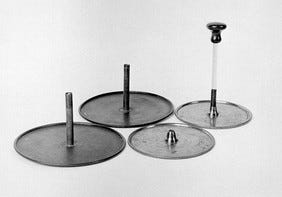
These public demonstrations were dramatic, theatrical, and intended to get as great a response from its audience as was socially decent. And maybe a little more. The spectacles brought the “science” of galvanism into public awareness and discussion. Mary Shelley’s audience would be familiar with, and fascinated by, galvanism. They were also excellent sources of income and for fame. A physician with a talent for showmanship could become a minor celebrity.
During these experiments/demonstrations, the scientist would hook rods to the body in various positions to make the limbs twitch and jerk, much to the delight of the audience. One particularly memorable instance occurred in 1818 with the corpse of Matthew Clydesdale. Rods were connected to his diaphragm and the left phrenic nerve. When a current was passed through him, his chest rose and fell giving the illusion of breathing. A scene which horrified and thrilled the audience.
Making the dead mimic life sparked debate about the source of life and the definition of death. Which brings us to one final morbid bit. Physicians were often worried that the person they were about to declare dead actually wasn’t. This is particularly true with poison. Alfred Swaine Tayhor recommended galvanism be used “during the raging epidemics, if additional evidence be required for early burial.” (Medical Jurisprudence) Many recommended galvanism to ensure, beyond a doubt, that the patient had expired. If there was any uncertainty (and sometimes even if there wasn’t), they would hook the individual up to a galvanic battery and send an electrical current through the body. If the patient regained consciousness, they weren’t dead yet; if there was no reaction, they were deemed beyond medical help.
(Is it just me, or does that scenario have the makings of a brilliant Monty Python skit?)
Click HERE to tune into an interview I did with D. P. Lyle and Kathleen Antrim through their OutliersYouTube site.

Or get a quick bit of advice on how to enrich your historical detective fiction on the Sisters in Crime YouTube channel, SINC-UP by clicking HERE.

Thanks for reading Bandit’s Roost! Subscribe for free to receive new posts and support my work.
No posts
Comments
Nothing yet. Say the first thing.
Sign in to join the conversation.