
“If a hair submitted for examination be not human, from what animal has it been derived?” Charles Meymott Tidy, Legal Medicine, 1892
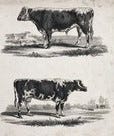
There is a long (and sordid) history to the examination and comparison of hair from different species. When Dr. Tidy penned his treatise in 1892, he was building on, at least, a century’s worth of studies carried out by fellow physicians to allow them to testify in court about species. Though not always correct, they did form a solid foundation for later studies. This was rare for the nineteenth century scientific study to be carried out solely for the purpose of providing evidence. The vast majority of forensic discoveries were independent of law enforcement and often applied to court cases as an afterthought. But that is an entirely separate discussion for a later date.
The impetus for the forensic interest in the study of hair and identifying characteristics to distinguish which person, and which species, they belonged to is unexpected and somewhat disturbing. It finds its origin in the plethora of accusations of amorous activity with pets and/or livestock. Given the number of cases which appeared in court (right through to the end of the century), it is safe to say that this was somewhat of an obsession for nineteenth-century folk (reporting the crime; there are no figures on how many engaged in the acts). The frequency was such that Dr. Tidy advised physicians to keep a series of hairs from different species ready mounted, and close at hand for easy and timely responses to law enforcement requests. Key here is that the study of hair, and testifying about it in court fell firmly within the prevue of doctors; not scientists. This is true for most of the nineteenth century.
Frolicking with livestock did not cease with the arrival of the 1900s. Scottish pathologist, John Glaister, wrote about an interesting court case from 1950 of an individual caught in a compromising position with a duck. (I leave it to you to conjure that image and then try to scrub it from your mind.)
When these cases reached court, unless the individual was arrested during the act, the only evidence available was identifying the hairs of the animal on the accused. Without getting graphic, the animal hairs had to be found in specific anatomical locations or their corresponding place on clothing. There were other pieces of evidence, in the form of stains, but these could not be distinguished by species until beyond the 1940s. As a result, hair was only available piece of forensic/physical evidence that could prove guilt. Given that a guilty verdict condemned the individual to a lifetime of penal service, physicians had to be as certain as was possible where the hair came from. That meant a considerable amount of time and money spent studying it.
As microscopes improved, finer details became visible and distinction became more empirical and more accurate. In 1869, Emile Pfaff wrote a definitive paper on distinguishing species, noting that “animal hair generally had cuticle cells that were larger and not as regular as those in humans.” (Le pod de l’homme etides animaux; The Hair of Man and Animals) Animal hairs are characterized by medullary index, shape, microscopical appearance, pigment location, and medullary type.” (Stoney, More Chemistry, p. 113) When compound microscopes improved and became more prevalent, allowing two items to be viewed side-by-side, accuracy increased exponentially.
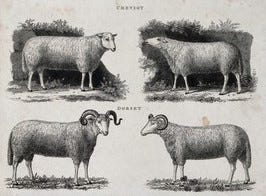
There were other, non-amorous cases when distinguishing animal from human hair was important. In an 1851 murder, the weapon was covered in short white hairs. Prosecution said it was the victim’s eyebrows; the suspect claimed they were hairs from a goat skin.
Other crimes did not involve animals at all, but required hair to be attributed to an individual. Before the century came to a close, police were advised to preserve all hair collected on or near a body, on the accused, and on the murder weapon. These samples were to be studied under a microscope. One such case occurred in the early 1900s when a taxicab driver was beaten to death with a blackjack (a type of club). Heinrich Oscar secured a conviction when he stated absolutely that the hairs found on the blackjack in the suspect’s possession were those of the victim.
The science of hair served the innocent as well. Another gentleman accused of a kicking a man to death was released from custody when the grey “hairs” on his boots were proven to be thistledown and not human hair.
When a corpse could not be identified, hair sometimes served that purpose. In the days before DNA, certainty was not absolute, but enough clues could be obtained that a reasonable conclusion could be made. In one instance, a body was identified as female based on the length of the hair found (8 inches) and the signs of bleaching. Between 1800 and 1940, men darkened their hair, but they didn’t bleach it. Further evidence came from the colour; dark brown and lacking strands of grey. Based on this, it was determined that the woman was not past middle age. Though not scientific, it was enough to convince police that they had found the missing Cora.
In other instances, law enforcement wasn’t as successful. In 1889, days after Chicago physician Patrick Cronin disappeared, a body was found in a trunk. Its condition made visual identification impossible, but it was assumed to be Mr. Cronin. To prove their assumption, law enforcement took samples of hair from the trunk and brought them to two people believed to be familiar enough with Cronin to know if it was his. Mrs. Conklin, a friend, looked at the silky strands and declared without a doubt they were Cronin’s. His barber, took a different view, claiming Cronin’s hair was much coarser and shorter. (It had been cut less than a week prior.) Despite the disagreement, police declared the hair to be Cronin’s and began an investigation into his murder.
Though lacking in the science of today, hair was a vital piece of evidence throughout the period of 1800-1940, and resulted in many convictions. As technology advanced, hair became even more important. And used to prosecute more crimes than being overly friendly with the pets.
(Images courtesy of the Wellcome Collection)
Want to learn more? Follow me on Instagram (@acuriosityofcrime). There you’ll find quizzes and tidbits of information about historical crime and the society in which it occurred. There’s “First Friday’s Firsts,” about firsts in law enforcement, crime, forensics, basically anything related to committing, investigating, or prosecuting crimes (or creating a new type of crime). And, “Thursday Think About It,” which are vignettes of life and crime from 1800-1940; obscure little things that will add depth and authenticity to your historical detective fiction. They’re taken from real cases and are posted every two weeks. The first one was about Sweaty Horses.
Click HERE to tune into an interview I did with D. P. Lyle and Kathleen Antrim through their OutliersYouTube site.

Or get a quick bit of advice on how to enrich your historical detective fiction on the Sisters in Crime YouTube channel, SINC-UP by clicking HERE.

No posts
Comments
Nothing yet. Say the first thing.
Sign in to join the conversation.