
Earlier this week, I hoisted my Ego brush cutter over my shoulder and headed for the southern third of the east woods, where I have spent little time this summer. This area is nearest the tenant house and borders—in the southeast corner—my ongoing reforestation project outside the deer fence and along the road. What I saw made me happy.
There are some mature native trees in the general area, particularly pin oaks. In addition, we planted native whips and small trees in the gaps six or eight years ago: in particular oaks (Quercus spp.), American basswood (Tilia americana), American hornbeam (Carpinus caroliniana), and black tupelo (Nissa sylvatica). Some trees died. Others have begun to thrive.
A year or two before those plantings, we hired a company to get a few patches of trees established immediately after installing the deer fence. One place they concentrated on was the southeast corner. Another was a portion of the fence just north of the wet meadow.
It has been my philosophy, when attempting to establish or enhance wooded areas, to plant at random spacing and, at times, densely (which is to say, closer than one would place trees in a garden or even a hedge). One disadvantage of this approach is that a lot of trees fail to make it. They are not coddled in the woods like specimen trees near the house. They may get outcompeted for nutrients or be starved for sunlight. On the other side of the ledger, they can form mutually beneficial relationships with neighboring mature trees, such as sharing mycorrhizal fungus (the benefits of which scientists are only beginning to understand), receiving shelter from harsh winds, and being less prone to drying out in a shadier setting with leaf litter and a humus layer.
The two areas we first planted had different characteristics. The northern plot was wet meadow with a rill that carried runoff from neighboring developments’ open space. The southeastern plot was dry meadow. But both were degraded land, subject for generations to agricultural use and mowing.
It’s important to note what we did not do when we planted trees in these two areas. We did not remove large swaths if grass or prepare beds. We did not fertilize. We did not water regularly. We did mulch lightly immediately around the base just once. Other than that, we let nature take its course.
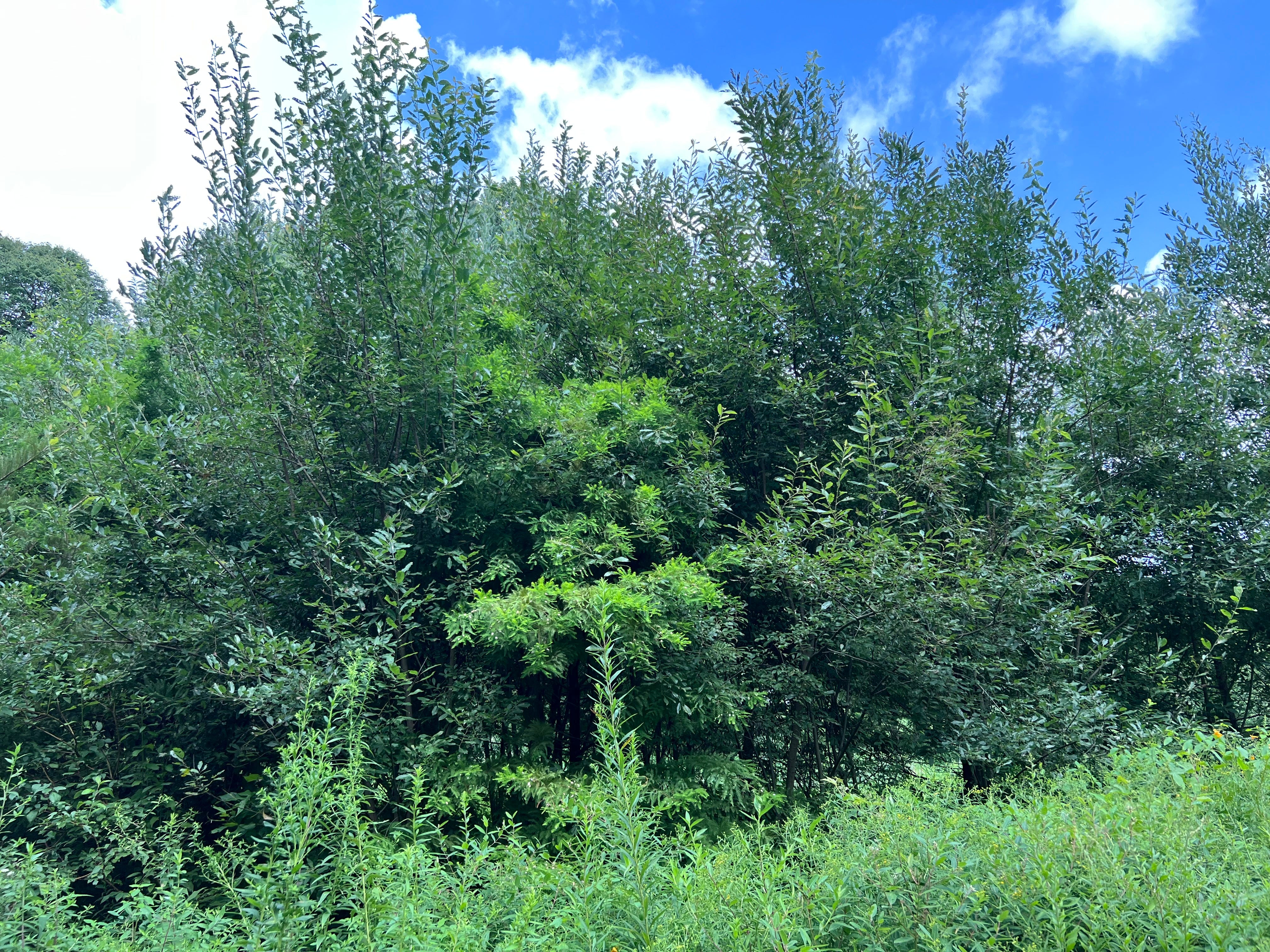
In the north, we planted about a dozen native bald cypress (Taxodium distichum) trees and used live stakes to establish a great many silky willows (Salix glaucosericea), which are characterized as small trees or large shrubs. In full sun with wet feet, both of these species thrived. The most successful willows, in fact, have outgrown the book guidance in height, which is said to top out around twelve feet but here grow beyond fifteen.
Some live stakes did not take (which is the nature of live staking, even more so than normal planting), but all the cypresses survived, and within a few years these two species grew into a sense, happy mess:
In the southeast plot, we planted native possumhaw viburnum (Viburnum nudum), American holly (Ilex opaca), red maple (Acer rubrum), and chestnut oak (Quercus montana). These were placed with more than usual density (eight- to ten-foot spacing). Most of the hollies died; they were only a foot tall when they went in. The other trees, which started bigger, struggled for a while but ultimately took off.
The most important thing that happened in that plot was that sassafras trees moved in. These pioneers want very much to grow in that area but have largely succumbed to deer pressure outside the fence. I welcomed them, along with a non-native crepe myrtle (Lagerstroemia) that I believe will eventually get shaded out. Black walnut saplings have also sprung up. I say, Let ‘em.
Here’s what that plot looks like today:
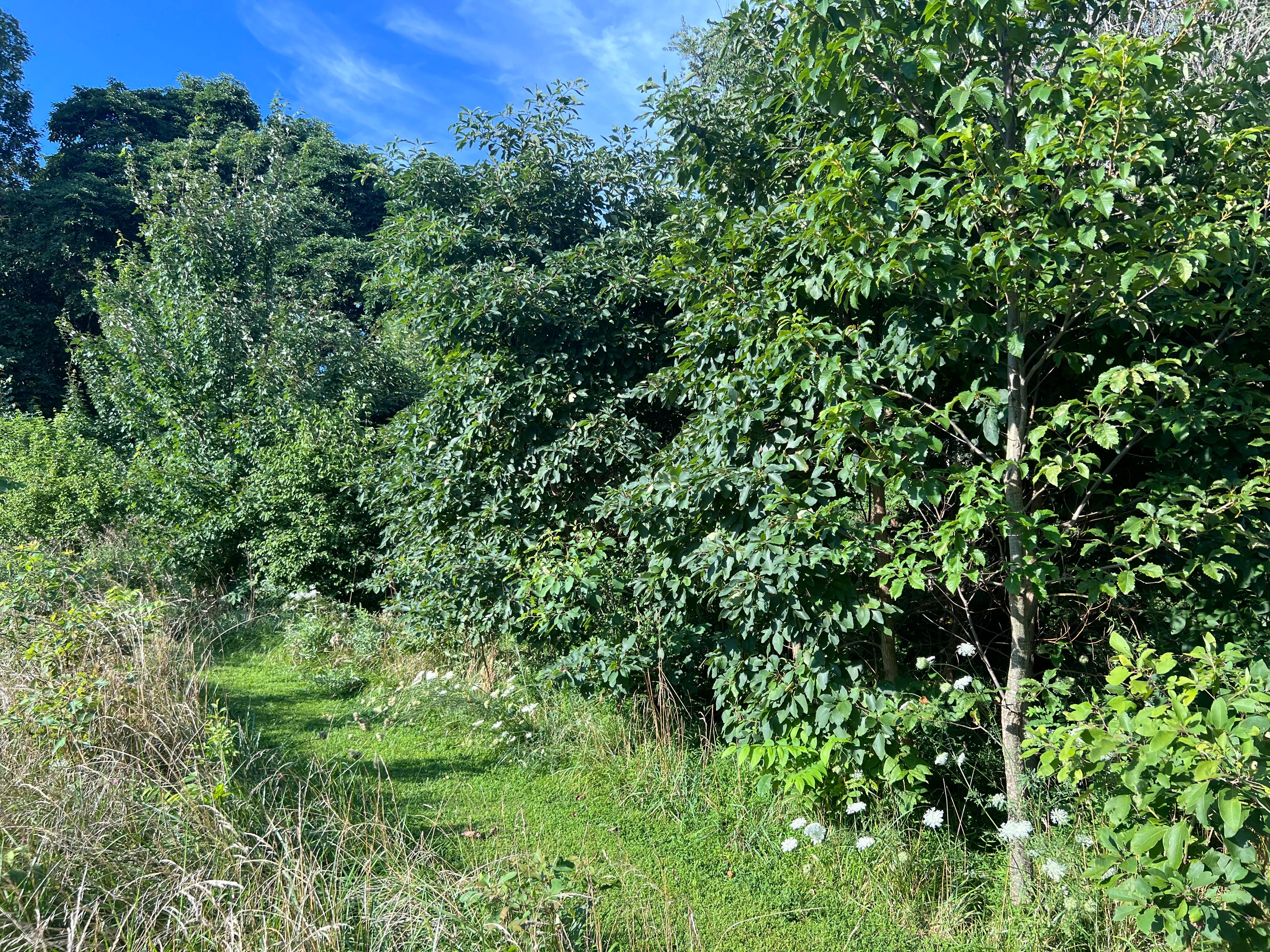
I realize that both of the above pictures resemble little more than a wall of green, but that’s the point. Their growth is dense and getting denser. They’re cooperating and competing with one another in the best way possible, forming a forest more quickly than my sparser plantings outside the fence ever will.
Furthermore, the ground under both of these plots, while not yet presenting fully as a forest floor, has fewer weeds than I’m finding in thinner woods. In the southeast corner, a patch of invasive Canada thistle peters out as the shade deepens. I found some multiflora rose, but it was leggy and not vigorous. And, remarkably, the north plot doesn’t even have any Japanese stiltgrass, which carpets airier woods at this time of year.
Inadvertently, in these two places, we created something close to what is known as a Miyawaki forest.
In the seventies, a Japanese botanist named Akira Miyawaki pioneered a new approach to rehabilitating degraded land. His method is so intuitive that it’s surprising to learn it had to be discovered at all. In essence, all it asks is that we select saplings of forest species native to the area and plant them almost absurdly close together. Absurdly, that is, from the perspective of a gardener, but perfectly routine from the perspective of nature.
For example, in the rear of our property, we have an old silver maple, south of which lies what I often refer to as our no-mow area—former lawn that we only mow twice a year, early spring and late fall, selectively fighting invasives in between. This spring, for whatever reason, hundreds of silver maple saplings colonized the area.
Sadly, these saplings will all get mowed down, but if left to their own devices they’d soon be competing with one another for light and space. In this way, under the right conditions, forests rapidly replace meadows and fill in areas of disturbance within the forest itself.
The Miyawaki method calls for planting trees as densely as 3-5 saplings per square meter. Not all survive, of course, but these forests are said to grow ten times faster than other reforestation or afforestation projects, also thereby achieving biodiversity more quickly and storing carbon sooner.
In other areas of the east woods at Puddock Hill, one could say that I’m allowing nature to execute its own Miyawaki strategy:
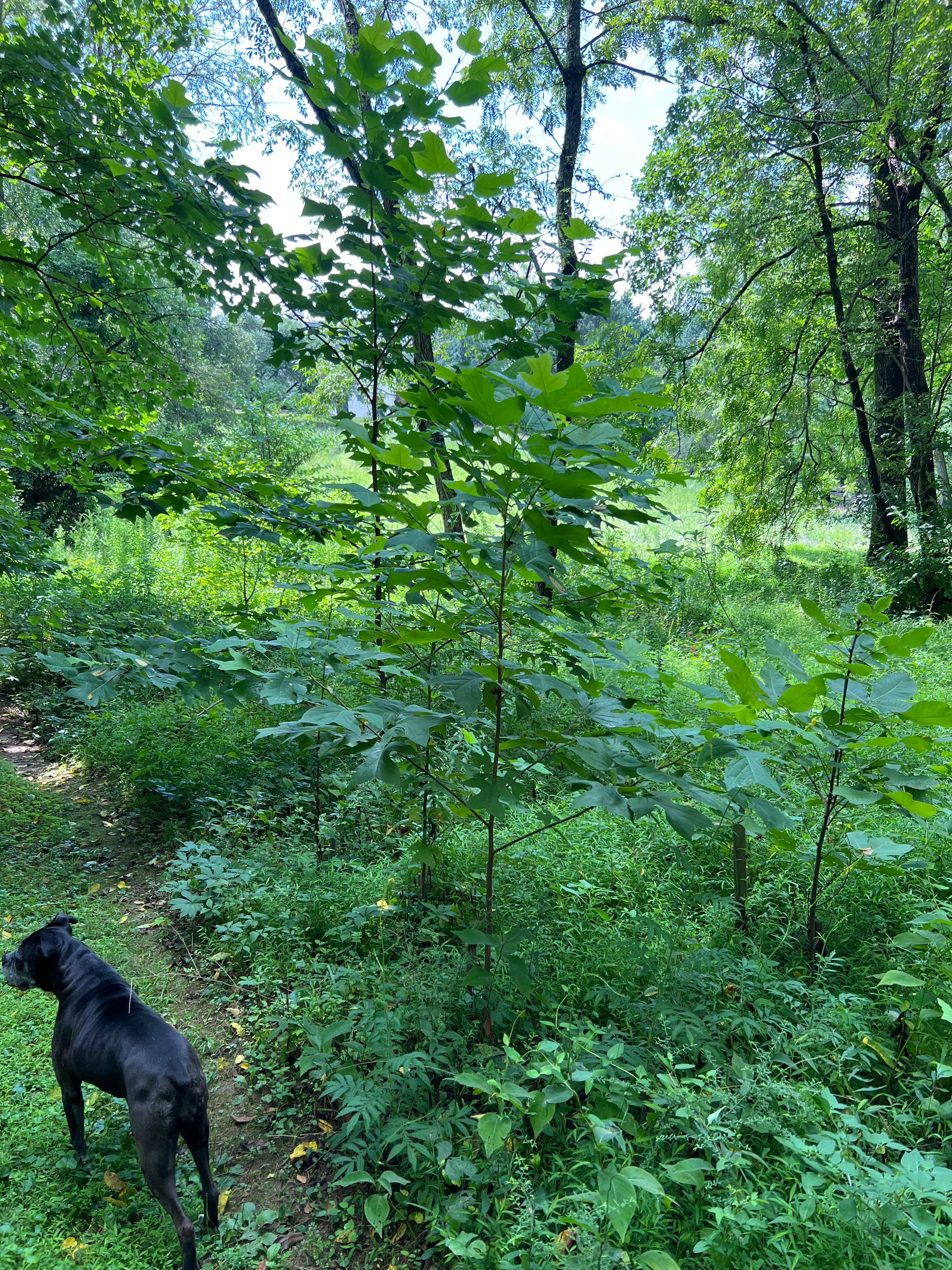
Here, along the path, the young trees in the foreground consist of tuliptrees (Liriodendron tulipifera) from two to ten feet tall and a shagbark hickory (Carya ovata) to the far right, about four feet tall. Only the tallest tuliptree and the shagbark hickory were planted by me. The others, growing in close proximity to one another, sprung up in the past two years. If all of these trees grow to maturity, you won’t be able to walk between them. But that’s okay. Instead of culling, I’ll let them all compete, as nature intends.
A keen eye may also spot Japanese stiltgrass in the picture. The forest here isn’t near thick enough yet to shade out this adaptable invader, and it may not be so in my lifetime. Which is all the more reason to invite density sooner rather than later.
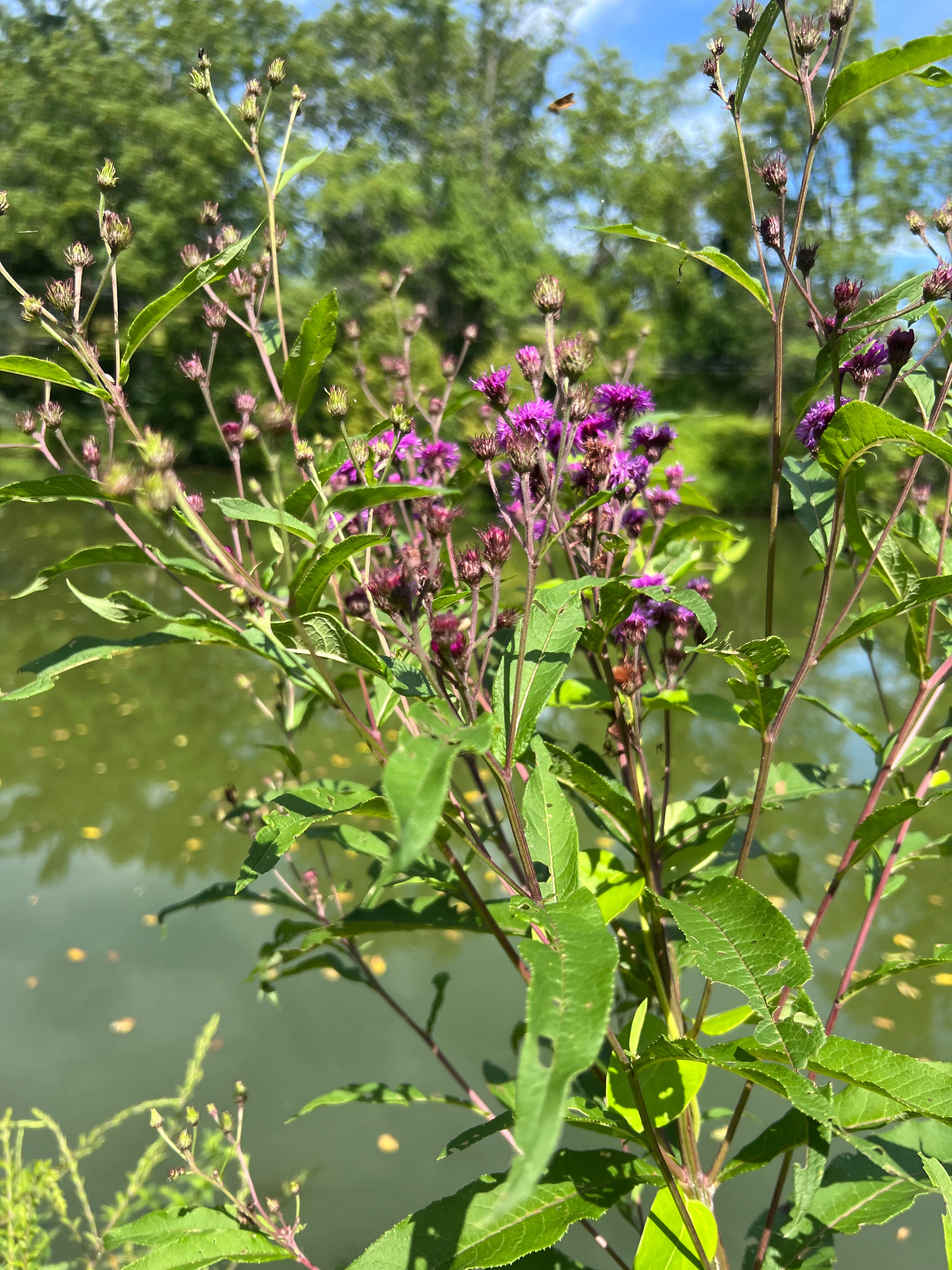
Native New York ironweed (Vernonia noveboracensis) flowers near the big pond:
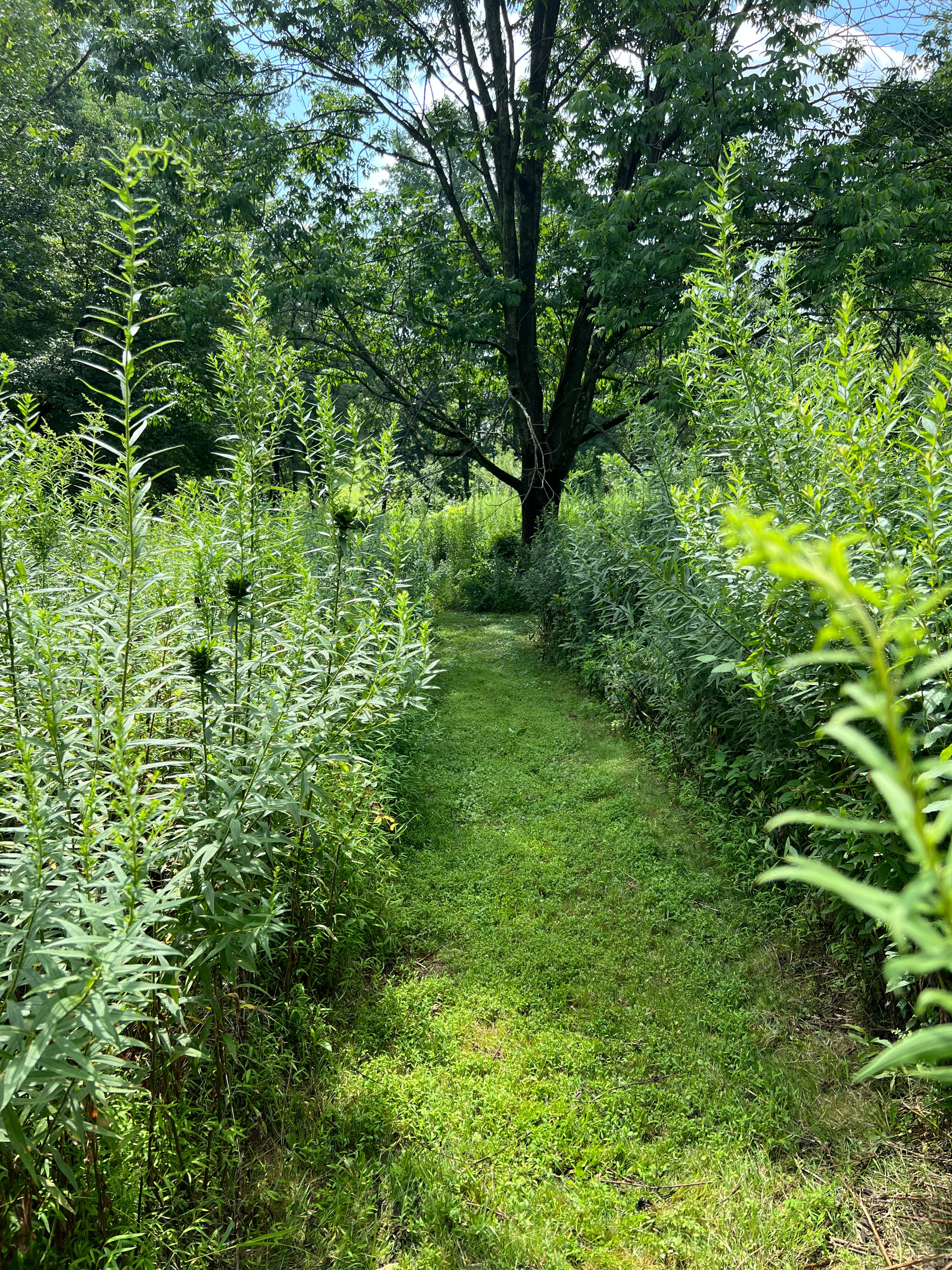
A lush path through the wet meadow:
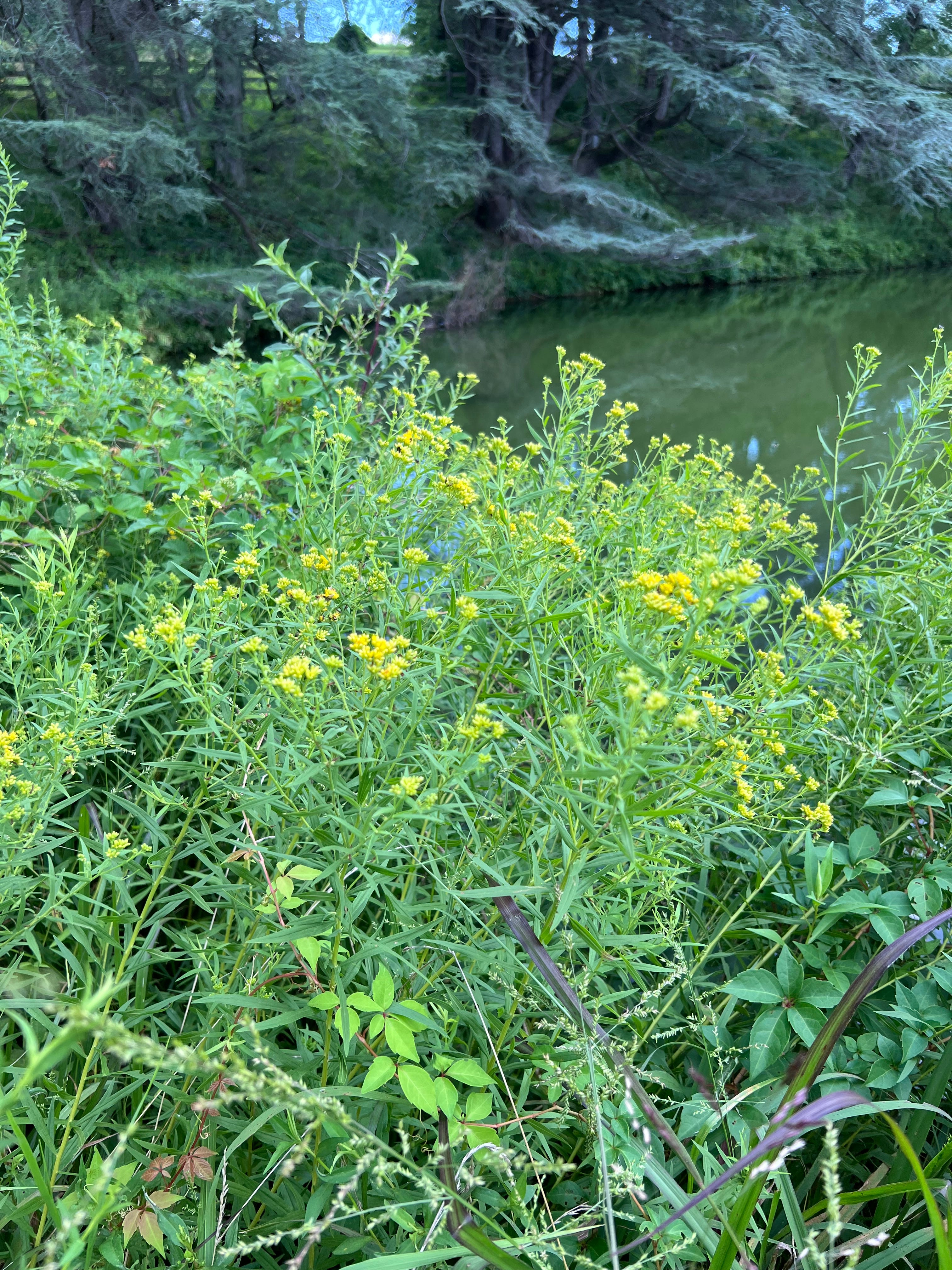
Native grass-leaved goldenrod (Euthamia graminifolia) has begun to bloom by the big pond:
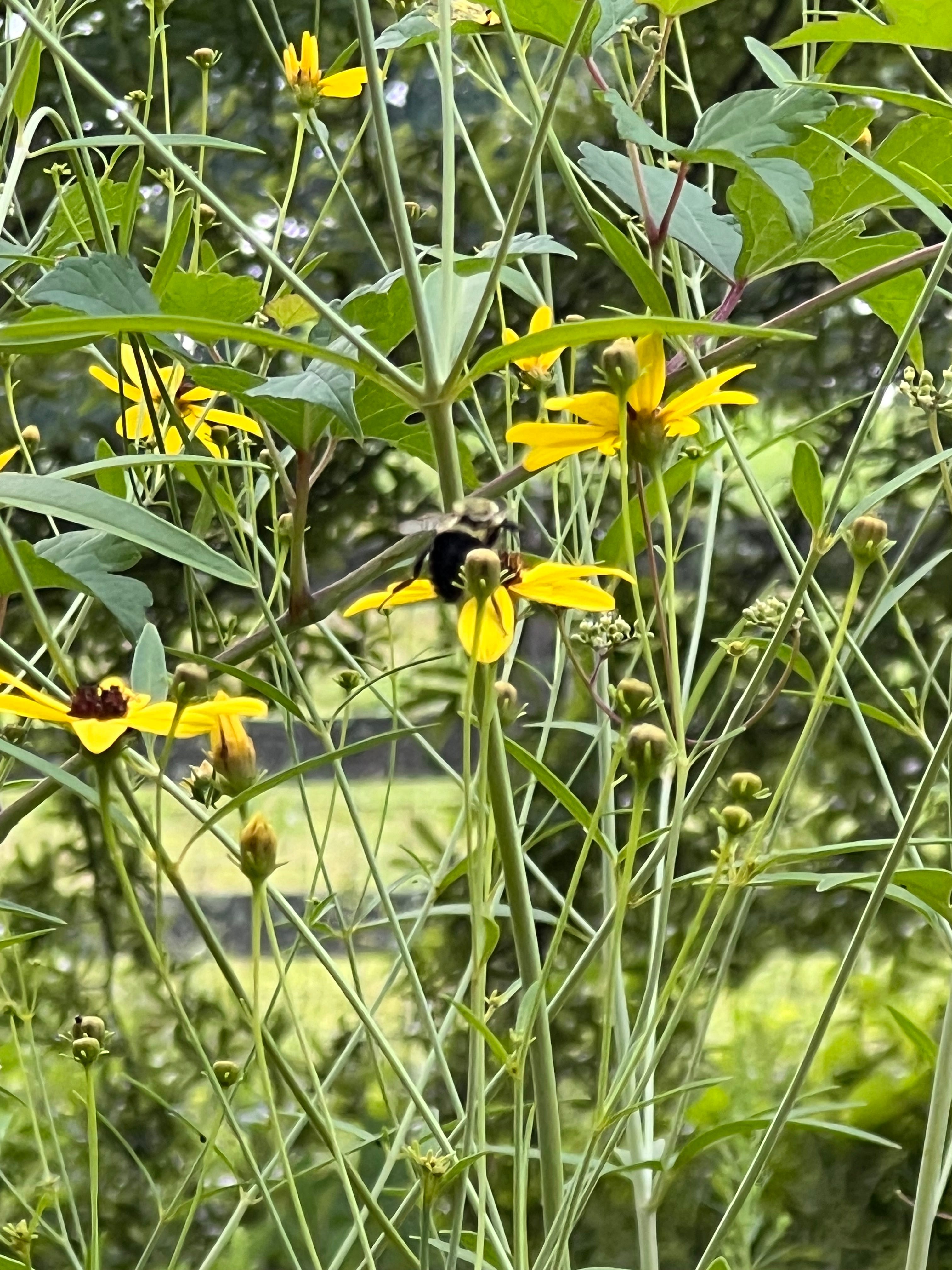
A carpenter bee visits native tall coreopsis in the barn meadow (note also leaves of invasive porcelainberry—argh!):
Comments
Nothing yet. Say the first thing.
Sign in to join the conversation.