
I have been in the habit of lamenting how few butterflies we see these days, but this summer seems better than last. Although I’d like to think it’s because our native planting efforts are having their intended effect, a small increase in butterflies might just as easily be the product of a wet July.
With more and more land around us being suburbanized by folks who mostly don’t embrace backyard stewardship, I’m not sure how long even this small bounty will last. The neighboring development has changed its mowing schedule for the dedicated open space at the end of our driveway, for example. What used to be a meadow thick with Joe Pye weed this time of year is now a useless field cut six inches high. Our small patches of Joe Pye weed hardly compensate.
I wonder where the majority of these suburbanites think the birds and bees and butterflies in their yards come from. Do they think they spontaneously generate? That they drop from heaven? These animals likely don’t reproduce in gardens dominated by the biological deserts created by close-cut lawns and exotic shrubs, that’s for sure.
As readers of these missives know, backyard stewardship first and foremost means planting for the beasts. As such, I thought I’d do a quick rundown of the butterflies I’ve seen this summer and their larval hosts. All the pollen in the world will not support a butterfly caterpillar. Those guys need to eat leaves. (Note: photos are not necessarily recent but are all mine and all Puddock Hill.)
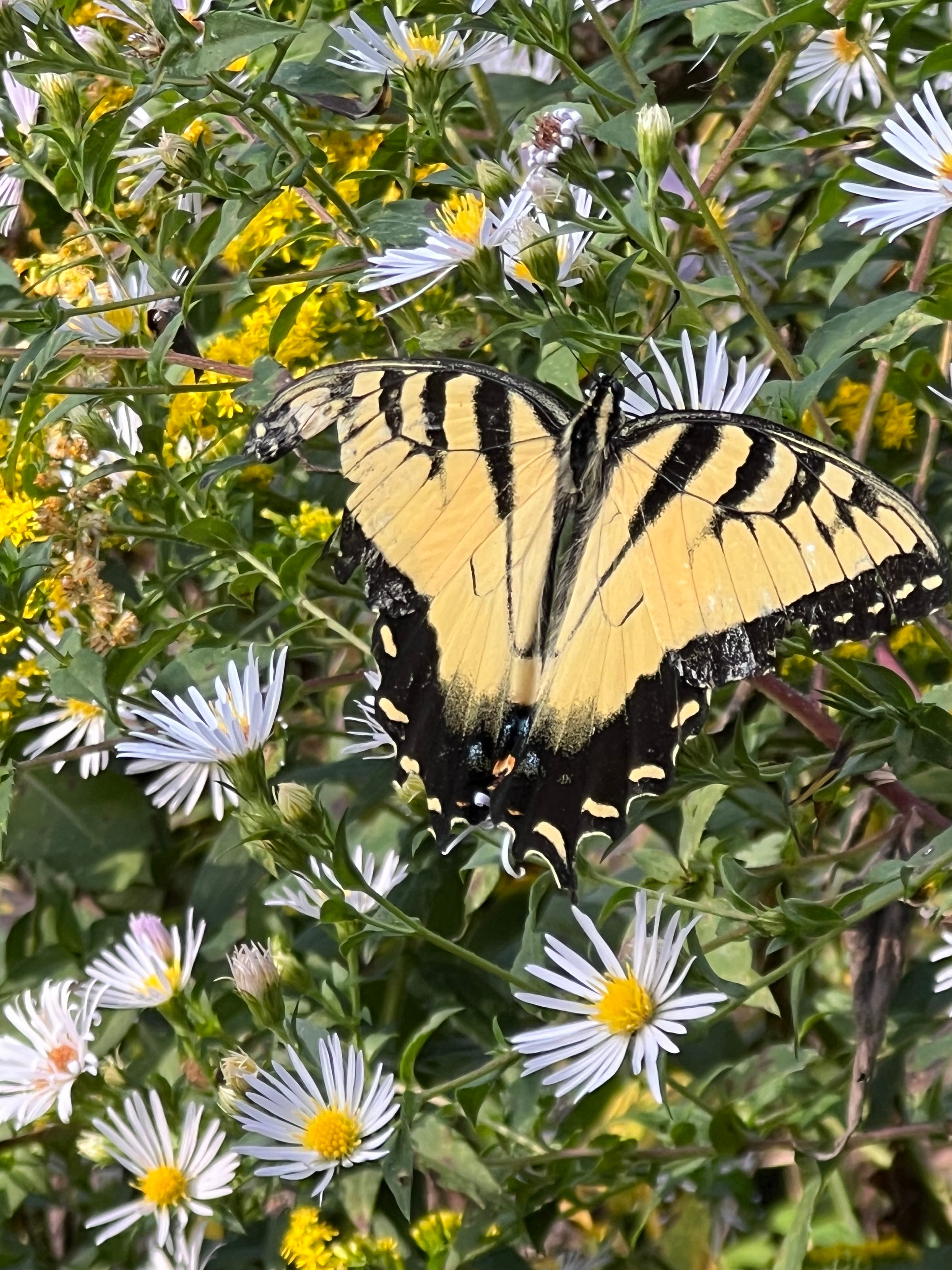
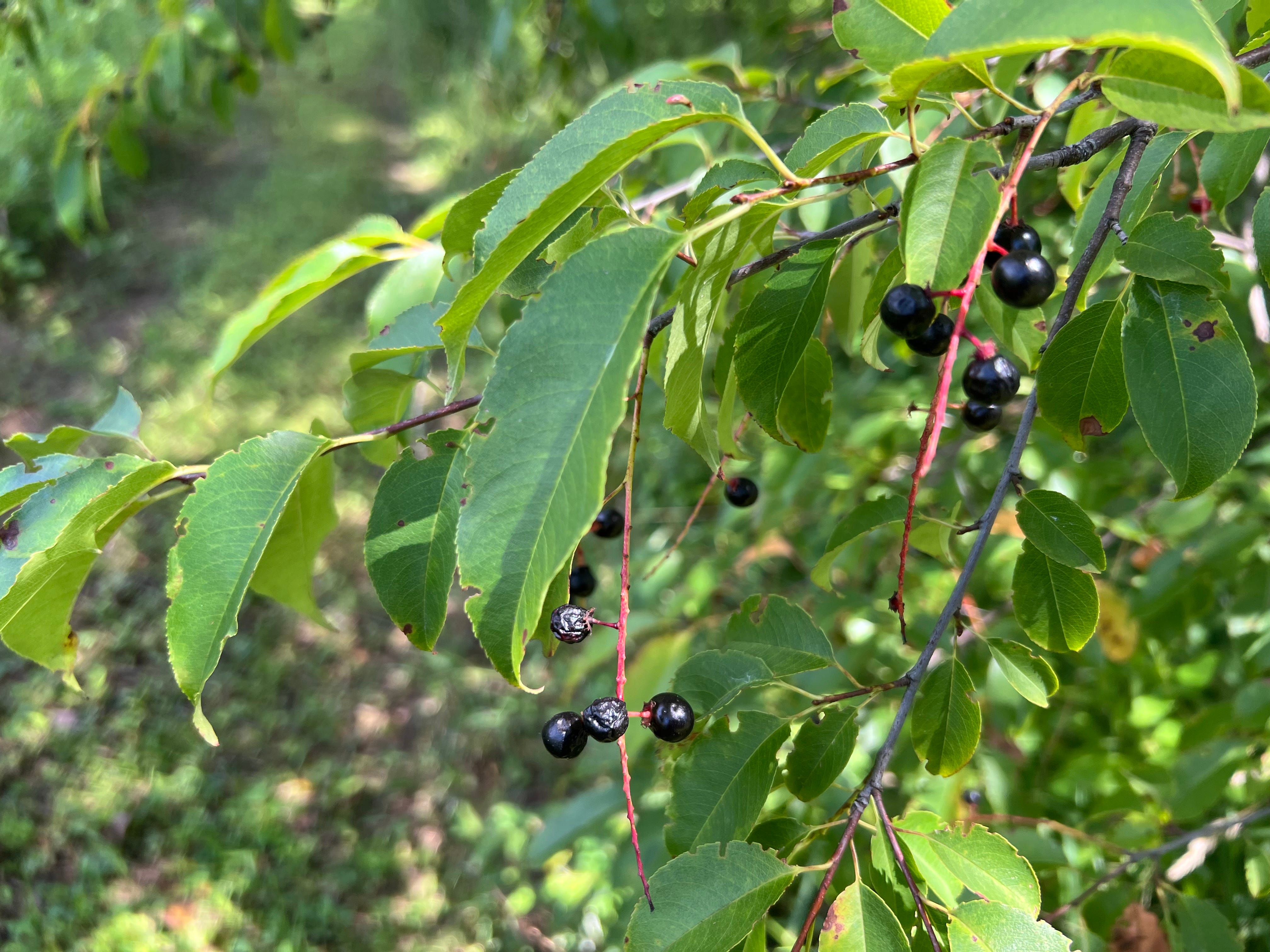
It should be no surprise that this large, showy butterfly is among the most common at Puddock Hill. Its main host plants are tuliptree (Liriodendron tulipifera), black cherry (Prunus serotina), and sweetbay magnolia (Magnolia virginiana). The first two are here in abundance. We only have one mature sweetbay magnolia, but we planted some younger ones a few years ago that are beginning to come into their own.
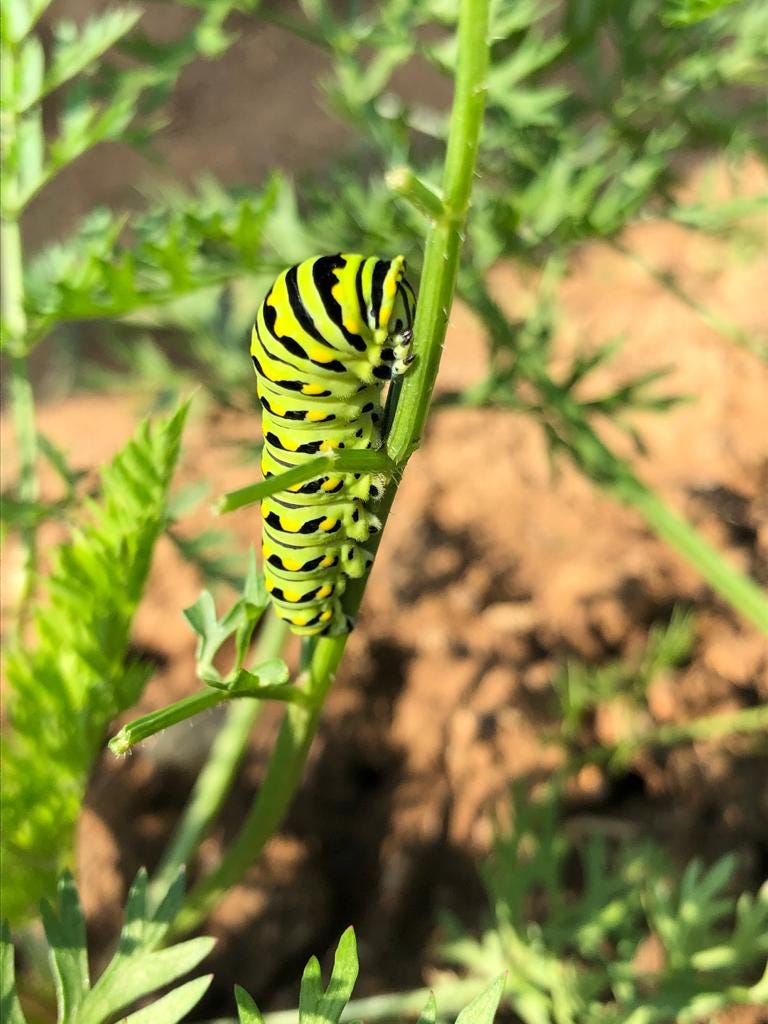
The larvae of this butterfly eat plants of the carrot family, including non-natives. Here they’re mostly subsisting on Queen Anne’s lace (Daucus carota), also known as wild carrot. A native of Europe and Eurasia, Queen Anne’s lace has long been naturalized in parts of North America, and we have plenty of it in our meadows. Last year, we planted golden Alexander (Zizia aurea) in a difficult patch on the south side of an ancient cut-leaf maple. Our eastern black swallowtail caterpillars may be enjoying that plant as well.
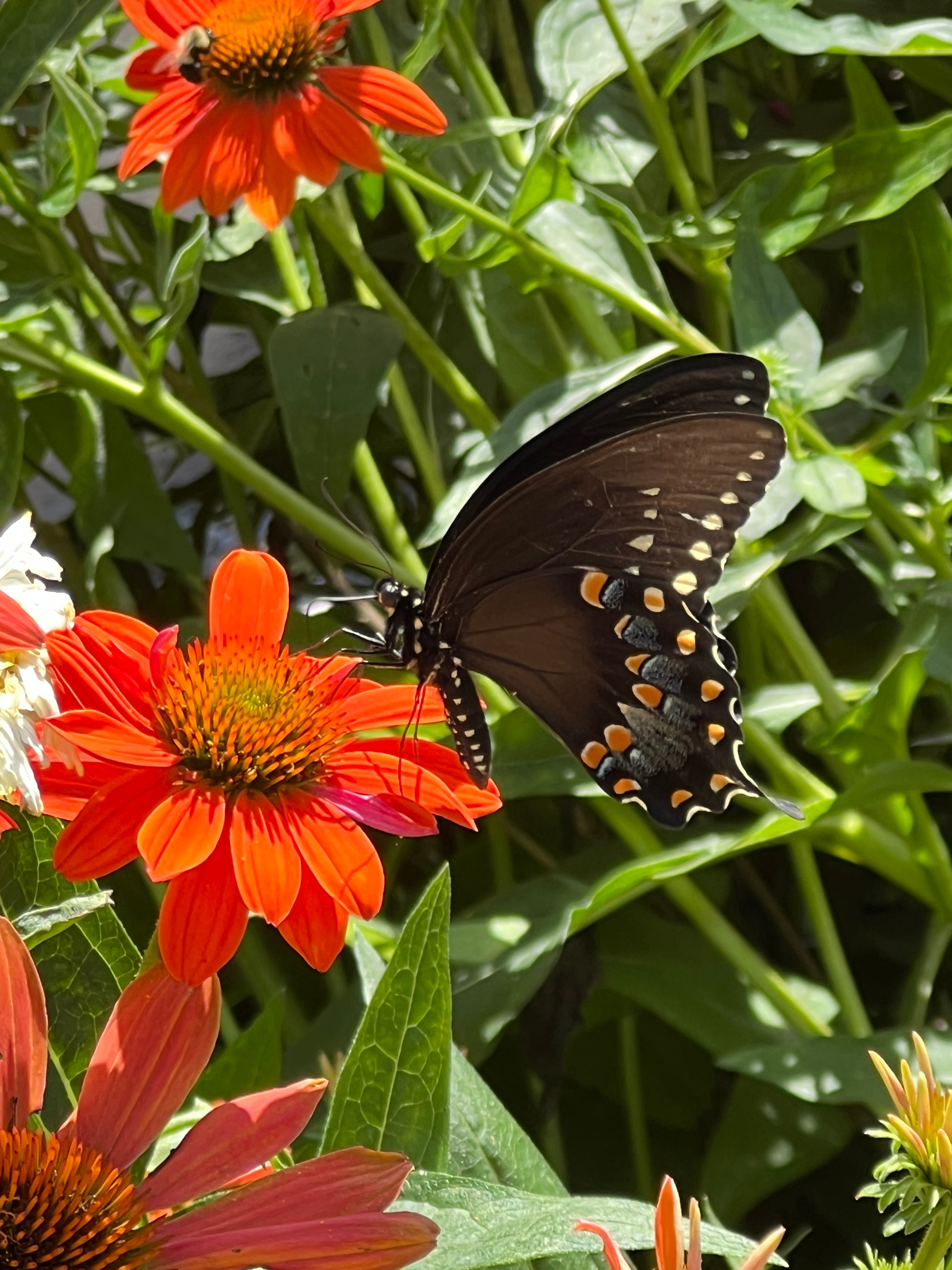
As the name implies, one of the primary host plants for this butterfly is spicebush (Lindera benzoin), of which we may have a few lingering specimens at the edges of the property. (Note to self: plant more!) But I suspect its main host here is our sassafras trees (Sassafras albidum), which are abundant at Puddock Hill, especially since we erected our deer fence.
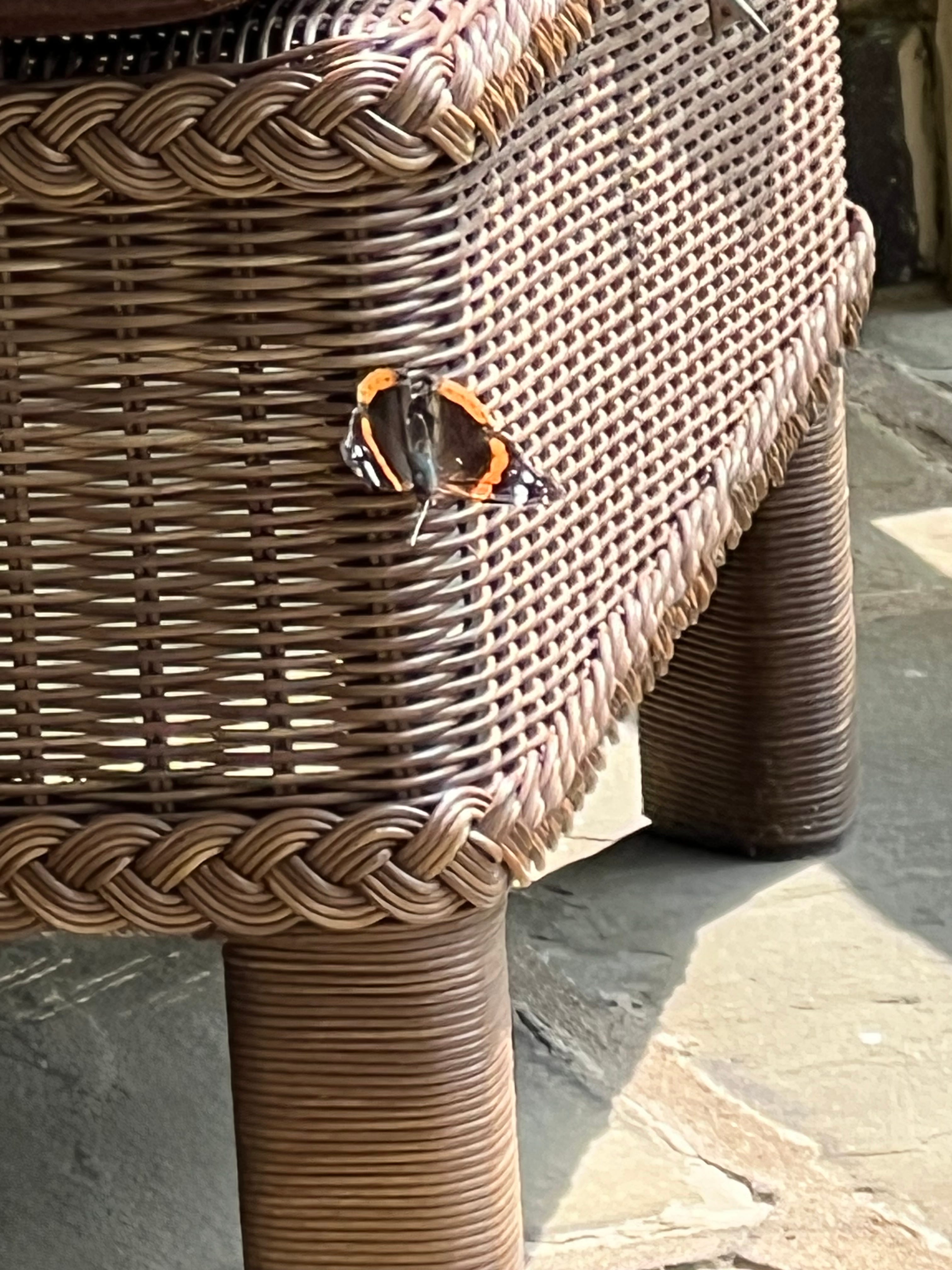
This butterfly’s lifecycle provides a small insight into the wonders of nature when you consider that its caterpillars eat nettles, primarily stinging nettle (Urtica dioica), which creates a most uncomfortable burning sensation when it comes into contact with human skin. One man’s ceiling is a caterpillar’s floor, I guess. Or something like that. We don’t promote stinging nettle, but we do have a wild patch of it growing outside the fence in the southeast corner. I wouldn’t be surprised if there’s more of it growing in sunnier patches elsewhere.
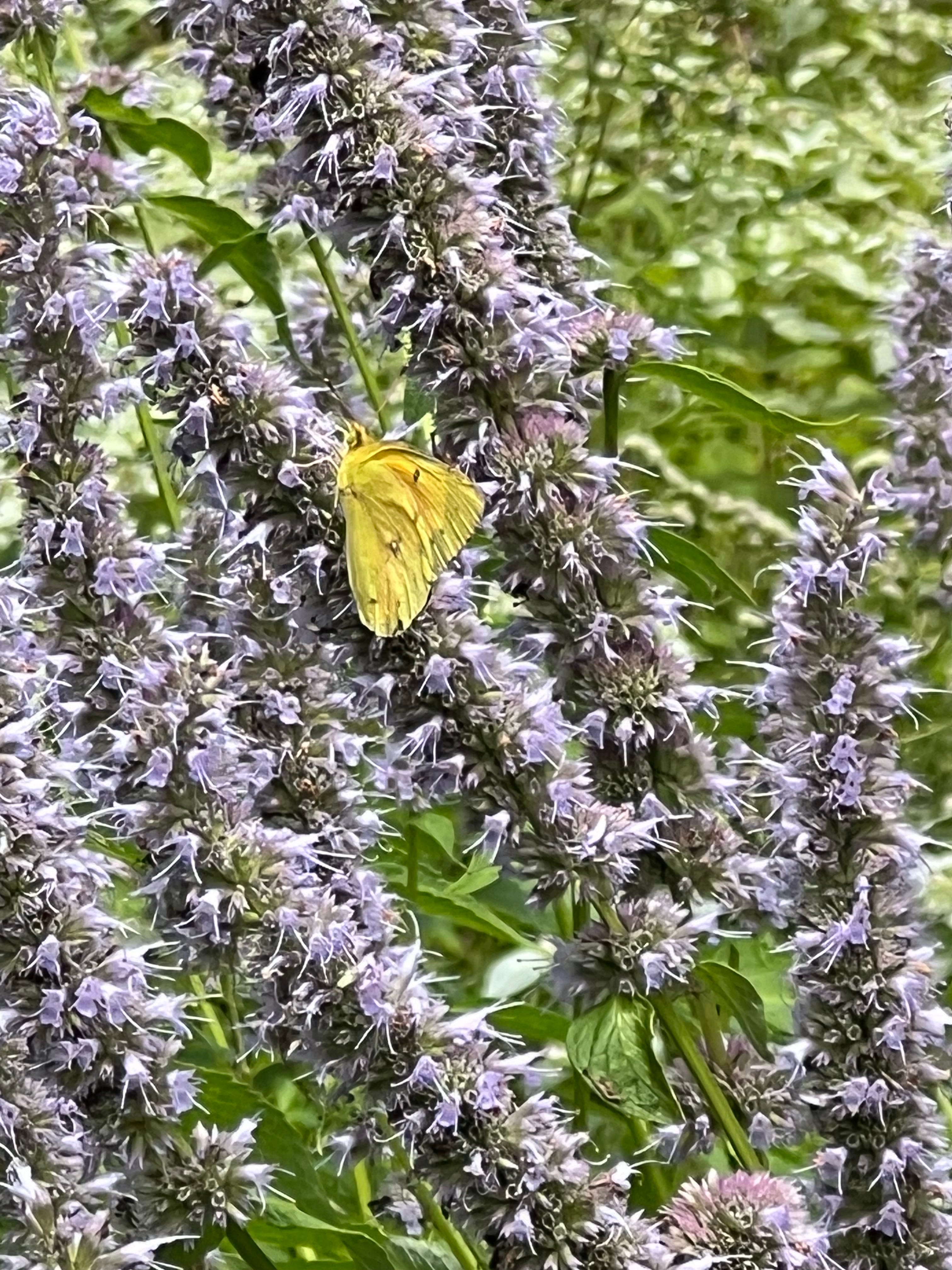
The picture above is of an orange sulphur (Colias eurytheme). It’s no wonder this family of butterflies is abundant even in suburban landscapes, as their caterpillars rely on common clovers and vetches. The related little yellow (Eurema lisa) eats tick-trefoils and other legumes, which are plentiful in the meadows we allow to go wild.
The caterpillars of this species survive on plants in the mustard family. They’re too quick for an iPhone picture—or I’m too impatient—but undoubtedly readers in the East have seen them about. At Puddock Hill they must mostly be feeding on wild mustard, which is common in unmowed sunny areas.
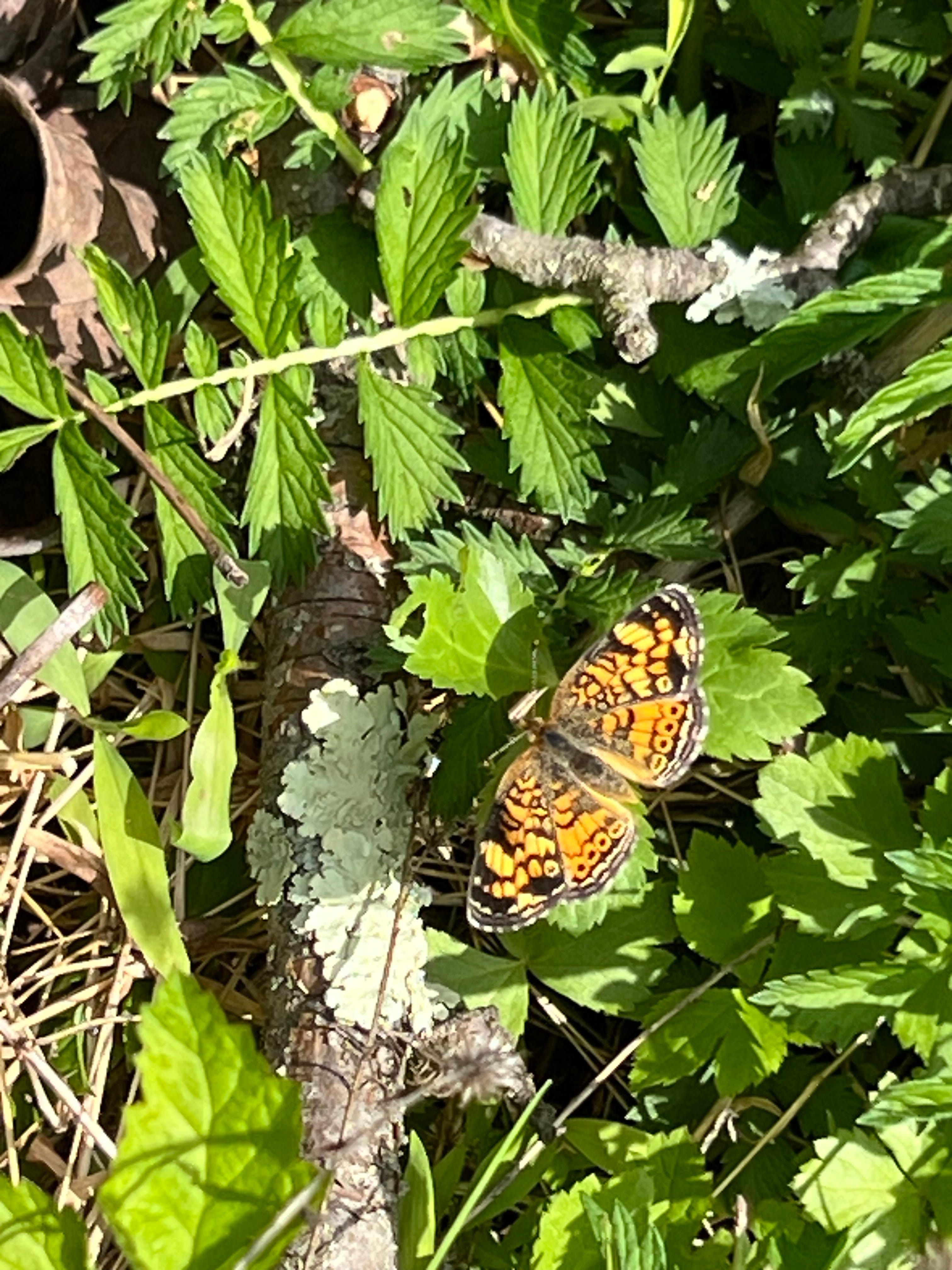
This butterfly’s caterpillars specialize in asters. If you’ve followed me through a fall season, you know that Puddock Hill is absolutely rife with asters. Be prepared to see lots of aster pictures in another month or two!
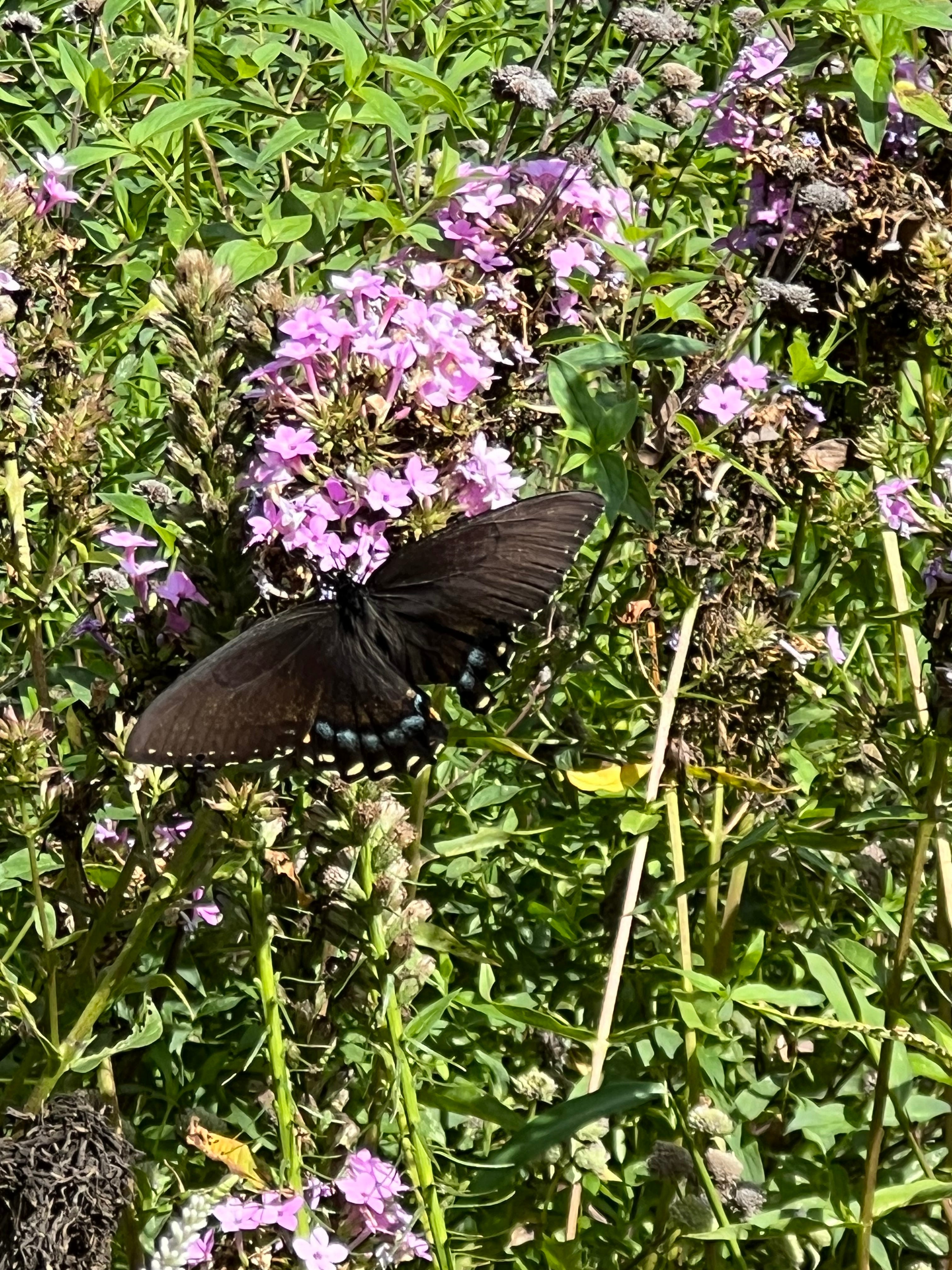
This butterfly is named after its favorite host plant, but I don’t think I’ve ever seen pipevine around here (which doesn’t mean it’s not present). Pipevine swallowtails also use Virginia snakeroot (Aristolochia serpentaria) as a host plant, and there’s plenty of that around, especially because it’s deer resistant.
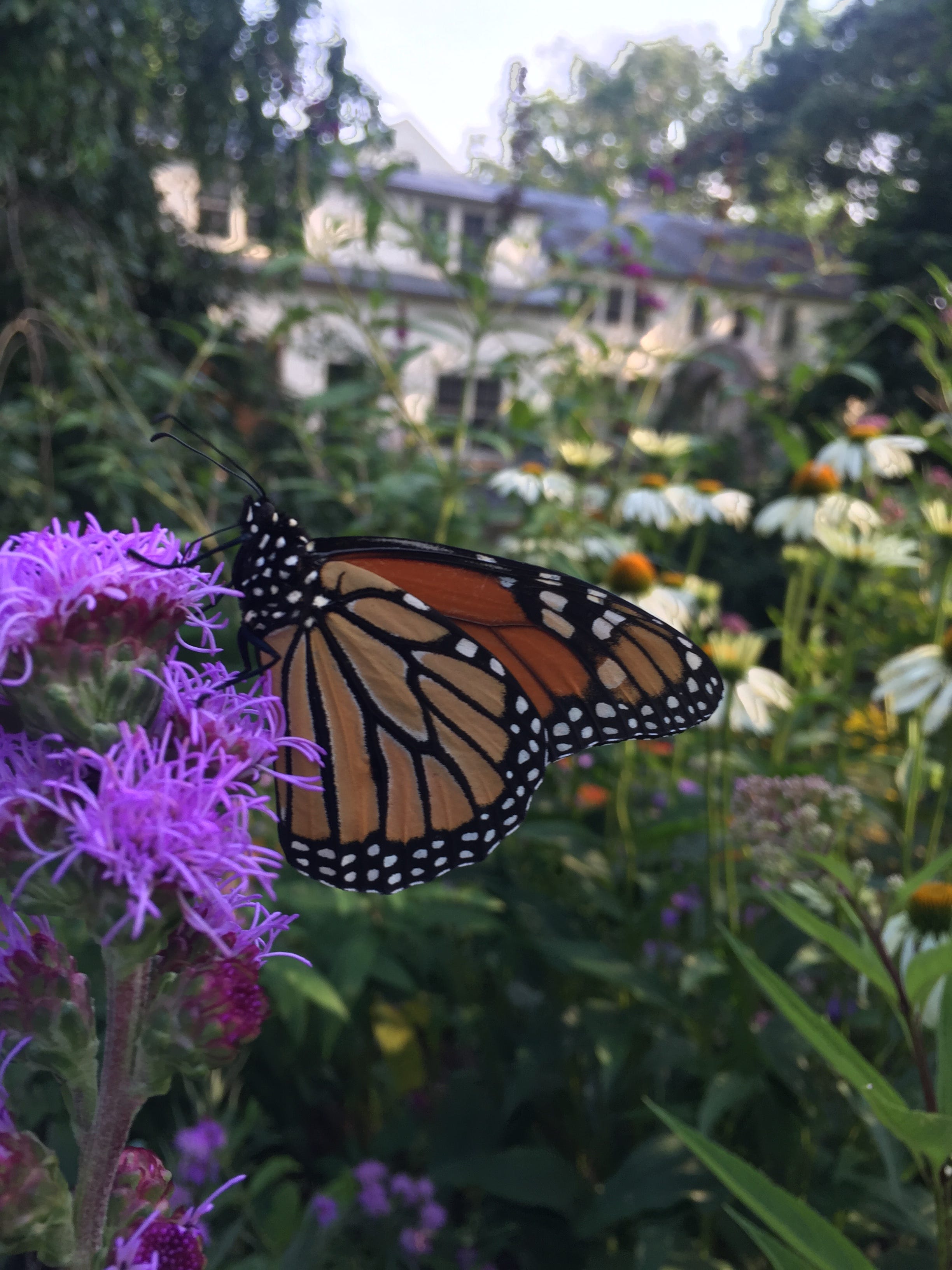
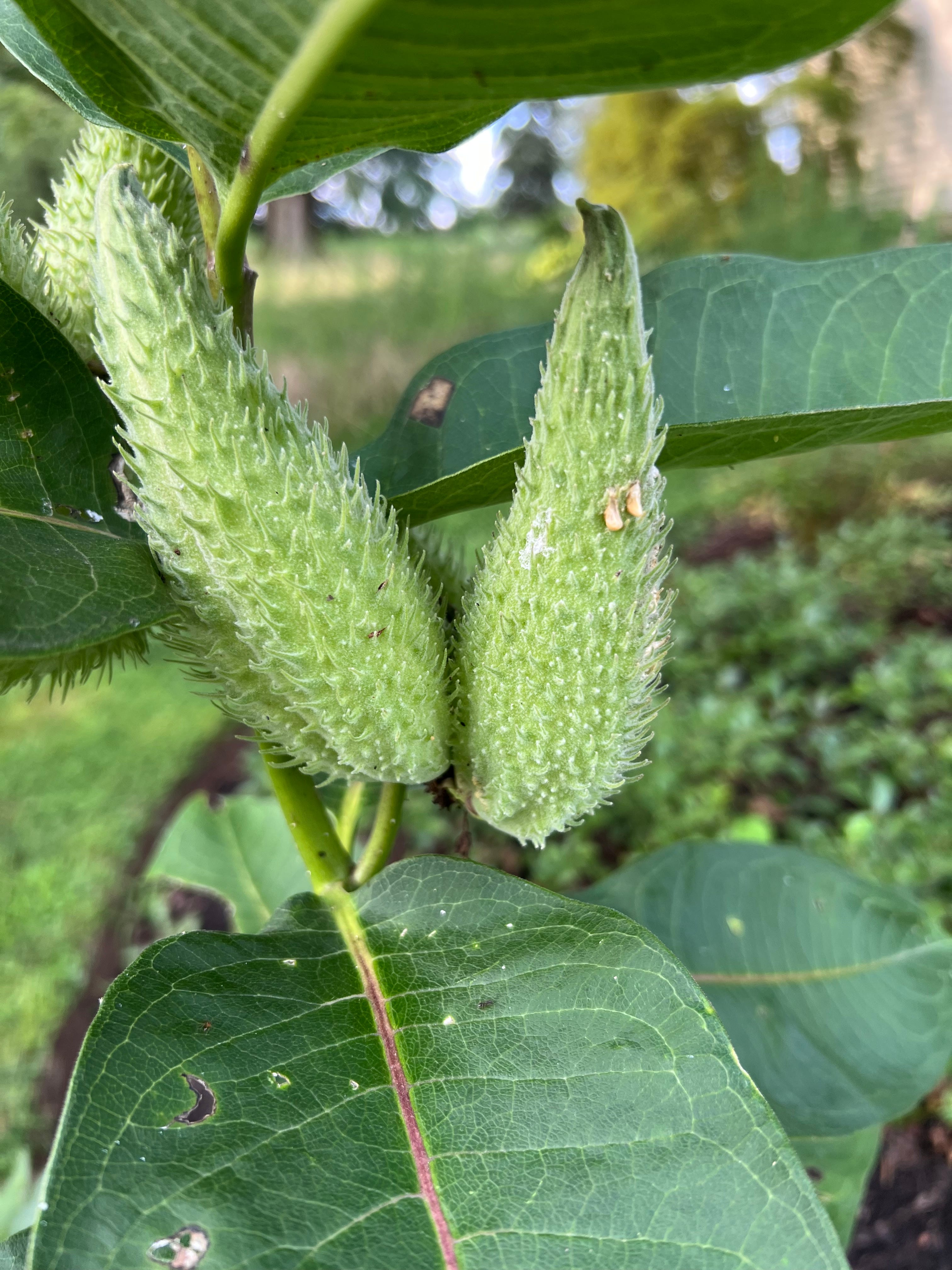
Ah, the famous monarch. We don’t see many of these, sadly, but there seem to be a few more than last year. As every naturalist knows, their host plants are milkweeds (Asclepius spp.). While swamp milkweed (Asclepius incarnata) grows wild in small quantities in the wet meadow, we mostly have common milkweed (Asclepias syriaca) in drier places where we don’t mow. In fact, we now have more common milkweed growing wild than ever before. I pray this eventually results in more monarchs—the kings of American butterflies!
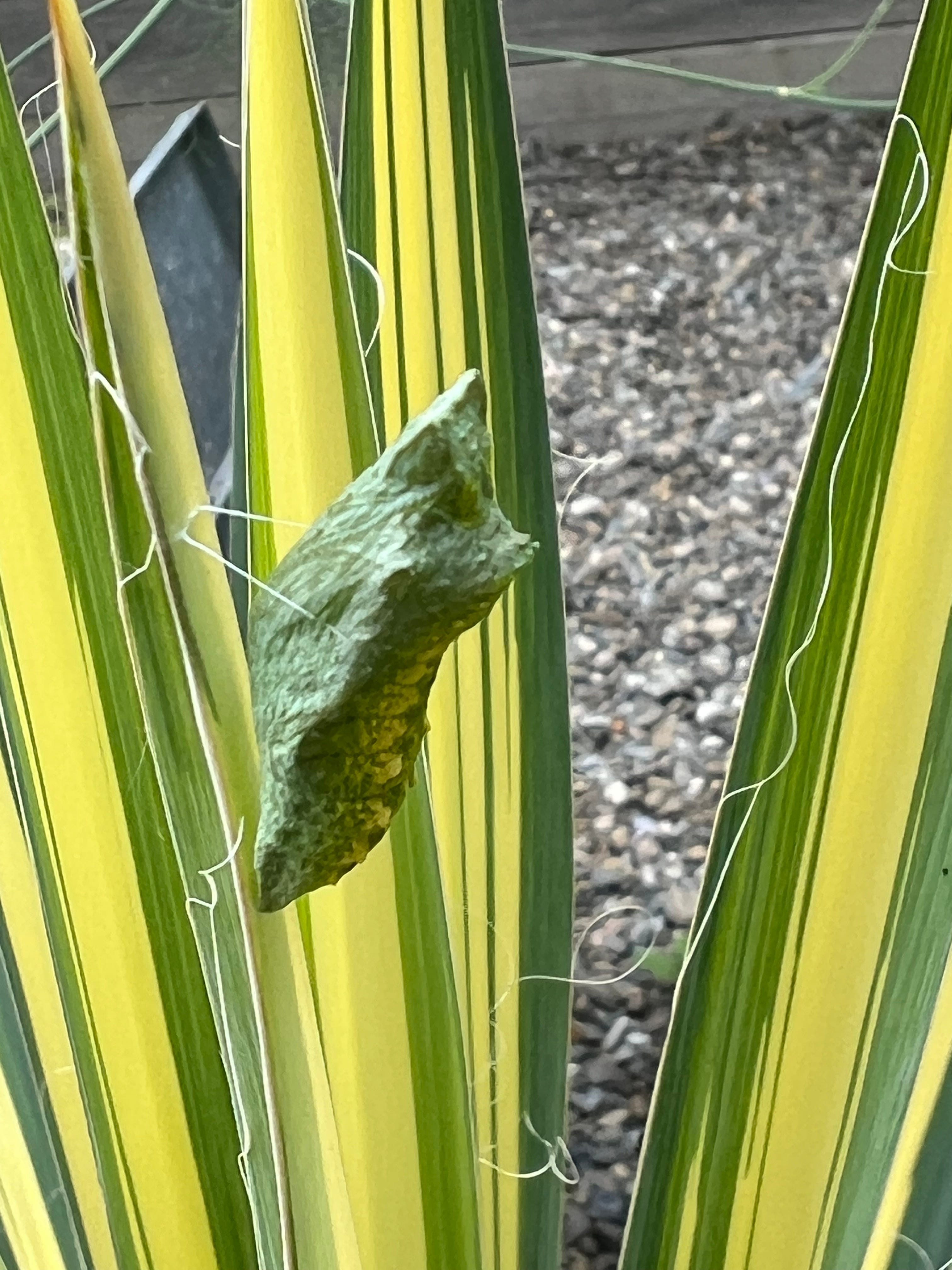
We believe this is the chrysalis of an eastern tiger swallowtail, here attached to a potted plant in the raised bed garden:
Native black cherry fruits ripen in the barn meadow:
Common milkweed seed pods get ready to burst:
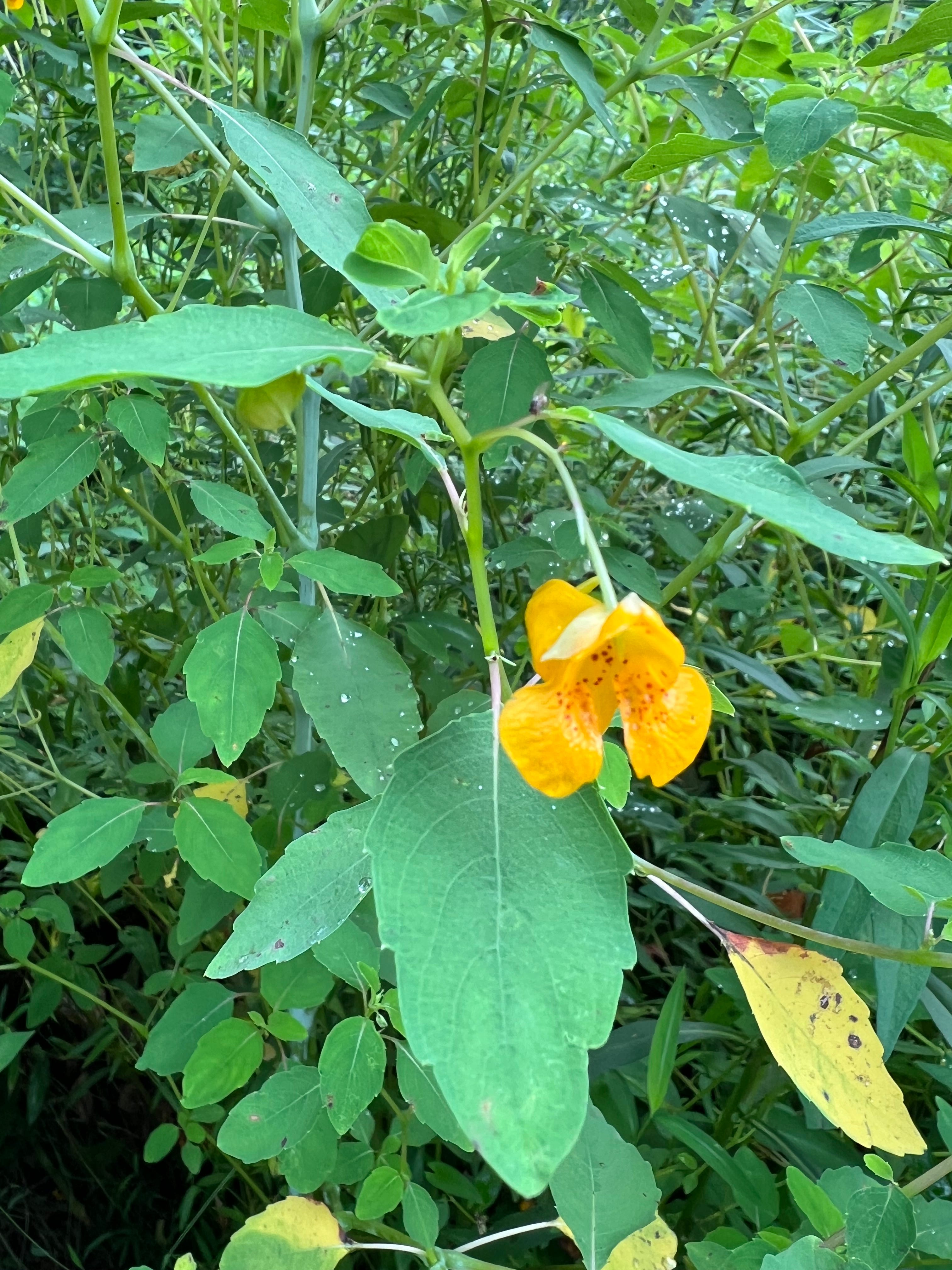
Native jewelweed (Impatiens capensis) brightens up the edge of the wet woods:
Comments
Nothing yet. Say the first thing.
Sign in to join the conversation.