
well hello again,
I hope you’re not dealing with a little fatphobia. And if you are… I get it. Most of us were raised in it.
I just hope something in this opens a small door.
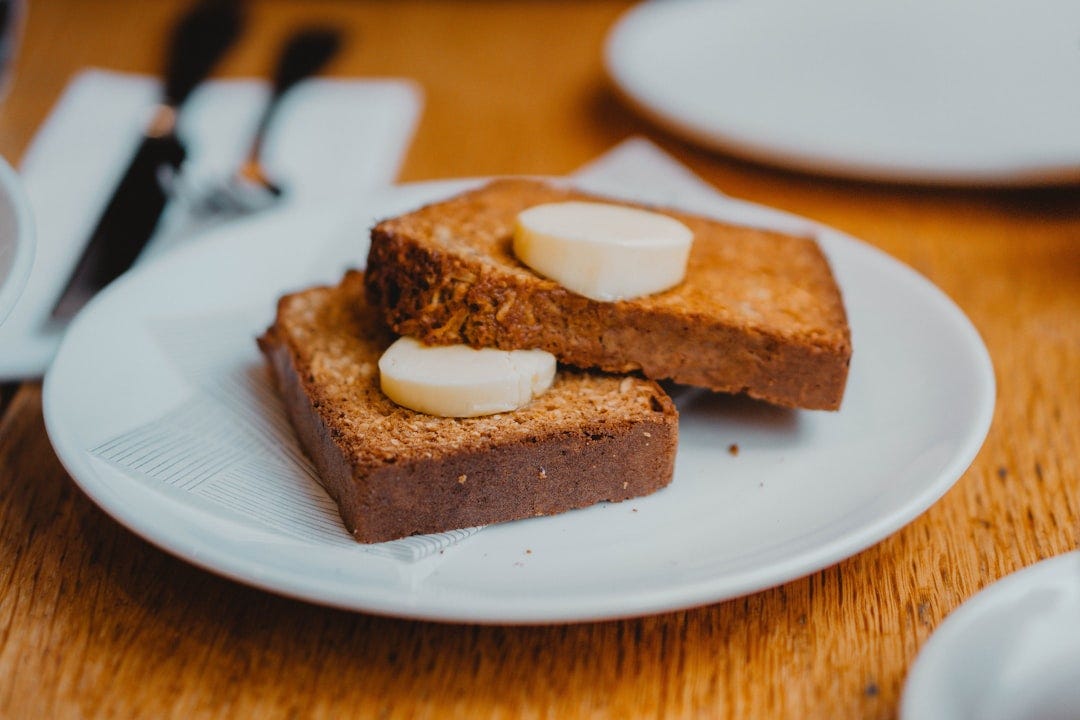
Because there was a time when butter quietly got pushed out of the kitchen. People started looking at it like it had done something wrong. Eggs needed defending. Fat became something you felt slightly guilty about enjoying.
And right around that time, margarine showed up like the “healthier” replacement.
Bright yellow tubs. Smooth. Spreadable. Approved.
People swapped butter for something made in a factory, full of processed vegetable oils, often hydrogenated, stripped, heated, deodorized, recolored… and then told this was the better choice for the human body.
It’s honestly a bit wild when you pause and think about it.
If you still have margarine at home, this is your gentle nudge. Please stop eating it.
Your body recognizes real food. It struggles with things that were built to last on a shelf.
But this is how strong the messaging was.
Fat was framed as the problem. Cholesterol became something to fear. And anything that lowered it felt like the “right” move.
And once that belief settles in, it’s not easy to change.
It moves beyond information. It becomes something you trust without questioning. Even when new ideas show up, even when real-life examples don’t quite match the story, the mind hesitates.
Because letting go of something you’ve believed for years not easy.
now hear this out …
Dr. Malcolm Kendrick is a Scottish physician who has spent years asking a question medicine rarely welcomes. What if the main story we were told about heart disease was too simple to be true. In his writing, especially The Clot Thickens, he lays out a careful challenge to the old belief that cholesterol is the central cause of heart disease and that lowering it must therefore be the answer. His argument is not built on one dramatic claim. It is built on a long trail of contradictions, studies, population data, clinical observations, and a deeper look at how arteries actually get damaged.
Kendrick became known for looking at the parts of the story that did not fit. He writes about a fit, lean, competitive cyclist with very low cholesterol, normal blood pressure, and none of the usual risk markers who still had a heart attack in his thirties. Cases like that matter because they shake the confidence of a theory that claims to predict who is safe and who is not. When someone appears to do everything “right” on paper and still develops heart disease, it should force a bigger question. Maybe the paper story was never the whole story.
into true science, real facts, real research, and real outcomes on how to support heart health
The body functions as one integrated system. The heart is shaped by metabolism, hormones, inflammation, and your daily habits, how you eat, sleep, move, and handle stress. This is basic physiology.
Yet health is often approached in parts.
You have a specialist for everything… it almost feels like you need a team meeting to stay healthy. Meanwhile, your body has been running it all together the whole time.
The heart responds to the liver. The liver responds to food. Food shapes insulin. Insulin influences inflammation. And that circles back to the heart.
No single number captures that.
So the focus shifts, from controlling one marker to understanding the environment your body is responding to.
That’s how I approach health in the program. We support the system as a whole, and when that changes, the body responds in ways that often surprise people.
If you’re curious to see how your body changes once it’s given the right environment, you can join the waitlist for the next cohort and experience it for yourself. Waitlist
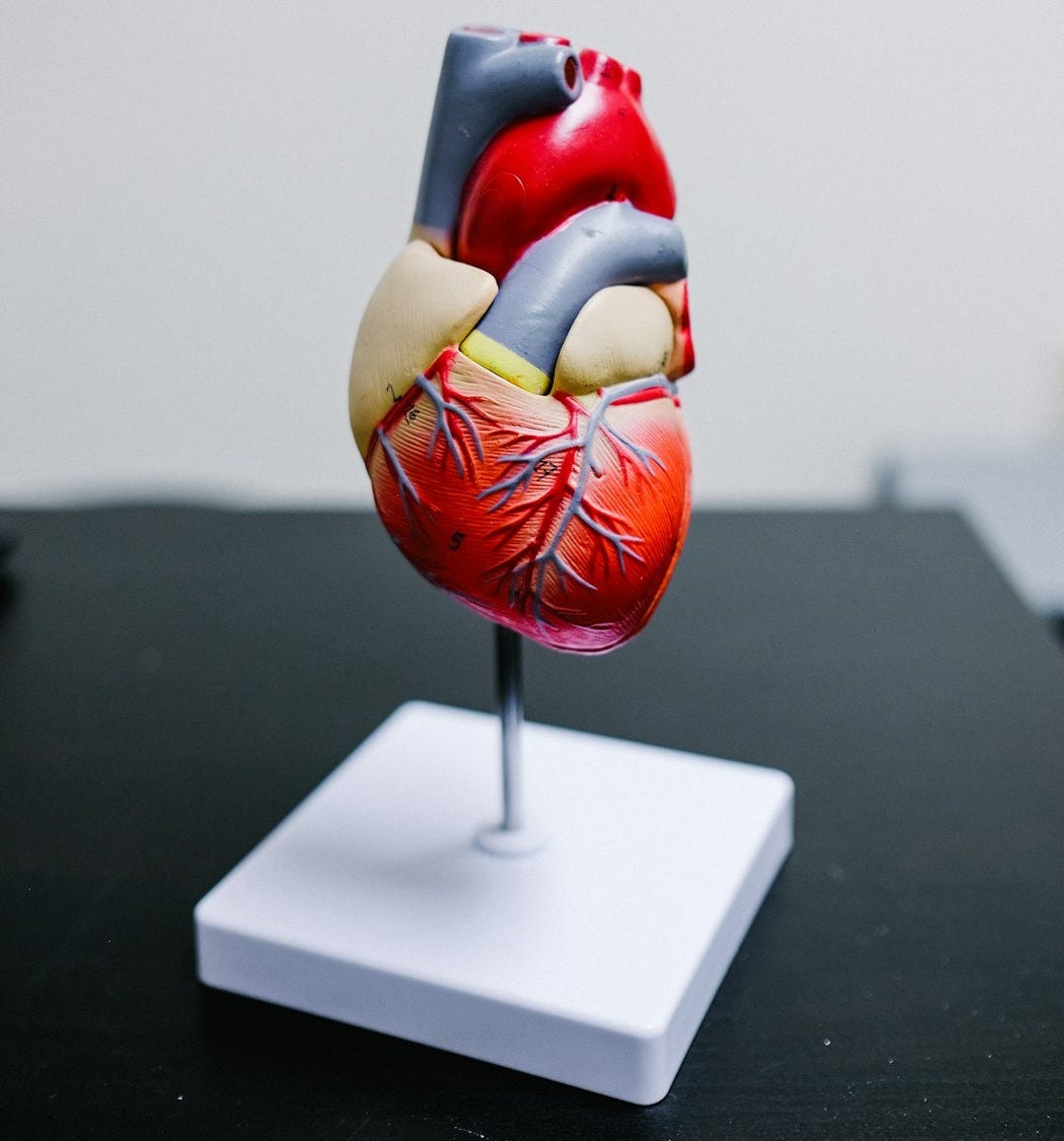
That same broader challenge appears in Dr. Natasha Campbell-McBride’s book Put Your Heart in Your Mouth. Her book is centered on atherosclerosis and coronary heart disease, and it argues that conventional medicine still does not fully explain the true cause of these conditions. She frames heart disease through food quality, environmental burden, inflammation, and damage to the body’s inner terrain rather than treating cholesterol as a standalone villain. The book also pushes readers back toward traditional foods and away from the processed diet and chemical load that she believes contribute to vascular disease.
This matters because when two very different thinkers, Kendrick from a clotting and endothelial damage perspective, and Campbell-McBride from a nutrition and terrain perspective, arrive at the same conclusion, it deserves attention. Both argue that the cholesterol story grew far beyond what the evidence could honestly support. Both argue that something deeper is going on in the artery wall. Both point away from fear of cholesterol itself and toward the conditions that damage blood vessels in the first place.
The original cholesterol hypothesis sounded simple enough for anyone to understand. Eat cholesterol, raise cholesterol in the blood, let cholesterol build up in arteries, and over time those arteries narrow and harden. It was clean, memorable, and easy to turn into public health messaging.
The problem is that biology did not behave so neatly.
Even Ancel Keys, one of the most influential figures behind the diet-heart story, helped show that dietary cholesterol does not map neatly onto blood cholesterol because the body regulates its own production. When that became difficult to ignore, the focus moved away from dietary cholesterol and onto saturated fat. When saturated fat created its own set of contradictions across different populations, the language shifted again. Now the story had new moving parts. It became about fat ratios, then different kinds of fat, then different kinds of LDL, then smaller and denser particles, then oxidized particles. Kendrick’s point is not that none of those things matter in any context. His point is that a theory that keeps changing every time reality does not cooperate starts looking less like science and more like a story protecting itself.
That is one reason he calls the cholesterol hypothesis so difficult to kill. It adapts every time it is challenged.
One of the most cited challenges to the simple cholesterol story came from a 2016 systematic review in BMJ Open, led by researchers including Uffe Ravnskov. Looking at older adults, the authors found that high LDL cholesterol was either not associated with higher mortality or was inversely associated with it in most of the cohorts they reviewed.
Many older people with higher LDL were not dying sooner, and some lived longer. That finding does not prove cholesterol is always protective, but it does make the old one-line story far harder to defend.
This is one reason critics of the mainstream model keep coming back to the same concern. If cholesterol is the main driver, why do so many real-world findings fail to line up neatly with that claim.
Kendrick also points to older population findings, including the Framingham data discussed in his work, where falling cholesterol in older adults was associated with higher mortality rather than lower mortality. Again, that does not mean every drop in cholesterol is dangerous by itself, but it does mean the body is more complicated than a single lab marker. A lower number does not automatically mean a healthier person.
Natasha Campbell-McBride’s work fits naturally here because she also pulls the reader away from reductionist thinking. In Put Your Heart in Your Mouth, she frames cardiovascular disease as something shaped by the quality of food, the burden of toxicity, inflammation, and the body’s ability to repair itself. Her premise is that modern diets and modern living create an internal environment that weakens the system long before a crisis appears.
One of the biggest problems in the public conversation is that cholesterol got turned into a bad substance instead of being understood as a basic building block of life. Cholesterol is essential for cell membranes, steroid hormones, bile acids, and normal brain biology. The brain is especially rich in cholesterol, which is one reason simplistic fear around the molecule never made complete biological sense.
The body does not manufacture something so important by accident.The body is not trying to poison itself. It is trying to build, repair, protect, and adapt. When cholesterol shows up at a damaged site, that does not automatically make it the criminal.
That is where Kendrick’s work becomes so useful.
He argues that plaques are better understood as part of a damage and repair process. According to the thrombogenic hypothesis he discusses, the inner lining of the artery, the endothelium, gets injured. A clot forms over the injury, just like a scab forms on skin. New cells grow over it. If that process repeats over and over, and if repair is incomplete, plaque builds up inside the wall over time. In this model, the key event is not cholesterol suddenly clogging a pipe. The key event is repeated injury to the vessel wall and imperfect healing.
That model also helps explain why so many different things raise heart risk. Smoking. Diabetes. High blood pressure. Chronic inflammation. Kidney disease. Autoimmune stress. Poor metabolic health. All of these can injure the vessel lining or interfere with healthy repair. That is a much more coherent story than pretending one molecule explains everything.
One of the best examples of the weakness of the old model is the famous French paradox. The French have long been used as an example of a population eating more saturated fat while showing lower rates of heart disease than expected. Instead of taking that as a serious challenge to the theory, medicine labeled it a paradox, which is often just a sophisticated way of saying the data do not fit but we do not want to disturb the theory. Kendrick points to France and Switzerland as countries that sat awkwardly inside the cholesterol story because their dietary patterns and heart disease rates did not behave the way the theory predicted.
The cholesterol story would never have become so dominant without statins. Once cholesterol was made into the main enemy, the drug to lower it became the hero.
Kendrick’s criticism here is not simply emotional. It is methodological. He argues that statin benefits are often presented using relative risk reductions, which sound impressive, while the absolute benefit can be much smaller. He also argues that many trials are structured in ways that favor the drug, including run-in periods that remove people who cannot tolerate the treatment before the trial officially starts. That means the final group being studied is already filtered.
Even critics who are careful with language often return to the same issue. In primary prevention, meaning people who have not yet had a heart attack or stroke, the benefit is often less dramatic than the public assumes. At the same time, side effects and dropouts in the real world are not trivial. Studies has shown that the public was sold a cleaner and more confident story than the evidence really supports.
Then there is the issue of CoQ10. Statins block HMG-CoA reductase, which lowers cholesterol synthesis, but that same pathway is also involved in producing CoQ10, a compound essential for cellular energy production. Critics have long argued that this helps explain why some people feel weak, tired, sore, or mentally slower on statins. Kendrick discusses this as an important biological clue, especially because the heart and muscles are such energy-demanding tissues.
That piece matters because it reminds us that no drug changes one thing only. When you interfere with a pathway, you are often affecting more than the target printed on the prescription label.
If cholesterol is not the true starting point, what should people care about more.
Damage to the endothelium should matter more.
Blood sugar instability should matter more.
Insulin resistance should matter more.
Inflammation should matter more.
Smoking, stress, poor sleep, ultra-processed food, pollutants, and the general weakness of the modern internal environment should matter more.
That is also why so many of the markers that travel together with metabolic dysfunction, including high triglycerides, blood sugar problems, abdominal weight gain, and hypertension, often tell us more about risk than total cholesterol by itself. The body is showing signs of injury, not simply a cholesterol problem.
Once you step away from the idea that one number defines your heart, everything becomes more grounded.
You start looking at what protects the vessel wall, what reduces damage, and what helps the body repair itself over time.
And this is where the science becomes much more practical.
1. Stable blood sugar and insulin
Research has consistently shown that insulin resistance is strongly linked to cardiovascular disease. Studies published in journals like The Lancet and JACC have shown that elevated insulin and repeated glucose spikes damage the endothelium, increase oxidative stress, and accelerate plaque formation.
When blood sugar stays elevated, proteins and fats in the body become glycated. This process stiffens blood vessels and makes them more prone to injury.
Keeping meals simple, reducing processed carbohydrates, and prioritizing protein and whole foods helps lower insulin levels and protect the arteries from that constant stress.This is one of the clearest and most supported pathways in modern research.
2. Interval training and heart efficiency
Cardiologists have been shifting their view on exercise for years.
In the book Pace, written by leading cardiologists including Alok Patel, interval-based movement is emphasized as a powerful way to train the heart. Short bursts of higher effort followed by recovery periods improve how the heart pumps, how blood vessels respond, and how efficiently oxygen is delivered.
Clinical studies on HIIT show improvements in VO₂ max, insulin sensitivity, and endothelial function, often outperforming longer steady-state cardio sessions.
The heart is a muscle. It adapts when it is challenged, not when it is only kept comfortable.Even a few rounds of short, intense effort, done consistently, can shift cardiovascular health in a meaningful way.
3. Hawthorn and circulation support
Hawthorn is one of the most researched traditional herbs for heart health.
Clinical studies have shown that hawthorn extract can improve blood flow, support heart muscle contraction, and reduce symptoms in people with mild heart failure. Some trials published in Phytomedicine and The Cochrane Database suggest it may improve exercise tolerance and reduce fatigue.
Its compounds, particularly flavonoids and oligomeric procyanidins, help dilate blood vessels and improve circulation.
It works gently, but consistently, supporting the heart rather than forcing it.
4. Magnesium, potassium, and the electrical system of the heart
The heart runs on electrical signals.
Magnesium and potassium are essential for maintaining normal rhythm and proper contraction. Low magnesium levels have been linked in multiple studies to arrhythmias, hypertension, and increased cardiovascular risk.
Magnesium helps relax blood vessels and reduce vascular resistance. Potassium helps regulate fluid balance and counteracts the effects of excess sodium. Research published in Hypertension and Circulation has shown that adequate intake of these minerals is associated with lower blood pressure and improved heart outcomes.
This is why whole foods, leafy greens, proper hydration, and mineral balance matter far more than most people think.
5. Inflammation and oxidative stress
Chronic inflammation is one of the strongest predictors of heart disease.
Markers like C-reactive protein (CRP) have been shown in large studies to correlate with cardiovascular events, sometimes even more strongly than LDL cholesterol.
Inflammation damages the vessel lining, making it easier for plaque to develop and harder for the body to repair itself.
Reducing processed foods, lowering sugar intake, improving sleep, and managing stress all directly lower inflammatory load.
The heart does not exist in isolation. It responds to the entire internal environment.
6. Breathing, stress, and the nervous system
This is the quiet factor most people overlook.
Chronic stress activates the sympathetic nervous system, raises cortisol, increases blood pressure, and contributes to endothelial dysfunction.
Research has shown that slow breathing and nasal breathing improve oxygen delivery, support nitric oxide production, and help regulate vascular tone.
Mouth breathing, poor sleep, and constant stress create the opposite effect.
The body cannot repair well when it stays in a constant alert state.
Deep Breath right now :)
with love,
Azadeh
Comments
Nothing yet. Say the first thing.
Sign in to join the conversation.