

I spend a lot of time telling people what’s broken. Fair enough — that’s basically my whole thing.
But The Receipts exists for something different. Once a month (or there about), I pull apart real brands; what they actually did, what actually worked, and what you can steal without the budget, the team, or the 50-page strategy deck.
This month: three brands that built structural revenue. And one that burned through $266M trying.

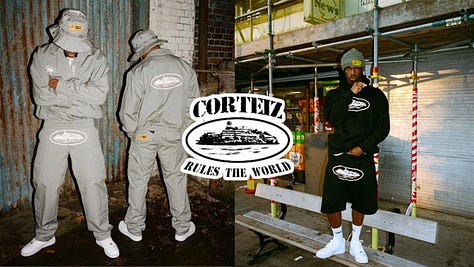

The Setup: West London streetwear. No paid ads. No influencer contracts. No PR agency. Just a founder (Clint419) with a phone and an understanding of cultural mechanics that would make most CMOs weep.
What They Actually Did: Corteiz doesn’t announce drops, but the drops get ‘leaked’. Cryptic Instagram stories. Coordinates posted hours before pop-ups open. Product quantities so limited that missing a drop is genuinely peak.
What’s easy to miss about Corteiz is that scarcity is the evidence of the strategy. The actual strategy is identity construction. Wearing Corteiz means something specific in specific boroughs. You’re quite literally proving cultural fluency.
The Structural Lesson:
Corteiz built demand that exists independently of any platform. If Instagram disappeared tomorrow, the community would move to WhatsApp, Telegram, word of mouth. The brand is built on shared cultural participation.
What You Can Steal:
You probably can’t do what Corteiz does. But you can ask the right question: does your brand create demand that would survive a platform collapse? If no, you’re renting attention (like most). Start building something people would find each other to talk about.
Thanks for reading The Culture Brief! This post is public so feel free to share it.



The Setup: Meal replacement brand. Not sexy. Not culturally cool. But structurally one of the best-built D2C brands in the UK.
What They Actually Did: Huel solved the one problem that kills most D2C brands: the repeat purchase desert. Their subscription model means that once a customer converts, revenue recurs without a new acquisition cost. They crossed £200M in annual revenue without becoming a household name… because they didn’t need to. The recurring floor does the work.
The Structural Lesson:
Most D2C founders obsess over first purchase. Huel obsessed over the second, third, and fortieth. Their entire product, pricing, and packaging strategy is engineered to make reordering effortless.
What You Can Steal:
Map your customer’s journey after the first purchase. If there’s no system, no email flow, no reorder trigger, no subscription option, no reason to come back; you’re leaving compound revenue on the table. Build the floor before the ceiling.



The Setup: UK outdoor brand. Small team. No viral moments. No celebrity endorsements. Most marketing people have never heard of them.
What They Actually Did: Passenger built a brand around environmental storytelling and van life culture, but not in the generic “sustainable brand” way that killed Allbirds’ positioning. They’re specific. They plant a tree for every product sold (13M+ and counting). Their content is about the lifestyle the clothes enable. The community self-organises around shared values.
The Structural Lesson:
Passenger found a Wedge; a cultural position specific enough that the right people self-select in and the wrong people don’t bother. And that specificity is their moat. Nobody’s going to out-van-life them.
What You Can Steal:
Your Wedge doesn’t need to be loud. It needs to be specific enough that someone can describe your brand to a friend without looking at your website. Otherwise, your positioning is too generic to defend.



The Setup: The most-cited D2C community success story of the last decade. $266M raised. $200M–$250M revenue in 2024. And yet…
What Actually Happened: Glossier built its mythology on community. “Born from a blog.” “Built by our customers.” “Community is our channel.” It was a beautiful story — and for a while, it was true. The Into The Gloss blog created genuine cultural pull. Early customers really did feel like co-creators.
But community at scale is nearly impossible. As Glossier grew, the “community” became a Mailchimp list with aesthetic. The user-generated content slowed. The product differentiation got lost. They expanded into every category and lost the tension that made it interesting. And went from “the beauty brand for people who don’t like beauty brands” to “another beauty brand.”
Revenue is strong. But they raised $266M. The path to IPO stalled. Emiliy (The founder) stepped away as CEO and came back. The narrative shifted from “disruptor” to “survivor.”
The Structural Lesson:
Community is a byproduct of tension. Glossier’s tension (“beauty for real people”) expired when every brand adopted the same positioning. Without a second act, the community becomes decorative.
What You Should Remember:
If your brand’s core tension can be copied by a competitor in one quarter, just know that trends expire, but a solid position compounds.
Next month’s Receipts: I’m looking at brands that successfully raised prices without losing customers. If you’ve done this (or tried and failed), reply — I might feature you.
— Ayo
The Culture Brief is a weekly newsletter for D2C founders. Sacred Cow drops every month. Industry Signals every week.
No posts
Comments
Nothing yet. Say the first thing.
Sign in to join the conversation.