
Hello, today I’m going to do the last post about Henry James and what we can learn from him.
I’m going to be looking at a manuscript of a novel, not notes for a novel — The Europeans — and looking back at what I said about Jane Austen’s Persuasion in an earlier post.
So here we go.
Henry James’s drafting process — I hate to call it a drafting ‘process’, but I can’t really think of what else to call it — was more labour intensive, more of a struggle than what we can see from the surviving handwritten pages of Jane Austen’s Persuasion.
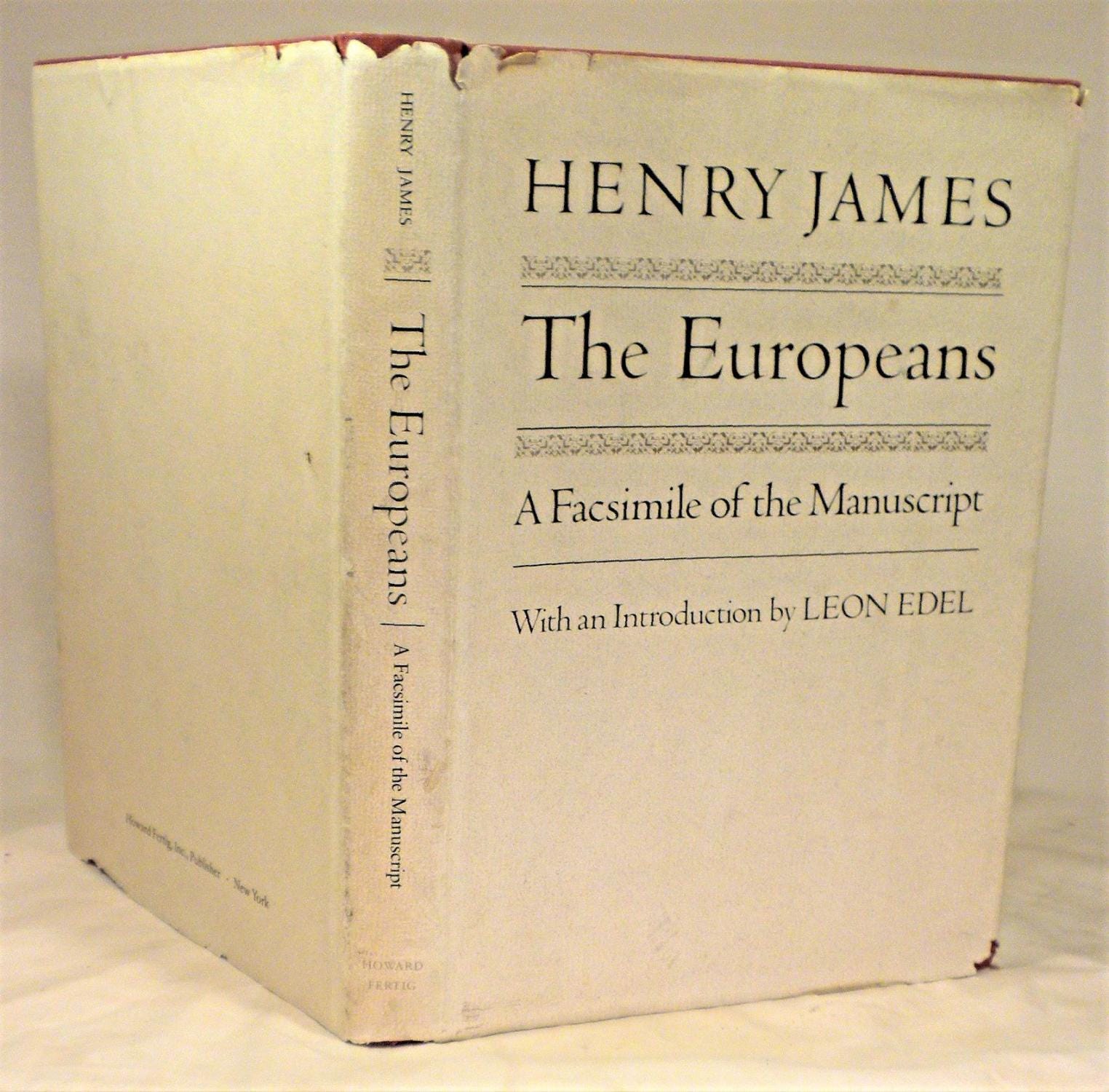
Even so, the manuscript of James’s The Europeans, written in 1878 and published as a facsimile in 1979, is very clean and clear. There are few changes on sentence level, perhaps an average of one per page.
There’s less here to be learned than there is from Orwell, and looking in that sort of granular way at particular sentence choices at the start of Nineteen Eighty-Four. But writing can sometimes come easily, and maybe that’s worth learning.
The Europeans is James’s most Austen-like novel, and some of her lightness of touch and retouch seems to have come across into his drafting of it.
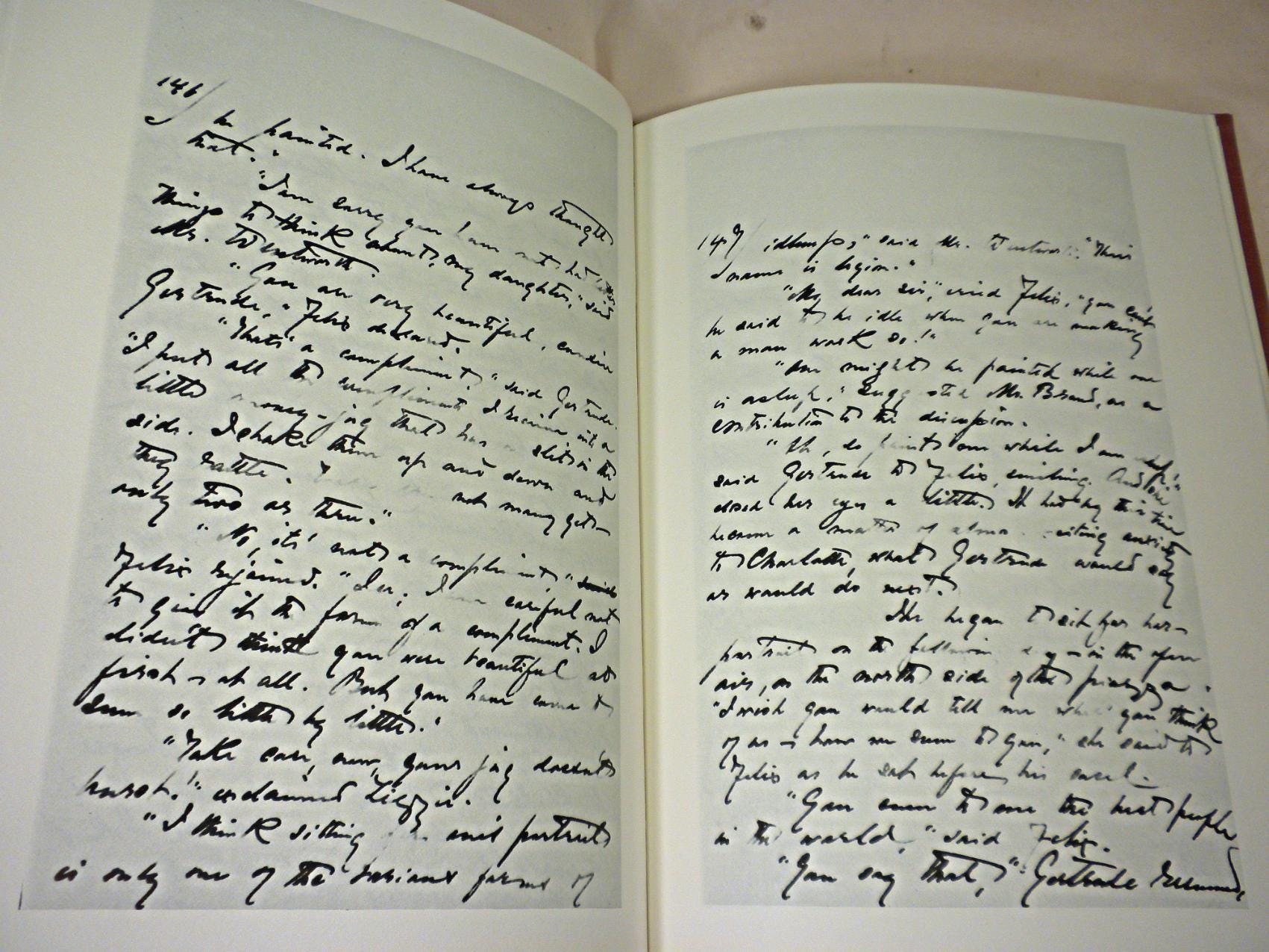
What’s most noticeably different between James and Austen is that he has removed whole pages from the manuscript in the effort to cut the total number of words. We see the vestiges of this because he has left pages with only a few lines on, and then snaking, space-swallowing diagonal squiggles that lead us over to the next page. What was there has been shuffled out and replaced with something shorter.
Because the surviving manuscript is the version sent to the printers in several tranches, James did not include his first drafts. He wasn’t lodging his work in a library. In fact, later on, he burned most of his papers so as to avoid future scrutiny. What he wrote on these pages in The Europeans needed to be a clear series of instructions for a printer.
The Europeans, then, as we have it, is something between a final draft and a clean copy. However, this final draft was almost certainly very close to James’s first draft. He was working at speed and, like Jane Austen, could produce almost finished prose at will.
From James’s crossings out, we can learn the same lessons as from Austen’s. Here is where I have been having trouble. Maybe rethink. That’s what the crossing out says.
James doesn’t add much to our vocabulary of drafting signs. He crosses out with a line through the middle of the words, as Austen does — that’s the most basic On Drafting thing you could imagine. He underlines for italics. That’s about all we can add to that.
Unless I’m writing journalism up against a deadline, what I personally write doesn’t come out as clean and almost there as this, in The Europeans. From start to finish, I tend to write around six drafts of any piece of fiction. The fourth or fifth draft might look something like James’s if it wasn’t typed up — I mean, it would look the same in terms of the number of corrections per thousand words. By then, though, troublesome sentences may have gone through ten or more versions.
James wastes more page space than Austen. Not only does he leave some sheets almost blank, he also includes paragraph breaks.
Paper was clearly more expensive for Austen than for James, and she was content to leave decisions about paragraphing to her publisher and typesetter.
Like Austen, James tends to struggle more when conveying the way one of his characters speaks than when Third Person narrating — when saying what needs to be said at that point. A deeper insight into a character means an author saying to themselves, They wouldn’t express it like that, they’d say it like this. And the more you get to know a character, the more likely you are to make more of those changes, because you’re more in their head.
James anticipated page proofs — typeset versions of his finished copy from the magazines he was commissioned by — and would, if there was time, make further changes. He could also count on another chance to rewrite when he corrected the stories for publication in book form. Those he didn’t value, he could leave in serialised form and forget about them forever.
Much later than when he was writing The Europeans — between 1905 and 1909 — James rewrote much of his earlier fiction for the definitive 24-volume New York Edition. There’s an immense amount to learn from late Henry James’s improvements, or changes, or destruction of early to mid James’s fiction. If you look at the different editions of these novels, the different versions, there’s even more to learn from his prefaces, collected together in a book called The Art of the Novel. But here’s not the place for that.
It’s with Henry James that Anglo-American fiction becomes, for better and worse, intensely self-conscious. James it was who developed and refined the rules around maintaining a consistent Point of View, not slipping laxly from one character’s interior to another.
He may seem distant sometimes, almost as if he’s speaking another language within English. But his decisions and hesitations are contemporary. We are still enmeshed in these questions of consistent Point of View, and his workroom underlays our own.
He’s one of our most present ghosts, hovering over our desks, looking over our shoulder, whether we choose to be aware of him or not.
So that’s everything for today.
Please like, share and subscribe. And I’ll see you soon.
A Writer's Diary is a reader-supported publication. To receive new posts and support my work, consider becoming a free or paid subscriber.
Comments
Nothing yet. Say the first thing.
Sign in to join the conversation.