
Hello, welcome back.
I haven’t been doing much podcasting the last few months because I’ve been putting out the Complete Guide to Point of View, which is there on Substack for everyone to read.
And if you subscribe, you can download the whole thing as a PDF.
Today, I’d like to get back to On Drafting, which is the book that, with your help, I’m writing.
And I’ve got something to say about Henry James and what we can learn from the way that he developed ideas before he started writing them.
So here is a draft of what I’d like to say about him.
I’m interested to hear what you think, so please do comment.
Here we go —
What I’m working on is a book called On Drafting, not On Writing.
And I think there is a difference, or just for now I can make one — a difference between writing and drafting.
The aim of writing is to be done with writing.
Each sentence is written in the hope it has found its finished form.
Whereas the purpose of drafting, of each individual draft, is to make the next draft possible, if not easy.
Each sentence is creating the possibility of better future sentences.
As with the Loomis method of drawing, the first writing that’s done, draft zero, or notes, may simply be aiming to say, there is something in front of me, there is an object in my imagination, and it has roughly these volumes in these places.
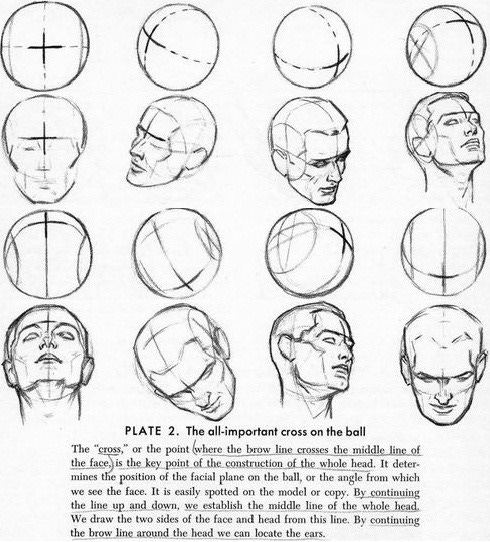
The equivalent in writing to those first drawing marks, traced in loops or spirals and turning into an oval, is a jotted note in a notebook.
Although it hints at narrative, it more likely is a statement of the subject.
Henry James called these données, givens.
He put them down almost always attributed to their social source in his notebooks.
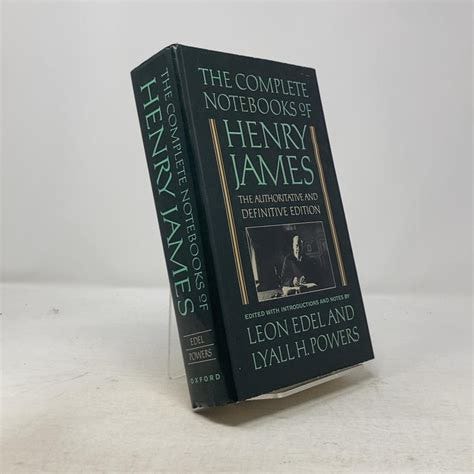
Here is the donnée, the given, of his famous story, perhaps his most famous story, ‘The Turn of the Screw’.
Saturday, January 12th, 1895.
Note here the ghost story told me at Addington (evening of Thursday 10th), that’s two days earlier, by the Archbishop of Canterbury: the mere, vague, undetailed, faint sketch of it — being all that he had been told (very badly and imperfectly), by a lady who had no art of relation and no clearness: the story of the young children (indefinite number and age) left to the care of servants in an old country-house, through the death, presumably, of parents. The servants, wicked and depraved, corrupt and deprave the children; the children are bad, full of evil to a sinister degree. The servants die (the story vague about the way of it) and their apparitions, figures, return to haunt the house and children, to whom they seem to beckon, whom they invite and solicit, from across dangerous places, the deep ditch of a sunk fence, etc. — so that the children may destroy themselves, lose themselves, by responding, by getting into their power. So long as the children are kept from them, they are not lost: but they try and try and try, these evil presences, to get hold of them. It is a question of the children ‘coming over to where they are’. It is all obscure and imperfect, the picture, the story, but there is a suggestion of strangely gruesome effect in it. The story to be told — tolerably, obviously — by an outside spectator, observer.
Well, the first thing to say is this is just a great idea.
This is something that you could mess up, but even just in note form it’s really gripping, and there’s a central evil, almost horror movie scenario, that Henry James can bring out.
In this first podcast on James I’m just going to pick that apart and look at how James makes a note, and then we’ll move on to what he makes of it.
Firstly, he’s quite kind of journalistic in putting down a date and a time and saying who the source was, and that can help prompt his memory later on.
He doesn’t put down all he remembers, but if he comes back to this in a few years’ time, maybe the memory of where he was sitting, who he was sitting opposite, those kind of physical details will give more juice to the idea.
Then he relates the story.
He does a sketchy version of it, including where he admits, “I don’t know about this bit,” or “this bit was vague when it was told to me.”
That leaves him space to develop.
He also does two really important things.
Firstly, he talks about the effect of it:
It is all obscure and imperfect, but there is a suggestion of strangely gruesome effect in it.
So he doesn’t only note down the idea, but what kind of story he thinks it might be for the reader.
And finally, he talks about point of view.
The story to be told, tolerably, obviously, by an outside spectator, observer.
This seems to me a pretty good model of taking a note.
Rather than just putting down a one-liner, he does a paragraph.
He tells the story, but in that Loomis method, sketchy, “there is a volume here” form.
And that seems to me what we could learn from this.
Please like, share and subscribe, and I’ll see you soon.
Comments
Nothing yet. Say the first thing.
Sign in to join the conversation.