
The signing of a Memorandum of Understanding (MoU) between Washington and Tehran is expected to launch a new “60-day negotiating period”. The signing took place electronically last Sunday, and concluded while the US president was visiting Versailles this week and has already entered force. The framework agreement is intended to halt military operations while diplomats work through the most difficult unresolved issues. These include Iran’s uranium stockpile, nuclear infrastructure, future sanctions policy, and long-term security arrangements across the Middle East.
The timing of the deal prompted criticism from some observers, who questioned whether the administration was seeking a symbolic political victory alongside a diplomatic breakthrough.
What does an MoU mean? A memorandum of understanding (MoU) is a non-binding document that outlines the terms and intentions of a mutual agreement between parties, serving as a preliminary step toward a formal contract. But a critical party was missing - Israel. The MoU is aimed at transforming a fragile ceasefire into a broader agreement later addressing Iran’s nuclear programme, sanctions relief, regional security, and the reopening of the Strait of Hormuz among other significant items listed below. According to draft details of the MoU reported by Reuters, the agreement entails the following:
Immediately reopening of the Strait of Hormuz to commercial shipping
United States would begin lifting its naval blockade on Iranian ports
This initial two steps processes are expected to be completed within 30 days.
A freeze on new US sanctions and discussions on broader sanctions relief — tied to Iranian compliance.
US blockade in Strait of Hormuz expected to lifted Friday when agreement is signed, as per the US State Department, quoting Trump.
The (MoU) is widely viewed as a “starting point”: an agreement to start talking rather than a final settlement. It follows the signing of the agreement, expected to be negotiated during the 60-day period are the most contentious issues, including Iran’s nuclear activities, economic relief, security guarantees, and the future of maritime access through the Strait of Hormuz.
In short, it’s a deal to allow both parties to keep talking within the given period. Potentially, it could help transform a fragile ceasefire into a broader agreement to end the conflict. Though viewed differently in Tehran and Washington, the Pakistan-mediated MoU stands as a platform for a mutually-agreed process of address longstanding disputes over Iran’s nuclear programme, sanctions relief and regional security arrangements.
However, there are differing narratives. Both sides have signalled support for the framework as they understand it. US and Iranian officials have offered sharply different descriptions of what the proposed accord would entail. Whilst Trump portrayed the MoU as a pathway toward stricter nuclear restrictions and a lasting peace settlement; Iranian officials have emphasised sanctions relief, the release of billions of dollars in frozen assets and follow-on negotiations over unresolved issues. Despite general optimism that a preliminary agreement could prevent a wider regional war, the conflicting narratives underscore the significant gaps that remain.
There are concerns that renewed violence between Israel and Iran-backed Hezbollah in Lebanon could derail the diplomatic momentum, with fears that tit-for-tat attacks could halt negotiations at a critical stage. Iran has previously vowed retaliation for strikes on its regional allies, while Israel has signalled it will continue targeting Hezbollah positions.
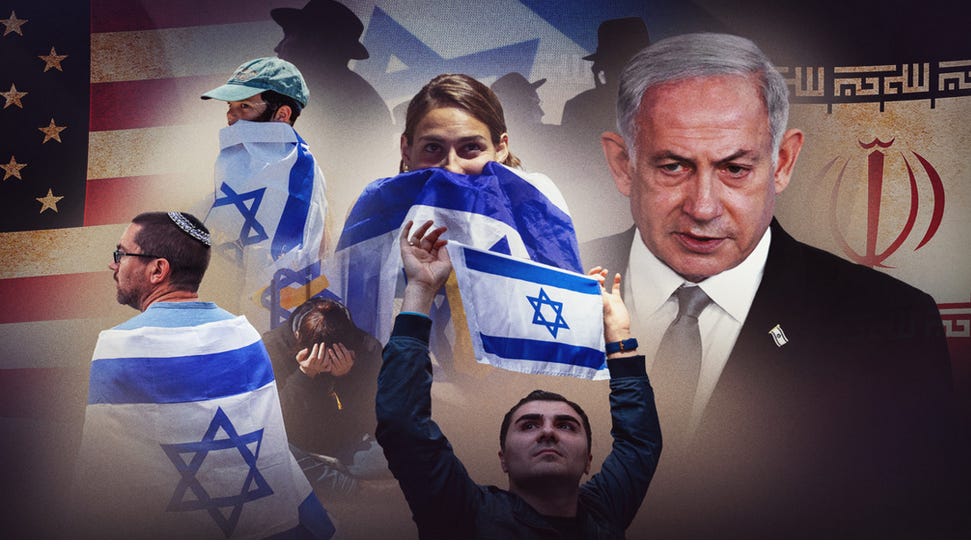
“The peace agreement is bad for Israel”, Yair Lapid, the leader of the Israeli opposition and former prime minister, said. Israel has not taken the news lightly. Yair Lapid said that the emerging agreement achieves “none of Israel’s goals…” “the regime survives, the missile program remains intact, and Iran retains the ability to rebuild its nuclear program. This is a complete failure by Netanyahu, and in the process he is turning Israel into a client state that takes orders on matters of its own national security.”
Another opposition figure, Yair Golan, was equally blunt, describing the policy as a failure. “Trump is signing an agreement that funnels billions of dollars to the Ayatollahs’ regime, leaves the nuclear infrastructure intact, preserves the ballistic threat as it is, and throws a lifeline to the murderous regime in Tehran.”
Israeli Defence Minister Israel Katz issued a written statement signalling that Israel is prepared to respond forcefully if Iran intervenes in any future confrontation involving Hezbollah. “We will not compromise on Israel’s supreme security interests or the protection of our citizens, and we will not withdraw from the security zones,” the statement said. “If Iran attacks Israel because of events in Lebanon, we will strike it with full force and clearly demonstrate the disparity in power between us,” it concluded.
The US and Israel launched a joint military operation against Iran on February 28, prompting retaliatory strikes across the Middle East and leading Tehran to close the Strait of Hormuz to nearly all shipping, triggering a surge in global energy prices. The exchange of strikes largely ceased after a truce was reached in April. Trump said Iran will pledge to not seek nuclear weapons, and the US will dilute and destroy the Iran’s enriched uranium stockpile.
Iran has long insisted that uranium enrichment is its sovereign right. Foreign Minister Abbas Araghchi said on Friday that the MoU will focus on ending the war and reopening the Strait of Hormuz, while providing a 60-day window for further negotiations on Iran’s nuclear program. Tehran has always denied that it seeks to develop nuclear weapons.
The US and Israel previously demanded that Iran completely dismantle its nuclear program and surrender its entire stockpile of enriched uranium. Netanyahu also repeatedly called on Iranians to topple their government: “As long as I am prime minister of Israel, Iran will not obtain nuclear weapons. There is complete agreement between President Trump and me on this issue,” Netanyahu said.
According to Axios and CNN, however, the news of the deal caught Netanyahu by surprise. Trump said Israel will have no choice but to accept the agreement and acknowledged that he pressured Netanyahu to halt Israeli airstrikes in Lebanon during several heated phone calls. The US and Iran appear closer than they have been in months to a possible agreement that could halt the war in the Middle East and ease tensions around the Strait of Hormuz. But despite optimistic statements from Trump and signals from Tehran, major questions remain unresolved and both sides are describing the proposed deal in strikingly different ways.
According to a detailed report by The New York Times, American and Iranian officials are presenting conflicting accounts of what has actually been agreed upon, particularly on Iran’s nuclear programme, the future of the Strait of Hormuz, and sanctions relief. At the heart of the negotiations are many explosive issues that could determine whether the talks lead to a lasting breakthrough or collapse into another cycle of confrontation:
Iran’s nuclear programme. The biggest sticking point remains Iran’s nuclear programme and, specifically, what happens to its stockpile of highly enriched uranium. Trump has repeatedly insisted that Iran must surrender uranium enriched close to weapons-grade levels. According to the International Atomic Energy Agency, Iran currently possesses roughly 970 pounds of uranium enriched to 60% purity, along with nearly 11 tonnes enriched at lower levels.
A US official quoted by the NYT said Washington and Tehran had reached a preliminary understanding under which Iran would eventually dispose of its highly enriched uranium stockpile, although the mechanism for doing so was still under negotiation. But Iranian officials pushed back sharply on that claim. Three senior Iranian officials told the newspaper anonymously that no final agreement had been reached on uranium disposal and that all nuclear issues would instead be negotiated over the next 30 to 60 days.
The issue of future enrichment also remains unresolved. The US official said the draft arrangement does not currently require Iran to halt uranium enrichment, with that issue deferred to later negotiations. Secretary of State Marco Rubio acknowledged that a broader agreement could take months, suggesting Washington may temporarily accept an interim arrangement rather than demand immediate dismantlement. That ambiguity is already fuelling doubts about how durable any agreement could be. ‘Trump has sold us out’: Israelis react with anger and anxiety to new Iran deal; many Israelis fear the deal preserves Iran’s military power and sets the stage for the next war.
Control of the Strait of Hormuz, the strategic waterway through which roughly one-fifth of the world’s oil and gas supplies normally pass, has not been agreed. Before the war began on February 28, commercial shipping moved freely through the strait. But after the conflict erupted, Iran effectively disrupted traffic through attacks and restrictions on shipping, while the United States responded with a naval blockade targeting Iranian ports and Iran-linked vessels.
Now, the question is whether both sides are willing to roll back those measures. Iranian officials told the NYT that Tehran would allow ships to pass through Hormuz without charging transit fees, at least temporarily, if Washington lifts its blockade. Trump, however, signalled the blockade would remain in place until a final agreement is reached: “The Blockade will remain in full force and effect until an agreement is reached,” he wrote on social media Sunday.
The dispute is significant because any Iranian attempt to formalise or monetise control over Hormuz could trigger legal and geopolitical backlash. International maritime law generally prohibits states from charging for safe passage through international waterways.
Frozen Iranian assets, access to billions of dollars in frozen overseas assets, are locked up under sanctions. Iranian officials claim the proposed arrangement could eventually unlock about $25 billion in frozen funds. But the American position appears far more cautious. The US official quoted by the NYT said Washington has not yet agreed to release any frozen assets, although it may consider doing so later if Iran complies with nuclear commitments. The issue is politically sensitive for Trump, who has repeatedly criticised former President Barack Obama for releasing Iranian funds under the 2015 nuclear agreement; the same accord Trump withdrew from in 2018.
Iran-backed proxies are another unresolved issue is Iran’s regional network of armed allies, especially Hezbollah in Lebanon. Iranian officials reportedly said the proposed arrangement would halt fighting “on all fronts,” including Lebanon, suggesting Tehran could restrain allied militias as part of a broader ceasefire framework.
However, US officials have not publicly confirmed that Iran-backed groups are part of the negotiations. Israeli Prime Minister Benjamin Netanyahu reinforced that uncertainty, saying Trump had reaffirmed Israel’s right to defend itself “on every front, including Lebanon.” That suggests Israel will continue military operations regardless of any US-Iran understanding.
Iran’s missiles are one of Israel’s biggest concerns with Iran’s ballistic missiles being absent from the current framework. Earlier in the war, the Trump administration had demanded limits on Iran’s missile capabilities. But the US official told the NYT that missiles are not part of the draft deal.
That omission could become a major source of friction with Israel and Gulf allies, who view Iran’s missiles as one of the region’s biggest security threats. Analysts warn that even if a ceasefire holds and Hormuz reopens, unresolved disputes over missiles and enrichment could leave the region vulnerable to another confrontation in the months ahead.
The agreement may have succeeded in halting hostilities for now, whether it has secured a lasting peace, or merely postponed the next conflict, remains a question that hangs heavily over Israel. One thing is certain: while the guns fall silent, the battle over what this deal means for Israel’s future is noted by Iran’s own Khorasan paper claiming that the deal is only postponing the apocalyptic “final battle” which awaits. Sources
Israelis fear the deal preserves Iran’s military power and sets the stage for the next war. https://www.rt.com/news/641619-israelis-reacts-with-anger/
Despite optimistic statements from President Donald Trump and signals from Tehran, major questions remain unresolved https://gulfnews.com/world/mena/closer-to-peace-or-another-crisis-5-unresolved-issues-haunting-the-us-iran-deal-1.500552529
No posts
Comments
Nothing yet. Say the first thing.
Sign in to join the conversation.