
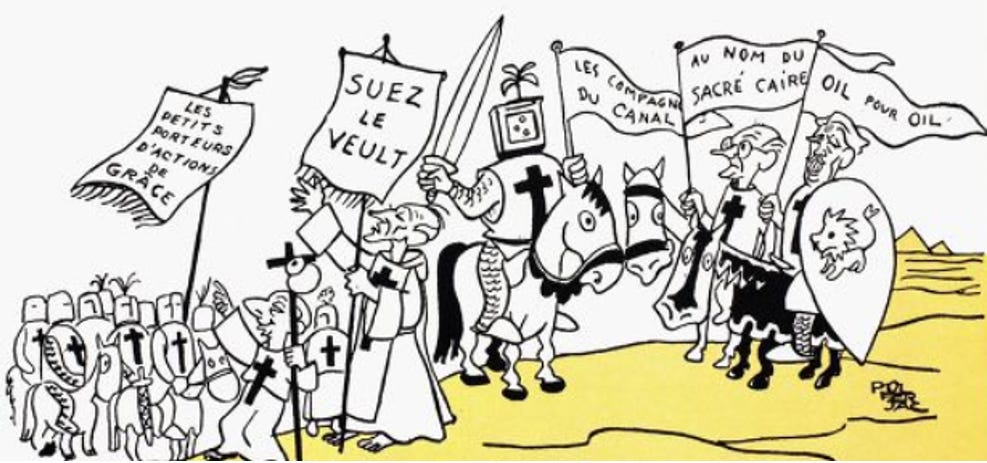
Empires almost never notice the precise moment when they begin to lose control of themselves. Decline is rarely heralded by a decisive military defeat or a definitive economic crisis. It emerges more discreetly. It reveals itself when elites stop thinking in terms of the system and act solely in pursuit of their own interests. When the struggle to appropriate resources replaces the ability to manage them. When those in power cease to be guardians of an order and instead compete within it. That is, likely, the most significant transformation the United States is undergoing today.
Richard Lachmann, in “First-Class Passengers on a Sinking Ship,” offered one of the most accurate descriptions of this phenomenon. His thesis argues that today’s elites no longer fulfil the historical role once played by successful ruling classes.
Those elites who built empires used to assume, at least in part, the task of managing the system that secured their privileges. They invested in institutions, infrastructure, political stability, and mechanisms for long-term reproduction. Contemporary elites, on the other hand, resemble first-class passengers who enjoy the comforts of the journey without worrying about the ship’s fate.
This metaphor is particularly apt for explaining the recent trajectory of the United States. The problem does not lie entirely in the existence of a powerful elite, but in its growing fragmentation. Wall Street, Silicon Valley, the military-industrial complex, major energy corporations, investment funds, media conglomerates, technology contractors, and federal bureaucracies do not form a unified bloc. Rather, they constitute a mosaic of groups that constantly compete for influence, fiscal resources, subsidies, public contracts, and privileged access to the state apparatus.
The capture of the American state is far removed from the simplistic image of a small circle conspiring in secret. It is a far more sophisticated web:
Wall Street seeks macroeconomic stability, access to emerging markets, and clear rules.
Silicon Valley demands massive subsidies for research and artificial intelligence, patent protection, and global standards that support its business models;
The military-industrial complex depends on long-term defence contracts and threat narratives that justify growing budgets.
The tech elites are no longer content with influencing public policy: they aspire to redefine the capitalist model of accumulation through direct access to government decision-making and the privatization of state assets.
C. Wright Mills’ theory of the “power elite,” formulated in 1956, described the convergence of interests among the corporate, political, and military leadership in the United States. That view was accurate. Seven decades later, that triad has expanded and become more sophisticated, but it has also fractured.
Heather Gautney, in her contemporary review of Mills, notes that “The new power elite” operates through mechanisms of regulatory capture, campaign financing, and the rotation of personnel between the public and private sectors, creating a structural autonomy that limits democratic accountability. The elite persists, but it has lost much of its capacity for coordination. The dilemma is no longer an excess of cohesion, but its absence.
During the era of neoliberal globalisation, the financial bloc, represented by firms such as BlackRock, Vanguard, and Goldman Sachs, exercised hegemony in shaping US foreign policy. Its absolute priority was the opening of markets, the free movement of capital, and global labour arbitrage (aka outsourcing). Geopolitical tensions were treated as externalities that could be resolved through diplomacy.
Today, the Bureau of Industry and Security (BIS) of the US Department of Commerce and the National Security Council have imposed restrictions that prevent large US investment funds from seeking returns in strategic foreign markets. The partial withdrawal of traditional financial capital has left a void filled by a far more aggressive elite faction, which merges the interests of Silicon Valley with those of intelligence and defence agencies. Companies such as Palantir Technologies, Anduril Industries, and SpaceX no longer act solely as technology providers to the state, but as direct architects of imperial military doctrine.
This new bloc promotes a narrative of permanent existential emergency. By monopolising the development of advanced artificial intelligence, algorithmic analysis of big data, and unmanned warfare, it has managed to capture national defence budgets. An analysis published in The Financial Times shows how traditional venture capital funds have shifted toward defence tech, creating a closed feedback loop: tech entrepreneurs finance political campaigns and expert committees in Washington, which then issue guidelines mandating the purchase of proprietary artificial intelligence software from those very same companies.
Privatisation and technological fragmentation clash directly with the traditional military-industrial complex (Lockheed Martin, Raytheon, General Dynamics et al). The result is profound logistical inconsistency. The RAND Corporation has warned in repeated reports that the US defence industrial base is not prepared to sustain prolonged high-intensity wars, due to excessive corporate concentration.
Decades of state-backed mergers, designed to boost dividends, reduced the number of major contractors and eliminated productive redundancies. Although the United States spends more on defence than the next ten countries combined, it faces a chronic shortage of conventional ammunition, air defence systems, and naval capacity. Corporate elites in the sector absorb public funds to develop hyper-complex and exorbitantly priced weapons platforms, designed to maximise quarterly profits rather than ensure operational effectiveness. The imperial state has lost political autonomy and acts as a financial hostage to its own oligopolies.
What is significant is not only the power accumulated by technology companies, but also the fact that they have begun to occupy spaces that once belonged to the state. They control information, digital infrastructure, communication flows, artificial intelligence, and enormous volumes of data. Their influence over public policy is growing at the same pace as their economic clout.
During Trump’s second term, this trend reached a new level. The convergence of Silicon Valley, artificial intelligence, and the military-industrial complex reshaped the map of US power. What emerged was not a coherent national strategy, but a fierce struggle among business groups to control the public resources associated with that transformation.
Artificial intelligence has become the modern-day equivalent of the railroads of the 19th century or the aviation industry of the 20th: a sector capable of attracting massive amounts of public and private capital. Federal research programs, defence contracts, energy subsidies, data centers, and digital infrastructure are mobilising hundreds of billions of dollars. Reports from 2025 estimate that investments in “digital infrastructure” will range from $15 to $20 trillion over the next decade. The battle for these resources is, in essence, a battle for control of the state.
Each actor justifies its demands in the name of national security or innovation, but behind this lies a competition for subsidies, contracts, and regulatory privileges. The result is paradoxical: the more the state intervenes to boost strategic sectors, the more intense the struggle to capture it becomes.
The question is not whether artificial intelligence will transform the economy, it likely will, but who will manage that transformation and under what criteria. The evidence suggests that decisions respond less to coherent national planning than to the ability of different groups to influence the state apparatus.
This highlights the difference between managed power and captured power. In the former, subsidies are part of a strategy; in the latter, they become spoils for rival factions. Contractors thrive, shareholders thrive, lobbyists thrive, but problems such as cost overruns, delays, and program duplication multiply. The logic of maximising private profits takes precedence over administrative rationality.
The same pattern is observed in other sectors: pharmaceutical companies shape health regulations, financial giants influence economic policy, digital platforms shape regulatory debates, and energy groups lobby for tax breaks. Each sector refines its mechanisms of influence, but none assumes responsibility for the overall functioning of the system.
Herein lies the true significance of the “Suez moment” for the American elites. It is not about losing power to another actor, but about losing the ability to govern the power they still possess. Political polarisation reflects this fracture: Democrats and Republicans function as vehicles for opposing economic coalitions, and each change in administration redistributes resources among rival groups. Strategic continuity fades, and the state becomes a contested territory.
The result is a peculiar decline: not an abrupt collapse, but a gradual erosion of the capacity to coordinate resources, interests, and institutions. The elites remain extraordinarily effective at generating private wealth, but they have weakened their role as a ruling class. An oligarchy can enrich itself without sustaining the system; a functioning ruling class understands that its survival depends on reproducing it.
The alliance between Silicon Valley, artificial intelligence, and the military-industrial complex does not solve this problem. It does not constitute a new elite capable of reorganising the system, but rather the addition of more players to an increasingly intense competition for state subsidies and resources.
The consequences of an empire lacking strategic coherence extend throughout the world-system. The risk is not an orderly replacement of hegemony, but a prolonged phase of geopolitical anarchy and institutional fragmentation. As the Texas National Security Review (TNSR) points out, US ineffectiveness erodes its alliances: countries that depended on Washington’s military umbrella are rethinking their security. In Europe, the volatility of the Trump administration is accelerating the divide between Atlanticists and advocates of a protectionist “strategic autonomy.”
Hegemony does not collapse overnight: it survives thanks to accumulated momentum. But it loses something more crucial than power: the ability to steer it. That is the true “Suez moment” for the American elites. Not the moment when they discover that another actor is stronger, but the moment when they realise they no longer know how to govern the power they still possess. Source
Iran’s victory over the US is a turning point in world history https://eltabanoeconomista.wordpress.com/2026/06/07/el-momento-suez-de-las-elites-estadounidenses-un-imperio-sin-administradores/

While Fox News political commentators lament the Empire’s defeat as set out in the Islamabad Memorandum, which provides, amongst other things, for the lifting of sanctions against Iran, and Bibi Netanyahu orders further bombings in Lebanon in an attempt to scupper that memorandum, Tehran is celebrating an historic achievement. The damage done to the United States’ reputation and credibility in the wake of the Iran war are significantly more severe than anything the country suffered in the wake of Vietnam.
This war, much like the Battle of Stalingrad, has already changed the world. Iran has not only become the dominant power in Western Asia, having demonstrated its military superiority over its neighbours, particularly Israel, but it can also lay claim to the status of a global power, since it has not only prevented the largest military apparatus in history from imposing its interests by force, but has also come to control, de facto, the planet’s most critical energy chokepoint, the Strait of Hormuz.
Both countries have agreed to set aside 60 days for negotiations, but there are considerable doubts regarding its viability. Brasil de Fato, the Iranian intellectual Mohammad Marandi, expressed the sense of mistrust felt by a large part of the country regarding the status of the agreement: “At this moment, the Israeli regime is massacring families, children and women every day [in Lebanon]. And whilst this continues and the Israeli regime does not back down, the agreement will not be implemented.”
Iran remains committed to the implementation of the agreement, for, as Marandi points out: “It is obviously a victory for Iran, because the United States has stated that it will return the stolen assets (…). It will lift the sanctions on Iranian oil and energy exports. They will lift the blockade of the Strait of Hormuz. And they will put an end to the genocide in Lebanon, amongst other things”
It remains to be seen what the negotiations will decide regarding the US’s main agenda, linked to Iran’s nuclear programme and what to do with the 430kg of uranium enriched to 60%, a level close to that required to produce a nuclear bomb. Under the agreement, this uranium will be diluted domestically under the strict supervision of the International Atomic Energy Agency, rather than being sent to other countries. This represents yet another victory for Iran.
Finally, Marandi believes that his country “will step up its cooperation with the countries of the Global South, the BRICS nations and the members of the Shanghai Cooperation Organisation, and its control over the Strait of Hormuz will enhance its capacity to grow economically and to exert regional and global influence more than ever before”
As negotiations for the ratification of the agreement continue, Iran is preparing for one of the greatest events in its history: the funeral of the former Supreme Leader Ali Khamenei – martyred in the early hours of the war, the chief architect of the military capability the country has built up over the last four decades, which took the whole world by surprise: He said it will be a massive funeral. He was very popular in Iran and much loved amongst supporters of the Axis of Resistance and the Palestinian cause. He led Iran to this victory. His insistence that Iran should stand up to the oppressor, defend the oppressed and preserve its sovereignty is something that has led the world today to view Iran in a new light”.
The United States did not win this war. They lost the military conflict. After 39 days of fighting, the Iranians emerged victorious. It was not merely that Iran survived. Iran defeated the coalition: The United States, the Israeli regime, Jordan, Saudi Arabia, Bahrain, Kuwait, Qatar, and the United Arab Emirates. And, of course, the West as a whole supported them, as did the NATO countries. So, the United States became embroiled in a naval war, and that was a double-edged sword.
As a result, the United States is breaking the fragile global economy. The Iranians held out longer than predicted. Therefore, the United States now needs a workable agreement. This agreement is not a bad one for those other than Israel. It is a reasonable agreement, but the United States may not be prepared to implement it. And if they do not implement it, Iran will not fulfil its commitments.
Currently, the Israeli regime is massacring families, children and women, every single day. And as long as this continues and the Israeli regime does not relent, there will be no final implementation of the agreement. Sources
This article is published with the express permission of the author, Marco Fernandes (Brasil de Fato). https://forumgeopolitica.com/article/irans-victory-over-the-us-is-a-turning-point-in-world-history-says-mohammad-marandi
The United States is inarguably in a weaker position than when it began this war of choice, with core US strategic objectives harmed https://www.commondreams.org/news/iran-war-strategic-defeat

No posts
Comments
Nothing yet. Say the first thing.
Sign in to join the conversation.