
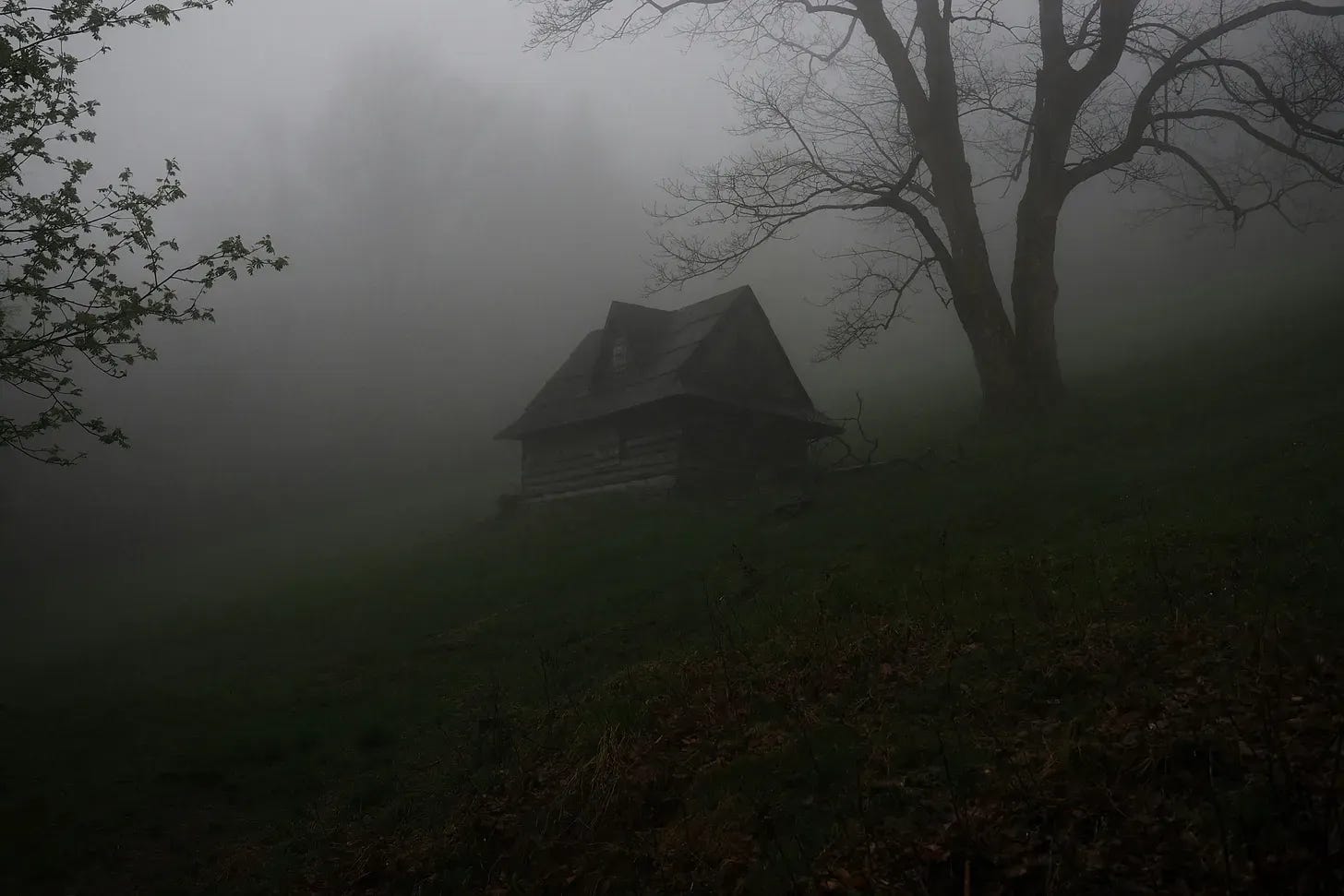
I say the gods deal very unrightly with us. For they will neither (which would be best of all) go away and leave us to live our own short days to ourselves, nor will they show themselves openly and tell us what they would have us to do. For that too would be endurable. But to hint and hover, to draw near us in dreams and oracles, or in a waking vision that vanishes as soon as seen, to be dead silent when we question them and then glide back and whisper (words we cannot understand) in our ears when we most wish to be free of them, and to show to one what they hide from another; what is all this but cat-and-mouse play, blindman’s bluff, and mere jugglery? Why must holy places be dark places?1
Saying Lewis was a rare talent may be the least controversial statement to make on a platform that has an entire cottage industry of notes featuring quotes from Lewis (or, as is often the case, quotes that sound like Lewis but are falsely attributed to him). It may be slightly more controversial to say that the closing paragraphs of Part 1 of Till We Have Faces, from which the lengthy quote above has been pulled, is one of his finest pieces of writing.
If there is any cudgel with which to beat Lewis over his writing, it is the one that Tolkien famously used: he can be too preachy in his fiction and more than a little on the nose in his allegory.
There is none of that here. Here, an aging and mature Lewis allows a character to lash out against the gods in a way that is not immediately rebutted. True, Part 2 goes a long way toward answering this question, and I intend to examine that in a future essay, Lord willing, but for now I want to look at where Lewis leaves us at the end of Part 1, with Orual asking a perennial question that has no easy answer: if God exists, why doesn’t He make it more apparent?
Incidentally, this is where my book club has left off, which you can join by becoming a paid subscriber. We meet on Zoom to discuss the Church Fathers in the Fall/Spring and fiction in the Summer.
A touch of background
In case it’s been a minute since you’ve read TWHF, let me briefly say what has led us to this point. If you’ve got the story fresh in your head, feel free to skip ahead. If you don’t want spoilers, you may leave, but only after liking this article. Sorry, I don’t make the rules, but I hear the consequences for breaking them are severe. Why risk it?
The beginning of Part 1 deals primarily with the relationship between Orual (the main character who voices the lines above) and Psyche, her sister who is sacrificed to the gods. Except, the sacrifice doesn’t go according to plan. Rather than being eaten by the angry god of the mountain, Psyche is whisked off to a palace only she can see by a chivalrous god who saves her from death by exposure. Huzzah! But wait—to complicate matters, the god insists that she must not look at him, a demand to which she obliges.
Initially seeking only to bury her sister’s body, Orual travels to the site where Psyche was left to die, only to discover that Psyche hasn’t been killed at all. In fact, she’s perfectly healthy—at least in body. But when Psyche insists that Orual is standing with her in a castle, Orual realizes—or so she thinks—her sister has gone mad. The story of this unseen lover does not help. Eventually, Orual coerces Psyche into taking a lamp in the night to see her lover’s face, which leads to Psyche’s banishment and the god yelling at Orual for such foolishness. This direct confrontation with the god is important for today’s purposes.
But one other detail is absolutely essential to understanding the text we’re looking at in this essay: After Orual’s first argument with Psyche about the existence of the palace in which Psyche lives, she returns to her camp not far off. When kneeling for a drink of water—and surely this kneeling posture isn’t incidental—Orual catches a fleeting glimpse of the castle. It’s exactly as her sister described, and for a brief moment, Orual repents of her blasphemies against the gods and her disbelief of her sister. However, as quickly as the vision came, it vanishes when Orual rises to her feet, and she then asks the reader this: “That moment when I either saw or thought I saw the House—does it tell against the gods or against me?”2 This, of course, is the very question asked in the opening quotation. Is it better or worse that the gods give us fleeting glimpses?
Our Fleeting Visions
Most Christians, and I suspect most people of any faith they sustain for a lifetime, have moments they cling to in which the veil seems to have torn, the gap between the here and hereafter thinned, or the fog lifted on the really real such that the faith that is assured of things unseen becomes something more like a flash of the unseen that has been briefly but truly seen.
In the moment, such experiences are more valuable than words. Some are enough to sustain you for a lifetime. George MacDonald speaks about this in his Unspoken Sermons, saying, “He believes in the God of former vision, lives by that word therefore, when all is dark and there is no vision.”3 But for many, in time we can doubt what we have seen. We wonder, “if what I saw/experienced really were real, why was the vision so short, the experience so fleeting?” From there, we ask with Orual, “does this count for or against God?” Why would God play these cat-and-mouse games?
These are, in essence, the question of Divine Hiddenness. If the most important thing in life were knowing God, why doesn’t God make His existence, His presence more obvious? It is a question armchair and academic philosopher alike have wrestled with for centuries. Even within the pages of Scripture, we find Job, David, and others asking these same questions. They are not questions that I think have easy answers, and they’re further complicated by the fact that, for some, God is easily seen everywhere, while others search unsuccessfully for years.
Again, Lewis will try to answer this in Part 2 of the book, and it’s a brilliant and beautiful answer, but answers are for another day. This essay is for the tension in which we live absent answers. And especially, I want to look at that last line,
why must holy places be dark places?
As I wrote in a previous essay, one of the defining features of TWHF is its exploration of two approaches to religion. On the one hand, there is the Fox, who is representative of a rational approach exemplified in the classical Greek philosophers. On the other hand, we have the Priest of Ungit. His religion is one of blood and guts, of mystery and sacrifice. It is the latter which is marked by darkness. But it’s a paradoxical darkness, the darkness of holiness.
The Christian tradition tends to speak of God in terms of light. God dwells in unapproachable light, Christ is the Light of Life and His followers are the light of the world. If Lewis wanted this book to be a sermon, it would be about light versus darkness. In place of the Fox we’d have a good Christian against the bad pagan priest. Instead, he gives us two opposites that cry out for synthesis, not easy victory. What’s most fascinating to me about the book is that it’s not simply a story of the Fox being right and the pagan priest being wrong. The holy darkness of the Priest taps into the “thick religion” that the human soul needs.
You see, while it is true that, in the end, light shall triumph over darkness, on this side of glory, our experience of life is marked by the dark. That much may be obvious, but what is less obvious, what may even sound scandalous to some, is that our experience of God, of holy places, will often be marked by darkness as well. I do not mean the darkness that is moral depravity. I mean the darkness that conceals. The dark nights in which we cry out to a seemingly deaf heaven. The dark but holy places where we celebrate mysteries we do not fully understand. Where bread that looks and tastes like bread is said to be a sacrificial body. Where water is said to save. Where words are read that challenge and provoke and confound.
Just the other week, I found myself reading at our church, and the passage was Genesis 22, wherein God calls Abraham to sacrifice his son. With Kierkegaard I must declare I don’t understand it even if I try to admire it. And even more so, I know, like Kierkegaard again, there is a gap between my faith and the faith on display here.
It is this same darkness in the lives of saints I don’t understand. The stories were tempted to sanitize because how else can we understand young women starving themselves or men sitting on top of poles for a lifetime?
It is in relationship to this holy darkness that I can understand my friends who love the Latin Mass despite not knowing what is said. For all the disagreements we might have, I understand the pull of the holy darkness. So too with Orthodox liturgies in foreign languages that mystify and draw you in.
And yet, we must not fetishize this darkness. The darkness is not meant to stay forever. We worship a God of light. The darkness seems to me more an accident of our fallen state that an essential part of God. In God there is no darkness. On our earthly pilgrimage, however, there is in abundance. And strange as it is, often the only path toward the Light of Life is to journey through the darkness, into that cloud of unknowing or up the arduous hills that are the dark nights of the soul.
With Orual, I don’t always understand why this is. Why doesn’t God make Himself more easily known? Why are holy places so often dark places?
Perhaps, as Lewis insists, it has more to do with us than God. Perhaps, God cannot speak to us face to face until we have faces. But more on that later.
C.S. Lewis, Till We Have Faces, (Edition: that HarperCollins one with the annoying ruffled edges) 284.
C.S. Lewis, Till We Have Faces, 150.
George MacDonald, Unspoken Sermons (Edition: the big blue one with MacDonald’s face on the front), 64
Comments
Nothing yet. Say the first thing.
Sign in to join the conversation.