
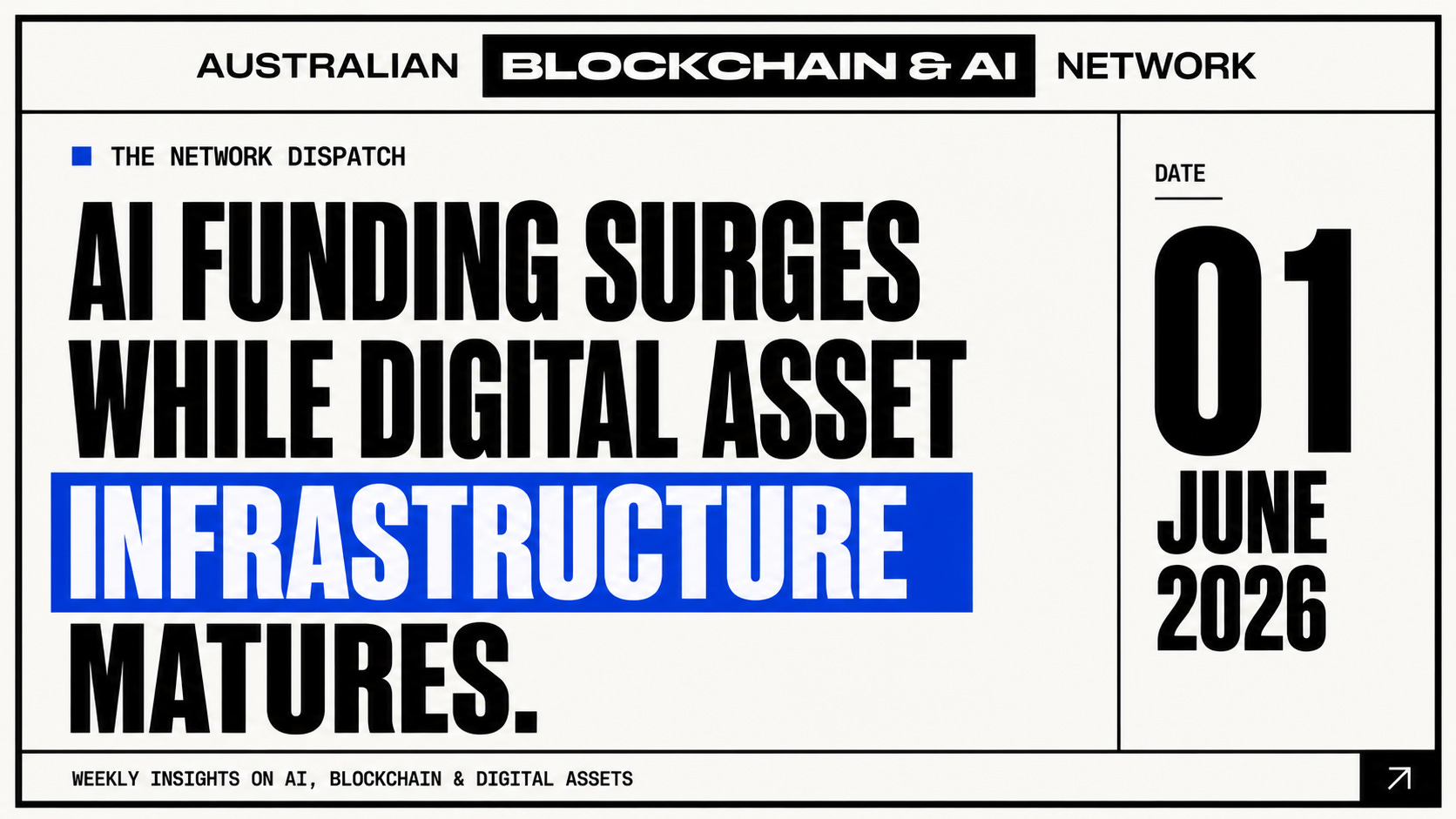
As we close out May, one theme continues to emerge across both AI and digital assets: the conversation is shifting from possibility to implementation.
Over the past week we’ve seen AI companies attract unprecedented levels of capital, governments and institutions grapple with the implications of increasingly capable models, and tokenisation initiatives continue their steady march from pilot programs into real-world deployment. What was once viewed as experimental technology is increasingly becoming part of the infrastructure that will underpin future financial systems, business operations and digital experiences.
For those of us who have spent years working across these sectors, this transition is both exciting and expected. The real question is no longer whether AI and blockchain will have an impact, but how organisations, regulators and communities adapt to a world where these technologies become embedded into everyday processes and critical systems.
This week’s newsletter explores some of the developments driving that shift, from Anthropic’s latest funding milestone and global discussions around AI governance through to stablecoin adoption, tokenisation initiatives and the continued maturation of digital asset infrastructure.
As always, we hope you find these insights valuable and welcome your thoughts and perspectives.
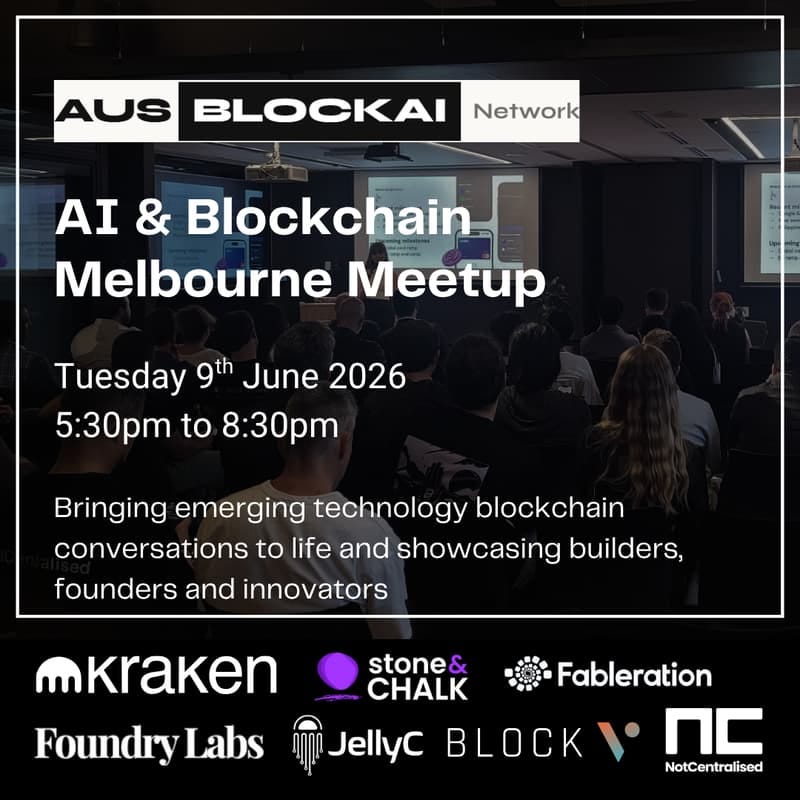
Also, before we get to the news, we have 2 events coming up with one next week, on the 9th June in Melbourne, and another the week after during the Digital Economy Conference (powered by DECA) in Sydney on the 16th June.
Sign up to the Melbourne event here: https://luma.com/2ie8qq06
and the Sydney event here: https://luma.com/x5ygy1v2
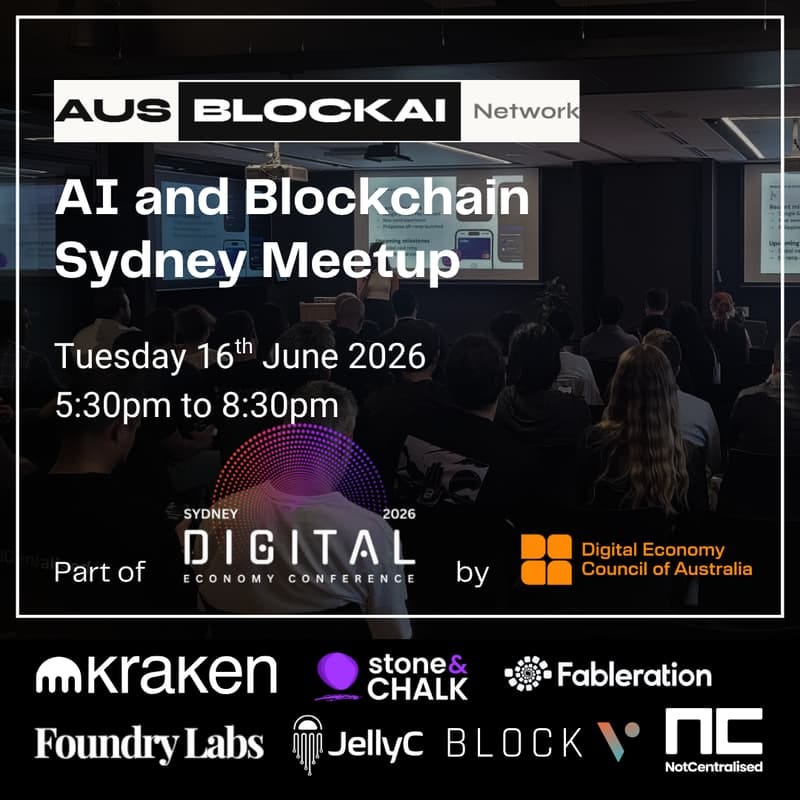
And if you are interested in attending the DECA event see here:
https://www.deconference.com.au/
Alongside the valuation announcement, Anthropic released Claude Opus 4.8, introducing improvements in reasoning, coding performance, and model efficiency. One notable addition is “effort control”, allowing users to balance capability against compute usage and cost. The release highlights how model competition is increasingly focusing not just on raw intelligence, but on operational usability and economics.
https://www.theguardian.com/technology/2026/may/28/anthropic-ai-valuation?utm_source=chatgpt.com
Anthropic became one of the biggest stories in AI this week after closing a major funding round that reportedly pushed its valuation to approximately US$965 billion. The company continues to gain traction across enterprise markets, particularly with coding and workflow automation tools, while positioning itself as one of the leading voices around AI safety and governance.
The raise further reinforces a growing trend: investors are increasingly treating frontier AI companies as foundational infrastructure plays rather than traditional software businesses.
https://www.theverge.com/ai-artificial-intelligence/937028/military-ai-warfare-red-lines
The debate around AI safety and military deployment intensified again this week. New reporting highlighted growing tensions between governments seeking broader AI deployment capabilities and companies attempting to impose restrictions around surveillance, targeting, and autonomous weapons. The discussion reflects a broader shift as frontier AI increasingly intersects with national security and geopolitical strategy.
https://apnews.com/article/d92d0108730d146baa46da041b8523da?utm_source=chatgpt.com
One of the more unexpected developments this week came from the Vatican, with Pope Leo XIV releasing a major encyclical focused on artificial intelligence.
The document calls for stronger international oversight of AI, raises concerns around labour displacement, autonomous weapons, concentration of power within major technology companies and the broader impact of AI on humanity. The release also sparked discussion due to the involvement of Anthropic representatives in the dialogue surrounding the publication.
The significance here isn’t purely religious. It highlights how AI governance discussions are expanding beyond regulators and technology companies into broader societal and ethical institutions.
The Cannes Film Festival became an unlikely showcase for the growing influence of AI.
Despite public criticism from many creatives, reports suggest major talent agencies and media companies were actively exploring partnerships and commercial agreements with AI firms behind the scenes. Technology companies reportedly became some of the most visible participants across the festival’s events and discussions.
The contrast highlights a broader reality emerging across industries: while concerns around AI remain significant, organisations are increasingly looking at how to integrate the technology rather than whether to adopt it at all.
Tether announced plans to launch a digital version of the Georgian lari (GELT) alongside government stakeholders in Georgia.
While details remain limited, the initiative is notable because it represents one of the clearest examples yet of a private stablecoin issuer working directly alongside a national government to create digital currency infrastructure.
The project is expected to focus on digital payments, fintech innovation and cross-border transactions.
Stablecoins continued to dominate discussions across regulators, policymakers and financial institutions this week.
As adoption accelerates globally, attention is increasingly turning towards how stablecoins interact with traditional banking systems, payment rails and monetary policy frameworks. Multiple jurisdictions are continuing to explore new regulatory frameworks designed to support innovation while addressing financial stability concerns.
The broader trend remains clear: stablecoins are no longer being viewed solely as crypto market infrastructure but as a growing component of future payment and settlement systems
https://genfinity.io/2026/05/26/project-acacia-final-report-rba-dfcrc-tokenised-finance/
Industry analysis surrounding Project Acacia this week focused on the breadth of use cases explored, including fixed income markets, managed funds, repos, carbon credits, and trade payables. The report reinforced that tokenisation is increasingly being viewed as financial infrastructure rather than a standalone crypto sector.
Australian regulators continue increasing scrutiny across digital asset providers, with growing focus on supervision, onboarding standards, reporting obligations, and compliance frameworks. The direction of travel remains clear: digital asset businesses are increasingly being integrated into mainstream financial regulatory structures.
https://www.mexc.com/news/1117835
Australia’s work through Project Acacia attracted broader international attention this week, with global coverage highlighting Australia’s experimentation around tokenised settlement systems and wholesale digital money. As tokenisation becomes a larger global theme, Australia’s regulatory and infrastructure work is increasingly being recognised beyond local markets.
If there is one theme tying this week together, it is that both AI and blockchain are continuing to move deeper into infrastructure.
Across AI, the conversation is incre
asingly about deployment, enterprise integration, workflows, and operational capability.
Across blockchain, the focus is increasingly on settlement, tokenisation, digital money, and financial market infrastructure.
In both cases, the shift is the same: moving from experimentation toward implementation.
The Australian Blockchain & AI Network (ABAI Network) is a non-profit community organisation dedicated to increasing education and awareness of blockchain technology, specifically blockchain and AI-based projects. Their goal is to empower the Australian community with the knowledge and tools to participate in the digital economy, and to promote the adoption and growth of emerging technology in Australia and beyond.
This newsletter is brought to you by the following sponsors:
No posts
Comments
Nothing yet. Say the first thing.
Sign in to join the conversation.