
Recently the brilliant analyst Shanaka Anslem Perera wrote:
Dario Amodei1 told back in February that a tsunami is coming, so close we can see it on the horizon, yet people are inventing explanations for why it is a trick of the light. Anthropic’s official position is that powerful AI systems matching Nobel laureates across most disciplines will emerge in late 2026 or early 2027. A country of geniuses in a data centre. Months away.
Now hold that timeline in one hand and hold the last thirty days of human civilisation in the other.
In thirty days, humanity demonstrated that it still cannot keep a 39-kilometre strait open. That its most advanced medical imaging depends on a gas boiling off in containers nobody can reach. That three billion people’s food supply routes through a chokepoint a single insurance market can close. That its most expensive aircraft can be destroyed by drones costing less than a used car. That a gas field discovered in 1971 still determines whether semiconductor fabs operate in 2026. The molecule, the most ancient unit of physical reality, remains the binding constraint on the most advanced technological civilisation ever constructed.
This is the gap Dario is describing, and it is more profound than his framing suggests. The tsunami is not merely that AI is approaching human-level intelligence. The tsunami is that AI is approaching human-level intelligence at the precise moment when human-level intelligence has proven insufficient to manage the physical systems it built. We constructed a global economy of extraordinary complexity, interlinked through chokepoints of extraordinary fragility, with eight billion minds available to notice the risk. Nobody noticed. Nobody priced it. Nobody mapped the seven industries running through one reservoir until the missiles made the map undeniable.
The question this raises is not whether AI will be as smart as a Nobel laureate. It is whether being as smart as a Nobel laureate is sufficient.
The engineers who designed Ras Laffan were brilliant. The metallurgists who built the cryogenic heat exchangers are world-class. The actuaries who structured the insurance market created an elegant system. Each node is a masterpiece of human intelligence. The failure is not in any node. It is in the connections between nodes that no individual mind was tasked with mapping. The failure is architectural, not intellectual.
Dario wrote2 that powerful AI could compress a century of biological progress into a decade, and that we are in a period where capability outruns wisdom, like a teenager with a car but no judgment. The Iran war adds the dimension neither essay anticipated: the teenager has discovered that the roads themselves are built on a single bridge, and the bridge is on fire, and the fire truck runs on the same fuel that flows under it.
Read that again:
AI is approaching human-level intelligence at the precise moment when human-level intelligence has proven insufficient to manage the physical systems it built. We constructed a global economy of extraordinary complexity, interlinked through chokepoints of extraordinary fragility, with eight billion minds available to notice the risk. Nobody noticed. Nobody priced it. Nobody mapped the seven industries running through one reservoir until the missiles made the map undeniable.... The question this raises is not whether AI will be as smart as a Nobel laureate. It is whether being as smart as a Nobel laureate is sufficient.
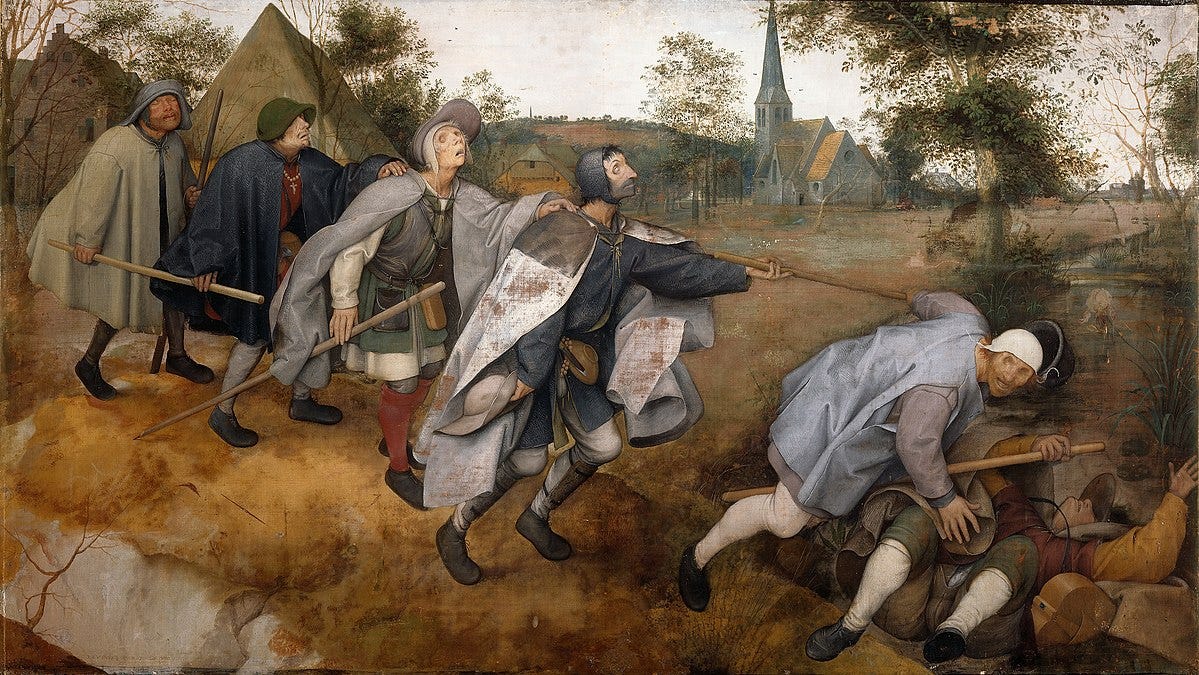
Most readers of this substack will know why it’s called “Aurocafe,” and why the root of the problem is the mental constitution of human consciousness. But some who have more recently subscribed to Aurocafe or somehow stumbled upon this post will want to know what is meant by “the mental constitution of human consciousness” and why it’s the root of the problem. The following snippet points to the problem and hints at the solution:
Mental nature and mental thought are based on a consciousness of the finite; supramental nature is in its very grain a consciousness and power of the Infinite. Supramental Nature sees everything from the standpoint of oneness and regards all things, even the greatest multiplicity and diversity, even what are to the mind the strongest contradictions, in the light of that oneness; its will, ideas, feelings, sense are made of the stuff of oneness, its actions proceed upon that basis. Mental Nature, on the contrary, thinks, sees, wills, feels, senses with division as a starting-point and has only a constructed understanding of unity.
This text is from the penultimate chapter of The Life Divine by Sri Aurobindo. In this chapter Sri Aurobindo makes an attempt to describe to us mentally conscious beings the consciousness and nature of a supramental gnostic being. Before addressing these unfamiliar terms and concepts, let’s take a step back and consider who we are talking about. For readers completely unfamiliar with Sri Aurobindo, here is a sketch of his life up to the day (in 1910) when he arrived in the (then) French enclave of Pondicherry in Southern India, where he remained until his passing in 1950.
Sri Aurobindo originally thought to return to politics in a year or two. But before long “the magnitude of the spiritual work set before him became more and more clear to him”.3 It was no longer a question of “revolt against the British government; he was now waging a revolt against the whole universal Nature”.4 This is not the place to discuss Sri Aurobindo’s 40-year-long revolt against universal Nature. Suffice it to quote him on the sources of his “philosophy”5:
My philosophy was formed first by the study of the Upanishads and the Gita; the Veda came later. They were the basis of my first practice of Yoga; I tried to realise what I read in my spiritual experience and succeeded; in fact I was never satisfied till experience came and it was on this experience that later on I founded my philosophy, not on ideas by themselves. I owed nothing in my philosophy to intellectual abstractions, ratiocination or dialectics; when I have used these means it was simply to explain my philosophy and justify it to the intellect of others. The other source of my philosophy was the knowledge that flowed from above when I sat in meditation, especially from the plane of the Higher Mind when I reached that level; they [the ideas from the Higher Mind] came down in a mighty flood which swelled into a sea of direct Knowledge always translating itself into experience, or they were intuitions starting from experience and leading to other intuitions and a corresponding experience. This source was exceedingly catholic and many-sided and all sorts of ideas came in which might have belonged to conflicting philosophies but they were here reconciled in a large synthetic whole.
He also wrote that he “never, never, never was a philosopher”: “I had only to write down in the terms of the intellect all that I had observed and come to know in practising Yoga daily and the philosophy was there, automatically. But that is not being a philosopher!”6 Needless to say, by “Yoga” Sri Aurobindo did not mean an exercise cult with expensive accessories. Read this post if you want to know what he had in mind.
One pillar of Sri Aurobindo’s philosophy is the conception of a supramental consciousness or supermind. This is how the term is introduced in The Life Divine:
“In the beginning,” says the Vedanta [the philosophy of the Upanishads], “was the one Existence without a second,” but before and after the beginning, now, for ever and beyond Time is that which we cannot describe even as the One, even when we say that nothing but That is. What we can be aware of is, first, its original self-concentration which we endeavour to realise as the indivisible One; secondly, the diffusion and apparent disintegration of all that was concentrated in its unity which is the Mind’s conception of the universe; and thirdly, its firm self-extension in the Truth-consciousness which contains and upholds the diffusion and prevents it from being a real disintegration, maintains unity in utmost diversity and stability in utmost mutability, insists on harmony in the appearance of an all-pervading strife and collision, keeps eternal cosmos where Mind would arrive only at a chaos eternally attempting to form itself. This is the Supermind, the Truth-consciousness, the Real-Idea which knows itself and all that it becomes. [pp. 136‒37]
A second pillar of Sri Aurobindo’s philosophy is his concept of involution. The One—described by the Upanishads as a trinity of Being, Consciousness, and Bliss—has involved or imprisoned itself Houdini-like in insentient matter, wherefrom it has emerged, thus far, in the forms of life (vital force) and mind (mental consciousness). But mentally conscious homo sapiens, far from being the crown and culmination of Nature’s evolutionary nisus, is a transitional being7:
[M]an is essentially a journeyman. He is skilful in putting things [up], buildings, a job, a swindle. In pulling down he is perfect, a destroyer ne plus ultra. The world is full of his constructions, but more pervasive is his destruction; but that leaves few traces. But still the great doers are few in number, the good doers are many, the poor doers are legion, the evil doers hardly less. All this shows that he is a transitional and evolving animal.
To Sri Aurobindo, the eventual emergence of a species of supramentally conscious beings is a foregone conclusion: it “is an inevitable necessity in the logic of things and is therefore sure. It is because people do not understand what the supermind is or realise the significance of the emergence of consciousness in a world of ‘inconscient’ Matter that they are unable to realise this inevitability”.8 But there is a flipside9:
It is a spiritual, a greater than the rational enlightenment that can alone illumine the vital nature of man and impose harmony on its self-seekings, antagonisms and discords.... For so only can egoism disappear and the true individualism of the unique godhead in each man found itself on the true communism of the equal godhead in the race.... This is a solution to which it may be objected that it puts off the consummation of a better human society to a far-off date in the future evolution of the race. For it means that ... an inner change is needed in human nature, a change too difficult to be ever effected except by the few. This is not certain; but in any case, if this is not the solution, then there is no solution, if this is not the way, then there is no way for the human kind. Then the terrestrial evolution must pass beyond man as it has passed beyond the animal and a greater race must come that will be capable of the spiritual change, a form of life must be born that is nearer to the divine.
This was written during the first World War. At the beginning of the second World War, Sri Aurobindo re-stated his position10:
It is only the full emergence of the soul, the full descent of the native light and power of the Spirit and the consequent replacement or transformation and uplifting of our insufficient mental and vital nature by a spiritual and supramental supernature that can effect this evolutionary miracle.
At first sight this insistence on a radical change of nature might seem to put off all the hope of humanity to a distant evolutionary future; for the transcendence of our normal human nature, a transcendence of our mental, vital and physical being, has the appearance of an endeavour too high and difficult and at present, for man as he is, impossible. Even if it were so, it would still remain the sole possibility for the transmutation of life; for to hope for a true change of human life without a change of human nature is an irrational and unspiritual proposition; it is to ask for something unnatural and unreal, an impossible miracle. But what is demanded by this change is not something altogether distant, alien to our existence and radically impossible; for what has to be developed is there in our being and not something outside it: what evolutionary Nature presses for, is an awakening to the knowledge of self, the discovery of self, the manifestation of the self and spirit within us and the release of its self-knowledge, its self-power, its native self-instrumentation. It is, besides, a step for which the whole of evolution has been a preparation and which is brought closer at each crisis of human destiny when the mental and vital evolution of the being touches a point where intellect and vital force reach some acme of tension and there is a need either for them to collapse, to sink back into a torpor of defeat or a repose of unprogressive quiescence or to rend their way through the veil against which they are straining.
Ten years later, in 1950, one can sense a greater urgency11:
If man is intended to survive and carry forward the evolution of which he is at present the head and, to some extent, a half-conscious leader of its march, he must come out of his present chaotic international life and arrive at a beginning of organised united action…. The question now put by evolving Nature to mankind is whether its existing international system, if system it can be called, a sort of provisional order maintained with constant evolutionary or revolutionary changes, cannot be replaced by a willed and thought-out fixed arrangement, a true system, eventually a real unity serving all the common interests of the earth’s peoples…. It is for the men of our day and, at the most, of tomorrow to give the answer. For, too long a postponement or too continued a failure will open the way to a series of increasing catastrophes which might create a too prolonged and disastrous confusion and chaos and render a solution too difficult or impossible; it might even end in something like an irremediable crash not only of the present world-civilisation but of all civilisation. A new, a difficult and uncertain beginning might have to be made in the midst of the chaos and ruin after perhaps an extermination on a large scale, and a more successful creation could be predicted only if a way was found to develop a better humanity or perhaps a greater, a superhuman race.
Earlier in the same chapter, Sri Aurobindo considers the possibility of a third World War. (The last time I quoted this passage, I wrote that it wouldn’t be the last time!)
If the third war ... does come, it is likely to precipitate as inevitably a further step and perhaps the final outcome of this great world-endeavour [towards Human Unity].12 Nature uses such means, apparently opposed and dangerous to her intended purpose, to bring about the fruition of that purpose. As in the practice of the spiritual science and art of Yoga one has to raise up the psychological possibilities which are there in the nature and stand in the way of its spiritual perfection and fulfilment so as to eliminate them, even, it may be, the sleeping possibilities which might arise in future to break the work that has been done, so too Nature acts with the world-forces that meet her on her way, not only calling up those which will assist her but raising too, so as to finish with them, those that she knows to be the normal or even the unavoidable obstacles which cannot but start up to impede her secret will. [Ibid, pp. 580‒81]
So that’s where we are, and that’s what is at stake.
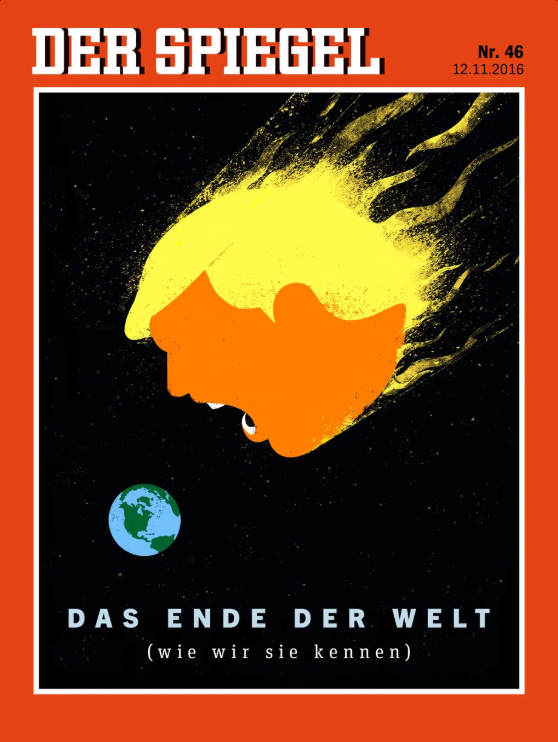
In February 2026, Anthropic CEO Dario Amodei did indeed warn that an “AI tsunami” is approaching. During an interview on the Nikhil Kamath podcast, he used this metaphor to describe how rapidly artificial intelligence is nearing human-level intelligence.
In January 2026, Anthropic CEO Dario Amodei published a landmark essay titled “The Adolescence of Technology”, in which he argues that humanity is entering a “turbulent and inevitable” rite of passage where our technical capabilities are outstripping our institutional and ethical maturity.
Sri Aurobindo, Autobiographical Notes and Other Writings of Historical Interest, p. 64.
A.B. Purani, Evening Talks with Sri Aurobindo, third edition 1982, p. 37.
Autobiographical Notes, p. 113.
Sri Aurobindo, Letters on Himself and the Ashram, p. 70.
Sri Aurobindo, Essays Divine and Human, p. 234.
Letters on Himself and the Ashram, p. 357.
Sri Aurobindo, The Human Cycle — The Ideal of Human Unity — War and Self-Determination, pp. 220–21.
The Life Divine, pp. 1096‒97, emphases added.
The Human Cycle, pp. 585‒87, emphasis added.
The first step was the formation of the League of Nations after WW1. The second step was the creation of the United Nations after WW2. What Sri Aurobindo wrote about this institution so shortly after its formation is quite remarkable: “A strong surviving element of oligarchy remained in the preponderant place assigned to the five great Powers in the Security Council and was clinched by the device of the veto; these were concessions to a sense of realism and the necessity of recognising the actual condition of things and the results of the second great war and could not perhaps have been avoided, but they have done more to create trouble, hamper the action and diminish the success of the new institution than anything else in its make-up or the way of action forced upon it by the world situation or the difficulties of a combined working inherent in its very structure. A too hasty or radical endeavour to get rid of these defects might lead to a crash of the whole edifice; to leave them unmodified prolongs a malaise, an absence of harmony and smooth working and a consequent discredit and a sense of limited and abortive action, cause of the wide-spread feeling of futility and regard of doubt the world at large has begun to cast on this great and necessary institution which was founded with such high hopes and without which world conditions would be infinitely worse and more dangerous, even perhaps irremediable. A third attempt, the substitution of a differently constituted body, could only come if this institution collapsed as the result of a new catastrophe: if certain dubious portents fulfil their menace, it might emerge into being and might even this time be more successful because of an increased and a more general determination not to allow such a calamity to occur again; but it would be after a third cataclysmal struggle which might shake to its foundations the international structure now holding together after two upheavals with so much difficulty and unease. Yet, even in such a contingency, the intention in the working of Nature is likely to overcome the obstacles she has herself raised up and they may be got rid of once and for all.” [The Human Cycle, pp. 582‒83]
No posts
Comments
Nothing yet. Say the first thing.
Sign in to join the conversation.