
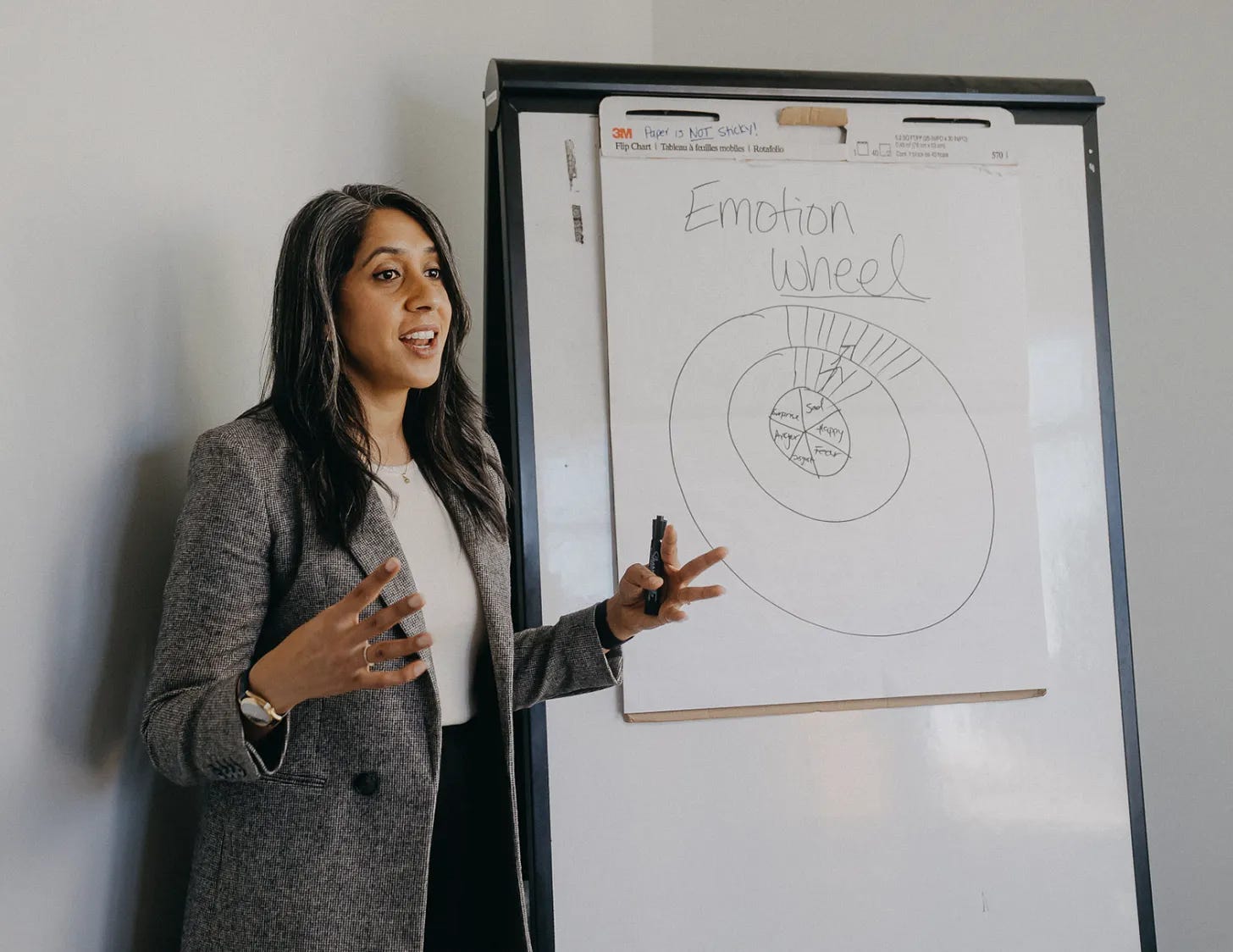
This work travels — strategy sessions with leadership teams, workshops inside companies, 1:1 coaching, and conflict-zone work on behalf of the State Department.
Dolores had just landed her company’s biggest client, and nobody said a word about it. She was ready to storm into her boss’s office and let him have it, and honestly, she had every reason to. But that blow up could have cost her job.
Instead, we worked through it. It took her a week to figure out what she wanted — recognition and appreciation. She managed the emotional beast, walked in calmly, and made the ask. At the next all-hands, she and her team were recognized by the CEO. Plus a nice bonus.
I started my own consulting practice over a decade ago because I saw such a heavy need for support on negotiation, conflict resolution, and leadership. I hate seeing amazing leaders settle for less. I help through coaching and workshops, but often the individual problem is really an organizational one. That’s especially true at rapid-growth companies.
Growing fast, losing people faster
A tech startup came to me. They were growing explosively, and losing people just as fast. Early employees felt undervalued, and new people felt excluded from the tight-knit culture. I started with listening sessions and then developed custom workshops for their leaders, plus coaching — 1:1 and group, with accountability buddies — because without practice and a feedback loop, the skills don’t stick.
As we dug in, I saw the structural issues: goals that were misaligned, communication that had broken down, good people who were promoted into management with zero leadership training. The list goes on. So I recommended long-term strategy work. We reinforced their foundation with a five-year strategic plan broken into yearly goals addressing everything we’d uncovered — sustainable growth without losing the people who got them there.
My sweet spot: organizations that grow so fast their foundation can’t keep up.
That looks like leaders who are great at managing teams of 5–10 and now have 50. Or a strategy that worked beautifully at 100 people and doesn’t scale to 1,000.
Try This Week: Name what you actually want.
Pick the thing that’s been nagging you — the tough conversation with your boss or your employee, the teammate you avoid, the decision your organization keeps reopening. Now let’s look at the puzzle pieces: yours and theirs.
Write down what you actually want on the other side of it. Go past your first answer.
“I’m underpaid” is real, and you might also want your scope recognized in your title, and to stop being the only one who knows how this works.Now do the same for everyone else at the table — your manager, the business, the client, the teammate. What do they actually need underneath what they’re asking for? Be as specific as you were with yourself.
Your boss may need to look consistent to her peers, protect a budget she doesn’t control, and not lose you.Find where your list and theirs overlap. Write a line for yourself on how you’d like to open the conversation there.
“I know you’re protecting the budget and you need this team to stay steady. I want the same thing — and I want my comp to reflect what I’m carrying. Can we figure out how to get there together?”Assess how you feel now. Are you more likely to take that next step and open the conversation? If not, revisit your interests — especially the emotional ones — to see if there’s something you missed. My interactive emotion wheel will help you find them.
The newest branch of my work
Since Never Settle came out, I’ve also been taking this message to stages — keynotes that inspire bigger groups to start making 30-second changes every day, using relational influence to drive more value.
If you’re curious about the work itself, my services page lays out coaching, workshops, keynotes, and strategic planning.
No posts
Comments
Nothing yet. Say the first thing.
Sign in to join the conversation.