
A client I coach — I’ll call her Priya — called me last week from her car. Her CEO had just stood on stage at the all-hands and said the words she’d been dreading: “We will need fewer people doing some of the jobs being done today.” He didn’t name her role. He didn’t have to.
Priya is a senior marketing lead at a Fortune 500, mid-forties, two kids in high school. Her words came out in a flood: she didn’t know what she was supposed to do, because her whole resume was the thing they said the machine could now do.
I’ve been getting versions of that call all year. Here’s what I told her — and it isn’t the reassurance you’re expecting.
The fear is real. I won’t talk you out of it.
This isn’t 2023, when the layoffs were speculative and the CEOs were careful with their language. The May 2026 Challenger report just named AI as the reason for 40% of announced U.S. layoffs — up from 7% in January. Amazon put “fewer people” in a memo. Meta cut another eight thousand.
The story a lot of us told ourselves — that the disruption would happen slowly, to somebody else, in some other industry — is over.
But here’s the part the headlines miss.
In the same window that Klarna and Duolingo were parading their “AI-first” strategies, they were quietly rehiring the people they’d let go — because the machine couldn’t do the work. Klarna’s own CEO said the cost-first approach produced “lower quality.” Duolingo’s said he doesn’t see AI replacing what his employees do. And Gartner now projects that half of the customer-service jobs cut for AI reasons will be rehired by 2027.
It gives me a Groundhog Day feeling — the way companies once declared themselves “remote-first,” slashed the real estate, then a few years later demanded everyone back in the office. The companies that went AI-first are already carefully hedging. Because a certain kind of human work turns out to be what actually keeps the business running.
And it isn’t just my read from the calls.
The people who study the labor market have been saying the same thing — and the signal has only gotten louder since AI arrived:
Harvard economist David Deming has tracked which jobs pay more and grow faster for a decade. The answer keeps coming back the same: the ones that require working well with other people.
The World Economic Forum’s latest Future of Jobs report puts communication, leadership, conflict resolution, and adaptability at the top of what employers say they need more of.
LinkedIn’s data on the fastest-growing skills tells the same story — and the gap has widened, not narrowed, since AI showed up.The negotiation researchers at Harvard said AI can help you prepareand even coach you afterward — but warned against giving it authority in the room. A live negotiation asks you to read the pause and catch the thing the other person didn’t quite say. The machine keeps missing it.
WHAT I TOLD PRIYA
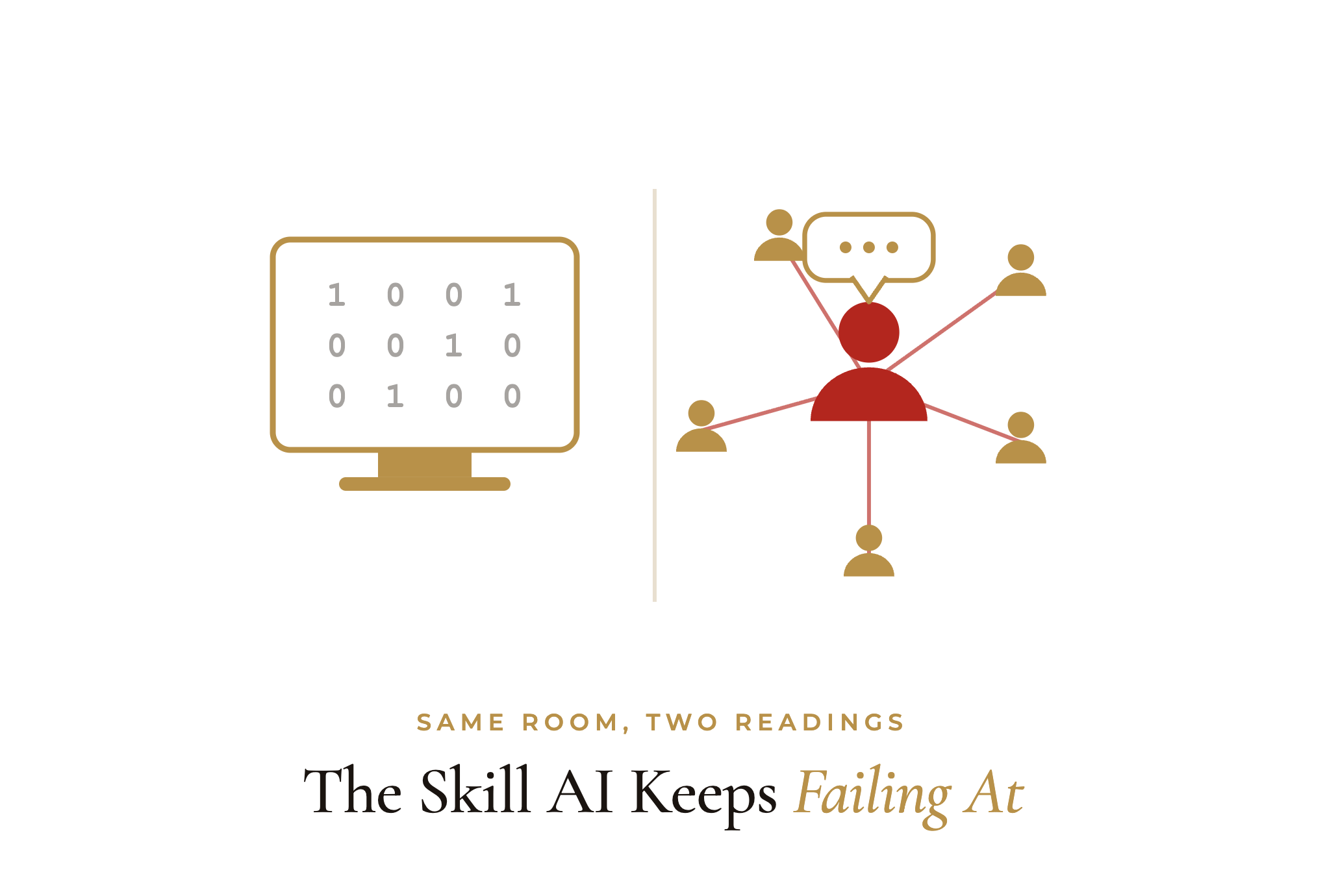
The skill AI keeps failing at is reading a room full of people who don’t fully agree, hearing what they aren’t saying, and moving them toward a decision they can all live with.
It’s the skill of holding a hard conversation and staying in relationship on the other side of it. Of negotiating the relational way — the way I built it in Never Settle — where Emotions, Interests, Relationships, and Communication carry the weight the machine cannot lift.
So don’t compete. Redirect.
This doesn’t mean you stop learning the tools — don’t pretend they aren’t there. But don’t try to out-compete what AI does well; you won’t win that fight. Put your energy into the parts it still can’t touch: the deeper conversation that surfaces the true interests, reading the tone of the room and pivoting, the small moments of influence that bring people together, and the hard feedback you give kindly — the kind that actually drives better results.
TRY THIS WEEK
Pick one conversation you’ve been having over email or Slack that actually deserves a phone call or a walk — and have it that way instead. Notice what you catch that the text was hiding.
That is the skill. And it gets more valuable every quarter, not less.
P.S. Priya is going to be fine — she’s the kind of person who reads a room. If you’re sitting in a parking lot right now, hit reply and I’ll write back.
THE HUMAN EDGE: Build the skill AI can’t
Get my relationship-building guide — the practical moves for reading emotion, working through conflict, and influencing people to move together.
Comments
Nothing yet. Say the first thing.
Sign in to join the conversation.