
ATP is presented by:

Welcome back to The Asia Tech Podcast. Today we dug into SoftBank’s bold new bet on AI infrastructure, explored how digital trust is evolving for autonomous agents, and heard from founders building in payments, AI governance, outsourcing, construction, and intellectual property.
We were joined by:
• 26:26 James Cook - Asia-Pacific Group Vice-President at DigiCert
• 45:02 Tee Kean Kang - CEO at Paydibs
• 01:03:49 Claire Ma - Co-Founder at Sign (we had some technical issues with Claire, she will be back on the show soon!)
• 01:21:40 Natcho Angelo - CEO at kuubiik
• 01:39:21 Jon Gregory - Founder at Build World
• 01:59:49 Hanis Harmiles - Founder & CEO at Reinvent IP
Here is an overview of the topics we discussed today:
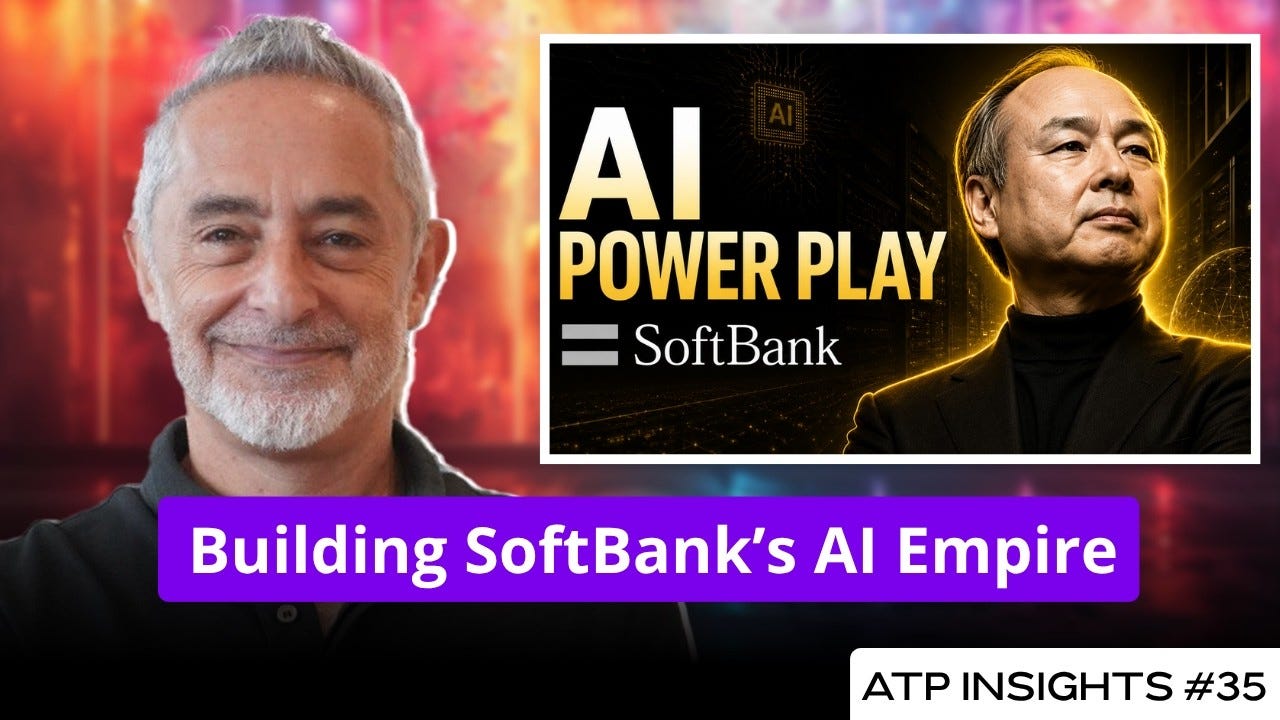
SoftBank Goes All In on AI
At its June 24 shareholder meeting in Tokyo, Masayoshi Son announced a target to raise SoftBank’s net asset value to $6.2 trillion within a decade. The framing was unmistakable: SoftBank is no longer a tech investment portfolio. It wants to own the full AI infrastructure stack — chips (ARM, Ampere, Graphcore), frontier models (OpenAI), data center scale (Stargate, with a $500 billion buildout), US semiconductor capacity (Intel), and robotics.
What makes this different from past SoftBank bets is the logic behind it. Son isn’t concentrating risk in one company this time. He’s wagering that the companies controlling the underlying rails of AI — compute, power, models, and distribution — will capture most of the value in the next decade. This is a man who was early to the internet, mobile, and cloud. The market is being asked to underwrite his conviction again.
AI Agents Need Passports — James (DigiCert)
James raised a question worth sitting with: what does it actually mean to trust an AI agent? When a human employee joins a company, they go through onboarding, get a defined job description, and have clear limits on what they can access. If they step outside those limits, there’s a process to remove them.
AI agents need the same structure. James described it as an “AI passport” — verifiable credentials that define who the agent is, what it’s authorized to do, and how to shut it down if needed. The technology already exists through PKI infrastructure; the challenge is extending it to autonomous systems at scale. With 50 connected devices for every connected person on the planet, the identity problem is only getting bigger.
What Happens After the Payment — Tee Kean Kang (Paydibs)
Paydibs is building payment infrastructure for micro-SMEs in Malaysia. Tee Kean Kang made a distinction that gets to the heart of the fintech opportunity: static QR codes just accept money. Dynamic payments generate data. And the data is where the real value lives.
Knowing what sold, when, and how much lets a merchant manage inventory and predict cash flow. And if you’re already processing a merchant’s transactions, you already know enough to offer them pre-approved financing — no new application, no separate underwriting. Paydibs is launching exactly that product next quarter. The payment infrastructure becomes the lending infrastructure.
IP in the Age of AI — Hanis (Reinvent IP)
When AI can reproduce creative work in seconds, ownership gets complicated fast. As of 2026, there are over 160 active lawsuits globally involving AI companies using copyrighted content in training or output — up from fewer than five cases in 2023.
Hanis is building what she calls an index layer for IP in the AI content economy. Think of it as a Moody’s for intellectual property: tracking where your IP shows up in AI outputs, measuring the risk exposure, and enabling licensing or enforcement. Brands, voice likenesses, characters, creative catalogs — all of it is now potential infringement territory. Insurers are starting to price AI liability as a new asset class, and Reinvent IP is building the infrastructure to measure and manage it.
Scaling Without the Complexity — Nacho (kuubiik)
Nacho runs kuubiik, which helps businesses hire and manage remote talent globally — handling compliance, recruitment, and HR across borders. As AI takes on more execution work, how businesses design their human-plus-AI teams is becoming one of the more interesting questions in scaling.
AI Meets Construction — Jon (Build World)
Jon is building an AI-native platform for the construction industry, one of the last major sectors to go digital. The promise is better project visibility, less waste, and tighter operational control for builders who have historically run projects on gut instinct and spreadsheets.
Watch the full episode here:
ATP Is Presented by Twilio:

Twilio is the secure and scalable platform to build amazing customer engagement without the complexity, with the AI-driven workflows you need to connect.
Visit Twilio.com to start building today
ATP Is Made Possible by:

Boomi, the data activation company for AI, powers the agentic enterprise by bringing data to life across the business. Trusted by over 30,000 customers and supported by a network of 800+ partners, Boomi helps organizations of all sizes achieve agility, efficiency, and innovation at scale.
Visit www.boomi.com to learn more
Thanks for reading! Subscribe for free to receive new posts and support my work.
Comments
Nothing yet. Say the first thing.
Sign in to join the conversation.