
ATP is presented by:

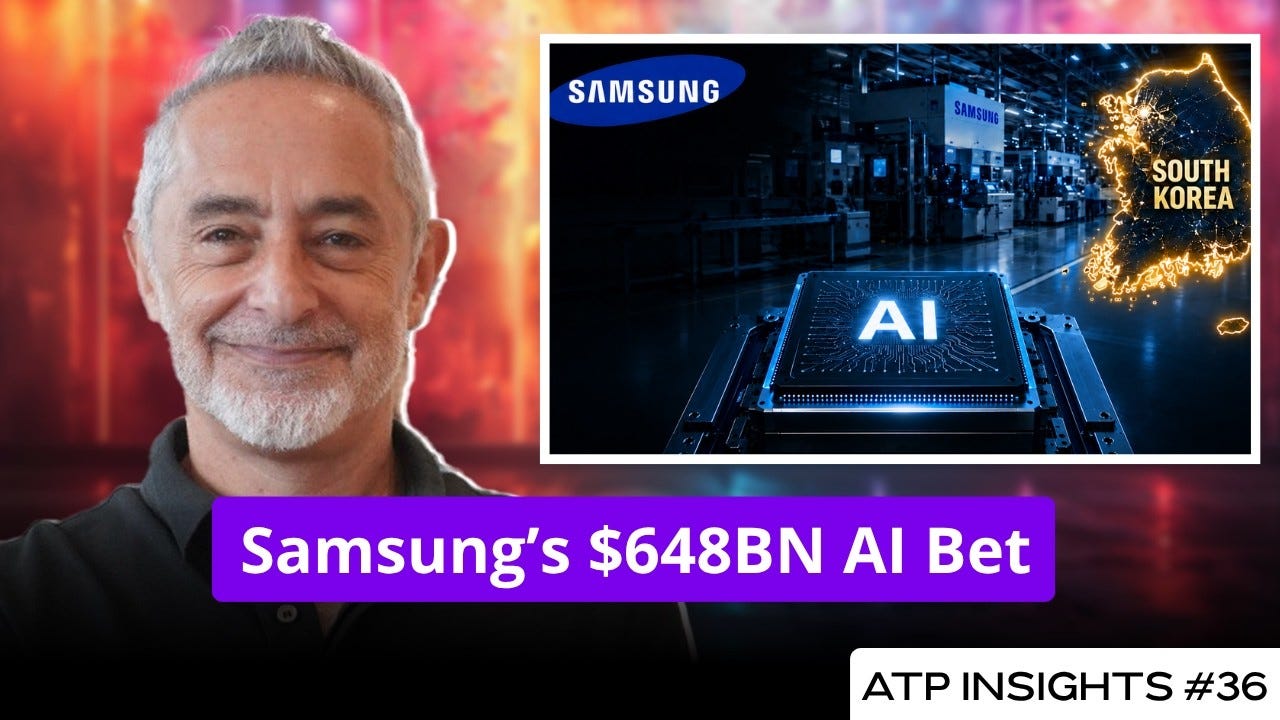
Welcome back to The Asia Tech Podcast. Today we discussed Samsung’s reported $648 billion AI plan, customer-facing AI agents, composable banking, AI-powered payroll, digital asset risk, trusted digital identities, and the data foundations needed to move AI into production.
• 28:17 Valerie Cheng - SVP, Sales & Marketing at AiChat
• 43:24 David Becker - Head of Sales APAC at Mambu
• 01:23:51 Simon Li - Founder & CEO at Smart Salary
• 01:43:10 Rob Russell - Founder & CEO at Continuum Risk Advisory
• 02:03:20 CZ Wong - Chief AI Officer of Zetrix AI and Architect of Avatar at Zetrix AI
• 02:22:40 David Irecki - Chief Technology Officer for APJ at Boomi
Here is an overview of the topics we discussed today:
Could Samsung’s reported ten-year investment turn South Korea into a top global AI power? The plan may reach far beyond chips into data centers, power, batteries, displays, and advanced manufacturing, with government support helping spread investment beyond Seoul. Yet the harder test may be whether Korea can connect these pieces, secure enough energy and customers, and catch SK Hynix in high-bandwidth memory, a key part of AI chips.
What changes when a customer asking about opening hours gets an appointment instead of a basic answer? Valerie explained how an AI agent could understand the customer’s intent, check a booking system, update the CRM, send confirmation, and alert a salesperson in seconds. Could starting with lower-risk tasks, while limiting what data and systems the agent can access, make this useful without giving up control?
Could messaging apps also become lasting sales channels rather than one-time help desks? Valerie pointed to WhatsApp, Messenger, Line, and KakaoTalk as places where brands can re-engage customers in natural language. Instead of measuring only how many chats avoid a human agent, might businesses track completed tasks, full resolutions, faster staff training, sales, and loyalty?
Could a composable core, built from parts that connect through APIs, let banks launch new products without replacing everything at once? David described a “sidecar” approach in which an established bank tests a new product beside its old core, keeps regulatory controls in place, and expands after it works. Might that lower the cost of serving underbanked customers with microloans, e-wallets, or motorbike financing while still controlling credit and security risks?
Could AI-powered payroll bring modern HR tools to workers and companies still relying on paper or huge spreadsheets? Simon described one fast-growing client whose payroll file became too large to open, while workers had little visibility into attendance, overtime, or pay. A mobile system could show each calculation clearly, support local labor rules, and use workers’ own languages—even where literacy and smartphone access remain limited.
Could earned wage access reduce the need for costly short-term loans by letting people receive part of the pay they have already earned? Simon suggested that attendance, tenure, and performance records could set safe limits, while e-wallet payments could reach workers without bank accounts. Might that also reduce the pressure on managers and coworkers who are often asked for emergency loans?
Could better insurance and risk advice help digital asset firms earn the confidence of regulators, partners, and customers? Rob noted that coverage is improving but remains young, and that insurers need to know who controls private keys, what assets are held, and where a smart-contract failure could cause harm. Yet might weak management, unclear information, or a compromised person still create more danger than the blockchain itself?
What happens when digital avatars attend meetings, answer colleagues, or act for a company? CZ described training an avatar on a person’s knowledge and habits, then using permission checks and several verifying agents for higher-risk replies. Could blockchain-based identities and credentials help prove which person or company an agent represents, trace its actions, and expose impersonators across borders?
Could the real AI bottleneck be trusted business data rather than the model? David argued that agents need context from customers, contracts, supply chains, and internal rules, all connected and governed well enough to guide action. Might companies get further by fixing integrations, limiting what agents may access or change, keeping people accountable, and measuring revenue, profit, and customer outcomes instead of counting pilots and licenses?
Watch the full episode for the complete conversations and examples:

Twilio is the secure and scalable platform to build amazing customer engagement without the complexity, with the AI-driven workflows you need to connect.
Visit Twilio.com to start building today

Boomi, the data activation company for AI, powers the agentic enterprise by bringing data to life across the business. Trusted by over 30,000 customers and supported by a network of 800+ partners, Boomi helps organizations of all sizes achieve agility, efficiency, and innovation at scale.
Visit www.boomi.com to learn more
No posts
Comments
Nothing yet. Say the first thing.
Sign in to join the conversation.