
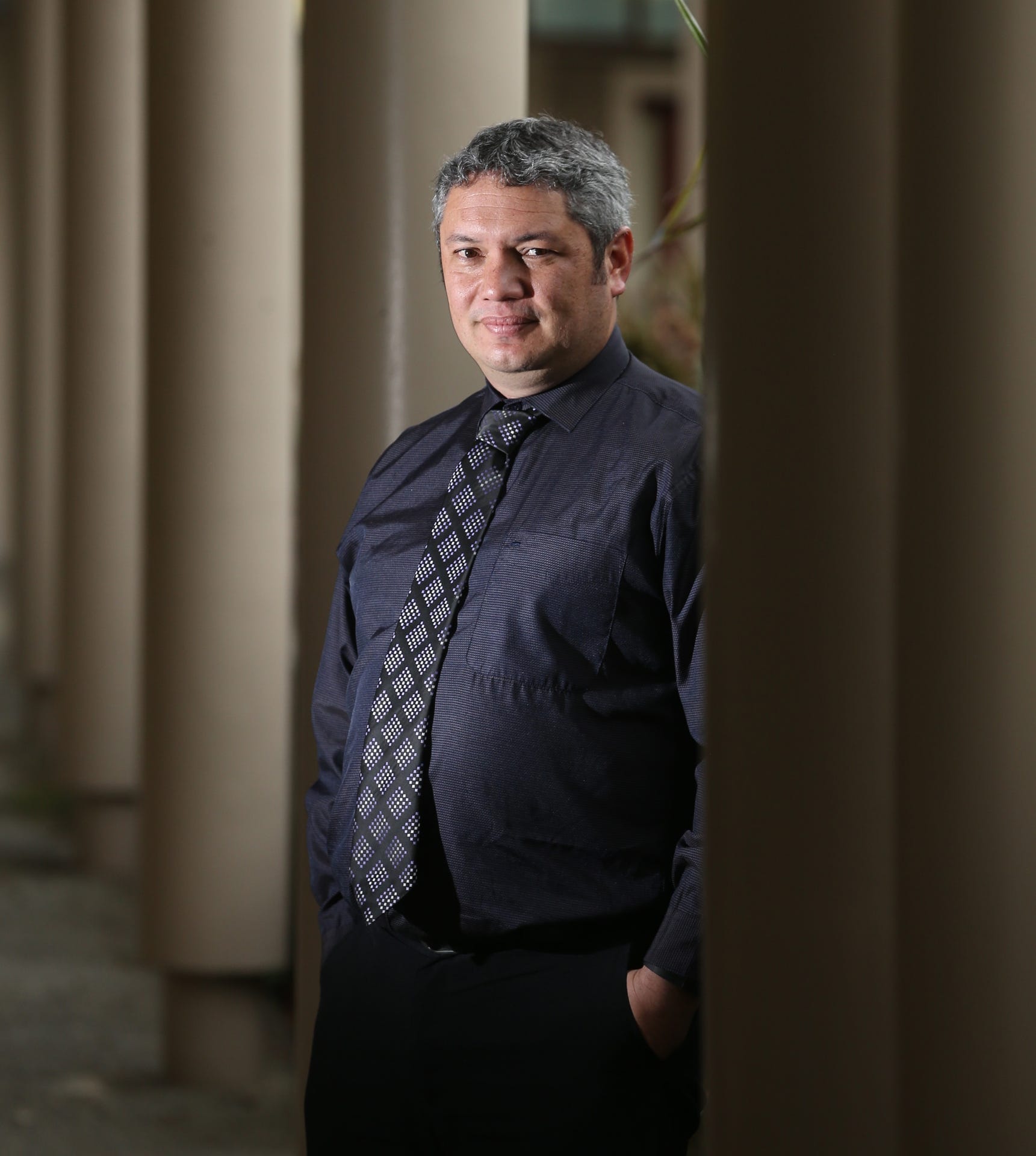
When last we left Dr. Tamatea, he was about to explain his three reasons why the world is in need of my kind, and now we get to go into the meat of his talk.
But okay, so in the meantime, and as an exercise in reframing perceptions, here are three ideas I want you to think about.
Quick reminder of what he is referring to here. He is speaking about wanting to study psychopaths like me that aren’t in prison in the previous paragraph.
The first reason about perhaps why we need psychopaths is that psychopathic traits can actually be advantageous. Psychopaths in many ways are the least and most visible members of our communities. Certainly those we hear about are those that tend to inflict significant economic, social, and human costs. But some don’t. So are we overlooking the possible strengths of this group?
Correction. The world hears about people that are abhorrent and then labeled as psychopathic, either without any reason to be so, or because people refuse to actually come to a rational definition for psychopathy. Instead, it is just used as a qualifier. It means “bad person”, despite the evidence to the contrary.
Also, as much as you don’t hear about actual psychopaths because the labeling is so ridiculous, the percentages here are wrong. Granted, he didn’t specifically say percentages, he said “some don’t” as in, some don’t end up in prison. That is a totally backwards way of seeing things. Most people in prison are neurotypical. A very large percentage are, actually. People need to remember that “neurotypical” does not equal “without pathology”. However, we don’t look at the broader population of neurotypicals and state that “some of them” didn’t end up in prisons. No. Most of them didn’t end up in prison, but we don’t make this distinction for psychopathy.
My guess is as to why this rather important distinction is not made, that the studies are solely on those prisoners, so that is who researchers are exposed to. It’s like when you work in an emergency room. Suddenly, instead of your kid having a stomach ache because they ate too much junk food, instead it’s indicative of an aortic hemorrhage that requires immediate medical intervention. Now, maybe. I mean, it isn’t impossible, but it is unlikely, right? However, when you are surrounded by emergencies all day long, it becomes your mindset. The outlier is the normative, the standard is the lights and sirens. I think this is the same mentality that is used regarding psychopathy.
Most psychopaths are not in prison. It’s not a hard equation to figure out. It comes down to about ten to thirteen percent circulating through the criminal justice system, while the rest of us are just out here living. That’s a heavy burden that gets thrown around like it’s made of Styrofoam. However, people do it all the time, without thinking about the mindset this indicates they are in. The same can be said if someone has a relationship with someone that has a particular diagnosis. BPD comes to mind for this one. I have seen a lot of people claim to have had a past relationship with someone who has that diagnosis, and because they had a bad time with that individual, all people with BPD are nightmares to deal with. It’s very generalized.
If we think about psychopathy on one level as being an issue of personality, and that personality — in a very simplified form — is a configuration of attributes and strategies that allow us to negotiate through a wide range of quite complex social interchanges, then being psychopathic to some extent can be quite helpful.
Hmm, I am not too fond of describing psychopathy as a “personality”. A psychopath’s personality is formed through their life experience, their psychopathy is present from birth. Lumping the two together is incorrect. Psychopathy is a bunch of physical differences in the brain and chemical processing centers of the brain, and those things can certainly influence personality, but they aren’t the core of it. Life experience, choices made, external lessons, intelligence, impulse control, among other things all come together and form that person’s personality as well. It is not solely a product of the brain that is genetically coded.
There are a number of traits that comprise what we call psychopathic personality. I won’t go through all of them, but just a couple of some of the more well-known ones. So let’s start with what we call superficial charm, which is a kind of an insincere sense of appeal. Someone who has this trait may well tell unlikely stories about themselves. They may puff themselves up to be more than what their background or their experience warrants. And we all know someone like this, don’t we? But at the same time, these people can be quite engaging. They can have good interpersonal skills. They can form social alliances quite well. They can work through social hierarchies quite well. And if they’re refined enough, they can attract mates. They’re good at picking up chicks, which then surely there must be some evolutionary benefits of that somewhere down the line.
The charm of psychopathy is not that which is described here. This is the charm that you might see of a narcissist, but psychopaths are unlikely to tell you anything about themselves. Both myself, and the other psychopath that I know, plus those I have spoken to online, are not interested in people knowing anything about us. You aren’t going to find psychopaths begging for attention on social media, we aren’t going to tell you about our lives, and we aren’t interested in what you think about us.
Instead, the charm of a psychopath is in that lack of interest in giving information. People like to talk to us, because we don’t talk about ourselves. We are, apparently, an open invitation for people to let loose all of their problems because to them, we seem interested. We also tend to be quite gracious about this, it is part of the mask, can offer advice that isn’t considered by many neurotypicals when they are too wrapped up in the emotions of whatever they are dealing with, and do so without expecting anything in return.
Now, that sounds quite selfless, but it isn’t. One, we aren’t exactly looking to make a scene when some stranger decides that we are the one that needs to know about the affair that they are having, their child that has died, the money troubles that they are having, their teenager has had to be sent to one of those survival behavioral modification camps, their recent terminal diagnosis, or whatever else is weighing on them at that moment. Granted, sometimes people will talk to me about mundane things, but often it is some heavy issue that they need to lay down somewhere, and apparently I appear strong enough to shoulder that burden with them, a stranger that I am.
This happens to the other psychopath that I know as well. People just like to talk to us. I said it wasn’t selfless, and while there is little to be gained from the supermarket ambush, there are places that how we are with people pays real dividends. People generally do not feel heard, and when they feel heard by someone, they remember that. They think of you fondly. They want you around, and we occupy their minds to some extent. Add to that, we don’t carry around a lot of the animus that a lot of neurotypicals have. We don’t have judgments that we are seeking to pass on our fellow humans, not because we are the shining examples of all good will, but rather, we don’t care in the first place.
People may not be aware of why they don’t feel a certain way around us, but they certainly know it on an unconscious level. They understand that they aren’t walking into a starving hyena’s den, rather a well fed lion that notes their presence, but really has no reason to be bothered with them. It isn’t that we aren’t dangerous, we are in many ways, because we aren’t supervised by the same emotional rules, but for the most part, other people really don’t matter to us. We also don’t feel jealousy or envy. Those are oxytocin emotions and as I have mentioned, all of those are absent for us.
You might think, so what? What does that have to do with anything? You would be surprised at how often people judge those around them even before speaking about them, and how much other people have a sense that there is some kind of animosity in the air. They may not be looking directly at the people that have those thoughts and think, a-ha! That’s where it’s coming from, but most people tend to have this built-in response system to other humans that comes preloaded with all sorts of subtle attitude issues that the other person picks up on, and adjust their own behavior accordingly.
We don’t have any of that. If there is a beautiful woman, I probably won’t notice her in the first place, but if she speaks to me, I will note that she is beautiful with the same level of concern I would note that her shoes are white. They are observations. I do not feel any sort of threat from her beauty, I don’t have an interest in tearing it down, getting my Significant Other to agree with my insistence that she isn’t nearly as pretty as everyone seems to treat her (such a common behavior from women, and it really needs to stop), there is nothing about her that has anything to do with me. That energy shift is palatable to her, and she will remember me fondly.
How does this all come back to me in the end? Well, I don’t remember a lot of people, but many do they remember me. There is a business that I have been in one time, one time in my entire life, but I recently saw the owner, and she remembered me. She said that was strange, as she has had thousands of customers, and does not recall them. Nothing about my visit there was remarkable in any way, and it was several years ago, but she remembers me very fondly.
Psychopaths are memorable to people, and how people remember us has direct impacts on the lives we want to lead. I have had jobs offered to me from people I met maybe twice previously, and had very passing interactions with. Free dinners, drinks, events offered to me, all from people that met me, like me, and want to do things for me. If I am going to be memorable, those memories being positive ones pay off in the end. The other way around? Not a chance.
Psychopathic charm is not at all what he is describing here. That’s unfortunate, but he already called Bundy a psychopath, and he had many of these traits, so I can see where he is holding a lot of misinformation as fact. He is making my argument for me, and for himself, really, that he needs to distance himself from the prison system where the diagnosis “psychopath” is thrown around like glitter, which attaches itself randomly to whomever might be present.
As for the rest of his point, I think I covered it pretty well in the previous paragraphs as to why people find us engaging, and why meeting people, be it for dating or otherwise, is pretty easy for us. That isn’t exactly the evolutionary reason why we are good at getting mates, however.
Fearlessness is another trait. And by fearlessness I’m talking about someone has a high threshold for anxiety. So they may lead impulsive lifestyles where they may entertain situations that contain some level of danger or risk. And depending on how extensively they entertain that lifestyle of danger and risk, they may well expect to have a reduced quality of life, if not a reduced life expectancy. But by the same token, they may well develop a certain coolness under pressure, a greater resilience to stress, and be able to make hard decisions that perhaps you or I might find difficult to do because of our own anxieties and inhibitions about the consequences or the cost of those decisions.
For there to be a high threshold for anxiety, it has to exist for us in the first place. I literally have no idea what that is. Like, at all. It is such a foreign concept to me. The whole, “I can’t go to such and such event because of my anxiety”, for the longest time simply translated to, “I don’t want to go, and here is my flimsy excuse.” I would always wonder why the person doesn’t just say, “I don’t want to go”. It seemed way simpler, and less weak. Saying that you don’t want to go to an event because you’re anxious does not convey strength to me. I know, there are people reading thinking to themselves, “That’s a perfectly normal reason. I have anxiety.”
I mean, to you it’s perfectly normal, to me it is so outside my understanding of reality, it sounds like an excuse. I have to take it for granted that people are not making this up.
He isn’t wrong. Psychopathy and fearlessness can have pretty negative outcomes if there isn’t a cognitive ability to tell oneself, no, and stick to it. Or, barring that, having someone in our lives that can tell us no and have the strength of character that is enough that we respect the declaration. Those people are rare, though.
I will say this, all of what he is describing here:
…they may well develop a certain coolness under pressure, a greater resilience to stress, and be able to make hard decisions that perhaps you or I might find difficult to do because of our own anxieties and inhibitions about the consequences or the cost of those decisions.
Psychopaths are very high in disagreeableness. In other words, we do not care about making you happy. The only reason we might negotiate about something is if the other person has something of value, otherwise, we are not the, go along to get along, kind of folks. Once the mask drops, it is definitely my way or the highway, and for the situation to call for that mask drop, it would do well for those around me to listen, respond, and do what they are told, because if I am suddenly barking orders, there’s a reason. I have a rule, my Significant Other moves, I move. No questions asked. I have learned over the years that he sees things that I do not.
What that translates to in this context is this. He sees more than I see. However, pretty much always, I see more than everyone else around me sees. Good lord the amount you people do not pay attention to things is shocking to me. Put the damn phone down, and look around at what’s going on. If my Significant Other moves and I don’t, I’m in a bad spot. If I move, and you don’t, you are in a bad spot. It doesn’t tend to be an issue, however. I have found that in those situations, people are looking for someone to take control, and when I do so, people follow without question. So, at least there is that. That is a strong signal for evolutionary advantage, but I really think that people need to pay better attention to their environment.
And perhaps the most notorious trait when we think about psychopathic personality is what we call a lack of empathy, which is really a failure to engage with people in a way which recognizes their vulnerabilities and sensitivities. And you will know if you have this trait if you lose your social alliances as quickly as you make them. If you have a long history of pissing people off, chances are you probably have this trait. But it also means that you may well be able to pursue life goals unhindered by the concerns of other people.
Yup, we know that, and that’s why we have cognitive empathy. Frankly, it does not change our opinion on the matter, however. Psychopaths see absolutely no value in recognizing other people’s vulnerabilities and sensitivities. That is not something that we think any of y’all should be advertising. You should be keeping that well hidden. They are weaknesses to us.
Let me put it this way. If a psychopath is sick, we would rather crawl across the house for four hours to get to what we need, all the while telling you that we’re fine, than asking you for help. We’re fine. We’ve got this. Go away. We do not want your head pats, your pity, your soup, your concern. We do not understand why you would ever tell anyone that you need help, or want your feelings considered. That is totally outside of our comprehension. You want your feelings considered… All right, they are considered, and deemed weak. That is how our hardwiring works.
We can learn that these emotions are something real to you. We can learn that you don’t function like us. We can learn that you need other humans not only to thrive, but simply survive. We can learn all of that. We can believe you when you claim it. It only creates in us a box from which to draw responses from. That box is cognitive empathy.
It’s funny. Psychopaths are demonized because we don’t have emotional empathy. Neurotypicals should really reconsider that position, and they would if they were wise. First they would have to acknowledge what emotional empathy really is. It is a projection of their own feelings on something coupled with the assumption that other people share that. Most of the time, to some degree or another, they are correct. Other people do share that perspective, but we don’t.
If you wanted “emotional empathy” from a psychopath, it would literally be what it is for you, but from our perspective, and as I type this, perhaps we have it as much as you do, but using my definition, not the fairytale, we all share one emotional heart nonsense one that people try to sell me on.
People think we’re cruel for how we respond to and consider people, but that is a reflection of how we experience the world. We don’t feel sorry for ourselves, we don’t feel grief when we lose things or people, we don’t feel sad, hurt, lonely, fall in love, bond to people, feel trust, or any of that stuff. Why would we think that anyone else does? Just like neurotypicals think that their perspective is empathetic, we are granting you the same level of grace we have for ourselves.
Empathy is our internal perspective projected out into the world with the expectation that others will agree with us. Our version of it simply is a far more streamlined stripped down version that expects you to be as logically competent as we are. The difference is, when we figure out that you aren’t like us, we aren’t seeking to surgically repair you, exterminate you, or sterilize you.
I suppose if we were to genetically engineer the perfect CEO in a very harsh and chaotic capitalist context, we may well want someone who was aggressively competitive, who maybe engages in anti-competitive practices, and even takes certain calculated risks. So I suppose the take-home message here is that some psychopathic traits in moderation, in certain contexts, with the right support, can actually be quite useful.
I’m confused. He just described the average CEO. There is no genetically engineering that. They literally helm pretty much every major business in the world, and most of them are not psychopaths. I don’t know what the point of that paragraph was. Also, he didn’t describe any psychopathic traits in moderation. He just described standard business practice. It’s not just me, right? This is well known?
I guess we will go into reason number two in the next post.
No posts
Comments
Nothing yet. Say the first thing.
Sign in to join the conversation.