
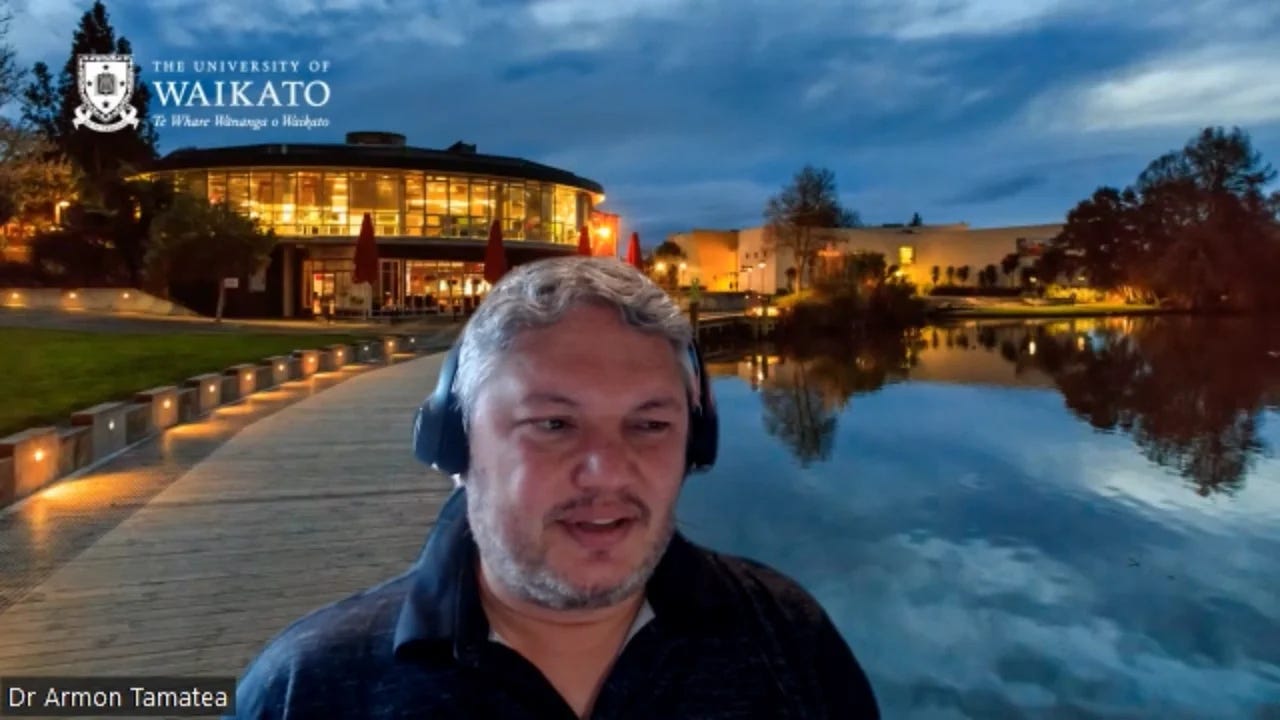
Yeah, I wouldn’t be thrilled about that image being used either, but who knew his talk was going to take so many posts to go through, and the man doesn’t have a lot of images to choose from, so he gets what he gets.
All right, we are on to reason number two that people need psychopaths in the world. Let’s just get right into it.
The second reason perhaps why we need psychopaths is that they can teach us something about suffering and coping with suffering. It’s been long held that psychopaths tend not to suffer even if everyone around them does. They may well suffer, but the experience might be different from you and I. They may acknowledge you and I suffer, but they just may not care about it.
By job, he’s done it. He got through an entire paragraph without there being a bunch of things that I disagree with. Actually, he pretty well nails this one, with the exception of suffering. He would need to describe how a psychopath suffers for me to even weigh in on that one. I don’t understand what that word means, with context or without. I was speaking to the other psychopath that I know, and conveyed to him an interesting comment I got on the addiction series that spoke about suffering, and he said something interesting.
“Suffering requires you to carry things but we lack the bags to do so.”
Meaning, while we can get hurt in the moment, that moment is just that. It’s this moment. When we get to the next moment, that pain may or may not be present, but it isn’t an ongoing past present and future that breeds suffering. It’s just pain in the now.
So to give you a bit of a flavor of this, I’ve got a letter which I conveniently had in my pocket. This is written to me by a prisoner many years ago when I was involved in an experimental treatment program for psychopathic offenders who had violent histories. And I want you to kind of just — it’s not very long — to get a sort of a sense of how this person has framed an issue and even presented a kind of a solution. So see what you think of this:
Oh this should be interesting. Frankly, doctor, if this dude is actually psychopathic, there is a reason he is writing you. He wouldn’t think of you otherwise. The only reason psychopaths are going to show up out of the blue and send you a letter is because they have identified something that you have or can do that they want. Let’s see, shall we? Granted, he didn’t say when he got that letter in relation to when the program was ongoing, so there is that caveat. Depending on what it says, it should be a fascinating read.
“Dear Armon, thank you for your letter. I appreciate you giving me the opportunity to attend your violence prevention program. But to tell you the truth, I don’t believe I have an anger problem or think I’m a violent person. If you’re enjoying your time down the river and you swat a pesky sandfly, does that mean you have an anger problem? Does that mean it’s imperative — it’s genuine, lad, by the way — does it mean it’s imperative you attend a violence prevention program designed for extremely violent people? Of course not. How absurd. And should you be awarded brownie points for not swatting it and instead allow it to gorge itself freely on your blood? No, certainly not. It’s not your own choice if you wish to be sandfly fodder.
All right, fair, it seems this letter is in response to something Dr. Tamatea wrote to the prisoner first. Also, the letter has very little meaning without context. Did this guy go out into the world seeking violence? If so, I doubt he is psychopathic. That sounds more like someone that has anger regulation issues. Also, what is the criteria to be included in this program that Dr. Tamatea was running? That context also matters. What sorts of crimes did these people commit? Without understanding that, we cannot see whether those crimes align well with what psychopathy is. If they are highly emotionally reactionary violent crimes, then my guess is that the dude is a sociopath, or just someone that has ASPD. However, if he is someone that was an enforcer, and that was just his job, that would be in line with what I would expect from a psychopath.
Here’s the problem: now and again a prisoner will arrive and start behaving like a pesky sandfly. When all attempts — i.e., shit-talking, apologizing, giving, and finally coercing — fail to snap him out of his pesky demeanor, he leaves me no choice but to swat him. And not because I hate him, am angry at him, or want to be violent towards him. I just want my time at the river. So is it possible that your service could provide these folk with anti-pesky sandfly courses or something like that?”
Name and address withheld.
All right, drawing as much context as I can from this, the dude is just trying to serve his time and he has people that keep trying to cause him problems, so he employs several measures to stop them, but they do not work, so he uses violence to get his point across.
A couple of thoughts.
This is pretty in line with psychopathy. However, I do think that there is a lot of room for disagreement. This likely is setting the prisoner up for future conflict. People in prison often want to take on the biggest guy to establish their dominance.
A psychopath will do what we can to step around the problem, when solving the problem directly will cause us issues. It’s the logical way of dealing with it.
I can understand why this prisoner is like, “Hey, I’m not violent. I am responding to things that have to be dealt with. It isn’t like I am looking for problems, but when they come my way, and other things don’t work, what do you expect me to do.” To that I say, yeah, what should he do? What other recourse does he have?
So I guess the take-home message here is psychopaths can teach us something about addressing complex issues by allowing us to entertain unorthodox thoughts, unintuitive ideas, maybe even prohibitive ideas. So a thought experiment you can try at home is to ask yourself a question: in this situation, what would a psychopath think? And apart from perhaps the obvious antisocial kind of response that might come out of that, what is the principle behind that thought? It might be interesting what you come back with.
Seriously doc, what is this dude supposed to do with this situation? Is he supposed to just take abuse for the sake of getting along with douchebags? You say his way of thinking is unorthodox, but I really don’t see that being the case. It is a pretty normal way of thinking. Screw how a psychopath would think. I want to know what neurotypicals think is going to work in this situation? Should he have hugged it out, or something?
This is not a reason that we need psychopaths in the world. It might be indicative that some people need to reexamine their way of being in the world and see if that way is causing them to be a doormat, but I don’t see how this has to do with educating people why psychopaths are necessary.
And the third reason perhaps why we need psychopaths — there’s more of a bigger picture issue — is that perhaps in uncertain terms, psychopaths tell us what we’re willing to tolerate as a society. Psychopaths hold up a mirror to the social health of communities and organizations. I think it was Juvenal, the ancient Roman satirist, who famously said corruption is a matter of degree. That psychopaths exist is no accident and perhaps serves as a reminder to us that we have in some way collectively been responsible for allowing those conditions to exist for antisocial behavior and emotional abuse and whatnot to be able to exist, if not flourish, in parts of our communities.
What the ever loving hell are you talking about? What does psychopathy have to do with corruption? Psychopathy has nothing to do with antisocial behavior. Most people that are antisocial are neurotypical, and most psychopaths are not antisocial. I literally have no idea what the point of this paragraph is meant to be. Stating that society allows for antisocial behavior and emotional abuse to exist is a true statement, but not one that makes any sense in regard to psychopathy, as we aren’t the ones perpetuating those problems. That is largely on your plate, neurotypicals.
That is not to say that there are psychopaths that have those issues, but they aren’t the norm, they aren’t the majority of either those committing those acts, or psychopaths in general. Yes, society plays a role in those things being present in the world, but leave us out of that equation.
And in my time working in the prisons, I worked with many men who were considered psychopathic. And whilst I recognize the pathology, I also recognize that somewhere in that backstory is a really traumatic and damaged history which has meant qualities like empathy, responsibility, and a deep sense of connectedness with others served no purpose whatsoever — not even survival value — and has instead been replaced with things like deceitfulness or narcissism, callousness, or even indifference to others.
Do not get me started on the poor practices of diagnosing “psychopathy” in the prison system. Most of the time they are using the PCL-R, and yes, I checked, it is used in both Australia, and New Zealand. which is where Dr. Tamatea is employed. However, let me take him at his word. He worked with psychopaths in prisons, and that they had very bad pasts. I have long held the belief that a psychopathic child is more likely to be abused, because we will stretch a parent’s patience far past their breaking point.
A parent can only parent with what they know, and what they know is about emotional interactions. A child can be formed through many emotional cues, but none of that works on a psychopath. How many times can you tell a child not to do something, punish a child for whatever it is, find that shame, guilt, fear, a desire to please, and find that none of those things exist in this child? What do you do next? You can say, meet the child where they are, which of course is my suggestion, but that’s a nice thing to say, when you aren’t in that moment.
In that moment you have a child that is defiant, not really, but that is how it seems. In reality, the child is just doing what they want and finding ways around the dictate of “no”. To the parent, it looks like the child is being willful and arrogant, with nothing working so far. That, I imagine, is a very stressful position to be in. How do you think a lot of people respond? With anger. However, that doesn’t work either. It’s a cycle and I can understand many psychopathic children pushing their parents beyond their limits. I did all the time, but both my parents have excellent self-control. If they didn’t, I would not have blamed them for drowning me in the tub as a young one.
It makes sense to me that this is going to be a common trope with a psychopathic child, and if you add into the mix a parent that lacks the self-control necessary to not strangle the smug smile off that kid’s face, and I bet that abuse laden backgrounds are common in antisocial psychopaths that are in prison. However, let’s also make room for the fact that there is a high chance that these same people may have suffered head trauma as a child, which would make it difficult to identify psychopathy as opposed to the antisocial behavior in later life being linked to that TBI.
Psychopaths disturb us, I guess, because they are us but without our sense of moral obligation. They show us what we look like without our fears, our anxieties, our self-doubts, recrimination, or a conscience. They see our environment for what it is but uncluttered with social boundaries and indifference to the feelings of others, and they interact with it accordingly — which is in an instrumental way.
No. We are not neurotypicals without your sense of moral obligation. I have seen those neurotypicals, and they are not folks that any of us have any interest in associating with. The difference there is that neurotypicals absent their moral obligation, or worse, a perverted sense of moral obligation, creates a monster of untold magnitude. The negative emotions that neurotypicals have and often indulge in trivial ways become the front and center focus for their motivations in life. All the envy, jealousy, hatred, anger, become fodder for the furnace of righteousness that now burns within them. Their self-convinced perspective that they are the ones that can right the world into what is the “correct” way of being. That is a neurotypical sans their moral obligations.
Psychopaths are not like you. We see the motivations that drive you, both good and bad, but we do not share them. You might see in us the way you want to live, the ability to not care about the opinions and judgments of others, but that is not the same as living as you, without the worry about society’s perspective of you.
Psychopathy is a very different thing. All the things that you hold dear to you as being you, you wouldn’t have. Just like if I became neurotypical over night, I wouldn’t be me any more. I would be some other person with different focuses and motivations. I am me because of my life experience, the people I surround myself with, and a great deal of that would be different if I were not psychopathic. Psychopathy created the blueprint, but the building of personality requires building materials, time, and workers. Remove one, and the building, as it stands or would stand, does not exist.
A wise botanist friend once told me that a weed is a plant that’s growing in the wrong place. And by “wrong place” he’s talking about that it inflicts damage on surrounding plants because it has to compete somewhat aggressively in order to flourish — competing with sunlight and soil, water, and so forth. And traditional ways of dealing with weeds is to manually pull them out, and if that job’s not done properly we have to go back and keep doing it because more weeds will keep growing. So as you can see, this becomes a multigenerational problem, if you get my meaning.
That sounds very eugenicisty to me. In the context of humans, this is basically saying, when you have a human that doesn’t belong, you get rid of it. If you don’t, you get more, and then you have to get rid of all of them. The only way this doesn’t sound monstrous is if you are making the argument that psychopathy is created, not born, and what needs to be dealt with are the social conditions responsible for it. Sure… I guess that would be an argument if you were speaking about sociopaths. Stop the horrific abuse, neglect, and/or prolonged trauma that they experience in order to cease it from being a problem, but psychopathy is genetic, and when you insert that context, this sounds horrific.
A second approach is to douse with herbicide, and you may well target those plants, those weeds that you’re after, but you may well contaminate the soil and compromise the healthy growth of those plants that you’re trying to retain.
You are really not helping yourself here, sir. This is not a better argument.
But then there are those instances where maybe some weeds are kind of useful weeds. Like dandelions, for instance, can be both pretty to look at and have medicinal purposes. So a weed may actually have a use beyond its status as a weed if we’re kind of willing to look a bit further.
Oh my god… Dude, this is also not better. Now it’s the whole argument that I laid out above, but now carving out an exception for psychopathy. So you aren’t genociding us, but other people are on the chopping block. I do not think you thought through this botanist friend of yours comment. It’s… it’s not a good comment. Also, does this mean that only some psychopaths are worthy of being not genocided? The dandelion argument is pretty much saying, “yeah, but that psychopath is pretty, so we’ll keep her”? What are you even talking about right now?
Some of you scrolling up to check and see if he has a weird little mustache, I see you, and I really don’t blame you.
If we bring that logic back to people, then without ignoring the hazards that psychopathic individuals may pose to us, maybe we need to start looking at the strengths perhaps of this particular group. So is ostracism or treatment really the answer, as it has been so far?
You can’t ostracize what you cannot see, and you will not see us. After this argument, the botanist one, we aren’t exactly going to be jumping at the chance for you to see where we are. Also, treatment? What treatment? There is nothing wrong with us.
I know this seems super limited in my way of thinking, but the dudes he was working with in prison, you aren’t going to be treating them any time soon. They aren’t going to change their way of being, and why should they? They likely don’t have any motivation to do so. They do what they want outside of prison, and if they are sent to prison, all their needs are met. I don’t see them having a lot of reasons to change things up.
As for the rest of us, we have it figured out already, so what treatment does he think that we need. The answer is, of course, none.
It was actually about looking at developing alternative forms of support to try and bring out the best in these individuals who concern us so much.
This support should be directed at parents. The other psychopath that I know jokes that there should be a license for parents to be allowed to raise psychopathic children. “Most” he says, “fail out of the gate, so perhaps they should have to prove they are up to the challenge before embarking on it.” However, he acknowledges that there is not a better solution in giving our type over to the government so they can create their little super soldier program with us. There is no reason to volunteer to be the plot of a movie, or an anime. Fair.
So if that’s the case, the thought we need to entertain then is: what do psychopaths want? Which is a question that’s really asked. This is a group that’s often talked about but really talked with.
Well, that poses a problem. We want different things. It’s about what interests us, and what interests us can shift on a dime. I know lots of things about lots of things, but probably couldn’t tell you anything about those things if prompted, unless there was a reason to have that knowledge at my finger tips. I could have done a great deal of research about something, but once my interest shifts to something else, I will have to be pressed to even recall the details of my last interest. What we want is not a static thing and will vary between us wildly.
So let me leave you with this idea: psychopaths are unlikely to garner public sympathies anytime soon, and that’s perfectly understandable — let’s be honest. But they don’t just exist in our headlines and movies. They exist in our workplaces, our neighborhoods, our homes, and our lives. So if we are to develop solutions — whatever that means — to the problems of psychopathy, then maybe we need to look at the problem a little differently. We need new ways to address old problems.
It’s funny to me. He hasn’t laid out a problem to find a solution to. That we exist? That isn’t a problem. If he is referring to those that are in prison, it seems to me they already solved that problem themselves. They got caught and get what they get. Problem handled.
So, what problem is he referring to? He doesn’t say. I like Armon Tamatea, but this talk is a bit of a mess. It seems to be lacking a cohesive narrative, and portends a problem, but doesn’t specify what that problem is, and suggests that we need to solve the problem without articulating what it actually is. It’s unfortunate, but this is not a great talk on psychopathy. It lacks an argument, and internal structure to support whatever it is he’s trying to accomplish.
It’s unfortunate. He has the capability to do better, and certainly should be doing so.
Comments
Nothing yet. Say the first thing.
Sign in to join the conversation.