
For a quick primer of what this series is about you can scroll to the bottom and then come back up.
ok onto the post
🚀 Tuesday July 21, 2026 🚀
730a up and at it. Quick emails, whatsapps and dog walking.
Last night I through out this note on Substack and I have to follow through now 😅 😅 😅 so today’s producer’s diary is going to be a little different. Live.
I’m at a conference for three days, Getting Real ‘26, the IDA’s biennial gathering for documentary filmmakers here in Little Tokyo, LA. I wrote about what it is and why I think it matters here before the conference started. Now I’m in it.
I’m going to update this post throughout the day as things happen and land. Come back at the end of the day to see what got added. Or just check in when you can.
The conference is also available as a livestream so if you’re not in LA you can still be part of it. Register and get your pass here.
1015a for the first session of the day.
What do I want from three days here? Same thing I always want from Getting Real. New ideas, new voices, honest conversations about how documentary filmmaking can actually be sustainable. Not just creatively but economically. How films get made. How filmmakers get paid a real living wage doing this work. And how the films then reach people and have impact once they’re done. Financing, sustainability, distribution.
The first session was “The Possibility of More: A Conversation With Tikkun Olam Productions,” moderated by journalist and programmer Anthony Kaufman, with four core members of the collective, Sam Eilertsen, Marielle Olentine, Pulkit Datta, and Nik Damants.
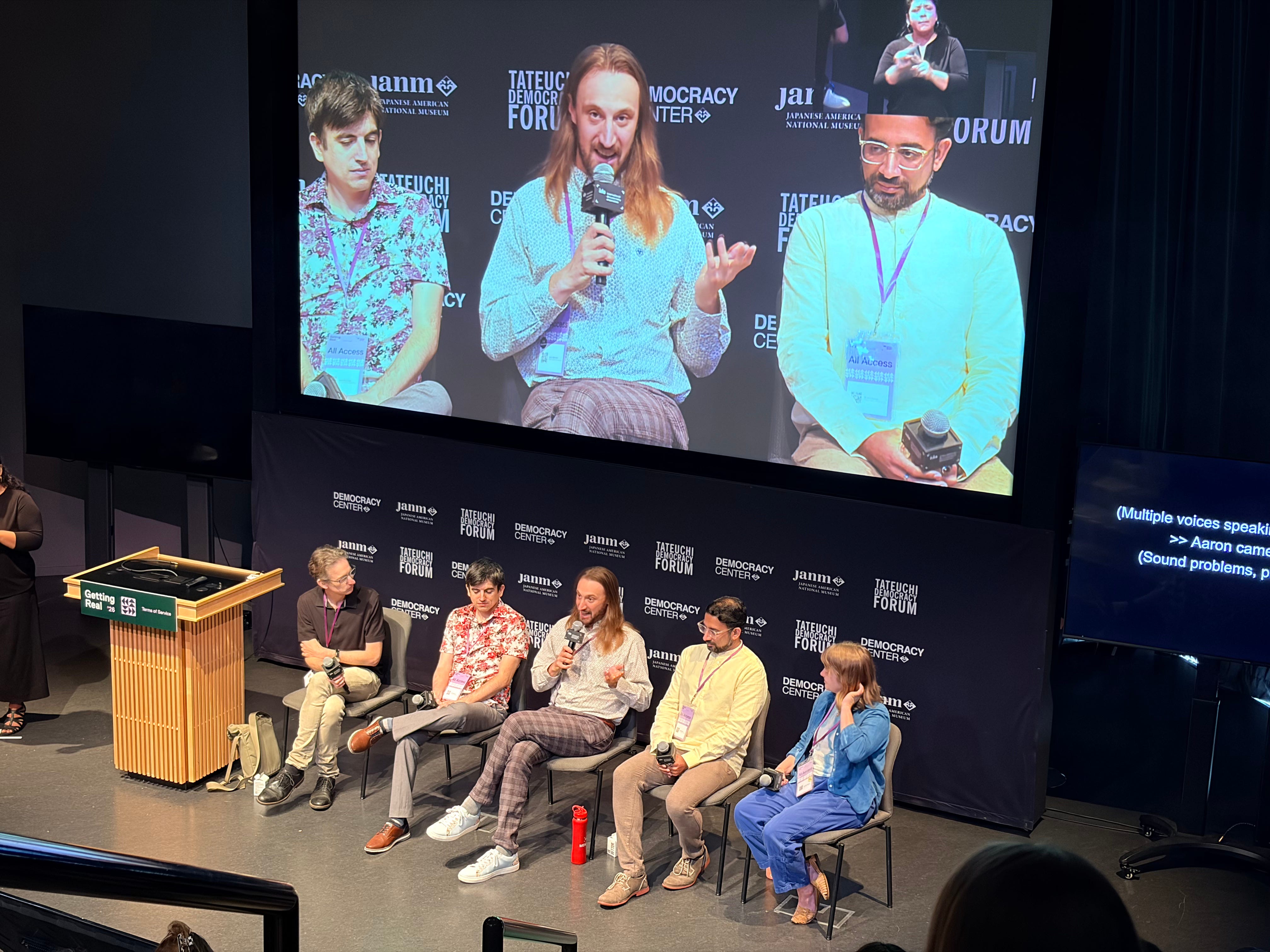
Tikkun Olam is a nonprofit cooperative that built the grassroots audience for their film Israelism before it hit number one on Apple TV’s documentary chart. They’ve since run impact campaigns for No Other Land, The Voice of Hind Rajab, Life After, The Encampments, and others. The session title says it well...the possibility of more. More than what the conventional distribution playbook offers. More than a festival premiere followed by an all-rights platform deal that may or may not materialise.
The thing that landed most clearly, for filmmakers who were never offered that conventional playbook, resourcefulness was already the strategy. Tikkun Olam just built a model around it. They talked about what a direct distribution and impact team actually looks like in practice, how release strategy shapes production from the very beginning rather than being bolted on at the end, and what it means to build a film for more than one outcome at a time. I’d love a full morning with them, listening to the numbers, the tactics and what they learned.
One of their messages is the hope for the field is in doing things outside the system. Not accepting what the system tells us can be done, how it should be done, that it’s the only way. Finding the other ways and building from there. Good to hear it from people doing it at scale.
Now heading into the budgeting workshop: Budgeting in Troubled Times, with filmmaker and producer Baba Bahar, who has previously put out a budgeting template that a lot of documentary filmmakers reference and use. Curious what he’s going to share.
2nd update
1145a. Budgeting in Troubled Times with Robert Bahar
Every filmmaker should do this workshop if they ever get the chance. Robert Bahar, a Peabody, duPont-Columbia and three-time Emmy-winning filmmaker (and good friend!), ran a practical and empowering session on getting a grip on your numbers. Budgeting, cost reporting, cash flow. The core message: put the power in your hands by knowing your numbers. You make better art, better decisions, and better films when you are not afraid of the financial reality of what you’re making. He has a budgeting template and resources available through the IDA that you can download and go to town with.
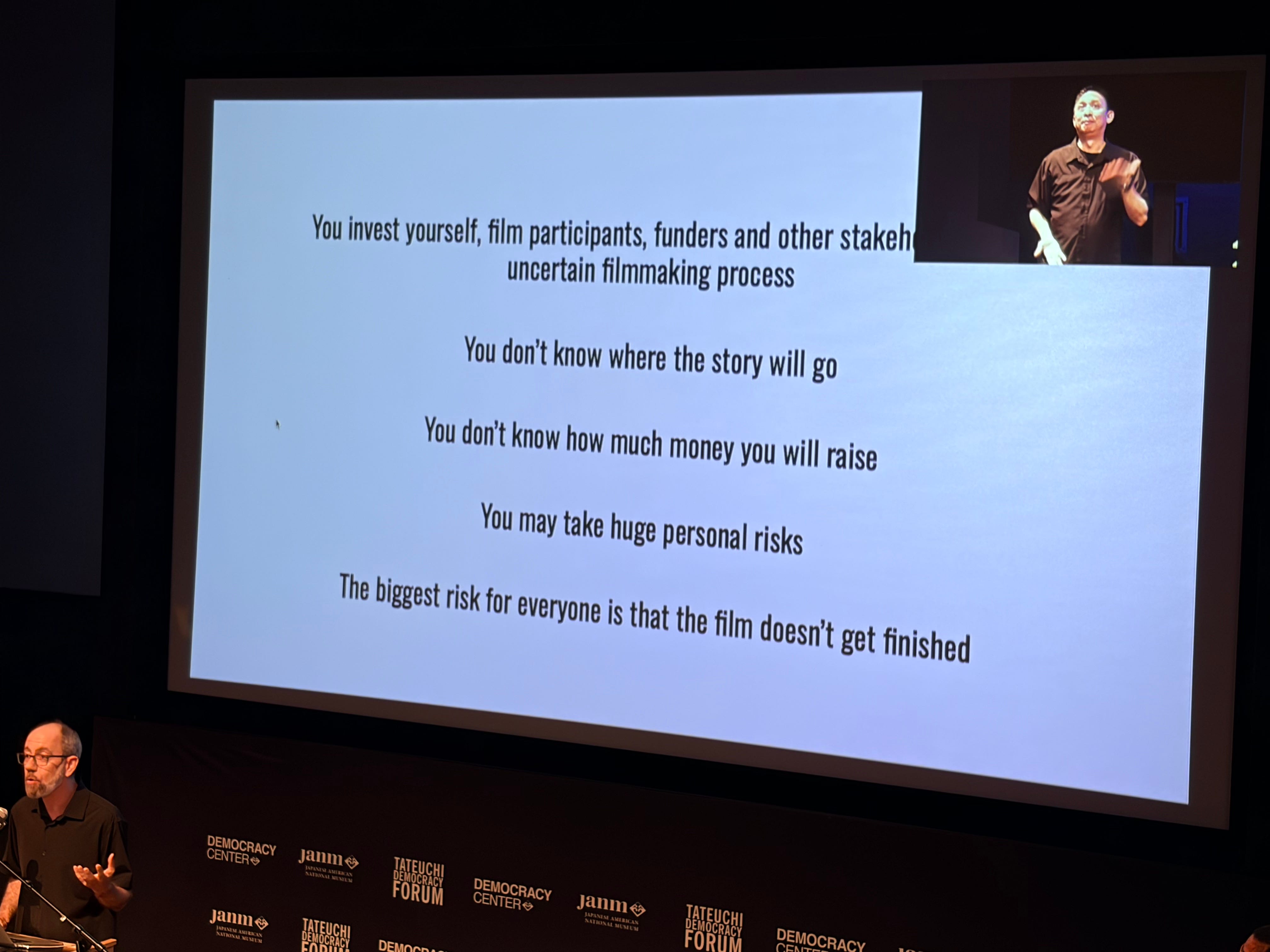
**great points from Robert!
1pm. Lunch
Skipped the IDA lunch because I had a quick call to take. Top tip for anyone at Getting Real: cross the street to the Nijiya Japanese market in the mall across of 1st. Onigiri, sushi, pork katsu sando (what I had), Japanese snacks, Pocari Sweat. Fuels you up for the afternoon at very reasonable prices. I guess this is my top tip...or maybe my top tip is go hit Somi Somi on 2nd street for some soft serve ice cream tastiness. Didn’t make it today but likely tomorrow!
2pm. Past the Panic: What Really Matters in AI and Documentary
Fascinating session. Moderated by Kat Cizek (MIT Co-Creation Studio) with Shirin anlen (WITNESS), Anna Giralt Gris (Artefacto), and A.X. Mina (Archival Producers Alliance). Worth catching the rerun if you missed it. The panel moved past the threat-or-opportunity framing that dominates most AI conversations and got into what’s actually happening, how AI is being integrated into documentary workflow right now, the ethical questions around that, and what filmmakers and advocates are doing in response. There’s a companion workshop from some of the same panelists which I had to miss because I needed to get my daughter from camp. Catching what I can via the livestream on the drive...though maybe I should say audio only, I’m not watching the video while driving...or am I?
Ran into a lot of great people already today. Rachel Elizabeth Seed, Judy Korin, Marty Syjuco, Robert Bahar, Marj Safinia, and many more.
3rd update
330p left to get kid picked up from camp.
Thanks to the magic of live streaming I was able to catch part of Set Hernandez and Leonard Cortana fireside chat (sans actual fireside, as noted by Set). Hit the replay on this. It is well worth it. My highlight of the day.
There was a quick froyo pitstop, so I paused the live stream and finished back home. That was my last interaction with the conference for the day.
630p another dog walk and then cycle.
730p fiancé making (very tasty) dinner and some final emails.
Tomorrow is going to be a packed day. I’m going to have to chose between the filmmaker co-op session or the new economic models session which clash. One gets recorded and the other doesn’t so clearly my choice is made for me but I’ll probably not do the right choice. I’m all for the expanded model this edition where there are multiple locations with dual tracks of panels as it shows growth but I am bummed to have clashing events.
If you’re there. Say hi. Signing off for the night. New Post in the morning.
This is a quick primer of what this series is about.
I get the question “what do you do as a producer?” often.
One of my favorite quotes about this is from Larry Turman who was a mentor. He said “a producer is a person who causes a film to be made, and a good producer is a person who causes a film to be made well.”
I could (and will) write a more holistic answer to that basic question, but here I’m trying out a diary-like entry that lists what I did on a specific day. Maybe something as simple as a daily log will shed a light on what a producer does.
The previous posts in this series are collected here in the “producer diary” section of the stack.
Comments
Nothing yet. Say the first thing.
Sign in to join the conversation.