
England are in the Men’s World Cup semifinal.
I’m going to let that sit for a second. Because if you’ve been following England for any length of time you understand why that sentence needs a moment before anything else gets said.
I’ve been following England since 1986. I’ve also spent a part of my career telling cinematic stories about football. This is a recollection of the ups and downs of my relationship supporting England in tournament football AND a mash up of my experiences telling stories with football and it’s power. It’s about what I’ve come to understand about what this sport actually is and what it actually does in the world.
1986
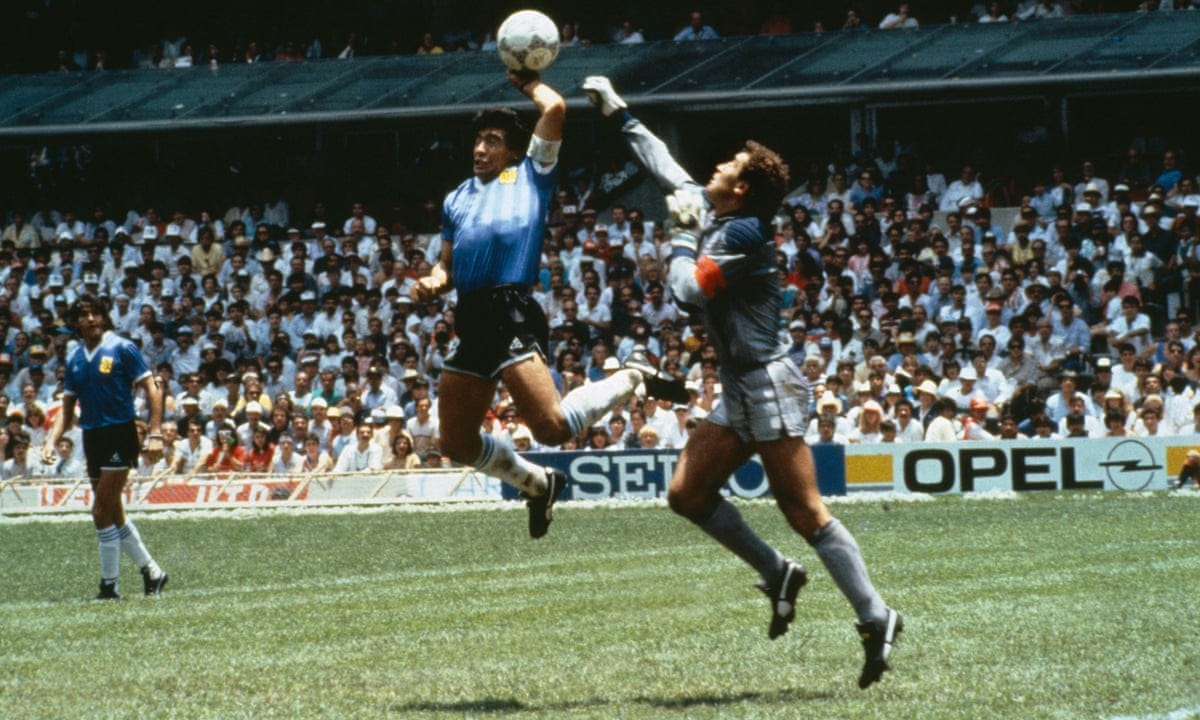
My first England related football memory...England versus Argentina. Quarterfinal. Mexico. Estadio Azteca. World Cup ‘86.
I was 12. At boarding school in England. There were maybe three or four of us watching. I didn’t have a deep football history at that point. My dad wasn’t particularly into it. We watched the FA Cup final together a few times, and that was about the extent of it. So I came to this world cup without much context and I left it with something burned into my retinas that’s never quite gone away.
Two goals from Maradona. The first one he punched in with his hand that the referee didn’t see it and has since been referred to as “the hand of god”. The second one he ran from his own half, beat five England players, and scored what would eventually be called the goal of the century. If you haven’t seen it...here.
England lost. But that day began my journey following England that hasn’t stopped.
Italia 90
Still at school. But now there were maybe forty of us in the room.
I remember the silence around the whole town the school is based in during the Belgium vs England match. Not a soul on the street outside. And then David Platt’s late swivel and volley, spinning and striking in one movement to score in extra time, and the room just exploded. The pubs nearby went off at the same moment. That kind of simultaneous eruption across a country, everyone reacting to the same thing at the same instant, I hadn’t felt anything like it before.
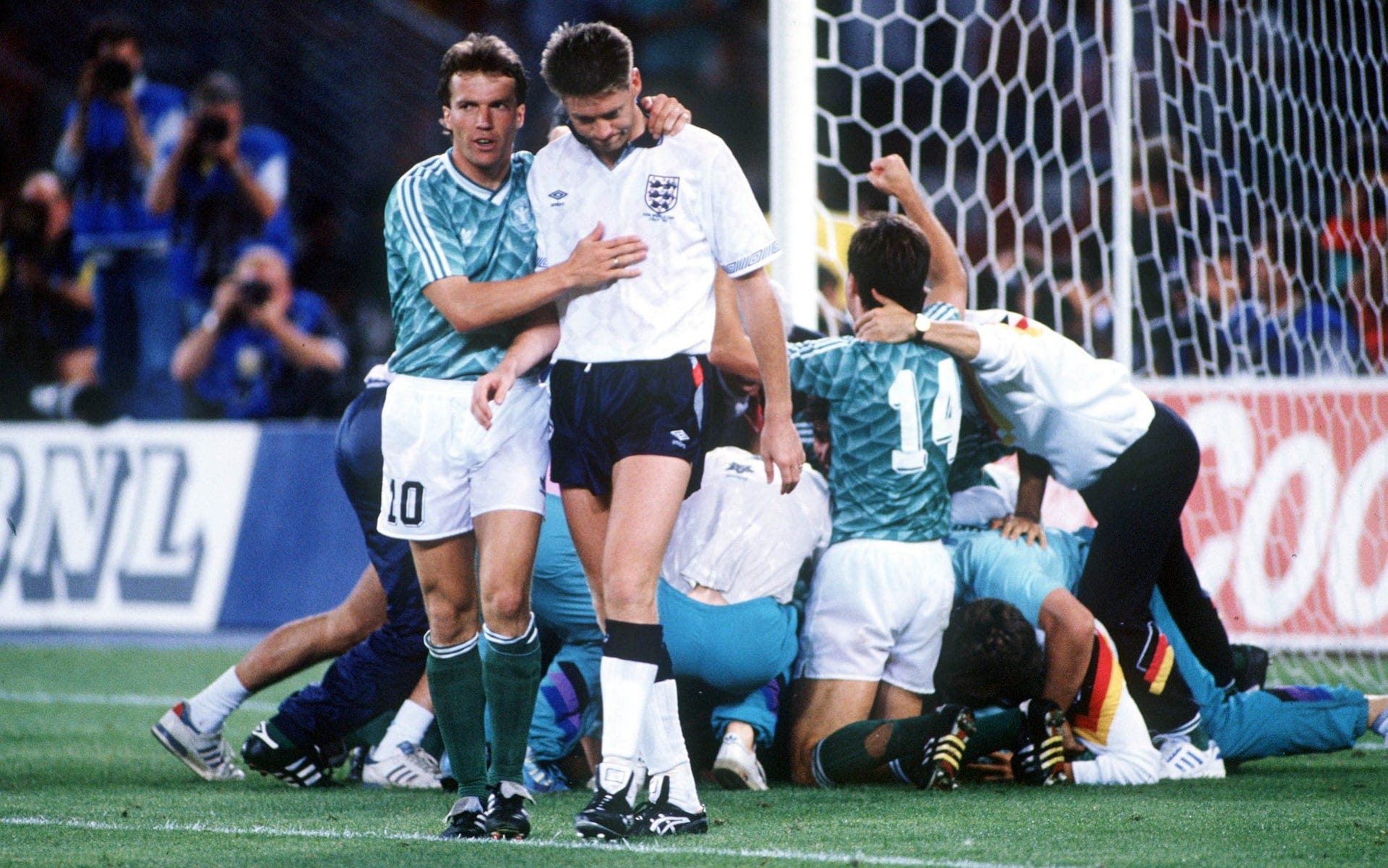
I remember Cameroon in the quarterfinals. Thinking this is it, we’re done. And then Gary Lineker getting two penalties to bring it back. And then the semifinal against West Germany, which I remember very clearly. Long pass from Paul Parker, Lineker controls with his thigh. Goal. The tension of extra time. And then the penalties.
The penalties.
If you are an England supporter of a certain age the word penalties does something to your nervous system that is very hard to explain to someone who hasn’t lived through it.
Chris Waddle’s penalty went into orbit somewhere above the stadium. England were out.
I stayed hooked.
Euro 96 (i.e. not a Men’s World Cup)
I got tickets to everything.
This was the first major tournament I’d ever attended in person. England hosting. Wembley. And a run of games that still lives with me as the best football I’ve ever watched in person.
I sold the Scotland tickets to pay for the rest of the run. It was my friend’s 21st birthday anyway and we watched the match on TV and celebrated at the same time. It turned out to be a great financial decision (that one sale covered all my tickets) and a great night in two very different ways.
Jumping for joy four times as the Netherlands were dispatched four-one. Beating Spain on penalties in the quarterfinals. which was not supposed to happen, and watching it happen from inside the stadium was one of those nights where you think, maybe this is the year, maybe this is actually the year.
And then the semifinal against Germany.
Gareth Southgate’s penalty.
I’ll just leave that there.
The tickets for Euro 96 were reasonably priced. I was 22 and I could actually afford them. I think about that sometimes when I look at what tickets for the 2026 World Cup in the US cost and feel a specific kind of sadness. Where has football gone?
France 98
I watched the England Argentina round of sixteen match in London. Quiet streets again. The Michael Owen goal. The Beckham red card. The penalties.
The penalties again.
Korea/Japan 2002
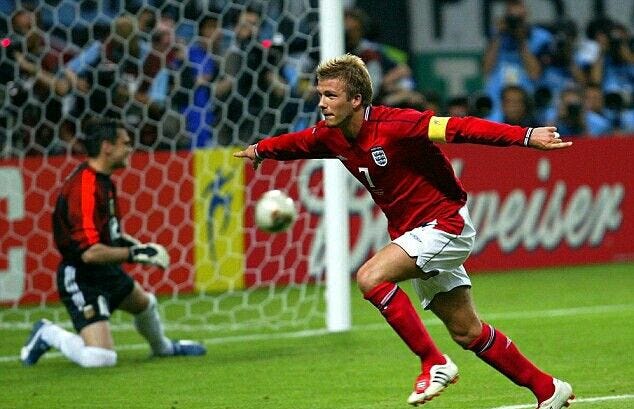
Rematch with Argentina in the group stages. Beckham’s penalty was redemption for the red card four years earlier, and England winning. I remember my dad who was watching with me in Hong Kong was surprised by my roar. It was short lived. A quarter final loss to Brazil. Ronaldinho’s free kick looping over David Seaman.
Germany 2006
A bit deja vu. Rooney red card. Quarter final exit on penalties against Portugal.
The penalties again.
Is this really The Beautiful Game? To have to suffer?
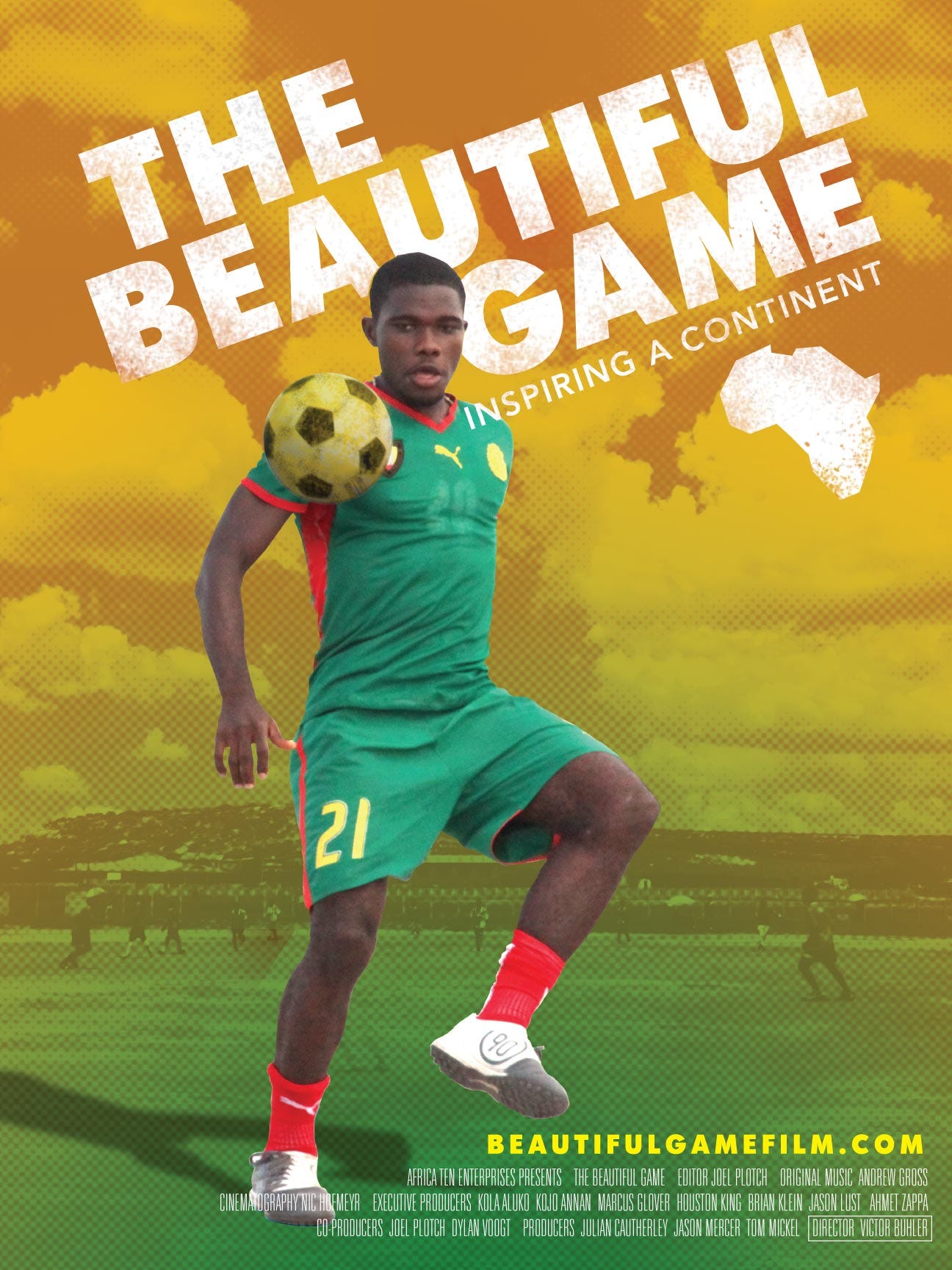
In the run up to the 2010 World Cup in South Africa, we went and made a documentary feature...called The Beautiful Game. We filmed across a host of African countries, Ghana, Egypt, Nigeria, South Africa, Kenya, Cote d’Ivoire, in the period when the continent was buzzing with something it had never experienced before, the men’s World Cup coming to Africa for the first time.
Something happened on that production that I think about a lot. We’d pull up with our production van to places we’d never been to. Unfamiliar places. Places where you’d arrive with some uncertainty about how you’d be received, a bunch of outsiders with cameras showing up without much context. There was always some initial skepticism. That’s natural and fair.
And then one of us would open the van door and the football would come out.
Within minutes people would come over. Kids would take the ball and start playing. Adults would follow. Conversations would start that wouldn’t have started any other way. Barriers that would have taken much longer to cross, if they crossed at all, dissolved in about thirty seconds.
Language can a barrier. The football is not.
I think football works this way because of what it is as an object and as an idea. It’s round, like the earth. It’s accessible. You don’t need equipment beyond the ball. You don’t need a specific space. And crucially, almost everyone on earth knows what to do with one. That universality is not an accident. Football spread from England, partly as a byproduct of colonialism and British exploration, and then kept spreading because it travelled well. It required nothing and connected everything.
Music. Food. and Cinema, those are the main three things I could think of that do something similar.
Care to watch the doc? Find it here. We dropped the rental price for the month. As for the tournament, England out in round of sixteen to our other fierce rivals, Germany. The Lampard goal that was but not counted.
Brazil 2014. Just tragic what happened to English football that year. Let’s not revisit.
I’ve basically lost faith in watching at this point.
Russia 2018
I went in with zero expectations. Which maybe turned out to be the right approach.
The years of Beckham, Gerrard, Lampard, world-class players who never quite got the team to where the talent suggested it should go, had done something to my expectations.
And then came penalties. Round of sixteen. Colombia. We Won.
I’m not going to pretend that wasn’t a big deal. It was an enormous deal. Years of penalty trauma and suddenly it went the other way.
We got to the semifinal. Against Croatia. And I remember the feeling, which I hadn’t had since Italia 90, of thinking this could actually be the World Cup year. Kieran Trippier’s free kick, one nil up, and for a moment it felt like it. And then Croatia came back and we lost. No penalties at least.
I believe this was the year that changed my relationship with England. I can still get wrapped up in the drama and excitement in those 90 (or 120 minutes) of the game but once the final whistle goes, win or lose. I can just enjoy what I saw without obsession anymore. I’m at peace with enjoying the experience. I stopped being addicted to the highs and lows. I learned something about the way to move through the world (life) through football.
And that’s actually quite a segue to another football project I worked on, a documentary series called The World According to Football with Trevor Noah. We filmed in the US, UK, Brazil, France, and Qatar, finding stories in each country about how people use football at the non-professional level to do things that have nothing to do with winning matches.
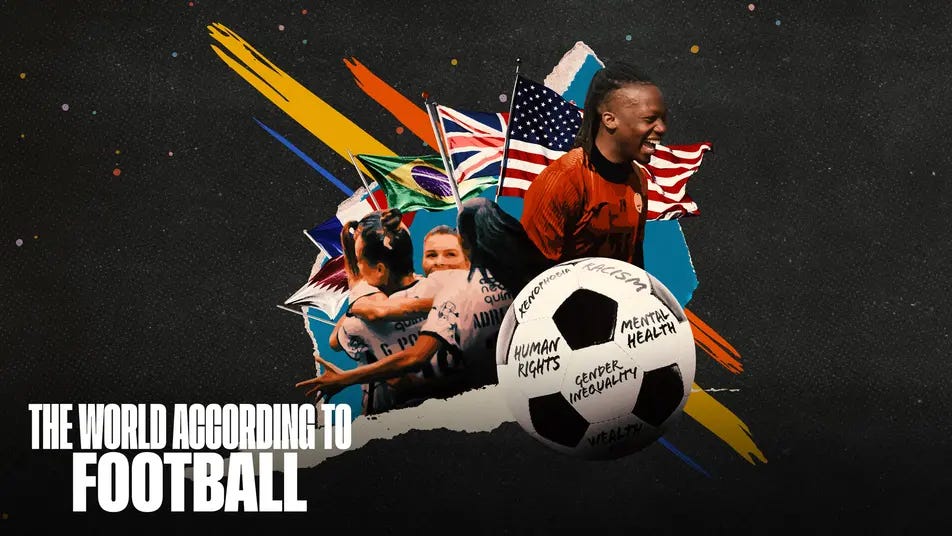
In France we found women from African communities in Paris using football as a tool to fight economic and racial inequality. Giving young women from communities with limited options a structure, a community, a way up. Really powerful storytelling.
In the US we found a long and deep football history that most Americans don’t know exists. Football didn’t arrive in America in 1994 with the World Cup. It was there long before, brought by immigrants and communities that kept it alive for decades before it got eclipsed by American football and basketball and baseball. Title IX. The women’s game in America is enough evidence on its own that this country loves football. It just took a while for everyone to admit it.
And we went to Qatar. Which was important. There was a dominant media image of Qatar around the World Cup, and it was partial at best. Being there, finding stories, understanding how deep football actually runs in that culture, not because the World Cup landed there but independently of it, that was one of those experiences that reminds you why you make documentaries. You go somewhere expecting one thing and you find the actual thing. The final episode didn’t feature some of the best nuanced stories we found, long story.
There’s a line I came across in research for these projects that has stuck with me. Football explains the world. If you understand how football works in a place, in its structure, its clubs, its communities, you understand that place. It’s a lens. It’s one of the most accurate lenses we have.
Today.
England are in the Men’s World Cup semifinal.
I said I wouldn’t be obsessed if we lose. We will find out if that still holds true. I’ve been following England through tournaments since 1986. That’s forty years and a lot of near misses and early exits and penalty shootouts that did not go our way. I’ve watch them lose the last two Euros finals but we’ve never made a World Cup final in my lifetime.
But today there’s a chance.
I’ve been in Los Angeles long enough that I watch England games at strange hours, sometimes alone or in a small group, which is its own kind of experience. Watching a country feel something from very far away. Following it through a phone screen and a streaming app rather than the eerily silent streets of England.
Yet the feeling is the same. That’s what football does. It transcends everything.
Come on England.
I’ll even take penalties.
Welcome to the new subscribers and followers. If you want to know what this substack is all about, start here and then work through some other older posts like this one and this one. Participate with your comments and suggestions. Share things you like and get your friends to stop by. Here’s another plug for the OG case study post which I’m constantly updating, so send me any case studies I’ve missed that you found useful! I’m in the middle of creating a budget template for direct to audience distribution and looking for you to share with me your data around what you spend your budgets on. DM me!
Comments
Nothing yet. Say the first thing.
Sign in to join the conversation.