
Welcome to the latest edition of ASPI’s Fault Lines.
Each fortnight, ASPI’s Defence Strategy Program monitors the moves and countermoves shaping the regional order and Australia’s security.
This edition covers the period 1 May 2026 - 14 May 2026.
Follow the Australian Strategic Policy Institute on X, on LinkedIn, and on Bluesky.
You scratch my back…
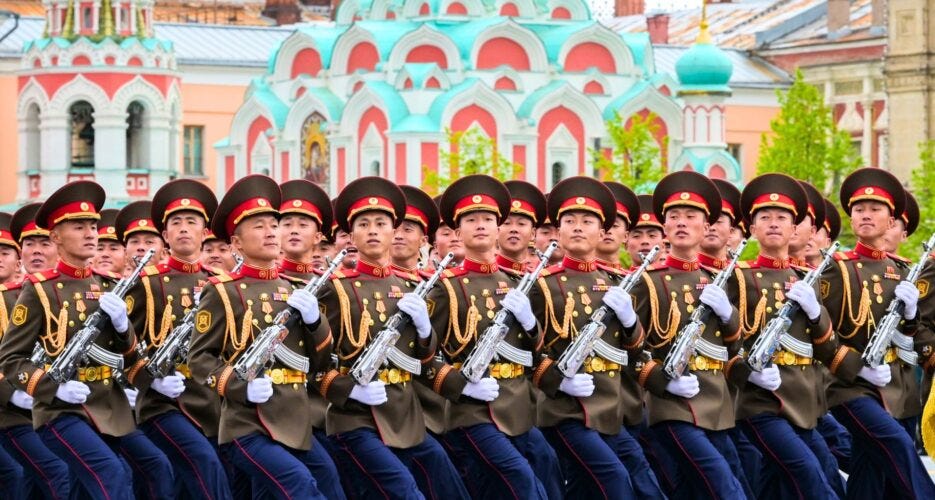
North Korean soldiers—about 120 of them—marched in the Victory Day parade in Moscow on 9 May. First time that’s happened. The annual parade through Red Square commemorates the surrender of Nazi Germany in 1945; it’s Russia’s most militarised public holiday, and as with Soviet history in general, the Russian government tries its best to make it ‘on message’. North Korea sent combat forces to support Russia’s war on Ukraine in October 2024, and you might recall the Kremlin initially denied it was happening. In the past year, however, Moscow has doubled down on military cooperation with Pyongyang to the point of defending it at a 30 April UN Security Council debate—a debate, no less, on the North Korea sanctions regime Russia helped create in the 2000s. (The Russian permanent representative’s claim that their relationship is ‘in all areas in accordance with the UN Charter’ requires no commentary.) Now, sixteen years ago British, French, and American troops marched, you instead see the symbolic side of a North Korean partnership that’s already operational.
Yet the parade itself was a sad affair—barely forty-five minutes long, with Moscow under a mobile data blackout for fear of Ukrainian drones. That could also explain the absence of the usually slow-moving column of armoured vehicles and other military hardware, but the truth is probably simpler: the front in Ukraine hadn’t any to spare. All across Russia, military parades for this year’s Victory Day were scaled back or called off, in some cases for the first time in decades.
It’s times like these you can see the hard transactional core seep through the comradely trappings of the relationship. Russia is in straitened circumstances, and North Korea has what it very much wants: artillery shells in Soviet calibres, ballistic missiles, and manpower. Russia also has what North Korea wants: food, fuel, a deep bench of talent for high-tech weapons systems, precisely zero regard for the UN sanctions regime, and the opportunity to gain combat experience at the very sharpest end of contemporary land warfare. The rest is, shall we say, the art of the deal.
Technical aid is already accelerating Pyongyang’s missile program, as weapons bought by Moscow and fielded in Ukraine trickle battlefield performance data back to engineers in North Korea. On 12 May, reportage from CNN disclosed a still more significant development: the Russian freighter Ursa Major, which sank mysteriously in the Mediterranean in December 2024 while underway to Vladivostok, is now believed to have been carrying two submarine nuclear reactors. Not many buyers for those. While their loss will have set back Pyongyang’s effort to develop a nuclear-powered submarine capability, neither it, nor Russia’s assistance to it, show any sign of stopping. And as long as the Russian war machine keeps grinding away in Donbass and North Korea’s nuclear weapons keep soaking up US and allied attention, Kim Jong Un will be hard put to find a warmer handshake than Vladimir Putin’s.
News from abroad
Remember Taiwan’s legislature blocking President Lai’s US$40 billion supplementary defence budget earlier in the year? Well, they passed it—just not the whole thing. A pared-back US$25 billion budget was approved by the Legislative Yuan on 8 May.
It’s looking like the approved money will mostly be used to buy weapons from the US. Lai’s ambitions for a domestic industrial buildout—particularly for drones and counter-drone systems—will have to wait.
On 8 May Japan’s second-largest oil refiner, Idemitsu Kosan, purchased its first shipment of Russian crude oil. Three days earlier, a smaller refiner, Taiyo Oil, received a shipment of Russian crude oil at its facility in western Japan.
Japan imports about 95% of its oil from the Middle East. Well, it did; then Operation EPIC FURY happened. Idemitsu and Taiyo are the first Japanese refiners to begin Russian oil imports since the conflict in the Middle East disrupted supply.
Your guess is as good as mine
There’s about 27,000 square kilometres of the Gulf of Thailand which Cambodia and Thailand have disputed since the 1970s. Your next question: vast amounts of untapped oil and gas? You bet. In 2001 the two countries signed an MoU to work towards a deal for finally pinning down the maritime boundary and jointly developing the resources in the Overlapping Claims Area (OCA). A quarter-century of diplomatic wrangling hasn’t produced any such deal, and on 5 May the Thai cabinet unilaterally terminated the MoU.
The OCA, and the prospective future division of hydrocarbon revenues lurking beneath, is a touchy issue for nationalist sentiment in Bangkok and Phnom Penh alike. The past 18 months of sporadic armed conflict on the land border created the charged situation in which Thailand’s conservative-populist Bhumjaithai Party was swept into power by voters back in February. Cancelling the 2001 MoU was one of their election promises. Whether or not it conceded too much to Cambodia, as some sectors of Thai opinion maintain, a replacement will be in order. Bangkok still wants to talk—they can’t get the gas otherwise—but on different terms. They’ve indicated they want to manage negotiations going forward in accordance with the UN Convention on the Law of the Sea (UNCLOS). Cambodia is more forward-leaning, but in the same direction: it wants to take the matter to the UNCLOS compulsory conciliation mechanism. (That’s the one used for the first time—so far the only time—in the long-running maritime boundary dispute between Australia and Timor-Leste.)
Wherever the new framework ends up, if it’s in some way under UNCLOS it’ll be more public and more grounded in international law than the quite opaque backroom diplomacy characteristic of the old MoU. It makes sense that Cambodia, being the smaller country, sees putting a neutral third party in the middle of the dispute as giving it better odds of a favourable result. (Though not a binding one: UNCLOS conciliations only create recommendations, not legal awards.) Thailand, historically, prefers to keep things bilateral where sovereignty issues are on the line. But the closed-door MoU process clearly hasn’t done the job, and Bangkok knows that it holds more of the cards: its offshore energy sector is immensely larger and decades more mature than Cambodia’s, so in terms of practical return on ‘joint development’ of the OCA they’d probably do relatively well out of almost any compromise. The great risk is that a more public-facing process framed in legal language will inflame the same domestic political dynamics that have kept a compromise out of reach for decades.
Shoulder to shoulder
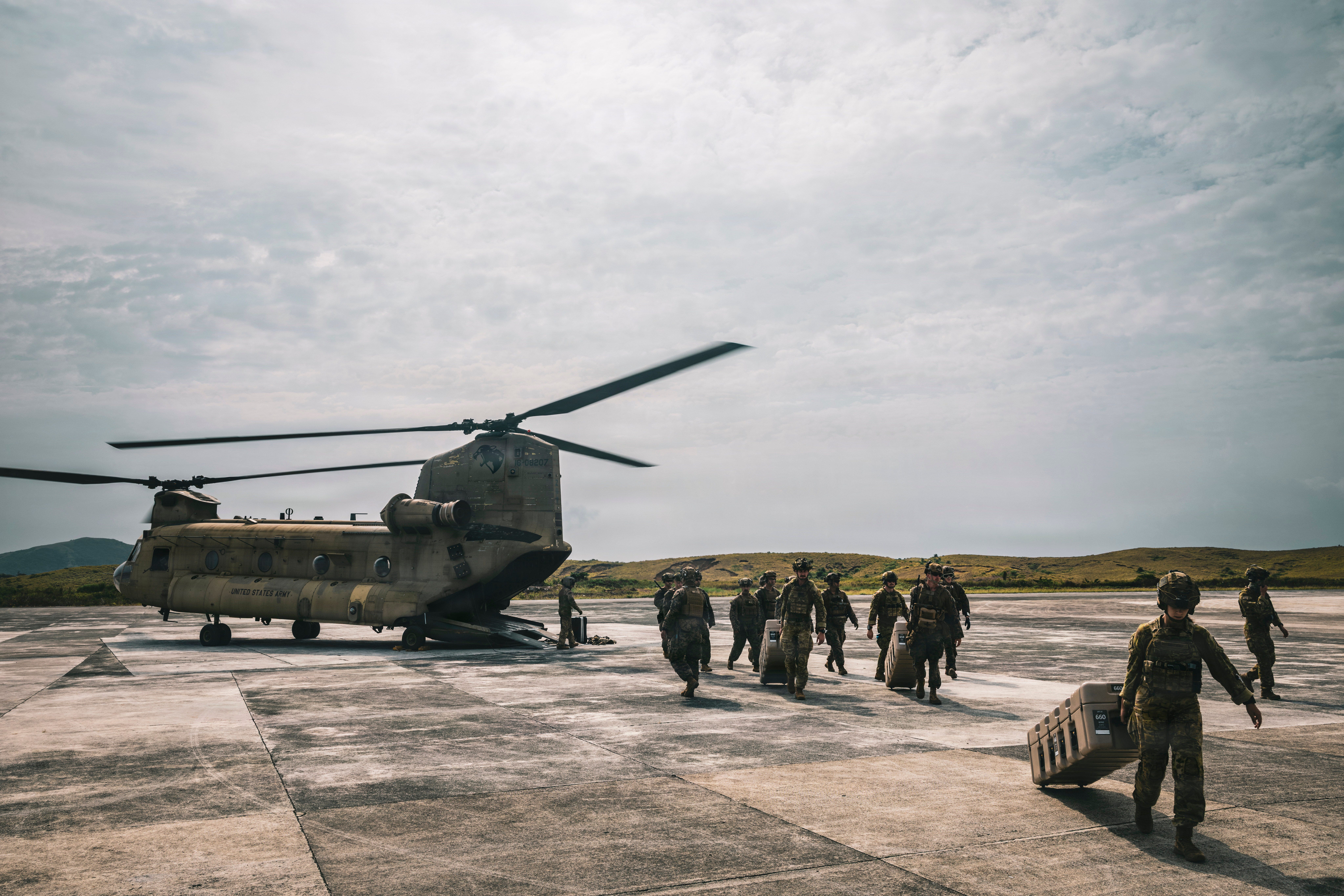
After nineteen days of activities for 17,000 troops from seven countries, Exercise BALIKATAN 2026 wrapped up on 8 May. As a fair summary it’s hard to go past Adm. Samuel Paparo’s remarks at the closing ceremony: BALIKATAN has decisively evolved from a bilateral training day for Washington and Manila to a ‘full-scale, multinational mission rehearsal for the defense of the Philippines.’
That’s a mission with more than a few moving parts, and probably the most notable outcome from BALIKATAN was the field trial of a new Common Operating Picture (COP) for multinational forces. A COP, to its friends, is what it says on the tin: a shared source of real-time information on the battlefield that a military force can use to inform its decisions and keep its left hands up to speed on what the right hands are doing.. This one in particular, designed to meet the needs of prospective complex multi-domain coalition operations in the Pacific, has been an ambition of US Indo-Pacific Command for many years.
The slow going’s understandable: anyone who’s had the pleasure of working with a large business’s IT system knows how hard this can get inside a single building. As of BALIKATAN 2026, the US now seems to have the system in a working state. In live-fire training in early May, US, Filipino, Canadian, and Japanese forces—the first Japanese combat troops to set foot on the Philippines since 1945, by the way, and with an invitation this time—used it to coordinate fire from land, sea, and air elements to defeat a simulated amphibious landing. That’s no mean feat. You’ve got different software, different languages, different data security regimes—and they all need to talk in real time under battlefield conditions. It’s not as photogenic as the mandatory ‘stuff blowing up’ you see in major exercises—plenty of that at BALIKATAN, to be sure—but it’s the kind of backbone a coalition of modern, high-tech armed forces demands if it’s going to get anything done at all.
News from the neighbourhood
Myanmar’s junta has moved former president Aung San Suu Kyi from prison to house arrest. Suu Kyi has been a prisoner since the military coup in 2021, and an image of her broadcast on state media earlier in the month is the first photograph of the Nobel Laureate seen in years.
Exercise BERSAMA SHIELD—one of the major exercises held under the Five Power Defence Arrangements by Australia, Malaysia, New Zealand, Singapore and the UK—finished up on 3 May.
It’s much smaller in scale than BALIKATAN (only about a thousand troops participating), but it still saw a few notable firsts, including the incorporation of information operations into the exercise lineup.
Trade routes
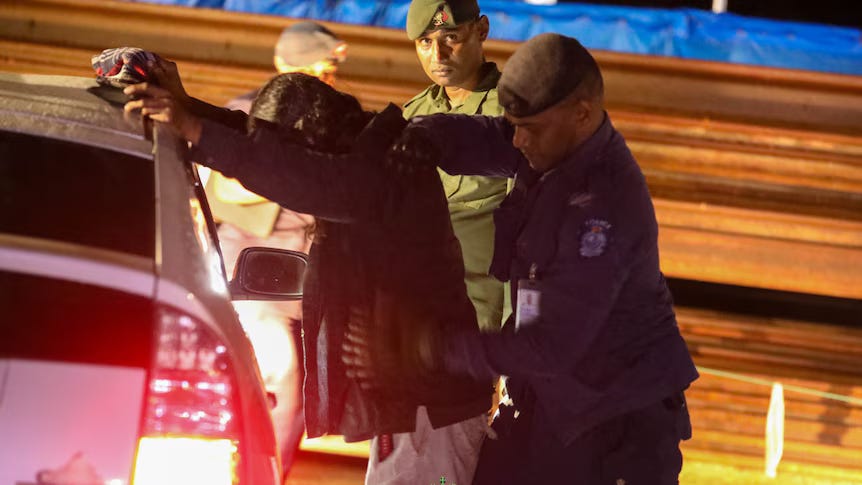
Fiji came close last week to declaring a state of emergency over its widening drug crisis. Police and military patrols have stepped up across the country, and Suva has seen a run of raids and surge operations. The declaration was ultimately judged unnecessary, but the issue has nonetheless acquired a political edge: in mid-April, a suspected drug lord died in military custody—with a murder investigation ongoing—and in the same month the defence minister’s daughter was struck by a vehicle attempting to force its way through a checkpoint.
Fiji has lately become a transit hub for illicit drugs crossing the Pacific, and it’s no mystery why. Australia’s growing demand and constrained access to supply mean that cocaine from Central and South American can fetch street prices here of up to A$400 per gram—among the highest in the world, and more than enough to make sense on a cartel spreadsheet. But products like these tend to create markets wherever they go, and in recent years UN and Australian authorities have watched the Pacific drug trade’s waystations become destinations as well. Drug-running ‘narco-submarines’ now ply the waters of the Solomon Islands and the Marshall Islands, while local seizure volumes have grown explosively. In 2012, the drug trade was a problem Fijian police measured in milligrams; now they measure it in tonnes.
It’s one more wrinkle in a security environment that’s far from smooth even on a good day. Fiji’s near-emergency declaration came as Canberra and Suva were concluding negotiations over the Vuvale Union Treaty—a comprehensive framework for partnership across multiple policy areas, with security in the forefront. Fiji’s Cabinet approved the treaty on 8 May; Canberra will likely follow soon. Australian officials highlighted the Treaty’s potential to facilitate further capacity-building for Fijian police. They’ll need it. Fiji’s 2024 Counter Narcotics Strategy identified persistent under-resourcing and inadequate legal frameworks as ‘critical factors’ hampering Fijian law enforcement. There’s also an integrity issue, rounding out the drug trade’s broader test of state capacity: last year Prime Minister Rabuka ordered the Counter Narcotics Bureau shut down barely a year on from its creation, after multiple high-profile arrests of CNB’s own officers were arrested for methamphetamine smuggling.
News from the family
This week, Vanuatu’s cabinet approved a revised version of the Nakamal Agreement—the security pact with Australia whose signing fell through last year.
The revised version won’t limit Chinese investment in Vanuatu—a sticking point for ni-Vanuatu leaders. The revised version now has to receive Australia’s approval.
PNG Prime Minister James Marape was in Guangzhou, China last fortnight seeking to shore up infrastructure investment. Marape was particularly interested in Chinese investment in water infrastructure, ports, and resource development.
France and Vanuatu have been in a diplomatic spat since last week after the ni-Vanuatu government hosted the leadership of the Kanak and Socialist National Liberation Front (FLNKS)—a New Caledonian independence group. Authorities in New Caledonia suspended trade cooperation with Vanuatu in response, and the French Ambassador in Port Vila took to Facebook to protest the ni-Vanuatu government.
Despite heightened tensions, a freight line between Vanuatu and New Caledonia still made its maiden voyage this week, with officials stating that the fundamental friendship between France and Vanuatu remains intact.

That’s all for this fortnight. For more timely analysis and commentary, check out The Strategist and ASPI’s Stop the World podcast—or elsewhere on Substack:


Thanks for reading! This post is public, so feel free to share it.
No posts
Comments
Nothing yet. Say the first thing.
Sign in to join the conversation.