
Welcome to the latest edition of ASPI’s Fault Lines.
Every fortnight, ASPI’s Defence Strategy Program monitors the moves and countermoves shaping the regional order and Australia’s security.
This edition covers the period 20 February 2026 - 5 March 2026.
Follow the Australian Strategic Policy Institute on X, on LinkedIn, and on Bluesky.
Northeast Asia
Hard Friendly new world
As South Korea’s former President Yoon Suk Yeol contemplates life imprisonment (memo to Kim Yong-hyun: friends don’t let friends attempt coups d’etat) it’s probably cold comfort that the new government’s foreign policy has a central plank in common with his: improving economic and security ties with Japan. On 1 March, President Lee Jae-myung made a speech welcoming continued Japanese engagement with the aim of creating a ‘friendly new world based on genuine mutual understanding and empathy.’
Of all the days to say it, too: 1 March is a public holiday in Korea, the anniversary of mass protests against Japanese occupation in 1919. The Korean left, contra conservatives like Yoon, has long tended to foreground historical issues with Japan; it’s tough to partner for security with a country that ruthlessly colonised yours. Ten years ago, Lee Jae-myung was the progressive mayor of Seongnam and his opinion was that ‘from a military point of view, Japan is still an enemy country.’ But ten years is a long time in politics, and when Lee became President last June he inherited Yoon’s bilateral thaw and a new US-Japan-ROK trilateral architecture spun up at Camp David in 2023. Annual meetings at the leader and ministerial level, named joint multidomain exercises, real-time data sharing on missile threats—the whole shebang.
With relations northward in the deep-freeze and a rather mercurial character in the White House, it’s no surprise Lee figured keeping Japan on side could be useful. Visiting Tokyo first, before Washington, wasn’t just to commiserate about tariffs. Before the election Lee foreshadowed a dual-track approach—keep historical reckonings in one lane, security and trade in the other—and eight months and one jam session later it seems to have all gone extremely well. Bilateral search-and-rescue exercises are back; personnel exchanges and cooperation on AI and uncrewed systems are on the table.
Trouble with a friendly new world is, not everyone wants to share it with you. A few days earlier and two hundred kilometres away, the Ninth Congress of the Workers’ Party of Korea unveiled the next five-year plan, and its posture toward the South hasn’t budged: ‘The DPRK has nothing to discuss with the ROK, the most hostile entity, and will exclude the ROK from the category of compatriots forever.’ Doesn’t seem too friendly. Lee’s conciliatory efforts so far—he’s apologised for those drone incursions, which it turns out did happen but were caused by private citizens flying them over the DMZ—haven’t rebuilt the roads the North blew up in October 2024.
The wording of the summary report of Kim Jong Un’s speech to the Congress leaves a highly conditional door open to dialogue with the United States, but Seoul gets nothing. It’s very clear who Pyongyang thinks is worth making a deal with, even in principle—and the remote possibility that it might happen is another factor incentivising Lee Jae-myung to find a friend in Japan.
Let’s have your people call my people
Mind you, friends bring their own problems. On 18 February, in the course of a US Forces Korea (USFK) training exercise, a USAF flight of about ten F16 fighter aircraft over the Yellow Sea entered a region between the Korean and Chinese Air Defense Identification Zones (ADIZ). The PLA Air Force scrambled jets in response, leading to a ‘rare standoff’ between US and Chinese fighter jets. While the two sides de-escalated safely and everybody went home, it’s unusual for USFK to run exercises close to China’s ADIZ without involving Korean forces, and senior officials on the Korean side aren’t happy: they weren’t fully briefed in time.
USFK commander Gen. Xavier Brunson has expressed regret for that, but the coordination problem it signals probably isn’t going away; the way things are trending, Washington seems to think about USFK more in the context of deterring China rather than purely providing extended deterrence to the South against the North. As the vexed issue of OPCON transfer grinds its way toward a major milestone this year—South Korea won’t quite be granted a fully independent chain of command in wartime, but it’s getting there—there’s a risk not only that USFK and the Korean armed forces might wind up with diverging priorities in a crisis, but that some of the bureaucratic wires that let them talk to each other will end up snapping when OPCON changes hands. Which isn’t what you want, when the possibility of a Chinese response to USFK activities is a very live one.
Island in the sun
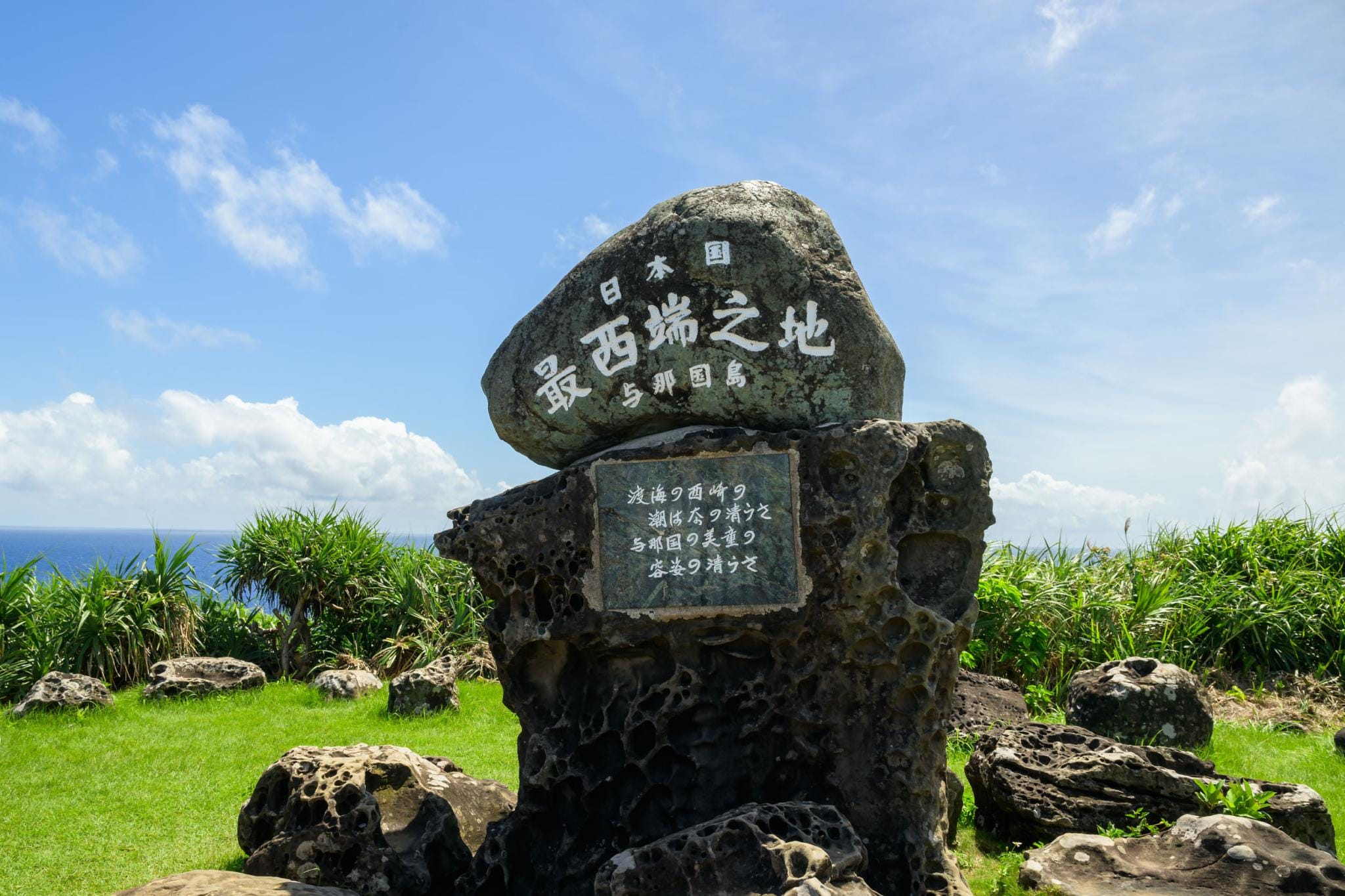
Yonaguni is Japan’s westernmost island, known for mysterious undersea rock formations, an endangered species of miniature horse, and being a hundred kilometres from Taiwan. That last part is poised to become more important, as plans to add a missile unit to the Japanese Ground Self Defense Force (JGSDF) presence there now have a delivery timeline. Defense Minister Koizumi revealed on 24 February that Type-03 medium-range surface-to-air guided missiles will be stationed on Yonaguni (which we’ve known since 2022) in 2030 (which is new information). Ministerial fine print: timeline may be subject to change, please check back after the next election. That’s on top of previously-announced plans for a radar jammer to be built on Yonaguni sometime this year. 2030 or not, that choice of missile is indicative of the JGSDF’s concern for escalation. Medium-range, for the Type-03, means about fifty kilometres: it’s not holding anything over Taiwan at risk, let alone the Strait or the disputed Senkaku Islands to the north. Also timeline-relevant: the Type 03’s ongoing upgrade program is expected to deliver a robust terminal-phase interceptor for hypersonic glide vehicles by 2028. Good news for anyone who might be planning to use Yonaguni as a forward position to arm and refuel combat aircraft—hey, didn’t the US Marine Corps give that a test-run last October?
For more on these topics, we suggest:
Continuity or change? Navigating ROK-Japan relations in the post-election era (EUI Global Governance Programme, 2026)—More continuity than change from Yoon’s to Lee’s foreign policy. Why?
Navigating the new normal: Strategic simultaneity, US Forces Korea flexibility, and alliance imperatives (Atlantic Council, 2025)—USFK was put there to defend Seoul; can it balance that with deterring China?
Don’t judge islands by their sizes: The role of remote Japanese islands in the regional military balance (Journal of Strategic Studies, 2025)—There’s more at stake in putting missiles on Yonaguni than Japan’s homeland defence.
Southeast Asia
Striking similarities?
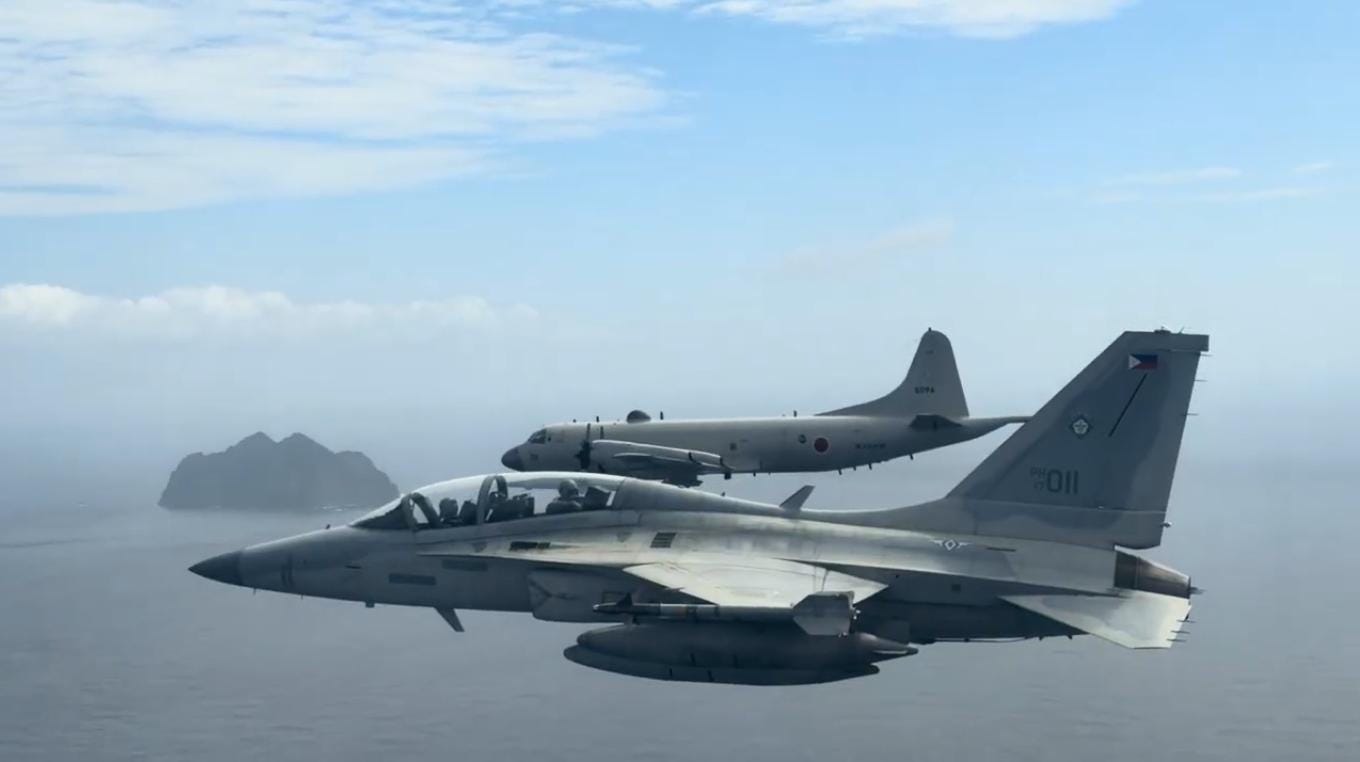
Manila has an eye on the Middle East, and for obvious reasons: about 1.1 million Philippine nationals work there, and given present hostilities a fair number have asked to be repatriated. But some reasons are less obvious. On 1 March, Senator Erwin Tulfo—chair of the Senate Foreign Relations Committee—stated to media his intent to call for a review of the Enhanced Defense Cooperation Agreement (EDCA), on the grounds that US forces in the country could be targeted in a regional conflict, with collateral damage affecting nearby residents in a manner analogous to what’s happening near US bases in the Persian Gulf. EDCA is a 2014 treaty, giving the US authority to rotate forces through specially designated Philippines military facilities, as well as to pre-position materiel and make improvements to infrastructure; bilateral and multilateral exercises involving the US use the EDCA sites extensively. It’s not a basing agreement—a point on which the Department of National Defense was quite insistent in a press release following Sen. Tulfo’s comments. (Nor is it of relevance to current hostilities in the Middle East; even if it was, Iran has no demonstrated capability to strike targets that far away.) Still, the Senate may well take a look at it. Grounded or not, it’s a type of concern which is becoming more salient wherever the US has a footprint in the Indo-Pacific, including here in Australia for Perth residents near the future site of SRF-West. Nobody likes being blown up, and it’s reasonable to question whether PLA staff planners distinguish a ‘base’ from a ‘rotational presence’ quite as sharply as the lawyers do. For the Philippines armed forces, the question’s more concretely one of how to make the best of EDCA to deter a blowup in the first place. Last week’s Philippines-Japan-US joint military exercises saw airborne patrols over the Bashi Channel—the hundred-kilometre stretch of water between northern Luzon and Taiwan, marking the first time these trilateral drills have taken place outside the South China Sea. That comes alongside recent news that the US will deploy further tranches of US Typhon mid-range missile launchers to the northern Philippines over 2026. Contra Japan’s Type-03, ‘mid-range’ for Typhon means two thousand kilometres or more.
For more on these topics, we suggest:
Missiles Over Fleets: How A2/AD is Redefining Maritime Power in Southeast Asia (AMTI, 2026)—It’s not just the Philippines getting land-based anti-ship missiles. Why?
Allies entwined: Australia’s strategic convergence with the Philippines (ASPI, 2025)—Manila’s a longtime US treaty ally. Where does Australia fit in?
A Decade On: EDCA and the Philippines-US Alliance (RUSI, 2024)—EDCA has faced domestic challenges before, but the China threat keeps Manila and DC together.
Oceania
Technically also an island country in the Pacific
The Japan–Pacific Islands Defense Dialogue (JPIDD) ran from 22 to 24 February this year—the third and biggest yet, with ASEAN states participating as observers for the first time. JPIDD is quite new (round 1 was in 2021) and is notable for being quite inclusive as these things go: there aren’t many standing armies (or defence ministers) in the Pacific Islands, so the annual South Pacific Defence Ministers’ Meeting only gets representation from Fiji, Tonga, and PNG. JPIDD, which is the only other Pacific-oriented ministerial dialogue of that kind, invites everyone. (Countries without armies usually send police or coast-guard officials at the undersecretary level.) Having twenty-eight flags in the room provides ample opportunity for bilateral pull-asides (Japan did a few, likewise the Philippines) but the main discussions circled around the need to deepen cooperation on humanitarian assistance, climate change, and maritime law-enforcement. So far there’s no radical new policy line out of Takaichi’s cabinet on the Free and Open Indo-Pacific construct, but there are some novel initiatives: Defense Minister Koizumi announced a ‘Next Generation Leadership Security Program’, with Japan’s Ministry of Defense to run professional development for early- and mid-career security officials from Pacific Island nations.
On the Strait and narrow
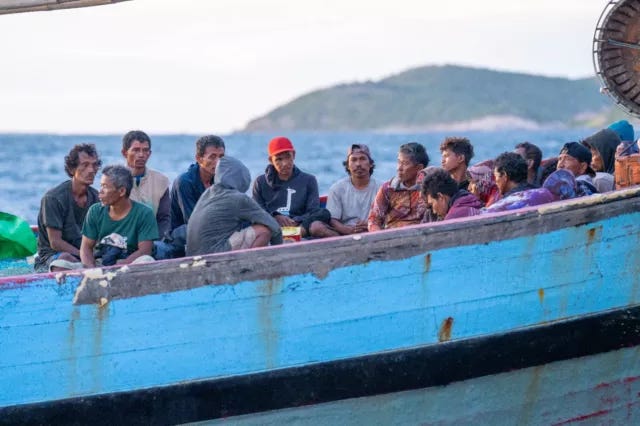
Whoever raised the topic of illegal fishing as an existential threat to Pacific Island countries at JPIDD might have provoked a sharp glance across the room—from PNG’s representatives to Indonesia’s observers. Papua New Guinea’s National Fisheries Authority opened a new state-of-the-art command centre in Daru earlier this year, and it’s already chalked up some wins: NFA boat seizures near the Torres Strait boundary with Australia led to the successful prosecution of 27 Indonesian nationals on 23 February for illegal, unreported and unregulated (IUU) fishing in PNG territorial waters. The Australian Border Force, on the other side of the line, also has its eye on IUU fishing boats entering from Indonesian waters; it has noted an uptick in intercepts and vessel destructions since the start of the year. PNG’s tougher line on illegal fishing is an index of where its priorities for building out maritime domain awareness lie, and Australia’s kept up its end of cooperation across the Strait. But the prevalence of Indonesian nationals among the perpetrators, and the sensitivity of fishing resources to local sentiment in PNG, will need pragmatic handling. Australia’s two northern neighbours—and newest security-treaty partners—are likely to keep their relationship ‘messy but managed’ for years to come.
For more on these topics, we suggest:
Japan-Australia defence cooperation in the Pacific: the case for a partial division of labour (ASPI, 2025)—Japan wants a bigger role in the Pacific. How’s the geography work out?
Leveraging PNG’s strengths and location to become a small maritime power (SAA, 2024)—What are PNG’s maritime security imperatives? What are its constraints?
Drivers of illegal livelihoods in remote transboundary regions: the case of the Trans-Fly region of Papua New Guinea (Ecology and Society, 2018)—IUU fishing near the Indonesia-PNG maritime border is a classic wicked problem.
That’s all for this fortnight. For more timely analysis and commentary, check out The Strategist and ASPI’s Stop the World podcast—or our other Substack newsletters:


Thanks for reading! This post is public, so feel free to share it.
Comments
Nothing yet. Say the first thing.
Sign in to join the conversation.