

Welcome to the latest edition of ASPI’s Fault Lines.
Every fortnight, ASPI’s Defence Strategy Program monitors the moves and countermoves shaping the regional order and Australia’s security.
This edition covers the period 6 February 2026 - 19 February 2026.
Follow the Australian Strategic Policy Institute on X, on LinkedIn, and on Bluesky.
Northeast Asia
Drumroll please
Sanae Takaichi led Japan’s Liberal Democratic Party to a historic victory in the snap election on 8 February—is news you’ve already read somewhere else. It’ll take a moment for the LDP’s new supermajority to get the policy ball rolling, but you can be pretty sure that passing Takaichi’s FY2026 budget will be top priority once they do. Another priority, however, will be updating the decade-old Free and Open Indo-Pacific (FOIP) strategy—as foreshadowed by Chief Cabinet Secretary Kihara on 16 February. A ‘more severe’ security environment demands expanding the scope of FOIP; he’s left us guessing on what exactly that means, but Japan’s recent behaviour suggests enhanced security cooperation with Pacific states is a good guess.
Back to Takaichi’s budget. While the new government’s willingness to spike trillions of yen into defence spending is likely to go down well in Washington (sure, they’re only going to 2% of GDP, but it’s a big GDP) it may turn out that throwing money around is the easy part. Japan’s Self-Defense Forces (SDF) have less tractable difficulties: they’ve had serious recruitment shortfalls of late, particularly in the Maritime SDF, and unlike neighbouring South Korea (which faces similar demographic headwinds in its super-aged population) they can’t just conscript the numbers they want. The 2026 budget’s record-high allocation for uncrewed systems is a strong hint at the shape of things to come, but—according to anonymous Ministry of Defense officials quoted in the Asahi—there are indications procurement is running faster than the forces can build doctrine around new capabilities. Japan’s tightly-regulated electromagnetic spectrum and lack of wide-open spaces make training for drone warfare quite tricky. Makes you wonder if there’s a country down south that could help with that.
Catch and release
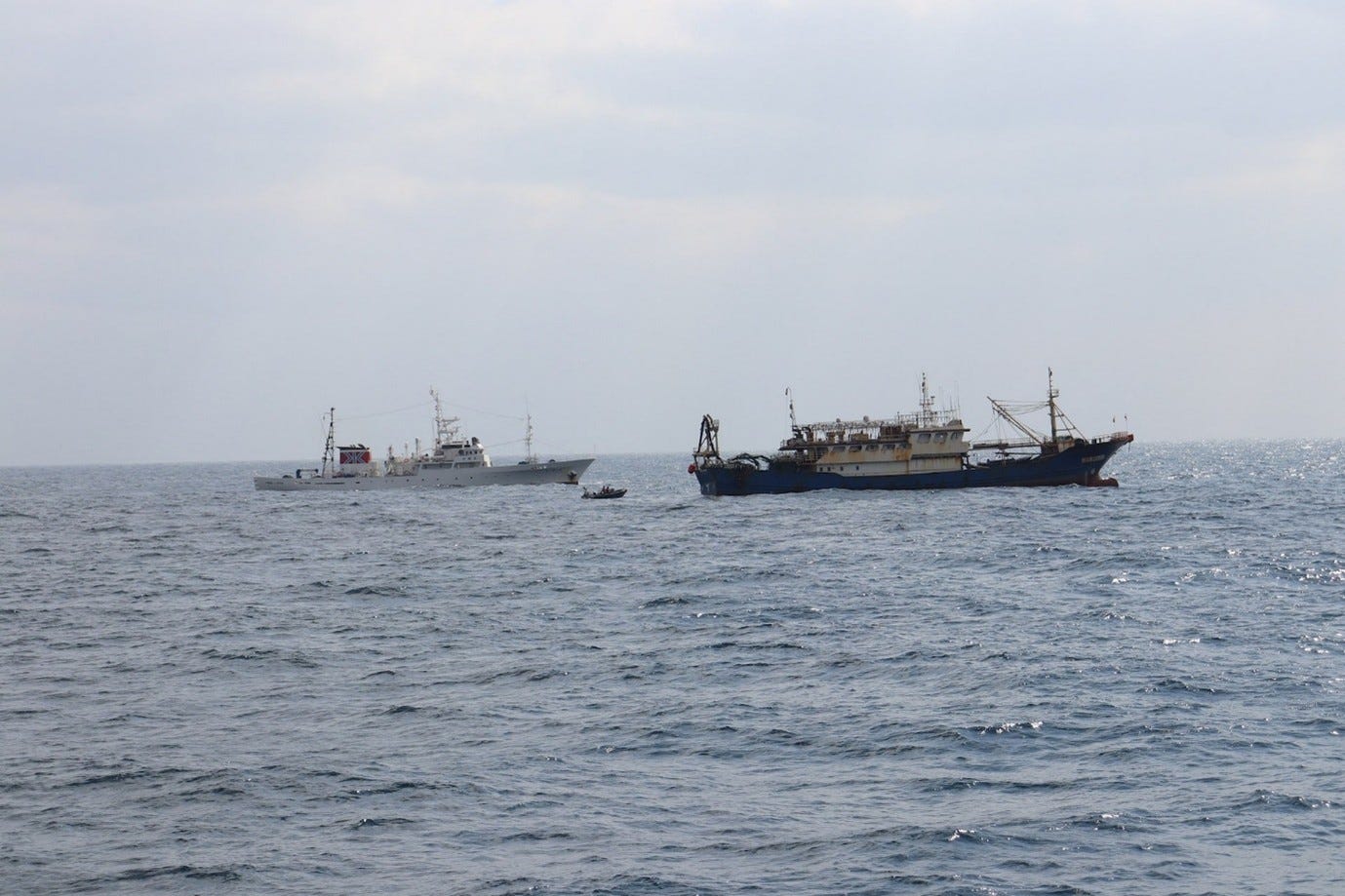
On 12 February Japan’s fisheries agency seized a Chinese fishing boat at sea and arrested its captain, citing his refusal to comply with an order to stop for inspection. That’s the first fishing boat seizure of the year, and the first time a Chinese boat’s been seized since 2022. Despite elevated Beijing-Tokyo tensions—they even sent the pandas back last month—China’s foreign ministry had a low-key response. They made a measured statement calling on Japan to ensure the safety of the crew, then quietly paid the captain’s bail the next day.
The focus of Chinese maritime pressure activities against Japan has long been the Senkaku Islands—uninhabited, administered by Japan, subject to a three-way dispute with China and Taiwan. When in 2010 Japan seized a fishing boat near the Senkakus and detained its skipper, Beijing responded with sustained diplomatic pressure and a (at that time unprecedented) curb on rare-earth exports. While it’s arguable that the muted response to this latest incident reflects Beijing’s effort to ‘climb down the escalation tree’ through minor cooperative efforts now that Takaichi has a secure mandate, the simpler explanation might just be that they view the Home Islands’ EEZ as one thing and the Senkakus as another. On 14 February, the China Coast Guard sailed four ships through what Japan considers its territorial waters at the Senkakus—that’s the second time this year. They spent about two hours inside before Japan’s Coast Guard herded them out.
Takes two to tango
On 6 February, the UN Security Council’s North Korea Sanctions Committee—you’ll never guess what it does—approved exemptions to the Resolution 1718 sanctions regime for seventeen humanitarian assistance projects. This is a general prerequisite to aid going into North Korea, and these programs are nothing special in that regard: healthcare, water, sanitation improvements, classic UNICEF fare. They’d been held up in the Committee since early 2025, largely thanks to the United States refusing to let them pass; South Korea’s Foreign Minister Cho Hyun, who was in the US in early February, seems to have talked the administration around. It’s hard to tell if the White House sees this as a preamble to re-engaging Pyongyang. There was a period back in the first Trump administration when the odd couple of a right-wing White House and left-wing Blue House, same as today, seemed to be making real progress on denuclearisation talks. Those talks broke down, and since then the North has done its best to look aggressively uninterested in dialogue—or indeed in foreign aid. UN staff haven’t been allowed to enter the country since early 2021, so even once the diplomats approve a sanctions exception, the UN’s ability to deliver the aid is severely constrained.
For more on these topics, we suggest:
FOIP 4.0? Continuity or Evolution under PM Takaichi (Pacific Forum, 2025)—How might Tokyo take FOIP to the next level?
Japan’s Strategy of “Proactive Restraint” in Defending the Senkaku Islands (Sasakawa Peace Foundation, 2025)—How does Japan seek to manage Chinese pressure in the Senkakus?
The 2026 Window: Can the “Ember” of US-North Korea Diplomacy Still Catch Fire? (38 North, 2026)—Is dialogue with Pyongyang still on the table?
Southeast Asia
Watch your step
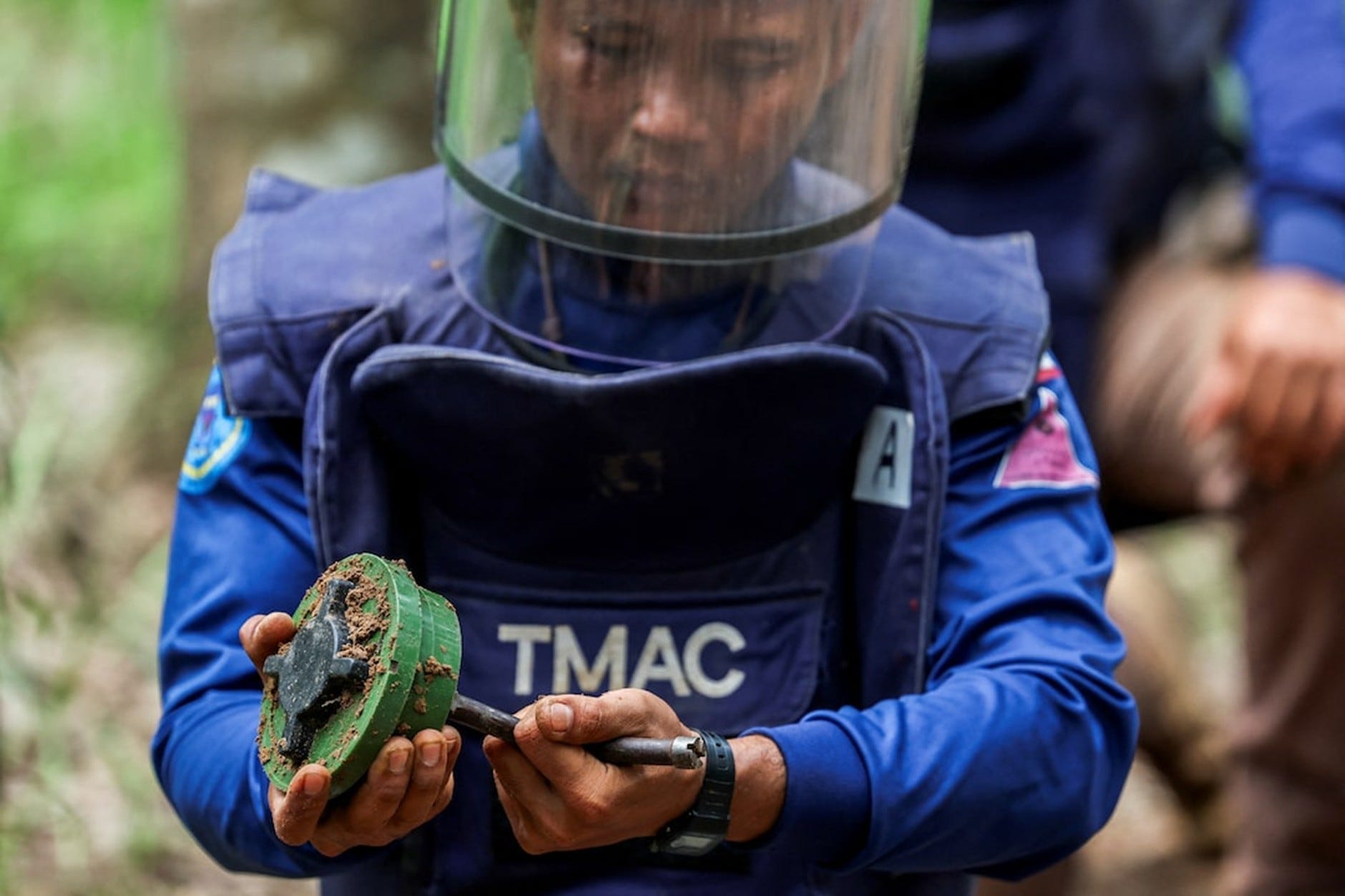
On 11 February, three Thai soldiers were injured by a landmine explosion in Sisaket Province—that’s in Thailand’s far east, on the Cambodian border. If this story sounds eerily familiar, it should. Last July’s military clashes between Thailand and Cambodia, which saw tens of soldiers killed and hundreds of thousands of civilians displaced, were sparked by a very similar incident. Implementation of the ceasefire and peace deal brokered that October (this is one of the numerous wars Donald Trump claims to have stopped, by the way) was paused in mid-November after yet another case of Thai soldiers falling victim to landmines in the border region. Cross-border skirmishes restarted in early December, and it wasn’t until nearly the end of the year that the two parties brokered another ceasefire. In fact, there were more landmine incidents than this throughout 2025—at least five in August alone according to Thailand’s foreign minister.
Cambodia’s northwestern provinces (which border Thailand) are some of the most landmine-contaminated places on Earth—the legacy of bygone decades of armed conflict—and every year about forty Cambodians are killed or injured by them. The government in Bangkok, however, insists the mines wounding its soldiers are freshly-laid. That government—the conservative Bhumjaithai Party—was returned to power in the general election on 8 February on the back of strong nationalist messaging and a tough stance on the border conflict. (A partial border wall with Cambodia was a major election promise.) While at the time of writing the December ceasefire appears to hold, if recent history’s any guide the fighting could restart with little warning, and escalate quickly.
Finding a long-term solution to Thailand-Cambodia is ASEAN’s biggest problem at the moment—aside from the junta in Myanmar, which is more of a chronic problem—and it’ll probably consume a lot of diplomatic oxygen this year. Quite aside from the humanitarian crisis we’d see if fighting restarts, there’s other important work ASEAN wants to get done and a limited amount of senior-level calendar time. Most importantly: the Philippines (chairing ASEAN this year) has expressed a strong desire to conclude the South China Sea Code of Conduct in 2026. On 6 February their foreign ministry announced that ASEAN and China will quicken the tempo of working group meetings, from quarterly to monthly. A higher tempo is welcome; the intent for some kind of agreed set of rules to keep a lid on the many and varied territorial disputes in the SCS is 34 years old, and the job of realising it has frustrated generations of diplomats. (Not least because the parties involved have changed the facts on the ground in the interim, often literally through land reclamation.) The current process has been wrangling a draft produced in 2018 ever since, with some success, but the core issues—notably the precise geographical scope of the Code, whether it’s to be legally binding or not (China prefers not), and how it’s to be enforced—are still unresolved, and the Philippines’ own strained relations with China at present add another complication. With this much on ASEAN’s plate already, there’s reason to be pessimistic about the schedule.
For more on these topics, we suggest:
Thailand-Cambodia conflict: legacy politics and premeditated escalation (ASPI, 2025)—Last July’s Thai-Khmer border clash had a lengthy prelude. How did it happen?
The Elusive Code: Why ASEAN Needs a New Playbook for the South China Sea (ISEAS, 2025)—Why’s it so hard to agree on a Code of Conduct? What are ASEAN’s options here?
Oceania
I’m not your Palau, buddy
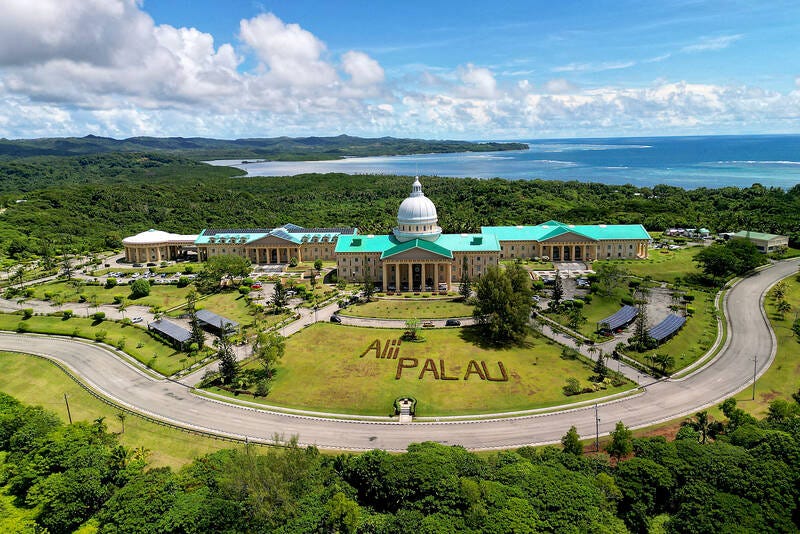
Hokkons Baules, President of Palau’s Senate, was banned from entering the United States on 10 February on the grounds of alleged ‘involvement in significant corruption on behalf of China-based actors.’ Big if true—a State Department press release isn’t an indictment, and no criminal charges have yet been laid against Baules in Palau—but if it is true he wouldn’t be the only Palauan elite in that position. Chinese organised crime has made plays in Palau in the recent past, almost certainly with Beijing’s tacit consent if not approval. Hundreds of PRC nationals were arrested and deported at the beginning of 2020 for running an illegal online casino out of Koror, Palau’s largest city. These and related schemes have been tied to members of the Chinese expatriate community on the island, as well as to state governors and two former presidents. In countries like Palau, where the Compact of Free Association with the United States puts Solomon Islands-style partnerships off the table (not to mention that they’re one of the few remaining states that officially recognise Taiwan) you tend to see the less photogenic side of Chinese influence in the Pacific. Think less infrastructure projects, more triad gangsters, shady businessmen, and crypto scams. Criminal ventures—like the ‘pig-butchering’ scam operations increasingly familiar to Palauan police—often need local facilitators to grease the wheels, and corrupt officials can in turn ease the way for further inroads. Palau is set to host significant US military infrastructure, notably a large-scale over-the-horizon radar for the US Air Force under construction on the main island, and proposed materiel pre-positioning sites for the Marine Corps. A distinct pattern of land near those facilities being long-term leased by Chinese businesspeople is now visible. Whether or not Baules is connected, he’s certainly been an advocate of friendlier relations with Beijing, and the Senate under his tenure has passed several resolutions critical of the deepening US military footprint on the island.
No, the other grey zone
The Financial Action Task Force (FATF)—a G7 initiative set up to combat international money laundering back in the late 1980s—maintains a ‘grey list’ of countries that are working to address serious deficiencies in their ability to stop illegal money (including terrorist financing) flowing through their institutions. Last Friday, Papua New Guinea got put on the grey list. That’s no life sentence—PNG’s been grey-listed before, 2014 to 2016—but getting off the list might be trickier this time. FATF now pay more attention to enforcement, and while PNG’s legal framework to combat money laundering has improved, enforcement is under-resourced and under-delivering. That PNG’s perceived level of public corruption has worsened in recent years—it’s viewed as the most corrupt state in the entire region—doesn’t help. Since PNG’s near-term growth is largely pinned to foreign-funded megaprojects, prominently in LNG and gold mining, grey-listing’s tendency to make foreign capital skittish could be a serious problem—though we needn’t over-egg it. Most punters saw this coming after the 2024 Mutual Evaluation Report, notwithstanding the Bank of PNG’s best efforts, and the upbeat tone of Westpac’s latest monthly outlook suggests investors have already priced in the risk. It’s a pointed reminder for Australia that, while PNG makes for a relationship worth investing in, it’s going to take a lot more investment to get Port Moresby where it wants to go.
For more on these topics, we suggest:
Will PNG be on the anti-money laundering grey list? (DevPolicy Blog, 2025)—Turns out, yes. But what’s the significance of it?
Politics at Play: Geopolitics and Organized Crime in the Pacific (Global Initiative against Transnational Organized Crime, 2024)—How does organised crime tie in with foreign policy in the Pacific islands? Part of a series.
Palau deports Chinese criminals, reinforces Indo-Pacific security (FDD, 2025)—What’s at stake in the contest over Palau?
That’s all for this fortnight. For more timely analysis and commentary, check out The Strategist and ASPI’s Stop the World podcast—or our other Substack newsletters:

Thanks for reading! This post is public, so feel free to share it.
Comments
Nothing yet. Say the first thing.
Sign in to join the conversation.