
The Enhanced Defense Cooperation Agreement (EDCA), ratified to strengthen the defensive capabilities of the Philippines and modernize the Armed Forces of the Philippines (AFP), was presented to the nation as a partnership for mutual defense and humanitarian readiness. However, in light of the escalating and volatile tensions between the United States and Iran, the ambiguity of EDCA’s text has transformed from a diplomatic technicality into a critical national security concern. The AFP must clarify to the Filipino people a singular, urgent question: 𝑨𝒓𝒆 𝑬𝑫𝑪𝑨 𝒔𝒊𝒕𝒆𝒔 𝒃𝒆𝒊𝒏𝒈 𝒖𝒔𝒆𝒅 𝒃𝒚 𝒕𝒉𝒆 𝑼𝒏𝒊𝒕𝒆𝒅 𝑺𝒕𝒂𝒕𝒆𝒔 𝒊𝒏 𝒊𝒕𝒔 𝒘𝒂𝒓 𝒘𝒊𝒕𝒉 𝑰𝒓𝒂𝒏?
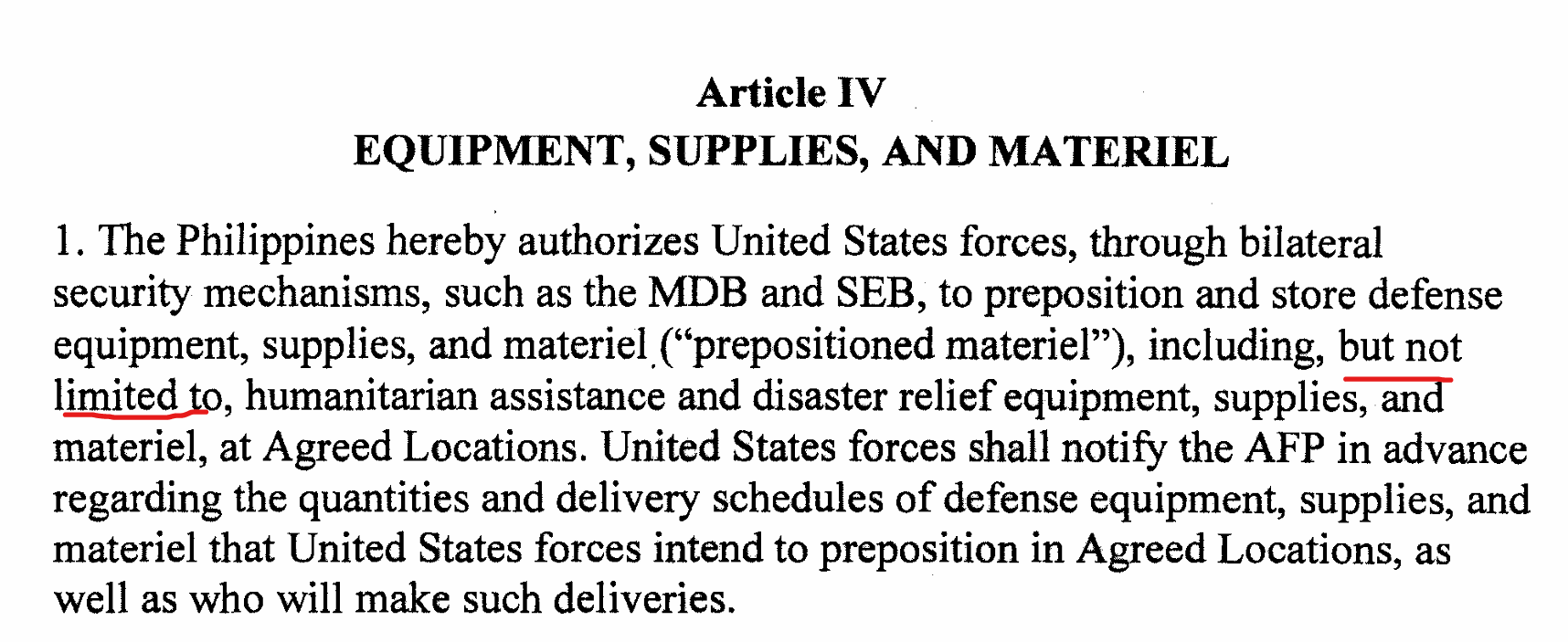
The answer to this question lies buried in the legal nuances of Article IV of the agreement. This provision grants the United States military the authority to “preposition and store defense equipment, supplies, and materiel... including, but not limited to, humanitarian assistance and disaster relief equipment” at designated Agreed Locations in the Philippines.
At first glance, this language appears benign, focusing on readiness for calamities and territorial defense. Yet, the phrase “but not limited to” functions as a legal wildcard. It is a blanket term that severs the text from the specific, public-facing promise of humanitarianism. By omitting any restriction on the type of materiel that can be stored, Article IV theoretically permits the stockpiling of offensive weaponry, combat aircraft munitions, drone technology, and intelligence infrastructure. The agreement binds the location of the equipment, but the “blanket term” liberates the nature of the equipment from legal constraint.
If the United States is utilizing these prepositioned assets in its campaign against Iran—whether by drawing down munitions stored in the Philippines, using Philippine bases for refueling operations, or staging surveillance flights from our territory—then the Philippines is no longer a passive host but an active participant in the logistics of a foreign war. While EDCA ostensibly governs “storage,” the line between a depot and a launching pad is perilously thin. When a warplane lands to refuel, it is not “storing” the fuel; it is consuming it for a combat mission. When a ship resupplies with “prepositioned” missiles before heading to the Strait of Hormuz, the Philippine base functions as a direct node in the American war machine.
This distinction is not merely semantic; it is a matter of survival. By allowing our territory to be used as a logistical hub for operations against Iran, the Philippines risks being drawn into a conflict with which it has no bilateral quarrel. This compromises our avowed policy of an independent foreign policy and, more dangerously, paints a target on Filipino lives. If retaliation of Iran and its allies extend to assets and facilities supporting U.S. operations, EDCA sites—and the Filipino communities surrounding them—could face consequences for a war the Filipino people never consented to.
For the AFP to remain silent on the operational status of these bases is to abdicate its duty to the sovereign Filipino people. The AFP must issue a definitive statement. Are U.S. forces operating out of EDCA sites in support of operations against Iran? Are prepositioned assets being utilized for that conflict? The Filipino people deserve to know if their land is being used to fuel a war they did not choose, before the silence of our government is a de facto declaration of involvement.
If you find value in what this blog does, please consider tipping via GCash - 09288956324 Buy me a Coffee: https://www.buymeacoffee.com/srsasot
Comments
Nothing yet. Say the first thing.
Sign in to join the conversation.