
But first: a sincere, teary-eyed thank you for the overwhelming kindness on my last post, which I never in a million years wanted to write. I have not had the emotional capacity to respond to comments or emails, but I have read every single one. Your compassion has been a light, and a buoy. Thank you. ❤️
While I don’t feel any pressure to re-enter this space consistently, I actually wrote this post two weeks before The Phone Call, so I’m letting it fly for now. Thank you—as always—for supporting my work, both in my presence and in my absence.
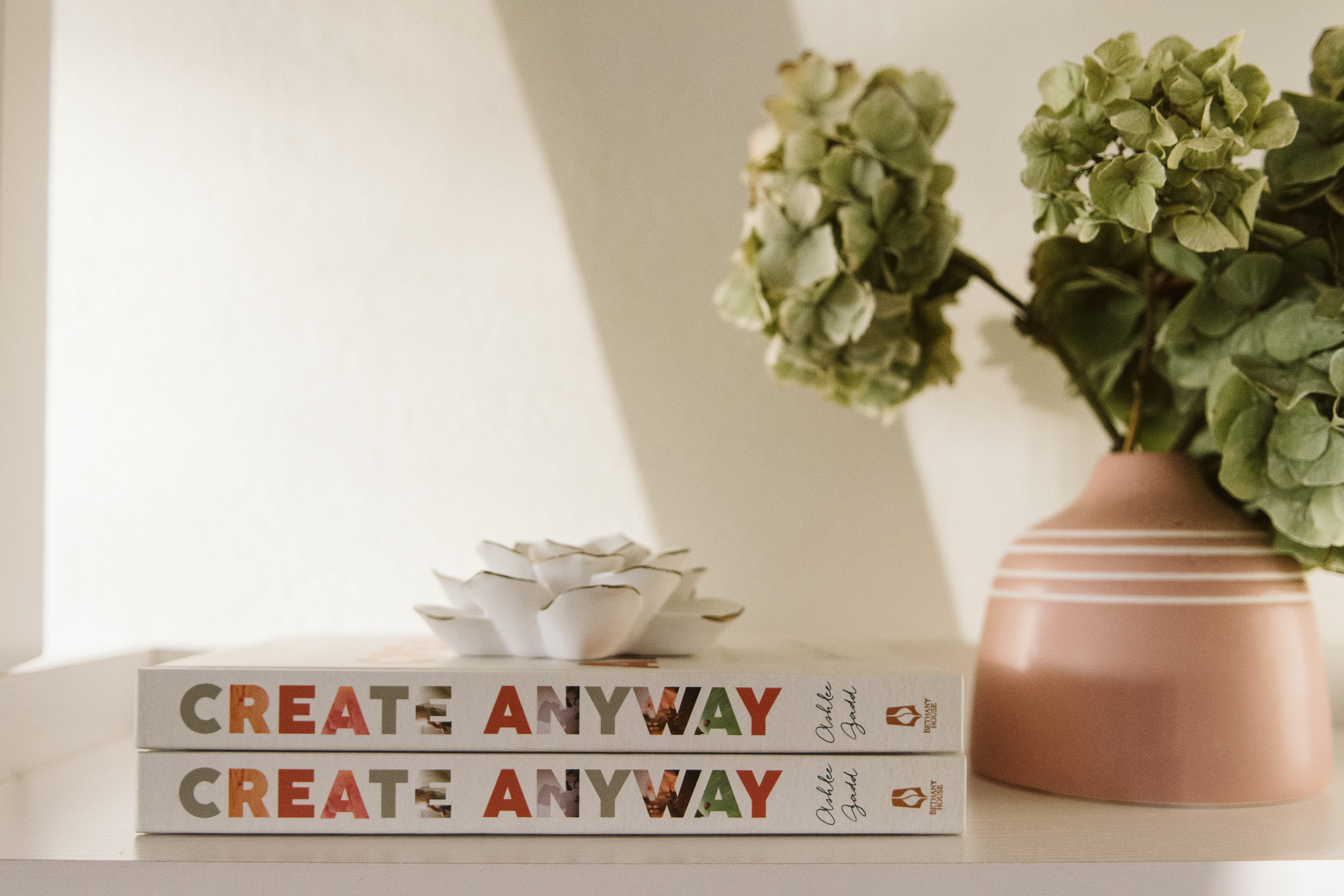
When my son’s 8th grade English teacher asks me to come speak to a handful of promising writers, I do not hesitate to say yes, even though I cannot fathom a more terrifying audience than a bunch of middle-schoolers. Embarrassingly, I spend far more time thinking about what I’m going to wear than what I’m going to say.
I arrive on campus in a green gingham midi dress and gold ballet flats, secretly wondering if the teenage grade girls will approve of my hair and makeup. When I find Mrs. Cooper’s classroom, I almost do a jump scare at my own face staring back at me on a big white screen. Caption: Ashlee Gadd, Author Talk.
“Sorry, I grabbed a few photos of you off Google, hope that’s okay,” the teacher smiles. I nod, even though one of the photos is terribly unflattering.
The kids shuffle in, one by one, plopping down in chairs and tossing their backpacks to the floor. Mrs. Cooper points at a basket of chips, inviting them to partake. I assume she paid for those out of pocket, and feel a fondness for her as the kids hurl themselves toward free Doritos. They are all here of their own accord, having given up their precious lunch break to listen to me talk about writing. I tuck a piece of hair behind my ear and regret not preparing an opening joke.
“Alright, let’s get started,” she says, “I’m going to introduce Mrs. Gadd and kick us off with a few questions. Then I’ll open it up to all of you.”
She throws me a softball. Have you always wanted to be a writer?
I nod and begin rambling about a childhood filled with Judy Blume books and personal diaries. I tell them about the first real story I ever wrote, and how I won the school’s Young Author Award in third grade.
When the kids begin asking questions, I shift in my seat a bit. I’m not sure what I expected. Questions about craft? Writing habits? Where I find inspiration? But that’s not where the conversation goes. Their most pressing questions have little to do with writing itself and more to do with publishing. They want to know how I got a book deal, how the industry works, how to land a literary agent.
A boy in the back wearing a grey hoodie raises his hand.
I point at him and nod, inviting him to speak.
“Umm, can I ask, how many books have you sold?”
I swallow. Pause. Hear the answer echo in my head.
Not enough.
Not enough.
Not enough.
///
I receive royalty statements twice a year for Create Anyway, which means each report accounts for a 6-month period. I typically glance at the document, file it away in a folder, and don’t think about it again until the next one arrives.
The report I got this past December, though, hit differently.
17 books sold.
24 books returned.
My net sales for that 6-month window? Negative seven.
Bless my heart, I thought I was looking at a typo. Some kind of glitch in the Amazon matrix. I knew my book hadn’t sold as well as the publisher had hoped. But negative seven books? In a six-month period? You don’t have to know anything about publishing or even be good at math to know those numbers are embarrassing.
I emailed my literary agent to confirm I had read the report correctly. She seemed a bit perplexed, but gently informed me that yes, my eyeballs had not deceived me.
“Would you like me to reach out to the publisher to see if they can offer any additional insight?” she offered.
I typed back, “Yes, please.”
The email came back with the following updates:
Amazon stopped ordering the book.
“There has been little movement on this title. Sorry, I know that’s not what Ashlee wants to hear.”
///
Questions I ask myself at 3am:
Should we have chosen a different title?
A different subtitle?
A different cover?
Should I have sold my soul to Instagram reels?
Started a TikTok?
Sent more emails?
What more could I have done?
(Am I just a terrible writer?)
///
The 8th grade kids keep asking questions, and I hardly know how to answer them. I am the alleged expert in the room, the capital A Author, the lady whose headshots are still floating on the big white screen.
I do not know how to tell these precious children that I know many (so, so many!) beautiful, dedicated, breathtaking writers who will—more than likely—never get a traditional book contract because they do not have impressive social media followings or humongous email lists. I do not know how to tell these kids that even if you beat the odds, even if you are One Of The Lucky Ones to get a contract, even if you pour all of your heart and all of your soul into a manuscript and do everything you’re supposed to do—go on 48 podcasts and write original pieces for other publications and publish well-crafted Substack essays and create pre-order incentives and host your own book launch team and send handwritten notes in the influencer boxes and beg everyone you know to buy the book and review the book and please please please tell everyone you know about the book—that you can still receive a royalty report that is, objectively, abysmal. I do not know how to tell these children about The Mountain of Expectations, the soul-sucking grind of Building A Platform, the pressure to sell, sell, sell, sell, sell until your head explodes.
I do not know how to tell them about the underbelly, so instead I simply say, in the most professional voice I can muster: “At the end of the day, you should know that publishing is a business.”
///
I should probably be jaded at this point, but I’m not. I can’t be. Because books have saved me, over and over again. What kind of writer would I even be without Anne Lamott? Amy Krause Rosenthal? Harrison Scott Key? Do you know how hard I laughed reading The Road To Tender Hearts? Or that I finished Wild Dark Shore with tears streaming down my face?
Every single day, books are being published all over the world. Every single day, people are reading stories and falling in love with stories and being transformed by stories.
Underbelly or not, I still believe that is something of a miracle.
///
The desire hits me like a pregnancy craving.
I want to go back to school.
I’ve felt this longing before, but never quite this acutely. My dream program just launched: a low-residency writer’s workshop that combines rigorous literary craft with deep spiritual formation.
I’ve toyed with pursuing an MFA in the past, but never for the right reasons. Once upon a time, I believed my debilitating self-doubt could be cured by simply adding a string of pretty little letters next to my name. M. F. A. Look at her, she’s a real writer now!
Today, I know better. Today, I am very comfortable calling myself a real writer. (A real writer with shitty book sales, but a real writer nonetheless.)
I’m no longer looking for a magic pill. It’s more of an ache. A longing. A true, authentic desire to become a better reader and a better writer. Not for accolades or the alleged prestige of dumb little letters next to my name. Not even for future publishing opportunities. It’s bigger than that. It’s more significant than that. When I went to college the first time around, I treated the entire experience like a line item on my Becoming An Adult to-do list. Graduate high school: check. Go to college: check. Get a full-time job: check. I jumped from lily pad to lily pad and never even bothered to enjoy a dip in the pond.
I did not relish or cherish my college experience. At all. And now, here I am, all these years later, desperately wishing for a do-over of sorts. AI is taking over the world and I have no idea what I’m doing with my one wild and precious life, and perhaps this is just another privileged Millennial existential crisis, but I’ve never been more unabashedly convinced that I want to write for the rest of my days.
I can already hear the pushback. I know, I know. I don’t need an MFA to write for the rest of my days. This is great news, actually, because I can’t afford one anyway.
Nevertheless. The longing is there, beating like a drum. I want this, I want this, I want this. I want to go back to school. I want to make the terrifying leap from nonfiction to fiction. I want to stop writing about my own life. I want to invent a world, a kingdom, a story that readers cannot put down. I want to write (am I seriously saying this out loud?!) … a novel.
After spending more than two hours researching the specific program I can’t stop thinking about, I fall asleep begging God for a sign. A word. An answer.
(A scholarship?)
I do not wake up to any of those things.
If anything, I wake up to the exact opposite: an email from my publisher kindly informing me that my book is going out of print.
///
“Why do books go out of print?” I ask Google.
Answer: low sales no longer justify the cost of printing, storing, and warehousing them. When a book stops selling consistently, publishers clear out excess inventory and cease producing new copies to cut financial losses.
My own words come back around like a boomerang.
At the end of the day, publishing is a business.
///
I do not cry right away.
I cry exactly three days later, and once I start, I can’t seem to stop.
What a lot of people don’t know about the publishing industry is that it’s mostly just a gamble. People—nice, kind people—roll the dice every day. It’s someone’s literal job to read slush piles of proposals and manuscripts that hopeful writers have spent anywhere from months to years writing. In the nonfiction world, as I understand it, they’re looking for the trifecta: a good concept + a good writer + a good platform.
(I wonder all the time if one, or two, or all three didn’t hold true for me.)
I can’t help but think of all my books sitting in a warehouse collecting cobwebs right now. I can’t help but think of the two (or was it three?) years of my life I poured into those pages, how hard I worked, how much I loved crafting every line.
And I can’t help but think of those poor, poor people—the nice, kind people—who pushed all their chips to the center of the table and said, “Her.”
They thought they had a real winner on their hands.
What else is there to say?
Sometimes even the kind people at the top bet on the wrong horse.
///
Despite my book not finding commercial success, my inbox tells a different story:
A woman named Katie started writing songs again. One song turned into ten, and this fall, she’s releasing her first full-length album.
A woman named Lisbeth—who dreamed of becoming a paleontologist as a child—booked herself a spot on a real dinosaur dig, a “coming back to herself” sort of thing.
A woman named Marianne, pregnant after a loss, taught herself how to crochet because she realized that having a creative, tactile activity could help her pray through her fear and anxiety.
My editor tells me, “Not every meaningful book finds a long commercial runway, but that does not diminish its impact or beauty.”
When I look at the emails, the Instagram DMs, the few reviews I actually allowed myself to read, I have no choice but to believe her. Despite the pathetic royalty reports, and despite it going out of print, I refuse to call my book a failure. Create Anyway may not have resonated with the masses, but it resonated deeply, profoundly, and meaningfully with a few.
At the end of the day, I still believe every word I wrote in chapter 16. I still believe in mission over metrics.
///
What I didn’t tell the 8th grade students, but wish I had:
Publishing can (and probably will) break your heart.
Writing can (and definitely will) put it back together.
///
On a warm Tuesday night, Presley and I venture out for a “girl walk” after dinner. The sky is pink and orange and I’ve got a film camera slung around my neck. She skips next to me with her own camera tucked in the pocket of her overalls. Every few minutes, she runs up to a stranger and asks if she can pet their dog.
“Mom, I have such a good idea!” she tells me, after caressing a golden retriever named Maggie.
“What if I wrote a graphic novel called The Dogsitters Club, about a bunch of dogsitters? And it will be, like, you know, about their adventures in dogsitting? Oh! And Mom! One of the characters will be named Presley! And one of them will be named Ashlee! What do you think, mom? Should I write it?”
She looks at me expectantly.
This time, I do not think of the underbelly, the risks, the heartbreak. There is only one answer to this question. I stare back into her bright blue eyes and say with all of the confidence in the world, “Yes, babe, of course you should.”
A triumphant smile stretches across her face. She squeezes my hand.
I squeeze back and add, “Nobody’s gonna write that book quite like you.”
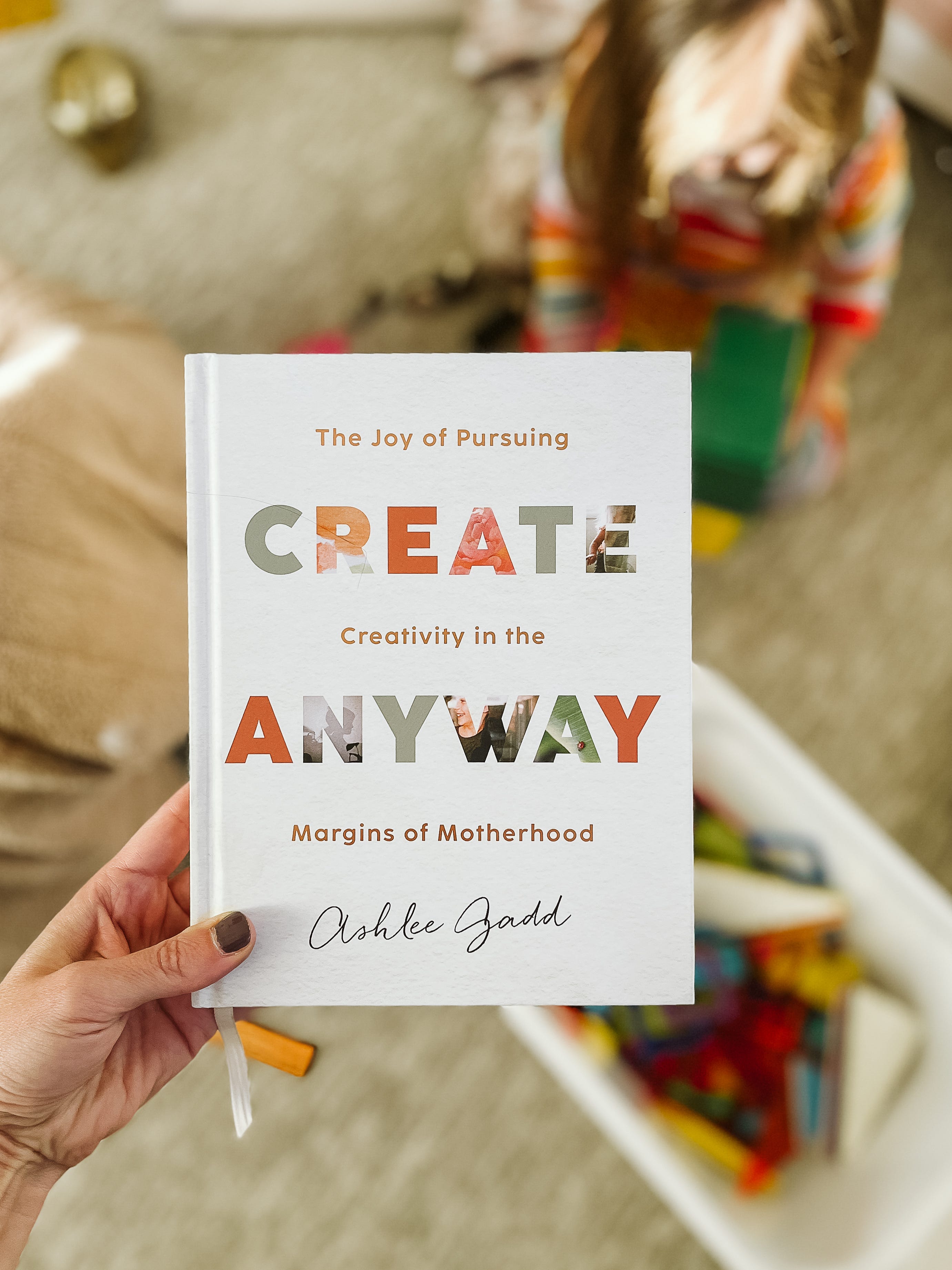
“You can fall short of the world’s standards for success while simultaneously reaping a kingdom harvest. One holds you captive; one sets you free.” - Create Anyway, page 207
Friends, please know: this is not a pity post, a rallying cry, a plea for compliments, or some other weird manipulative sales tactic. This is simply the truth—and my reaction to it. If you’d like to own a copy of Create Anyway, this is a really good time to grab one. In the near future, you will only be able to get this book at the library, or perhaps randomly stumble across it on eBay or your local thrift store.
To everyone who has already bought it, read it, reviewed it, and/or told your friends about it, “thank you” will never be enough. I am fully, wholly, deep-in-my-bones grateful.
Comments
Nothing yet. Say the first thing.
Sign in to join the conversation.