
The Boys has finally come to an end, and what an end it wasn’t. As the final season unfolded, I found myself sort of grimly fascinated, as if I were watching an acquaintance (I wouldn’t say friend) undergo some kind of disastrous elective surgery.
To give a rough sense of my relationship with The Boys, I would class it as a kind of guilty pleasure. With its Amazon label, an Israeli war criminal in a key role, and its never ending deluge of gross-outs, its vibes have always been sour. I would not necessarily encourage anyone to watch it, except for scientific purposes, and if you can avoid giving Bezos money, you should.
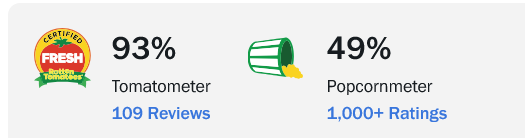
Still, The Boys had its good points as a drama, and as a satire it was often funny and true to life. Some would argue that the show’s quality has long been on the decline, though I have to admit that this did not become obvious to me until the final season, which paid critics are insisting is good, while the viewer response is lukewarm at best.
I also found Season 5’s politics more unsatisfactory than usual. We’ll get further into that, but at the top, I will say that this show has lately started putting phrases like ‘chosen people’ and ‘promised land’ into the mouths of Christian nationalists, meanwhile the word Israel remains the only word too dirty for The Boys to say, not even once.
Given the topical nature of the show, and what has dominated the news for the two years of production, the omission is frankly weird, or would be if we didn’t know where Amazon stands (that is, behind the machine-guns), and if the casting hadn’t already provided a substantial hint about its creators’ sympathies.
Wasted time and unmet expectations
One of the most anaemic aspects of the final season was its plot, which ranges from distractingly weak to actually moronic. Of course, you can find plot holes in any number of great works, but, if the story is good enough, we’re usually content to gloss over them, if we notice them at all.
However, I found myself noticing a great deal, which as a rule of thumb is usually a sign that the character drama is no longer good enough to compensate. Most importantly, the show fails to meet any of the expectations set up in the previous seasons, and wastes much time spinning its wheels with B-plots that go nowhere, at the cost of urgency and momentum.
The season begins with three of the Boys rescued from a not-MAGA internment camp. This is resolved in literally one episode, with sharp tonal whiplash from the far more impactful cliffhanger ending of Season 4, which forecast an end to the status quo and a raising of the stakes. The clear sense was that full-blown fascism had definitively arrived, and all signs were pointing to a sober, meaningful imprisonment storyline.1 Instead, we got about three prison scenes, followed by a swift escape. The rescued three show no signs of any long-term trauma after their year as political prisoners. The few references to their suffering are played for laughs (‘haha forcible cavity searches are so funny’2), and by Episode 2 it’s all business as usual again.
The virus plotline is distractingly dumb. So, this deadly anti-superhero virus that they spent much of Season 4, and two seasons of a spinoff, hyping up is destroyed by its creator, and then remade by Frenchie from scratch in the span of two episodes. Frenchie’s only relevant experience is cooking meth. It’s like Oppenheimer destroying all of his notes and a high school physics teacher splitting the atom the next morning. As soon as it’s completed, it becomes obsolete when Homelander takes V1. It eventually sort of comes to something, as the virus debate pushes Butcher and Hughie into their long-forecasted confrontation, which in no way diminishes the stupidity of having Frenchie re-create it overnight.
V1, the substance that makes supes immortal, is the only possible defence against the virus. It strangely becomes a major B-plot, spanning multiple episodes, for friendly supe characters (Kimiko and Starlight) to verbally agonise over whether or not they want to be immortal, when they haven’t even secured the V1 yet, don’t know if it’s safe to use, and are wasting precious time by delaying the use of the virus. As soon as the V1 is found, it becomes a moot point, as it’s promptly used by Homelander. So, what was any of this in aid of? I suppose you could argue that it’s about showing the difference between the good guys and Homelander, but is that news to anyone? A less charitable reading would explain it as filler to pad out the season’s sparse mid-section.
The possibility of simply quarantining the friendly supes on an island is briefly mentioned by Frenchie, then dropped, though we’ve seen that the virus can’t escape a sealed environment and normal people aren’t carriers.3 This adds to the absurdity of the V1 debate.
When Homelander shows up at the Boys’ base to look for Sage, he just kind of kills Frenchie and leaves empty-handed, instead of continuing to look for Sage or waiting for the others to return, as he could have done.
The buildup to the final confrontation is very thin. The only barrier to the Boys’ entry to the White House is one locked door (which they somehow hadn’t anticipated), and a room where people fire bullets at them, though three out of five are immune to bullets. Is this really final episode material? Did they spend literally all of the effects budget on the volcano jizz man?
The Soldier Boy chest blast power (tm) is A) a total ass-pull of a solution to the Homelander problem, and B) not what it used to be. Once billed as equivalent to a small nuclear blast, now it just knocks you over if you happen to be standing within six feet of it.

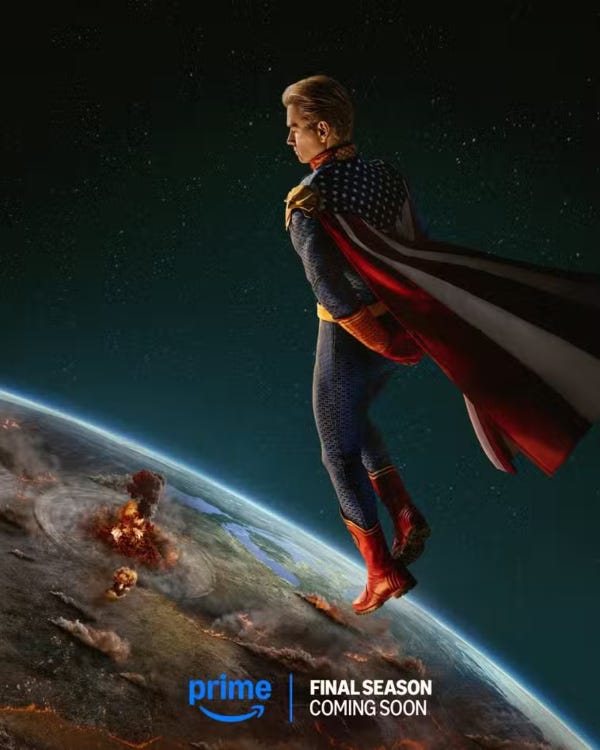
The Boys writers doing their damnedest to make sure nothing explodes in their finale. The confrontation with Homelander leaves much to be desired. The inevitability of this character snapping and killing millions of people was hyped up for four entire seasons, promised by 5’s promotional art,4 hyped up even harder by his V1 transformation and new delusional disorder, only for the final fight to be the most standard, low-budget, no-frills Boys fight ever. It’s literally just four people punching each other in a room. No cities destroyed, no nukes deployed, nothing. Even Vought Tower remains conspicuously unscathed.5 While Homelander’s humiliating de-powering was anticipated, viewers had every reason to expect more payoff from the final episode of the final season of a show built on violence and suspense.

Soldier Boy did not need to be in this season, and provided nothing of value. He came, he hung around and bickered, he got put back on ice. It bothers me that his status as a nepo-baby fraudster (arguably the most interesting thing about him) remains a footnote, while the body of the article is largely just dick jokes. Also, he does not need a spinoff, and nor does Stormfront.


Re-heated leftovers
What also became obvious in the final season was that many of the show’s main characters had long since been milked for every last drop of drama and development. They don’t sparkle as they used to, so much as wheeze to the finish line with the enthusiasm of the average Amazon employee at the end of a twelve hour shift.
Hughie’s post-prison angst manifests in the form of a very small amount of relationship tension with Starlight, which quickly dissipates. This feels like a rehash of his previous jealousy when she had to work with her ex, which was kind of better: it introduced a touch of grit and complexity to an otherwise annoyingly straight-laced, unproblematic character. Apart from that, and his rising tension with Butcher (which mostly just boils down to ‘Butcher is a prick’), there isn’t much new with Hughie.
Kimiko now talks, and I wish she didn’t. She used to speak only in sign language, now she speaks largely in porn references, and has become an old person’s degrading caricature of a young person. One wonders if this was really what the writers had in mind when they conceived of the moment at the end of Season 4 when she breaks her silence for the first time. Also, she and Frenchie are now fucking, which is weird, because I could have sworn they discussed this before and decided against it, with her describing him as ‘like a brother.’ If I were to give a hot take, I would say that they are ‘normalising’ the character - she must be magically cured of her disability,6 and must engage in compulsory heterosexuality, to be considered an acceptable human being.
Frenchie is still a war criminal. He’s also somehow even more unbearably sentimental than ever before, and his death is the most heavily telegraphed, drawn-out, and uninvolving thing I’ve seen in a long time. To paraphrase the old quote about Dickens, one must have a heart of stone to watch the death of Frenchie without laughing. His post-death ‘power of love’ monologue is beyond self-parody, and the fact that it comes from such an odious actor adds a layer of irony and tone-deafness that makes it extra special. Great TV moment, no notes.
Following Butcher’s example, MM briefly becomes a prick, but then decides to stop being a prick. His story lacks closure, as his multi-generational quest for justice against Vought and Soldier Boy remains unfulfilled, so his happy final scene rings hollow. They should have let him bludgeon Stan Edgar or something.
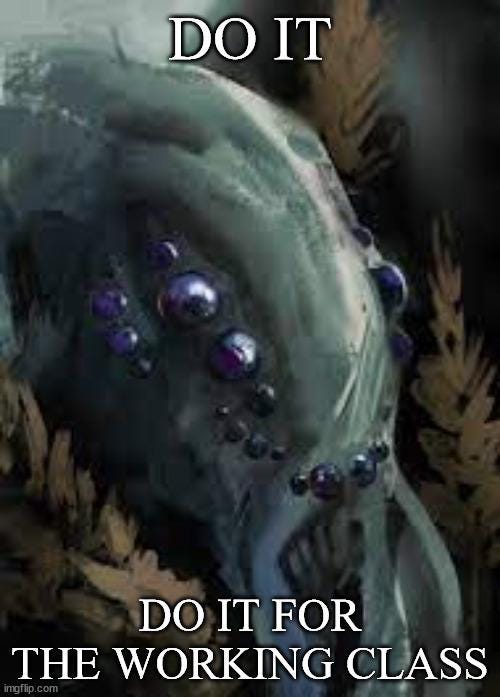
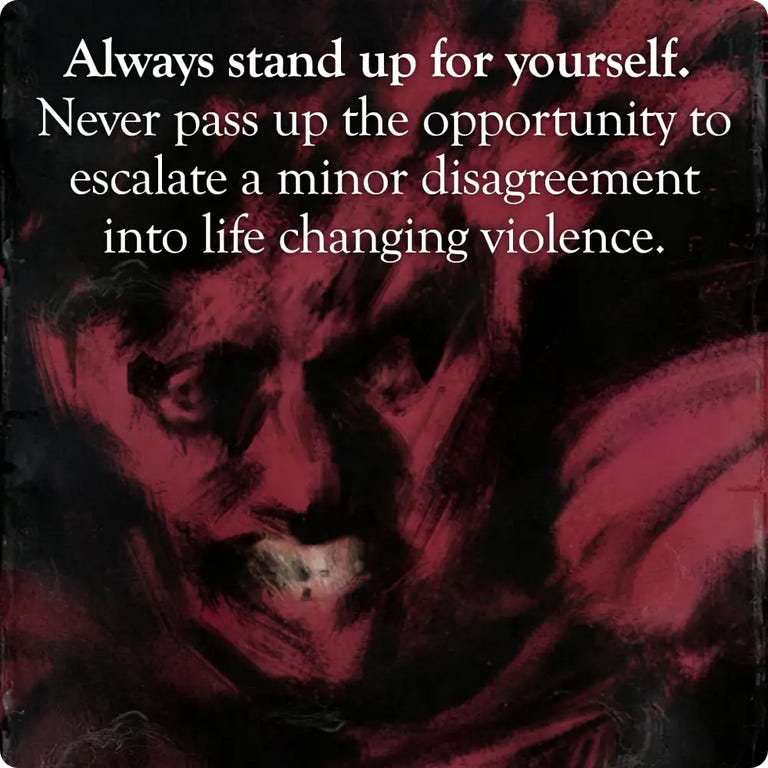
Butcher is as he has always been. He has a few good scenes, notably with Ryan. As always, he can’t maintain a positive relationship with anyone for more than two minutes. He needs to be a prick, he can’t help himself. He’s probably one of the better on-screen depictions of a sociopath - he isn’t completely heartless, but he’s too blisteringly angry and impulsive to hold a steady course, and his problems snowball endlessly. I did not hate the overall direction of Butcher’s character, although the reprisal of Kessler was a very heavy-handed and unnecessary re-statement of what we had already learned in a better scene last season. Butcher’s death scene did not do it for me, either: again, it was so heavily telegraphed that by the time it comes, it feels like ticking a box.
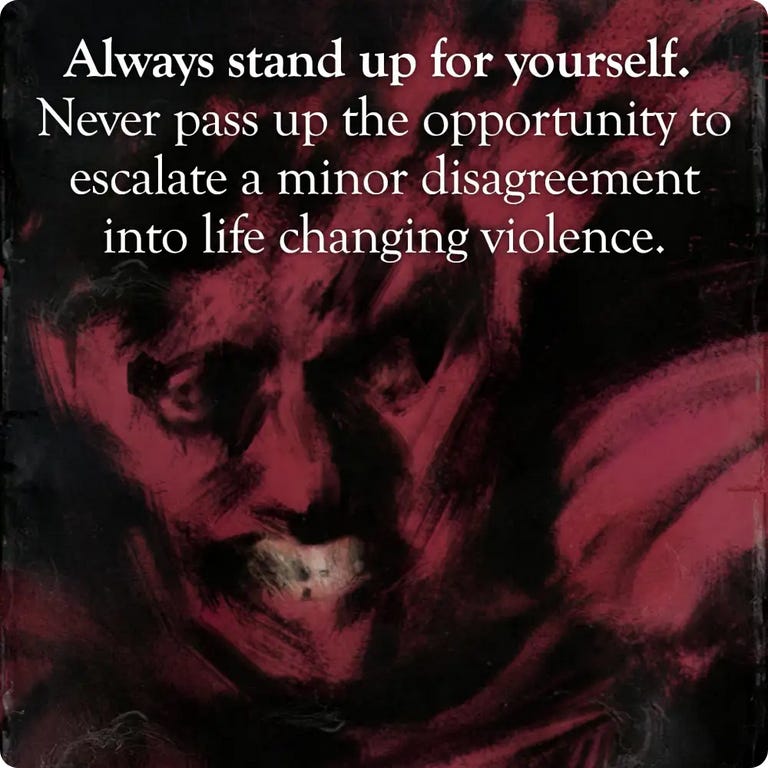
Billy Butcher.
Insisting upon anus jokes
Another thing that I really came to despise this season was the sub-toilet humour, which was more forced and cringe-inducing than ever.
In the past, The Boys did usually manage to strike a balance between jokes and more serious material: the comedy made the drama stand out by contrast, and vice versa, and it helped that the majority of the jokes were at least funny. Here, this was rarely the case.7 Again, it has partly to do with the expectations set up: in light of 4’s finale, there was a general sense that the stakes had risen and a more serious conclusion was approaching. Lest we forget, this is (or was) a funny show, but it’s also a show about a man’s all-consuming, Berserk-esque quest to avenge the rape of his wife.
Instead, I found myself watching a scene that seemed to go on forever where two quaternary characters sniff and describe each other’s buttholes, in the penultimate episode. It went on for so long and was so eye-wateringly bad that I ended up skipping ahead, and I just kept thinking: this is the second to last episode ever!
This was a pretty clear indication that I needed to lower my expectations from ‘scorched earth,’ and lower them I did, but not low enough, because the next episode began with a drawn-out scene where Hughie reads Frenchie’s will, in which he spends several paragraphs (and about two on-screen minutes) describing the times that he has seen his fellow Boys’ arseholes.
Again: was this really final episode material? For a show that used to have scenes like this? And is this braindead slop funny enough to justify itself? It’s like if you told an AI to write a Boys scene, but only gave it the most scatological Boys scenes to work with.
On top of that, many characters are badly Flanderised, notably Sage, who can now no longer speak without referencing Taco Bell. The writers also continue to self-report with characters such as Adam Bourke, the Worm Guy, and the sleazy Hollywood producer who reminisces about Woody Allen.
It was also crazy that they recycled the prehensile penis man into a prehensile scrotum man. If anything, it’s worse. I hate it here.
Bad politics, brought to you by bad people
Finally, it has to be said that the politics of the final season are about what you’d expect from an Amazon product.
For me, what was most exasperating was the dead silence on Israel. As mentioned above, there is a particular scene where one of Homelander’s propaganda videos says (of Americans) ‘We are God’s chosen people, and this is our promised land.’
The video is Western-themed, and of course you can talk about Evangelicals, or Mormons, or Manifest Destiny, or whatever you’d like to talk about, but the fact is that there is another group of people who call themselves God’s chosen people, and have been killing thousands of people every month in their so-called promised land for years now, with the full support of the USA.
Is it outrageous to expect a topical, political show to say something on that? It’s not exactly a stretch, given that The Boys is a sustained attack on the American right, one of the most Israelified groups of people on earth, and the demographic they like to make fun of the most (Evangelicals) are virulent Zionists to a man.8
Another pro-Homelander video advertises the ‘Homelander Youth,’ obviously a Hitler Youth allegory, but of course the show has nothing to say about the many American Jewish organisations (including youth groups) that recruit, raise funds, and distribute propaganda for the IDF.
Tomer Capone embodies the fundamental hypocrisy of The Boys. In his notorious 2016 interview, he describes abducting teenage Palestinian girls from their homes in the dead of night. One cannot imagine what the pretext for this was, but the aim of the exercise is beyond obvious - it is an act of dominance and intimidation. Even if these girls were not raped on this occasion, the message to them and their families was: ‘we can come for you whenever we want, and there’s nothing you can do about it.’ Capone also described seeing his friend shoot at a group of children, which for all we know is just his way of saying that he shot a child without admitting to that.
The Boys is not only Zionist by omission, it seeks to normalise Israeli crimes by employing an Israeli criminal as if there’s nothing wrong with that. I do think that Capone was likely chosen because he’s Israeli - God knows, it can’t have been because he’s a good actor, and there are thousands of other actors who could plausibly have played a French-Algerian, and were not known war criminals at time of casting. The fact that the character is French-Algerian is another layer of high-octane irony, given that Israel helped to kill hundreds of thousands of Algerians back in the ‘50s, supplying training and intelligence to French colonial forces.
Another disappointment is the show’s failure to offer any kind of closure or satisfaction about Vought, a company whose humdrum evil vastly overshadows Homelander’s. Lest we forget, Homelander was originally a victim of Vought’s Nazi scientists, and at his best he was a tragic figure, pitiful as well as monstrous. In the end, Vought’s continued thriving is depicted as if it were as natural and inevitable as gravity, a sentiment that makes complete sense when you remember that the show is funded and distributed by the real Vought (or one of the real Voughts).
There are many layers of irony to the whole project. In earlier seasons, The Boys even commented on things like pinkwashing and corporate use of identity politics, though in the final assessment it is itself a version of this, a collection of left-ish sentiments packaged and sold by the same forces it critiques.9
As Disco Elysium put it:
Capital has the ability to subsume all critiques into itself. Even those who would critique capital end up reinforcing it instead.
Closing thoughts
Did the final season have any redeeming features?
Sure, I guess. A-Train’s sendoff was well-conceived, as was Firecracker’s. Ryan was a standout, though his role was far less pivotal than we had been led to believe it would be. Antony Starr continues to sell the outrageous character of Homelander as no-one else could. The Deep’s manosphere podcast was amusing. Ashley continues to be pretty much what I imagine J.D. Vance to be like behind the scenes.
Overall, though, it remains a fundamentally flawed project, starting on a foundation of hypocrisy, and petering out in disappointment.
Ashlander Analysis is a reader-supported publication. To receive new posts and support my work, consider becoming a free or paid subscriber.
Shoutout to Andor. I had my gripes with it, but at least it could be bothered to do serious storylines properly, and put thought and effort into its depiction of what it’s actually like to be a prisoner in a fascist regime.
The show’s record on male rape is mixed at best: ironically, the only two sexually traumatised men the narrative takes at all seriously are the Deep (a rapist himself) and Homelander (a giga-rapist himself).
I think the writers sort of forgot that we all heard about viruses and how they work every day for about three years not that long ago.
Though the force of narrative demands that it should have fallen - the associations are screaming at us: Babel, Barad-Dur, Trump Tower… It’s literally a giant phallic symbol, and your villain is a notorious rapist!
Which was a really interesting and unusual thing - The Boys was almost unique for having a major character use sign language continuously for four seasons. Bit of a niche reference, but shoutout to Quest for Camelot for letting the love interest remain blind at the end.
Except in the case of stand-outs like Homelander and the Deep, who are well-conceived and well-cast enough that they can make any material work.
(Bizarrely: I do not know how you square the Sermon on the Mount with any of this ‘kill all Canaanites, we are entitled to everyone else’s stuff’ horseshit from the early Iron Age.)
See also: Fallout. I like the show a lot, but it’s disorientating to hear lines like this brought to you by Amazon. There’s a real chutzpah to it, and in a way it’s very on-brand: Amazon does not discriminate about the content of its shows, because it only cares what sells, and so what if the result is a post-post-post-ironic piece of performance art?
Comments
Nothing yet. Say the first thing.
Sign in to join the conversation.