
Moderate spoilers for Skald and True Detective ahead.
For the benefit of those not burdened with the weight of eldritch knowledge, Skald: Against the Black Priory is a dark fantasy RPG released in 2024, which was developed by a small Norwegian team headed by Anders Lauridsen. It has also been living rent-free in my head for weeks, and I would very much like to make that your problem, dear reader, if you’ll let me.
To give a rough sense of the premise, the story puts the player in the shoes of a mercenary sailing to the Outer Isles, a bleak and sparsely peopled archipelago on the northern edge of the Gallian Empire, which spans much of the known world. In an early flashback sequence, the protagonist visits the noble estate where they were raised, the child of a common master-at-arms serving Lord Cato. The protagonist grew up alongside Embla, Cato’s granddaughter, who was born with an uncanny supernatural aptitude.
Embla is the child of an unknown father, evidently conceived in murky and traumatic circumstances, and bears the nickname ‘Star-child,’ which would be less ominous if this were a different genre. We learn that she has recently gone missing, and that the protagonist has agreed to sail to the Outer Isles to find her. On arrival, we find that a disaster is underway, with animals transforming into monsters, and ordinary fishermen into murderous cultists. These events seem inseparably connected to Embla’s arrival.
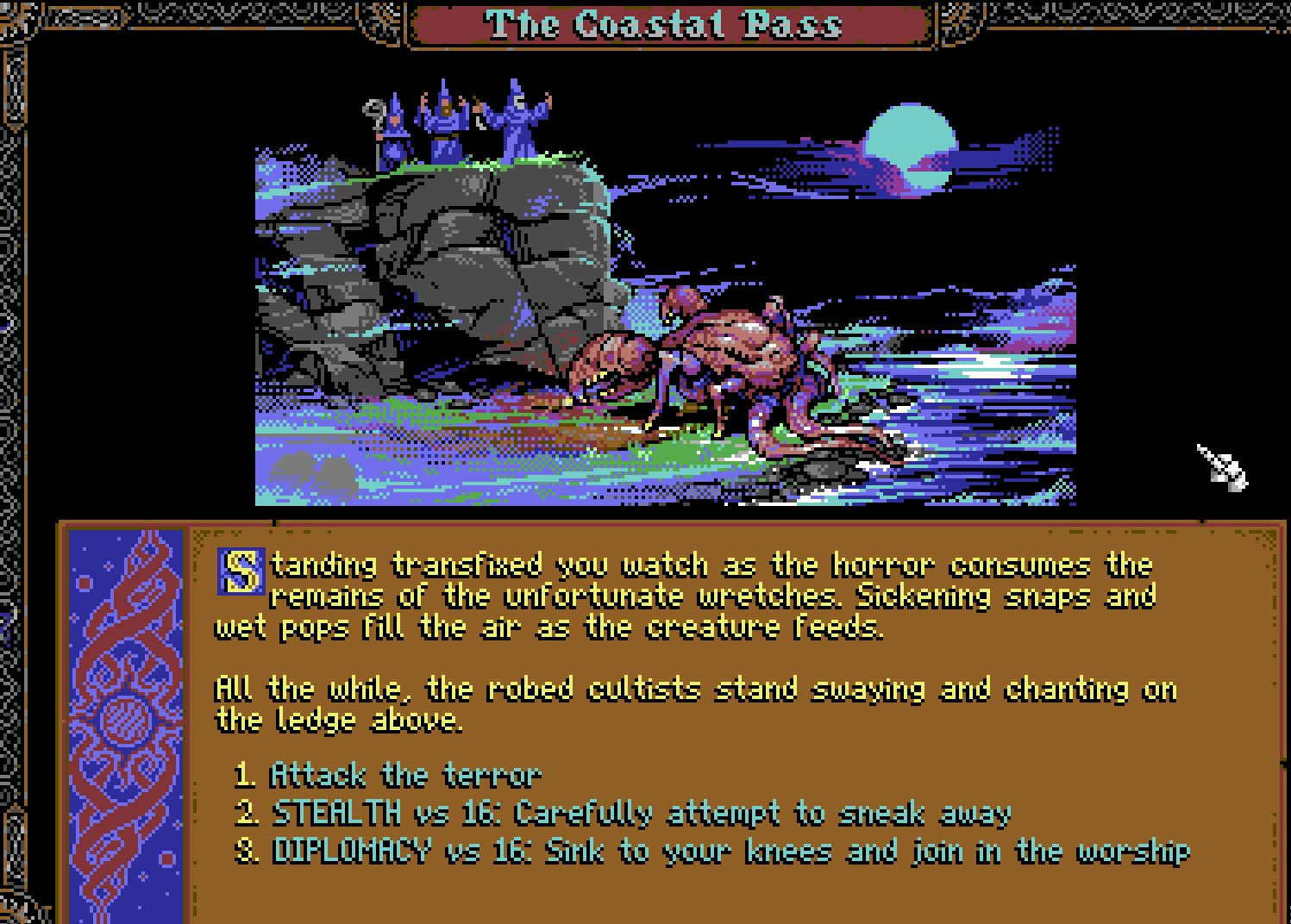
Billed as Lovecraftian, the game draws heavily from the genre of ‘weird fiction,’1 and there is undeniably a strong influence from Lovecraft himself, with familiar terminology (by which I don’t mean racial slurs) and ideas from the great neurotic. Skald is thoroughly steeped in Lovecraft’s vision of a hostile universe, as well as his morbid fascination with the sea:2 even his iconic ‘Deep Ones’ - a race of aquatic monsters - make an appearance. The titular Black Priory, an ice-bound ruin of impossible antiquity, also evokes famous Lovecraftian settings, particularly the nightmare plateau of Leng and the Antarctic ruins left by the Elder Things.
Having said that, it’s important to note that, while Lovecraft codified weird fiction to the point that his name is practically synonymous with the genre today, the genre did not start with him, but took shape decades earlier. As such, knowing about Lovecraft alone isn’t really sufficient to make sense of Skald: in actual fact, the game has far more to do with two other works only tangentially connected to Lovecraft. Namely, these are Robert W. Chambers’ The King in Yellow (1895),3 and the first season of the HBO anthology series True Detective (2014).
The King in Yellow is a collection of short stories rooted in supernatural horror and weird fiction. The title comes from a play within the book, which is a recurring thread tying the stories together, and the play’s title refers to a malovolent entity by the same name.
The King in Yellow is closely referenced by both True Detective and Skald, which itself references both The King in Yellow and True Detective, to the point that you actually get more out of Skald if you know about True Detective. So, what we have here is a play within a book within a TV show within a video game (within a newsletter…). Are you still with me?

True Detective probably needs less of an introduction - despite the unpromising title, the first season is generally accepted as one of the best TV dramas of its day, and justifiably so. Set in rural Louisiana over a span of nearly twenty years, True Detective follows detectives Rust Cohle (Matthew McConaughey) and Marty Hart (Woody Harrelson) in their investigation of a depraved cult embedded in Evangelical circles. Inspired by the very real Hosanna Church child abuse case, True Detective deals with difficult subject matter, and stands out not only for its haunting allusions to the unspeakable, but also its portrayal of the endemic poverty and corruption that funnels victims into the arms of abusers.
True Detective involves a subtle but definite element of the supernatural. Whereas the real Hosanna Church abusers incorporated Satanic trappings into their crimes, True Detective’s fictional counterparts perform ritual abuse and murder in the name of the Yellow King. This name comes up again and again throughout the series, along with a key phrase from Chambers’ fictional play that also appears in Skald - ‘Take off your mask.’ (We’ll come back to that in Part 2.)
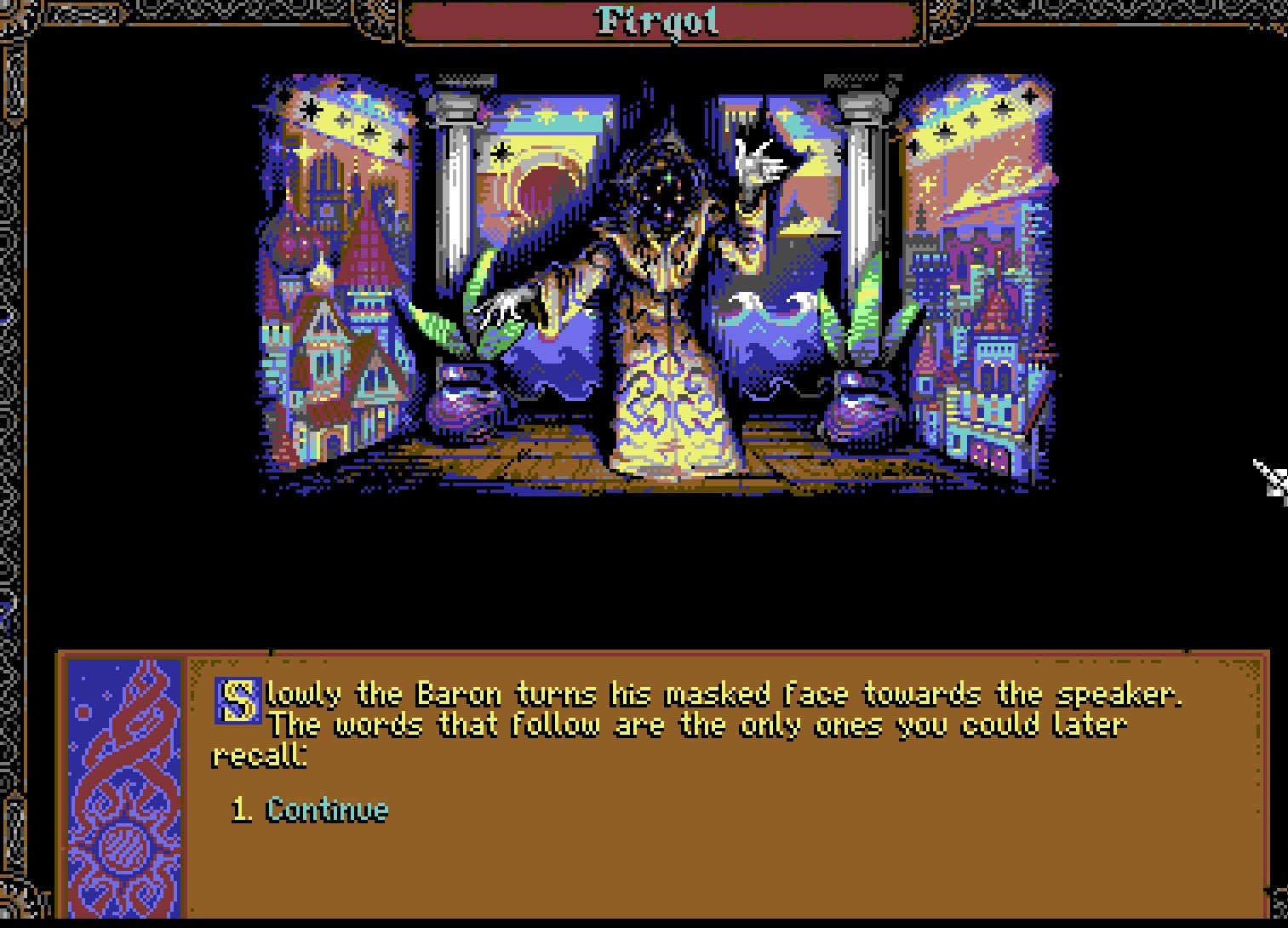
These are, however, only surface similarities, and in fact, it wasn’t the Yellow King references that reawakened the True Detective obsessive in me while playing Skald, but something more fundamental, which stems directly from True Detective rather than Chambers or Lovecraft. In True Detective, the cultist Reggie Ledoux tells Rust that:
You’ll do this again. Time is a flat circle.
For Rust, this phrase becomes a constant preoccupation, haunting him more than a decade later. He comes to believe that, whereas in our three-dimensional world, we perceive time as a linear process, viewed from a different dimension, ‘a sphere becomes a circle,’ and therefore all events overlap. According to this theory, everything that has ever happened - or will ever happen - is happening simultaneously, forever. As Rust puts it:
Everything we’ve ever done or will do, we’re going to do over and over and over again.
This idea of circular repetition is built into the narrative structure of True Detective. We see Rust and Marty in three different decades, and each time resembles a repetition of the same cycle: in 1995 and 2002, Rust and Marty seek the same killer, but fail in both instances because of their own personal flaws and the fractious nature of their partnership.4
Only in 2012, the final cycle, are they able to succeed, putting aside old resentments and committing themselves to what has become a sacred duty for both men. Rust and Marty’s first and last car journey together bookend the series, with their conversation following a familiar pattern - Rust pontificating, Marty annoyed - and Rust repeating a key phrase5 in both dialogues. Skald likewise has a circular structure to its story, with key scenes repeated at the beginning and end of the game, which we’ll look at in Part 2.
Variations of Rust’s fatalistic mantra also appear constantly in Skald, particularly in key conversations with Embla, and figure into the game’s ending in a major way (again, Part 2 will cover that):
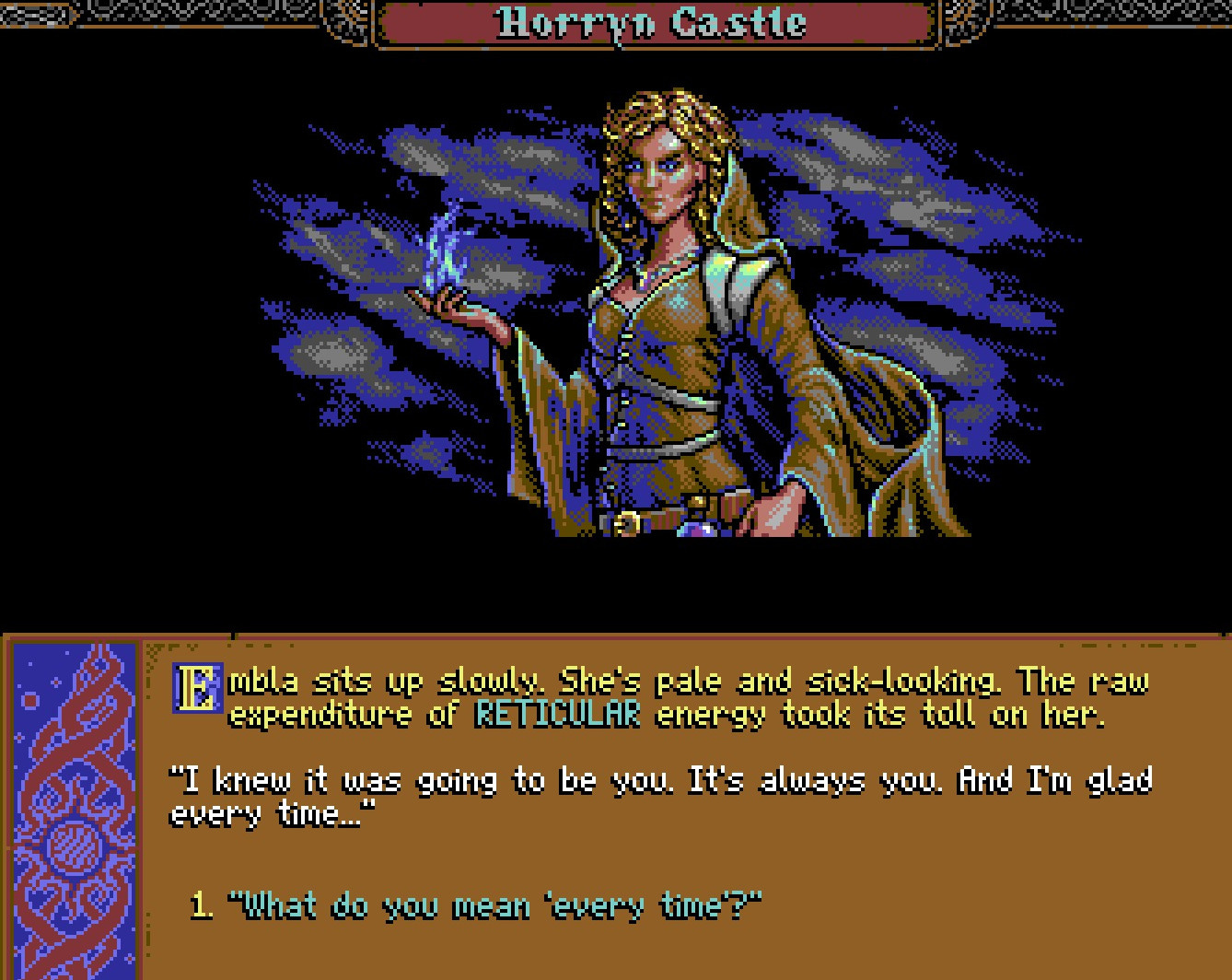
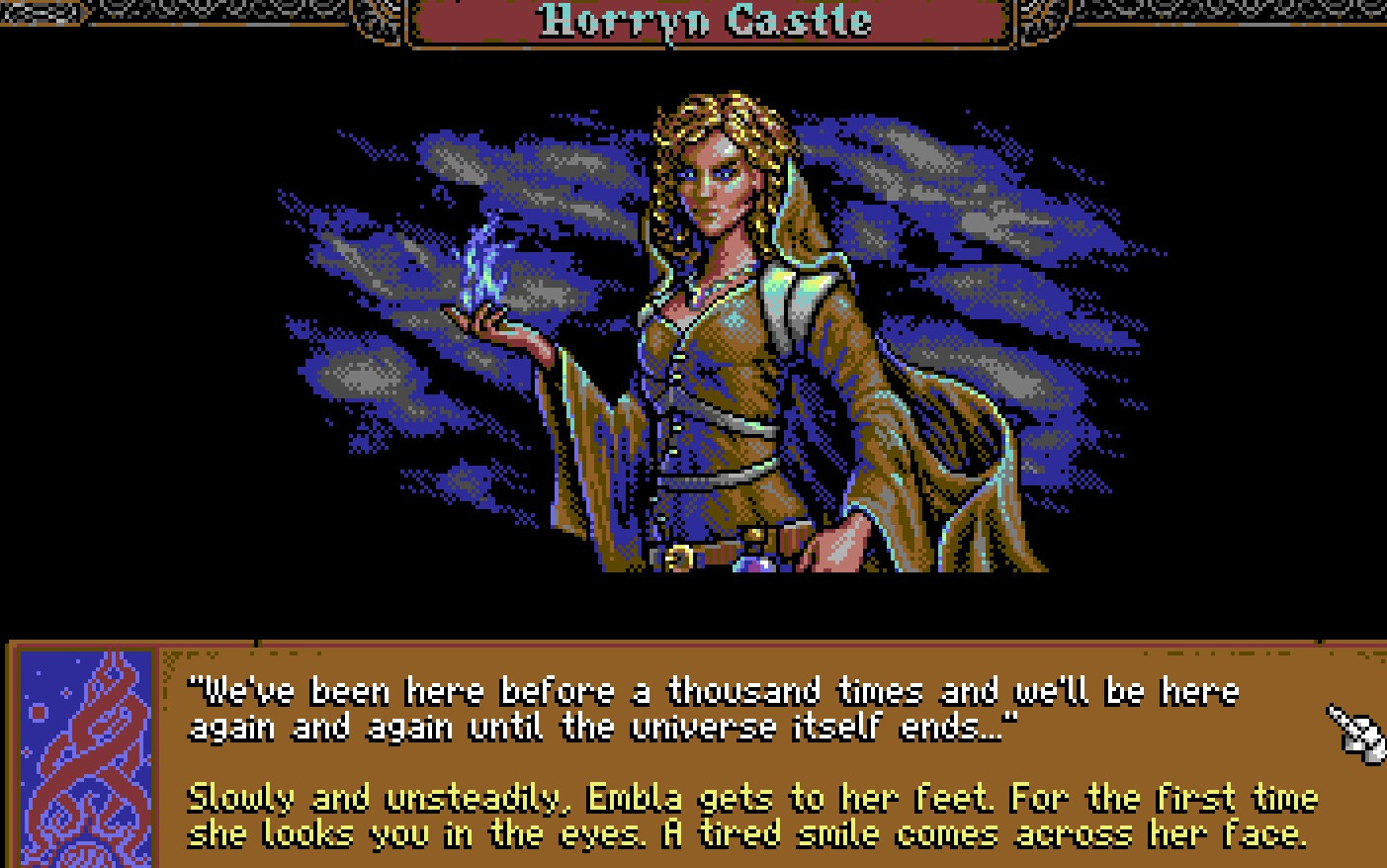
Appropriately, this idea - with its ominous connotation of inevitability - is repeated over and over again through the latter chapters of Skald:
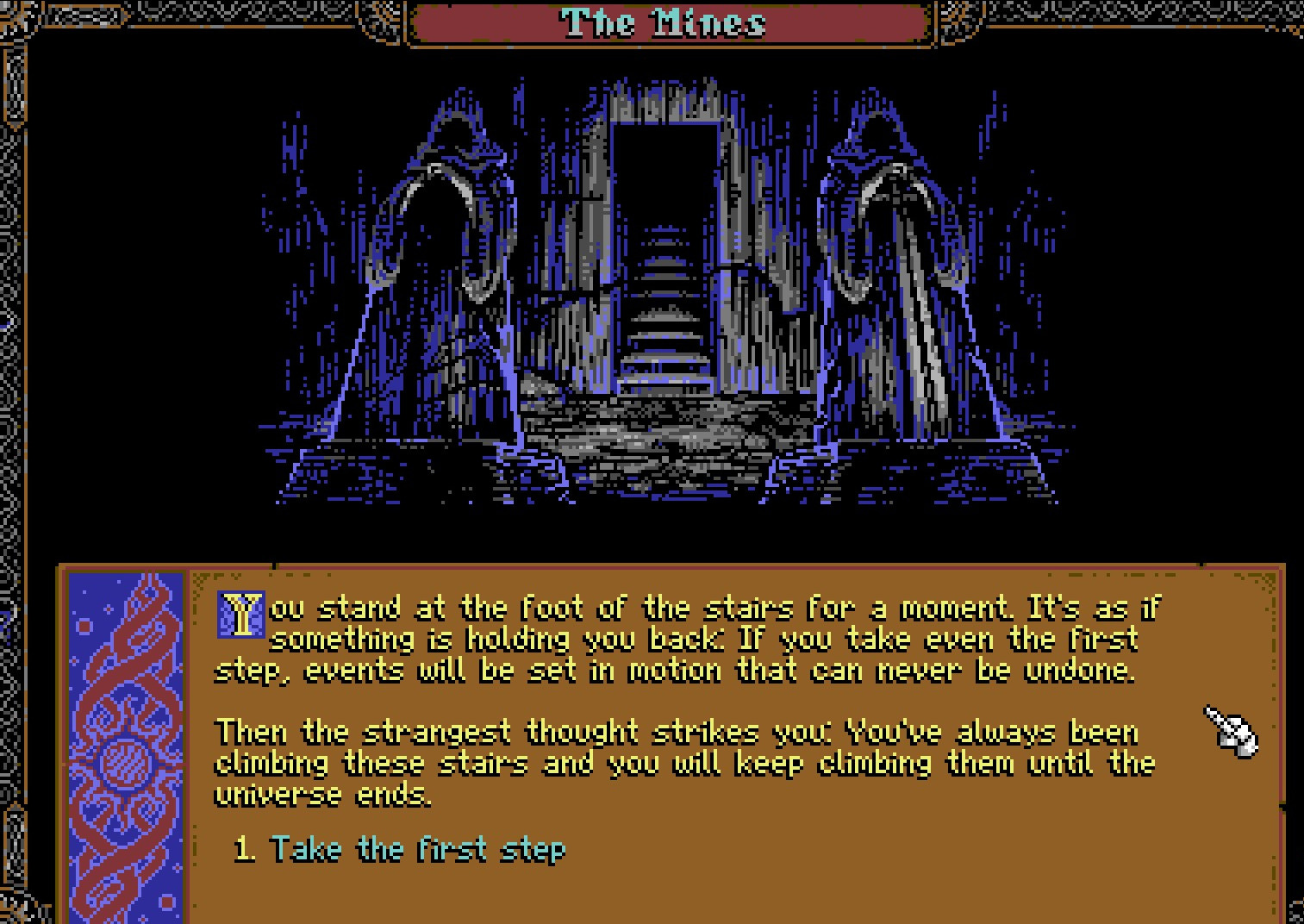
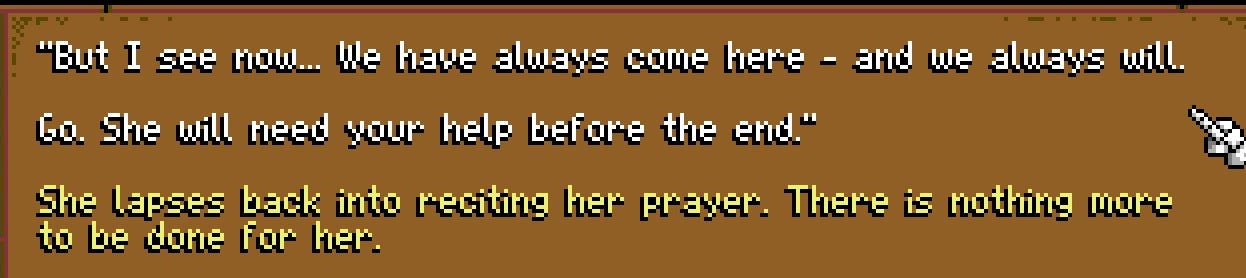
In True Detective, the circular motif is also seen in the symbol of the cult,6 a spiral pattern, which has a double or triple-meaning in the context of the show. And of course, this exact same symbol (also with multiple meanings) appears many times in Skald, where it is the sign of the malignant cult that has sprung up on the Outer Isles, who borrow much of their iconography straight from True Detective:
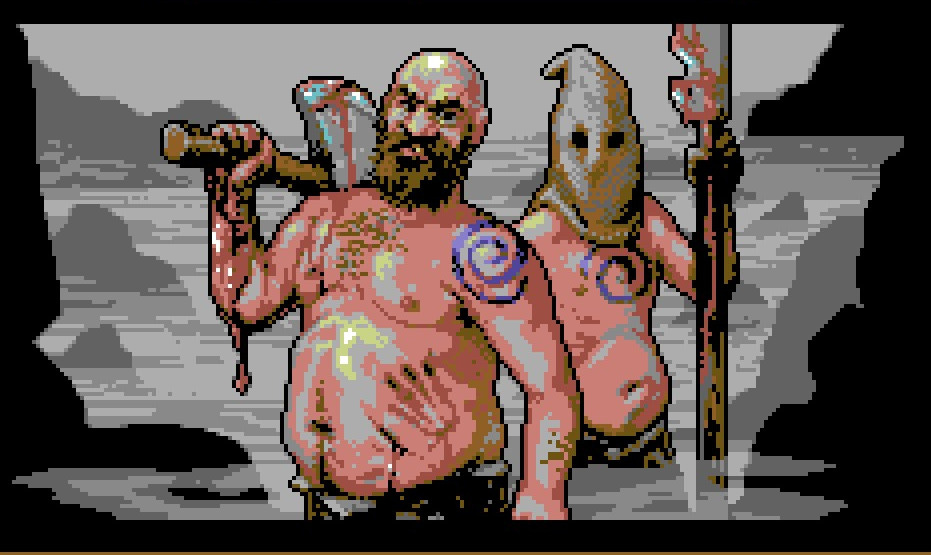
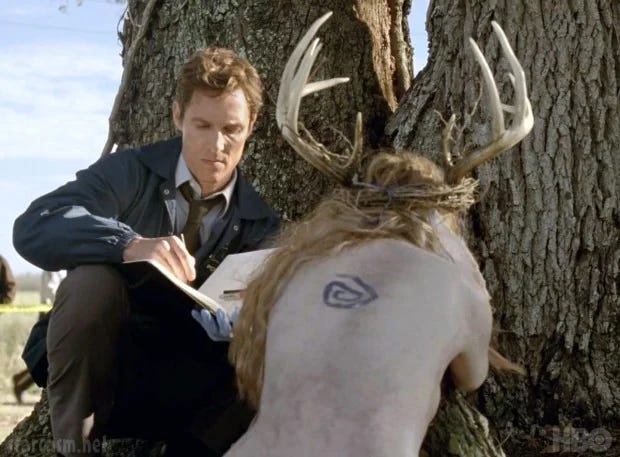
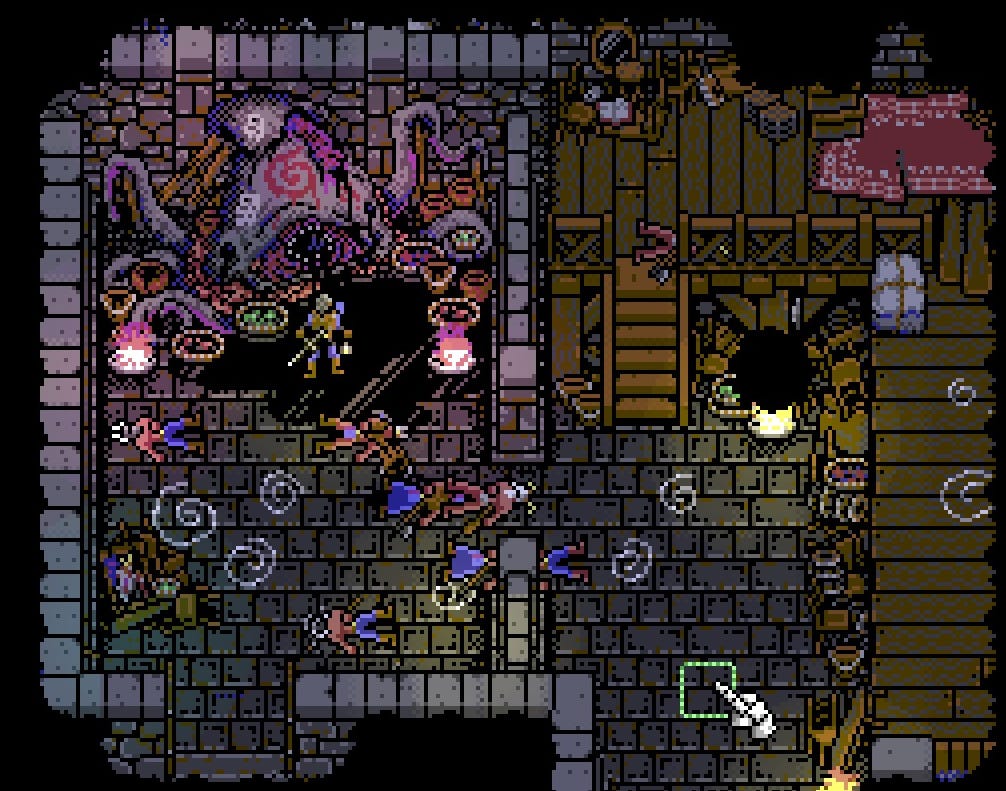
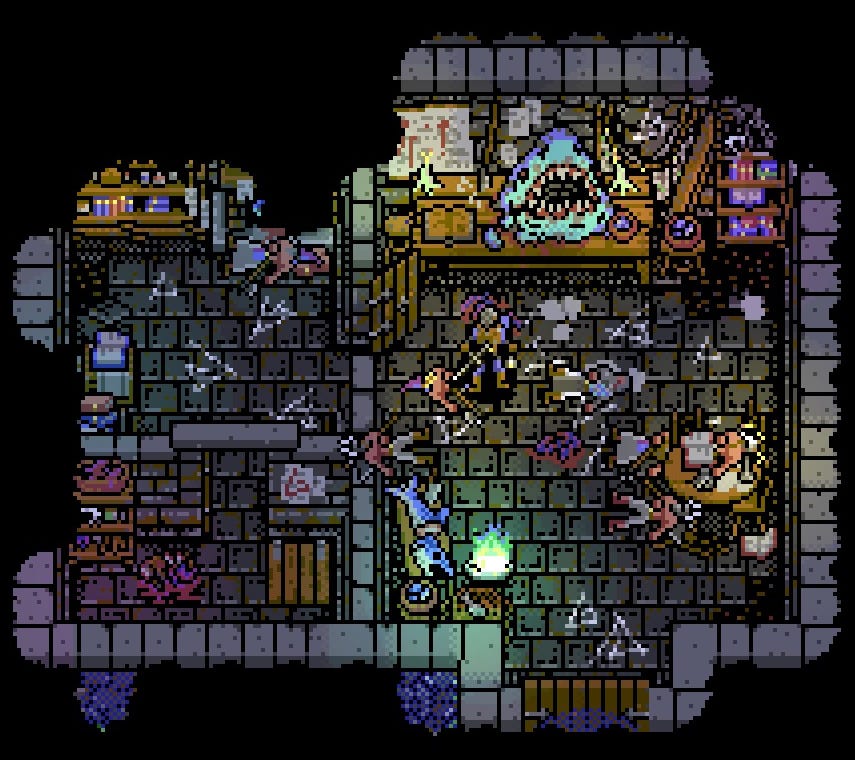
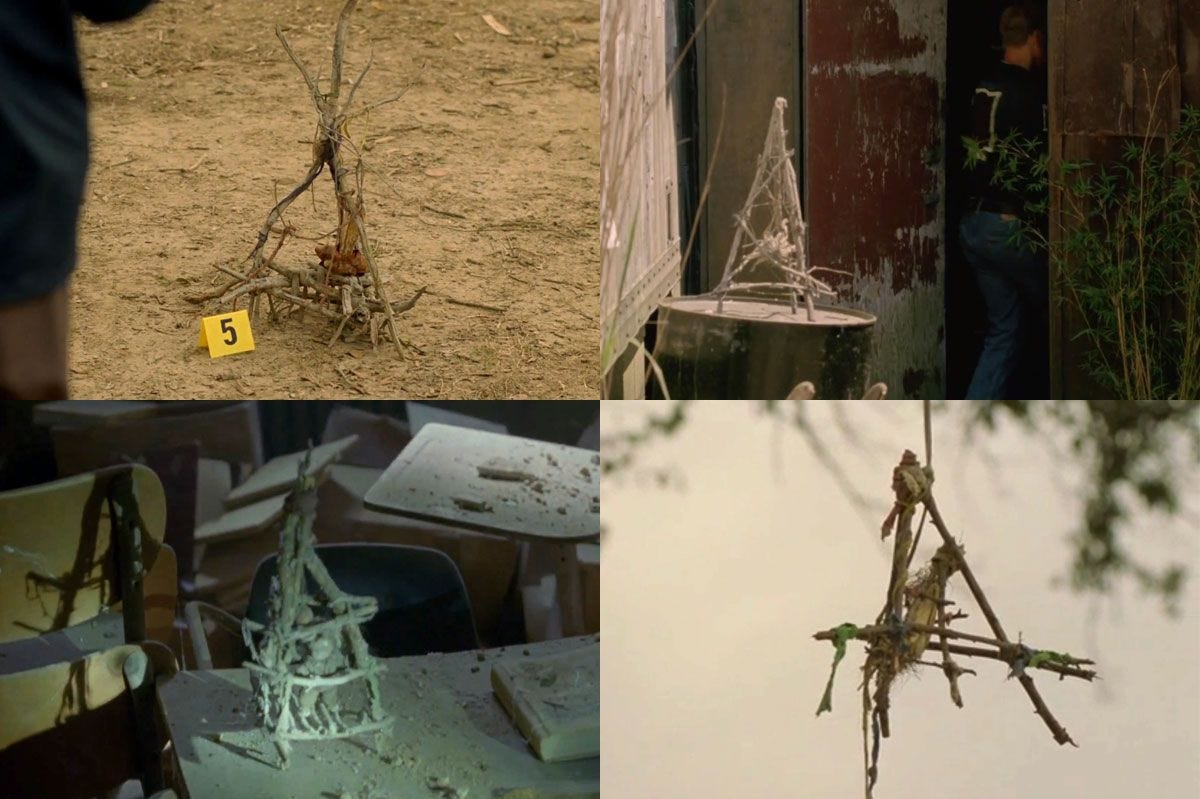
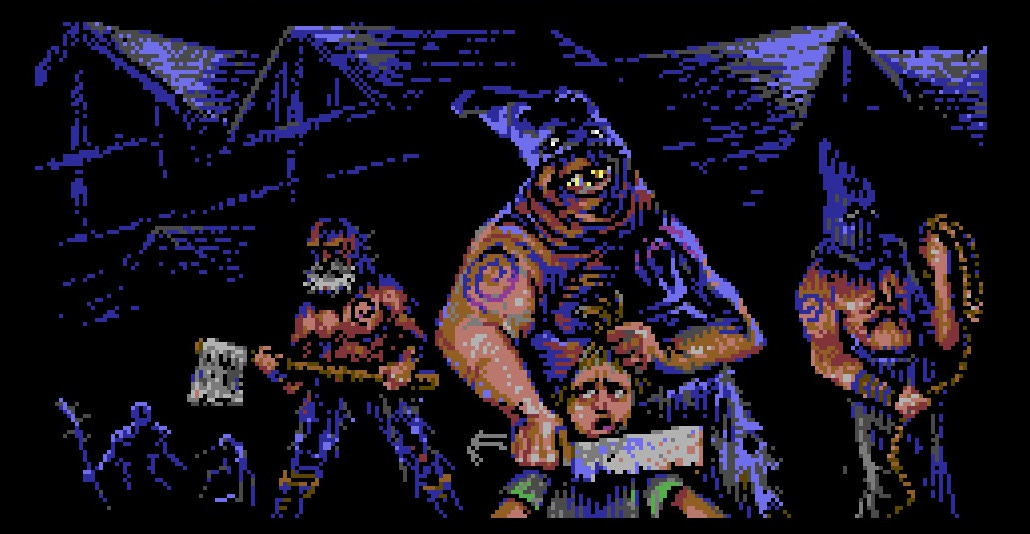
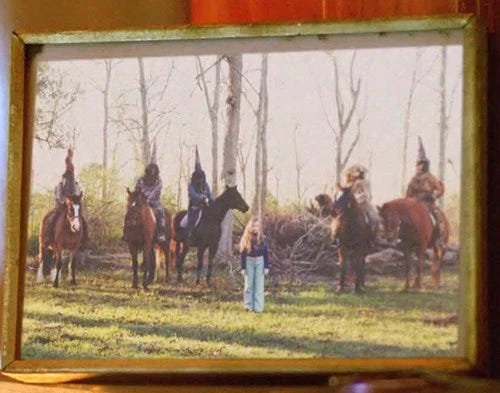
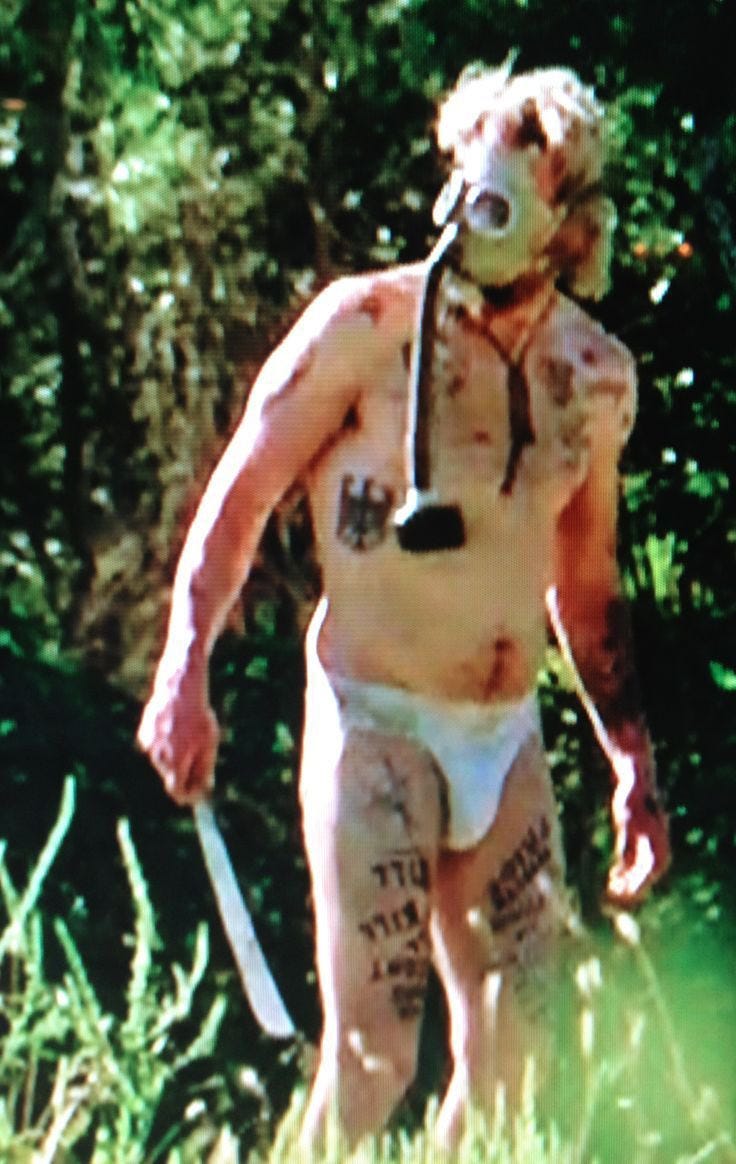

Skald also borrows the phrase ‘black stars’ from True Detective and The King in Yellow7 - this reference is made by Ledoux8 and other members of the cult, who speak ecstatically of ‘the coming of black stars,’ and likewise it’s uttered by several characters under supernatural influence in Skald.
In Skald, the phrase evokes a dark and hostile cosmos, in line with the sensibility of weird fiction, while in TD, the reference can be linked to Rust’s pessimistic philosophy - for Rust, the universe is a fundamentally dark and hopeless place, and his depressive tendency makes it impossible for him to recognise light and beauty. Whereas for Rust this is an unhappy preoccupation, the cult consciously rejects good and delights in evil, and eagerly anticipates the darkening of the stars. Accordingly, stars figure into crucial final scenes of both TD and Skald, which we’ll get into in the next post.
The two stories also bear similarities in the troubling sexual connotations of the violence depicted. Although Skald is far less explicit than TD, this element is introduced very early on, and a disturbing implication hangs over the narrative. In a childhood flashback, the protagonist discovers their father in a drunken stupor, and, while helping him back to his room, he rambles disjointedly about a past failure that has haunted him ever since. He was tasked with guarding Embla’s mother, Valeria, but she disappeared from her room, despite the door and window being locked, and, whatever happened to her that night, her mind was ‘broken,’ and she was never the same afterwards.
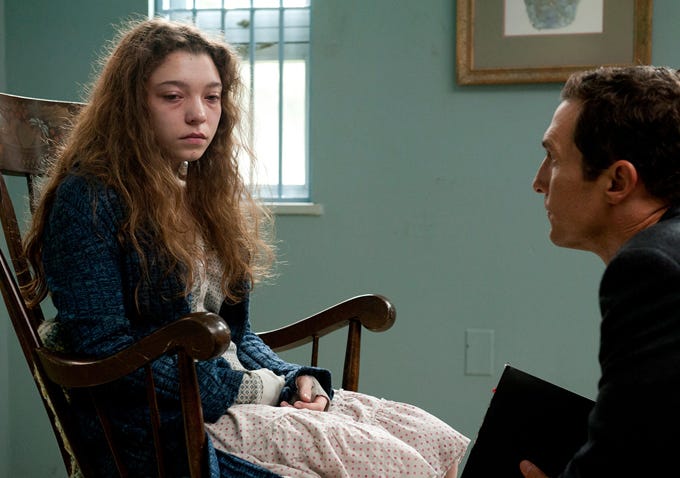
It is strongly implied that this was the same night that Embla was conceived, and the inference of rape is inescapable.9 Valeria never directly appears in Skald, but is delicately said to have been sent away - perhaps institutionalised? - because of what happened to her. A parallel can be found in True Detective’s Kelly Rita, a survivor of the cult’s abuse who Rust visits in a psychiatric ward in a particularly haunting scene.10 Likewise, the image of the protagonist’s guilty father, driven to drink and eventually exiled because of his failure, has many parallels in TD, which often lingers on images of the families and bystanders left devastated by the consequences of abuse.
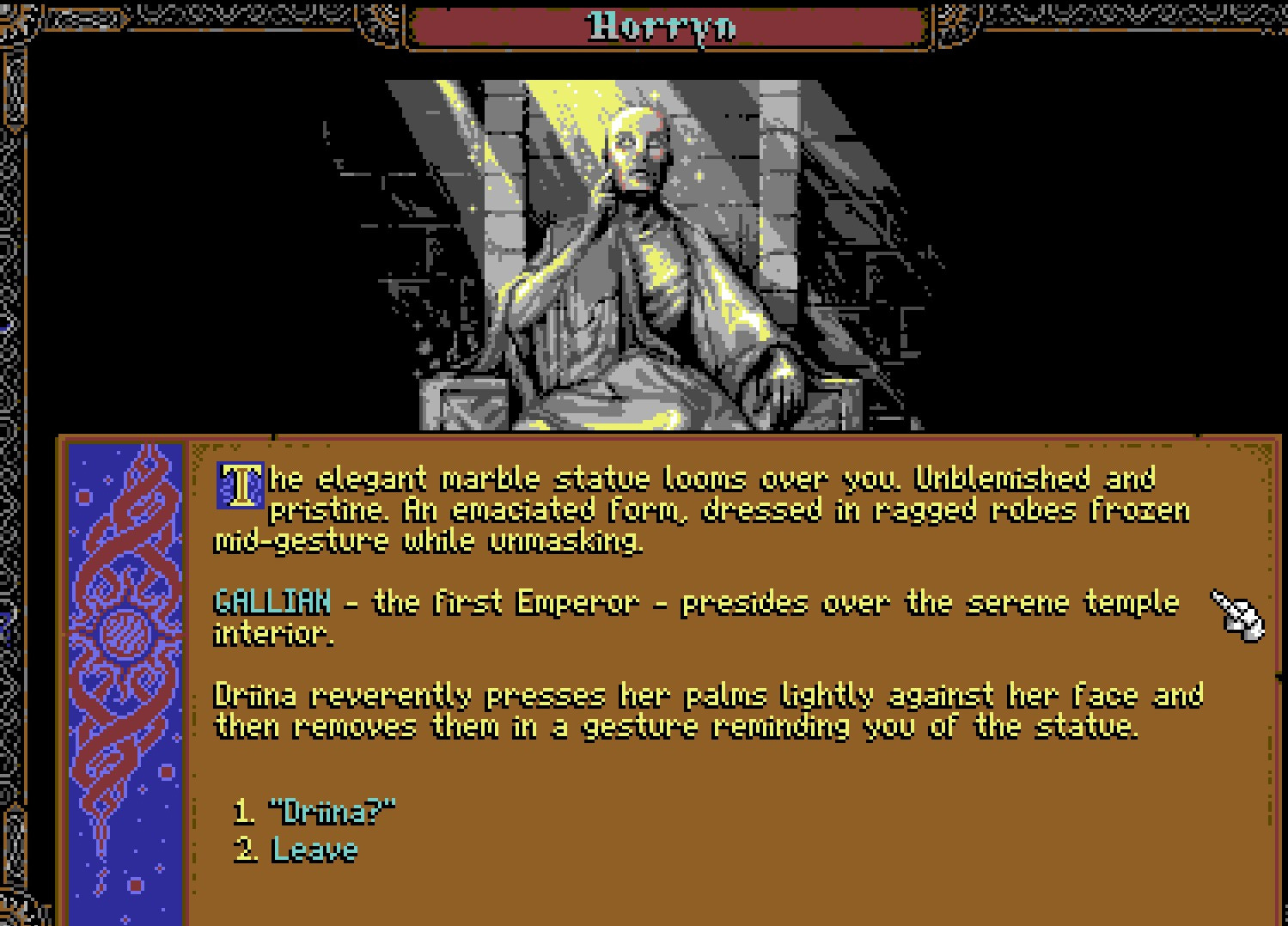
Skald’s reavers also parallel TD’s cult in that, whereas other creatures have been transformed by the malign presence on the Outer Isles, the reavers remain physically human, and capable of blending into society. After the ravaged village of Horryn has been cleared of reavers, the new guard captain is troubled by the sheer number of people flowing in from the countryside - they appear to be ordinary people, yet the reavers too were ordinary people: ‘Scrub away the blood and shit and markings, and what is the difference between a reaver and any other man?’
Likewise, True Detective’s cultists blend seamlessly into society, even as wealthy and respected people, and it is bitterly ironic that the child-killer Errol Childress is repeatedly encountered by detectives who fail to recognise him for what he is. In both Skald and True Detective, evil hides in plain sight, taking an all too human shape, and cannot be fully defeated.
As Rust laments at the end: ‘We didn’t get them all.’
Thanks for reading! I have tried to keep the spoilers moderate in this first part. In Part 2, I will be getting into the really juicy stuff, and unpacking the endings of Skald and TD. I hope you like sacrificial lambs and the Garden of Gethsemane.
Lovecraft was himself an island-dweller, born in Providence, Rhode Island.
Lovecraft borrowed the names Hastur, Hali and Carcosa from Chambers, who in turn lifted them from Ambrose Bierce. Carcosa is extensively mentioned in True Detective, but we’ll get to that.
Many have noted the Buddhist connotations, though Rust believes that we are born again and again into the same life rather than being reincarnated. Regardless, there’s a similarity, and the Buddhist-adjacent cyclical narrative will be familiar to anyone familiar with manga, anime, From Software, etc.
(Episode 1: ‘Aluminum, ash… I can smell the psychosphere.’ Episode 8: ‘Aluminum, ash… I’ve tasted this before.’ Rust’s hinted psychic sensitivity is one of many parallels between him and Embla, which I’ll explain in Part 2.)
(the show’s answer to The King in Yellow’s ‘Yellow Sign’)
NB: This is an edit, I have begun reading The King in Yellow myself, and found the ‘black stars’ element in the first story (‘Strange is the night where black stars rise.’). The phrase ‘strange moons’, which also occurs in Skald, is in the same passage.
Who notably has a Satanic black pentagram back tattoo, and another five-pointed star in black ink on his shoulder.
The supernatural/alien implication is also clear to anyone familiar with the genre, but that’s for Part 2.
This is another way in which, for victims of abuse, time is a flat circle - as Rust says of Kelly, she will relive what she suffered over and over again. Similarly, Rust himself is trapped in the past, and relives a number of past traumas over the course of the season.
Comments
Nothing yet. Say the first thing.
Sign in to join the conversation.