
Spoilers for Red Dead Redemption 2 and Ghost of Yotei.
As regulars will know, I spent several weeks liberating the island of Ezo last year, which is to say that I enjoyed Ghost of Yotei a bit too much. As I’ve said before, it’s a grand adventure full of high drama and excitement, and a thematically rich one, in touch with its Western/jidaigeiki roots.
There are many ways in which Yotei feels more like a Western than its predecessor - we can hear echoes of Ennio Morricone in the soundtrack, and the core revenge plot, with the framing of the villains as ‘outlaws,’ evokes that particular vibe. In an older post, I also discussed the game’s framing of Atsu, the main character, as an avenging ghost, and cited several Westerns while tracing the cinematic roots of that archetype.
More to the point, elements of the game’s story feel distinctly similar to gaming’s greatest Western - Red Dead Redemption 2 (or RDR2, not to be confused with the little guy from Star Wars).
Both games take place at the end of a violent and chaotic era - in Yotei, the Sengoku period, and in RDR2, the Wild West era of American history. Both frame their central conflict around nature vs civilisation, with the latter depicted as an oppressive and corrupting force. Accordingly, both games’ protagonists have animal motifs, with Atsu’s wolf1 and Arthur’s stag/coyete. Both also touch on colonialism, with RDR2 dealing with the genocide of Native Americans, and Yotei to a lesser extent dealing with the oppression of the Ainu people.
Yotei’s larger than life villains are also distinctly reminiscent of Western archetypes. From Blood Meridian’s Judge Holden to Westworld’s Man in Black, Westerns can be measured by the vividness of their villains, and Yotei is no exception. While playing, I had the nagging feeling that the main villain - the nefarious Lord Saito - was reminding me of someone, and it wasn’t until many hours in that I realised who it was.
It was only Dutch van der Linde, the not-so-magnificent bastard of RDR2, a character I like insofar as he makes me absolutely furious, but I can appreciate the writers’ skill in very carefully, deliberately, and believably crafting this insufferable loon.
Dutch van der Linde is basically just… an absolutely horrendous guy, on every level. For the sake of brevity, we will be focusing mainly here on his character in RDR2, a prequel that features and develops him far more extensively than the first game.
Dutch is an outlaw who presents himself as an anarchist and a revolutionary, yet virtually every word out of his mouth is contradicted by his actions. Although he gets exponentially worse over the course of the game, we are made acutely aware of his hypocrisy from the game’s opening chapter.
Dutch describes himself as a proletarian figure, frequently emphasising his humble immigrant origin.2 He is also an avid and outspoken reader of Evelyn Miller, a Henry David Thoreau-esque figure who preaches simple living and harmony with nature.3
This talk, however, is wildly at odds with the reality of Dutch - he dresses in a black fur coat in the prologue, which is soon replaced with an opulent three-piece suit with a silk waistcoat. This is in stark contrast to the shabby and threadbare clothing of everyone else in the gang. His matching revolvers are pearl-handled, engraved and inlaid, and he rides a perlino Arab stallion called ‘the Count,’ a distinctly aristocratic title.4 His tent is far bigger and more ostentatious than any other in the camp, and boasts a gramophone that he uses to play classical music and opera.
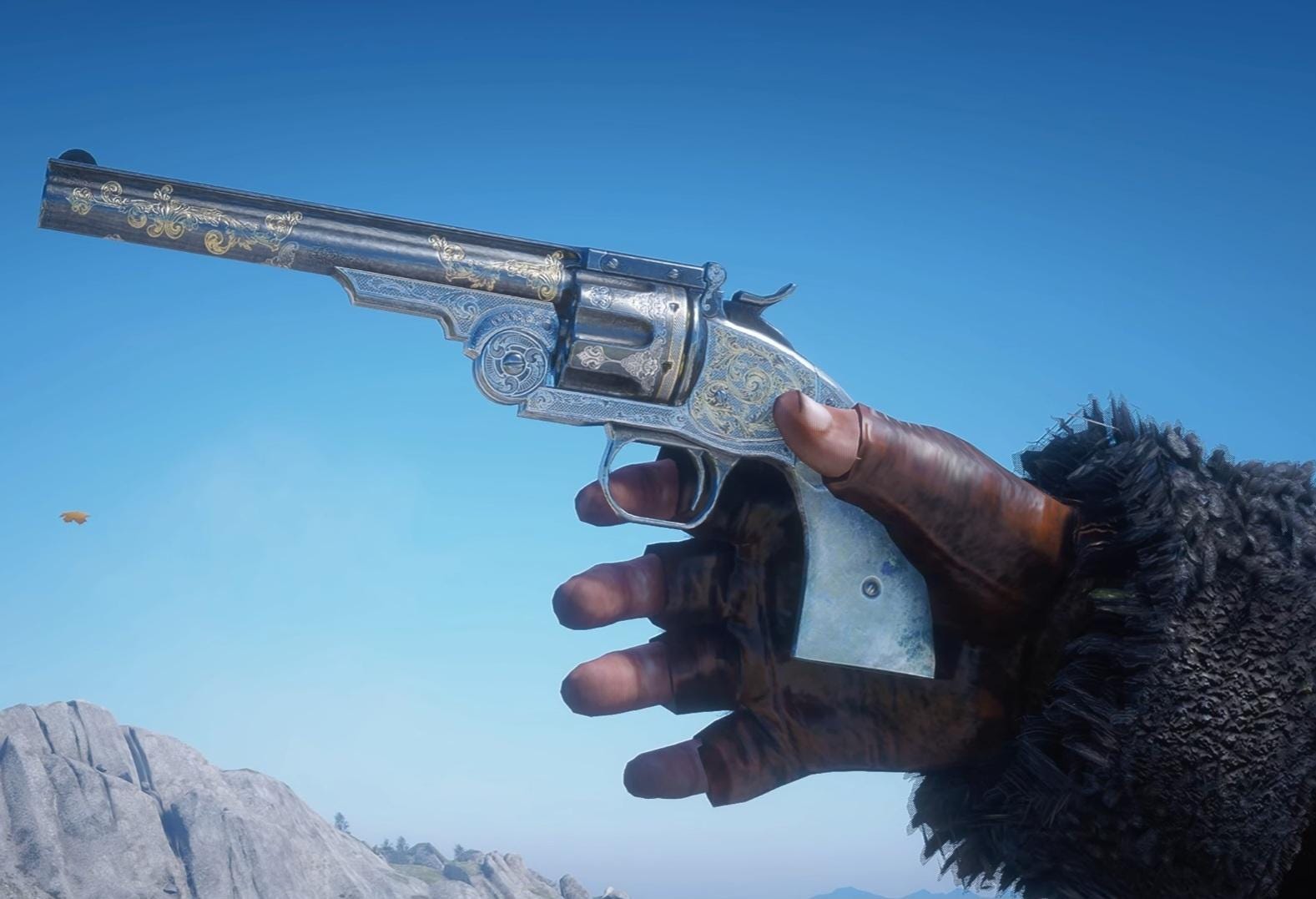
Not only that, but he has a kept woman, Molly O’Shea, who is from a wealthy background and does not contribute to the gang in any way, nor is she ever expected to. Meanwhile, Dutch not only preaches equality, but spends every waking moment badgering other members of the gang (especially Arthur/the player) to get to work. Dutch himself contributes remarkably little to the gang’s coffers, and is conspicuously absent from many key robberies.
He is venomously opposed to capitalist figures such as the Braithwaites (an old Southern plantation family who built their wealth on slavery), mafioso Angelo Bronte, and crooked railway tycoon Leviticus Cornwall, and yet he autocratically controls the gang’s finances, and has a morbid obsession with money. In an optional scene near the end of the game, Arthur can discover just how much wealth Dutch has been hoarding without the gang’s knowledge, while repeatedly putting his followers in harm’s way on the pretext of the need for money. Dutch’s lust for lucre has long since passed the threshold of greed, and become a kind of mental illness.
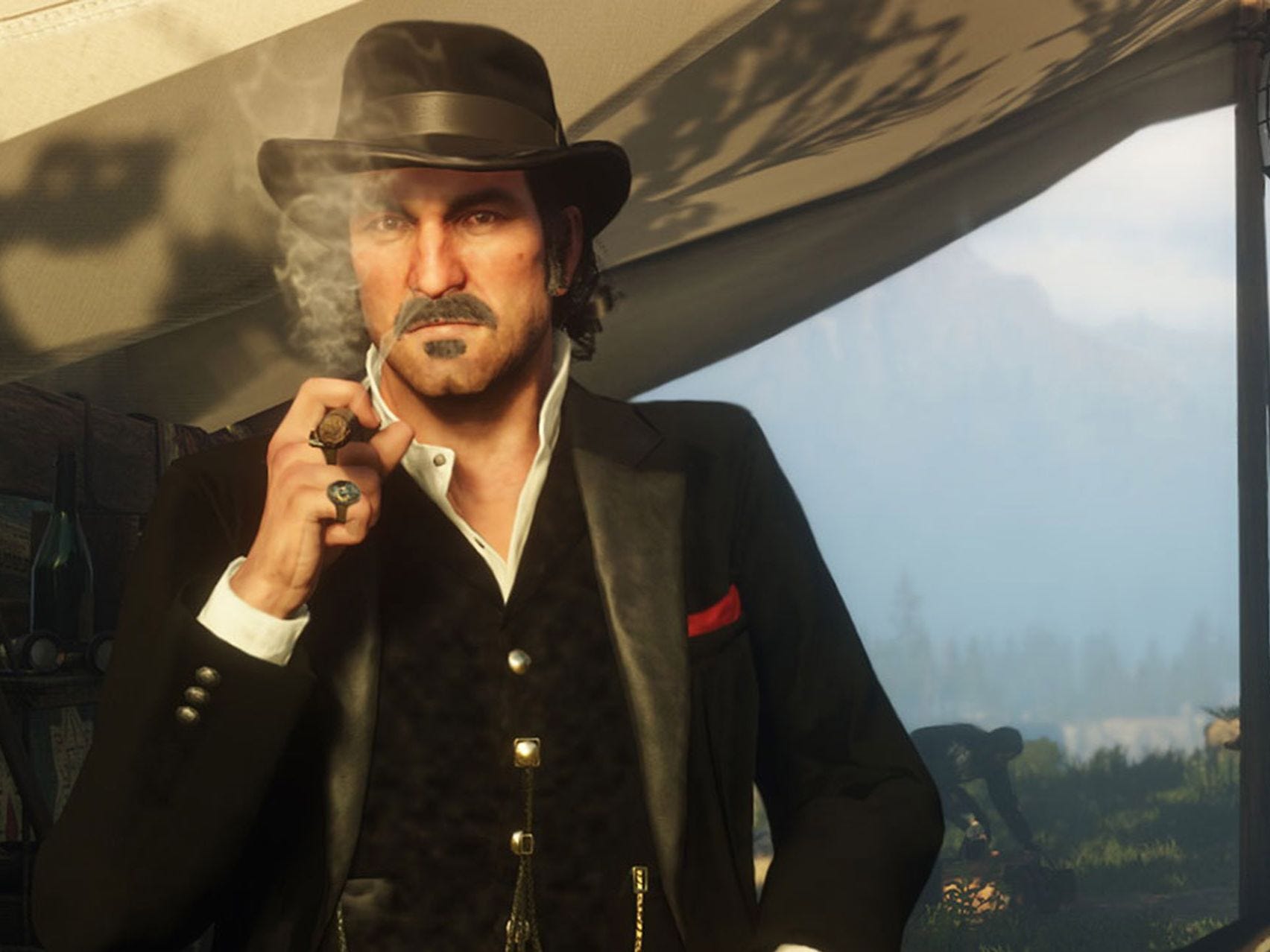
Tellingly, a conversation can be overheard between Dutch and Uncle, an aging reprobate who is sharper than he appears. Uncle tells his listeners that Dutch sees himself as an American king, and the gang as his knights, and the remark hits a nerve with Dutch. In a Freudian slip, Dutch likens Uncle to a court jester, and Uncle plays into this, defusing the situation by playing the fool. It’s suggestive that Arthur, not Dutch, is named after a legendary king, and the name foreshadows his ultimate moral victory over Dutch.
Dutch is also outspokenly anti-racist and pro-Native, castigating ex-soldier Bill for negative remarks about the Sioux; and yet, when representatives of a local tribe appear, Dutch’s first thought is how to exploit them for his own profit. The Native band is disarmed and confined to a meagre reservation in the far north, where they are slowly dying of treatable diseases while soldiers block shipments of medicine (oh boy, what does that remind me of?5). When they try to break the blockade, Native women are punitively raped, and when their chief goes to negotiate, he is humiliated and threatened.
Dutch takes advantage of the situation, manipulating the son of the chief into a doomed raid that gives the army the excuse they need to finish their project of ethnic cleansing, for no other reason than to draw attention away from his own gang’s activities. He does something very similar in the first game, stirring up young Native men into a doomed rebellion, effectively using them as cannon fodder for his own agenda.6 Dutch’s stated anti-racism is further contradicted by the fact that he turns a blind eye to the outspokenly racist Micah, who racially abuses other members of the gang in earshot of Dutch, and is never held to account.
Even Dutch’s hare-brained (and much-memed) notion of taking the gang to Tahiti, where he proposes to buy up land and go into business as plantation-owners, smacks of the very colonialism he claims to oppose. He speaks of Tahiti in terms of riches, comfort, and endless leisure, and his references to ‘dancing girls’ comes with a nasty subtext, given the colonial context and the gang’s history of exploiting young women7 (and also given the behaviour of other rich men on islands…).
It’s worth noting that, contrary to Dutch’s anarchist claims, the gang has a highly gendered division of labour, with the women doing all of the domestic chores while the men act as providers, bringing in money from robberies, and thus have more of a say in the gang’s activities.
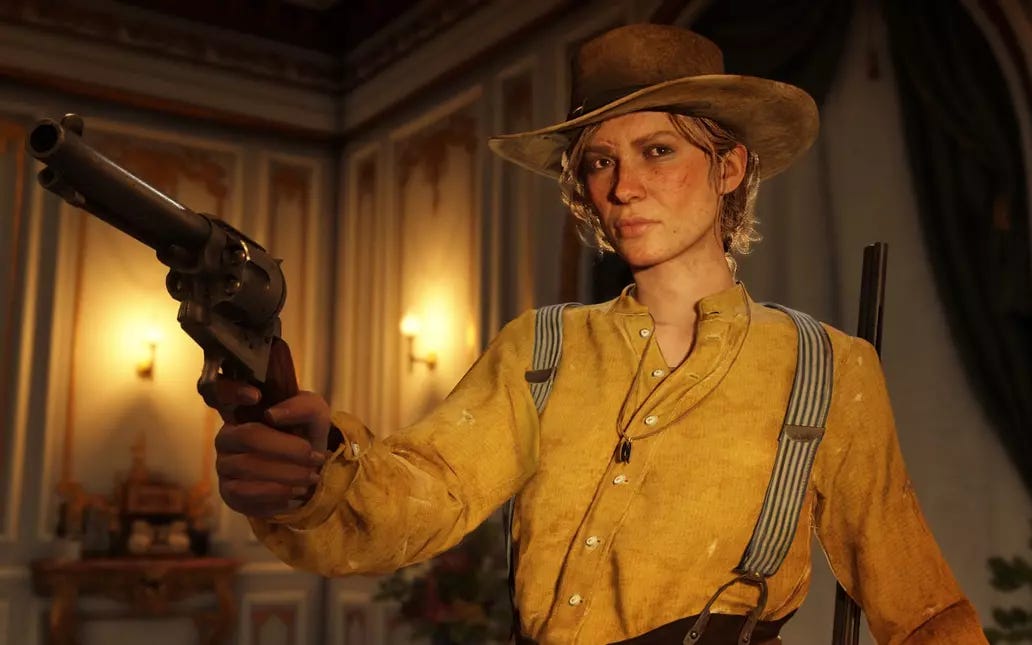
Over the course of the game, as Dutch increasingly loses control of the gang, he spirals into paranoia, and becomes viciously resentful of Arthur, making him the scapegoat for all the gang’s problems. Arthur is an orphan, raised and manipulated by Dutch from an early age, and over the course of the game, it’s shown that all of the gang’s members are likewise outcasts with nowhere else to turn,8 and many feel indebted to Dutch, hence his power over them.
So long as the gang fawns over Dutch and shows absolute loyalty, he is content, but he is extremely thin-skinned and insecure in his authority. The moment he receives any pushback at all - which comes increasingly from Arthur - he becomes indignant, resentful and even violent, reproaching Arthur with charges of ‘disloyalty’ from the game’s prologue onwards. Fundamentally, Dutch is defined by a sense of entitlement. He feels that he deserves the absolute, unquestioning loyalty and admiration of those around him, and whenever this is withdrawn, he becomes dangerous.
Ghost of Yotei, meanwhile, features a superficially different, but surprisingly similar central antagonist, in the form of Lord Saito. Saito is an exile from the Japanese mainland, and a feudal lord from the samurai class, who lost his lands in the civil war and fled to Ezo with his remaining followers.
He arrives in Ezo as a fugitive with only a handful of supporters - known as the Yotei Six - but becomes established as de facto ruler of the island over about sixteen years. He begins consolidating his rule with the Night of the Burning Tree, a brutal massacre of the swordsmith Kengo (Atsu’s father) and his family.
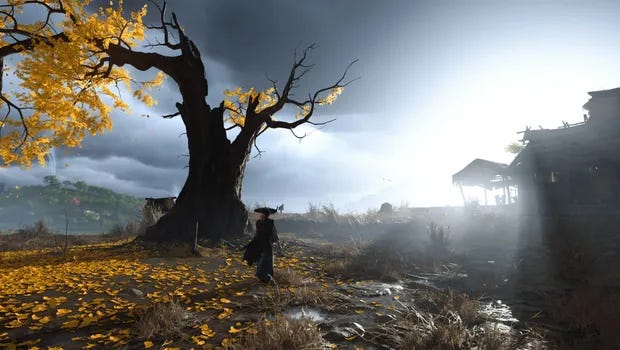
As we learn, Saito singled out Kengo because he had been one of his feudal subjects, and deserted him during a time of famine. This led to further desertions (at least according to Saito), and many of Saito’s followers starved, including his baby daughter, leading to his wife’s death by suicide soon after.
However, this humanising detail is not presented as a justification for Saito’s actions, but rather an insight into his warped perspective. Atsu’s mother, Yone, says that Kengo’s desertion was triggered by Saito’s raiding of villages for food, and given how atrociously we see Saito and his followers behave on Ezo, we have every reason to believe that these raids were brutal and excessive. Also, it is only Saito’s belief that the other desertions were Kengo’s fault - for all we know, this is just his rationalisation of events, that puts the blame on a scapegoat rather than admitting his own failures as a leader.
Like Dutch, Saito’s worst crimes are committed out of a sense of aggrieved entitlement - as a feudal lord, he demands his subjects’ absolute loyalty, and when it is withdrawn, he seeks to punish not only adults, but their children as well. Far from a sign of strength, Saito’s ruthlessness is a mark of his fear and insecurity - there are hints that this goes back to time spent as a hostage during his childhood, and he is overcompensating for the powerlessness he felt then.
As ruler of Ezo, Saito styles himself as ‘the Shogun of the North,’ and presents himself as a more enlightened alternative to the mainland’s new ruler, and a champion of freedom, but we have to ask: freedom for who? Throughout the game, Saito and his followers act as brutal tyrants, robbing, extorting, terrorising, and enslaving the island’s Japanese settlers. They are no better to Ezo’s Ainu natives, many of whom are implied to have been killed or displaced by Saito’s forces.9
Although Saito is said to have given many commoners the opportunity to rise to samurai status by fighting for him, it’s clear that his generosity has its limits: outside his training camp, many ronin grumble at having been refused entry. Interestingly, Saito is also willing to recruit women, but only as ashigaru, common foot-soldiers armed with spears and muskets, rather than being trained with swords like samurai.
Even this is too much for Saito’s men, who grumble at the presence of women in their ranks. In his first conversation with Atsu, Saito appeals to her exclusion, pointing out that no other samurai clan would ever give her the opportunity to rise to samurai status, and implies that he, on the other hand, would be willing to do so.
However, this apparent open-mindedness from Saito is sharply contradicted elsewhere. In justifying his use of female soldiers to his men, he cynically remarks that ‘bodies are bodies’ - in other words, they are cannon fodder. A dispute can also be overheard between some of the female gunners: one argues that guns represent the future, and therefore their weapons are proof of Saito’s trust in them, but another doubts this, and complains that they are not trained with swords like samurai.
More damning, however, is the story of Oyuki. Oyuki is a major character, a woman born to a family of shinobi loyal to Saito, who took on a masked male alter-ego as the Kitsune, one of the Yotei Six. During the Night of the Burning Tree, Oyuki took pity on a young Atsu, and let her escape. As punishment, Saito branded her with Kengo’s tools, and Oyuki, recounting the story to Atsu years later, says that ‘If I screamed, the others would know that I was a woman. You can imagine what would happen next,’ to which Atsu sadly affirms that she can.
The implication is clear, and this makes sense in the context of what we know about the Yotei Six. The Snake, one of the six, is strongly implied to be a rapist, with his men saying they will bring Atsu to their boss, because ‘he likes them rough around the edges.’ The description of his sword is also incriminating, remarking that the Snake would ‘leave his cruel mark on every brothel he visited.’ The Oni, another of the six, is also suspect: he is hospitable towards Atsu while she poses as a bounty hunter, but a female prisoner tries to escape his castle and is cut down. We have to wonder why she was being held, and why she tried to run.10
As with Kengo’s family, we see the same entitlement with Saito’s brutal treatment of Oyuki - she was born a servant of his family, served and protected him her whole life, and yet all it took was one act of disobedience for him to subject her to torture and threaten her with rape. He has no sense of reciprocal duty to his subjects: they exist only to serve him, and if they deviate, they are savagely punished. Years later, he deposes Oyuki from her position and replaces her with a male sycophant, who smears her as ‘a bitter and jealous woman.’
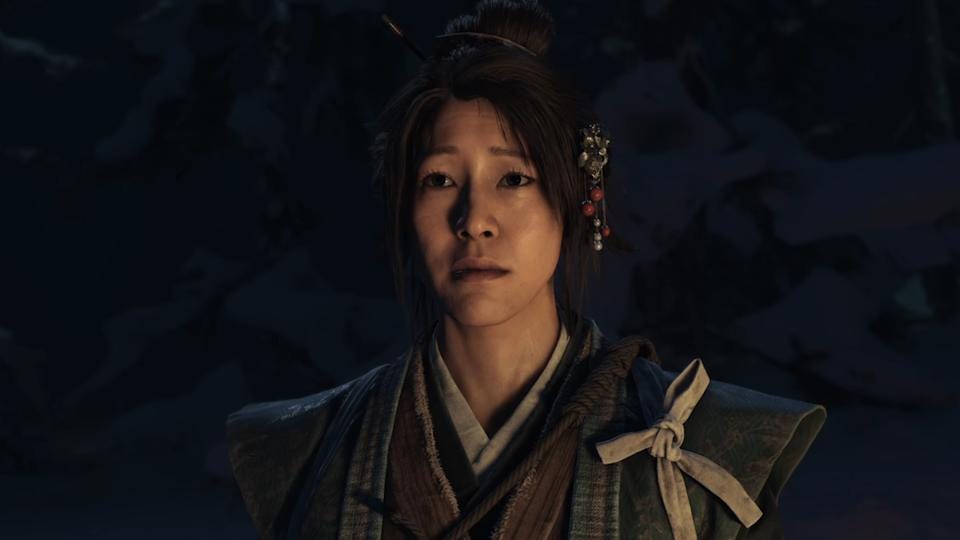
In short, Saito’s feminist credentials are about as sound as Tywin Lannister’s, and the opportunity he claims to offer Atsu should be taken with more than a pinch of salt. His talk of freedom and equality is incongruous coming from a member of a feudal elite, and sure enough, he spends most of the game burning villages, orchestrating massacres, and generally being atrocious.
Interestingly, there is a question as to whether Saito changed, or whether he was always this cruel - when asked why she followed him, Oyuki explains ‘He was different then - or maybe I only thought he was.’ This is a close parallel to a conversation between John and Sadie in RDR2’s epilogue - Sadie believes that Dutch changed in the time she knew him, but John (who knew Dutch better) disagrees: ‘You saw a man who changed. I saw a man who got found out for who he really was.’
Another parallel between the two lies in Saito’s abusive relationship with his sons, who are known to Atsu as the Dragon and the Spider. Saito only ever makes vaguely affectionate references to them in their absence, but plays the aloof and disapproving father when he is with them.
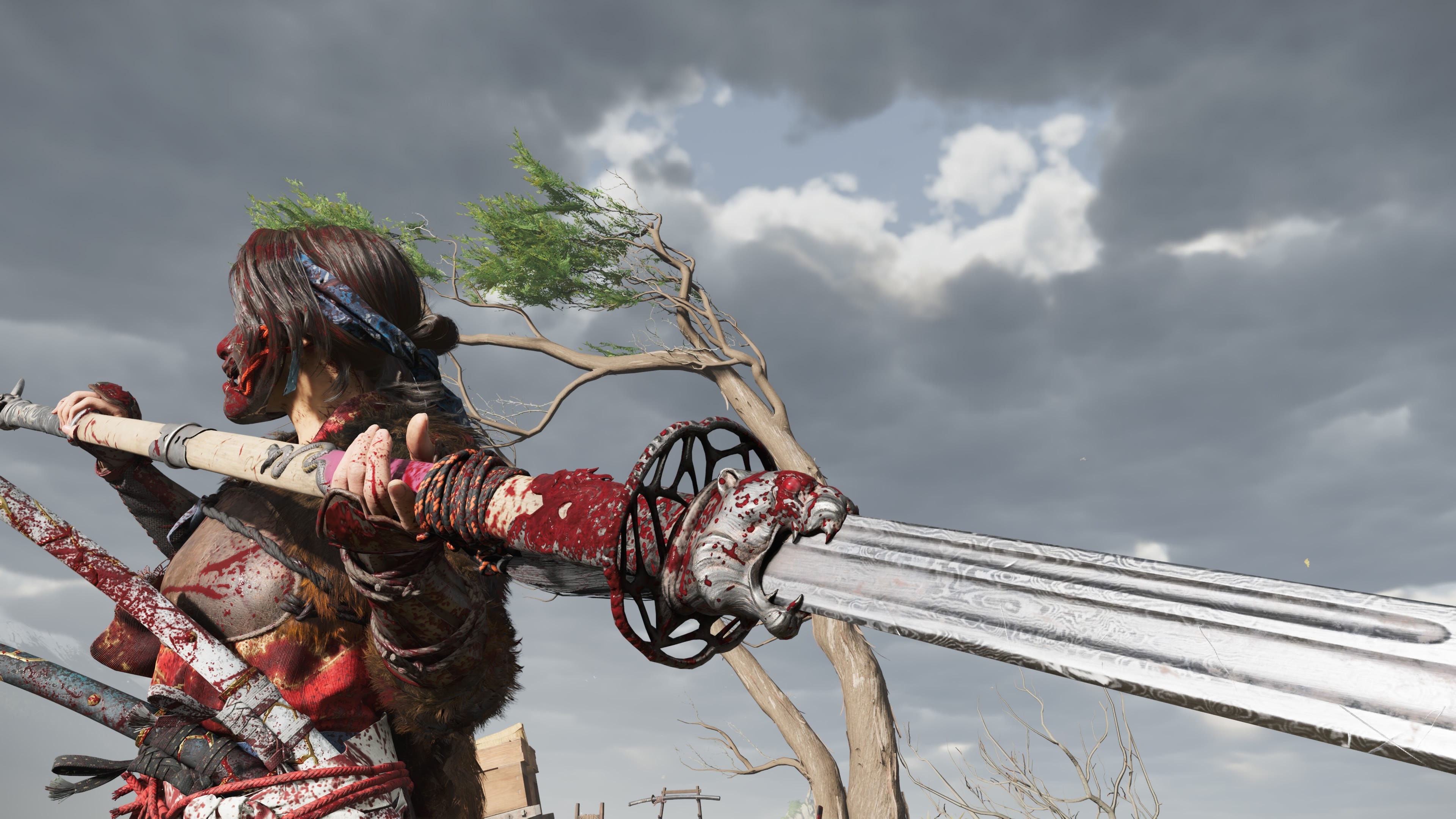
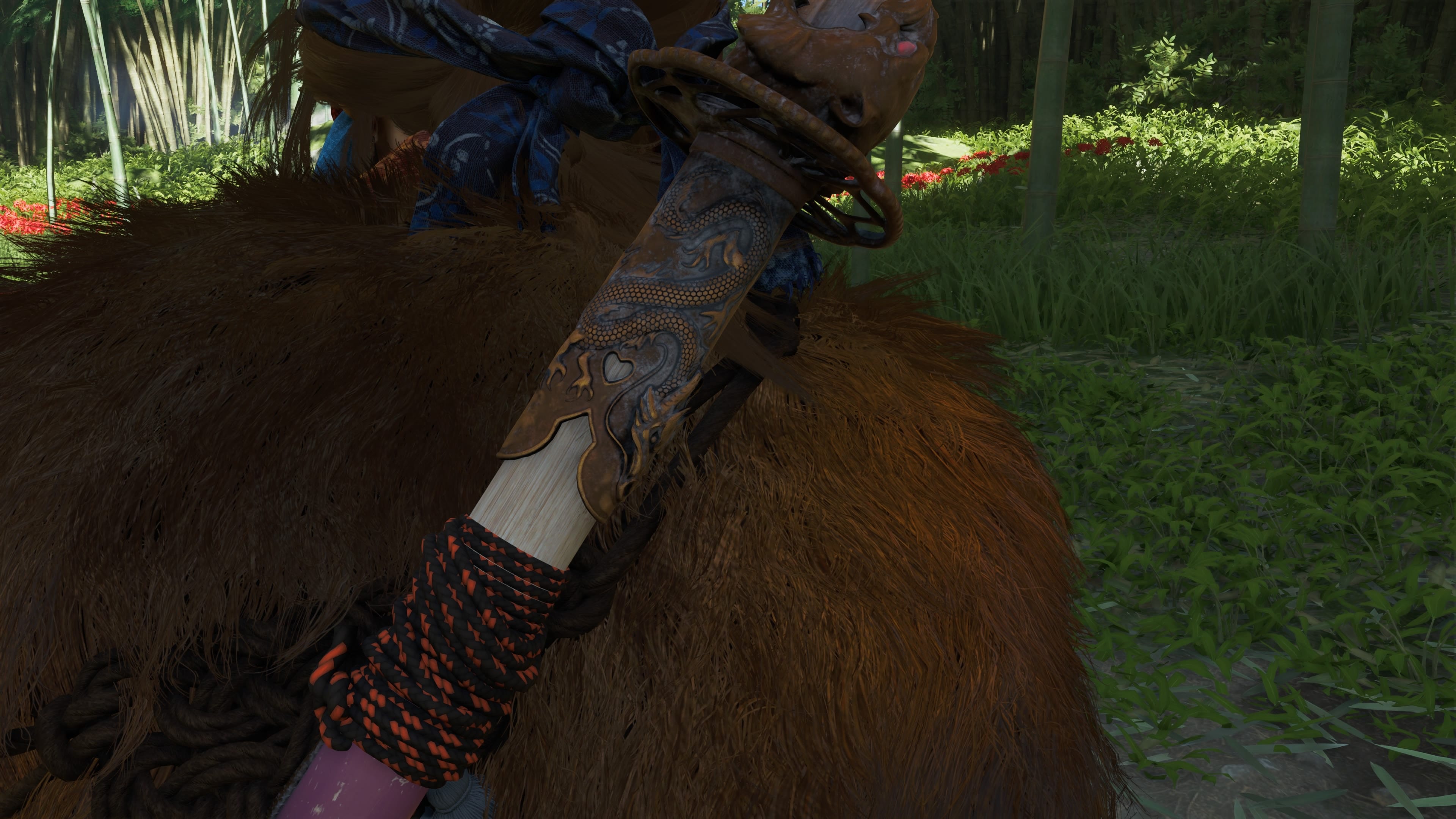
The Dragon is the favourite, whereas the Spider has long since given up trying to please his father, and spiralled into alcoholism. However, it’s implied through various item descriptions that even the Dragon is deeply unhappy, having to go to ever greater extremes to please his father, and never receiving much in return. With this context, it is unsurprising that the Dragon is responsible for massacres and terror on the Oshima Coast: how else do you please a father like Saito?
Parallels can be drawn with RDR2’s Arthur and John, Dutch’s proxy-sons, who he plays against one another with favouritism - as Arthur says to John, ‘I used to be the prize pony, but now I’m just the workhorse’ - although both are ultimately usurped by Micah. Unlike Arthur and John, however, who grow closer over the course of the game, the Dragon and the Spider are always steadfastly loyal to one another.
This could explain Saito’s coldness towards his sons - it may be that he envies the relationship that they have, and it’s interesting that he does complain about their absence, whereas in all likelihood he himself has driven them away.
Whereas villains are often more composed, powerful, and in control than the protagonists who face them, these two are distinguished not so much by their control, as their lack of it, and this is what makes them so dangerous.
Dutch is so hyper-sensitive to criticism that he is constantly on a hair trigger, perceiving any dissent as outright betrayal, and Saito will play the affable and generous warrior-lord, but is prepared to torture and kill anyone who disobeys him at a moment’s notice.
Both also pose as rebels and freedom fighters, while every detail of Dutch’s character broadcasts a view of himself as elite and others as his inferiors, and Saito preaches freedom while tyrannising an entire island and everyone on it. Both also abuse those closest to them, using their sons to do their dirty work, and engage in brutal colonial violence towards the natives of their respective lands.
Finally, there’s a close parallel in their shared identification with the dark side of civilisation, with each corrupted by greed and symbolically opposed to the natural world. Dutch laments that ‘You can’t fight nature, you can’t fight change, you can’t fight gravity,’ while Saito says of Atsu, ‘You can’t tame a wild thing, but I am tempted to try.’
There’s also a great side-quest where she [checks notes] encounters an Ainu god and battles with her Jungian shadow self, an invincible bear demon fuelled by rage. It’s like if Balto visited the cave on Dagobah. Ursula le Guin would love this game.
Though he is almost a WASP, and never acknowledges it.
Though this is something of a front - he once meets Miller at a party, and not only barely acknowledges him, but immediately begins to work against Miller’s pro-Native agenda; we’ll come back to that.
(and indeed a vampiric one; Dutch’s red, black and white costume, gaunt cheeks and dark hair are evocative of Dracula)
Which by that point is basically suicide but in an extraverted way.
The orphan Abigail was only seventeen when the gang recruited her as a prostitute. The game references Dostoyevsky with an extract from a novel in his style, which foreshadows the conflict between Dutch and Arthur, and Dostoyevsky did indeed once deal with a character reminiscent of Dutch - Stavrogin, a wealthy ‘revolutionary’ in The Possessed. Like Dutch, Stavrogin is a charismatic leader, but also a hypocrite and an abuser, who caused the suicide of a young girl who he raped. Like Dutch, Stavrogin poses as something he isn’t, and surrounds himself with damaged hangers-on (see footnote 6).
Swanson is a morphine addict; Bill has military PTSD, and is implied to be secretly gay; Lenny, Charles and Javier are ethnic minorities and fugitives; Sean is wanted for political crimes; Abigail is an orphan and until recently a prostitute; John and Arthur are orphans manipulated by Dutch from a young age. Every member of the gang is desperate, and Dutch’s success in manipulating them speaks less to his charisma and more to his skill in exploiting others’ vulnerabilities.
This comes up often when Atsu returns Ainu artifacts to their owners, and also in the Teshio Ridge arc, when one of Saito’s henchmen weaponises Ainu hunting poisons. It’s implied he learned how to make these by abducting and torturing an Ainu who knew the recipe.
There’s a similarity here to RDR2’s Native storyline: although the Ainu were not subjected to outright extermination on the level of America’s Natives, there are parallels, as they were forcibly assimilated into Japanese culture in the 19th century, with organised efforts to destroy their language and identity through the school system etc.
When Atsu asks whether the Oni has any children, he denies it, saying that ‘children require women, and both are more trouble than they are worth’ - we don’t know if he’s a rapist, but he’s certainly a misogynist.
Comments
Nothing yet. Say the first thing.
Sign in to join the conversation.