
More on roleplaying games can be found here.
In-game literature in fantasy games is so common that at this point, it’s almost passé. In the clumsiest cases, the player is drowned in disposable codex entries, to the point that you don’t so much feel like a hero on a quest as a recipient of spam mail, with nary an opt out button to be found.
Thankfully, this was never the case in The Elder Scrolls series, which has featured entire libraries of in-game books ever since 1996’s Daggerfall, the second entry in the series. The Elder Scrolls even has a nefarious god of books, and the title of the series itself refers to a collection of magical scrolls containing all knowledge. Small wonder, then, that TES went in for in-game texts in a big way.
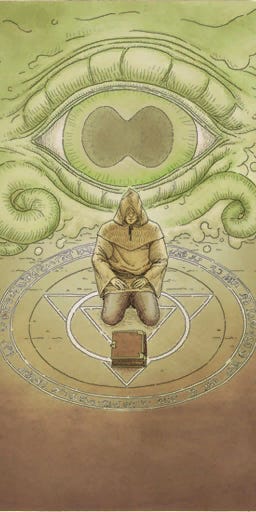
These include in-universe novels, plays, histories, religious scriptures, romance, erotica, racist pamphlets, anti-racist pamphlets, scientific textbooks, Necronomicons, and more. Each new entry in the series has added more and more to this in-universe trove of fact and fiction, with many carrying over from one installment to the next. The biggest infusion came with 2002’s Morrowind, which added around 400 new books to Daggerfall’s existing 100, while Oblivion and Skyrim contributed more modestly to the final count.
These books are as varied in quality as they are in style and content, but the best of the in-game novels1 are not only entertaining, but offer the player important perspective on the various problems that are everyday realities in Tamriel, from political backstabbing, to supernatural disasters, to social strife. Through in-universe fiction, we can often glimpse vulgarised versions of ‘real’ history, replete with truncated timelines, racial and national stereotypes, sexed-up subplots, and giddy sensationalism.
The ‘non-fiction’ of The Elder Scrolls also has an important part to play, offering the player a deeper understanding of the worlds they are navigating. The series has always been particularly knowing (and even satirical) with its presentation of in-game ‘non-fiction,’ and very aware of in-universe bias and misconception.
For example, Oblivion’s ‘Guide to -’ series, which offers a traveller’s guide to each city in Cyrodiil, is unfortunately written by an incredibly bigoted Imperial woman by the name of Alessia Ottus, who has ‘strong opinions’ on certain matters (i.e., people that don’t look like her). Her books are so poisonous it’s almost funny,2 and serve as a map of the exceptionalism at the heart of the empire, which often goes unspoken in the Imperial province, but is definitely there.
Morrowind, meanwhile, incorporates ‘non-fiction,’ directly into its main quest. One of the player’s first missions for Caius Cosades (a buff, eternally shirtless, elderly spymaster with substance abuse issues) involves visiting a bookshop in the capital, and the story requires several later trips to bookshops and libraries, where the player has to source historical and religious texts in an attempt to make sense of the main plot. What emerges is a conflict of historiographies,3 pitting the Temple’s official narrative of the Battle of Red Mountain against the oral histories of the persecuted Ashlanders (from whom I pilfered my handle :P) and the revisionist texts of the Dissident Priests, a secret sect within the Temple.
Although some of the versions we hear are shown to carry more weight than others, none are completely authoritative, and almost everybody involved sincerely believes (and stubbornly sticks to) their own version. Even Dagoth-Ur, the main antagonist, who is a villain in most versions of the Red Mountain story, has his own perspective on the tale. He feels betrayed and misunderstood, and in fact appears more honest in some ways than the seemingly more benign Vivec, who lies to the player’s face about Red Mountain while confessing to his crimes in a message hidden in a book.4
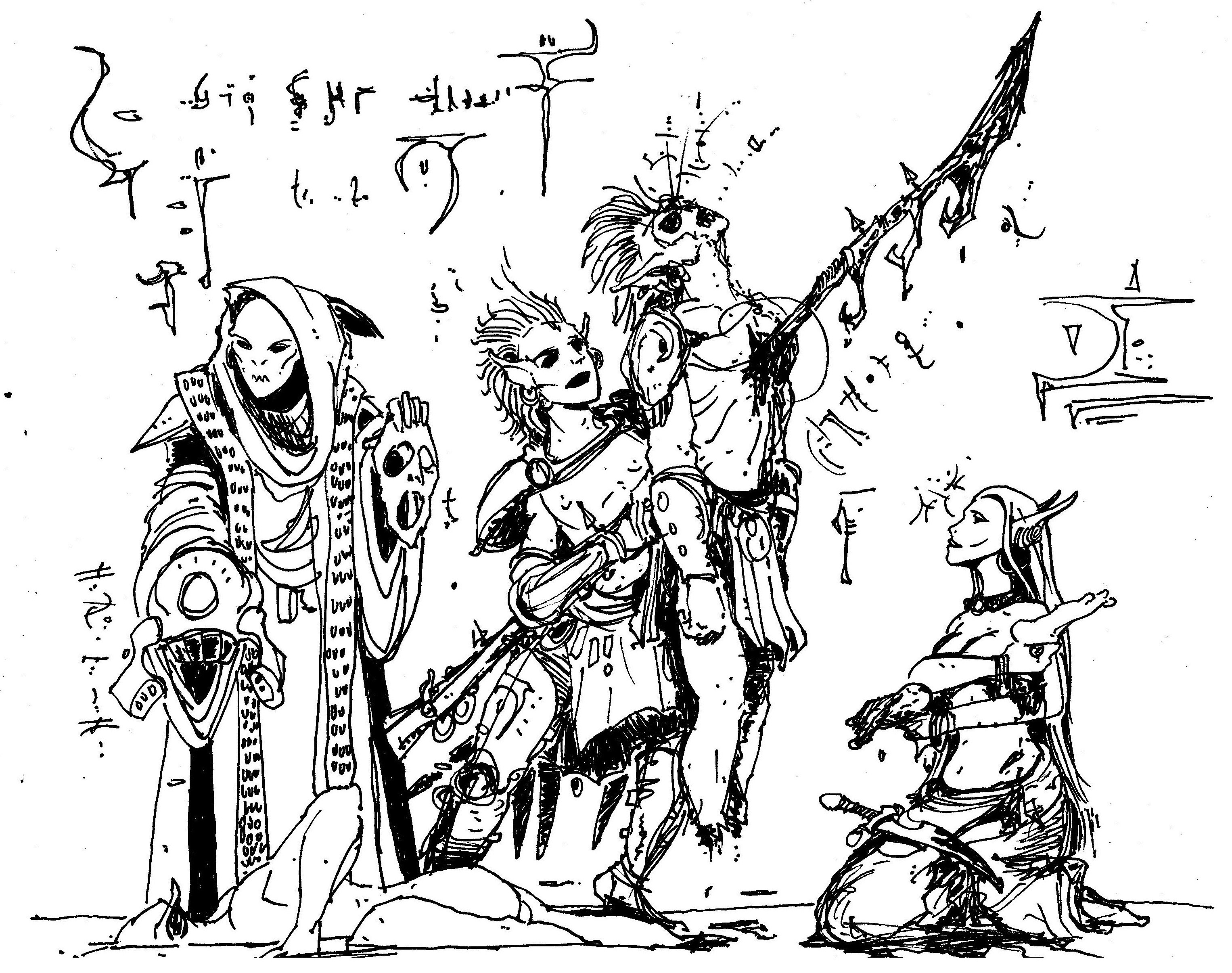
It’s also worth noting that, whereas in many RPGs in-game texts are totally ephemeral, accumulating in databases exterior to the player’s own inventory, The Elder Scrolls’ books are embodied in a more concrete and immediate way. Each book is an interactive item with its own model, weight, sound effects and dimensions, meaning that only a limited number may be carried at a time. This limit is useful, as it can make books feel more valuable, and encourage players to be selective about what they choose to carry or leave behind.
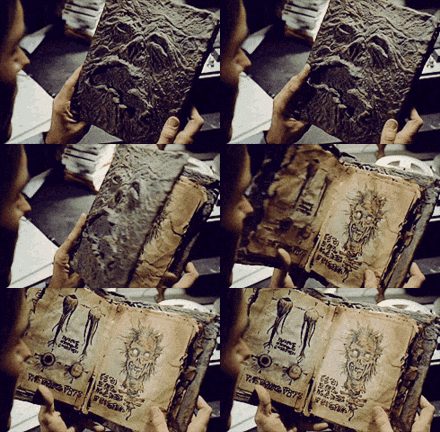
In later games, this amounts to an implicit encouragement for players to invest in property and amass a library of books that interest them, with Skyrim in particular offering interactive shelves that can be filled, put in order, and accessed at leisure. Later games also give each book its own character through various cover designs, from the beautiful marbled paper covers of Oblivion’s remaster, to the ghastly covering of the Oghma Infinium, which is sewn from the skins of sapient beings.
Having drawn out this preamble longer than strictly necessary, it’s high time I began pitching some worthy examples from The Elder Scrolls’ in-game library. I have limited myself to seven, which I’ve picked out according to my own criteria, with the aim of illustrating exactly why Tamriel’s in-game books have always felt so meaningful to me.
It was as if a crack in reality had opened wide. A flood of horrific beasts, tentacled toads, insects of armor and spine, gelatinous serpents, vaporous beings with the face of gods, all poured forth from the great hollow tree, blind with fury. They tore the Khajiiti in front of the temple to pieces. All the other cats fled for the jungle, but as they did so, they began pulling on the ropes they carried. In a few seconds time, the entire village of Vindisi was boiling with the lunatic apparitions of the Wild Hunt.
First appearing in Morrowind, A Dance in Fire is the work of in-universe author Waughin Jarth, who has several other stories to his name and a whole biography. Jarth’s books were all written by Ted Peterson, a key writer and designer of the first Elder Scrolls games,5 whose contribution to the tone, outlook, and general vibe of the series as a whole can’t be understated.
Set in the wild province of Valenwood, home of the wood elves, A Dance in Fire is weird, quite dark, and surprisingly funny, juxtaposing the fantastical with the down to earth in a Pratchett-esque way.6 It centres on Decumus Scotti, an unpromising hero if ever there was one - Scotti is a timid middle-aged Imperial clerk who faces imminent redundancy, and so undertakes a harebrained scheme to salvage his fortune through war profiteering.
Because the wood elves are forbidden by religious prohibition to cut down or eat any plant, they are forced to import timber from abroad. As luck would have it, they are currently under attack by their Khajiit (cat people) neighbours, and are going to need a lot of timber for reconstruction. Therefore, Scotti hopes to win back his comfortable sedentary job by getting in ahead of the competition, and negotiating a contract for his office.
Unfortunately, he is Decumus Scotti, and therefore badly equipped for navigating Valenwood at the best of times, let alone during a war. During his adventures, his life is threatened by marauding Khajiit, by suspicious beverages, and by monsters ranging from giant insects to the eldritch Wild Hunt. Ultimately, he finds himself making a meal of his own business partner alongside his carnivorous elven hosts.
A Dance in Fire is very much a creation of the Morrowind era, when The Elder Scrolls was truly weird fantasy - Morrowind itself featured a setting as evocative of Moebius’ alien paintings as of straight-laced Tolkienian fantasy, and A Dance in Fire leans into that. Valenwood is a land of incredible shapes and dimensions, and bizarre architecture - whereas Morrowind featured a city of giant mushrooms magically cultivated, and another under the shell of a vast crab, A Dance in Fire imagines a city built from walkways among the boughs of a single tree, and another in the shape of a massive flower sculpted from flowing sap.
The imaginary society of ADiF is equally bizarre, with the wood elves’ topsy-turvy sense of morality, which rates a mortal life below that of a tree, and their eccentric leadership in the person of the Silvenar, a magical, apparently non-binary person who is said to be the literal manifestation of the wood elven nation at any given time.

ADiF thus has its part to play in supplementing the weird world of Morrowind, painting a picture of still stranger unseen provinces beyond the scope of the game, which we might one day visit.
Gemullus took Scotti by the shoulder and positioned him on top of the mass of bubbles. “You stand right here …”
Scotti sank quickly into the mud, staring at the smuggler, horror-struck.
“And remember to wait ‘til you see the red clay, and then the next time you see bubbles, push up …”
The more Scotti wriggled to get free, the faster he sunk. The mud enveloped Scotti to his neck, and he continued staring, unable to articulate anything but a noise like “Oog.”
A rare example of an Elder Scrolls in-game book getting a sequel (which, I assume, means that the other writers liked the first so much they made Ted do it again), The Argonian Account is another Jarth story following Decumus Scotti, this time into the swampy province of Black Marsh, home of the lizard-like Argonians.
After his adventures in Valenwood, Scotti has gained an (unmerited) reputation in his office as an incredibly brave and resourceful outdoorsman who can be trusted to do the impossible. Having done little to curb this reputation, he becomes a victim of his own success when he is sent to the dangerous Black Marsh on a mission to discover why trade is at a standstill.
It follows the same general outline as A Dance in Fire, with Scotti’s guards and fellow travellers promptly killed by ferocious snake-like bandits, leaving him stranded in a strange land. He has to contend with treacherous geography, with clouds of flesh-eating gnats capable of gnawing off an ear or nose before the victim notices, and with some of the most peculiar methods of travel ever devised.
The Argonian Account’s depiction of Black Marsh as a tyrannised and watery province where native slaves toil under foreign masters is more than a little reminiscent of Joseph Conrad’s portrayal of central Africa in Heart of Darkness, and The Argonian Account takes a refreshingly anti-colonial stance. The province suffers under the Imperial yoke, and is able to prosper and trade with its neighbours only when foreign meddling is reduced. Given TES’ not uncomplicated record in that regard,7 it’s a good note to end on.
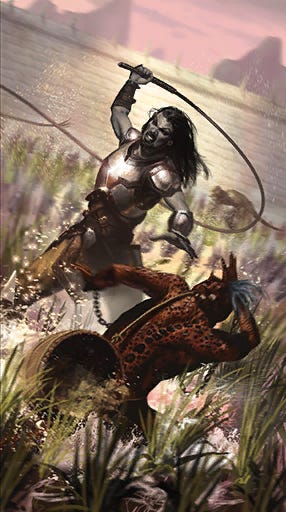
I did as he asked, and once again, his questions taxed my knowledge. There were many tribes to cover. The Bonsamu who were indistinguishable from Bosmer except when seen by candlelight. The Keerilth who could disintegrate into mist. The Yekef who swallowed men whole. The dread Telboth who preyed on children, eventually taking their place in the family, waiting patiently for years before murdering them all in their unnatural hunger.
First appearing in Oblivion, Immortal Blood is a creepily evocative, cleverly structured, and, we are led to believe, authoritative text on vampires. It serves as a successor to Daggerfall’s ‘Vampires of the Iliac Bay,’ which elaborated on the lore and mechanics of vampirism via a vampire’s true account. Immortal Blood, on the other hand, is presented as a short story, but appears to be suspiciously accurate.
In Immortal Blood, a priest receives repeated nightly visits from Movarth, a pale, intense man who says that he is a vampire hunter, and explains that he can only visit by night, as he sleeps during the day. Each time, Movarth quizzes the priest, whose knowledge of vampires seems endless, and the priest shares the names and attributes of vampire clans all over Tamriel, from Skyrim8 to Valenwood. Each time, Movarth must depart before daylight.
The set-up is almost reminiscent of the One Thousand and One Nights - we are led to believe that when the priest has given up all his knowledge and outlived his usefulness he will be disposed of by the (implied) vampire Movarth.
However, all is not as it seems. On the second to last visit, Movarth asks about Cyrodiil’s vampires, and is told that in Cyrodiil, there is only one bloodline, which is known for stealth and subterfuge, and has outcompeted all the others. After scouring the province and failing to find a single vampire, Movarth returns to the priest, who reveals his own pale skin and fangs in the candlelight, before overpowering and killing his guest in a sudden role reversal.
This, of course, explains how, whereas previous games depicted many different vampire bloodlines competing for territory amongst themselves, Oblivion features only one strain of vampirism, which the player may or may not succumb to.

No one -- not the oldest Dark Elf of Mount Dagoth-Ur or the Ancient Sage of Solitude himself -- can recall a time when the Orc did not ravage our fair Tamriel. Whatever foul and pestilent Daedra of Oblivion conjured them up could scarcely have created a more constant threat to the well-being of the civilized races of Tamriel than the obnoxious Orc.
First appearing in Daggerfall, The Pig Children is not so much a fun bit of in-game fiction as a document of historical significance, in much the same way that copies of Der Sturmer are historically significant. Essentially, it’s a thoroughly nasty racist tract directed at one of Tamriel’s most vilified peoples.
Now, I am an enthusiastic proponent of Orcish Studies - an academic discipline that doesn’t exist, but should - and apparently so was the real-world author of The Pig Children (also Ted Peterson), who makes quite an interesting comment. Peterson uses both the language of real-world racism, and characteristic phrases directly from Tolkien, distinguishing between the Orcs and the ‘free peoples,’ placing the former outside the category of ‘civilised,’ and justifying their extermination.
Not wishing to get too bogged down in questions of Tolkien and racism, in the context of Daggerfall’s main story, The Pig Children is actually very important. Whereas Orcs in all subsequent Elder Scrolls games are a playable race, who regularly feature as friendly NPCs like any others, Daggerfall was the last to treat Orcs as a ‘monster’ race, appearing only as innately hostile dungeon-dwellers without speech - or so it seems.
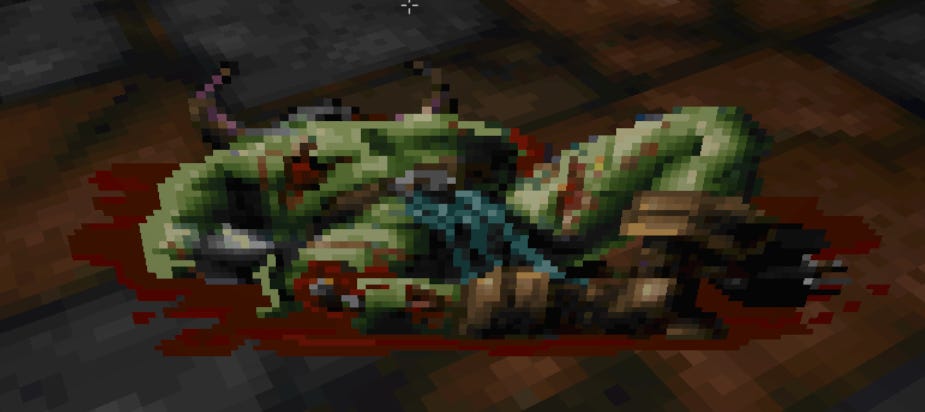
As the story progresses, we find a fragment of a letter describing the massacre of an Orc village, including children (also men and women,9 respectively called ‘stallions’ and ‘mares’ in dehumanising style, in keeping with The Pig Children’s title; it’s hard not to think of similarly blood-curdling rhetoric in recent years10). The fragment was apparently written by a reluctant participant in the massacre, and is found among scraps of other letters that were evidently destroyed out of shame.
This grim artifact leaves a lingering impression on the player, and colours our perception when we first meet Gortwog, leader of the Orcs, who, unlike the generic dungeon Orcs, has a far more detailed and humanised sprite and portrait.11 Far from a simple brute, Gortwog is a shrewd, articulate statesman, and a major player in the game’s political drama.12
Whereas others scheme for material benefit, Gortwog has a nobler cause: he wishes for his people to be recognised and protected by the laws of the Empire. He wants the ‘humanity’ of the Orcs to be acknowledged in a world that despises them, and ultimately, he succeeds in forcing the Emperor’s hand.
Effectively, The Elder Scrolls took the venerable Orcish Question that confounded Tolkien himself13 for decades - are Orcs people? - and answered in the affirmative, cleverly using the mechanics of a dungeon-crawling game to comment on how the genre dehumanises human-like enemies.
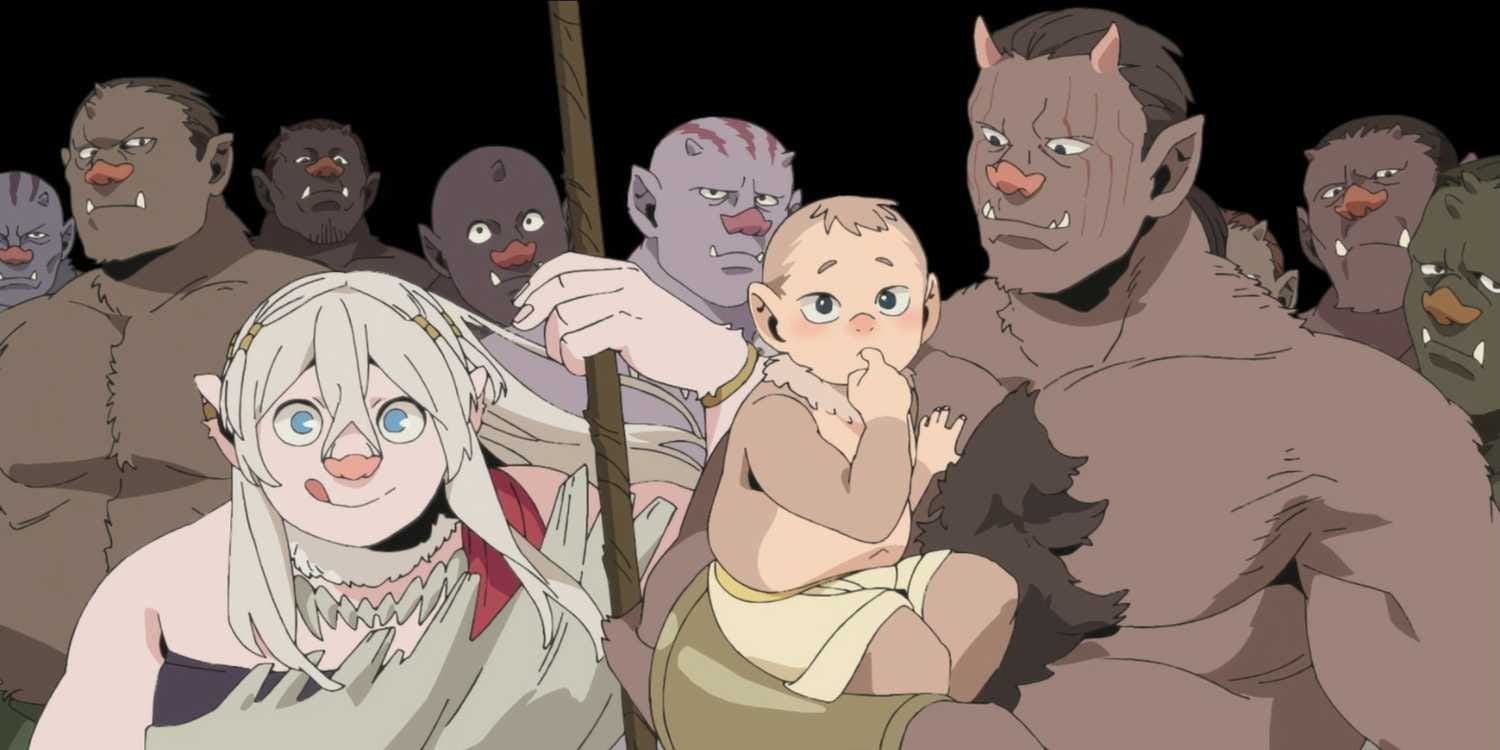
(Also, shoutout to Habeeb’s essay ‘the default dungeon is colonial,’ which is very good and made me think about my own tabletop experiences differently.)
‘I - I’m sorry...’ sputtered the voice of Emmeg Gro-Kayra. Malacath’s eyes went wide as he looked upon the severed head, seeping blood from its wound, but somehow kept alive. Its eyes wavered about wildly, trying to focus on the aspect of Malacath before it. The once-proud eyes of the champion were choked with tears of grief, pain, and confused recognition.
Added in Oblivion’s Shivering Isles expansion, only three of the purported sixteen volumes feature in the games, each describing the trickster Sheogorath’s triumph over another Daedric Prince.
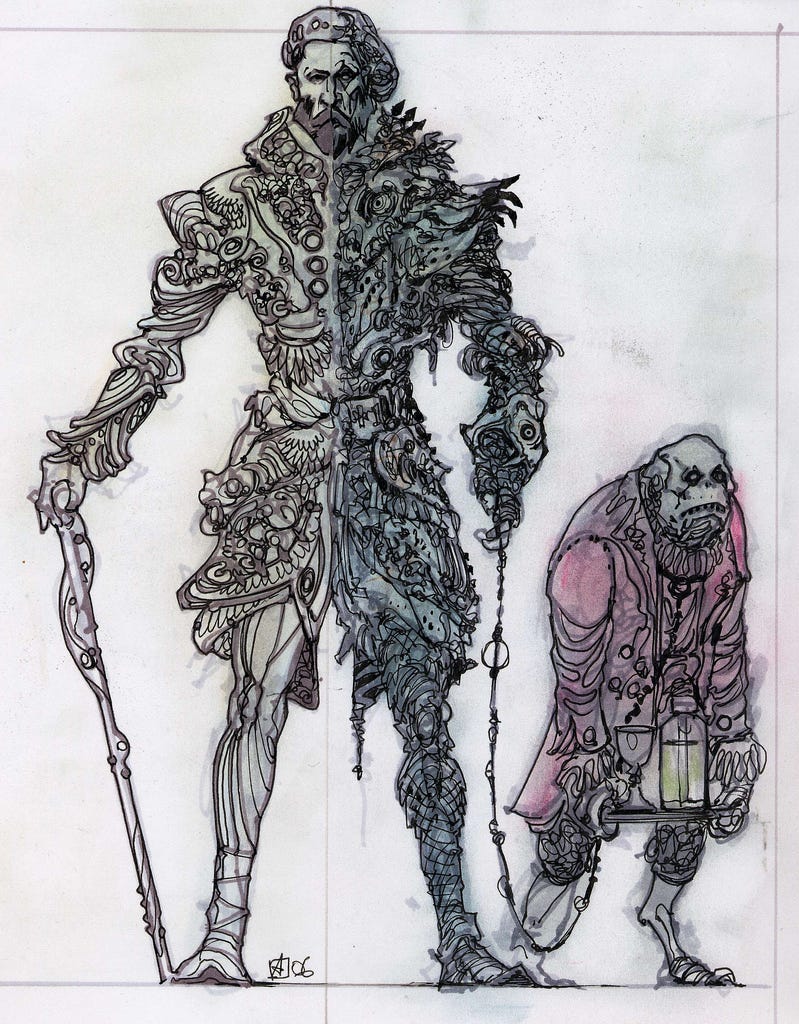
In this volume, Sheogorath (who is the Daedric Prince of Madness) makes Malacath - the god of the Orcs - the target of his cruel pranks. Instead of striking at him directly, Sheogorath chooses a mortal victim, Emmeg gro-Kayra, a young Orcish hero who defended his people in the dark days before Gortwog’s reign. He visits Emmeg in the guise of a frail old man, and gifts him the cursed sword Neb-Crescen.
The first time Emmeg draws the sword, he loses his mind, and the next thing he knows, he is standing over the mutilated corpse of a young Orc woman. Horrified, Emmeg flees, and Sheogorath summons Malacath to the scene of the crime.
The Orc god is furious, and rushes to take revenge, ambushing and beheading Emmeg. Only after he has done so does he recognise Emmeg as his own half-mortal son (!!!), and Sheogorath appears, carrying off Emmeg’s still-living head to his own realm of madness, and leaving the defeated Malacath to mourn.
The device of a hero tragically killing his own long-lost son is an authentically ancient one, from the Irish Cuchulain and Connla, to the Persian Rostam and Sohrab, in keeping with the mythic style of the story. The story also develops its motifs cleverly - Sheogorath’s appearing as a trickster ‘in the pale moonlight’ is of course evocative of the devil, and the moon (also referenced in the name of Neb-Crescen, as in crescent) is of course associated with madness, as in ‘lunacy’ and ‘lunatic.’
After a time, there was nothing left of his uncle that couldn’t be washed down the cellar drain. The process of cleaning up came easily to Torik as well. Blood scrubbed up much quicker than the usual grime and saltrice flour that littered the cellar floor.
Another classic from Ted Peterson, The Axe Man first appears in Morrowind, and tells the story of Minas Torik, a quiet, restrained member of the Morag Tong assassins. The author is intrigued by Torik’s stated preference for wielding axes, an inherently bloody class of weapon at odds with his meek exterior, and sets about quizzing him about his history.
Torik relates that he was sent at a young age to live with his uncle, a ruthless plantation owner, who had promised to make him a partner in his business. In reality, he made Torik a servant, keeping him busy at all hours with gruelling manual work, terrorising him with beatings, and never teaching him anything about the business.
At last, badly in debt, his uncle announces his intention to leave the plantation and flee the country, leaving Torik behind. The boy calmly lifts an axe from his uncle’s luggage, finding it no heavier than his work tools, and proceeds to methodically cut him into pieces and wash what is left of him down the drain.
The story is structured almost like a fairy tale, with a foundation of bitter irony and poetic justice: Torik is something of a boy Cinderella, and appropriately, his repetitive movements as he kills and disposes of his uncle are likened to the various domestic duties described in the first part of the story. The final line is particularly ironic:
The house and all the belongings were sold to the debt collectors, but Torik took the axe. It seemed that his uncle had given him some worthwhile business skills after all.
‘Certainly not, kind sir! I am here but to clean your chambers.’
‘Is that all you have come here for, little one? My chambers?’
‘I have no idea what it is you imply, master. I am but a poor Argonian maid.’
‘So you are, my dumpling. And a good one at that. Such strong legs and shapely tail.’
‘You embarrass me, sir!’
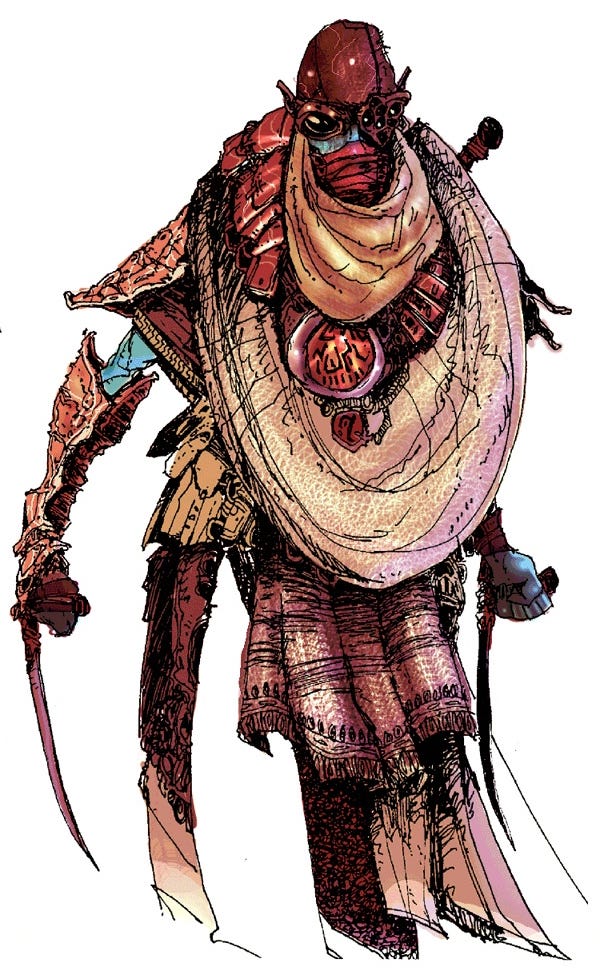
No picture of The Elder Scrolls literature would be complete without a mention of this deeply, deeply silly offering. First appearing in Morrowind, The Lusty Argonian Maid is often described in-universe as erotica, but is written more like a sex comedy akin to a Carry On film. It became a running gag even in Morrowind itself, to say nothing of the rest of the series.
The book consists of a couple of short exchanges between the eponymous maid, who has the ominous name of ‘Lifts-Her-Tail,’ and her employer, Crantius Colto, transparently a self-insert of the author, Crassius (as in crass) Curio. These conversations positively sag under the weight of innuendo.
The joke works largely because the actual material is so profoundly unsexy, from the choice of an Argonian (who are, lest we forget, lizard people) heroine, to the unpromising appearance of Crassius Curio, who actually features in Morrowind (and during the main quest no less!), and is as much of a sex pest as you’d expect.
The book crops up again and again in the later games, usually in funny contexts - in Skyrim’s Dragonborn expansion, the hero is sent off by the anxious wife of a staid, eminently respectable advisor to recover her treasured ‘portfolio’ from a shipwreck, and of course it’s actually a special edition of The Lusty Argonian Maid.
(Included because I suspect Jim Mander would be deeply disappointed if it didn’t make the list.)
I hope that those who are still with me have appreciated this indulgent window into weird fantasy, the postcolonial implications of Orcs, and the big-brained nature of Ted Peterson. This one has already run very long, and there’s little more to add, so I will end with a question:
Do you have a favourite Elder Scrolls book that didn’t make my list? If so, please let me know in the comments!
(short stories in real-world terms; the longer ones are split into multiple volumes)
But also, not that funny. Her first name, Alessia, refers to a human heroine who sort of helped exterminate the entire elven population of the province Ottus lives in; she shares it with Alessia Caro, another very fascist-coded Imperial, whose husband, Marius, enjoys [checks notes] torturing immigrants in a secret room in his palace. What a career that man would have in 2026.
It’s perhaps worth mentioning that Daggerfall has a similar - though less bookish and more down-to-earth - premise to its main story, with the player investigating conflicting accounts of the death of King Lysandus, who officially died in the Battle of Cryngaine, but was actually murdered elsewhere, and now haunts his former city as a wraith calling for vengeance. As in Morrowind, the narrative of what really happened has been manipulated by various factions for political ends, and the player must uncover the truth.
More recently, Peterson has been working on The Wayward Realms, a work-in-progress spiritual successor to Daggerfall, together with Vijay Lakshman and Julian LeFay, both of whom also worked on Arena and Daggerfall back in the 90s. Sadly, LeFay died last year, although it seems the project is still underway.
Pratchett was himself a fan of The Elder Scrolls, especially Oblivion. He did a very good Tolkien-critical Orc story in Unseen Academicals, not a million miles away from Daggerfall’s Orcish subplot (see ‘The Pig Children’ section).
The Empire is too often depicted as the enlightened and reasonable party, in contrast to native barbarism. E.g., the Empire gets a very easy ride in Skyrim, where the opposing rebels are depicted so negatively that players overwhelmingly side with the Empire, despite many Imperial crimes in the same game. Morrowind has similar issues, with added Orientalist connotations given that the province is heavily inspired by various Asian cultures.
Skyrim’s Volkihar vampires, first named in Immortal Blood, play a major role in the Dawnguard expansion, though sadly they do not live under frozen lakes and seize their victims through solid ice, as the book describes. Movarth, now a vampire himself, also appears in a prominent quest in the base game, low-key confirming the book as ‘canon’ rather than in-universe fiction.
Even the fact that Orcish women and children are confirmed to exist - and Orc women feature in all subsequent titles, potentially as the player character - is a humanising detail absent from Tolkien (not counting the letters).
Pictured below:
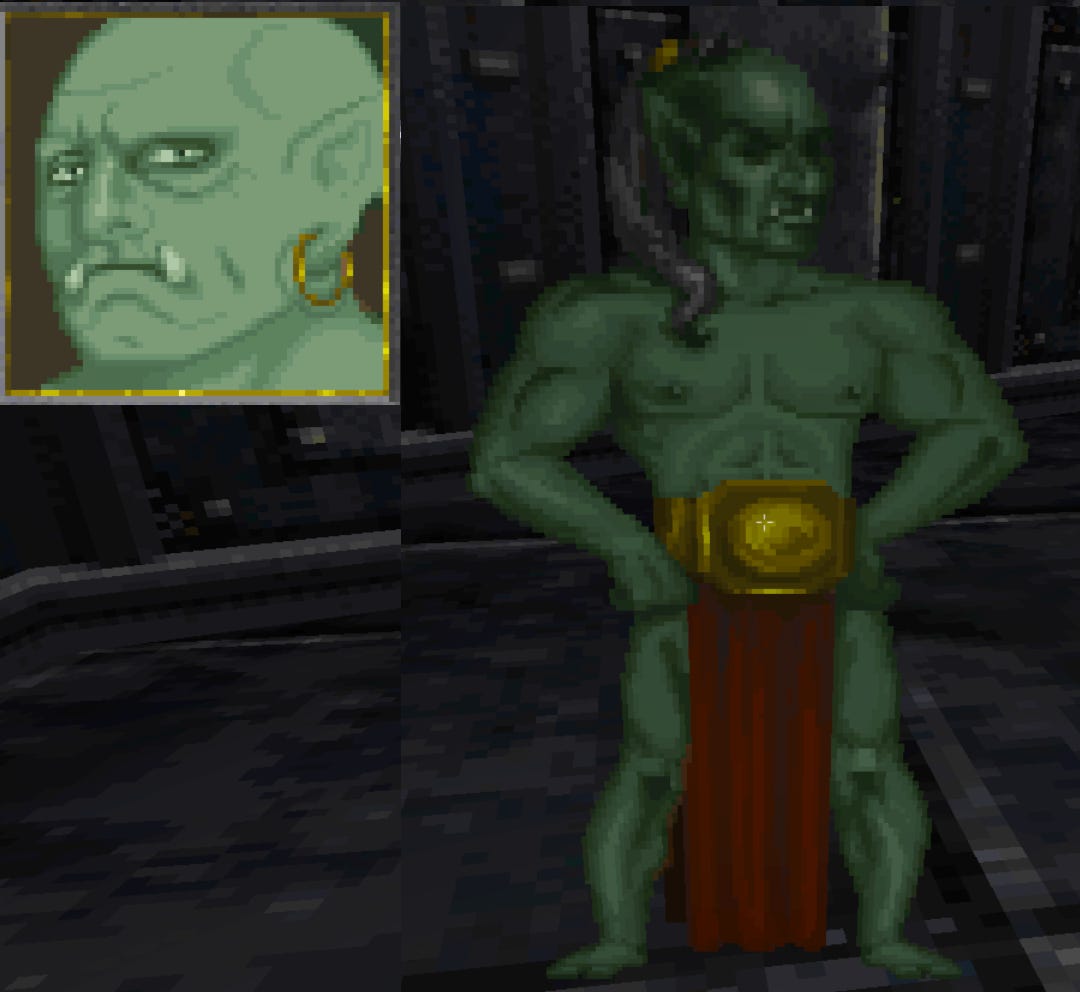
Highly recommend the linked article, it’s a very good breakdown of the OQ (orcish question). Tolkien sort of made the Orcs a bit too human, and couldn’t reconcile that with the fundamental premise of their role in the story, or indeed with his own Christian faith.
Comments
Nothing yet. Say the first thing.
Sign in to join the conversation.