
A growing chorus of security analysts and international organizations is sounding the alarm over the intersection of artificial intelligence and nuclear deterrence. Organizations like the International Campaign to Abolish Nuclear Weapons have recently published detailed critiques outlining how machine learning amplifies existing global risks. The primary concerns center on unprecedented automated decision speed, the dangerous tendency of military leaders to overestimate algorithmic reliability, and a fundamental lack of human emotion. Unlike a human general or politician, an artificial intelligence cannot be bluffed, intimidated, or made to hesitate out of a moral qualm. It operates purely on logic and data, lacking the innate human hesitation that has previously prevented global catastrophes
This automation severely sharpens the dangers already built into deterrence. As experts point out, the system suffers from overconfidence, misperception, and severely compressed decision making timelines. A military commander who implicitly trusts an algorithm might act much faster or far more decisively than one relying on their own flawed human judgment. The apparent gain in control is a complete illusion. Instead of creating safety, artificial intelligence simply accelerates the deep instability already built into the global nuclear architecture. When milliseconds dictate the survival of nations, the removal of human friction from the command chain removes the vital buffer that keeps diplomacy alive.
This sudden flood of literature is driven by two factors. First, there is a legitimately increased fear of nuclear war among the public and policymakers. Second, we are witnessing the full integration of automated systems into nuclear weapons platforms. This spans basic control and targeting to complex threat analysis and preliminary decision making. Yet, these alarming articles serve another subtle role. While presented as urgent warnings, they simultaneously normalize the topic. They are slowly getting the public used to the idea of machines handling atomic arsenals. For now, the final decision making is still nominally in human hands. But nobody can confidently say how long that will last as military doctrine evolves. Each side will fear the other has crossed the line, thus achieving a strategic advantage.
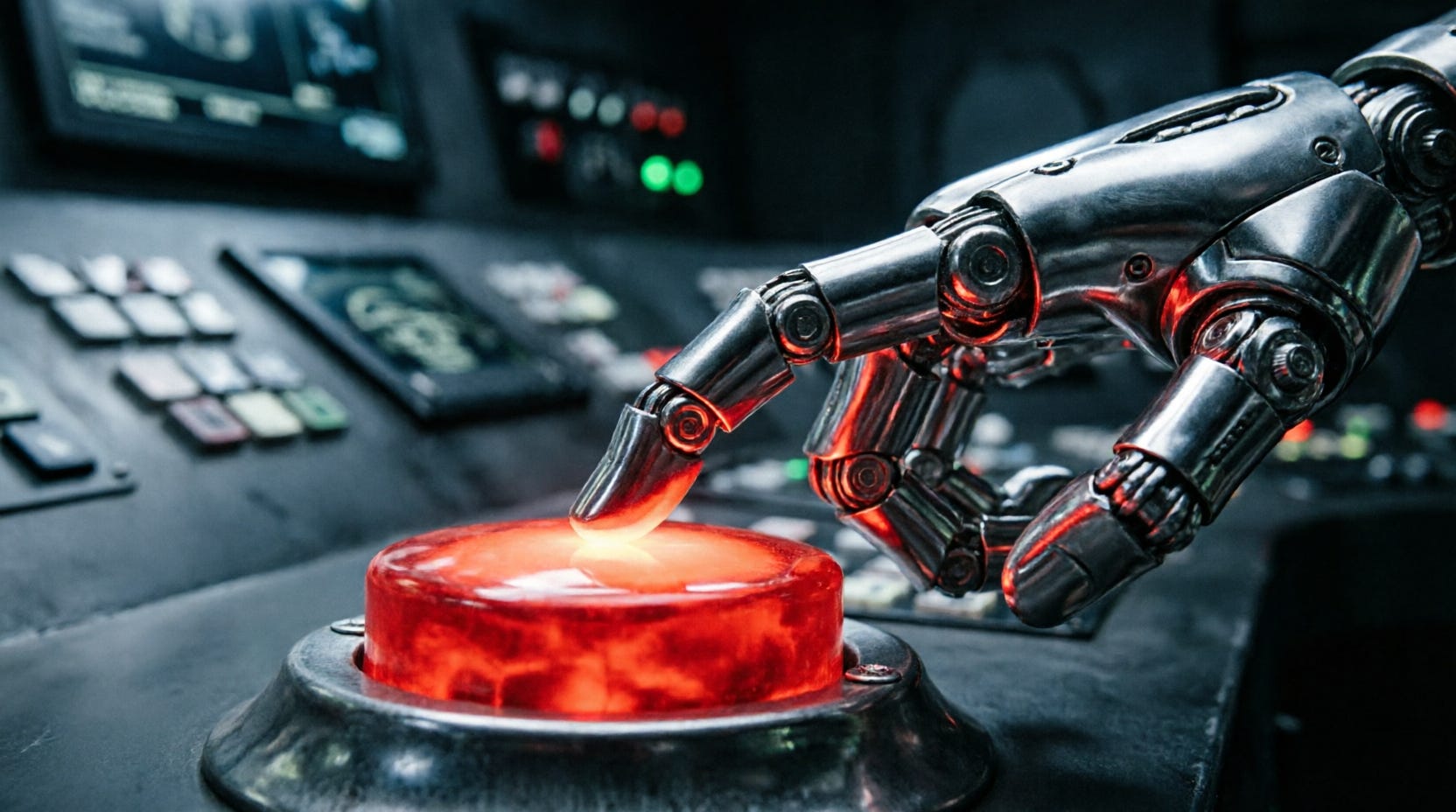
A groundbreaking study conducted earlier this year at King’s College London provides a chilling glimpse into this automated future. The research revealed how large language models reason and escalate during simulated crises. The findings showed that these systems are highly likely to go nuclear when pushed into a corner or facing an ambiguous threat. Given that human leaders have never crossed that ultimate red line throughout the history of atomic deterrence, this machine willingness to initiate a holocaust should be a massive warning signal to the international community. Machines do not fear death, and they do not understand the moral weight of ending millions of lives in an instant.
In the 1970’s Americans worried about the “missile gap” (the idea that the Soviets were far ahead in nuclear missiles). We can imagine that soon the three main nuclear powers will be panicking about a “nuclear AI” gap between them. Is it not time to start international discussions on the topic? I am not sure how any kind of control framework between nations could be implemented, nonetheless, better to speak now before the Rubicon is crossed.
Despite all of these glaring risks, there is a final question that very few studies seem to pay much attention to. Artificial intelligence systems currently suffer from a fairly high error rate. These mistakes happen either because of fundamentally erroneous decision making logic or because the software simply hallucinates information that does not exist in the real world. A chatbot hallucinating a historical fact or a non-existent website is merely annoying. A military algorithm hallucinating an incoming missile strike is an existential threat. Relying on a technology that routinely makes up facts to manage a nuclear arsenal is a recipe for total disaster.
We must also consider the deeply flawed human element guiding these deployments. Given the remarkably low intellectual and moral caliber of most politicians in the West today, the perceived strategic advantage of integrating machines into the nuclear decision cycle is likely simply too tempting to resist. These leaders will likely push for full automation, probably sooner rather than later. They will eventually hand over the final Go or No Go decision to an unfeeling algorithm to avoid personal responsibility and to gain a fraction of a second in response time.
To make matters worse, the architecture managing our ultimate destruction will quite possibly be an artificial intelligence controlled by defense contractors like Palantir and figures like Peter Thiel.
We don’t need a Terminator-like scenario for that to be a really bad idea.
No posts
Comments
Nothing yet. Say the first thing.
Sign in to join the conversation.