
Nornanótt is a day of purification and of cleansing; it ends the spring quarter, and marks the transition to the summer quarter. In ancient times, smoke was wafted over animals and herdsmen, to purify then for movement to summer pastures. Today, the ladies fumate the folk, as a purification in preparation for summer activity. Wafting smoke, made by a sacred fire, onto someone or something of value, is a very old Indo-European tradition attested widely. This is an ideal time to do spring cleaning, of the body, mind, and soul. Purify, cleanse, make right.
This is a very gynocentric holiday, and it precedes Sumarmál which is a very androcentric holiday. There’s a current here of using “spooky girl magic” for good. At Nornanótt, the women purify the folk and make them clean, yet disorganized: they create a state of nature, an unblemished primal matter. The men, in mimicry of the Allfather’s act of creating Midgarðr, then order that state of nature (in the calendar this is symbolically done at Sumarmál). The Norns as creators of the space of the possible are distant patronesses of this affair.
This one’s history is actually pretty complicated despite the relative simplicity of the holiday itself. The modern Nornanótt is thus a coming-together of several moving parts, and we have to describe all of them to make sense of what is occurring.
Also, let’s get this out of the way upfront: in ancient times, Nornanótt and Sumarmal were the same holy-tide, with Sumarmal being the “party” after the end of the “business” of Nornanótt.
In the olden days, holidays weren’t singular days, but rather holytides: a period of time in which one behaved differently. The realities of living in the modern world require us to adapt. Nornanótt preceded Sumarmál, so the official date of Nornanótt is at the end of April, although as usual the observed date is the third-Saturday of the month.
Nornanott, Sumarmál, and Miðsumar are all part of a big stretch of time that had certain characteristics across Europe, and precisely when this stretch of time was, and as such when an individual would actually do this or that, varied. So these three are all really similar, and this article, the first of the three, is going to be front-loaded with more information than the others.
This is the real meat and potatoes of Nornanótt, and what we’re actually doing, but it’s also the oldest strand of this tale, and as such is the most terminologically remote. There’s a very old Indo-European religioveterinary mytheme about wafting smoke onto animals before moving them into the summer pastures. This is also done to people and objects, but the specific timing here is relevant to herd animals. As said, purification via fire and smoke is a common Indo-European practice. I assume it’s a human universal to a degree, but here there’s a specific practice: purifying the animals via smoke before moving them into summer pastures, whenever precisely “summer” is for the locale.
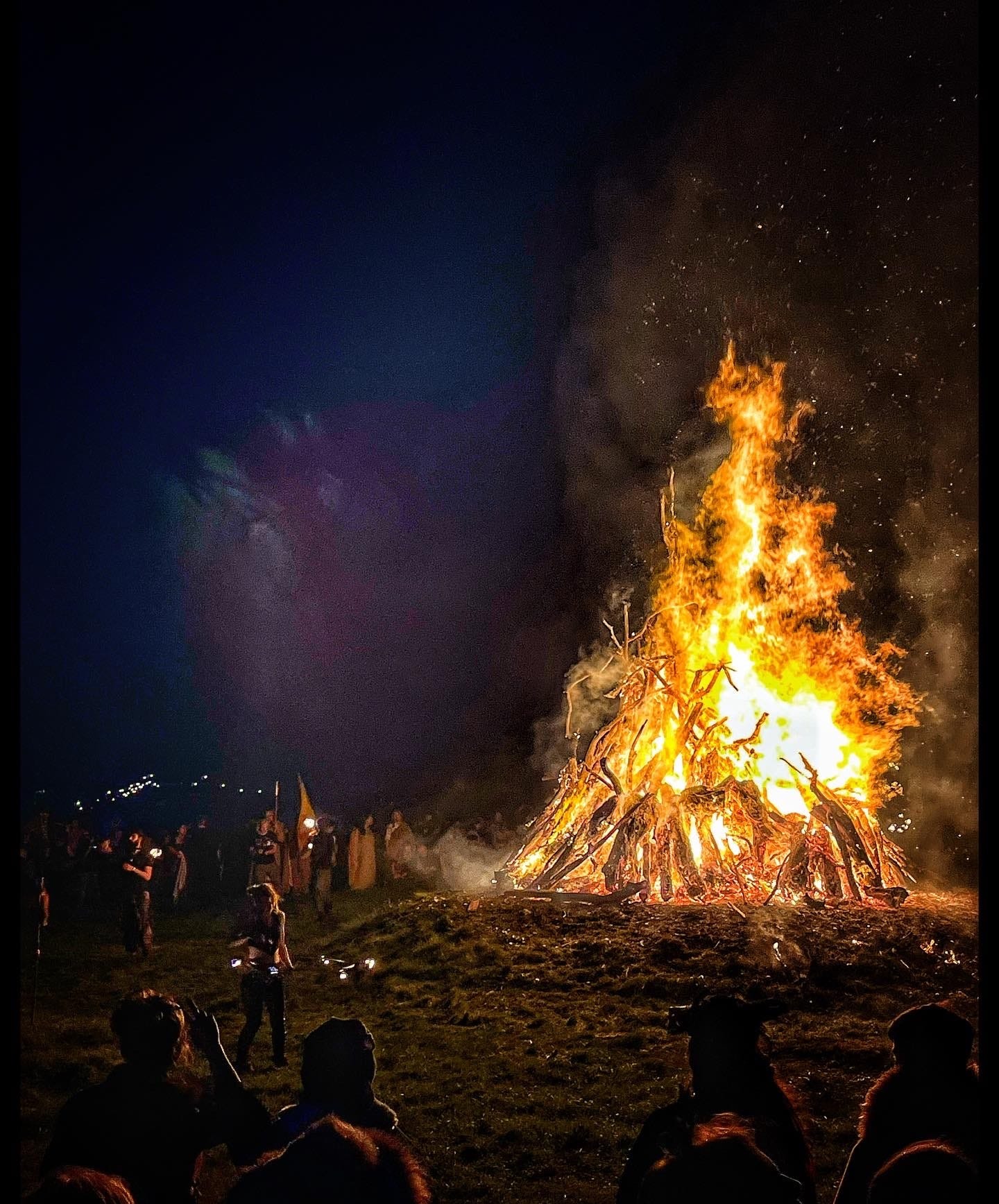
The discrepancies in when these rites are performed arises from the simple geographic and climatic differences in the locales of performance. Or, to put it another way: when cattle, sheep, etc are moved to summer pastures obviously varies regionally based on the specifics of that region, such as Ireland, northern Germany, Italy, Iran, the Indus Valley, etc.
In the month of April, before moving the sheep into their summer pastures, the Romans celebrated Parilia. This celebration involved a great deal of ceremony that we won’t get into, but notably it involved the shepherd and sheep jumping through the fire after having smoke wafted onto them. This all was done to purify and protect the sheep.
In the month of April, specifically late April, before moving sheep into their summer pastures, the Insular Celts celebrated Beltane. This celebration’s chief act involved the Druids lighting fires, and driving cattle and sheep between the two fires. There’s a lot of stuff involving offering to the Gods (“fairies”, the sídhe), but purification via smoke to prevent their displeasure (that is, disease) is key. The Welsh call this holiday “Cyntefin”, and while today it has absorbed a lot of Mayday stuff, it’s fundamentally still about smoking up the cattle and herdsmen before moving them to the summer pastures.
In Hinduism, Agni (who is both a God and fire in general) is constantly referenced in relation to purity, and purifying cattle and people, via smoke. This is found throughout many rituals in general. I can’t really emphasize how important fire and cattle are to the Rig Veda and it’s religiosity. You know who else is really big on fire, and it’s purifying aspects, and cattle? Zoroastrians. One of the Amesha Spentas, Atar, is the sacred fire. Again, I cannot stress enough how important this is in Zoroastrianism.
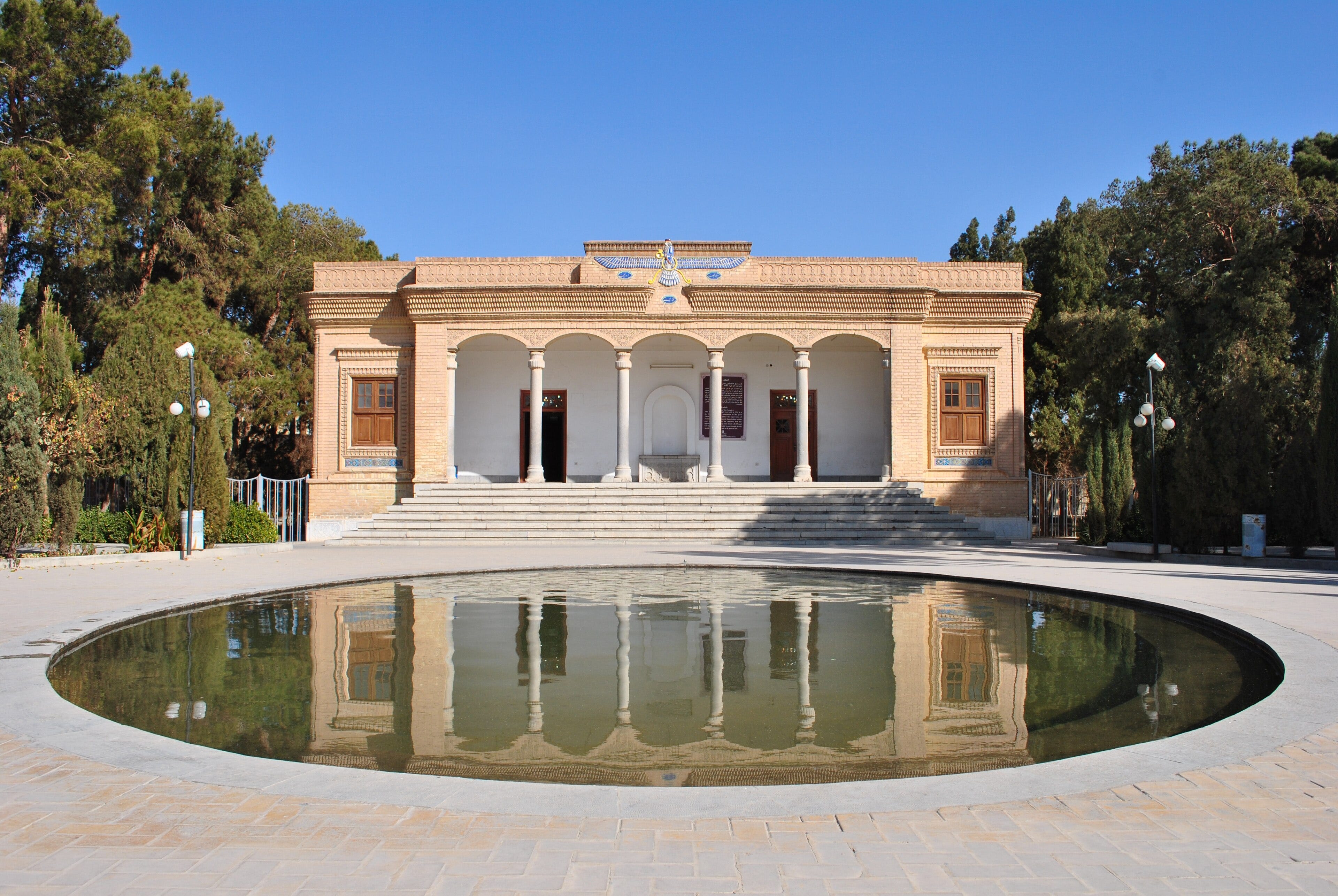
In the Greek world, Thargelia involved purifying herds and men via smoke. It was done in May, and was tied up in the first harvests (the holiday of Pyanepsia was for the last harvests). There’s a lot of other things going on in Thargelia (such as ritually processing the two ugliest men in the city out of it), and we’re just going to skip over them.
In the Alps and the Slavic world, this celebration eventually became unglued from pastoralism, moving forwards into June, attaching to the summer solstice. In both cases, Christian syncretism links purification by fire to John the Baptist, and the central ritual theme views the smoking of the participants as a form of baptism. But actual, literal washing in water was also part of this, and it was considered an auspicious time to baptize infants as such.
I presume part of why it could move so far forwards is the explicit attachment to John the Baptist, and the importance he plays in Christian tradition, alongside the decrease in pastoralism naturally detaching this ritual from an explicit utility. Nornanótt is the “business end” of a holy tide that actually traditionally included Sumarmál (May Day) as the “party end”, so I imagine this whole distinction collapsed as the festival moved forwards to accommodate the date given to John the Baptist’s supposed death. This has been a bit of a digression that we’ll cover more in the Sumarmál article, the point is the continuance of the syncretized “smoking” ritual.
In 710ADish, Walburga was born in Dumnonia (in Cornwall), into a Christian family. In 737AD, her uncle Wynfreth, who would later take the name Bonifacius (the antifa that got stabbed through his Bible) recruited her brothers to help him spread Christianity and engage in general antifa shenanigans in Germany. She moved to Heidenheim, and lived in a collective barracks there. Then, in either 777 or 779, she died. In 870, her remains were transferred to Eichstätt, and she was canonized as a Saint. Sometime later, her bones began to leak a bitter black slime, which the holders of her bones bottled and sold, advertising its powers against disease when drank. In 895, miracle narratives of her were invented. She was canonized on May 1st.
That date happened to be the date of a German fire based festivity, involving the wafting of smoke onto people in preparation for Sumarmal, which was coopted into “Walpurgisnacht”. Walburga herself is of little importance to the tale: she’s only a saint due to being Boniface’s niece, after all. But, one must remember that Walburga was associated with the Gregorian Mission.
The Gregorian Mission was a special mission (pardon the pun) sent to Anglo-Saxon England by Pope Gregory I in 596AD. The primary reason why the mission was sent was to lead the Anglo-Saxons into apostasy: the real reason for the mission was to figure out how to do that. The Gregorian Mission was important because it was the workshop where Chrisian-Asatru syncretism was developed. This mattered because Roman Britons had actually been returning to Asatru in the wake of the Anglo-Saxon migrations into the island, so figuring this stuff out was of paramount importance to the Vatican. We could talk about this more later in another article, but in short: Germanic culture and Asatru religious practices were deconstructed, with portions being cloven off and replaced with Christianity. The remains would then be discarded at a later date. We tend to focus on the parts that haven’t successfully been removed yet (like calling Passover “Easter”), but it’s also worth remembering that there are a lot of things that have been totally done away with, like Christian sumbls, Christian animal sacrifice, and holy wells/springs.
So, Walpurgisnacht being the night before May 1st, her date of canonization, and not her date of martyrdom, is important here, as a Saint’s Feast Day is on when they were supposedly martyred (because that’s when they are reborn in paradise with Yahweh). We have no reason to believe that Walburga was martyred (this is actually extremely common, but besides the point). So, the attachment of her celebration to May 1st in light of her association with the Gregorian Mission has to be read in the light of a conscious ideological choice for the purposes of advancing an ideological mission, not just as mere happenstance, as that is exactly what the Gregorian Mission’s method was. By attaching Christianity to Asatru festivities, but leaving bits of the original purpose for the festivities, the missionaries could detach the Asatru from the festivities and replace it with Christianity, to then later remove the festivities entirely.
At some point these festivities were understood as involving protection from witches. It’s not entirely clear when that started: Walburga has no association with witches, with her two superpowers according to the madeup stories about her are being able to control the weather and heal people; the black slime her bones exuded was declared a miracle in the 19th-century, far after the witch-stuff came about. It could be a holdover from the earlier stuff we talked about in the Beltane section, although there’s not really much to do with withcraft there from an Asatru perspective. But, perhaps that’s how the Gregorian ideology kept the fire-ceremonies around: not as protection from disease (protection of which Christians hold comes from pious worship of Yahweh, as disease is actually a manifestation of sin), but as protection from witches, priests and priestesses of Asatru (and actual malicious magical mischief makers compacted into the same character by Christianity) who were simply handwaved as being the source of the impurities that the fire-ritualism was meant to drive off.
At some point, people decided to not just take defensive precautions against witches, but instead go on the offense: by dressing up as witches and demons and being obnoxious and partying. While the MALLEVUS MALLEFICARVM might object to this, this does seem to be a ritual theme in central Europe (see: Krampus). This ties into the celebrations of John the Baptist in the Alps and all that.
“At some point” seems to have been the 1600s. By the entry into 1800, literature discussing the matter as something ubiquitous and by then traditional and ancient is present. It is also this strand that first catches the eye of the Asatru Free Assembly. The first reference to this holiday is in 1980’s Fall Runestone, but it isn’t really described until 1987’s issue 60.
Early modern Asatruar wanted to worship their Gods and study the past. That brought them up against Wicca, which at the time was only just coming under academic scrutiny. The Unified Mother Goddess Theory, positing a singular divine feminine worshipped by all humans in ancient times, was still taught in many universities as unquestionable fact, and was (and still is) ubiquitous in Christian Seminaries as an opponent to be defeated. It’s a bit odd to say this today, given how Wicca has more or less been cast aside, but at the time, Wicca’s claims were just thought of as being obviously true.
So when the early modern Asatruar started looking into this stuff and seeing that the Wiccans were wrong, they had to face a frightening challenge, and sail far from the shore. But, they were actively reading the Lore, and academic literature, and were some of the earliest lay-readers of Indo-Europeanist literature.
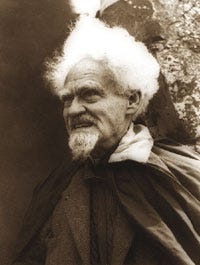
The problem with this is that Gardnerian Wicca isn’t entirely wrong in some of its claims, as it does draw from European religiosity and myth. For example, Beltane was a Celtic holiday, and Yule was(/is) a Germanic festivity, and Freyja and Brigid were indeed worshiped by ancient Europeans: despite what some e-crusaders might claim, Gerald Gardener didn’t invent Midsummer and Christmas. So, Wicca was on the one hand a starting point (for people who did not have the internet), but also a place to bounce off of (for people who lived before the internet). I must reiterate: the internet wasn’t an option at this point. People quite literally did not know what they didn’t know. Again: you can google “beltane celtic origins” and find the Gaelic source material: in 1970, that could not be done. You had to get a book from the library: if it didn’t allow you to check the book out to take home and read (as was very common), you had to make photocopies of the book.
Thus, earlier Asatruar spent time in prayer and contemplation as to what this actually was. Unfortunately, that brought them up against a wide array of witch-nonsense. Did you know that Walburga was actually named after a Goddess who was probably Frigg who was worshiped by witches? That’s what Ernst Ludwig Rocholz was saying in 1870, in Drei Gaugöttinen: Walburg, Verena und Gertrud, als deutsche Kirchenheilige. Sittenbilder aus germanischen Frauenleben. That’s what Christian seminaries and academia were saying into the 1980s; many Christian seminaries still peddle this stuff to this day. I don’t buy it, but this is what academia and Christian clerics were saying. They don’t say that now (well, academics don’t), but now isn’t then.
Academia and Christian clerics were obsessed with witches in the 1800s, and it’s part of what lead to Gerald Gardener and Wicca. There’s a lot of interesting little bits and bobs in these witch-studies, but most of it is extremely circumstantial, and separating Medieval folk-religiosity from Christian nonsense and ethnoreligious holdovers is extremely difficult with much of it. And, frankly, most of it is so small and speculatory anyways that the 19th-century witch-craze is actually quite difficult to do anything with.
So, in order to get to the Gods and the Ancestors, witches had to be left behind. That was more or less the goal of the People of the Lord and Lady, an early project within the Asatru Free Assembly to sort through Wicca, separating actual recognition of European religiosity from nonsense. Sifting through builtup misunderstandings of European religiosity to allow the light of the will of the Æsir to shine through is a monumental task: it is easy for people to forget that, especially in today’s antinomian environment that encourages jettisoning any project that takes more than a decade to complete. Thus, regarding this holiday, a sloughing off of builtup witch-nonsense and Christian oddities took place.
Thus, Walpurgisnacht was renamed to Hexennacht, and then finally to Nornanótt, as part of this process of refinement and increasing sophistication, leading people away from the delusions of Semitic preachers and outdated-academics, towards the truth of the Gods and Ancestors. Witches as some sort of special class of beings were cast aside, focusing instead on the folk. This idea of “the witch” is something that we do find in the Eddas and Sagas, but not as part of civilized Asatru society. Gender is real, a gift given to us by the Gods, and a higher state than androgyny. As such, there are men, and women. There are male roles, and female roles. There are knowledgeful men, and knowledgeful women. Both men and women must rise to their proper role in society, and be the most Aryan that they can be. That is social, but also religious in nature.
The term “Norn” is generally used to refer to the “three Norns”, Urðr, Verðandi, and Skuld, but it is also used more generally as a term for powerful women. Thus the name was chosen to reflect the noble and virtuous woman’s role in society, as both a woman who knows and does.
Part of woman’s role (as this is a lady-focused holiday) is to purify a space, and to make it good for a man to order. Thus, the casting out of the witch as a bad woman, and the embracing of the Aryaness as a good woman, who is not passive, but is active womanly. It is for this reason why Nornanótt is Nornanótt, as it is a celebration of the nornir (little-n), which is essentially an Old Norse term for “good witch”, or more so “a woman who knows things and uses that knowledge for good” (magic in various definitions wasn’t really seen as “special” in Medieval Scandinavia unless it was used inappropriately). Nornanótt is thus a day for the worship of the Nornir (big-N), but also Frigga, and Freyja, and all of the Asynjur.
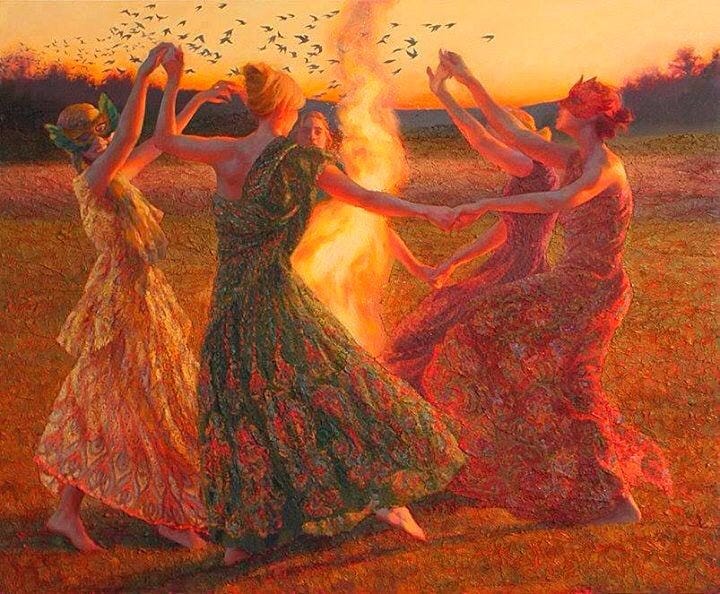
The cleansing power that women play here is the same as they do in blót: traditionally, before the blótkarl begins the ritual, a woman will hold the horn, and then hand it to the blótkarl. This is done as a reset, as a breather. “Using feminine energy to diffuse chaos in anticipation of masculine energy” is a fun way of referring to it, but that makes it a lot more technical than it really is. Nornanótt is, at its core, a similar phenomena, as it is proceeded by very masculine, and very ordering, holidays in relatively quick succession. In the agricultural cycle of our calendar, this is a period of purification before a period of growth. Austra was your seeds springing forth, and this is the leadup to the summer’s flourishing: the feminine makes the primal matter good, and the masculine then orders it.
An ongoing war that we in the Asatru Folk Assembly have been fighting has been setting aside salacious nonsense about things like witches or barbarism, and instead bringing people to the Gods and the Ancestors. Ours is a civilized faith, and stating the truth plainly is part of being civilized. So too is being clean: of being purified of contamination. Impurities are that which keeps us from being whole, in body, mind, spirit, and as a society. Women have a vital role in this war, as frithweavers, but also as purifiers of this nonsense. Part of a woman’s role in society is to call out nonsense when she sees it, and to purify her society of deleterious things when comes across them.
Pious things to do at Nornanótt!
This one is mostly for the ladies. The traditional Asatru practice to do here is to build a bonfire, circle around it, and to waft the smoke onto the gathered Folk. This should ideally be done by a lady. Accompanying this ceremony, possibly in-tandem with it, is a blót to the Asynjur Freyja and Frigga, and to the Disir, and the Nornir in general.
For those experiencing the ritual, however, the most important part is what one would do after the ritual was finished. You have been cleansed, returned to a state of purity: you are primal matter to be shaped by your own will. This is a good excuse not to go out and get yourself dirty again, or to be improper. It is also a time to be ordered, to be centered, to be directed.
Less important, in a sense, is the ritual itself, and more so what you do after it.
For more about the Ásatrú Folk Assembly, visit our website!
Thanks for reading the Runestone Newsletter! Subscribe, share, and donate to help bring the Folk home.
No posts
Comments
Nothing yet. Say the first thing.
Sign in to join the conversation.