
I’m the odd man out in this lineup because, unlike the other two, I don’t actually have anything other than blood that binds me to Europe, patrilineally. My great-grandfather was a jeweler turned union-muscle who came to Detroit from Serbia; he married my great-grandmother, impregnated her, and then died within 2-years. Their son, my father’s father, chose to break with Serbia and Serbianism. He would not learn the language, practice the religion, or participate in the culture: I do not know the degree to which he was forced to against his will, but he certainly did not pass it down to his sons, and as far as his son (my father) was concerned, he knew no Serbian what so ever. My grandfather died before I came to an age to ask him about such things.
However, I was told by my grandmother, that “[my grandfather] wanted to be an American”. He flip-flopped between Anglo-Protestant denominations, became a lawyer, then a Freemason, and then comptroller of the Chrysler company. He raised his kids as Americans. He married a beautiful young woman that he met at a dance. She came from Old Stock American heritage: she was a Pomeroy. Her ancestor, Eltweed Pomeroy, left Beaminister, Dorset and arrived in Massachusets, on 1630’s August 8th. Through him, I can trace my lineage back to Baldr and then Óðinn by way of Alfred the Great, and to Þórr and then Óðinn by way of Charlemagne. There’s a Pomeroy genealogical society who did all of the hardwork for me.
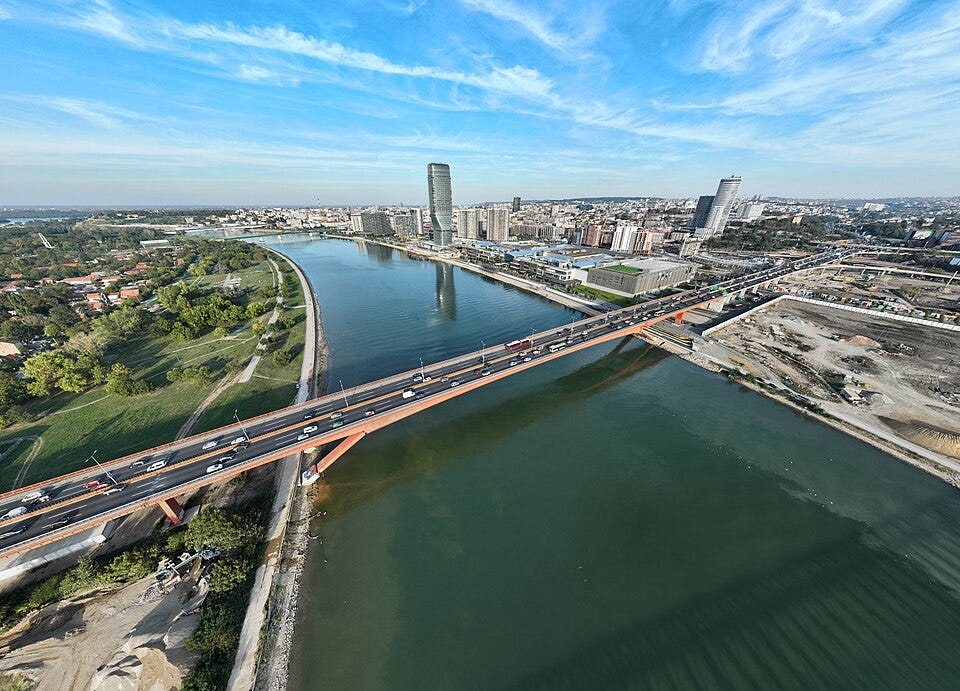
I’ve been able to find little on when my great-grandfather arrived in America. I know he came from the village of Bočar, Serbia, where he knew his bride-to-be’s family. The surname means “of the Sava river”; “Sava” is a preSlavic name of Celtic origin meaning something like “it that flows”. The saint is named after the river, despite what poorly made internet hagiographies will tell you.
I’ve always been a “White American”. Serbian ancestry is sort of just genealogical trivia, as I was never raised in a way that would be different if my paternal lineage was, say, English. So for me, the general mixing of European lineages here in North America has been the lived norm. So of course, research into my ancestry was mostly intellectual, rather than a sort “return to the folk-customs”. It probably didn’t help that when I reached out to the Serbian Orthodox Church in Detroit that my great-grandfather’s family (probably) attended I was totally ignored as the church had shut down entirely due to COVID. Family had little more to say about Serbian Orthodoxy, other than that it was dull, dreary, cold, lifeless, unfulfilling, and a bitter obligation: I’ve always found it odd that people come to the US to escape some poverty or deprivation, only for their descendants to quadruple down on the things that their ancestors were fleeing. It’s like they ablute themselves and then jump right back into a puddle of mud. “You don’t know what was like in old country”, great-great-grandma “Baba” told my uncle: “We rrraked ze dirrrt”. She started a mushroom farm in the Thumb and was quite successful. Some things should be washed away when one crosses the sea.
I came of age when all of the thought-leaders of the Orthobro Discord cults were still trying to grift as Catholics and Southern Baptists (and not Sunstein & Vermeule 2008 Catholics, actual Catholics), so I was quite literally too early to have this bizarre internet stuff presented before me. If it was around when I was a teenager, I would have (and still do) found it extremely droll and plebeian. So when I went looking into Serbian Orthodoxy, I actually saw the real religion that is (increasingly not) practiced by people in real life. I didn’t see esoteric wordgames about epistemology, or strange appeals to the omniscience of the cult leaders.
Because my patriline actually got the point, I was raised in a vaguely noncommital Protestant environment in a largely Polish (Catholic) town, and got exposed to various Christianities along the way. My mother’s mother introduced me to Southern Baptism, and I found it all bizarre and unappealing. There was nothing transcendant about Abrahamic religion. My first real religious leanings were to an amorphous European polytheism: the lifting of mens’ heads to heaven, rather than the bowing of their heads to sin. I knew it existed from a massive encyclopedia of polytheistic religion that my father’s father let me take from his library (Larouss WORLD MYTHOLOGY, by Pierre Grimal), and of course from the extremely in-depth tooltips that Age of Mythology’s units had, which were a prelude to Indo-Europeanism, and the study of an abstract theology that was pulled from the very light that shines upon us. I studied it in abstract and it made sense. It explained things. It called to me, from afar. I knew it was right, but had no way to make it real.
My first understanding that this wasn’t just an idle fancy was actually being introduced to the AFA, via the internet, in the early 2010s: Kennewick Man stuff. There was a guy in California who made this real. But I was a shy young teen from Northern Michigan in the upper Thumb, so it couldn’t manifest for me, but I knew it was real, somewhere out there. California was far closer to me than Eastern Europe. I knew that Rodnovery was a thing, but it was mostly inaccessible: one couldn’t get much on the topic in English pre-2016. You still really can’t without knowing Russian or Ukrainian. But even then, it wasn’t happening in the US, and I didn’t feel any particular connection to it on a cultural level. The White Boy Dashiki is cool though, don’t get me wrong, but it’s literally spiffy Russian peasant garb: it meant nothing to me.
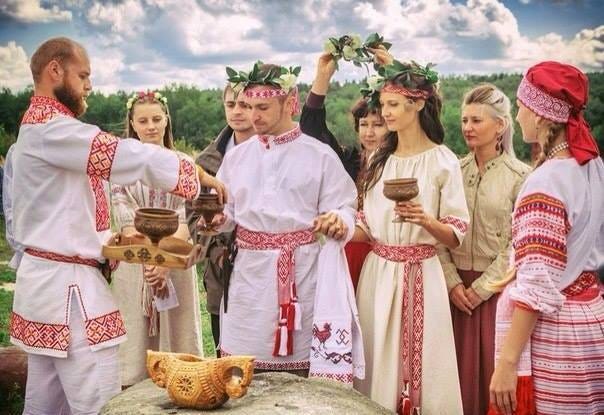
Religions are deeply intertwined with their societies, and what they mean to the people in them. The Rus find themselves as raceless biocapital in thrall to an empire whose state ideology is the universal brotherhood of all mankind under the yoke of the universal bureaucracy. Escape from this means reconstructing what it means to be a Rus, and a return to a raceship that Christianity denies them. But that religion means nothing to me.
It was the theology that I was after. I was after the Gods and the Ancestors, and a return to them for my folk, who are White Americans. I knew that all Europeans descend from common stock, so I wasn’t overly concerned about attachments of names to blood at specific points in time. A living thing changes, flexes, swells and shrinks, so too should a living religion: once it would leave the realm of pure theory and become real, it would naturally evolve away from that scholastic starting spot.
It wasn’t until my mid-20s that I happened across the AFA again. I didn’t like, start pretending to be Catholic or something dumb like that in the meantime: honestly college just swallowed me up. I had no time for religion. When I saw the AFA, I was intrigued. Now here was a religion, not just a theology. I reached out to a folkbuilder… and I actually chickened out. Not one of my proudest moments. Family stuff came up: I could have gone, but I didn’t. I said that I was too busy: I was busy, but not too busy. I could have made it work. I was just scared of opening up and sharing something that had been painfully private for so long. Much later, I would learn that the specific gathering wouldn’t have really been all that fun (for me, given the specifics) if I had gone, but I didn’t know those reasons at the time. So some time later, I reached out again.
I’m so glad that I did. I was welcomed with open arms and understanding. Being part of the AFA has given me so much. It’s given me friends, it’s given me a tribe, it’s given me purpose, it’s given me a community. I don’t have to hide what I think or feel; I am encouraged to think and feel. My children won’t have to grow up thinking “is this real?”, wanting something from afar yet being denied it, because the AFA makes this dream real. And then, I became a folkbuilder, and I get to make the dream real. I get to be an active agent of cosmic order and natural law against the forces of chaos: I get to fix the pr oblem. And what’s more, I don’t have to do it alone: I have friends, family, and allies.
-Folkbuilder Chris Savich
For more about the Ásatrú Folk Assembly, visit our website!
Thanks for reading the Runestone Newsletter! Subscribe, share, and donate to help bring the Folk home.
No posts
Comments
Nothing yet. Say the first thing.
Sign in to join the conversation.