
Between 3% and 8% of people have seen ghosts. That figure holds after eliminating psychological factors, misperceptions, and dishonesty. For those who have never had such an experience, it is perfectly understandable to regard ghosts and spirits as pure superstition. But the question is not whether to believe. The question is: if they truly exist, what exactly are they?
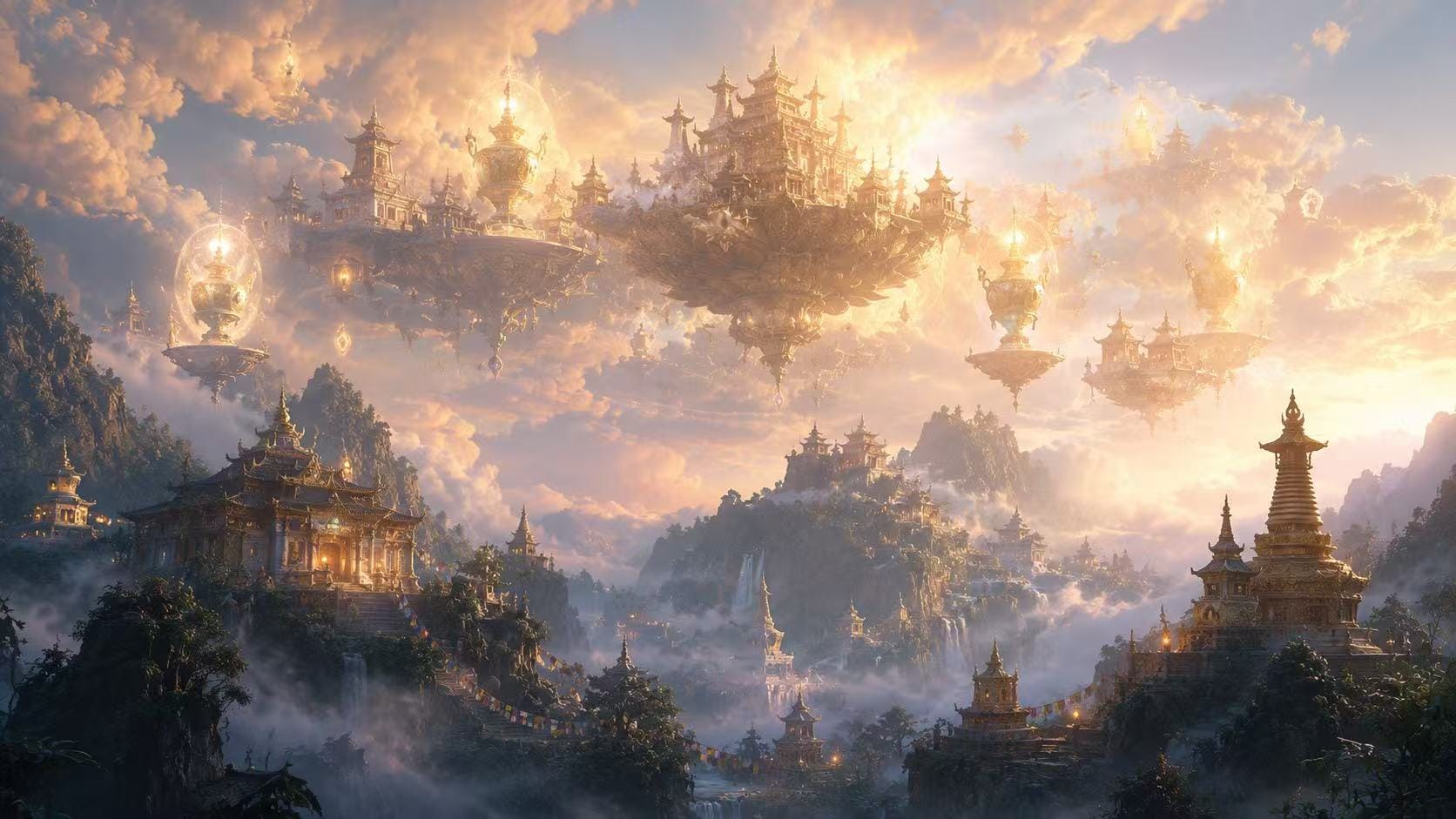
Human beings find it extremely difficult to make genuine contact with higher beings, devas of the desire realm (kāmadhātu) or the form realm (rūpadhātu). The desire realm devas divide into earth-dwelling devas and sky-dwelling devas. Earth-dwelling devas experience gravity as we do, inhabit buildings rooted to the ground, and reproduce through union between male and female, not unlike humans. Sky-dwelling devas feel no gravity, their structures float in open air. People with particular karmic affinities can sometimes make contact with earth-dwelling devas. Zen records include accounts of such beings offering nectar (amṛta) to accomplished monks. Most people, however, due to their innate constitution, are more likely to encounter beings of the ghost realm (preta-loka). These beings are nothing like the devas just described.
Beings of the ghost realm come in many kinds, and the vast majority possess no special abilities. In terms of capacity, the living human is actually the stronger party.
Ghosts are afraid of humans.
The most common type is the hungry ghost (preta): perpetually famished, utterly impoverished, operating at an energy level far beneath that of an ordinary living person.
But there are also ghosts with genuine power, yakṣas, bhaiṣajya-yakṣas, rākṣasas. They possess supernatural abilities (siddhi), can read human thoughts, and shift their appearance at will. In particular, as a person nears death, they take on the faces of that person’s deceased relatives. Many people have lived this directly: in the final month or two before death, the dying begin encountering their long-gone loved ones frequently, holding full conversations, while no one else in the room sees anything.
These capable ghosts do this simply to gather a kind of human warmth around themselves. They gravitate toward those who can perceive them, much like mischievous children acting out in front of adults to get attention, to feel their existence acknowledged by someone. At bottom it is a need to be loved. Most harbor no harmful intent whatsoever.
Some shamans and spirit-workers, through training or innate sensitivity, communicate with beings of the ghost realm. They pass along what they receive, but this information carries significant inaccuracies and should not be fully trusted. These shamans are not lying. They genuinely see faces and hear specific names. But all of it is performance by capable ghosts. Ghosts read the minds of the shaman and client, then improvise accordingly. There is nothing miraculous in any of it.
This process is the ghost piecing together elements from your own memory to please you.
Some people assume that death automatically produces a ghost. It does not. Where one goes is determined by karmic force: one may be reborn as a human again, or as a ghost, a deva, an animal, or fall into the hell realms (naraka). The ghost realm is only one of many possible directions.
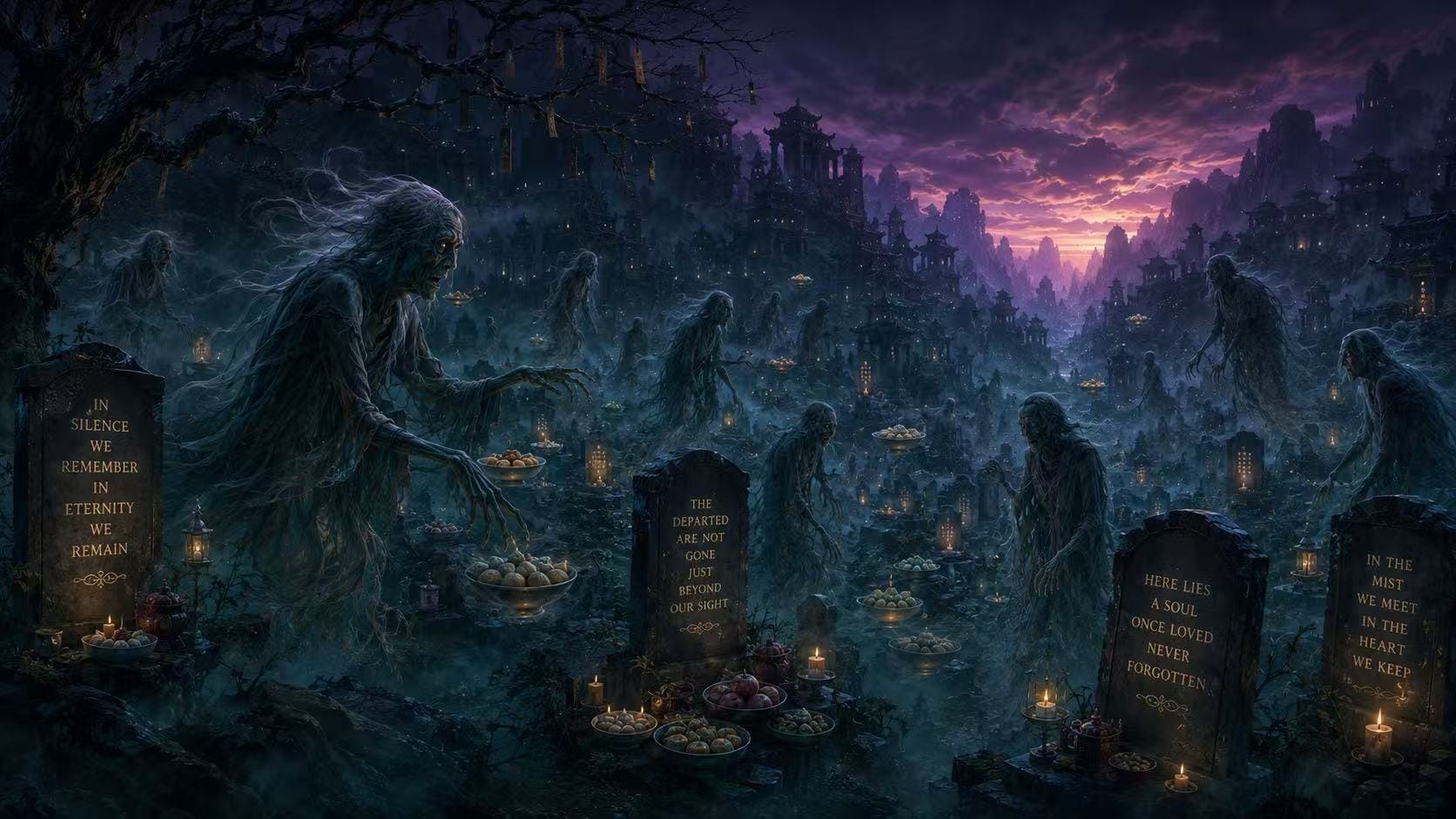
There is also frequent confusion between ghosts and the intermediate state (antarābhava), they are not the same. The intermediate state is invisible to ordinary people. Even those who can perceive ghosts cannot see beings in the intermediate state, because their subtle form is far finer than that of ghosts, which are comparatively coarse. Only practitioners of considerable accomplishment have any chance of perceiving it. The intermediate state is the form one inhabits after death and before actual rebirth. Buddhist scriptures call it the scent-seeker (gandharva). It is not a ghost. As for figures seen drifting near gravestones in cemeteries, what people who can see ghosts often report as the deceased lingering by their own tombstone is in reality a performance by other capable ghosts. The actual deceased has long since been reborn.
Some call Buddhism atheist: liberation comes through rational discernment, not faith in a creator god; the world was not made by a supreme being; and becoming enlightened does not make one a god. Others call it theistic and even polytheistic. While the Buddha is no creator deity, Buddhism fully acknowledges that the six realms (ṣaḍgati) contain countless devas and spirits with capacities far beyond ordinary humans. Unseen, yet real. In Mahāyāna Buddhism especially, there are innumerable buddhas and bodhisattvas, and practitioners venerate them.
Buddhism’s non-theism is not absolute. It rejects only the concept of a creator god. It does not deny that devas, ghosts, and other such beings exist as sentient beings within this world. The buddhas and bodhisattvas of Mahāyāna are not a folk pantheon assembled for idol worship. Each carries specific meaning; each functions in distinct ways within actual practice. Yellow Mañjuśrī, for example, orients the practitioner toward the cultivation of wisdom realizing emptiness. Green Tārā orients toward the diligent cultivation of virtue. Many people, however, do not practice at all and simply treat the buddhas and bodhisattvas as spirits to be placated.
From the Buddhist perspective, beings across all six realms have their own forms of suffering and happiness, and all act in pursuit of relief from suffering and the attainment of happiness. Beings of the ghost realm suffer enormously, hungry, cold, without sufficiency. Even the capable ghosts are like children who need attention and love. Buddhism does not venerate ghosts simply because it acknowledges them. Even toward buddhas and bodhisattvas, the orientation is toward one’s own cultivation and merit accumulation, not blind worship. Acknowledging that these beings exist does not make one superstitious. It leads to greater reverence for life and deeper appreciation for the precious human existence one already holds.
This body is something those beings searching in the darkness cannot reach at all.
Not because you are more noble. Because you are still here.
If you enjoyed this piece, you might also like:
Collected Topics of Epistemology - Focuses on traditional Tibetan Buddhist logic/pramana teachings.
Adhiyana Buddhism - General Teachings from Neo Shakya covering broad Buddhist Topics.
OṂ A RA PA CA NA DHĪḤ
Comments
Nothing yet. Say the first thing.
Sign in to join the conversation.