
There are people who have sat for 10, 15, 20 years in formal practice. By any ordinary measure, they are still carrying the same mind they started with. The familiar patterns return, the same limits remain in place, and the calm that settles during a session thins out within an hour of ordinary life resuming. If they speak honestly, what they have gained feels closer to a sophisticated companionship with their own restlessness than any fundamental shift in its nature.
What’s missing isn’t sincerity or effort, it’s that the original system was built to accomplish something more specific than what most teaching on this subject describes And a lot of careful, well-intentioned practice ends up refining outcomes that were never meant to be the center of it.
Traditional śamatha, the concentration practice at the root of every serious contemplative line, was not built to produce a gentler version of the mind you already have. It was built to establish a structurally different mode of consciousness, with a different relationship to time, to attention, to perception, operating on different principles at the foundation. The modern wellness world extracted a handful of its gentler effects and presented them as the whole. Much of what gets practiced under the name of meditation today is closer to the exhaust than the engine.
This series is about the engine itself. What it is, why it works the way it does, what is required to build it, what changes when it takes shape, and what becomes accessible further along a path that stays closed short of that point. Some of what follows may not resemble what you’ve encountered elsewhere on this subject.
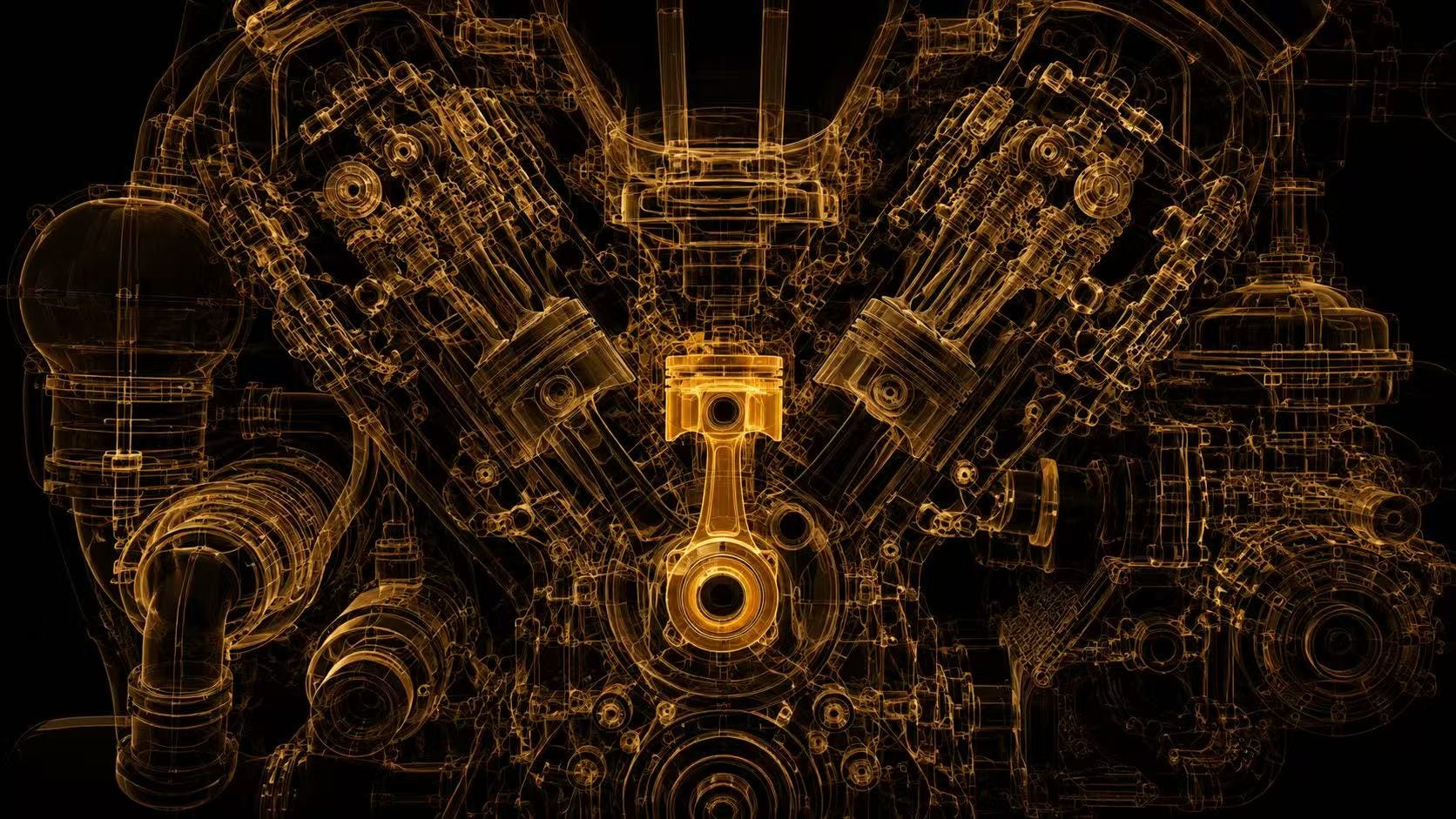
Where Meditation Actually Lives in the Architecture
In the tradition, concentration was never an isolated method. It is the second movement in a three-part structure, śīla, samādhi, prajñā, and its position in that structure determines both its purpose and what it requires of the practitioner.
The work of The Deep Code belonged to śīla in its fuller sense, which is not a set of rules but a precise reckoning with how inner patterns produce outer results: how the kleśas distort the volitional mechanism that connects intention to outcome, and how the ālayavijñāna holds the seeds that keep running beneath conscious awareness. That was horizontal work, loosening old grooves gradually through the accumulation of opposing patterns.
Samādhi moves vertically. It reaches into regions that ordinary conscious effort cannot access, because ordinary effort lacks the instrument required to get there. The order of the path matters for a specific reason: a powerful concentrative faculty applied on top of an unclear foundation can intensify distortion rather than resolve it. The work done in Series 1 is what makes the vertical work here safe to undertake.
Prajñā, wisdom, is the third movement. The tradition states plainly that the kind of insight capable of producing irreversible change at the root of cognition requires samādhi, because it demands a stability and clarity that the scattered mind cannot sustain. The image the tradition uses is surgical, precise work is not possible on a moving platform, and samādhi is what brings the platform to stillness. Most of what passes for meditation today is taking place in the outer chambers of this structure. The room where the deepest transformation actually happens is further in. What that inner room actually involves is worth being specific about, and by the end of this post you’ll have a clear picture of the claim itself, even before this series gets into how it’s reached.
What the Ordinary Mind Cannot Do, and Why
You live in what the tradition calls the desire realm, and its basic condition is dependence on resources drawn from outside: food, safety, standing, connection. A mind shaped by that dependence turns outward by default. The way your attention slips off any chosen object within seconds is the attentional system functioning exactly as it was built to function, continuously scanning a world where opportunity and threat both arrive from the periphery.
Genuine stillness only appears when external conditions feel secure enough for that scanning to ease, and even then the ease tends to be brief, because the underlying orientation has not changed. The system resumes scanning because scanning is its default state in this configuration, not an interruption of some calmer baseline.
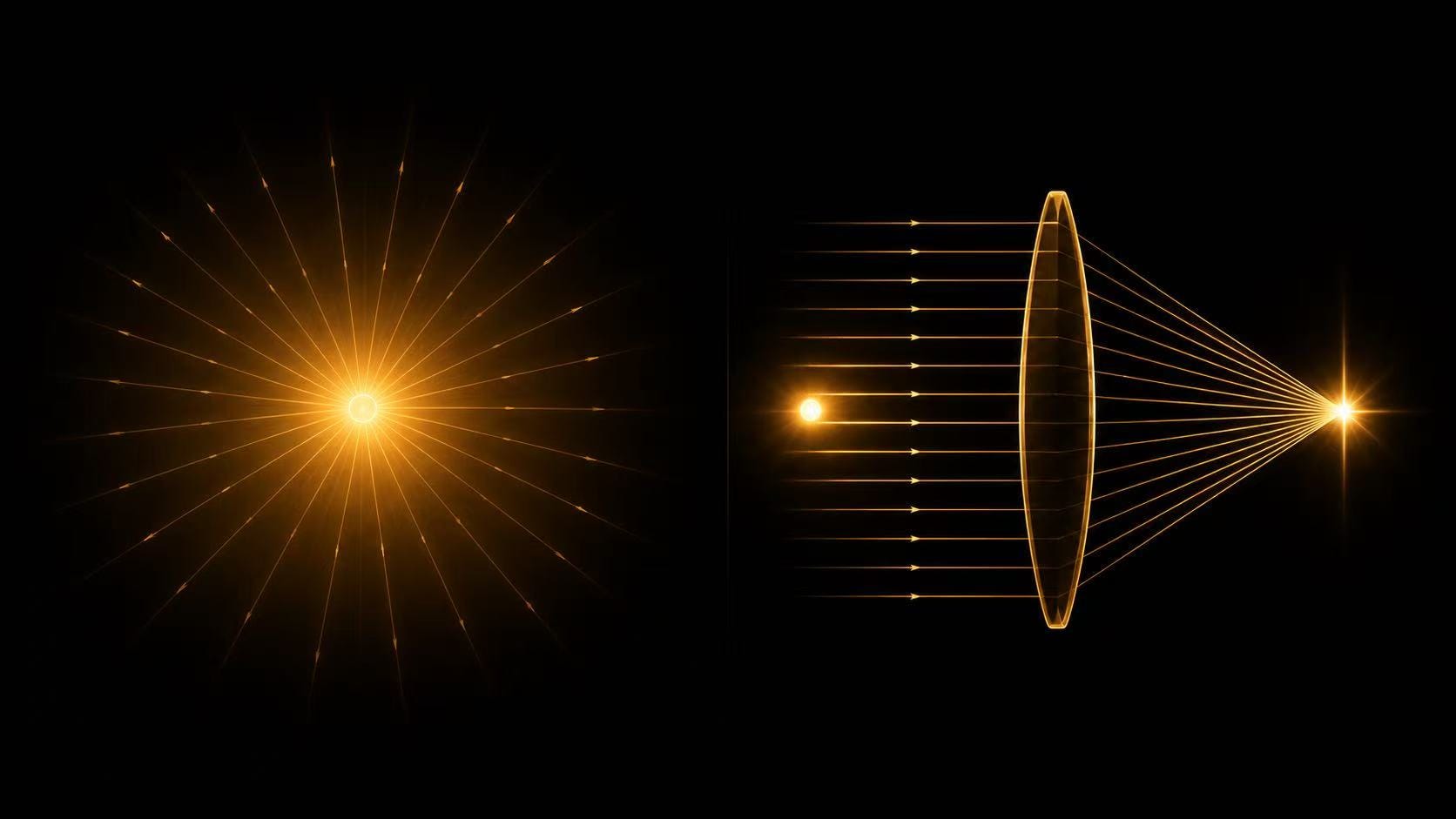
The same light that only warms you when scattered will burn when passed through a lens and gathered to a single point. The energy hasn’t changed. What changed is the structure organizing it. Samādhi is that gathering, and building it has nothing to do with trying harder inside the structure you already have. It means building a different structure altogether.
A Different Operating System
When samādhi settles, the tradition is not describing an improved version of your ordinary mind. It is describing consciousness operating under different conditions entirely, a shift from the desire realm’s restless outward scanning and dependence on external security into what is called the form realm: self-contained, stable, capable of a single-pointed absorption that simply does not arise in the scattered state.
There are real tradeoffs here, and they are worth sitting with because they cut against the assumption that the concentrated mind is just a better version of the ordinary one. In deep concentration, the rapid movement between ideas and the construction of complex logical chains becomes difficult, the mind rests in a unified absorption that doesn’t switch objects quickly. This is why the tradition holds that the first conceptual insight into emptiness has to arise in the ordinary scattered mind, before entering these deeper states. The concentrated mind isn’t superior at everything, it is built for a particular kind of work, and that specificity is what makes it powerful.
What the scattered mind cannot reach, and what samādhi opens access to, is a mode of awareness that moves through conceptual structure rather than being confined within it. Your ordinary mental consciousness is conceptual by nature, it meets the world through categories and distinctions, because that is the shape of the instrument itself, and no amount of thinking can get an instrument to see past its own shape. The concentrated mind gains access to both conceptual and non-conceptual modes, and it is in the non-conceptual register that the deepest structural changes become possible. This is why samādhi turns out to be indispensable for prajñā: the surgery needs an instrument that can get underneath the very structure it’s operating on.
What’s Waiting on the Other Side of This
The classical literature describes something specific about what happens further along this path: the mind-body relationship gets restructured at the level where it is actually formed, to the point that what the tradition calls the mental body can do things the body lying on your meditation cushion cannot. Time stops behaving the way it behaves for you right now, years from the outside can register as moments from within, or the reverse. Complex reasoning becomes harder in these states even as something else becomes possible that complex reasoning never could touch.
None of this is presented in the tradition as mysticism in the sense of things you’re asked to take on faith and never examine. It’s presented as mechanism, a precise account of why a mind that has restructured its relationship to the wind-energy carrying it through its own substrate would naturally have a different relationship to time, to the body, to the boundary between the two. Whether that account holds up is what the next section gets into. It’s the most technically dense part of this post, because it’s the part where the mechanism actually gets explained rather than just described.
Comments
Nothing yet. Say the first thing.
Sign in to join the conversation.