
A lot of people assume Buddhist renunciation means wanting less, even wanting nothing ideally. Some kind of spiritual poverty that passes for peace. This misreading isn’t limited to Western practitioners. But it’s wrong. Renunciation isn’t the disappearance of desire. It’s what happens when your understanding expands far enough that a much larger desire is born.
There’s nothing wrong with how ordinary people move through the world. Life is hard. People pursue happiness, avoid suffering, chase whatever resources and conditions might give them a decent shot at stability, and steer clear of whatever threatens that. That’s not a problem, that’s just living.
To get at what Buddhism is actually saying, look at a child through an adult’s eyes. A child falls apart because they can’t have a toy. From an adult perspective this looks almost absurd, not because the child’s desire is wrong, but because it’s so small. The child isn’t broken. They just can’t see far enough yet to want anything bigger. They haven’t built the mental map that shows them how the world actually works, what’s at stake over a lifetime, what risks are coming down the road. Their understanding caps their ambition. The toy is the horizon.
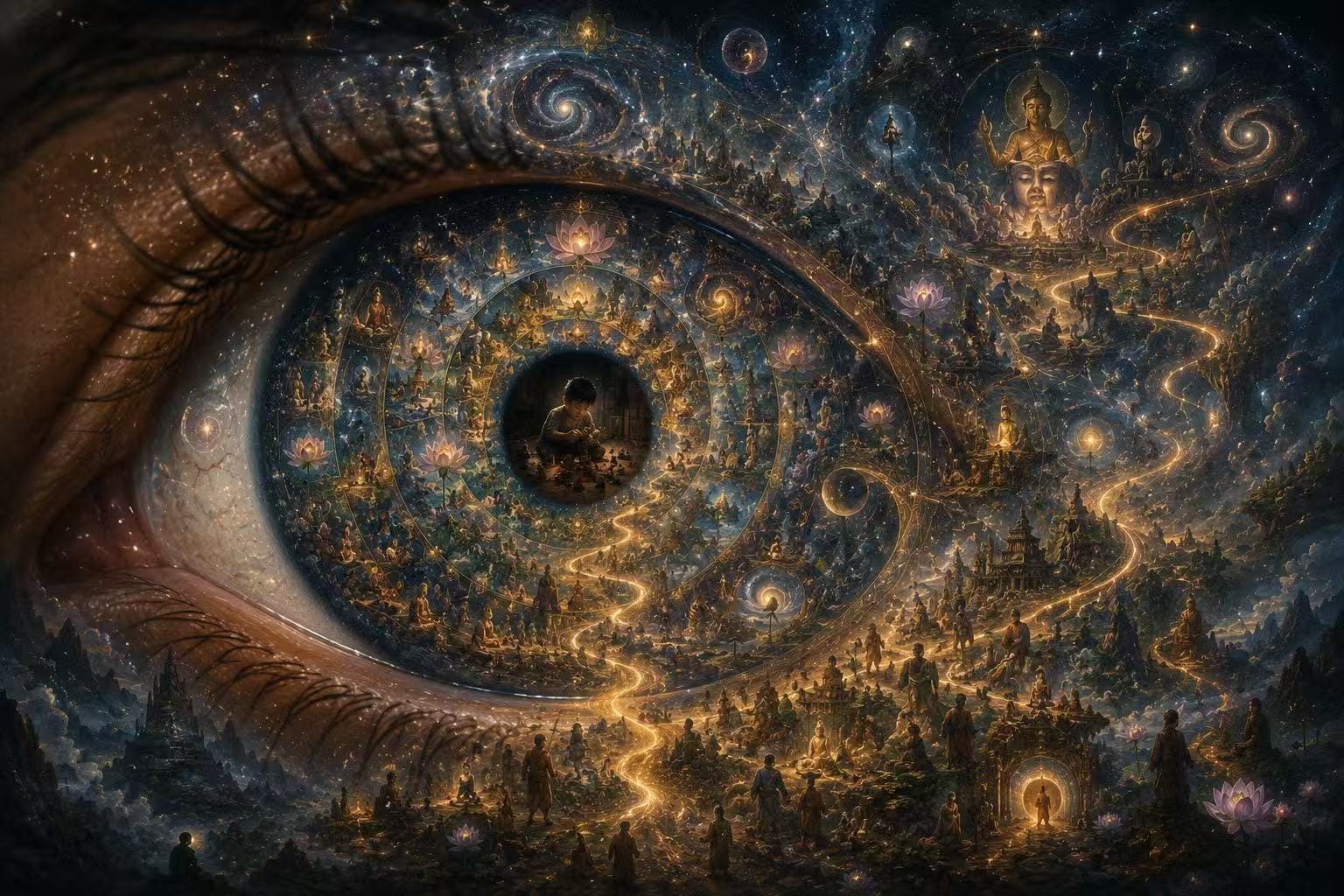
An adult who pursues a good career, a solid income, a strong education isn’t someone who has suppressed the desire for immediate pleasure. They’re someone whose understanding grew. They can see further, so they want something further. The scope of what you can perceive sets the scope of what you can pursue. How far you can see is how big you can want.
Someone who knows history, who has watched civilizations rise and collapse, who understands how fragile human arrangements are, tends to develop something like a humanist impulse, a desire to contribute to something larger than their own comfort. Someone whose horizon stops at eating well and dressing well tends to want enough cash to get by, and doesn’t think much beyond that. Neither of these is a moral judgment. They’re just different ranges of vision producing different ranges of wanting.
From a Buddhist perspective, a single human life, a human civilization, even the universe itself is temporary, it ends, and before the current there were countless others, and after it there will be more. Life, in this view, doesn’t begin and end with a single body. Consciousness moves through cycles, through different forms and realms, without a clear beginning or end. If you take this framework seriously, the question of what to pursue changes completely.
If you think this is all fiction, that the universe started with a Big Bang 13.8 billion years ago, is heading toward heat death, and consciousness is just matter doing what matter does, then you have no reason to accept the Buddhist view, and you shouldn’t pretend otherwise. I’m not trying to convert anyone here. I’m only pointing out that Buddhism has never asked people to stop living their lives.
But if the Buddhist picture of reality is even roughly right, if consciousness really does persist and move through lifetimes, then something shifts the moment you absorb that. You stop being a person with one life to manage and become something more like a point on an infinite stream. You start wondering what you’re becoming. Will the next form be human? Comfortable or desperate? Will it be something with a lifespan of a few months, a worm or an insect? Will it be worse, a hungry ghost, or one of the hell realms? Or something almost incomprehensibly better? And what actually determines that?
Buddhism answers that question with the concept of dukkha, the recognition that consciousness in the cycle is driven by karma it didn’t choose, pushed through realm after realm without genuine agency. We will all pass through states of unimaginable suffering and unimaginable pleasure, repeatedly, as long as this continues. The driver of all of it is affliction: the mental distortions that keep us from seeing clearly and keep us generating the kind of karma that perpetuates the cycle. If you actually take this in, the desire for liberation isn’t a mood. It isn’t an aesthetic. It becomes the only logical response to the situation. That’s renunciation. It isn’t nihilism. It’s the largest ambition the human mind has ever articulated. And it doesn’t ask you to stop working, stop building, stop caring about the people around you. Someone with genuine renunciation looks exactly like everyone else from the outside. They just have somewhere further to go.
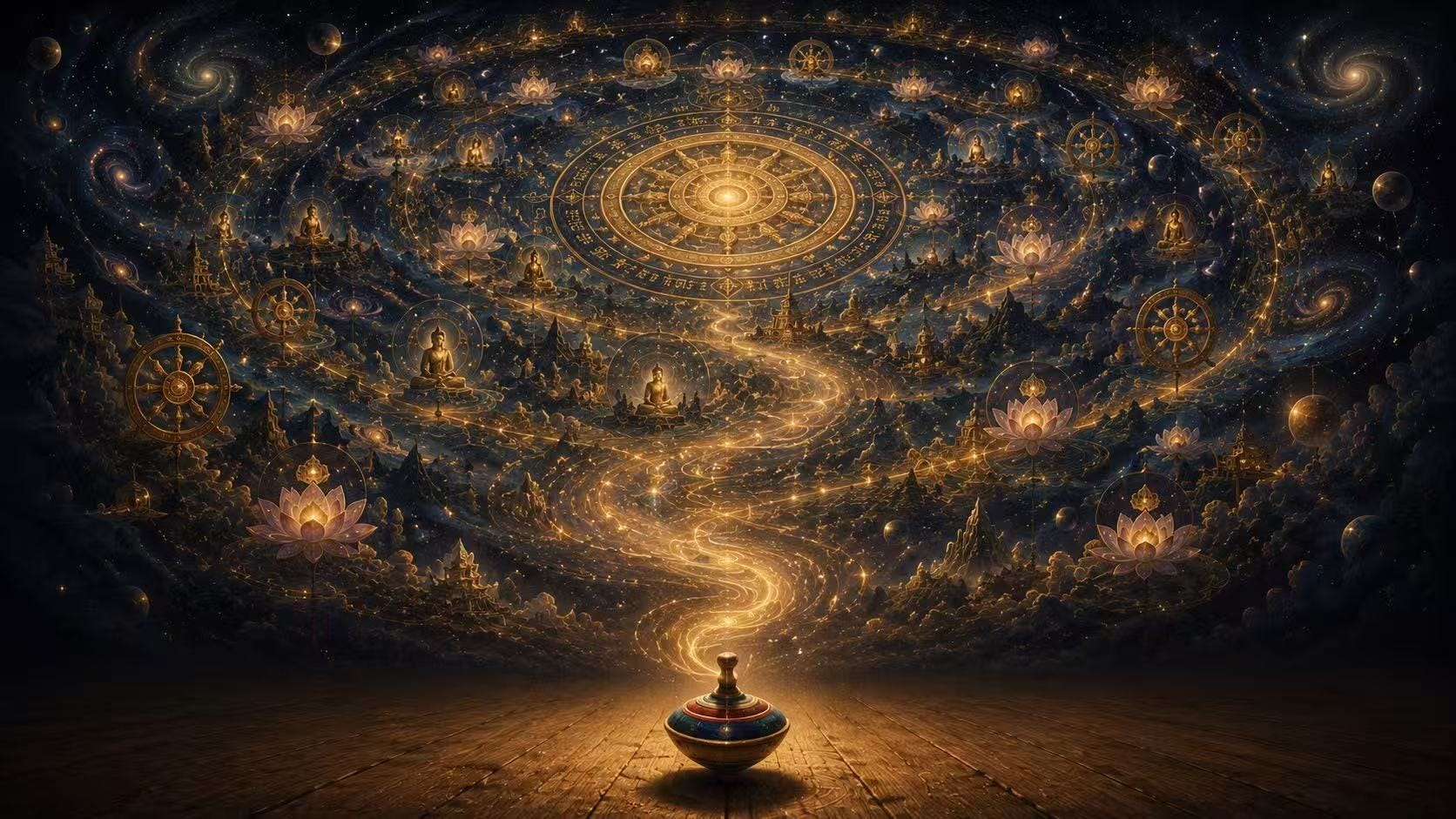
Which makes it worth being clear about what renunciation is not. It isn’t the exhaustion of someone beaten down enough by life that ambition collapses and they call the collapse spiritual. Someone who retreats from the world because they’ve been hurt badly enough isn’t operating from low desire, they’re operating from low capacity. The mind that has genuinely encountered the scale of what Buddhism is pointing at doesn’t go quiet and withdraw. It catches fire. People do sometimes arrive at serious practice through suffering, but the ones who get there aren’t the ones who gave up. They’re the ones who got hit hard enough to start thinking clearly, whose understanding cracked open fast, and who came out of it wanting something real.
Everyone is responsible for their own life. That’s not a moral position, it’s just the situation. The Mahāprajñāpāramitā Śāstra puts it this way: the beings of this world, though burdened by afflictions, are sharp and vigorous, surpassing even the gods. Burdened, yes, but capable, precisely because of this difficulty, of something the gods are not.
If you enjoyed this piece, you might also like:
Collected Topics of Epistemology - Focuses on traditional Tibetan Buddhist logic/pramana teachings.
Adhiyana Buddhism - General Teachings from Neo Shakya covering broad Buddhist Topics.
OṂ A RA PA CA NA DHĪḤ
No posts
Comments
Nothing yet. Say the first thing.
Sign in to join the conversation.