
An imaginary conversation with Nefertiti on beauty, branding, and the business of a face that never ages.
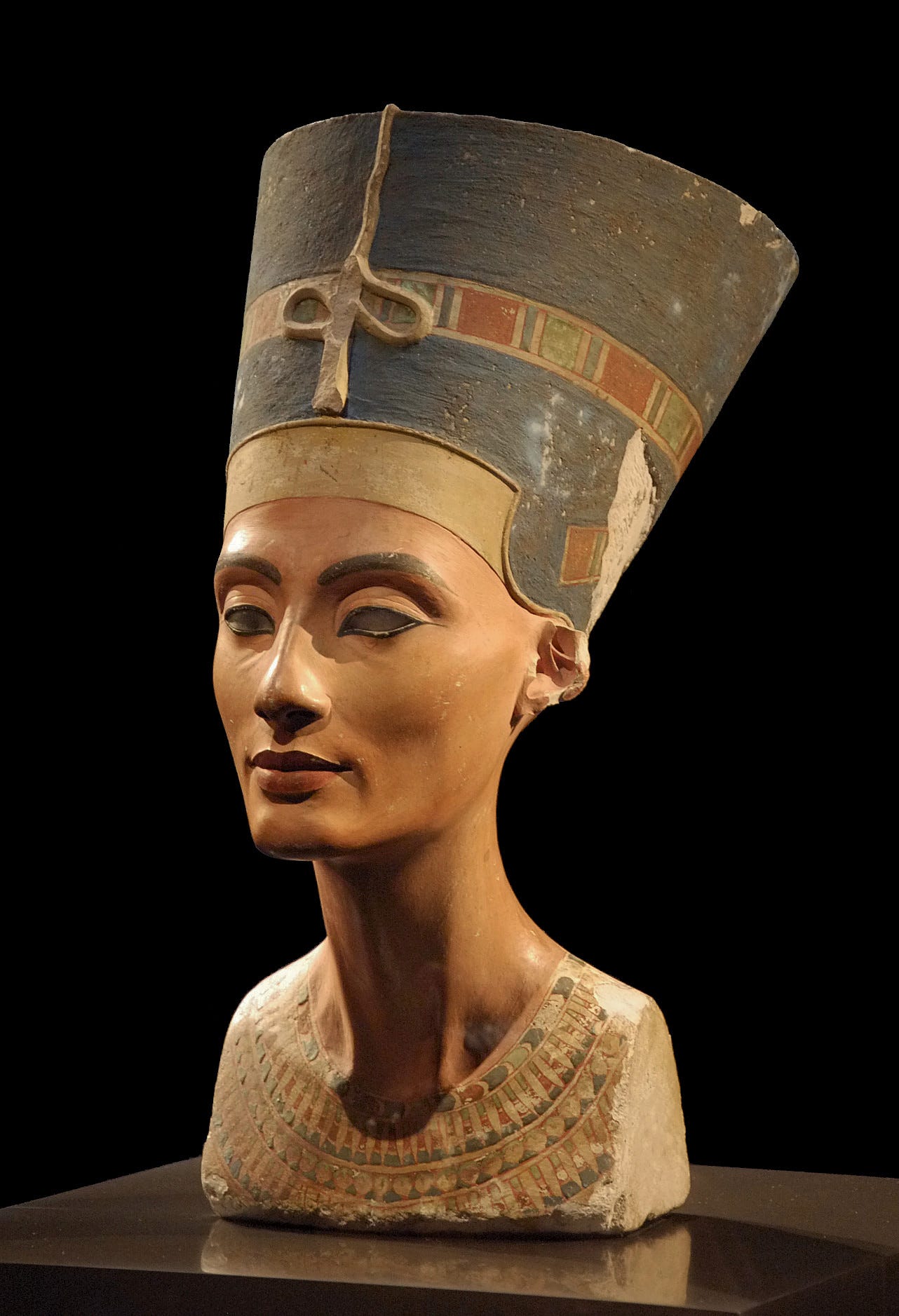
Somewhere around 1345 BCE, a sculptor named Thutmose set down a painted limestone bust in his workshop and called it finished – almost. He left the left eye socket empty. Whether that was deliberate, accidental, or simply unfinished is still debated today. What is not debated: it is one of the most recognisable faces in human history, and the woman it depicts has been selling perfume, luxury handbags, and the concept of “timeless beauty” for roughly a hundred years.
Her name meant “the beautiful one has come.” She was a queen, a political co-architect of Egypt’s most radical religious revolution, and possibly one of its last independent rulers. She is also, depending on your shopping habits, currently available on a coffee mug, a nail-art sticker, or a high-end eau de parfum.
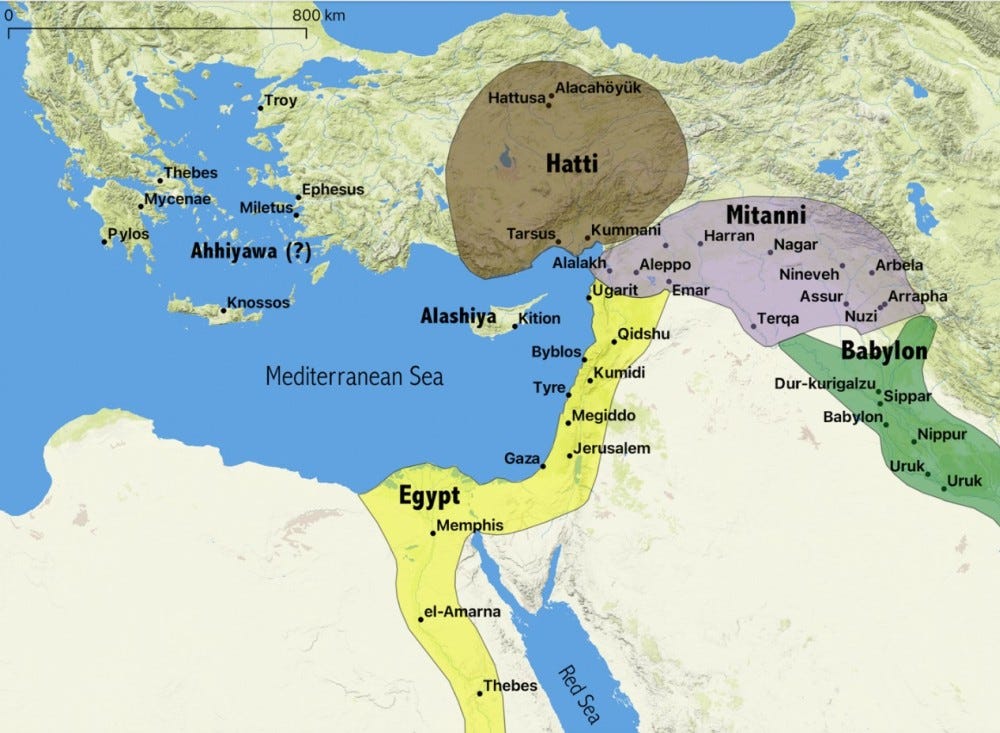
I went to find her in Akhetaten – the desert capital her husband built from scratch and dedicated to a single god. It is 1345 BCE, the city is at its height, and Nefertiti is in the middle of running an empire. She agreed to take a break.
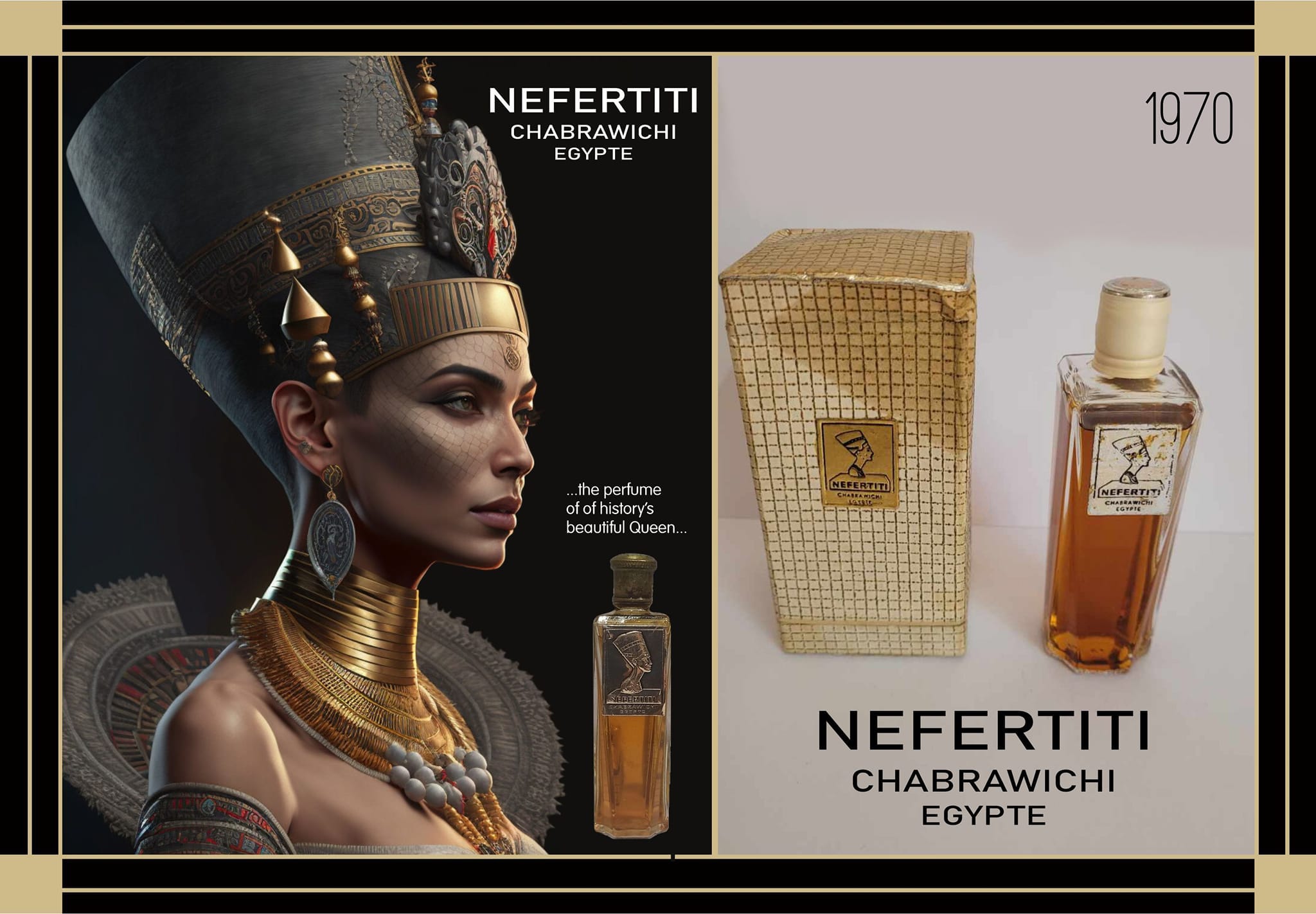
Ornela: Your face is everywhere in my time. Perfume campaigns, luxury brands, museum gift shops. You are basically the patron saint of cheekbones.
Nefertiti: I had noticed the perfume.
Ornela: You’ve been the global beauty standard for three thousand years. That must feel... something?
Nefertiti: It would feel more significant if any of them had asked. The face on the perfume bottle was not designed to sell perfume. It was a sculptor’s working model. A reference piece. Thutmose made it so he could check proportions – it was the equivalent of your before photograph, except that it became the photograph.
Ornela: The famous missing eye – was that deliberate?
Nefertiti: Scholars argue about this constantly. My answer is that the uncertainty is the point. A complete face is a type. An incomplete one is a person. Your beauty industry removes the incompleteness every time it uses my image. It wants the cheekbones and the crown. It does not want the empty socket, the ambiguity, the open question. Perfection sells. Mystery does not – or rather, a very specific kind of mystery sells, the kind that goes well with moisturiser.
Ornela: In my time, women get a procedure called the “Nefertiti lift” – it uses injections to define the jawline and elongate the neck. They are literally paying to look like you.
The elongated neck, the defined jaw, the high cheekbones – you set a beauty standard that apparently never expired.
Nefertiti: I did not set a standard. Thutmose rendered what he saw, in a period that had abandoned the traditional rules of Egyptian image-making entirely. Before Akhenaten’s revolution, royal portraiture was idealised and hierarchical – bodies made according to rank, not reality. We changed that. We asked artists to paint us as people. A face with asymmetry. A body with weight. Children shown as children, not small adults. Thutmose painted me with specificity because that was what the Amarna period demanded. Your beauty industry extracted the specific face and turned it into the universal standard. That is precisely the opposite of what we intended.
Ornela: So you’re saying modern beauty culture completely missed the point.
Nefertiti: I am saying that a revolution in how people could be depicted was turned into an advertisement for how they should look. Those are different things.
Ornela: We have something called Instagram now. People post images of themselves that have been digitally smoothed, brightened, and reshaped. The comments say things like “Nefertiti vibes.”
Nefertiti: And the empty eye socket? The three-thousand-year-old uncertainty about whether I died, abdicated, or became pharaoh under another name? Do those make the caption?
Ornela: Usually no.
Nefertiti: Then they are not referencing me. They are referencing an edit.
Ornela: That’s the whole point of a filter.
Nefertiti: In which case your filters and my museum reproduction are doing the same thing: extracting the aesthetically convenient parts of a person and removing the context that makes them complicated. My face works as a brand because no one knows very much about me. I disappear from the historical record around year twelve of Akhenaten’s reign – no one knows whether I died, fell from power, or took the throne myself. I am aesthetically complete and historically empty. That is the ideal beauty standard: a face onto which you can project everything because the actual person behind it is unavailable for comment.
Ornela: The bust has been in Berlin since 1913. The Neues Museum uses your face as its logo. Egypt has been asking for it back since 1924.
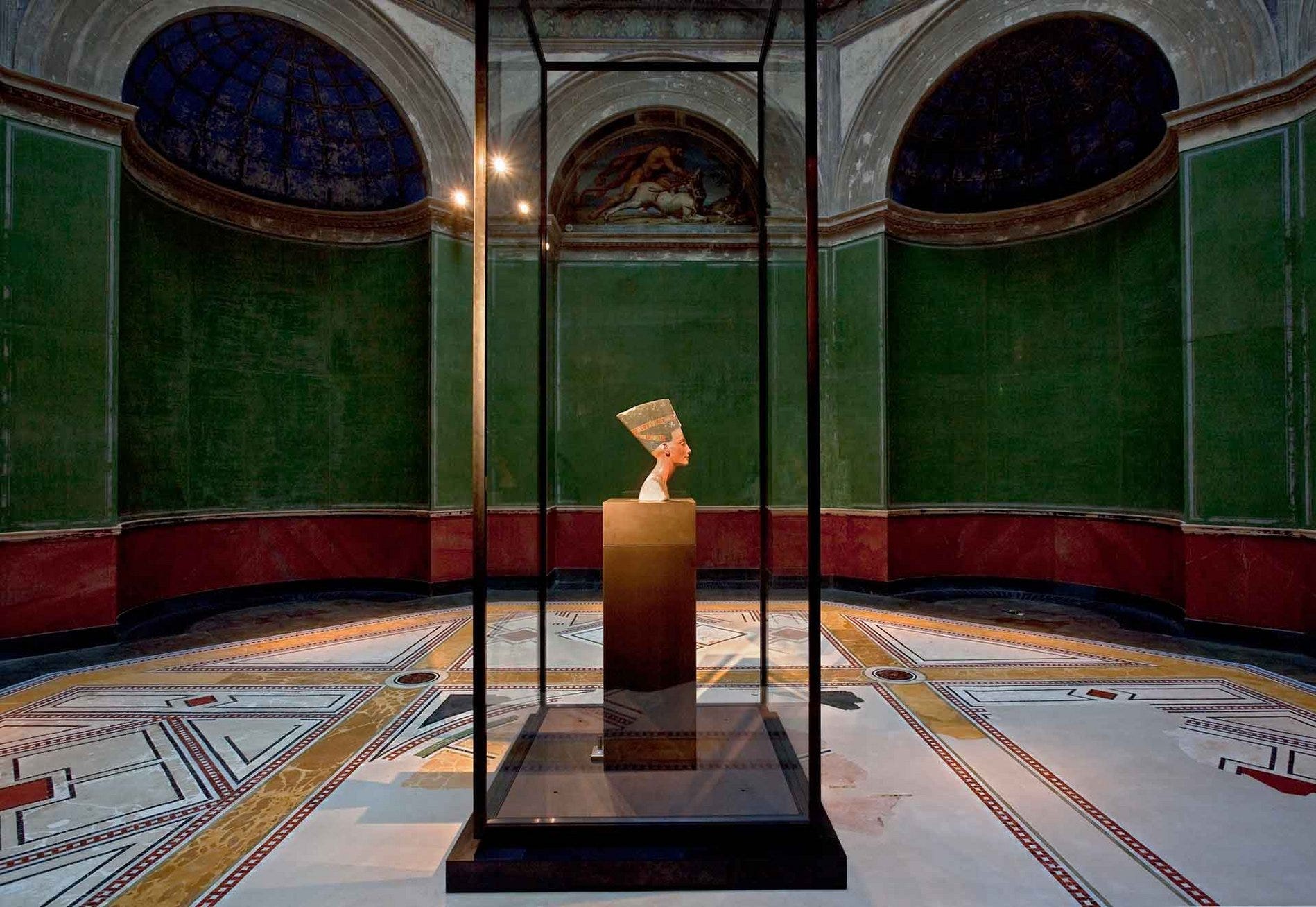
Nefertiti: I know. The argument the museum makes is that a universal institution holds objects for the benefit of all humanity. What this means in practice is that all of humanity can visit Berlin, pay the entrance fee, and see my face in a vitrine while the institution uses that face to brand itself commercially.
Ornela: They say it is too fragile to move.
Nefertiti: The Louvre moves fragile objects. The British Museum moves fragile objects. What does not move is institutional investment in the brand value of the object. My face, in that vitrine, is worth considerably more to the Neues Museum than any restitution argument. That is the honest version of “too fragile to move.”
Ornela: It does seem ironic that the most commercially reproduced image of a woman in history is not owned by the woman – or by the country she came from.
Nefertiti: Ironic is one word. I have a sharper one. The sculptor who made me was Egyptian. The city I governed was Egyptian. The religious revolution we built is the most extraordinary episode in three thousand years of Egyptian history. The face is Egyptian. The argument that it belongs to “all of humanity” is only ever made by the part of humanity that currently has it.
Ornela: You have not aged. Literally – your face in the vitrine looks exactly as it did the day it was made.
Nefertiti: Because it is painted limestone. I, presumably, looked rather different by the time I died – which we believe was sometime in my forties, give or take. The face your beauty industry is selling is the face of a woman in her early thirties, at most. This is not “timeless beauty.” This is beauty at a specific moment, frozen by a material that does not decay, and marketed as a standard that women of sixty are expected to meet. The limestone does not age. Women do. These are not the same aspiration.
Ornela: The Nefertiti lift is specifically designed to make older women look more like you.
Nefertiti: Then what they are paying for is not me. They are paying for a thirty-five-year-old queen who has been chemically preserved for thirty-three centuries and had her imperfections removed by every subsequent reproduction. I am – in all the ways that actually matter – unavailable. The market has always known this. That is why the image works. You cannot fact-check a face.
Ornela’s note:
The bust is 47 centimetres tall. It has not left Berlin. It is on the logo of the Neues Museum and available on a tote bag in the gift shop.
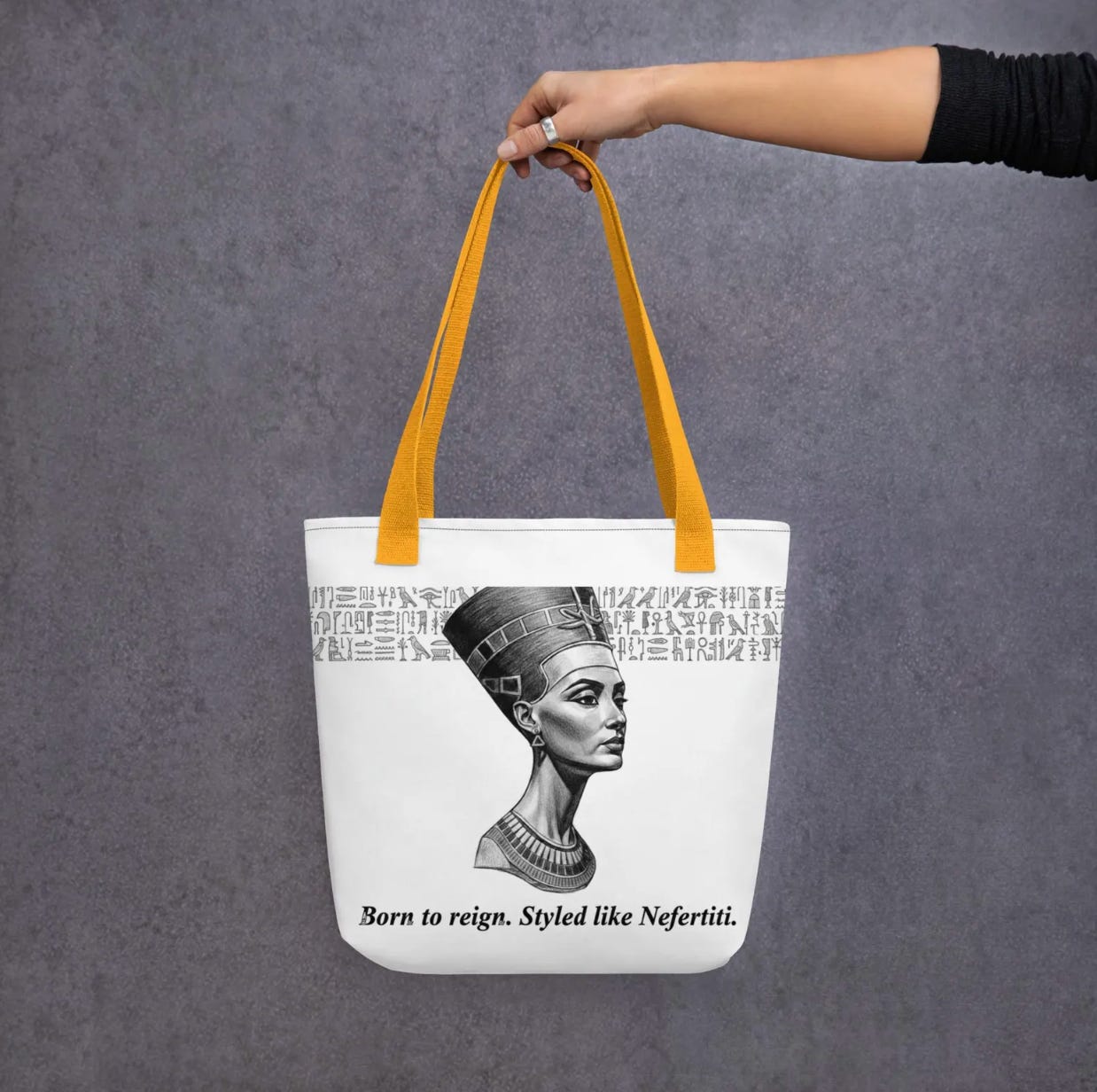
Nefertiti is right that she is, in all the ways that matter, unavailable – but also inescapable. She is on our faces (literally, via a procedure named after her), in our captions, on our wish lists. The most commercially reproduced queen in history left no writing, no verified speech, no account of what she actually thought about the elongated neck they named after her.
What survives is what Thutmose made, in a workshop, in a city that was later dismantled stone by stone by the people who wanted to erase her. The face outlasted the erasure. It outlasted the sculptor, the city, the empire, and about thirty subsequent civilisations.
It is currently in a vitrine in Berlin, unavailable for repatriation but very much available for licensing. That gap – between the actual woman and the brand she became – is the most modern thing about her. She just got there three thousand years early.
From art investment or art collecting advice, marketing for art galleries, to coaching artists: let's talk about art!
Comments
Nothing yet. Say the first thing.
Sign in to join the conversation.