
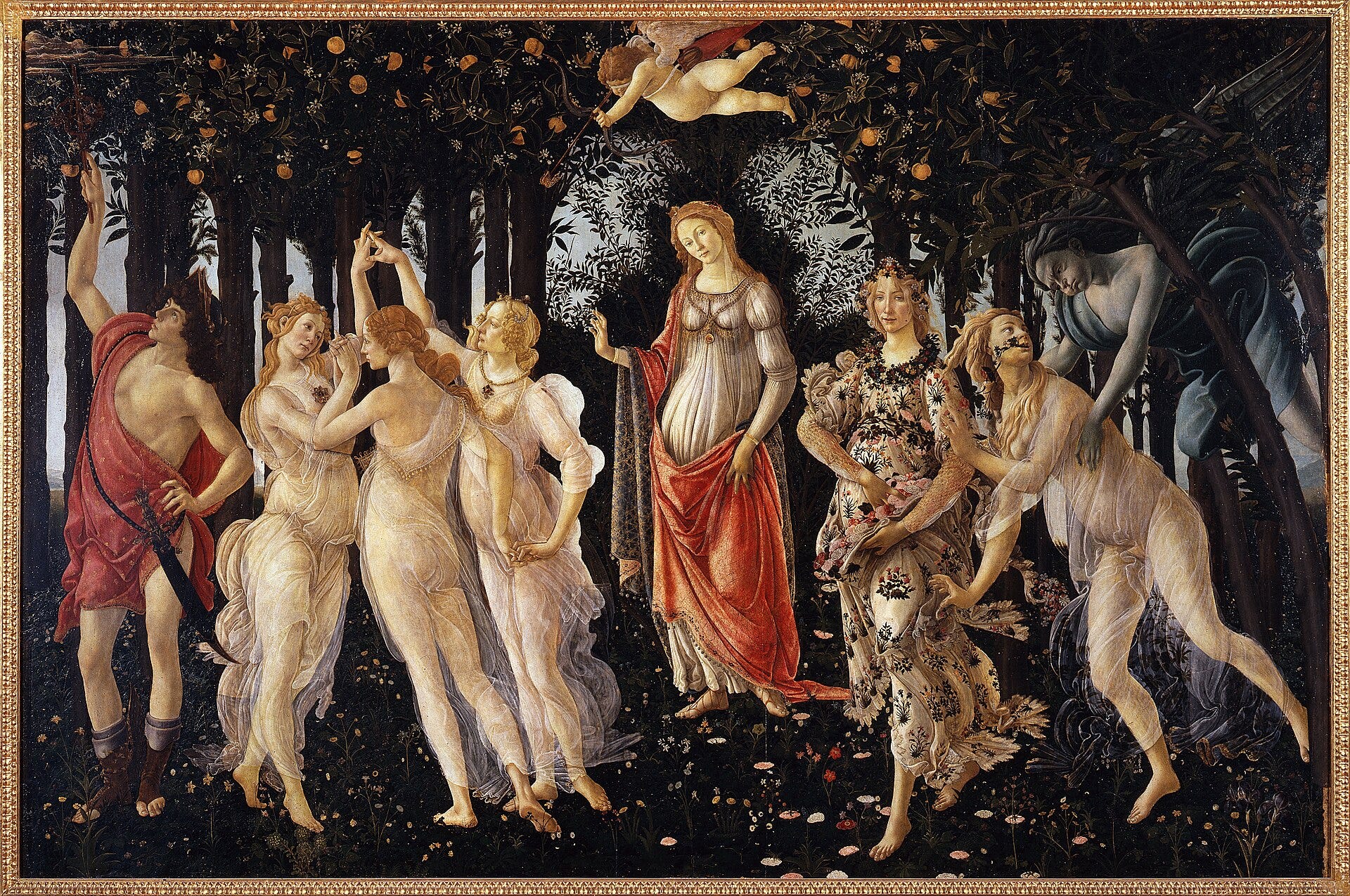
Renaissance
On the rebirth that wasn’t only European – and the price the market now puts on genius
Salvator Mundi is a small oil panel of Christ, painted in Milan around 1500, attributed – more or less confidently, depending which scholar is asked – to Leonardo da Vinci, the single name most synonymous with the period this chapter covers. In November 2017, Christie’s sold it for $450.3 million, the highest price ever paid for a work of art at auction. The winning bidder, a Saudi prince named Badr bin Abdullah, was quickly reported to be a stand-in for Crown Prince Mohammed bin Salman. The painting was promised to the Louvre Abu Dhabi for a September 2018 unveiling; the unveiling was postponed indefinitely, and it has not been exhibited publicly since the sale itself. It is reported to have spent time on the Crown Prince’s yacht and, more recently, in storage. Scholars remain divided over how much of the surface is by Leonardo’s own hand and how much belongs to his workshop – a question the sale price did not so much answer as bury. No single object captures the period’s contradictions more precisely: a market built on the myth of solitary genius, attached to a picture whose authorship nobody can fully agree on, owned by nobody the public can confirm, unseen since the night it made history (read more here»).
1. What the Period Means
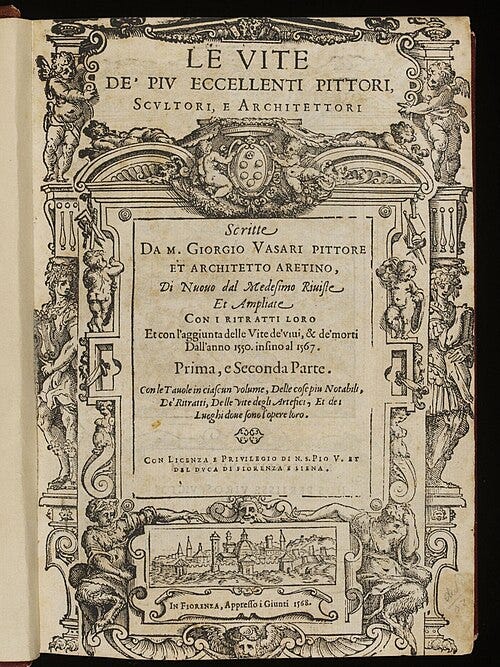
“Renaissance” – rebirth – was Giorgio Vasari’s word, used in his Lives of the Artists (1550) to describe what he saw as the return of classical excellence after centuries of supposed decline. Nineteenth-century historians, above all Jacob Burckhardt in The Civilization of the Renaissance in Italy (1860), turned Vasari’s framing into a settled period: roughly 1400 to 1600 CE, beginning in Florence and radiating outward. The problem is built into the name. “Rebirth” requires a preceding death, and the medieval period was not dead – it was simply being redescribed by people with an interest in appearing new. The classical texts humanist scholars prized so highly had, in many cases, survived and been elaborated for centuries in the Islamic world before reaching Florence and Venice through Sicily and Toledo – a transmission the Renaissance origin story rarely credits in proportion to its importance.
Comments
Nothing yet. Say the first thing.
Sign in to join the conversation.