
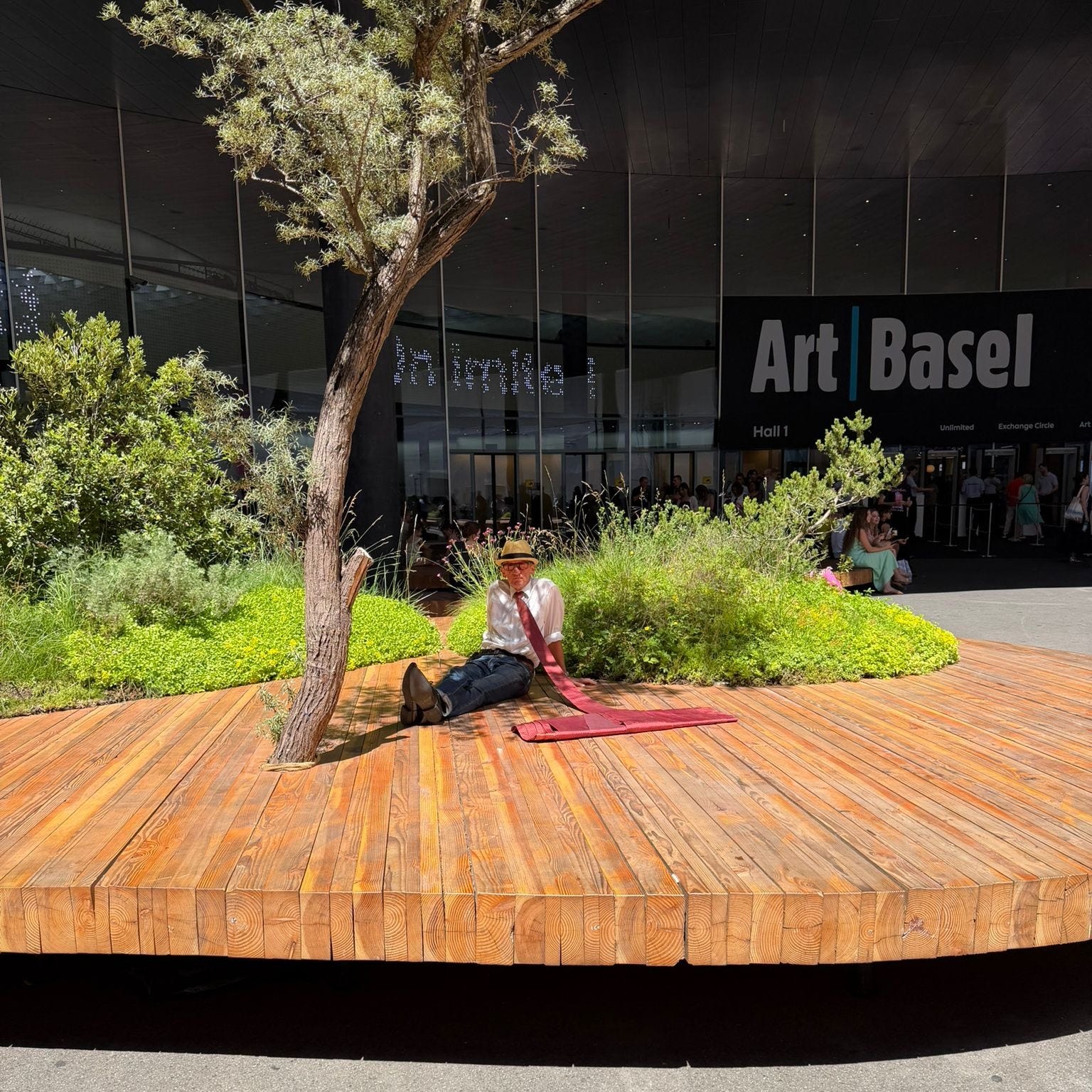
There is a concept I keep returning to when I try to explain what happened to me this year between Switzerland and Italy: metamodernism. Coined by Timotheus Vermeulen and Robin van den Akker in 2010, it describes a cultural mood that oscillates between modernist sincerity and postmodern irony – not a return to naive earnestness, and not a continuation of endless deconstruction, but an informed swing back toward feeling, commitment and direct meaning, made by people who know exactly what irony costs and have decided to pay a different price instead.
I did not expect to need this concept for an art-market column. But standing in front of a painting in Basel, then in front of an installation in Venice two days later, I realised I was watching the theory play out in real time – one event enacting the sincerity turn, the other still performing the exhausted irony it claims to have moved beyond.
The claim
Art fairs are supposed to be the shallow half of the art world: commerce dressed as culture, works selected for saleability rather than significance. Biennials are supposed to be the deep half: curated, theorised, free from market pressure to experiment and provoke. That hierarchy is the received wisdom of art criticism, and I absorbed it as a student like everyone else.
This year it inverted. Basel showed me more craft, more risk and more intellectual coherence than Venice did. And the reason is not that the market suddenly got smarter than the academy. The reason is that Basel, structurally, has no choice but to be metamodern – while Venice, structurally, is still rewarded for performing a mode of critique that culture has already moved past.
What metamodernism actually diagnoses
The postmodern move was to distrust: distrust the grand narrative, distrust sincerity as naivety, distrust the single meaning in favour of infinite deferral. That was a genuinely radical position once. It has since become a house style – something curators reach for by default, not because it says anything new about the work in front of them, but because it is the register that reads as serious.
Metamodernism’s argument is that this exhausted irony can no longer generate meaning on its own, and that culture has begun oscillating back toward directness – an informed sincerity that has been through irony and chosen not to stay there. Crucially, this is not anti-intellectualism. It is a harder position than pure deconstruction, because it requires committing to a reading and defending it, rather than gesturing at infinite complexity and calling the gesture depth.
An informed sincerity that has been through irony and chosen not to stay there.
This is exactly the distinction I could feel physically, gallery to gallery.
Basel: sincerity as discipline, not naivety
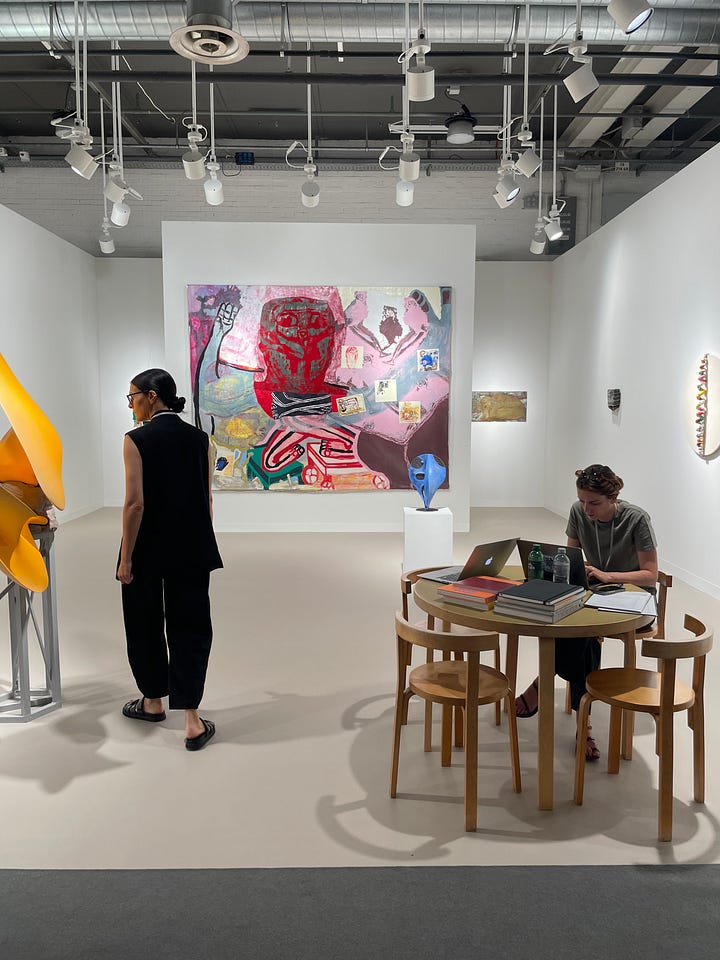
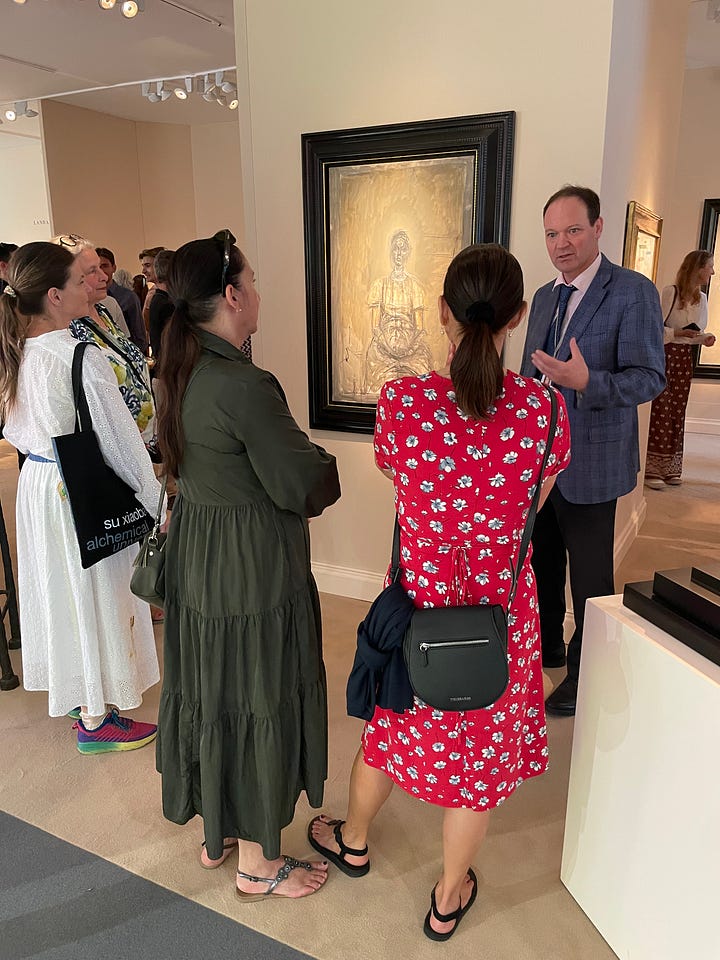
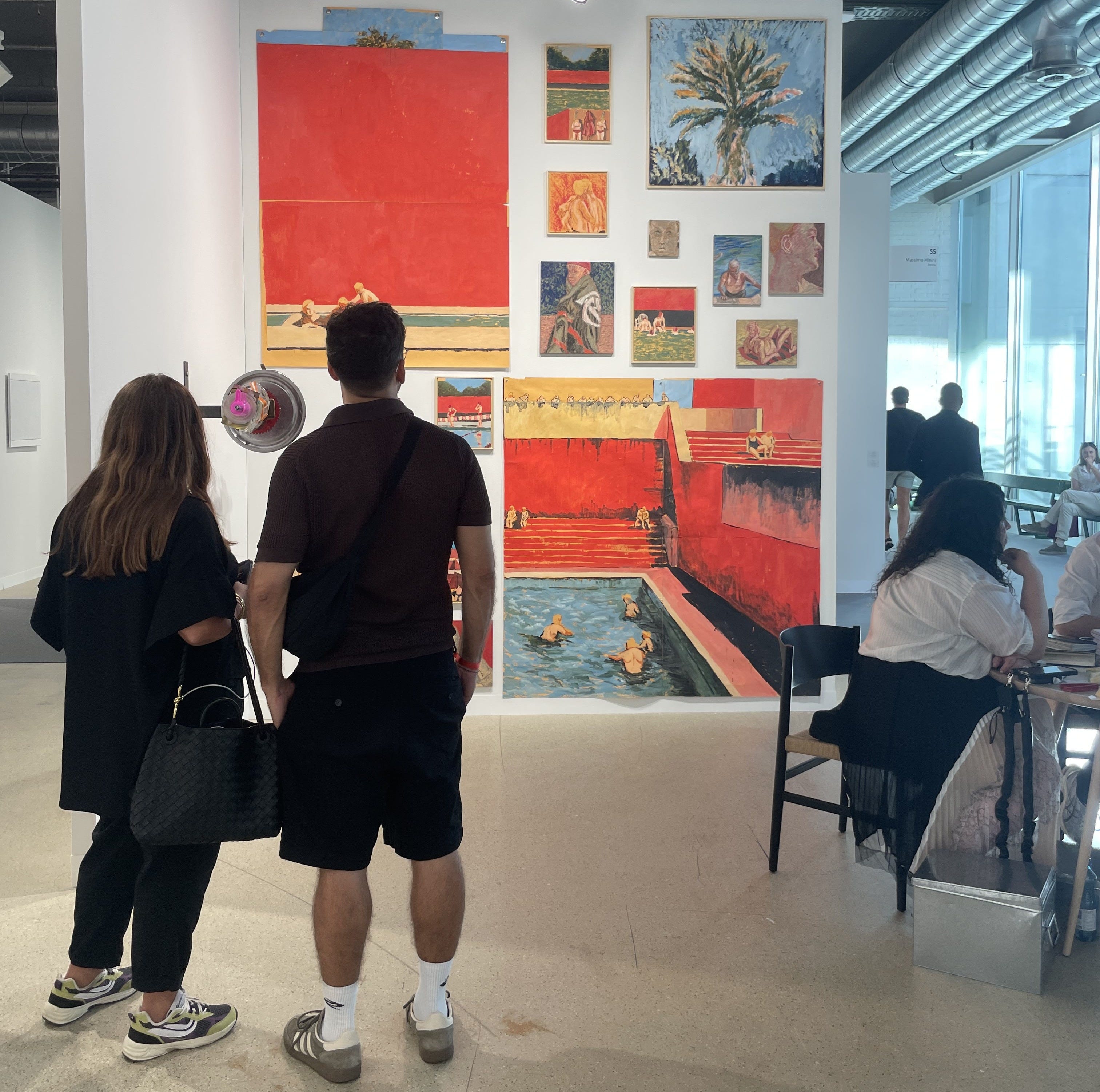
In Basel, I stood in front of a painting and felt no need to read anything. Canvas, colour, gesture – it happened directly, without a mediator. In a smaller gallery off the main halls, five paintings hung with no video, no installation, no QR code. Asked about the curatorial concept, the gallerist shrugged: she simply liked how the work was painted. In Venice, that answer would have sounded like professional suicide. In Basel, it sounded like clarity.
None of this means the fair is pure or the market always right – Basel has its share of decorative kitsch and speculative filler aimed purely at investors. But nothing there pretends to a depth it hasn’t earned. A commodity is called a commodity. And underneath the commodities, there was an unusual amount of real craft and honest looking.
This is the metamodern position exactly: not a rejection of complexity, but a refusal to let complexity substitute for a decision. Basel’s dealers cannot hide behind wall text. If a work does not hold attention within seconds, thousands of visitors simply walk past it, and no explication will save it. That commercial cruelty has an unexpected side effect – it forces craft back to the centre of the room.
Venice: irony as bureaucratic reflex
Venice’s problem is not the absence of commerce. It is a different, more constraining dependency – on funding logic, national prestige and a curatorial career economy in which seriousness is measured by complexity. I have written before about how European grant structures now push artists to braid sustainability, gender perspective, community inclusion and international collaboration into every application, whether or not the subject calls for it. The Biennale is the endpoint of that same logic. A single work is expected to speak simultaneously about climate, colonial legacy, sexuality, migration and artificial intelligence – because any omitted discourse becomes a liability at the press conference.
This year’s Canadian pavilion makes the point precisely. Abbas Akhavan turned it into a Wardian case – the sealed glass vessel that once carried plants, and with them empire, across the nineteenth-century world – filling a custom pool with giant Victoria water lilies under grow lights, inside a Commonwealth-era building raised under Queen Victoria’s reign. Seen cold, it is simply beautiful: water, light, enormous leaves. Only the wall text tells you that you are looking at the Crystal Palace’s 1851 display of exotic specimens, at colonial botany as an instrument of empire, at a century and a half of what got carried and what got left behind. Take the label away and you have a very good water garden. Read it, and you are handed an argument. The work itself is not confused – more than one critic called it quietly devastating, and I would not disagree. What it isn’t is legible without a translator standing beside it.
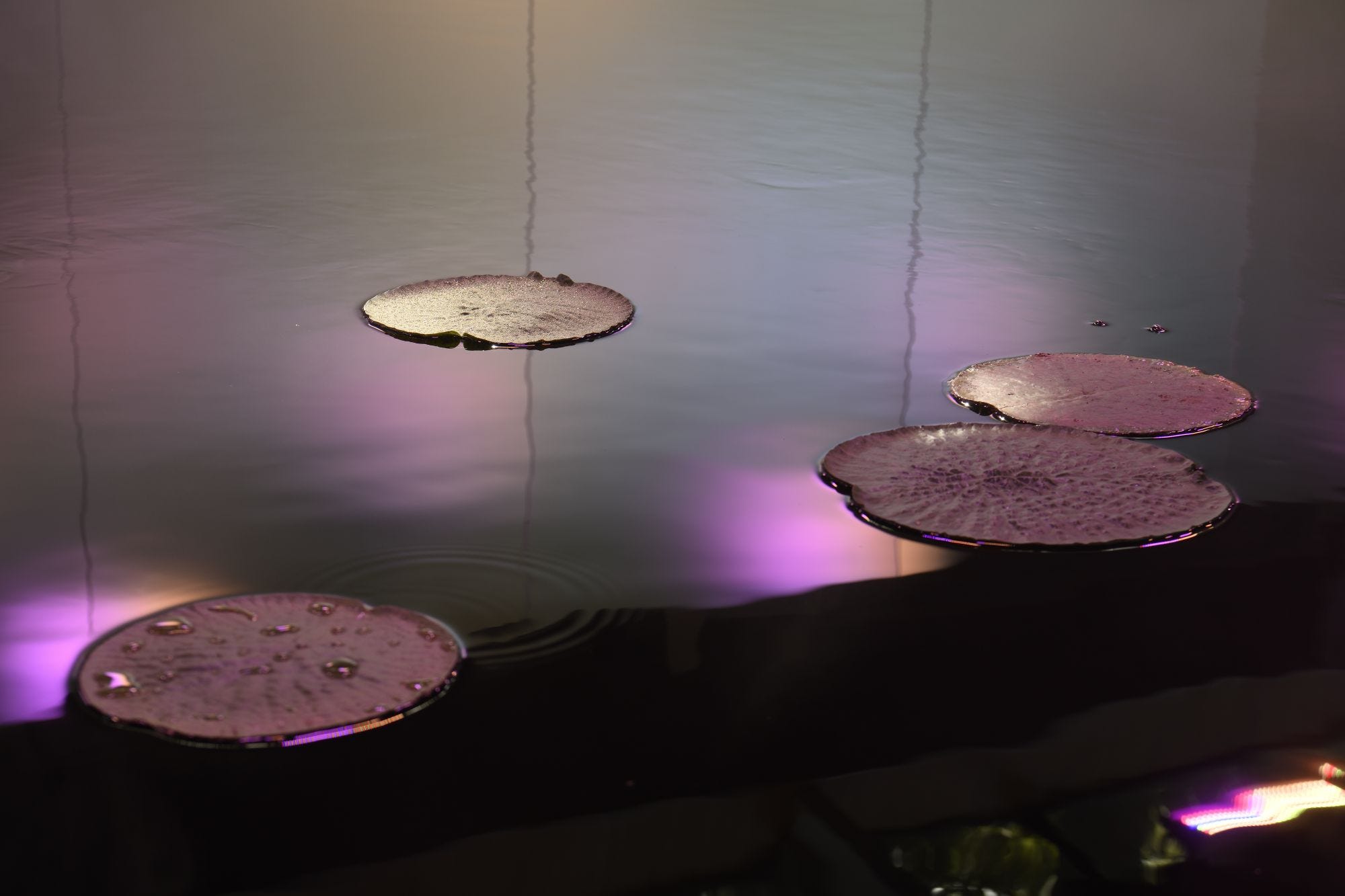
This is not the Biennale failing through incoherence. It is closer to the opposite problem: a single, well-made argument that still cannot reach a visitor unassisted – meaning arriving through the didactic panel rather than through the object, a claim that must be read before it can be felt. That dependency is its own kind of institutional reflex, performed because explanation reads as rigour, long after explanation stopped being the same thing as depth.
The market is already voting this way
This isn’t only an aesthetic argument – the data backs it. The Art Basel & UBS Art Market Report 2026 recorded the art market’s first year of growth since 2022, with global sales rising to an estimated $59.6 billion, and dealer sales climbing to $34.8 billion. After two years of declining sales, the global art market returned to growth in 2025, with total sales rising by 4%, driven by gains in both the auction sector and the dealer market. More tellingly, Art Basel’s own CEO framed the recovery around fairs specifically: dealers refined their programs and client engagement strategies with clear intentionality over the year, while art fair-related sales strengthened even as elevated costs and geopolitical uncertainty persisted.
And painting – the most legible, least mediated medium, the one that needs no explication to register – still accounts for 59% of dealer sales, even as photography, prints and digital works expand their share. The market is not retreating from complexity in general. It is rewarding legibility specifically, at the exact moment institutional curating is retreating further into jargon. That gap is not a coincidence. It is the metamodern turn showing up as a balance sheet.
Where this leaves the traveller
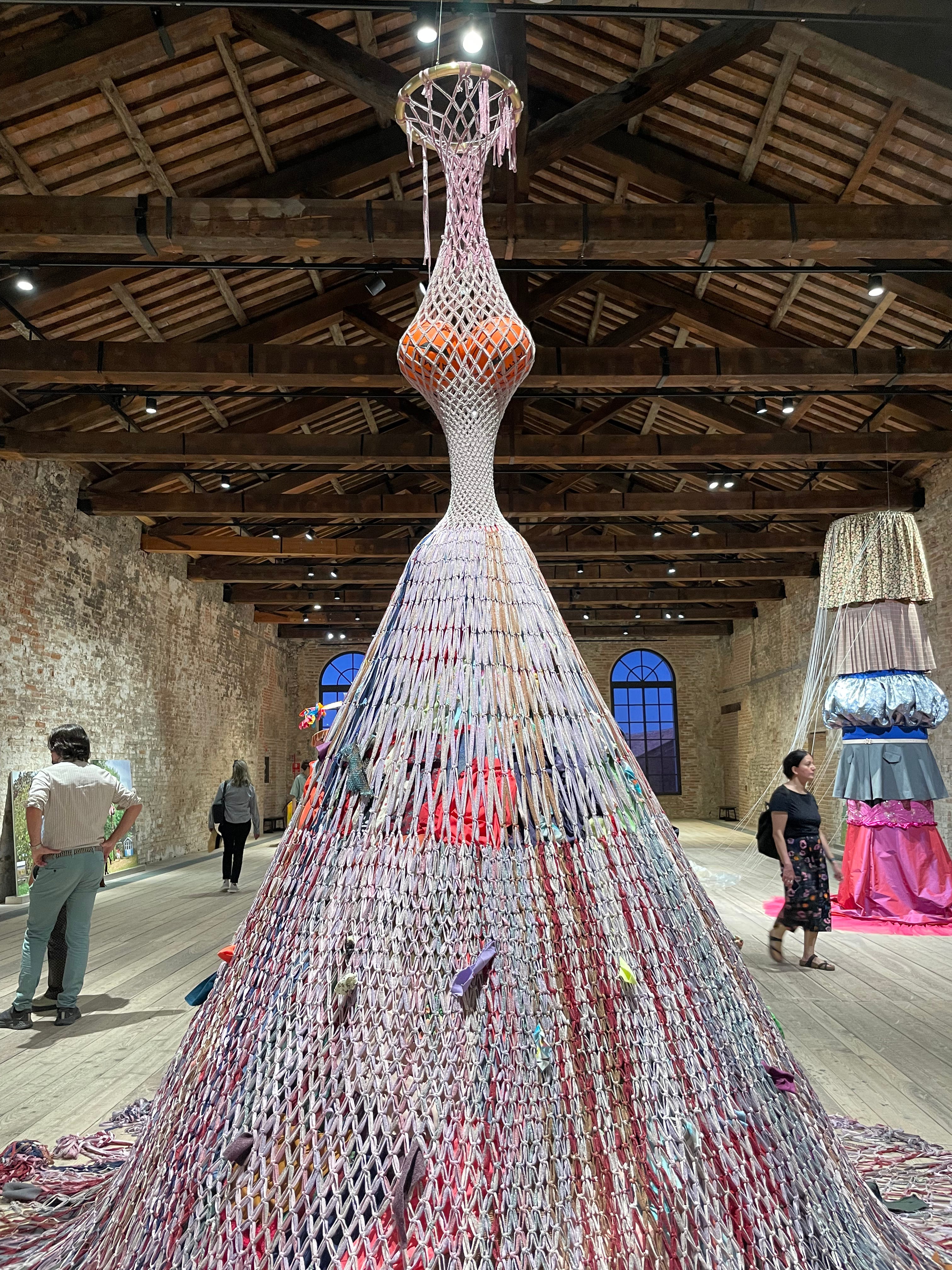
If you can only make one trip next year: go to Basel if you want art that touches you on contact – craft, colour, a visible hand, the nerve to mean one thing clearly. Don’t feel embarrassed liking a work with no accompanying theory attached. That isn’t shallowness. It means the piece did the hardest thing art can do – reach you with no intermediary.
Go to Venice (it happens every two years) only if what interests you is not art but the politics of the art world – institutional theatre, national prestige games – a fascinating spectacle in its own right, just not the one the ticket price promises. Go as an anthropologist, not as someone seeking beauty, and you won’t be disappointed for the wrong reasons.
And if you left a Biennale pavilion feeling like you’d lost the thread, that is not a gap in your own context. It’s a gap in the work’s ability to stand without a translator standing beside it. Metamodernism gave me the vocabulary for what I was already feeling in that room. The fair had moved on from irony. The Biennale, mostly, has not yet noticed it can.
Disclosure: the author held press accreditation for Art Basel Qatar 2026, for which she is grateful. The views expressed here are her own and were not influenced by that accreditation or by any other external party.
From art investment or art collecting advice, marketing for art galleries, to coaching artists:
Comments
Nothing yet. Say the first thing.
Sign in to join the conversation.