
“Human art has intention and feeling.”
2 problems with this statement. First, it’s far too vague. There’s no way to act on it. In the previous post I’ve given keys to actually acting on this. Second, are you so sure ? Did you know Andy Warhol, potentially the most famous artist of the 20th century, famously called his studio “the factory” ? That he is quoted as saying he strove to be like a machine ?
“Human art used to have so much intention and feeling, that it defined cultures. It’s time we bring that back, so we can properly face AI “Art””.
Sounds about right.
So I think the time is ripe to dive into the third principle of Human Art : presence.
As someone who has studied art education books from almost every century all the way back to the 1500s, I have come upon a pattern.
The older the book, the more it mangles together principles of Truth, Beauty, Discipline, and genuine admiration and wonder, with the study of Art. There is in the old books almost no way to separate the spiritual, and technical aspects. Only the greatest, most moral mind, it seems to them, can achieve mastery in Art.
Meanwhile, in recent times, Art has moved too much towards the hard sciences. The beautiful features of past Art are ignored. It is viewed as a way to grasp features of physics to produce trompe-l’oeil on paper. Modern Art as a way to seize complex sociological ideas and express them with a strange contraption. Or, even worse, a way to deconstruct and analyze the world, rather than creating it. Art education books nowadays will teach you very specific techniques, totally divorced from the person who executes the technique. They will teach you anatomy as a finished, determined field that can bear no improvement.
All of this leads to the third principle of human Art, that we are sorely lacking nowadays : PRESENCE.
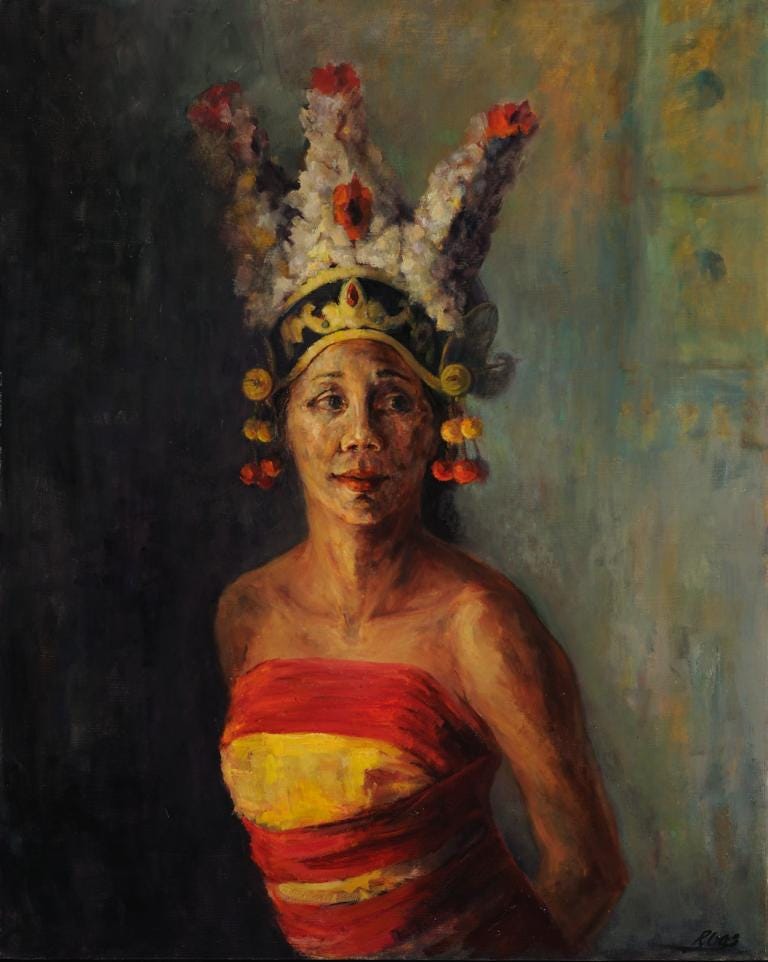
It has become shameful nowadays for people to sound unscientific. The charisma and passion of him who speaks is irrelevant. What matter are the authority figures he can put forward. The sources he can gather up. The erudition wall he can erect in support of his arguments.
To convince people, artists have forgotten their truest tool.
What’s an example of a work that seeks presence through the hard sciences ?
Ryoji Ikeda’s “supersymmetry” is basically a dark room packed with screens, tables, and projections of particle-physics data and perfect white grids. It takes two worlds that could communicate if the artist took the time to digest and interpret the deeper insights of supersymmetry, and tries to stitch them together in seemingly the first way that comes to mind.
The viewer is left thinking : what the hell is even the point? And they feel shame for thinking this way. Because it is unscientific.
I won’t be the first to say it : this kind of art lacks presence.
But what do I mean by presence ?
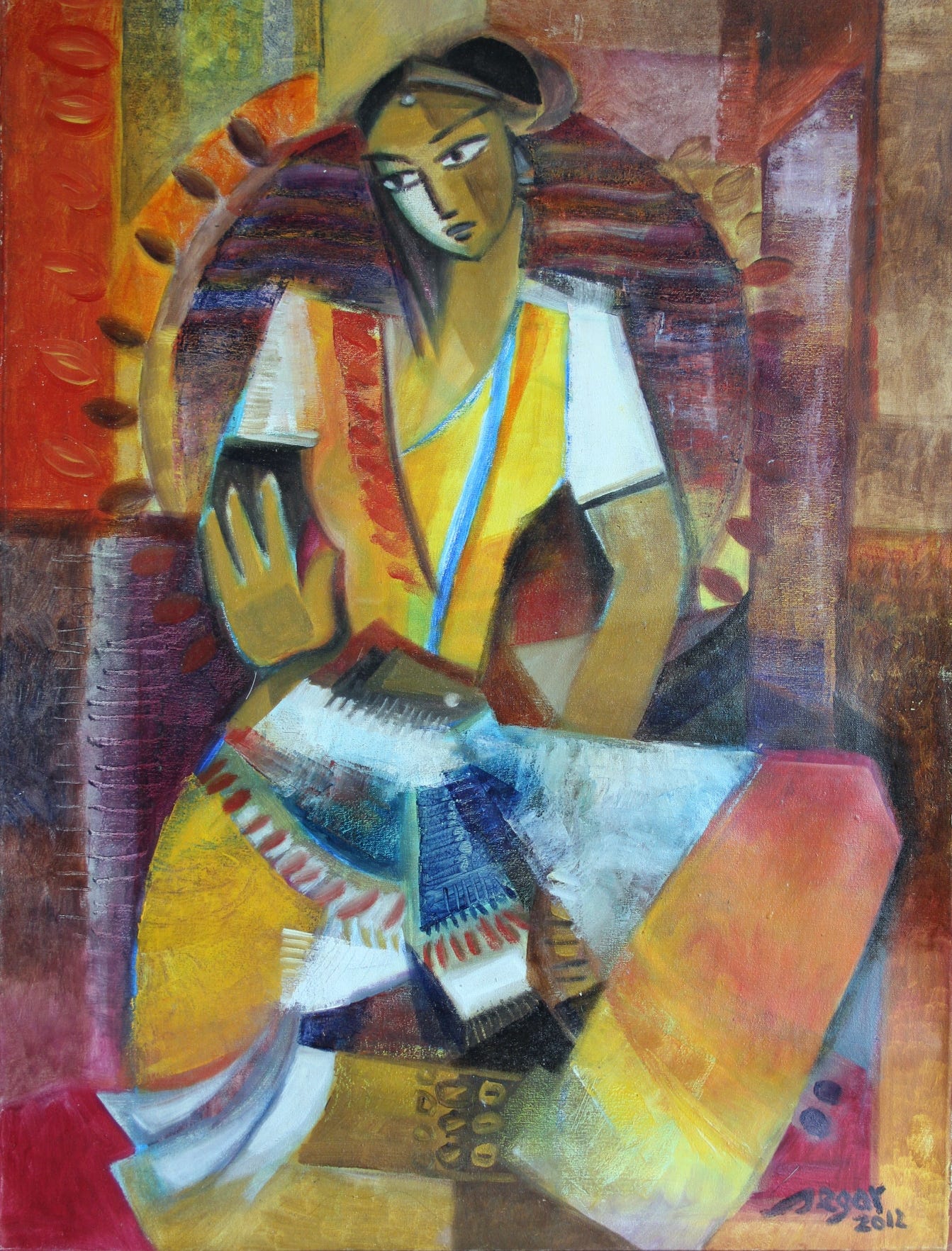
The Dance (Raga Neelambary) – Raja Segar, 2012, oil on canvas
In the early 1900s, all artists, from all over the world, acquiesced in the face of a simple truth.
“If you want to make it in Art, you gotta go to Paris”.
Why ? Can’t you make the same painting in, say, Luanda ? What’s the difference ?
The difference is three-fold. First, all the successful artists and salons were in Paris. You could run into them at the various animated cafés in town, and network with them. Second, if you made a painting in Paris, it was much easier to let everybody know you made it. And maybe get famous.
But the third reason is the most important. If you weren’t in Paris, you didn’t have any idea what was going on in the world of Art. You couldn’t get a vibe, a feeling for exactly which way things are going. You didn’t know what the world was made of; so how could you communicate a genuine reaction to it ?
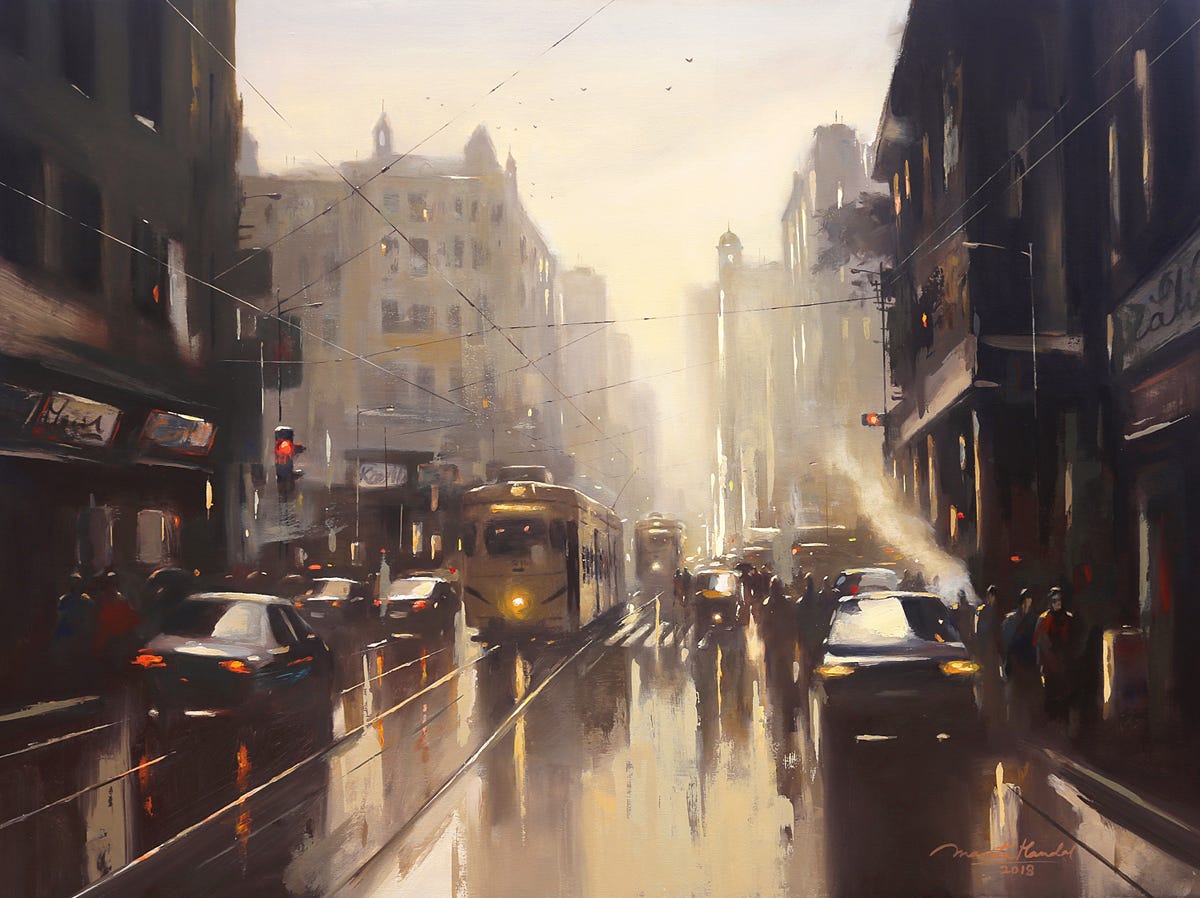
This is what social presence means : that a work has grasped, eloquently, the movement of minds, and proposed a constructive reaction to it, that speaks to the viewer immediately, because it is grounded in the same social world.
Think about Picasso’s Guernica. Think about Goya’s atrocities of War. Think about Michelangelo’s Pieta, or Church’s Heart of the Andes. All of these works have contextual presence because they instinctually and immediately communicate the highest moral response to their circumstances. Veneration in the face of beauty, or indignation in the face of hardship; even praise of sacrifice, are all but forgotten themes today.
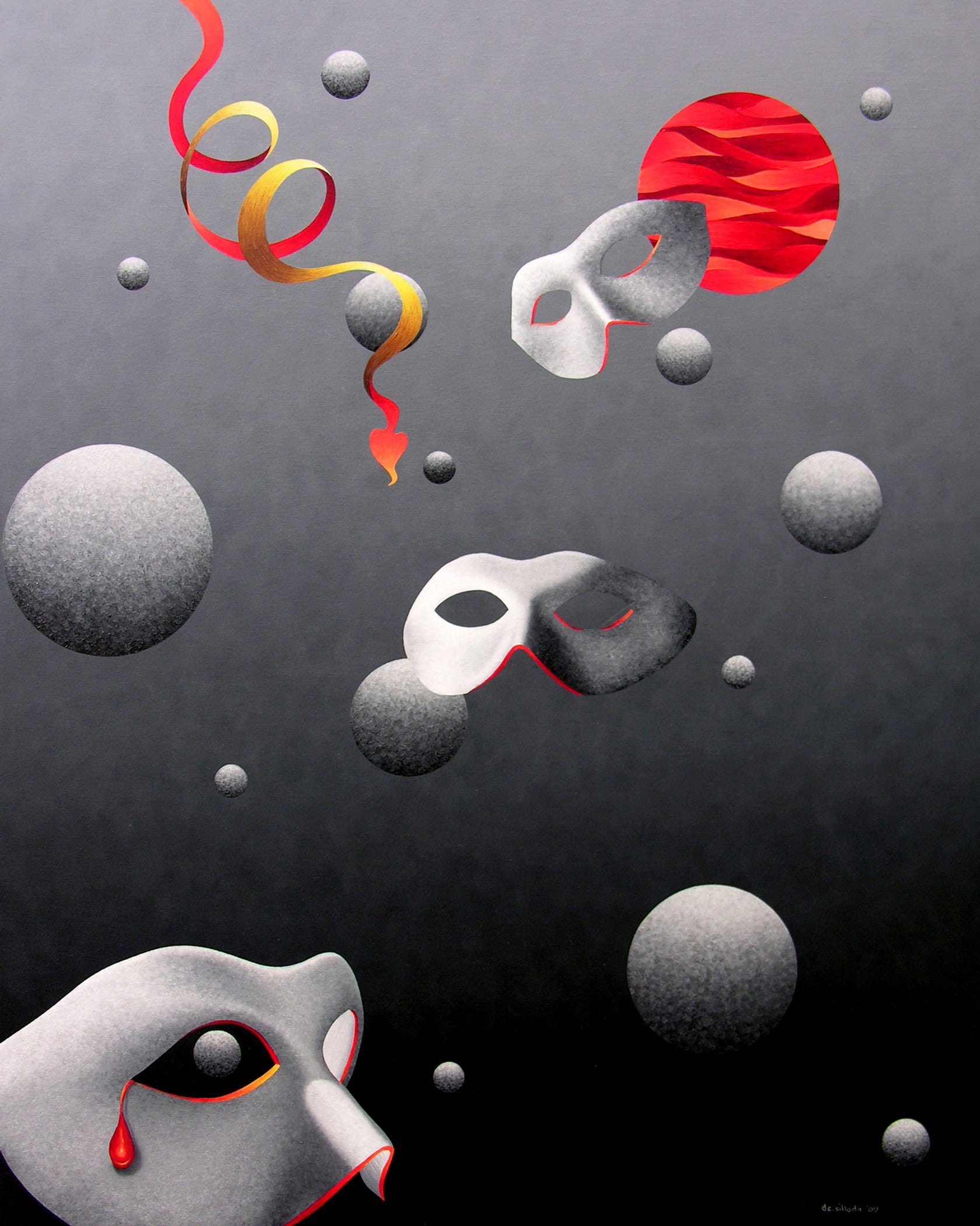
To reference real events in the kind of direct and simple way that these works did it is not passé. We deceived ourselves into thinking it was childish. But human nature doesn’t change; if a work of art doesn’t have this immediate contextual presence, it doesn’t ring true.
Though these themes repeat, they never take on the same form. There are plenty of paintings you can make today about sacrifice, that’ll gather a LOT of attention.
Dripping paint on a canvas and giving people a pamphlet guide to interpreting your artwork may impress billionaires with too much time on their hands. But it won’t impress the majority of people. Michelangelo’s Pieta would.
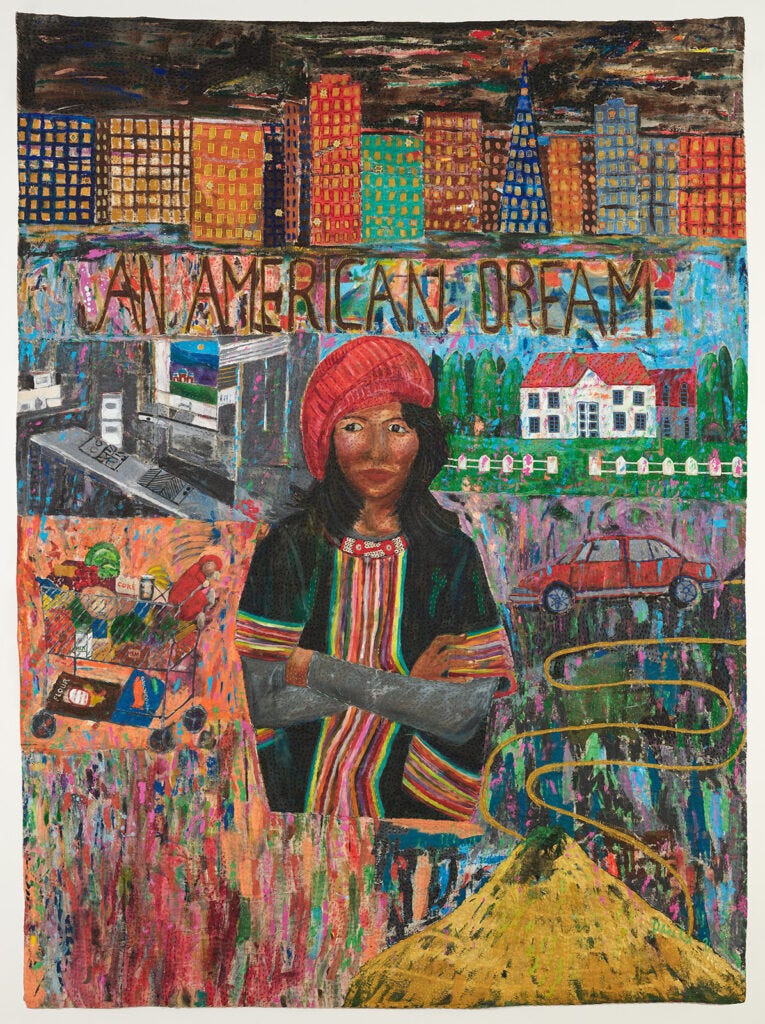
We’ve come to see Art as more present, the more interconnected it is with its current context, and the better it speaks the raw, direct language of its time.
To achieve this, you need to PAY ATTENTION.
My friend Bertus (writing the Archespheres substack, go check him out !) had an amazing post on Attention that I recommend you all read. But to make it short, if we draw from Zen philosophy, the mind will make categories for things, and judgements of value out of thin air.
This thing is good. This other thing is bad. This event was caused by this person. I made a mistake. And so on.
And all this excess activity robs us of our capacity to actually observe things and understand them as they are. But to try and pay attention is also a sin : you’ve now categorized attention as a good thing, and thought as a bad thing.
To pay attention is a thing that just happens. There is no training, and no striving to do it. But when you actually do, you are able to grasp things with the most open mind. To get to the root of everything in a nonchalant manner, as if by mere “beginner’s luck”. You see everything as interconnected. Unbothered by the games of blame and complain, you are able to love the world.
This kind of beginner’s mind is the quintessential artist’s mind. Intellectual Art is close-minded. The Artist who spends decades practicing and then stops caring; that is the artist who has presence, precisely because his mind is free from worry.
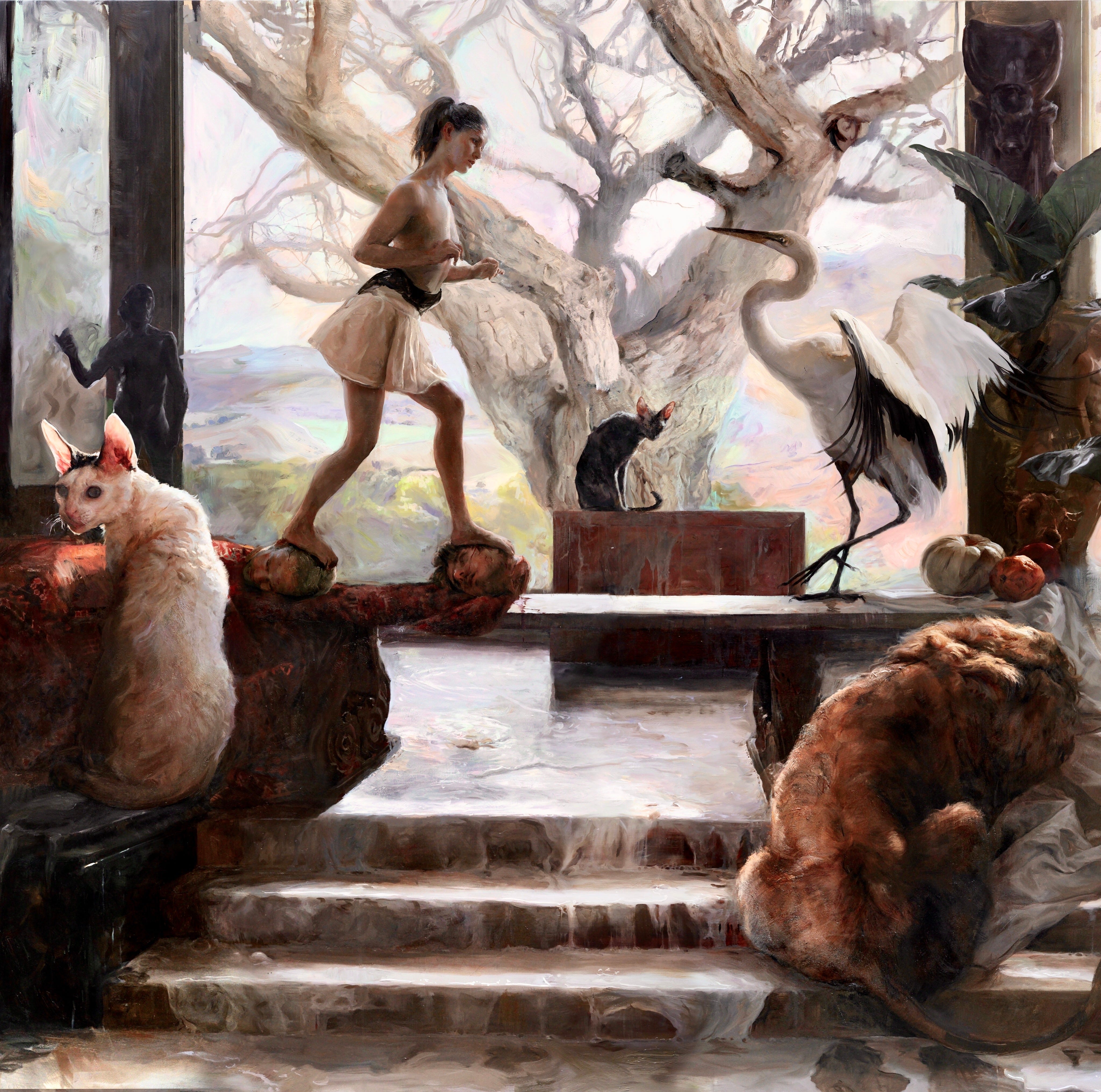
We have begun to view the interconnectedness of the world with the painting as the core ingredient of presence. But I would argue that’s only half the equation.
What’s the second half ? The human soul. For an AI Researcher by trade, I’m going to sound mind-blowingly unscientific here.
But science has failed. In the 20th century, the reaction to the failure of science to save the world, was to give up all Western traditions, Art included. They threw the baby out with the bath water. I say, science has failed. Not Art.
I’ll say it out loud : The Soul is a real thing. AI can replicate our thoughts only because we’ve become computational machines. It’s about time we start to look at thoughts like trees that come and go on the branches of a tree. Your thoughts aren’t your own. But each tree has a trunk and branches. Those constitute the tree. Not the birds.
There is something at the depth of your body and brain (and maybe beyond). This tiny ember has been under attack for your entire life. But if you go to all the parts of you, that you define as being yourself, and you ask them “who are you”, it is the only one that will answer “I am you”.
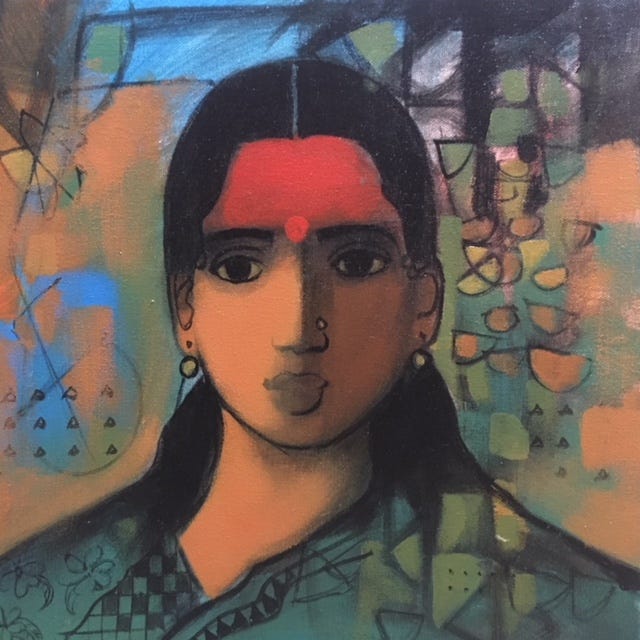
To find true, deep presence in your Art, and truly influence the epoch, you must not only know the world: its social, contextual aspects and interconnectedness. You must also cultivate yourself like a garden. You must tirelessly search inside yourself and get to your inner character, and, dare I say, morality.
So what does it mean to cultivate presence in your Art ?
To cultivate presence at the end is to make your mind as interconnected with the deeper realities of your time as possible. To live a life of attention and discernment, and most important of all, of morality. Art that has presence is art that not only reflects an epoch, like Warhol’s art, but actually affects it in the right direction (unlike Warhol’s art).
I won’t give you three quick steps or exercises for presence. Because that is precisely the kind of standardization of practice that has killed Art.
People who give you steps, immediately actionable tricks, are trying to sell you something. I’m trying to save Art. I’m a unique blend of AI expertise and passion for Art, in a unique time in history, and I’m trying to pass on my knowledge to my Art Allies before I die.
I won’t give you quick, immediate steps. I’m not trying to “provide value” in the capitalistic way, to “force loyalty”. I will only give you the general rule of presence, that AI can never grasp (by nature).
To cultivate presence at the end is to make your mind as interconnected with the deeper realities of your time as possible. To live a life of attention and discernment, and most important of all, of morality. Art that has presence is art that not only reflects an epoch, like Warhol’s art, but actually affects it in the right direction (unlike Warhol’s art).
So if I were to tell you in one sentence how to cultivate presence in your Art, it would be this : Cultivate your morality. Whatever that might mean to you.
In the next part of this series, I’ll go through three core principles of AI “Art”, from the point of view of someone who actually works with these models.
My hope is not to make you despair, but to give you a clearer, less vague sense of what your artistic edge actually is, so that when you pick up a brush, a pen, a guitar, you can feel that you are not competing on the same field at all.
Till next time,
ArtPostAI
Comments
Nothing yet. Say the first thing.
Sign in to join the conversation.